Alliteration is fun, huh? So is the pursuit of mysteries, especially in nature.
Three years ago, I wrote a post about multitudes of fuzzy caterpillars at our family prairie. Many of them were crawling high up into the vegetation and dying, leaving behind desiccated dead bodies, still clinging to plants. It was morbid, but fascinating. I haven’t seen that phenomenon again – until this year.

In late September, I traveled out to our prairie to do some seed harvesting. As the sun was setting and I was walking back to my truck, I nearly fell over as I spotted a fuzzy caterpillar right in front of me and contorted my body so as not to squish it underfoot. Immediately, I noticed several others nearby.
Within an area the size of my pickup, there were easily 20 or 30 caterpillars that I recognized as larvae of the Virginian tiger moth (Spilosoma virginica). I could only identify them because I’d seen lots of them three years earlier, and that experience stuck prominently in my mind. It was too dark to photograph the caterpillars that night, but I came back the next morning with my camera and chased (ok, that’s an exaggeration) them around for a while.

I started my early morning caterpillar exploration where I’d seen the big group the night before, but as I wandered around, I found that the congregation of them was much bigger than I’d thought. They weren’t uniformly distributed, but they were spread across several acres of prairie. In some places, I found as many as 4 or 5 per square foot, while in others, I’d walk several steps between sightings. Still, that’s an awful lot of caterpillars – thousands of them, for sure.
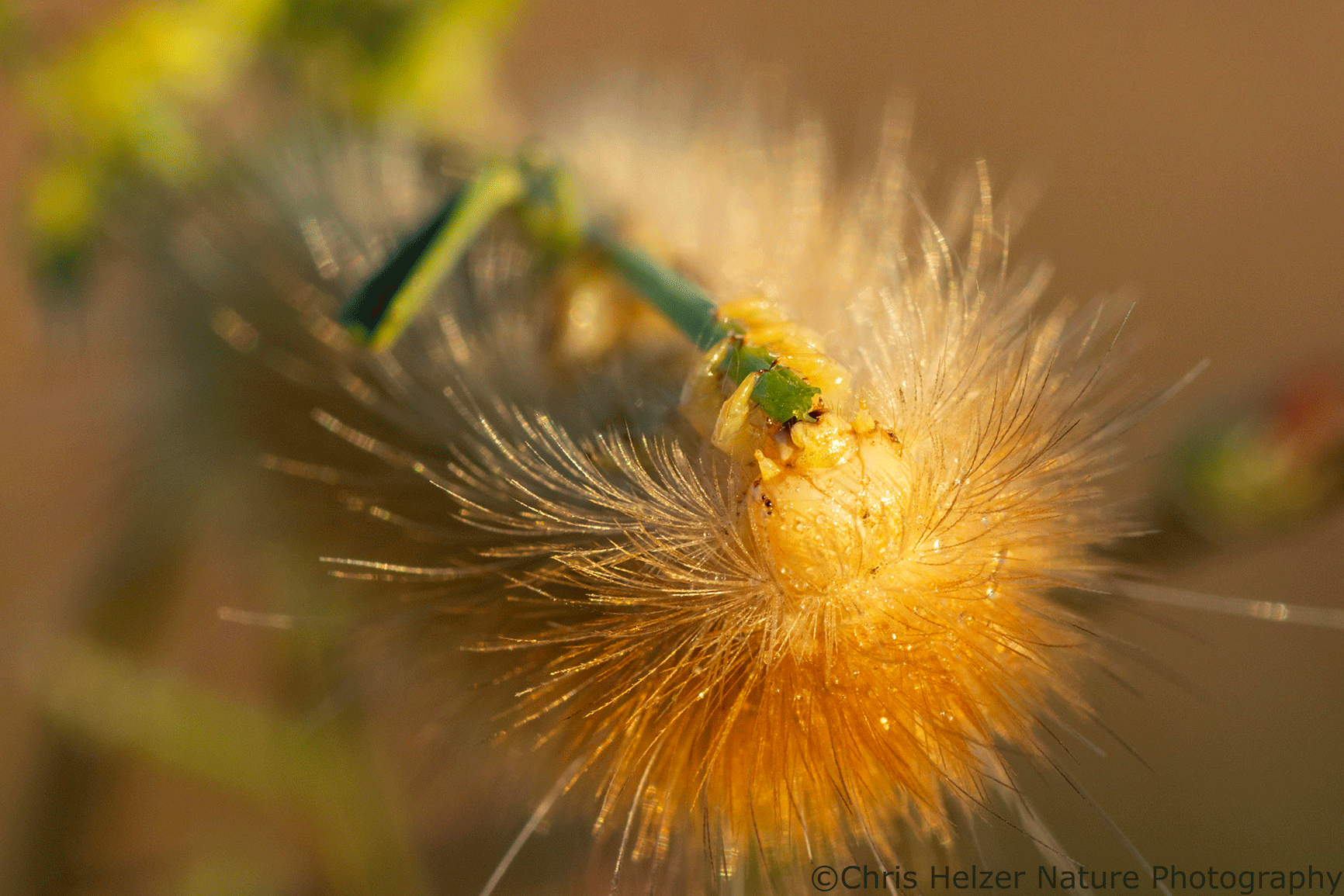
My ecologist brain was curious about what they were feeding on. At first, I was mainly seeing them on yellow sweetclover plants (Melilotus officinalis), chewing busily away at both leaves and stems. That was handy because it often positioned them off the ground a little bit, and gave me good angles for photography. As I kept looking, though, it was clear their diet was much broader. I saw them feeding on lambsquarters, some kind of pigweed (Amaranthus sp.), green milkweed (Asclepias viridiflora), a species of dock (Rumex sp.), a knotweed (Polygonum sp.) and western snowberry (Symphoricarpus occidentalis). That’s some serious variety.
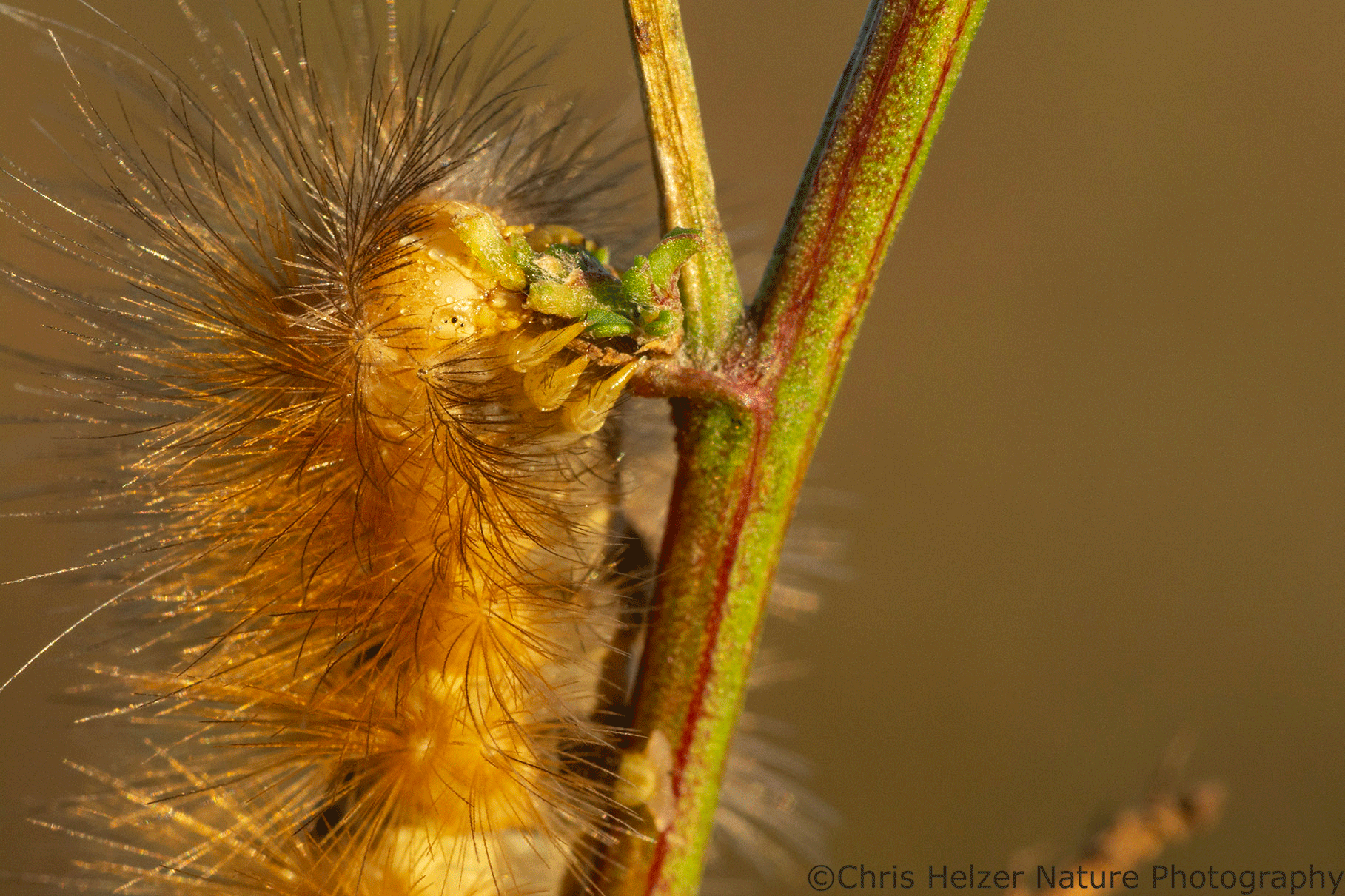

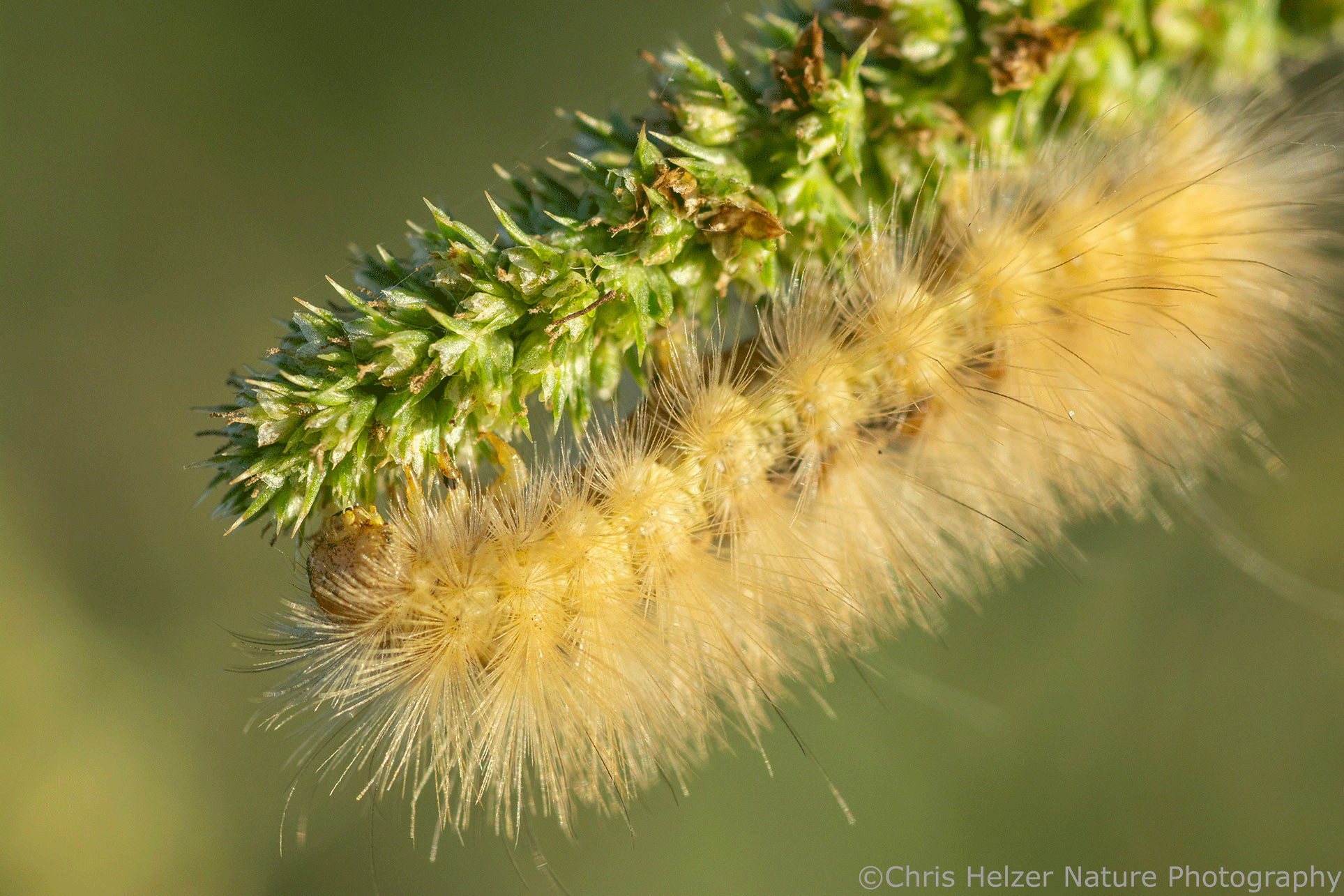
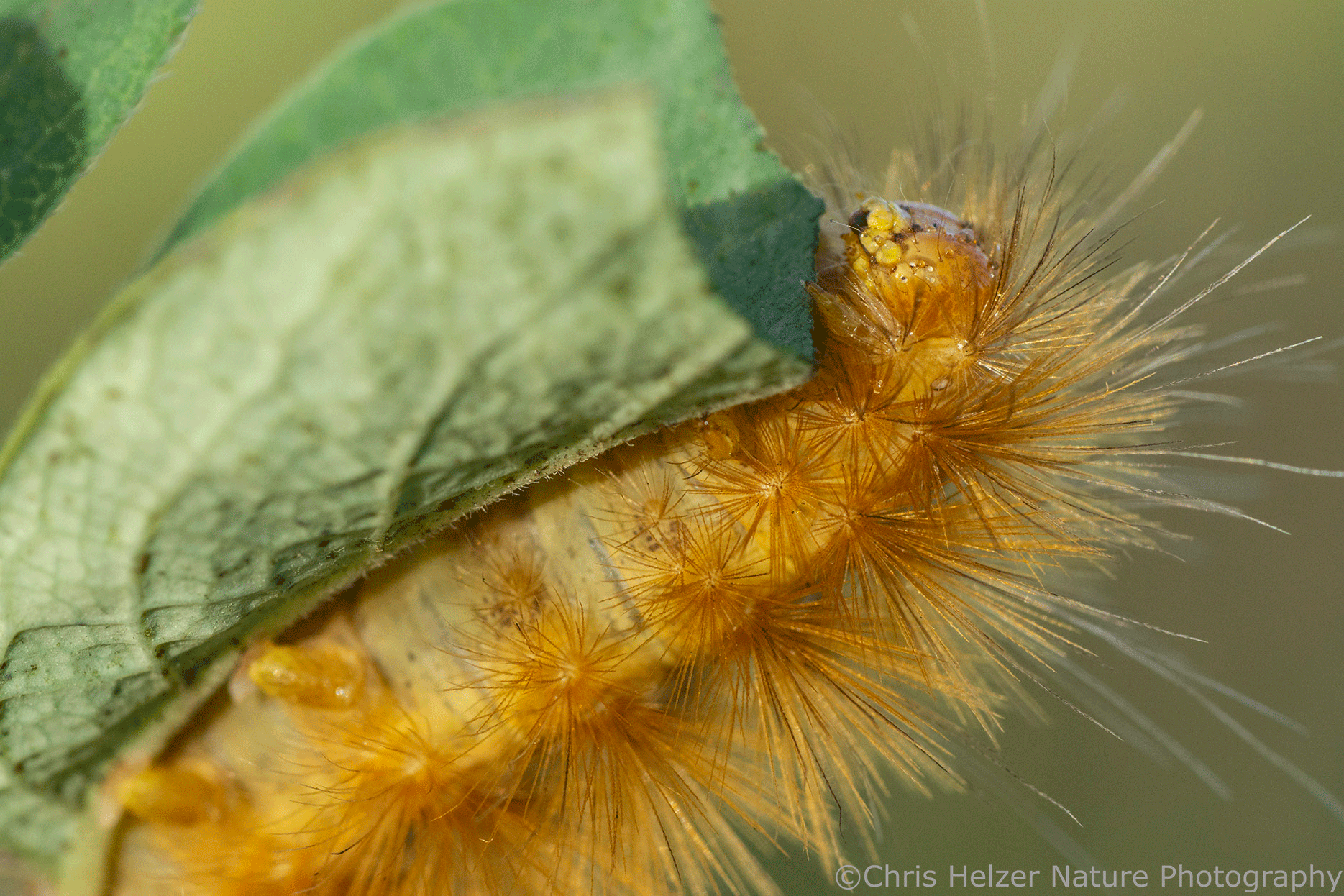
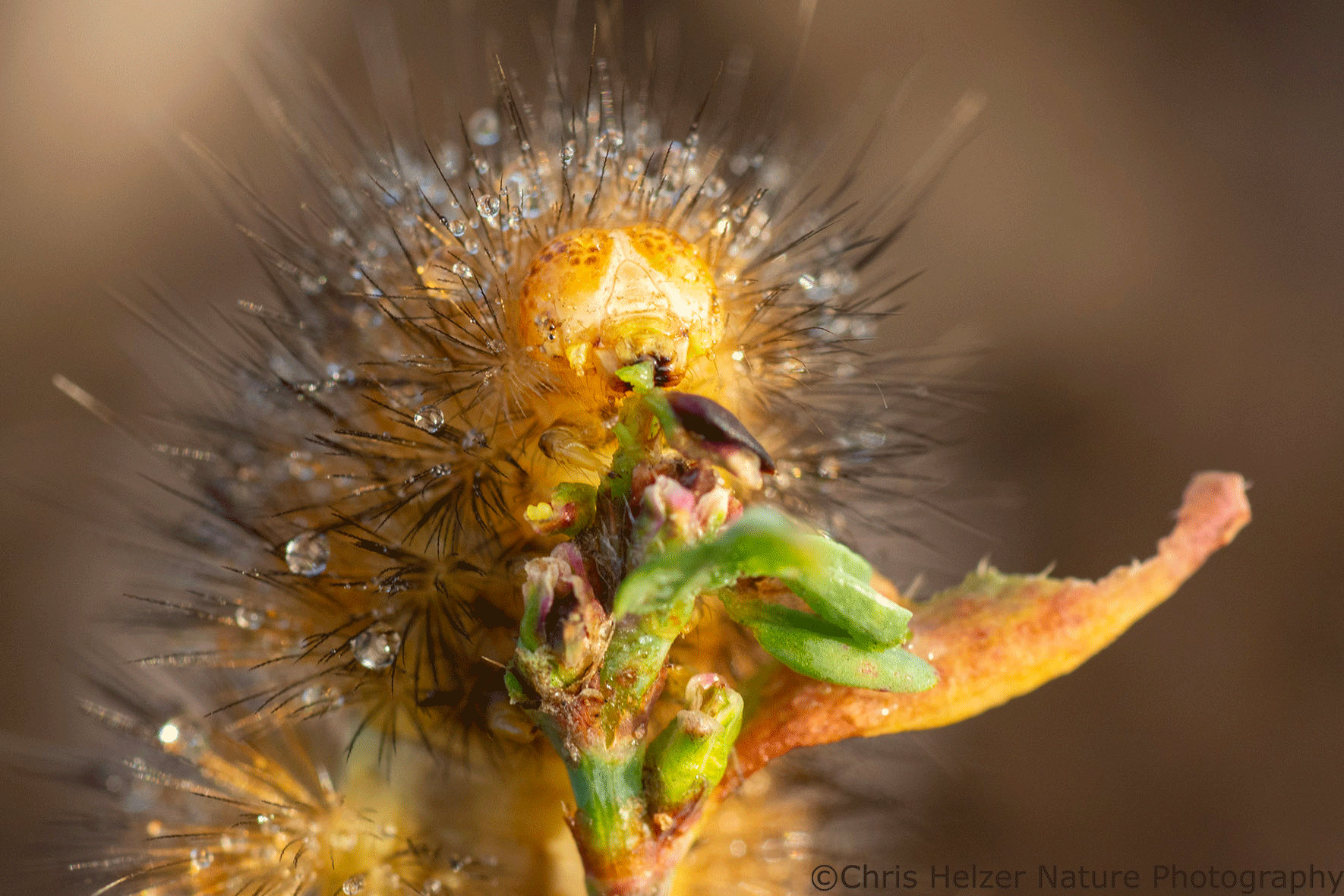
The feeding behavior was interesting, but that’s not what I was really looking for. I wanted to find evidence of the same ‘crawl-up-high-and-die’ behavior I’d seen three years earlier. Ok, to be clear, I wasn’t rooting for that, necessarily – that would be mean. I just didn’t want to miss the opportunity to see it if it was happening. I also hoped to get a little further in the investigation into what was causing the phenomenon.
Sure enough, as I walked around, about 5 or 10% of the caterpillars seemed to be dead – most of them at the top of plants, or even fenceposts. Some looked like they’d just recently died, but a few had clearly been there a while and had a kind of freeze-dried appearance. I took a few photos and then grabbed one of the dead ones to bring home with me.

As luck would have it, I was talking to former Hubbard Fellow Evan Barrientos shortly thereafter, and was reminded that he’d introduced me to Dr. Enakshi Ghosh earlier this year. Dr. Ghosh is a Post-doctoral researcher at the Natural Enemy Ecology Lab at Colorado State University. She studies cool things like parasitoid wasps that affect caterpillar populations. Evan helped me reach out to Dr. Ghosh and that email conversation led to me returning to the prairie to grab more caterpillar samples.
The next day, I shipped some caterpillar corpses to Colorado (that’s a normal, socially-appropriate thing to do, right?), hoping to solve the mystery of what killed them. A few days later, I got an email. Unfortunately, Dr. Ghosh wasn’t able to magically deduce exactly what had happened, but I did learn some things. First, she pointed out that the corpses were hollow – “which is a sign of developing parasitoids eating up their organs.”
In addition, she said there was a secondary fungal growth on them. I’d noticed that as well – it looked like some of them were covered with whitish powder. I wondered if that might somehow be tied to the parasitoid, but Dr. Ghosh didn’t think so. She also couldn’t find or examine the hole(s) used by parasitoid larva(e) to exit the carcasses after their death, probably because the caterpillar bodies had dried up too much.
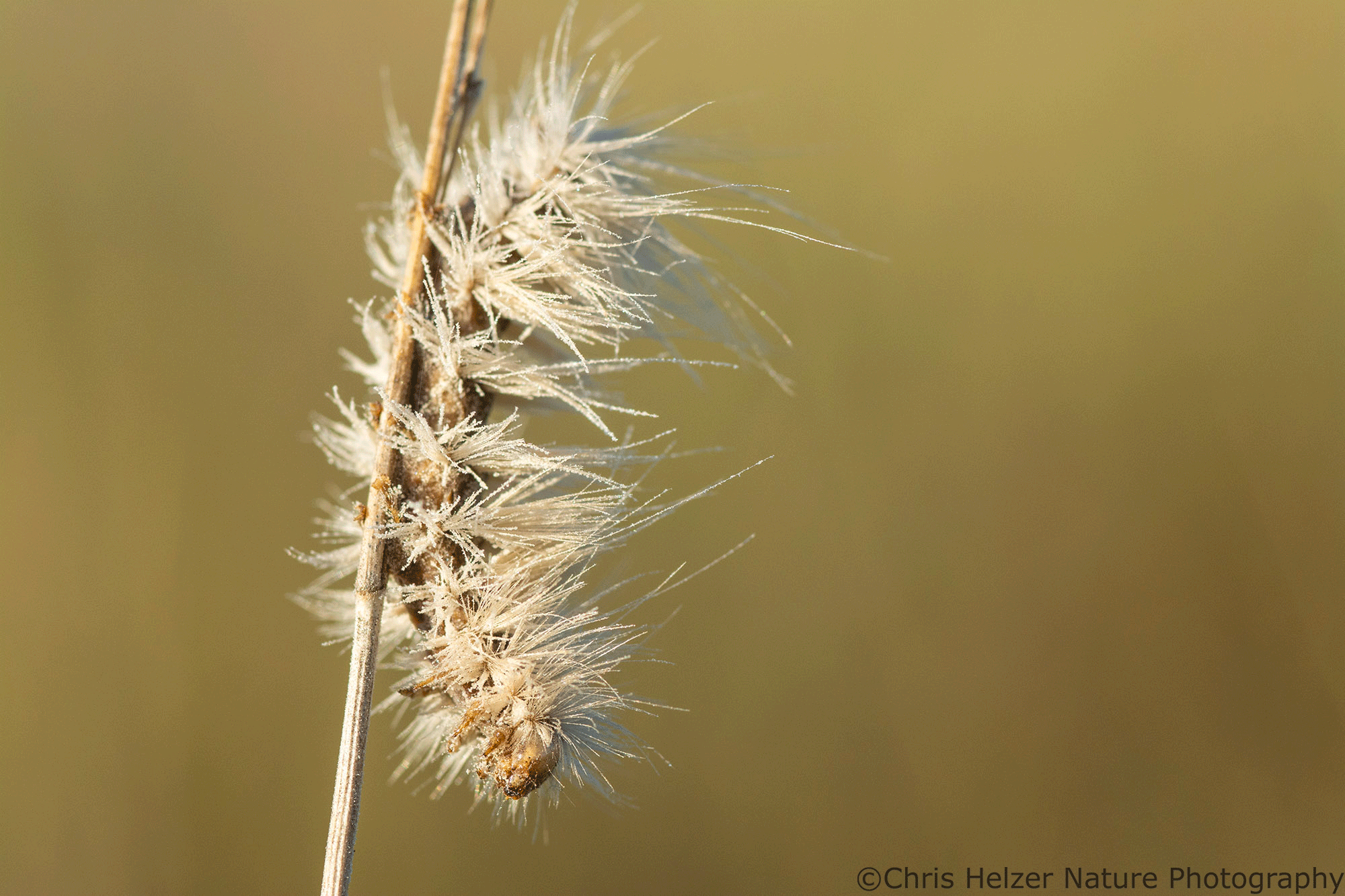
The mystery isn’t fully solved yet, but I feel good knowing that it’s a parasitoid-related case. Unfortunately, I didn’t get back out to our prairie before it froze last week, so I wasn’t able to grab some living caterpillars and see what came out of them. I apologize for that dereliction of duty. Maybe, in another three years (hopefully less??) I’ll get another chance.
Should I use ‘less’ or ‘fewer’ in that last sentence? If I was talking about something like mosquito bites, I’d say “hopefully fewer”. Especially with mosquito bites. It should probably be ‘fewer’ when I’m talking about years, too, but my brain is telling me that we’re talking about an amount of time, and it’s appropriate to say “less time”. But since ‘years’ is the unit, I suppose it should be “fewer”. Let’s just all pretend I said “fewer” and I’ll move on with the story. Also, please ignore the irrational use of single and double parentheses in this paragraph.
In the meantime, I’m left to wonder why I don’t see this event every year. Are the caterpillars (and their parasitoid) in our prairie annually, but I don’t always see them? That’s sure possible, but I walk around that prairie a lot, and it seems a little wild that I’d miss big caterpillar congregations that span several acres.
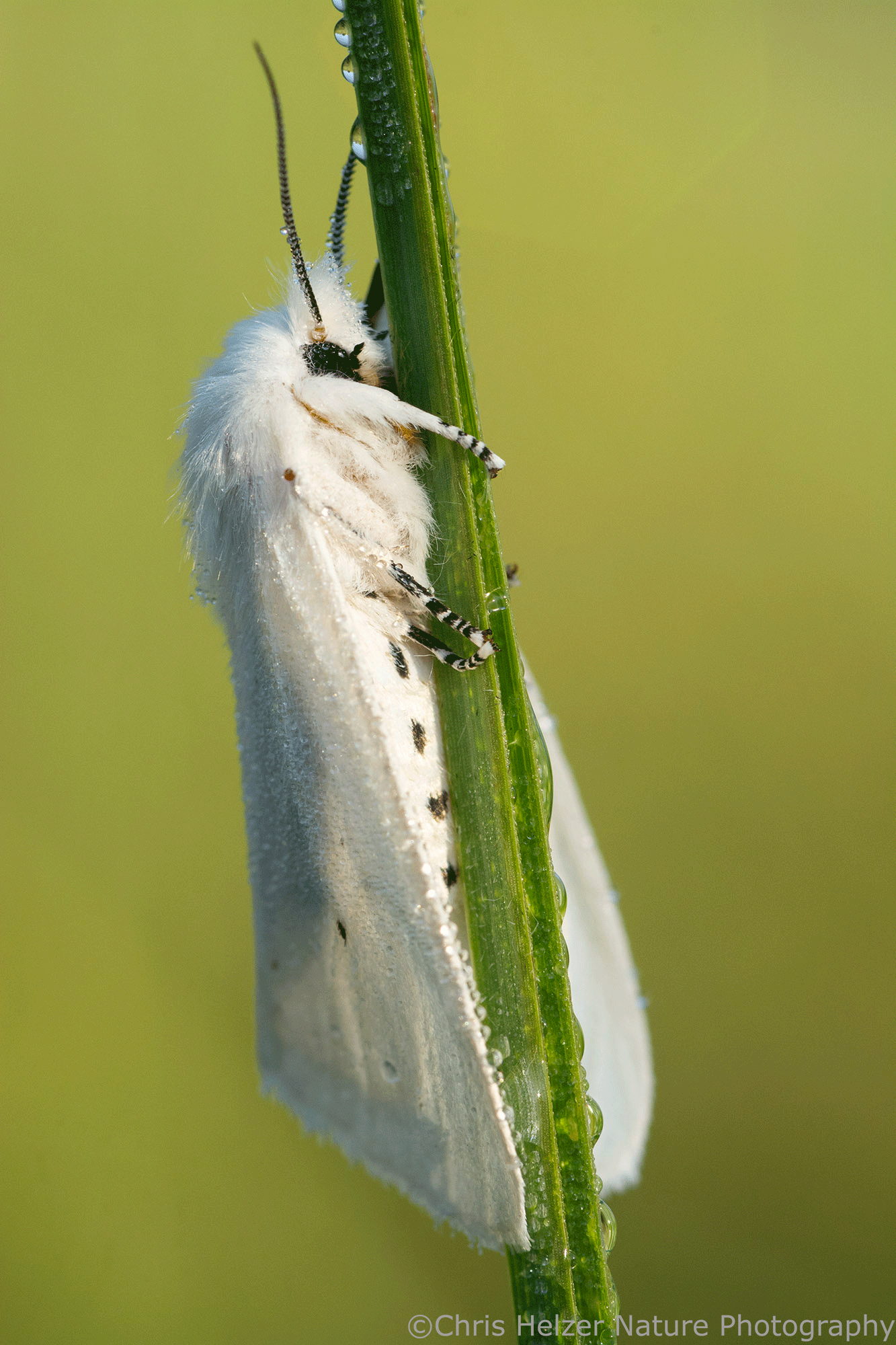
Also, where did all the caterpillars come from? I mean, I know how they came to be, but was it a particularly big year for adult tiger moths this year? I photographed one in town, but don’t remember coming across hordes of them out at our prairie. That doesn’t mean much, of course. I could easily have missed them (they’re small and often sit low in vegetation during the day). Plus, I don’t know how many adults you need to lay enough eggs to explain the caterpillar abundance I saw this fall. Or, maybe it’s more important to wonder whether a disease organism or predator was less abundant this year, and not able to reduce the caterpillar population before it started.
As I say all the time, I don’t need to know all the answers. It’s the questions that make this fun! Even when I do get answers, those inevitably lead to more questions, so there’s no risk of running out. Let’s all just keep trying to observe, question, and investigate. These days, it’s easier than ever to find information about observations, especially with more apps to help us identify species and lots of online information. And, of course, in my case, I’m super lucky to have smart friends who agree to lend their expertise to my questions and save me lots of time.
.
….By the way, if you think this story is amazing, just wait. I’ve got another story to share soon that will blow your mind! I’m hoping for a few more photos to wrap that story up, but I hope to post something about it within the next week or two, regardless of my success or failure.
I’m obviously very grateful for Dr. Enakshi Ghosh’s generous help with this. Not to provide too much of a spoiler, but she’s also connected to the other story I’m working on…


This is super interesting. It reminds me of the “mind control” fungi in the Amazon (?) that somehow manipulate ants to climb high into trees before a mushroom explodes out of the ant’s head. You know, a simple means of spore dispersal.
So the real question is how many exploded heads did you find? (Beside your own “blown mind?”)
I know, right? Three years ago, I was trying to associate the event with fungi, but have been largely talked out of that (though I haven’t totally given up). The fact that the caterpillars end up high in the air still makes that association seem possible… In this case, though, it feels like the fungi might be a side effect, rather than the cause of their death.
Fascinating! And, I love the grammatical aside.
I don’t know, but the fungus, the crawling up, the hollowed out bodies, etc. sounds like “zombie caterpillars” to me.
Whatever it is, thanks for pointing it out. (One more thing to worry about.)
How come you don’t send me packets of dead caterpillars?
(hopefully sooner??)
It is not surprising that you are seeing a lot of woolly bear caterpillars now. We had large moth flights at Clay Center in August. https://scal.unl.edu/ltr2023.pdf Often their populations explode when there is rainfall to support various broadleaf annual plants in pastures and field borders.
very cool. Do you have a feel for how often you see that kind of irruption (in how many years out of 10, for example)?
Once or twice every ten years there are noticeably high numbers of woolly bears somewhere in eastern Nebraska.
Your mention of the difference in numbers between the caterpillars and adult moths is interesting. Over the years, I probably have seen a couple of hundred salt marsh moth larvae (Estigmene acrea) in various stages of development, but I’ve only seen one adult — and it was on a friend’s front door. Although I’ve never seen the caterpillars in such large groups, it still seems as though the adults ‘ought’ to be more common.
Hi Chris! This happens with soldier beetles too. Last year and this year I have seen soldier beetles, jaws locked onto goldenrod, at the top of the plant, wings open to help with the dispersal of spores. Likely the fungus “programs” the beetles to climb to the top so the spores can more readily be airborne. Carol
Pingback: A Dizzying Amount of Complex Creepiness | The Prairie Ecologist