
I apologize for not sharing more photos from my square meter plot today (trust me, I’ve got plenty to show you!) but I made a quick trip to the Niobrara Valley Preserve this week. There were only a couple of short windows of time for photography, but I tried my best to take advantage of them. On Monday evening, I wandered around a sand blowout (bowl-shaped depression caused by wind erosion). I saw a lot of activity, only some of which I managed to photograph. I missed the sand wasps and robber flies, but did manage to get some photos of a big beetle, a tiger beetle, and a very accommodating lizard.
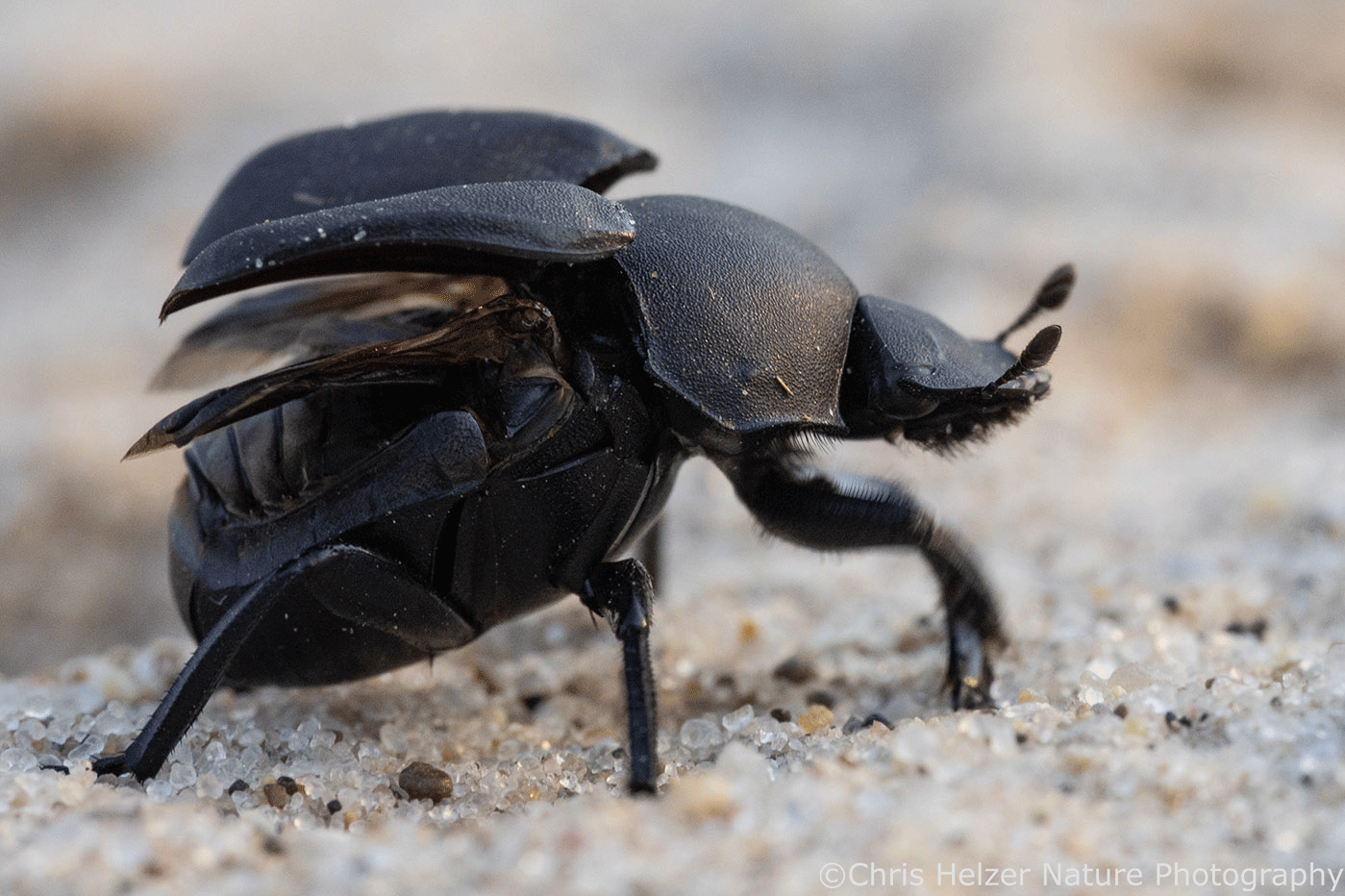


I had to follow the tiger beetle around for a while before finally getting a good photo, and the beetle didn’t stick around long. The lizard, though, was surprisingly willing to hang out. That happens sometimes, but I don’t know why. I’d like to think it’s my charming personality but it’s possible other factors are involved.
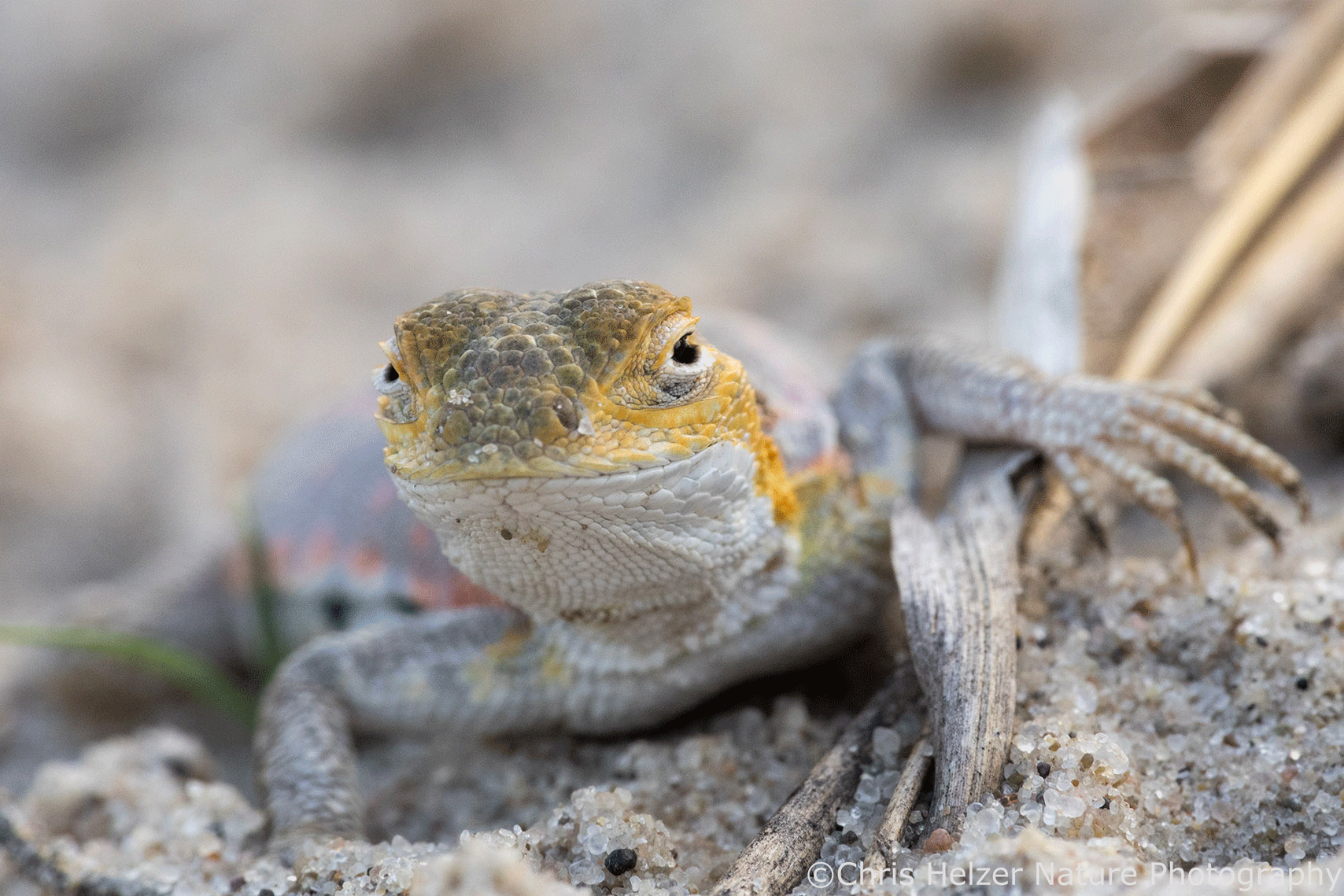
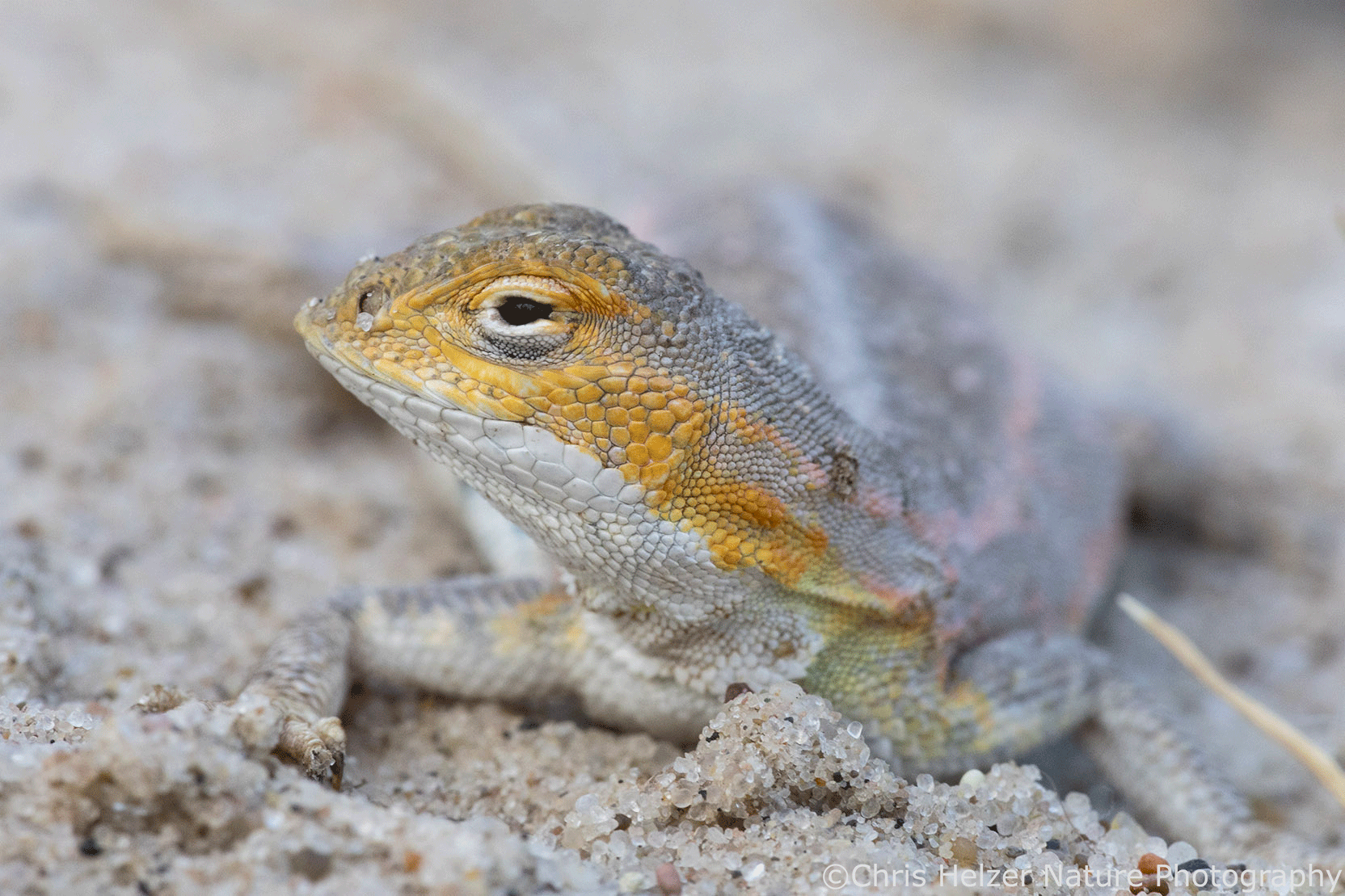
After a while, I decide that if the lizard was going to be that comfortable with my camera, I’d go for broke. I switched from my macro lens to a wide-angle lens with the ability to focus almost up to the glass (Canon RF 15-30mm). Approaching veeerrrry slowly, I managed to get the lens within an inch or so of the lizard and get a few photos. It backed off, but I managed a couple other shots before leaving him alone to enjoy the rest of the evening.

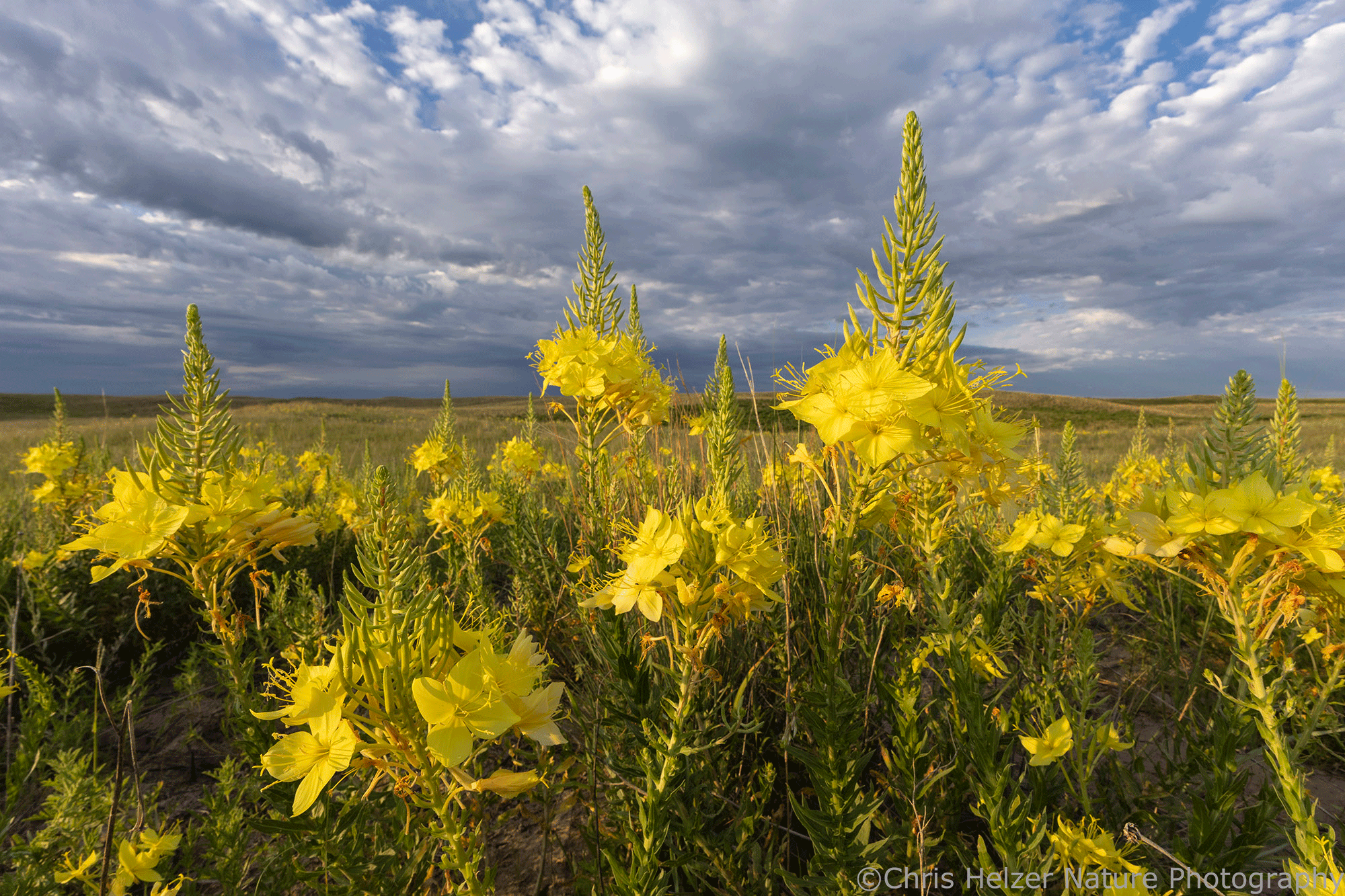
The big show going on in the Nebraska Sandhills right now features fourpoint evening primrose (Oenothera rhombipetala). It’s an incredibly showy biennial plant that is blooming throughout the landscape. As a biennial, a flush of fourpoint evening primrose is a good indicator of events that happened two years ago. In this case, that included drought conditions that made vegetation relatively sparse, let a lot of light hit the ground, and stimulated the germination of a lot of evening primroses.
The drought enabled primrose germination in many locations across the Sandhills, but they are particularly dense where grazing or other disturbances helped create even more bare ground and/or less vigorous grass competition. Those plants then spent last year (a wet year) as low-growing rosettes of leaves before bolting up this year and popping out profusions of large yellow blossoms. They’ll die at the end of this growing season, but they’ll each leave behind thousands of seeds to fuel the next primrose explosion whenever favorable conditions return.

As the evening sun disappeared behind clouds Monday night, I photographed a few primroses along the edge of the blowout. The light was subtle (drab?) but the flowers were showy enough to make some nice images. I decided that if Tuesday morning’s sunrise allowed it, I’d go out and try to photograph some of the bigger patches nearby.

There were lots of clouds Tuesday morning, and the sun popped in and out of them as it rose, creating some fun light for landscape photography. It wasn’t hard to decide what to feature in the foreground.
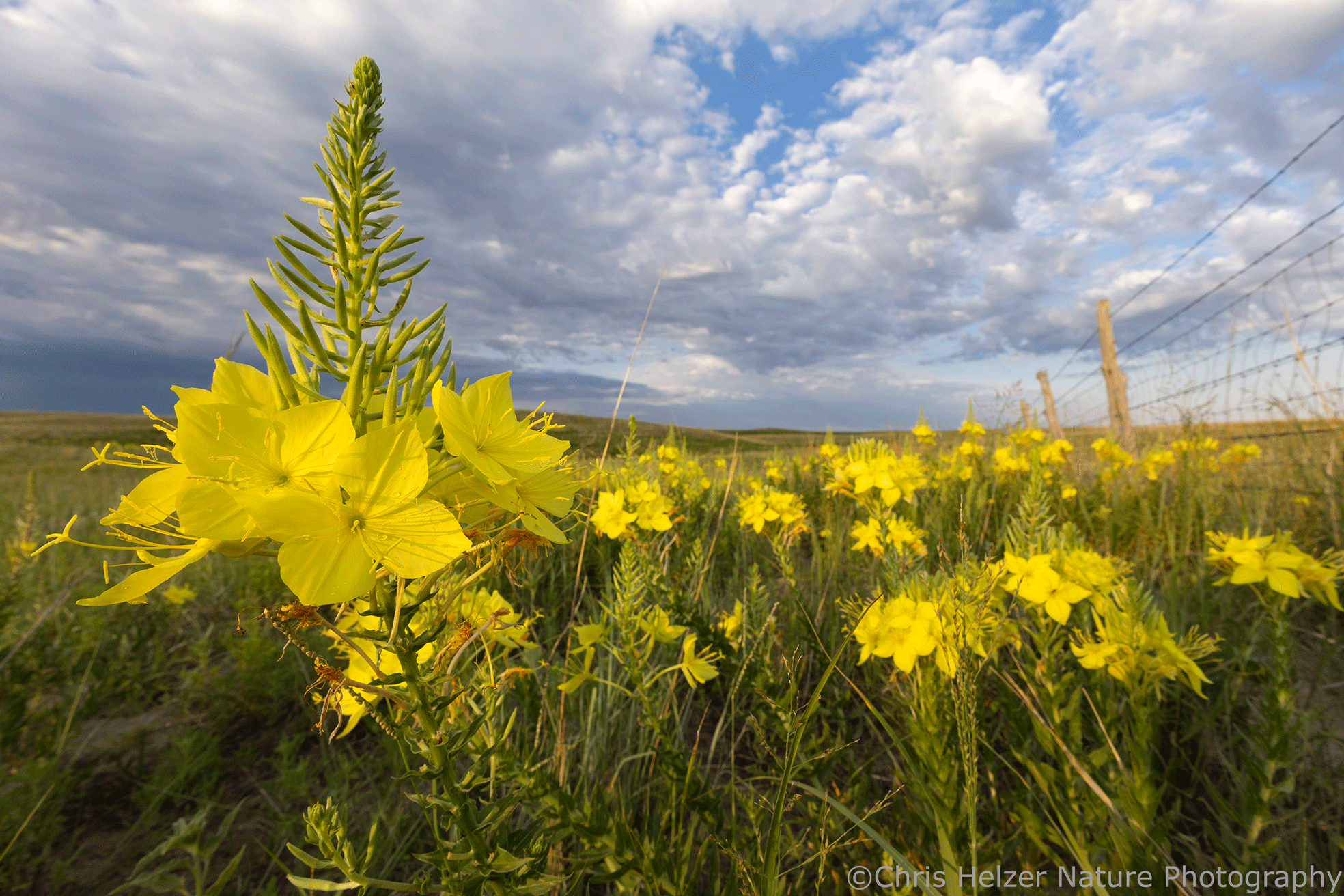
I headed for the bison pasture, guessing that the year-round grazing there had created some nice patches of primroses. I was right, though later in the day, I found much larger and more dense areas of primroses – long after the both the good light and my time had run out. Oh well. It’s hard to complain.
As the sun moved in and out of the clouds, I took advantage of the variable light to try lots of angles and compositions. I circled around within a few acres, often returning to the same plants to shoot them from a different perspective and/or under different lighting conditions. The two photos below show how much difference light makes.

I find that yellow flowers can be particularly challenging to photograph in bright light. They can easily get washed out and lose detail in images. That made things tricky as the sun rose higher because I liked the rich color and contrast with full light but also appreciated the diffusion caused by thin layers of clouds. I had plenty of time and subject matter, so I kept playing around for an hour or so before I finally had to go get ready for some actual work.


The Sandhills is a landscape of about 12 million acres of prairie. That expanse, along with the hills and (in many places) numerous wetlands and lakes, makes it a pretty spectacular place. When you add in profusions of big showy flowers, though, it’s out of this world. If you’ve never driven through north-central Nebraska, I’d politely suggest you add it to whatever list you have to keep track of the important experiences you want to have in your life.
If you do make the trip, be sure to stop and hike the trail at the Niobrara Valley Preserve. There are some other great options for exploration as well, though, including the Valentine, Crescent Lake, and Fort Niobrara National Wildlife Refuges and the Halsey and McKelvie units of the U.S. Forest Service, among others. There’s no bad time to visit the Sandhills, but if you can time your trip to coincide with big blooms of primroses or sunflowers, you’re living right.
 The Prairie Ecologist
I always appreciate your posts, but these photos of the beetles and the lizard are really amazing. Great job!
Vincenzo Tabaglio
Great post. You’re making me homesick, buddy!
Great photographer. But even more, great visual storyteller. Nice work, Chris.
Love that lizard!
Your close-ups are such a treat, Chris. Your lizard seemed to be working the camera. :) And the primroses are gorgeous – you’ve found such great viewpoints and compositions.
Enjoy your photographs. This fellow was
Hi Chris, A friend of mine (Kelly Ambler) from the Colorado Native Plant Society suggested that I subscribe to your blog, as I’m a nature photographer, too, although not nearly as good as you are. I am really enjoying your blog.
I, too, have been enjoying using my macro lenses lately. I’m amazed at what I see through my macro lens that I don’t see very well, or at all, with my eyes–like stilt bugs! I’m down in the southeastern part of the state. My go-to spots are around our field near Las Animas, CO, John Martin Reservoir, out on Comanche National Grassland near La Junta, or up near Westcliffe, CO, where my in-laws have a summer home. I currently have a FaceBook page, Scene in the Wild Photography, but I’ve been thinking of doing something along the lines of what you do with wordpress.
I wanted to comment on the lesser earless lizard photo you took. I took a similar photo (attached) earlier this year out on the Comanche. Strangely enough, “my” lizard was quite accommodating as well–didn’t seem to be worried about my or my husband, and allowed me to get fairly close, unlike most other lizards I’ve encountered. I did want to point out that when I looked up the lizard in Amphibians and Reptiles of Colorado, I found that the yellow-orange on the throat and sides of the head and neck and orange on the sides of the body indicate that it is a reproductive (gravid) female.I don’t think the book has been updated for quite a while, so this could be incorrect information. I did post it on the COPARC page, and no one disputed the ID, though. I just wonder that if our lizards were female, if that could be why they were so docile? Seems to me they’d be more likely to be skittish, though.
I’m really glad I discovered your blog. The square meter idea is great! It kind of reminds me of something on a smaller scale that we did as a Project Wild activity. We’d cut about a foot square in a piece of material and drop it somewhere. The idea was to find as many different organisms as possible in that small area. Folks were amazed at how many they found.