
Quick announcement for graduate students doing research in the Great Plains. J.E. Weaver grant applications will be accepted through February 7. They provide $1,500 to students working on topics that will help better understand and conserve Great Plains ecosystems.
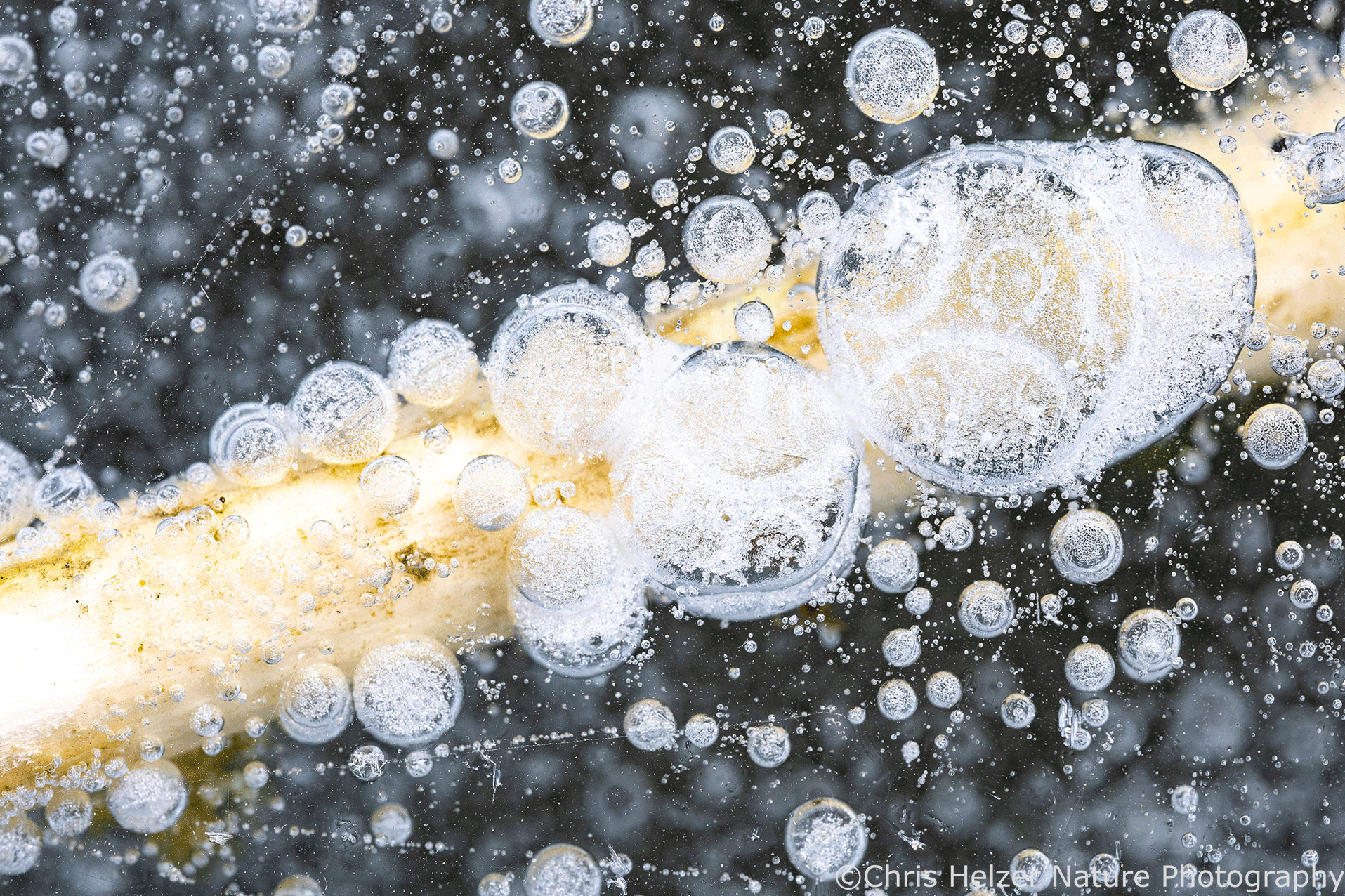
Last week was a flurry of activity, both at work and home. On Friday, I took a quick mid-day break and drove up to a small reservoir just north of town. Temperatures had been well below freezing for several days and I hoped to find some ice to photograph. Winter can be a tough time for this bug-and-flower photographer, but when temperatures are cold enough, I can usually find some interesting ice patterns to play with.


There are a couple great aspects of ice bubble photography. One is that they’re pretty easy to find, and usually abundant enough to provide lots of options for artsy compositions. Another, though, is that even public sites like the Pioneer Trails Recreation Area rarely have other visitors during ice bubble season. Even the county road that goes through it only had one pickup on it during the 45 minutes or so I was crawling around on the ice. It was nice and peaceful.

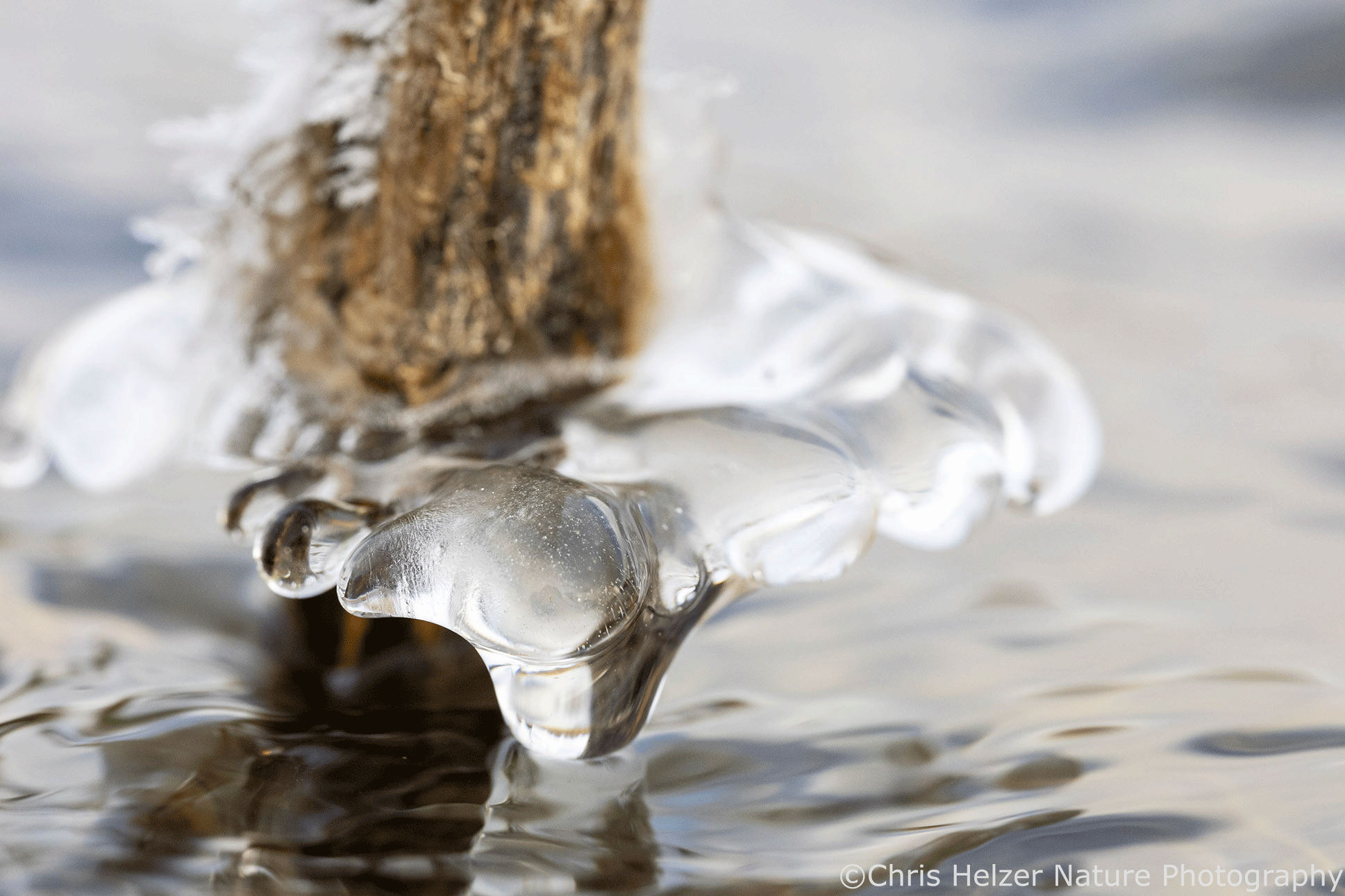
There were a few patches of open water, despite the cold temperatures. I played around with that ice/water boundary a little, but didn’t find much to catch my imagination. I did, though, find a sunflower (I think?) stem protruding from the water that had gathered an ice ring around it. I spent a pleasant five minutes or so laying on my belly and watching water lap against the stem and ice. Did I mention no one else was around?


I enjoyed looking at partially-submerged plants that had become trapped in the ice. As I was looking at those – mostly within a few feet of the lake’s edge, I started to notice some tiny black specks on the ice. At first, I just assumed they were bits of dirt or something, but when I started looking more closely, I realized they were alive!

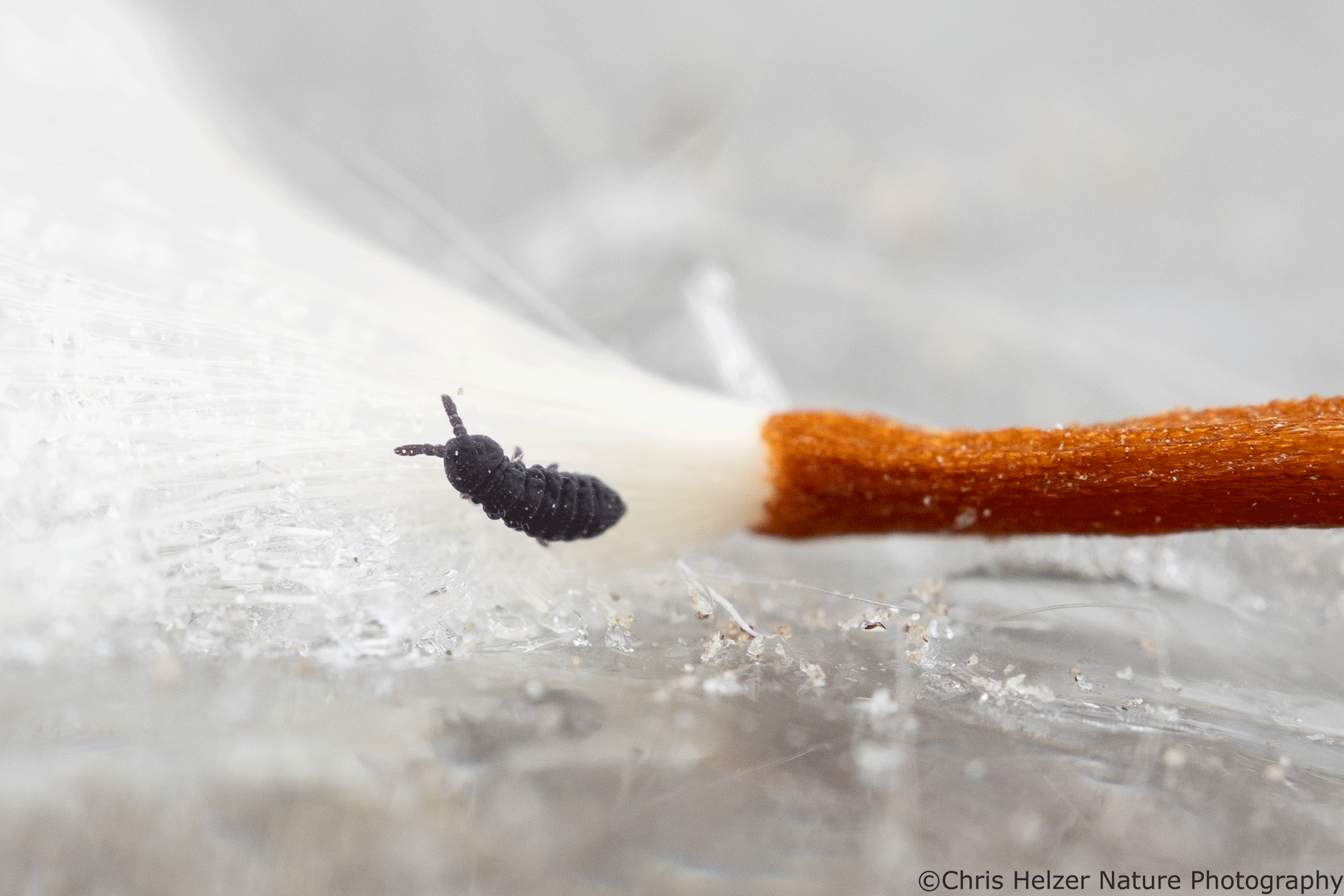
In fact, they were snow fleas! Snow fleas are a kind of springtail (Collembola) that feed on decomposing plant material but that are often active during the winter. I’ve heard about, but have never come across huge congregations of them on top of snow. On this day, however, they were out on top of the ice for some reason. I’m not sure if they were feeding – it was hard to watch creatures that small and figure out what they were doing. Plus, by the time I came across them, it was about time to be heading back to work.

I did, though, spend a few minutes watching one particular snow flea explore what I’m pretty sure was a dogbane seed lying on the ice. I didn’t learn much about it, but it sure didn’t look like it was suffering from the cold temperature, which was well below 20 degrees Fahrenheit.
As per usual, the choice to go outside an explore yielded more than I expected. I went looking for ice bubbles, but ended up chasing around tiny insects as well! It’s a good reminder to myself that it’s always worth going out to explore, even if I’m not sure what might be there to find.
 The Prairie Ecologist
The patterns within some of these bubbles were fascinating, and beautiful. Equally fascinating was the thought of you being out in conditions below 20F. I vaguely remember that sort of day, but I’m not quite ready to refresh my memory, even for the sake of capturing such winter beauty.
beautiful as always. intrigued by the wintry springtails!
Delightful photos and post! Thanks!
beautiful. Thank you
The photos of bubbles taken top down look like Lithops in sand or fine gravel. Very nice essay and photos. Thank you.
– Hobbitditz
The photos of bubbles taken top down look like Lithops in sand or fine gravel. Very nice essay and photos. Thank you.
– Hobbitditz
Ice bubbles are beautiful
In a macro world your beautiful photos remind me of the stunning beauty and importance of the micro. I look forward to the beauty that continues to come from you camera. Thank you.
Mary
You’ve probably addressed this in past blogs, but what causes those bubbles frozen into the ice?
Hi John, As I understand it, the bubbles are largely methane and other gases released by decomposing plants and other material underwater. As the ice begins to freeze on the surface, bubbles rising from below get trapped by the ice. Then, as the ice thickens, it envelopes those first bubbles as others rise and get trapped below. You end up with stacks of bubbles encased in ice. Gorgeous!
Ah, methane. Makes sense. Thanks.
This may be a duplicate comment. For some reason, when I try to reply on your site it wants me to login to WordPress which doesn’t always work. Anyway, thanks for answering my question. Methane and the rest makes perfect sense.
Great job capturing these tiny worlds! 📸❄️
Have you ever considered photographing the microbiota of the square meter plot? We know that microbiota are important to prairie ecosystems, but we do not know a whole lot about which microbiota are where. Perhaps you could grow some bacteria from your plot in petri dishes and photograph it or figure out how to take photos through a microscope. Would be fascinating, I imainge.
It would absolutely be fascinating, but isn’t the kind of photography/exploration i like best or that feels accessible to a broad audience. If the main point of the project was to maximize species numbers, that’d be the way to go, but I’m really trying to show people what they could see if they visited a prairie and looked closely. It’s still a great idea for someone…!
amazing