
Habitat heterogeneity is a fun jargon term within the fields of ecology and land stewardship. It’s a good one to know if you’re at a party trying to impress an ecologist. Although, to be honest, if you’re trying to impress an ecologist, going to a party is probably not the best way to start. You’d be better off meeting them “accidentally” on a hiking trail and bending down to closely examine a set of tracks or a fly feeding on a flower. Ecologists are impressed when people notice things in nature.
Regardless of whether you’re trying to impress an ecologist, habitat heterogeneity is an important concept. Most commonly, it is used to describe the variety of habitat conditions available in a particular location. It’s generally good to have numerous habitat types represented across a site that each provide something a little different in terms of food or shelter for animals or growing conditions for plants. That kind of variety supports the habitat needs of a broad diversity of species.
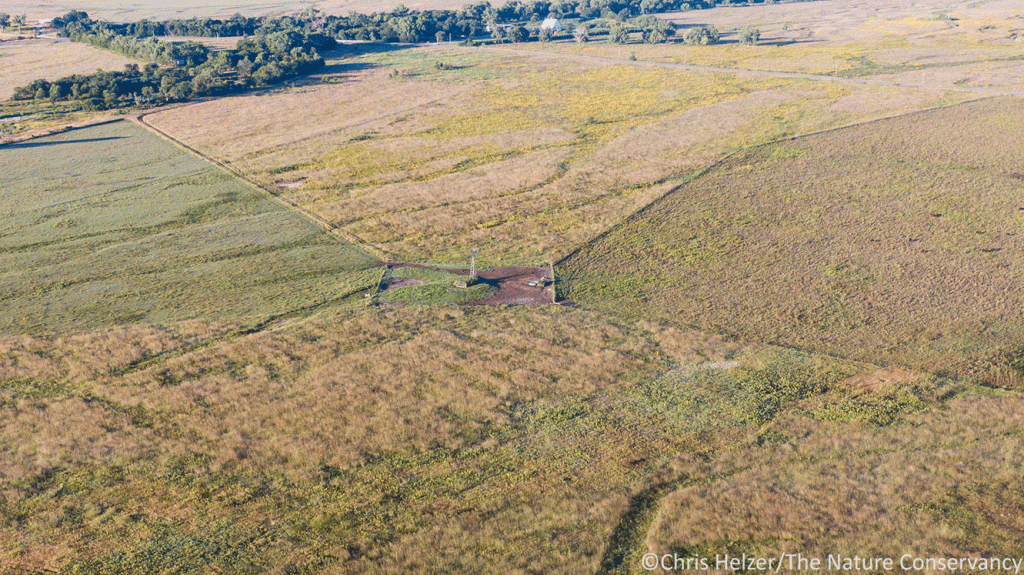
It’s not hard to imagine why lots of different habitat conditions would lead to a high number of species thriving in a prairie. However, if you really want to impress an ecologist, you’ll also consider the time elements, not just the spatial elements of habitat heterogeneity. In other words, it’s not just important to vary the kinds of available habitat across space, it’s also important for each of those habitat patches to change through time.
Good farmers and gardeners know the value of rotating crops. Rotation can help soil productivity because each crop uses soil resources differently. Shifting the location of crops from year to year also helps reduce impacts from diseases and insect herbivores that can build up over time when their favorite food source is available year after year.
Many of the same concepts apply very well to prairie and other natural land stewardship work. When habitat conditions remain static in a given location, bad things can happen to the inhabitants of that patch. Disease organisms (pathogens), parasites, and herbivores can build up high populations. Predators can learn to be very effective at finding and catching prey. Within plant communities, the plants best adapted to the current conditions will thrive at the expense of others. If those conditions don’t change, the plants less adapted to those will struggle to survive.
Here are two specific examples to illustrate why variation through time matters so much:
Years ago, a wildlife refuge manager told me about a situation he’d encountered early in his career. He was charged with managing wetlands for ducks. Ducks like nesting in dense vegetation, so he was told to make sure all the wetlands in his site had thick cover around them to maximize the number of duck nests. After a few years of this, though, he realized that nesting success was actually very low, even though he was providing the habitat ducks supposedly wanted.
What he thinks happened is this: The consistent dense vegetation allowed the vole population around wetlands to grow. That higher population attracted predators like bull snakes to feed on the voles. Unfortunately, those predators also enjoyed eating duck eggs, which worked out poorly for those ducks.
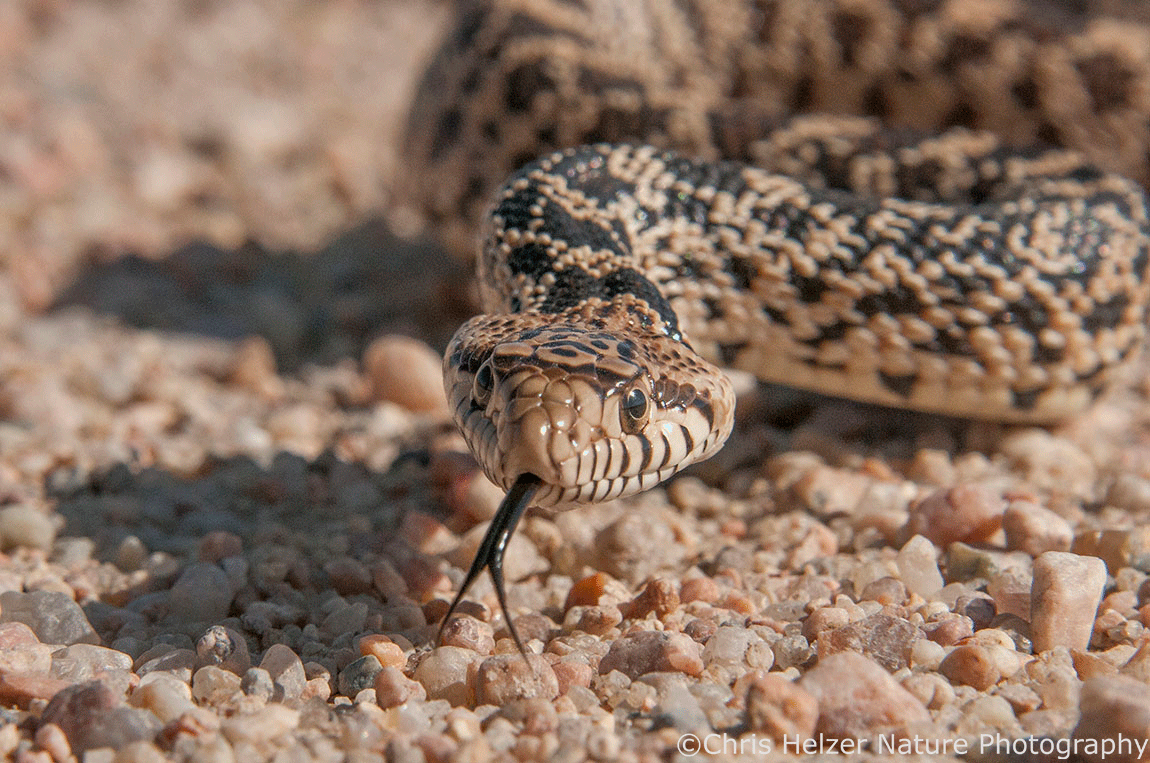
Regardless of whether the manager’s hypothesis was right or not, when he started varying the habitat structure from year to year, nesting success went up. He managed the site so that each year, some of his wetlands were surrounded by dense cover and others weren’t. Every nesting season, he’d change which wetlands had thick vegetation around them. Even though there was less overall nesting cover each year, ducks did better because nests suffered from lower rates of predation.
The second example comes from my own experience. Canada milkvetch (Astragalus canadensis) can be frustrating to harvest seeds from because the pods are often empty by the time we get to them. Those empty pods are easily identified because of the exit holes left by larvae of a small weevil (Tychius liljebladi) that feed on the seeds and then burrow out of the pod when they’re done. After leaving, the larvae dig into the soil beneath the plant, where they overwinter. The next summer, they emerge as adults and will lay eggs on the flowers in mid-summer to continue their life cycle.
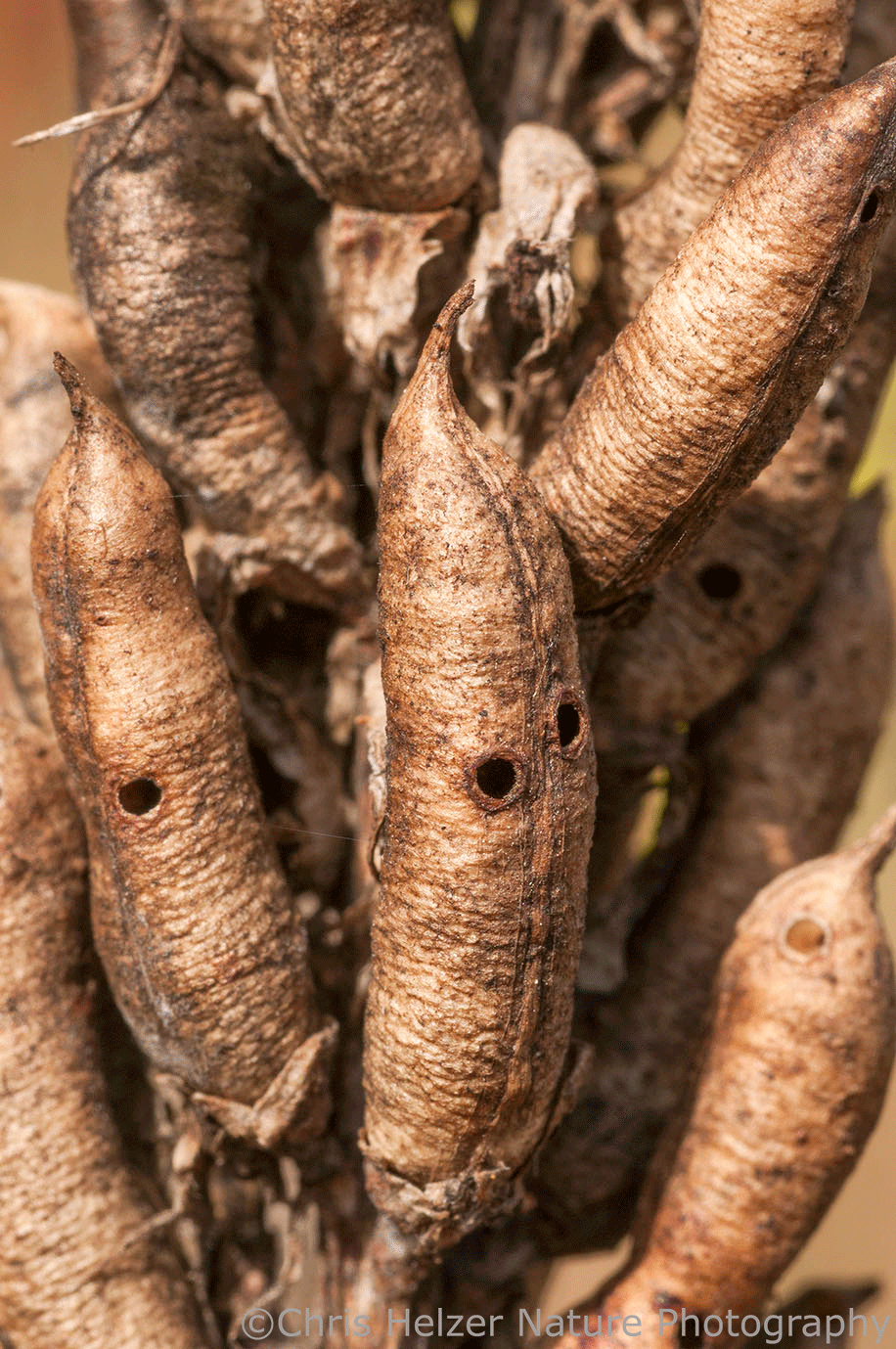
I’ve seen populations of Canda milkvetch go many years in a row without ever producing seeds because of the recurrence of those weevils. That’s not good for the longevity of a population. However, we’ve found that if we can break that annual pattern, we can get a year of strong seed production, which is good for both us and the plants. The easiest way to break the cycle is to prevent the plants from flowering for a year. If the weevils emerge from the soil and don’t see flowers to lay eggs on, they’ll fly off in search of flowers elsewhere.
The following year, when Canada milkvetch blooms again, a few weevils might travel from other places to breed on the flowers, but there aren’t high numbers of them popping out of the soil right beneath the plants. Usually, that results in low rates of seed predation. Even delaying flowering by a few weeks can help. In years where milkvetch plants are mowed or grazed in a way that makes them bloom later in the season, they tend to produce lots of seed because the weevils were done breeding by the time the flowers appeared.
Following the crop rotation model, the best way to vary habitat conditions through time is to create a kind of ‘shifting mosaic’ of habitat patches across a site. The ‘mosaic’ part of that phrase represents the variety of available habitats. Those can include patches with tall, thatchy vegetation as well as others with short plants and exposed bare ground – and still other patches where that tall and short structure is intermixed. It’s also helpful to have patches differ in the plant species that are blooming or otherwise thriving. That might include some patches where annual plants are temporarily flourishing instead of the usually dominant perennials. Having all those patches arrayed near each other allows animals to move between them to look for food, escape predators, seek out shade or sunlight, and anything else they need.
The ‘shifting’ aspect of the mosaic, though, is also crucial. Each habitat type should appear in a different place each year, or on some similar time scale. That can be created by simply mowing or burning different patches within a site at varying times of the year. You might end up with a patch that was burned in the early spring, another that was mowed in mid-summer, and another that hasn’t been mowed or burned for a while. That idled patch could then be burned the following year and the previous year’s burned patch could be mowed sometime during the growing season. Or whatever. Basically, you want to shake things up each year so you’re applying management in different places over time and always providing a good mix of habitat options.
Grazing can be used the same way, except that there’s a lot more flexibility in how it’s applied. Patch-burn grazing is a terrific way to combine fire and grazing to create heterogeneity across time and space. I’ve written about the ‘open gate rotational grazing’ approach we’ve been experimenting with. That’s another potential option. In both those examples, each part of a prairie is grazed for a full season or more and then allowed to rest for a couple years. The grazing and rest cycles are staggered across the site so there are always patches in each stage of that cycle available for the plants and animals that thrive best in those conditions.
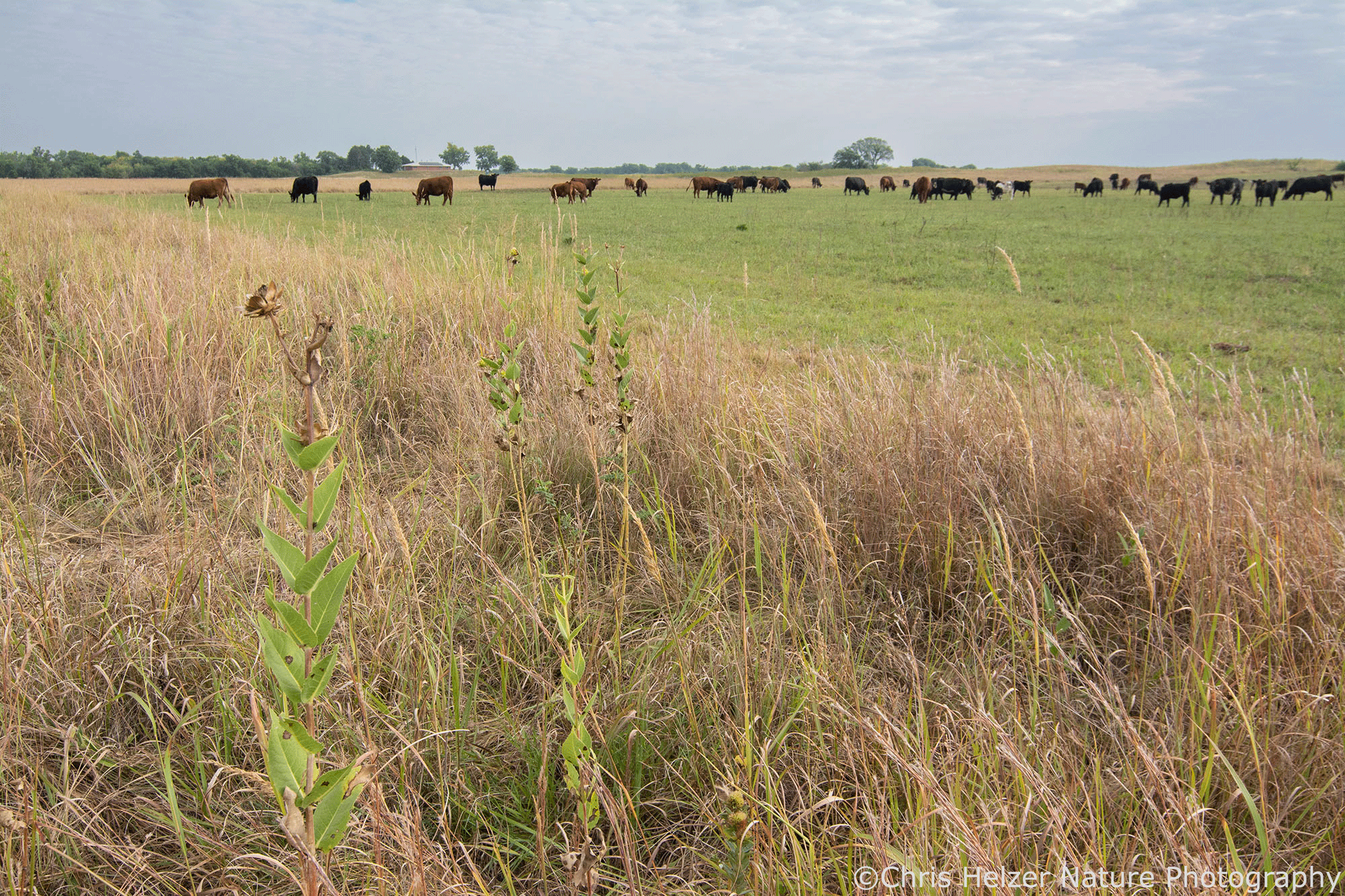
Those grazing approaches, though, are only a couple examples among an infinite array of choices. You can vary the stocking rate, timing, and duration of grazing to achieve lots of different results. You can combine grazing with fire and/or mowing to create even more variation. There’s lots of room for creativity, but more importantly, to observe, learn, and adapt over time.
Regardless of the stewardship options available to you, the key is to look for ways to provide a good variety of habitat options for animals and growing conditions for plants. More to the point of this post, it’s important to make sure those habitat options shift around in location to help prevent anyone from winning too consistently at the cost of others.
Or, if you’re still trying to impress that ecologist, you might say that you’re trying to foster both spatial and temporal heterogeneity. If that doesn’t work, you might try talking about how fascinating parasitoid-host relationships are. That always gets me going.
 The Prairie Ecologist
Thanks for the tip about the milkvetch, those weevils are ravenous.
Graham
Graham Steinhauer
Goose Pond Sanctuary Land Steward
Southern Wisconsin Bird Alliance
(formerly Madison Audubon)
e: gsteinhauer@swibirds.org*
p: 608-333-2947 | w: swibirds.org
[image: facebook.com/madisonaudubon] http://facebook.com/swibirds [image: instagram.com/madisonaudubon] http://instagram.com/swibirds [image: https://www.youtube.com/@SWiBirds%5D https://www.youtube.com/@SWiBirds [image: madisonaudubon.org/donate] http://swibirds.org/donate
**We have a new name http://swibirds.org/new-name! Please update your records to include my new contact information.*
Chris, I enjoyed meeting you
Pingback: Habitat Heterogeneity in One Photo | The Prairie Ecologist
Pingback: Introducing a New Photo/Storytelling Project – The Post-Grazing Party: Part 1 | The Prairie Ecologist
Pingback: Photos of the Week – July 3, 2025 | The Prairie Ecologist
Pingback: Learning How to Live With Shrubbier Grasslands – Part 2: Experimentation | The Prairie Ecologist
Pingback: The Post-Grazing Year | The Prairie Ecologist