

“I’m doing a prairie restoration project – how many plant species should I put in my seed mix?”
The answer to that depends on why you’re doing the restoration project. Do you want a planting that is both beautiful and resilient? Are you trying to enlarge or reconnect existing habitats? If the answer to either question is yes, the answer to your question about species diversity is easy: put as many species in the mix as you can.
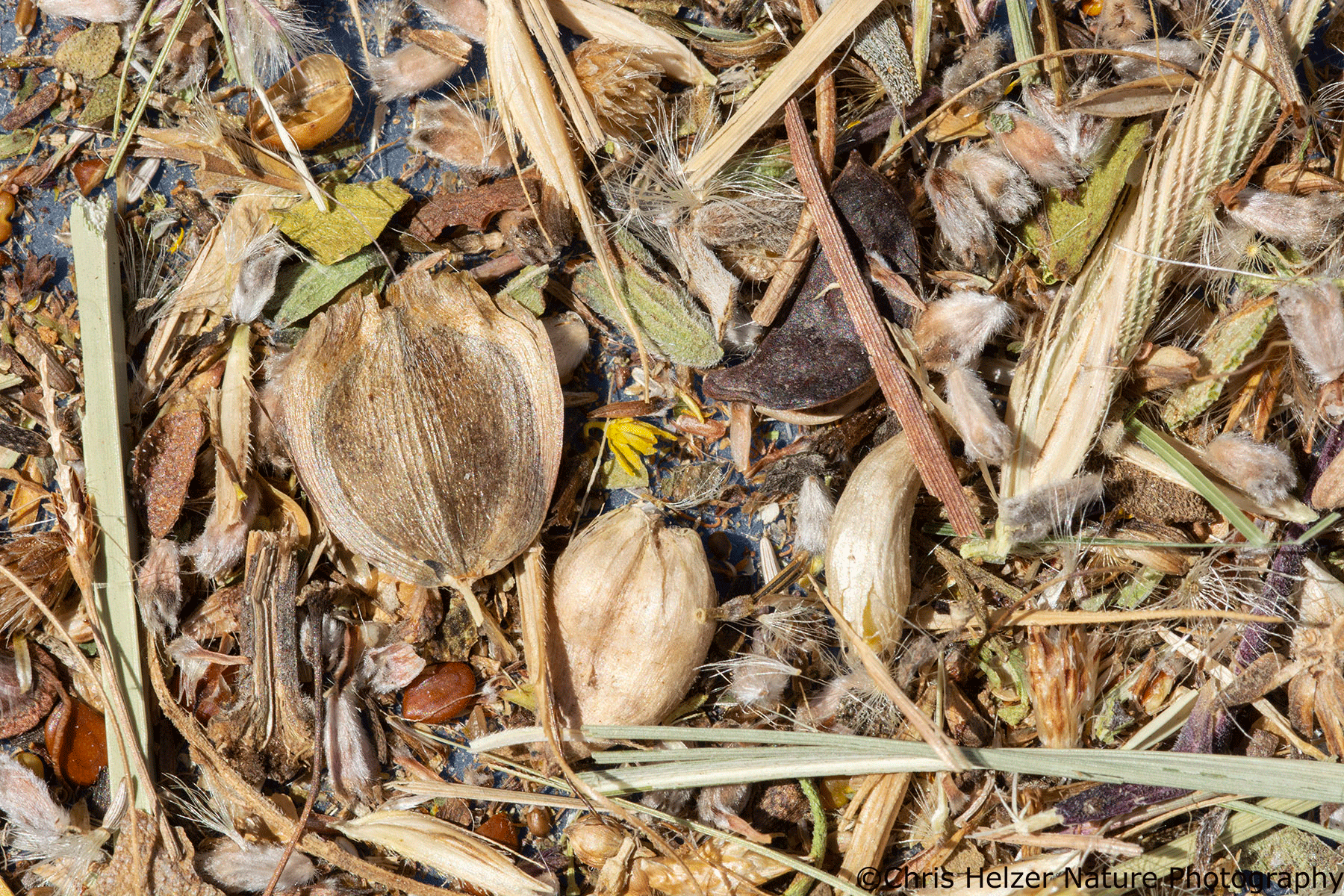
Ecologists are still arguing in the scientific literature about how to measure the value of plant diversity in habitats. We know a prairie with hundreds of plant species has advantages over a grassland with only a few, but there’s a lot of room in between those extremes. How do you calculate the value of a plant species that exists in low abundance and only in a few scattered populations? We know pollinators need to have plants blooming at all times across the field season, but how many plant species need to be blooming at a time to give them what they need?
Those, and many others, are important questions, and we’ll learn a lot from continuing research efforts. In practice, though, we don’t have to wait for the answers. There are lots of reasons to maximize the number of plant species you put in your seed mix. Here are some of them.
1 – Create beauty. Every plant species has its own individual architecture and charm. When you put a lot of them together, they create a prairie with varied heights, shapes, and colors. To most people, that’s more attractive than something that looks like a wall of monotypic vegetation. Both abundant and less abundant species contribute. Abundant species form the melody and the rest create harmony, dynamics, and accents. A monoculture of big bluestem or switchgrass is like an air horn – it can serve an important role, but if you were going to listen to something every day, wouldn’t you prefer an orchestra?
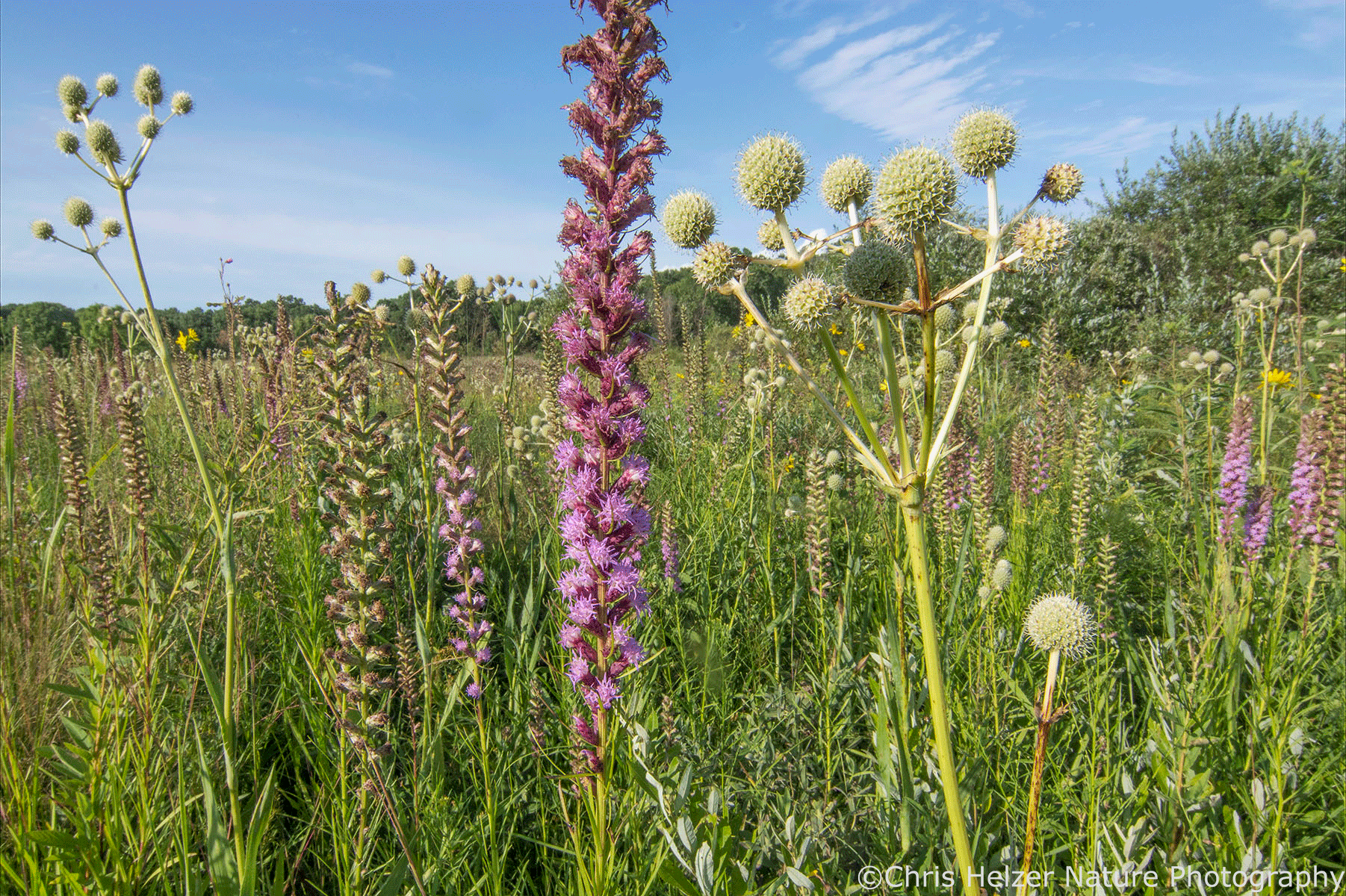
2 – Fill all the spaces. There’s a lot of variation in soils, topography, and other conditions, even on what looks like relatively flat ground. One the most fun aspects of using a high-diversity seed mix is the chance to watch plant populations find their optimal growing sites. Some of that will happen within the first few years. As plants establish, you’ll notice correlations between species occurrence and elevation, soil moisture, or other factors. In our Platte River Prairies restorations, for example, blue vervain does better in low wet spots and hoary vervain thrives in drier soils.
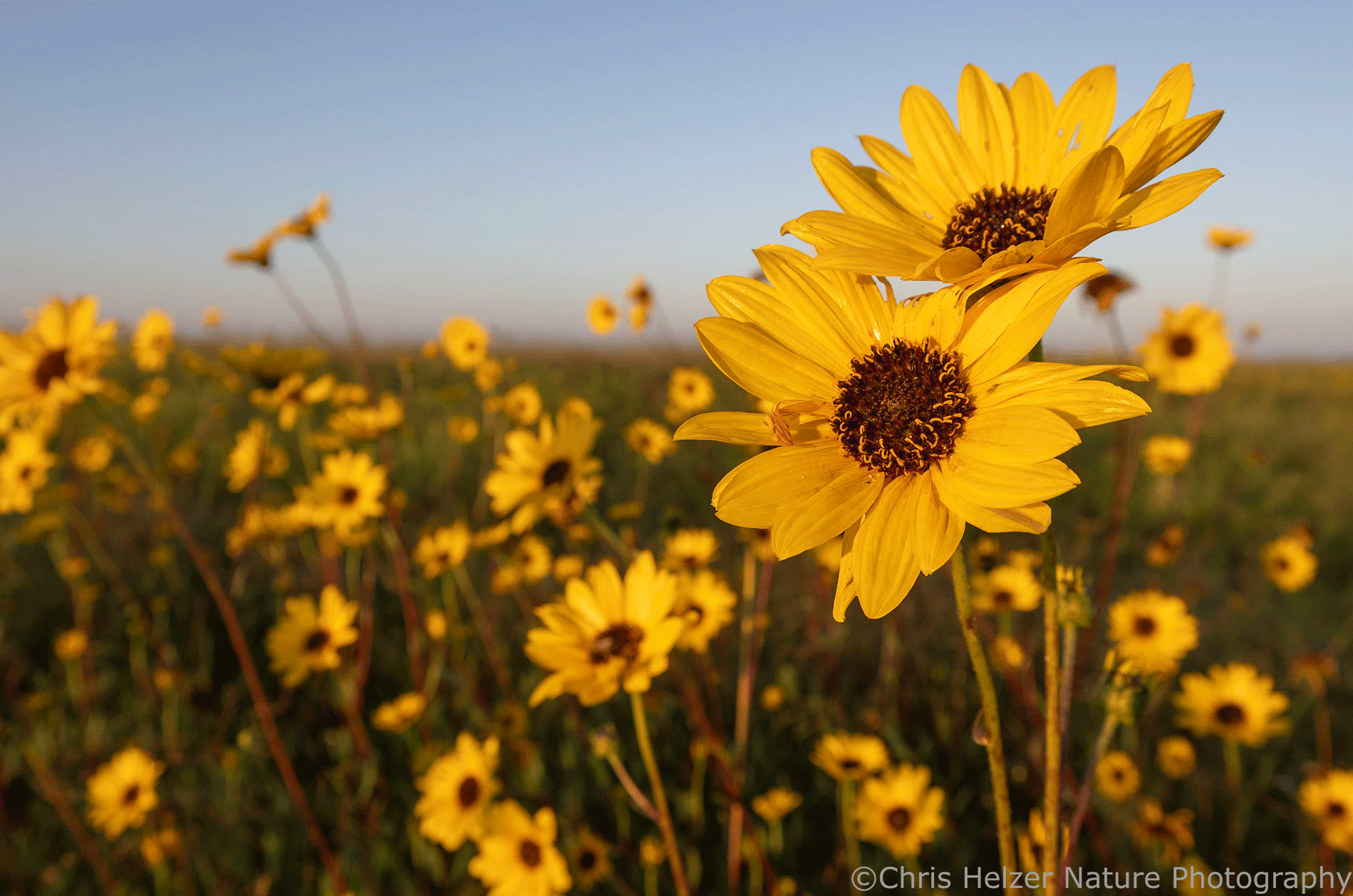
However, you’ll often see big changes after the first few dry years, fires, grazing bouts, or other events that put a little pressure on plant survival. That’s when the community really starts to take shape. Populations of individual plant species either grow or shrink, depending on how well matched they are to local conditions. This is when we often see stiff sunflower disappear from sandy wetland edges, but expand in number on higher ridges. Meanwhile, sawtooth sunflower expands its populations along wetland edges and drops out of higher sites.
It’s impossible to precisely predict what plant species will best match the conditions in each square foot across a site. However, throwing out seeds of many plant species will make it more likely to create good matches across all those little areas. More importantly, it’ll mean that multiple plant species will establish in each of those spots, which is important for reasons discussed below.
3 – Fill all the roles. Every plant species has a unique mix of strategies it employs as it competes for space in the plant community. Some thrive best by growing tall and dense and shading out their neighbors. They may gain territory in years with no fire or grazing, and when precipitation is substantial. Other plants are opportunists, and can quickly pop up (either from seed or by ballooning from basal leaves to large, robust plants) after events that suppress the competitiveness of others.
There are plants that flourish during wet years and others that prefer droughts. Some plants are preferred by grazers or browsers and others taste bad or are hard to digest. There are even plants (legumes) that cooperate with bacteria to convert nitrogen from the air into ammonia fertilizer they and neighboring plants can utilize.
Plants also vary in how quickly, and in what ways, they move around. Some invest their energy in slowly expanding their very local footprint. Others try to spread quickly across large areas, via seeds, rhizomes, or both.
If you have a plant community that includes species that fill all those roles, and many others, it will be more productive and adaptable than one with only a few plant species.
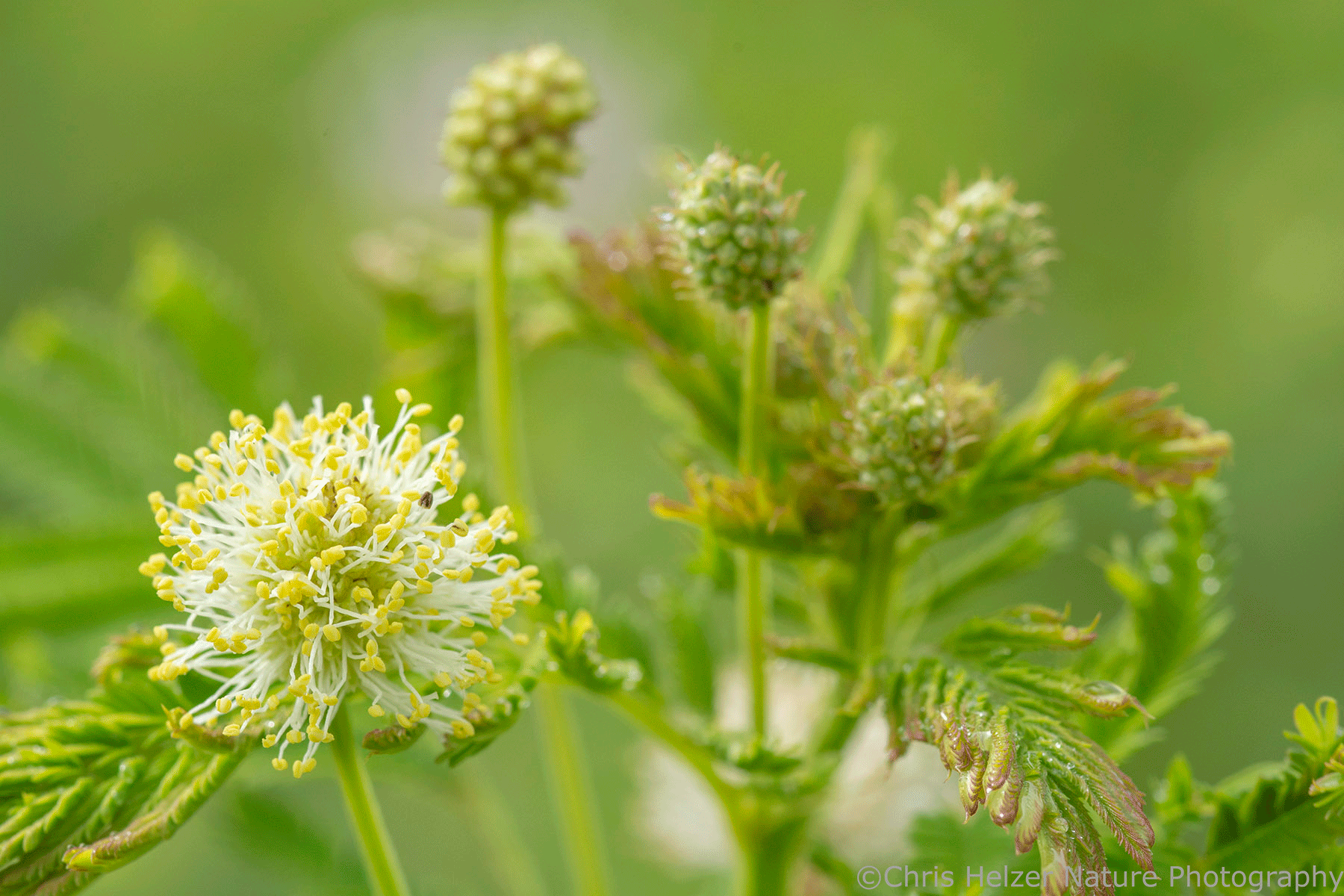
4 – Build networks of relationships.
A diverse mix of plant species also facilitates a lot of interactions and relationships between prairie species. That includes interplay between plant species themselves, as well as between plants and other taxonomic groups, including animals, fungi, and more.
Plants are in constant competition with each other for light, moisture, and nutrients. That competition can help keep any one species from becoming too abundant or dominant. The relationships between plant species, though, are much more complex than that, and often one plant species can provide benefits to its neighbors, even while competing with them. That can happen, for example, through the changes one plant makes to soil structure or nutrient composition around its roots that helps nearby plants. Other times a plant that is a favorite food of a grazer can “hide” from hungry animals beneath the canopy of another species that is spiny or less tasty.
Every plant species has individual relationships with fungi, bacteria, and/or other tiny entities in the soil, so a diverse plant community facilitates the presence and survival of a more diverse community of soil microorganisms. Plant diversity is also crucial for supporting a wide variety of pollinator species by providing a consistent availability of flowers across the season and a broad range of pollen and nectar nutritional choices. Similarly, a wide assortment of plant species means similarly wide assortment of seeds for the many animals (vertebrates and invertebrates) who eat them.
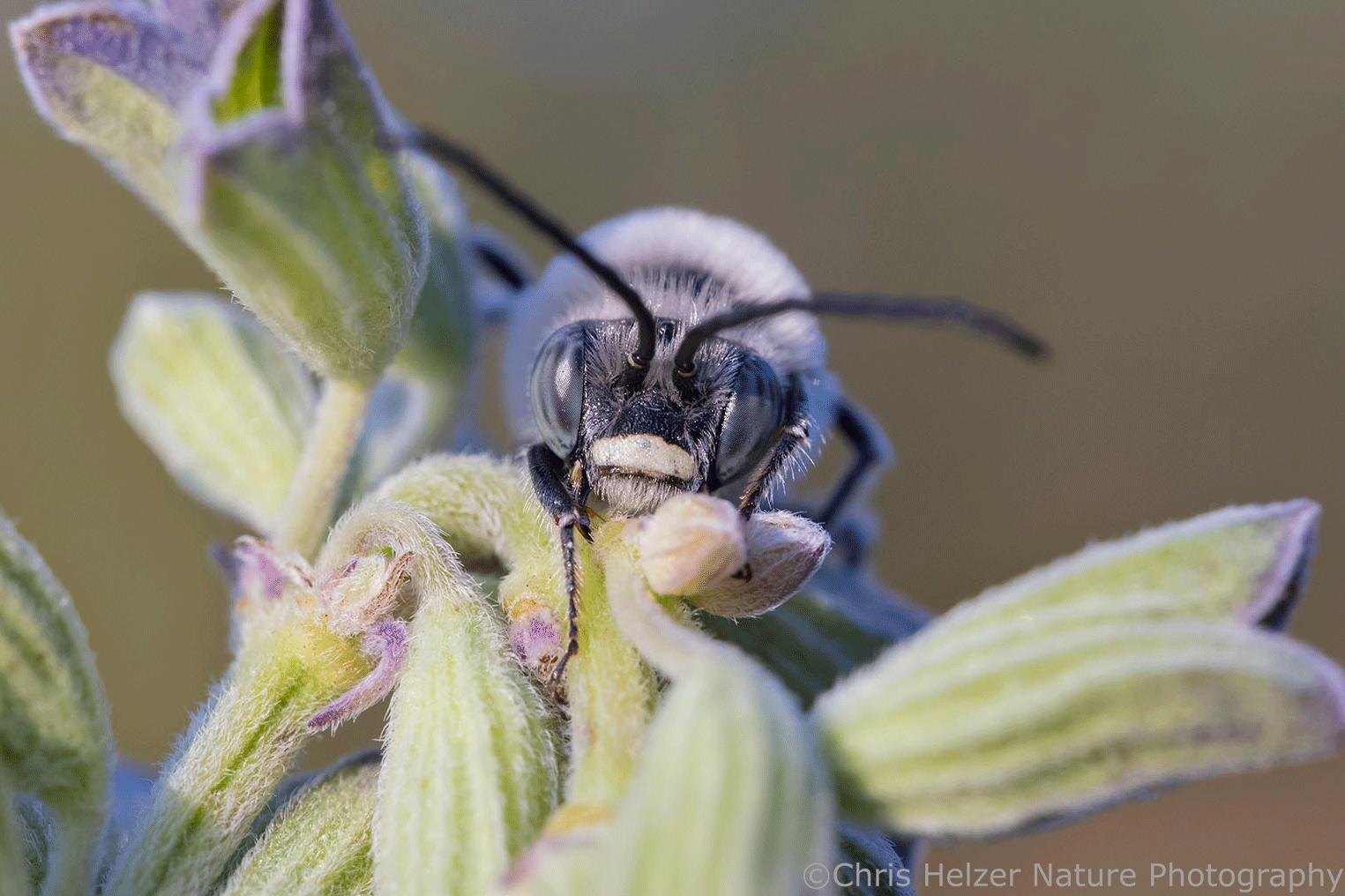
In addition, there are numerous specific relationships between invertebrate and plant species. Some bees, for example, can feed (themselves and their larvae) from only few related plant species, such as sunflowers or sages. Many people know that monarch larvae need milkweed for their food, but there are similar relationships between countless other insect and plant species. In many cases, an insect species can’t survive in a prairie without its host plant(s), and in some cases, neither plant or insect can survive without the presence of the other.
5 – Resilience.
Because of the varied roles and relationships each plant species brings with it, a diverse plant community is much more resilient than one with fewer species. Multiple species of milkweed means monarchs can survive even if one milkweed species suffers from a disease outbreak, late frost, or other stress. A community with plants that thrive in wet years and others that thrive in dry years can maintain consistent forage for grazers, seeds for birds, and pollen for bees and butterflies, no matter what precipitation pattern comes along. Opportunistic plant species can quickly fill in when normally-dominant plants are temporarily weakened by grazing, fire, or other stressors.
But what about?
Ok, you may be thinking, if someone has all the money and time in the world, planting a diverse seed mix is probably the best option. Seed of some species can be really expensive, though, and for a lot of species, seed isn’t even commercially available! What do I do about that?
First of all, talk to other people doing restoration work in your area and learn from them. You may be able to compare prices and availability between multiple commercial sources and cobble together a better mix than you can by buying from a single source. Harvesting your own seed can also help you fill gaps you can’t fill through commercial vendors. Again, local experts can help you. Once you identify sites where seed harvesting is allowed, the biggest challenges come from figuring out when seeds are ready, identifying which plants have good seed in them, and then knowing how quickly the seed needs to be planted before it loses viability. Harvesting your own seed can help you supplement what you buy, and either increase your plant diversity, save you money, or both.
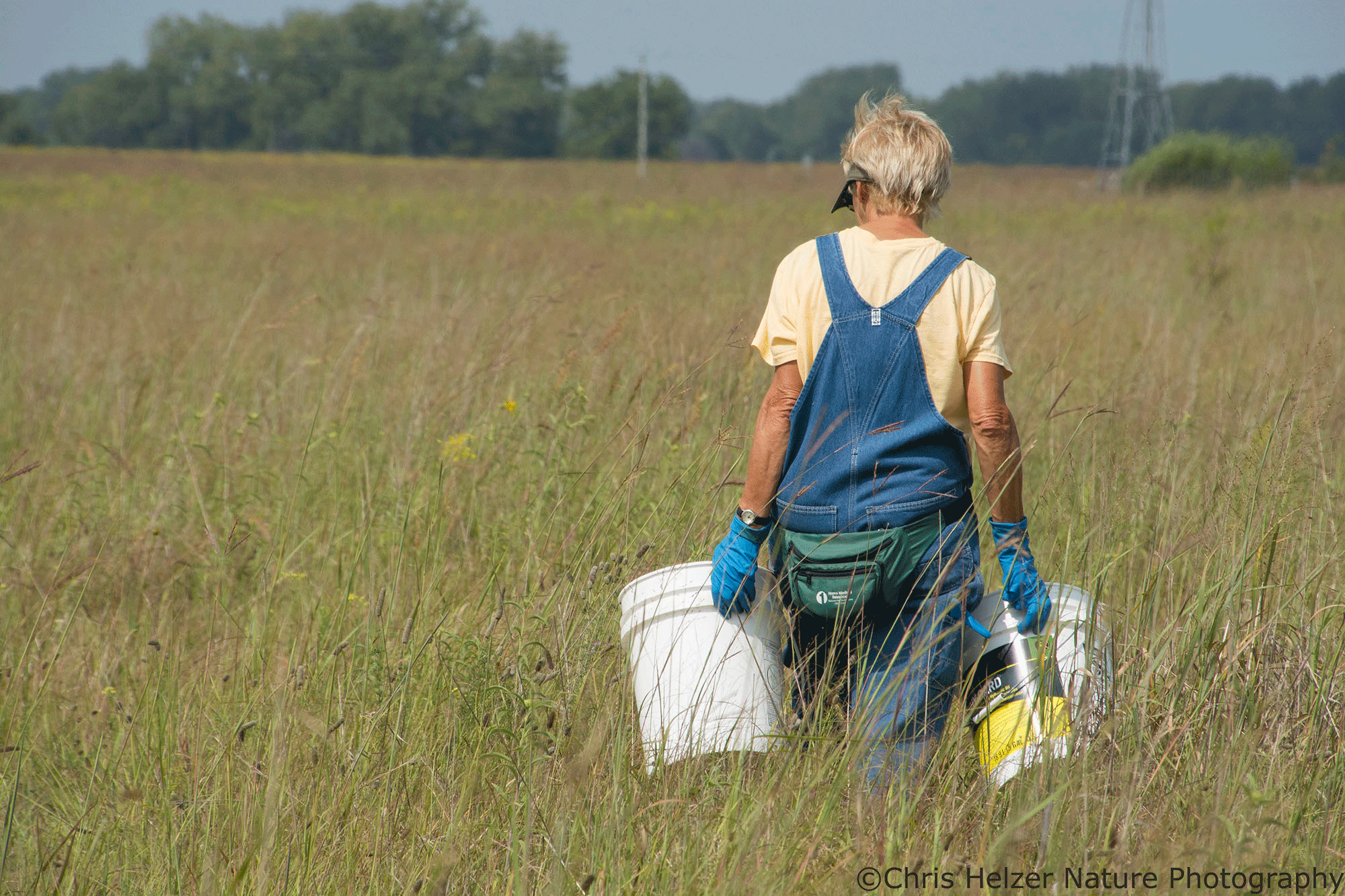
As you acquire your seed, be sure to ask questions about geographic and genetic origins. If you’re in Minnesota, seed from plants from Kansas might not survive well at your site, even if the seed is from a species that’s native in your area. Likewise, make sure you know the site history of any prairie you plan to harvest seed from, especially if it isn’t an unplowed remnant prairie.
Unfortunately, we still have a lot to learn about what matters in plant genetics, relative to prairie restoration. We’re all just doing the best we can with what we know at the moment. While bringing in genetics from sites far from yours can be problematic, including seed from a variety of genetic origins might boost the adaptability of that species in your restoration project. Again, talk to local experts to see what they’ve learned over the years and do your best to at least know where your seed came from so you can make the best decisions you can.
Lastly, knowledgeable locals can help you other questions, including seeding rates, weed control strategies, and more. For example, it’s often crucial to think about how much perennial grass seed you use, relative to wildflower seed. Some grass species can quickly dominate a planting before other plants have a chance to get established. Similarly, knowing what invasive plants can be problematic and how you can reduce their establishment can spell the difference between a successful planting and a failed one.
Do the best you can. Add as many locally-native species as you can find and afford to your seed mix. Get advice from experienced people in your area on the local nuances of restoration work. Then, enjoy the awe-inspiring process of a prairie community rising from the ground and becoming a complex, dynamic ecological system.
Other resources:
The blog for the Grassland Restoration Network is a fantastic resource for anyone working on prairie restoration projects. There is also an annual gathering of network members at sites around the U.S. where information is exchanged.
If you live in or near Nebraska, you might find this restoration guide helpful. It includes species lists for various habitat types, strategies for seed harvest and planting, and much more.
The Bureau of Land Management’s Seeds of Success Program is aimed at “increasing the quality and quantity of native plant materials available for restoring and supporting resilient ecosystems.” The program includes a strong set of protocols, many of which are relevant to site-based restoration programs.
 The Prairie Ecologist