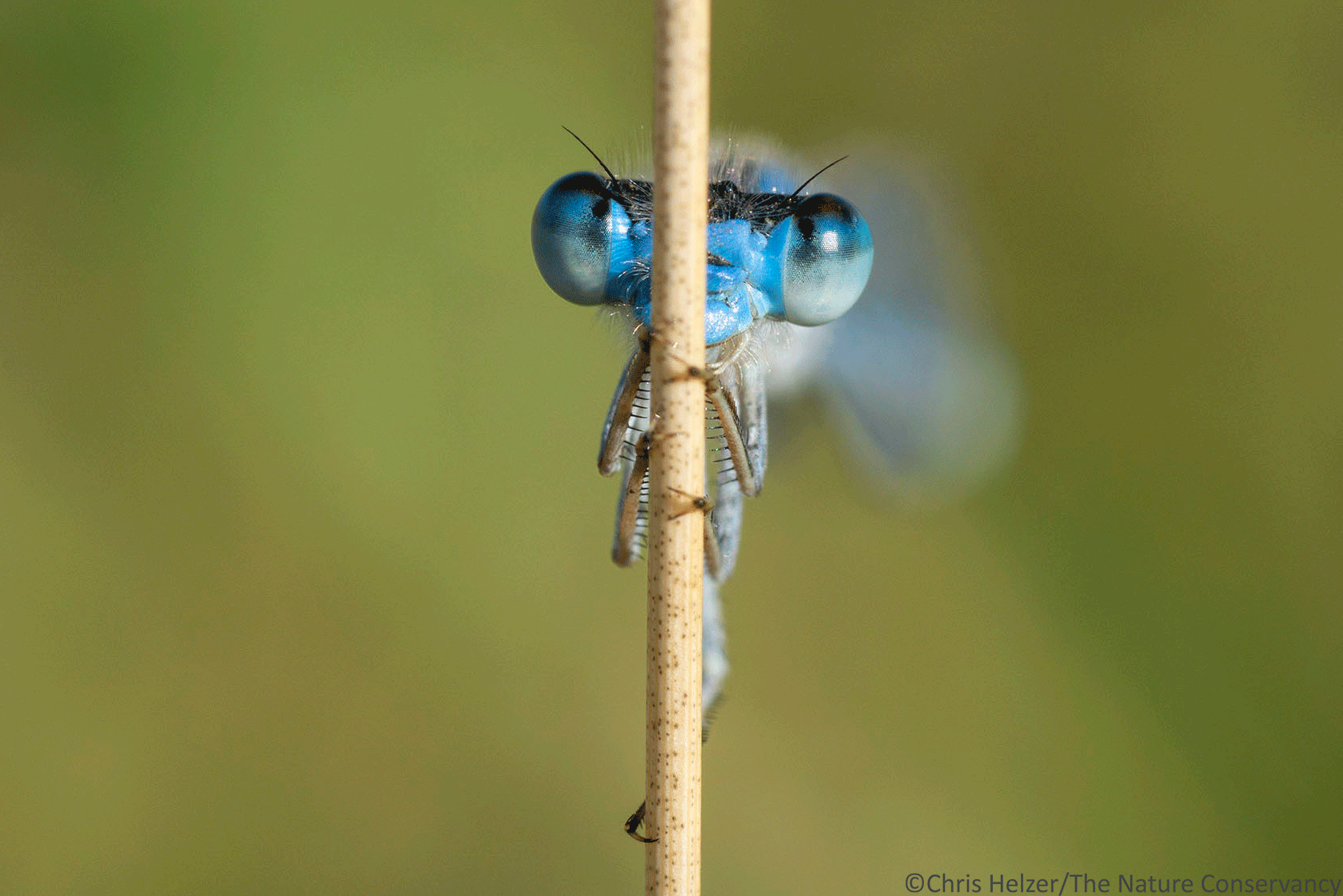
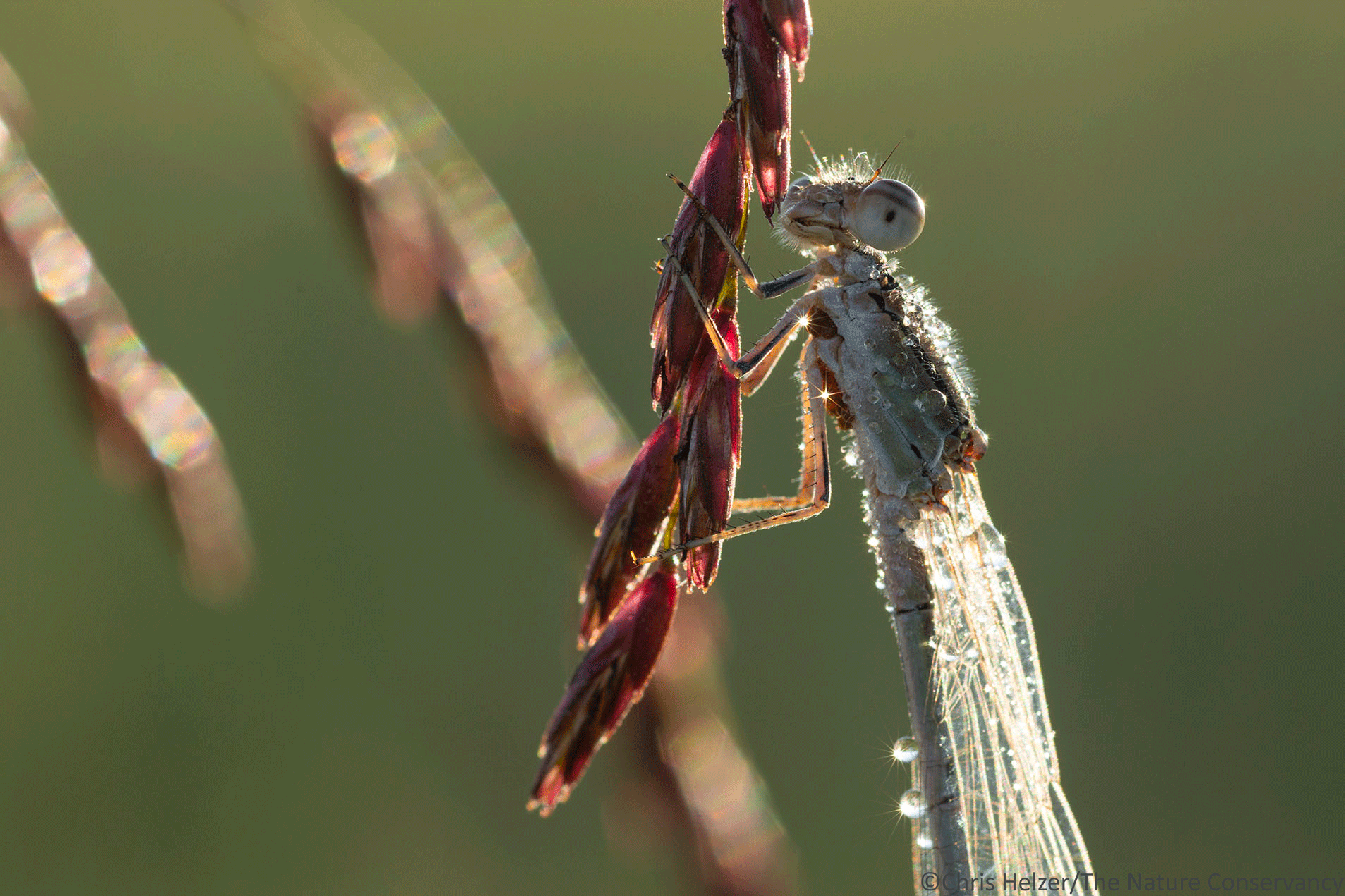
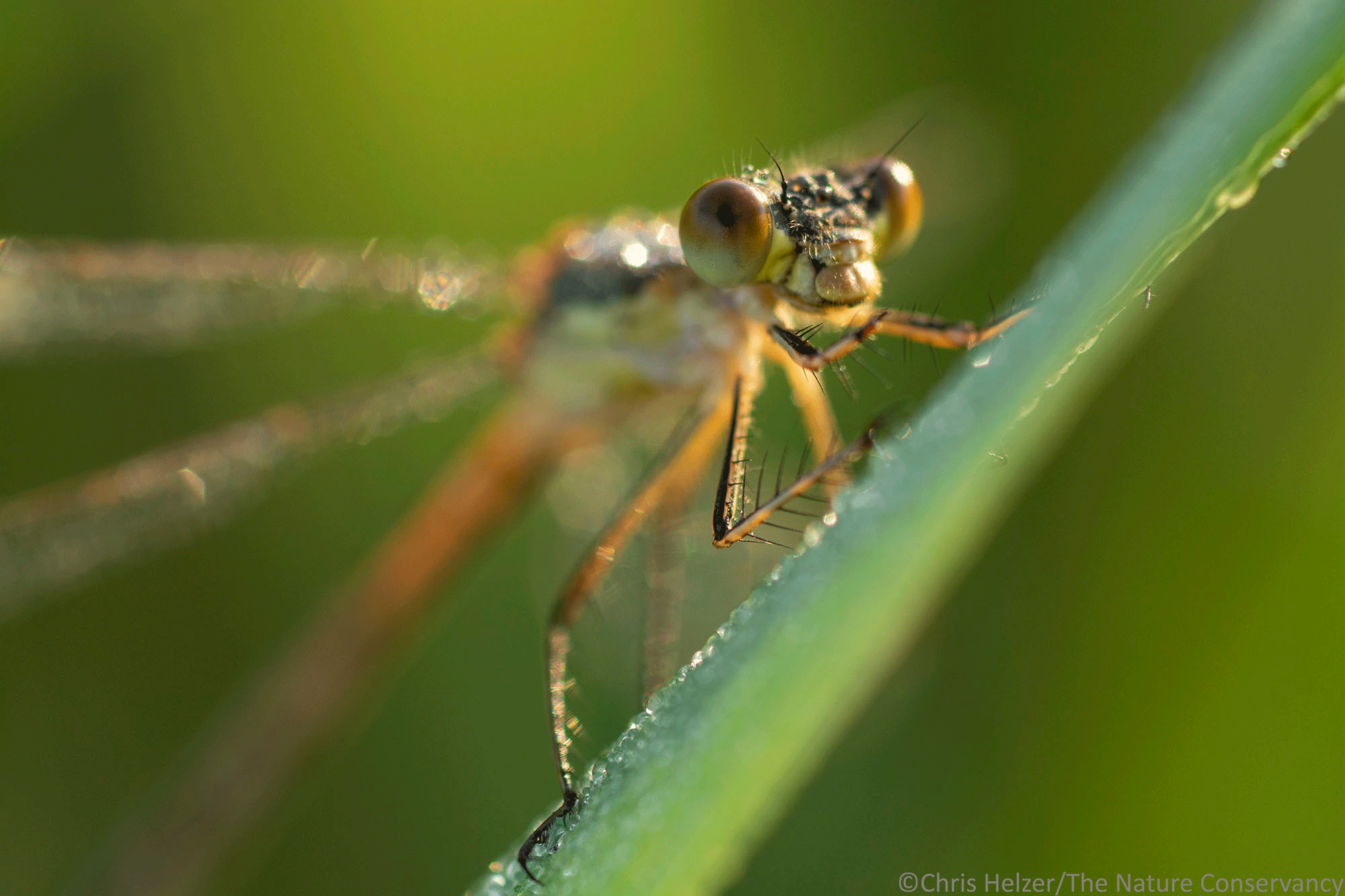
Almost a decade ago, I wrote about two competing metaphors for prairie restoration. I suggested we view prairie restoration like the reconstruction of a city after a disaster rather than like the restoration of an historic building. We need to concentrate on the roles and functions of prairie ecosystems rather than how closely a restored patch of prairie resembled what it used to be in the past.
Today, I’m hoping to stimulate conversation about the difficult decisions we face as we try to conserve prairies in the face of rapid climate change. One conservation planning approach is to focus on conserving the stage, not the actors. It advocates prioritization of sites with geophysical diversity because those abiotic conditions influence habitat heterogeneity, which supports biodiversity. The hope is that we might be able to conserve “an abiotically diverse ‘stage’ upon which evolution will play out and support many actors (biodiversity).”
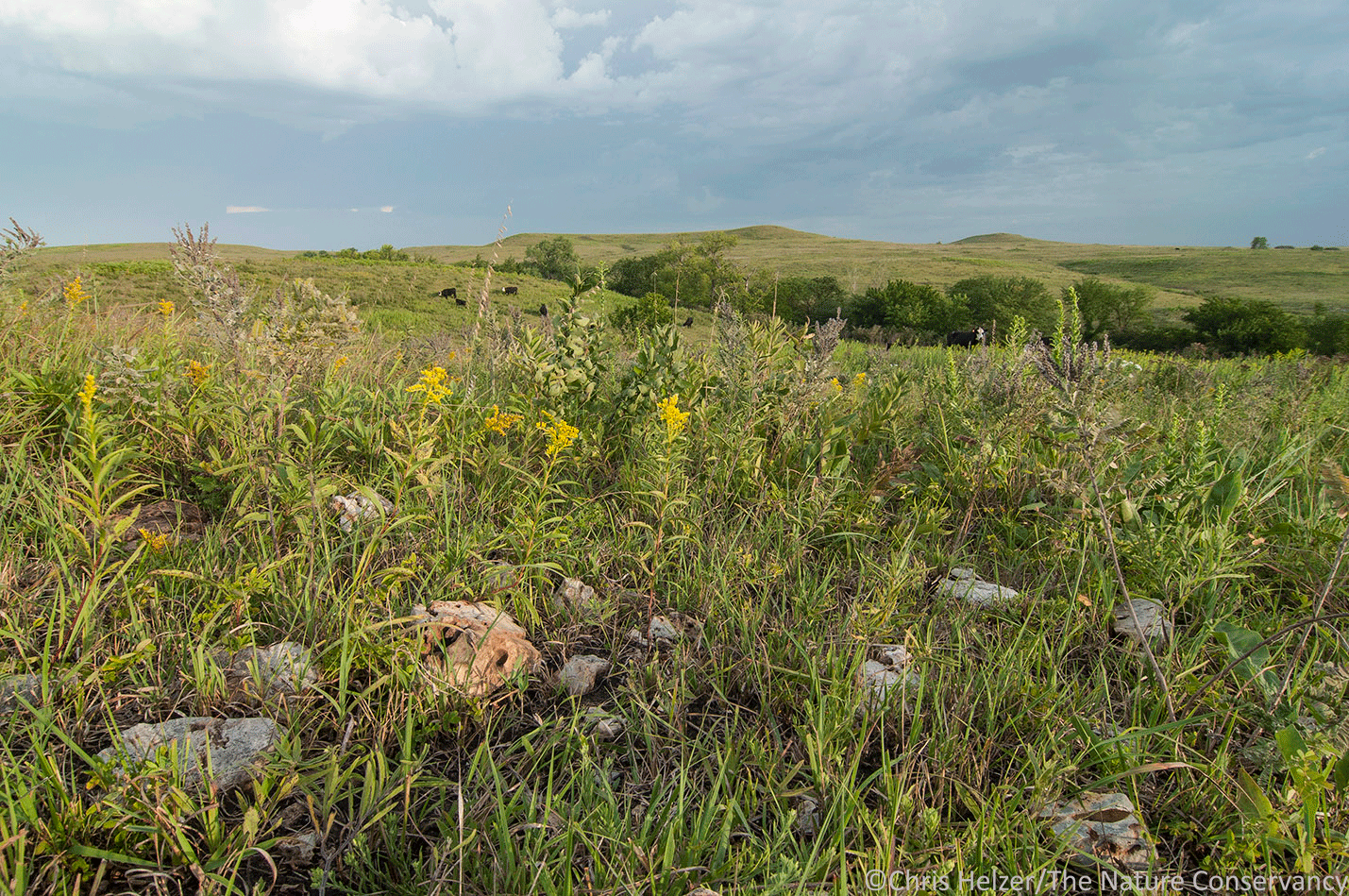
I think the ‘conserve the stage’ approach has merit, but it’s just a first step, especially for prairie conservation. We don’t just want to save the stage; we want to make sure the show goes on. Thus, I present to you a long (and potentially ridiculous) metaphor for prairie conservation that builds upon the ‘conserve the stage’ approach.
…
Every actor in a theatrical production plays a role that helps tell a story. Likewise, every species in a prairie plays a role that contributes to the overall functioning of the ecosystem. In a healthy and resilient prairie, all the key roles in are filled.
Fortunately, there is a lot of redundancy built into prairie communities. We have lots of species that provide pollination, seed dispersal, nutrient cycling, and all the other essential functions that keep prairies going. We have a big cast, or maybe a big actors’ union.
Today’s prairie ‘show’ already looks different than it did in the past. Prairie landscapes are fragmented, invasive species have joined the cast, and the climate is changing. Those and other factors mean that some actors who played key roles in the past are no longer part of the show, at least at some venues. Other actors remain in the cast but don’t play their roles as effectively as they used to. Despite those changes, there are still really good versions of the prairie show being presented on various stages, though the versions vary quite a bit from place to place.
To keep the show going, we, as producers and directors, have to be creative and adaptable. We face really difficult decisions, especially when it comes to actors who aren’t well suited for their roles anymore. Continuing to direct the show with those actors as the main focus can weaken the performance of others and drag the whole production down.
Making changes to the cast of a show comes with a lot of risk, however. We don’t have a lot of experience with that process and we’re likely to make mistakes. Fortunately, in most cases, there are existing cast members that have the potential to adapt their roles and take on new challenges. With some guidance, those actors will find new ways to collaborate with each other and put on a show that might not be exactly the same as we’re used to but will still have a plot we can follow and enjoy.
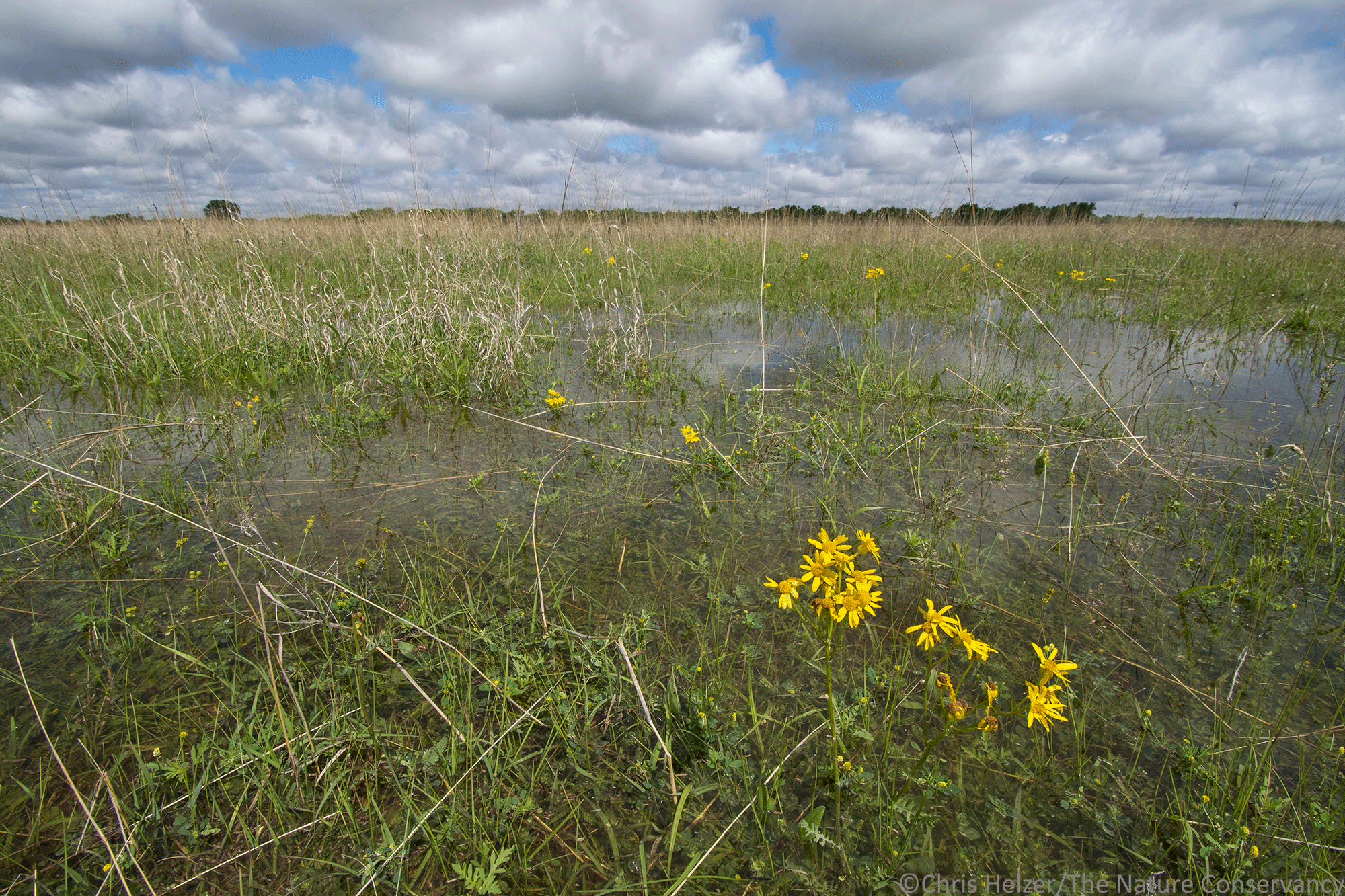
If more drastic actions are needed, we might recognize that some actors are on their way out and start training understudies who can gradually take over roles as needed. If necessary, we might decide to recruit actors that are playing diminished roles on other stages and bring them in to rejuvenate their careers in a more suitable situation. Similarly, we might help some of our own long-term stars find new opportunities elsewhere, rather than just watching them slowly fade away.
In some cases, the world around us might force major a rewriting of the show itself. We might find ourselves directing a shrubland or woodland production rather than a prairie show. That doesn’t mean the show will stop or become less important, but it will require a different approach, a significantly altered cast, and a lot of adaptation by all involved. However, if we stick with the mantra of ‘The Show Must Go On’, we’ll need to figure out how to adjust on the fly and sustain as much biodiversity and ecological function as we can.
…
Ok, I have to break away from this tedious metaphor. The real point here is that we can’t afford to be so invested in current or past versions of our prairies that we don’t allow them to adapt to changing conditions. At the risk of sliding back into my metaphor, there are lots of old movies and plays that don’t hold up well today. Jokes that used to be funny 20 or 30 years ago aren’t funny today. Old references don’t land with new audiences. In most cases, the basic stories themselves are still solid – they just need to be adapted for today’s world. Prairies and their species also exist in a different world than they used to, and that world continues to change (very quickly) around them.
The resilience and function of prairies is highly dependent upon biodiversity, which depends upon habitat size and heterogeneity, along with other factors. Maintaining high biodiversity in prairies that exist in fragmented landscapes comes with huge challenges, which are compounded by a rapidly changing climate. Plant and animal communities aren’t the same as they were in the past and they’ll continue to change over the next few decades and beyond. In fragmented landscapes, unless we take an active role, those alterations will largely take place in isolation, with limited opportunities for species to travel between one prairie fragment and another. Even in landscapes with large contiguous grasslands, we’ll need to be very thoughtful about how we shepherd those prairie communities through the coming years.

It’s really hard to look at the prairies we know best and imagine them with a different composition of species. We’re used to measuring stewardship success by our ability to sustain the status quo. Watching the population of a species diminish in size – or disappear entirely – feels like a major failure. Most of us have also looked skeptically at any new species that show up in a prairie, worrying about potential negative impacts of that species on the existing community.
I don’t have a lot of answers to the big questions we face. I’m certainly not ready to lay out a plan or advocate for a particular approach to managing these changing prairies. As I did in another recent post, I’m mainly trying to get some conversation going on this topic.
The best I can do right now is offer a few ideas for discussion. For example, I think we might be smart to reevaluate the way we look at our objectives for prairie management. Instead of trying to maintain the current composition of plants and animals, maybe we should focus more on biodiversity and less on which particular species are present or abundant within those communities. (That doesn’t mean we welcome invasive species, by the way. Any species – plant, animal, or otherwise – that acts to reduce biodiversity is still a problem.)
I also think we need more serious conversation about when to resist ‘state changes’ like the transition from grassland to shrubland and when to facilitate those transformations, while trying to preserve as much biodiversity and productivity as we can. Again, I have little to offer in terms of specifics, but it seems clear that we’re not going to be able to stave off those state changes forever in at least some places. Let’s start thinking about contingencies instead of just waiting for those sites to collapse.

Finally, it’s never been more important to find opportunities to enlarge and reconnect prairie fragments through prairie restoration. The chances are slim that a small, isolated prairie fragment is going to adapt well to a rapidly changing world. Growing the size of those fragments by restoring adjacent patches should be a top priority. Can we find new approaches for creating those restoration opportunities in strategic locations? As we do that restoration work, we should also continue to test and discuss seed sourcing strategies, including the regional admixture approach, to see if we can further bolster the adaptive capacity of those small sites.
We’ll be figuring this out as we go, and we’ll surely screw some things up, but we can’t afford to just continue reacting. At the very least, we need to be thinking ahead about the changes that are taking place and how those will affect prairies. In some cases, we should probably be ‘acting ahead’ to guide state transitions, migration of species, or simply changes in species composition within individual prairie sites.
What we can’t afford to do is live in the past. We’re hurtling into the future whether we like it or not. Let’s make sure we bring prairies along with us.