Chris Helzer is Director of Science and Stewardship for The Nature Conservancy in Nebraska, where he conducts research and supervises the Conservancy’s preserve stewardship program. He also helps develop, test, and share prairie management and restoration strategies.
Chris is also dedicated to raising awareness about the value of prairies through his photography, writing and presentations. He is the author of The Prairie Ecologist blog, and two books: The Ecology and Management of Prairies and Hidden Prairie: Photographing Life in One Square Meter. He is also a frequent contributor to NEBRASKAland magazine and other publications. Chris and his family live in Aurora, Nebraska.
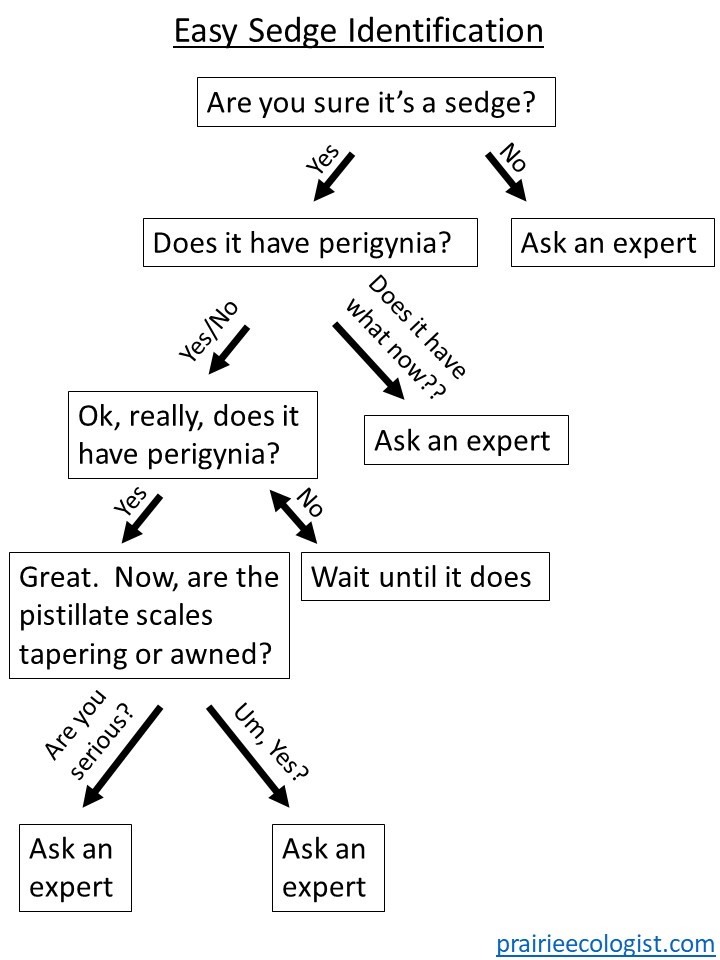
Perceptive reader John Blakeman pointed out that a similar format would be helpful for identifying sedges (Carex sp). He’s absolutely right, of course, and it just happens that I have also developed that particular guide. I was going to release it at a later date, but I can see that the demand is high and I don’t want to hold people back.
As with other sedge keys you may be familiar with, this key works best if the sedge is in fruit. What if it’s not? You just have to wait until it is. This is not the fault of me or my key, it’s just the way nature works. Sedges refuse to be identified when they are not in fruit. They’re sorry if that’s inconvenient for you.
Without further ado, here is my simple identification guide for sedges.
After eight consecutive weeks of quarantine quizzes, I’m taking a break. We may or may not see the return of the quizzes, but for this week, I thought I’d offer a free service to readers who may struggle to identify common – or uncommon – insects and spiders.
I post a lot of insect and spider photos on this blog. The fact that I often provide identification of those creatures – at least to family or order – tends to give people the impression that I have extensive entomological knowledge. Nothing could be further from the truth!
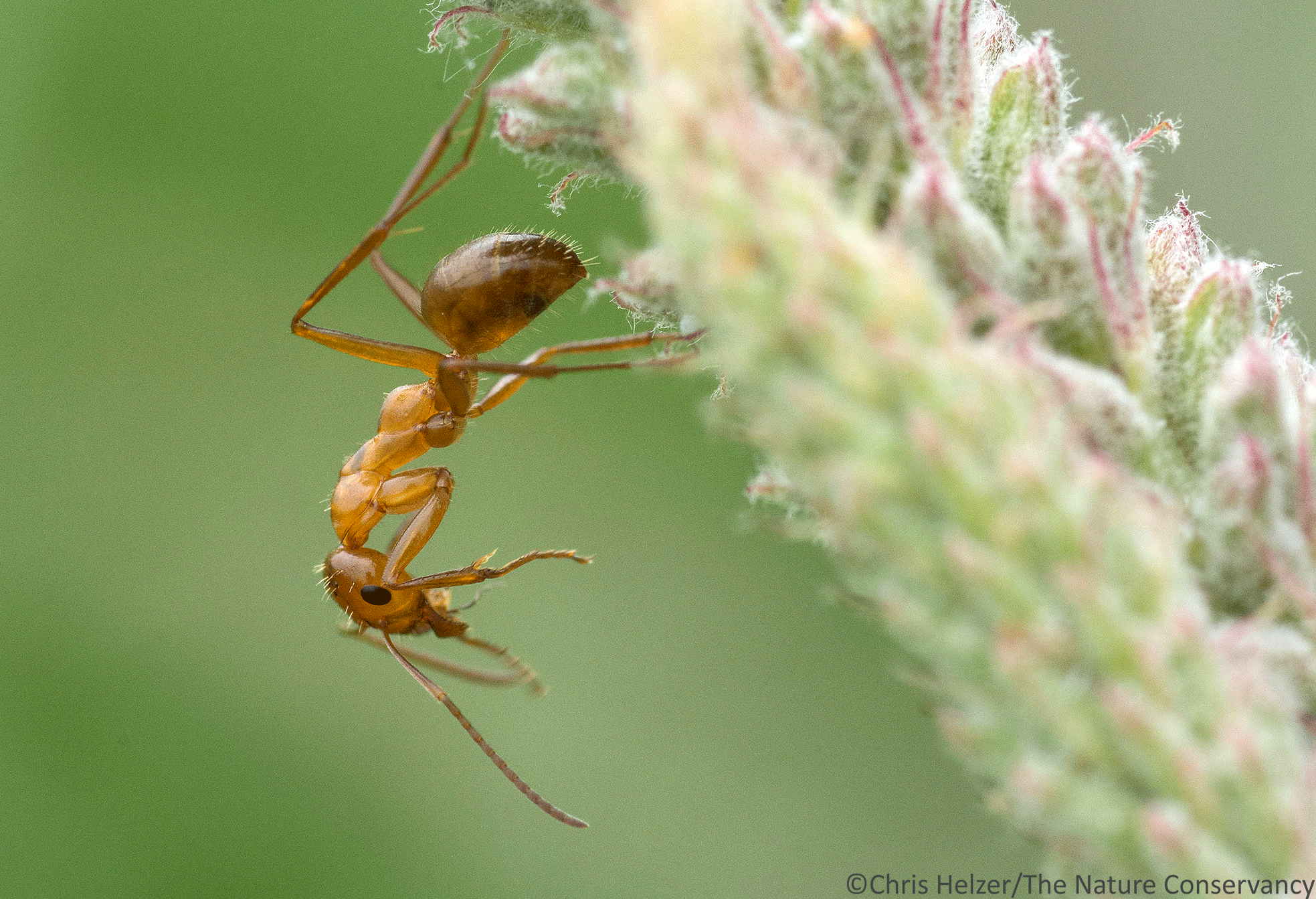
This gorgeous ant is Formica incerta. I was able to identify it via a my own very simple method (see below)
As I’ve told many people, I am an insect enthusiast, not an expert. I like to photograph small creatures and then learn about them. However, before I can dig into their fascinating stories, I first need to know who they are. Through years of practice, I have gradually developed and honed a very simple system of identification. Today, for the first time, I am making that system available to the public – at NO CHARGE.
There are, of course, multiple terrific resources available for the identification of invertebrates. Those include various old school field guides, as well as online resources such as iNaturalist and Bugguide. I see my method as complementary to those other resources, if considerably easier to use. It works for any species of insect, spider, or other invertebrate (and, honestly, with vertebrates and plants too). All you need is a reasonably good photo of whatever it is you’re trying to identify. Then, just follow the simple chart below and identify your bug!
You’re welcome. Stay safe, everyone.
(Thanks to James Trager, the expert who identified Formica incerta for me)