Quick Hitters

Here are a few tidbits of information you might be interested in:

#1. We’ve set the data for the first Citizen Science BioBlitz Prairie Extravaganza (still working on the title) at our Platte River Prairies here in Nebraska. If you’re within traveling distance, I hope you’ll consider joining us on Saturday June 29, 2019 for an all day learning and data collection event. Our main focus will be to collect data on butterflies, namely regal fritillaries and monarchs, as well as habitat they are using (especially flowering plant availability). However, we’ll do much more than just collect data.
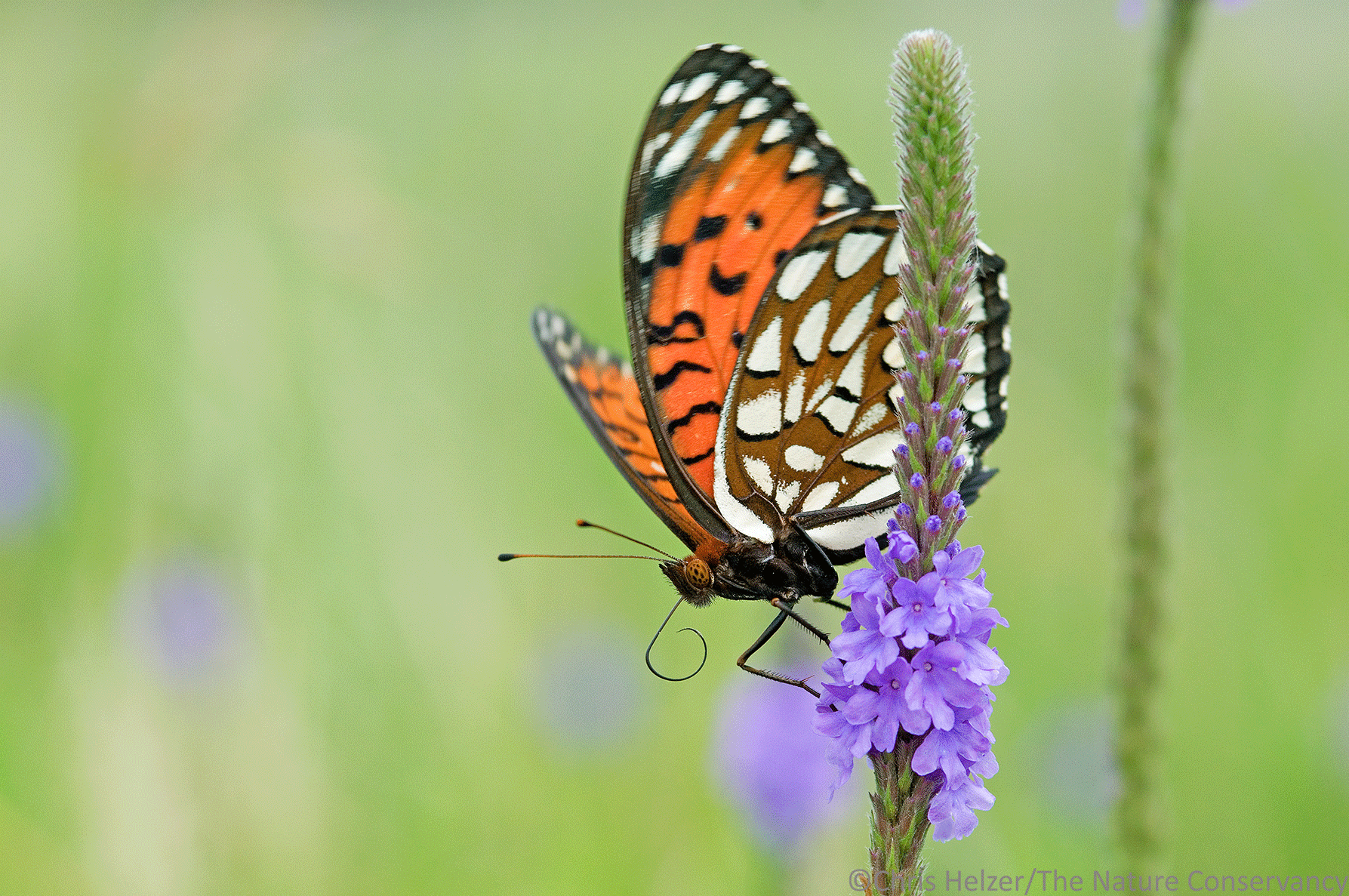
We will be counting regal fritillaries (and monarchs) on June 29, but also working to quantify the quality of pollinator habitat overall. I hope many of you will come give us a hand, but the day will be about more than just collecting data. We’ll have prairie hikes and other educational sessions available as well.

This effort builds upon data we’ve been collecting since about 2010 on regal fritillaries, including population trends and habitat use. We spent a couple years collecting pretty intensive data across our sites and then have been doing an annual survey since then. We’ve learned a lot but realize that we aren’t collecting enough data to really understand what’s happening with populations of this at-risk butterfly species or why. We’re hoping that we can pull in a lot of help and collect an abundance of data once a year to better understand how butterfly numbers and flowering plant populations are responding to our management, climate change, and other factors. Our data will apply to butterfly conservation, but also more broadly to all pollinators and overall ecological resilience.

You don’t need any special knowledge or expertise to attend and be helpful at this event. We’ll train you for the data collection we’ll be doing and will have educational sessions on other topics available as well. Think of this as a field day to learn and celebrate prairies, but also a chance to contribute to some important science along the way. We’ll provide many more details in the coming months, but please put this on the calendar if you’re interested.

#2. The next North American Prairie Conference will be held June 2-5, 2019 in Houston, TX. I’m excited and honored to be a featured speaker at this year’s conference, and am looking forward to seeing a lot of you there. This is always one of my favorite conferences because it attracts a diverse and interesting group of people who all care about prairies. It plays an important role as a scientific conference, but is also a venue where a lot of prairie management and restoration knowledge is shared, along with discussions about conservation education, art, and much more. This year’s field trips sound amazing and there’s a great list of featured speakers. You can learn more and register at this website.

#3. Former Hubbard Fellow Evan Barrientos has written a blog post about some of the restoration work he did during his time at our Platte River Prairies. It’s a great post that includes many photos of his first restoration efforts (family backyard) as well as some before and after photos of the high-diversity prairie/wetland restoration he helped with here. The “after” photos were taken last summer when Evan came back to visit and he and I wandered through that site together. The post is a nice story about the gratification found in projects like this, as well as some of what it took to make this particular project come to life. I encourage you to take a look at the post, which you can find HERE on his blog “The Naturalist Lens”. Evan is now working for the National Audubon Society in Fort Collins, Colorado, where he continues to apply his skills as a visual story teller.
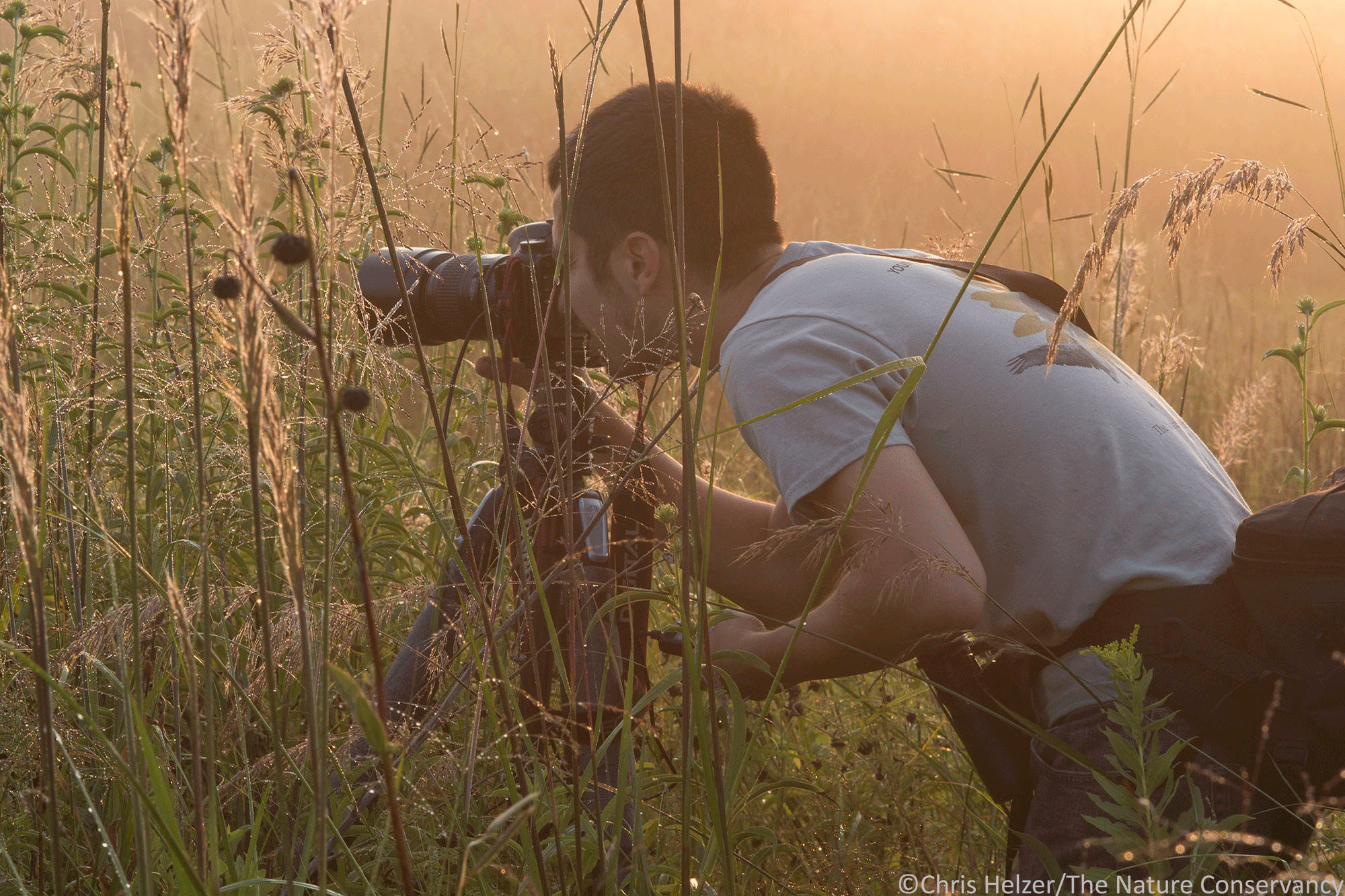
Here’s Evan last August, while visiting the restored prairie he helped create when he worked for us.

Prairie Word of the Day – Phenology

Hello, and welcome to the fifth edition of the popular series, “Prairie Word of the Day.” This is the series that has previously brought you such inspiring words/phrases as Tiller, Habitat Heterogeneity, Disturbance and Shifting Mosaic of Habitat. Thank you for the many cards and letters expressing your gratitude for the explanations of these words, and suggesting future topics.

Today’s featured word is Phenology. In short, phenology is the study of the timing of various events in the lives of plants and animals and the factors that influence that timing. Phenology should not be confused with Phrenology, which is the long discredited study of how the shape and size of the human skull supposedly correlates with character traits and mental capacity. Phrenology has been used to bilk people of their money, support racist and sexist stereotypes, and bolster Nazi eugenics. Let’s not talk about that today.

Phenology, without the “r”, is a complex and important topic in ecology. You might hear someone talk about the phenology of plants related to when they begin emerging from the ground, when they flower, and when they begin to wilt and senesce at the end of the growing season. Additionally, however, phenology includes the timing of the emergence of insects from dormancy or their final molt into adulthood. It also includes the timing of animal migrations and hibernation, as well as many other events in the lives of myriad organisms.

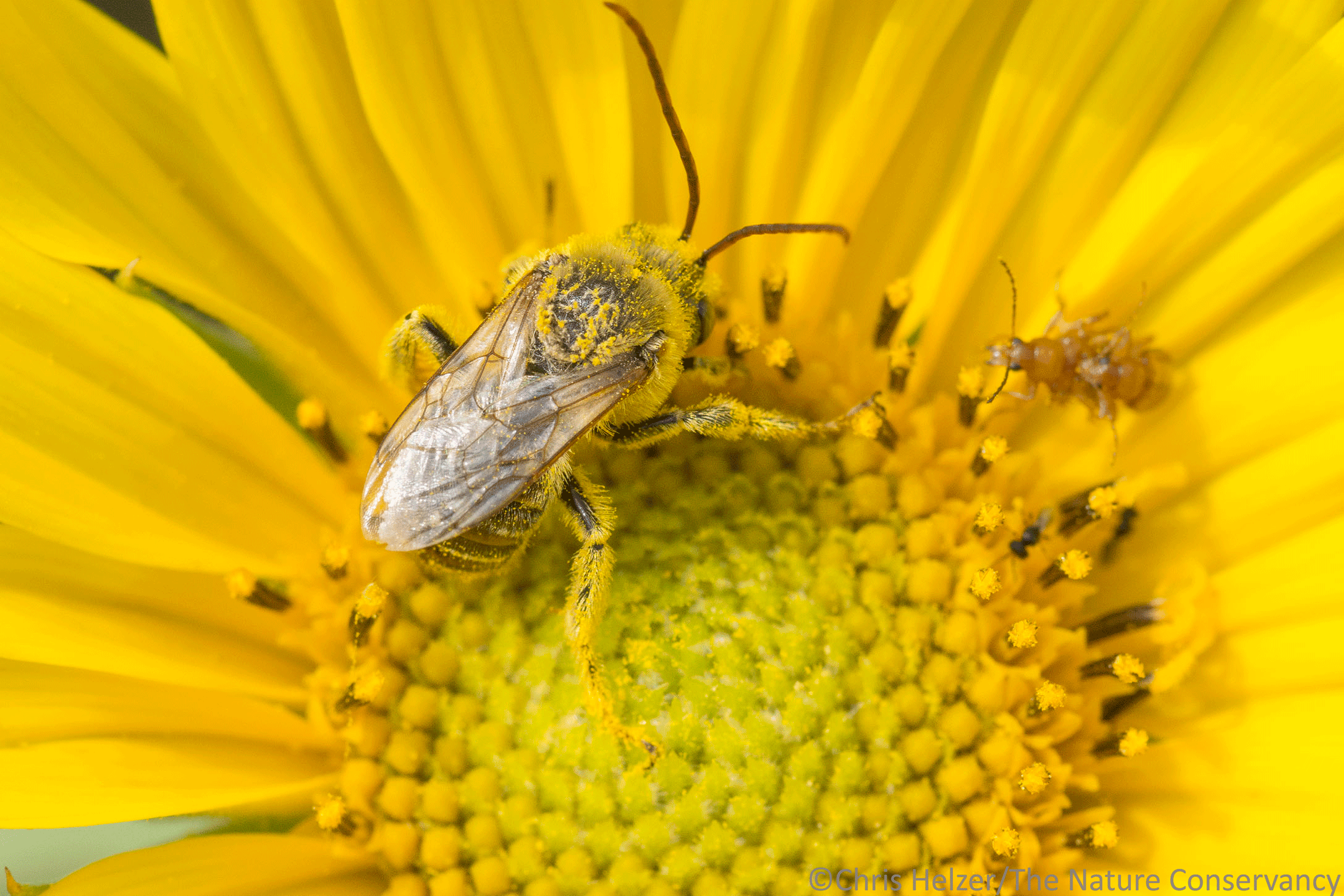
This bee (either Melissodes agilis or M. trinodis) is a specialist feeder on sunflower pollen and is only active during the period of summer when sunflowers are blooming. If the bee emerged before sunflowers started blooming, it might not find anything to eat.

The factors that influence a species’ phenology often include temperature, light, and moisture – in combination with genetic signals. We still have a lot to learn about the phenology of most prairie species, especially in terms of how they might adapt to changing climate. In fact, rapid climate change has brought much recent attention to phenology because changes in the flowering time of plants, for example, have already helped illustrate the occurrence and impacts of climate change. In addition, there is great concern that species may not be able to adapt the timing of their lives quickly enough to match the changing climate, and/or that timing of interdependent species might not remain synchronized. For example, flowers might start blooming before or after their particular pollinators are active, or birds or insects might migrate to breeding areas before food is available at those sites. A couple years ago, monarch butterflies arrived in Nebraska way ahead of schedule, but fortunately they were still able to something to eat and lay eggs on.

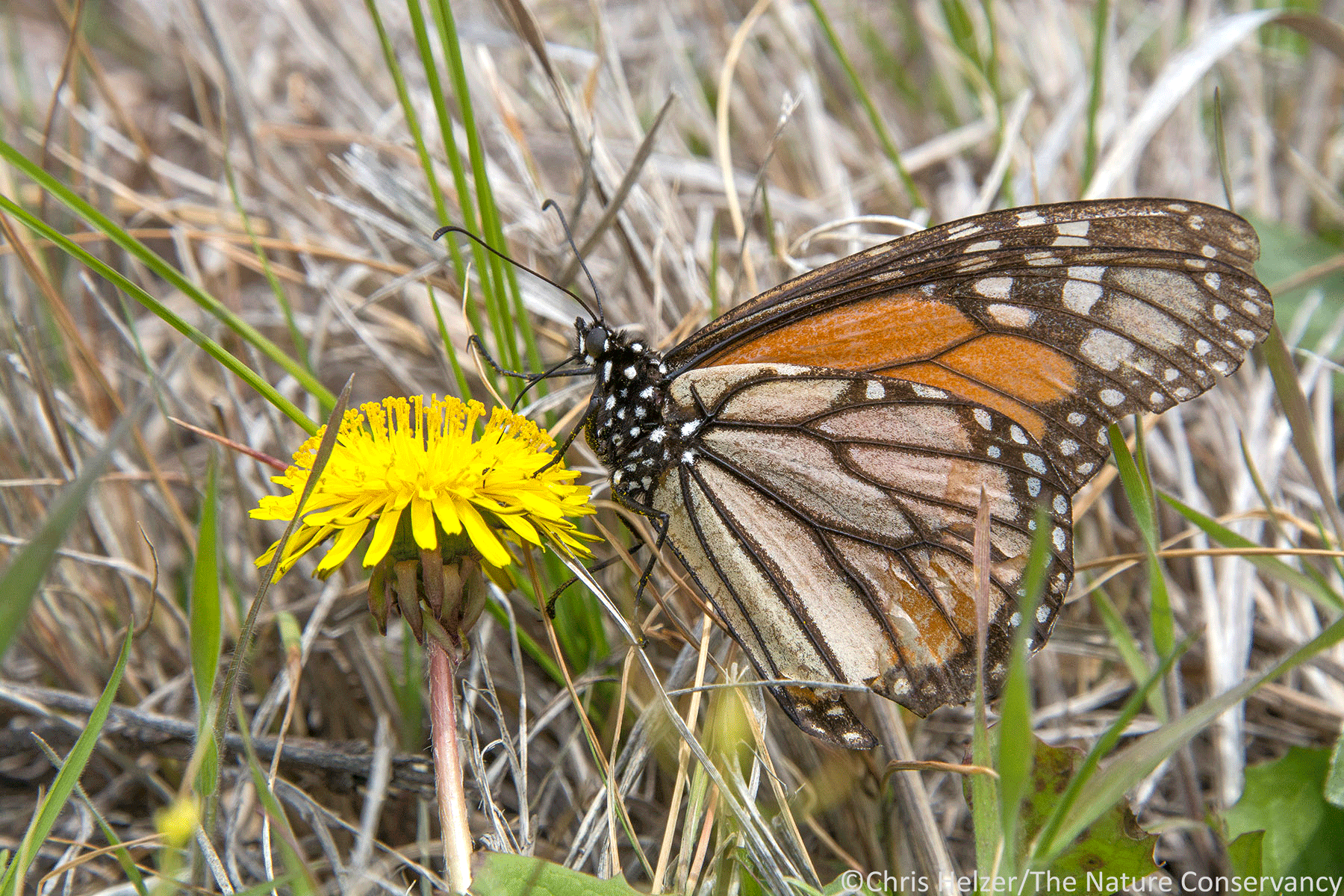
When monarchs arrived in Nebraska much earlier than normal, dandelions were one of the few abundant wildflowers for them to feed on and they laid eggs on whorled milkweed because common milkweed hadn’t emerged yet.

Here in Nebraska, we got some interesting insight into the phenology of plants during 2012. The year ended up giving us the most severe single year drought in recorded history and it started out as a year of extraordinarily warm temperatures. In fact, spring and summer temperatures arrived so early that we recorded many plant species blooming weeks or months ahead of their typical schedule. I wrote a short blog post about this back in May of 2012 and a number of people from around North America responded with their own sightings. The observation that stood out most to me was the blooming of asters in May. I had never seen heath aster (Aster ericoides) or New England aster (Aster novae-engliae) bloom before late August or September.

Phenology is also important to land managers trying to sustain biological diversity in prairies. For example, around here, we are constantly fighting cool-season invasive grasses. The growth period for those species starts earlier and ends later than that of most native prairie plants. That gives us some opportunities to use herbicides to kill or suppress smooth brome, Kentucky bluegrass, or other invasive grasses when the chance of harming other plants is very low. In addition, we can use prescribed fire, grazing or mowing to target those grasses when they are most vulnerable. For example, we might try to burn a prairie right as those species are starting to bloom because it wipes out those plants’ entire season of energy investment in growth and flowering. The fire doesn’t kill those grasses, but it can knock them back enough to allow other plants – especially those just starting their growth periods – to flourish while the vigor of the invasive grasses is low.

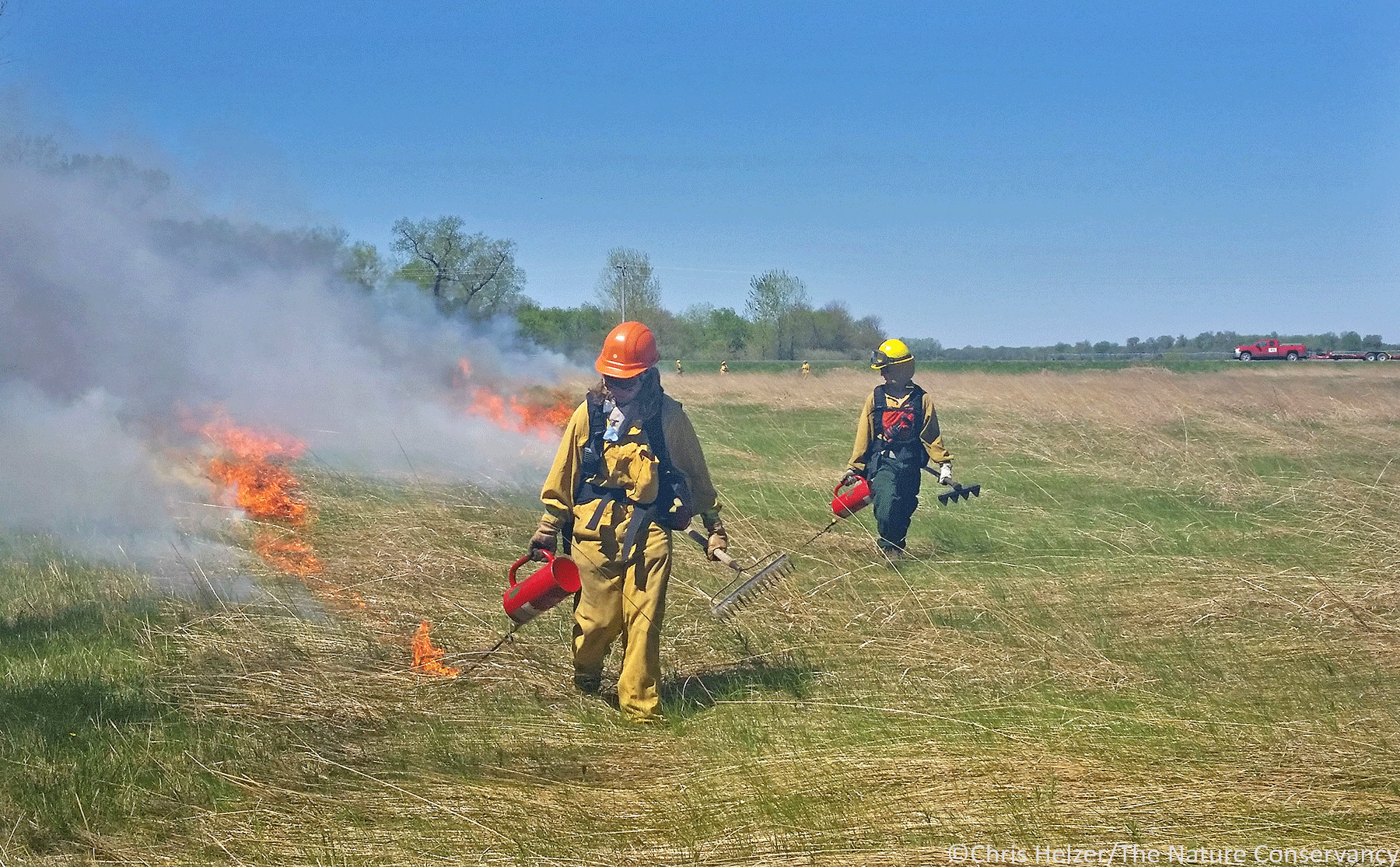
We timed this burn to suppress cool-season invasive grasses, which were just starting to bloom. After the fire, many warm-season grasses (and other plants) responded quickly because they were just beginning their period of most active growth.

Timing of burns can also be aimed at suppressing many other kinds of plants. For example, we sometimes try to burn prairies when encroaching trees are just leafing out and highly vulnerable. Alternatively, burns can be timed to limit impacts on animal or plant species. That might include strategically scheduling a fire based on the emergence of rare insect species or before sensitive reptiles become active in the spring. Prescribed grazing can be employed in much the same way – strategically moving livestock in and out of an area to suppress the growth of particular plants or to create desired habitat structure prior to the arrival or emergence of particular animal species. In all these cases, land managers are acutely aware of the phenology of the species they are trying to suppress or assist.

If you’re someone who enjoys keeping track of when things happen each year, you might enjoy joining a citizen science effort to document changes in the phenology of many different phenomenon. You could start at the National Phenology Network and peruse some of the options they provide. Or, if you already have years of field notes that document when you see your first bumblebee, prairie clover flower, or grasshopper sparrow each year, I’d encourage you to contact a local expert on that/those particular species and let them know about your data. You might have information of great value to conservation.