Last week’s blizzard dumped about a foot of snow here in town, and about 18 inches out at our Platte River Prairies. Combined with wind gusts of 40-50 miles per hour, it was quite a weather event. Our school was closed for three days while everyone dug themselves out and road crews cleared off streets and country roads.
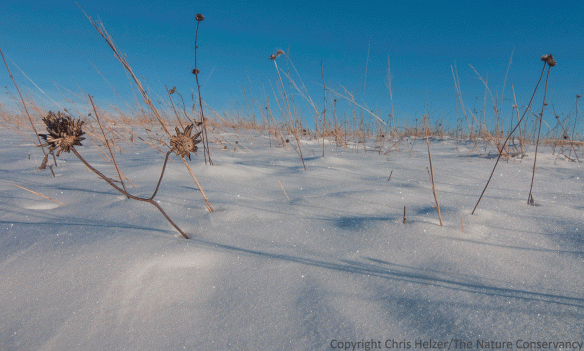
Knee-deep snow and even deeper drifts buried these sunflowers and many other tall prairie plants. The Nature Conservancy’s Platte River Prairies, Nebraska.
Blizzards are a part of life out on the prairie. School closings and sore shoveling muscles are pretty minor inconveniences compared to what grassland creatures without central heat and insulated windows have to deal with. On the other hand, prairie species have been doing this for thousands of years, so they’ve got it pretty well figured out. Prairie plants are mostly dormant this time of year, so snow and wind don’t really affect them at all. Many prairie animals are pretty dormant as well – lots of them spend the winter either below ground (or water) or nestled into deep thatch. Quite a few mammals, amphibians, insects, and others can slow their metabolisms enough that they can survive the winter without having to search for food or shelter once they’re settled in.
Other animals, however, stay much more active during the winter months, and a blizzard can cause them more problems than it does their more dormant peers. It’s really hard to gauge how this blizzard might have affected those animals, but during a couple short outings, I’ve tried to see what I can. It’s not hard to find tracks of deer, coyotes, and various kinds of birds, but that doesn’t say much about what percentage of those animals did or didn’t make it through the storm. My guess is that most of them did just fine, and the warmer temperatures this week are melting the snow pretty quickly, reducing stress on animals that have a hard time moving through or finding food in deep snow.
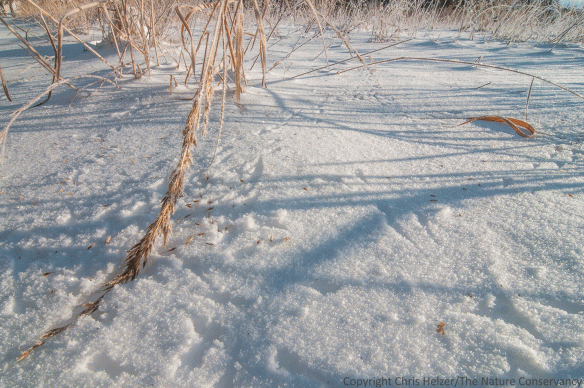
Songbird tracks around an indiangrass seed head at Lincoln Creek Prairie in Aurora, Nebraska.
I walked through some of our Platte River Prairies on Saturday morning, and can empathize with the deer and coyotes whose tracks I saw around me. I probably only walked a half mile, but even that distance was exhausting. Warm temperatures on Friday had begun to melt the snow and then that soft top froze overnight. Every step I took on Saturday morning sounded like, “Crinch, Foomp!” as my boot would very briefly rest on the frozen crust and then pop through as I put more weight on it. Repeating that process in knee-deep snow for a half a mile was more than enough for me. It looked like most of the deer I saw were having the same issues.
Based on their track patterns, I bet it would have been funny to watch the coyotes walk through the snow. I would see a few sets of tracks up on top of the snow, followed by deeper tracks where they’d fallen through the thin crust. I imagined a poor coyote walking as gingerly as possible on the crust, only to fall to its chest on the next step and have to flounder back up again. And for what? There weren’t many tracks of prey species, apart from birds, which probably just laughed at the coyotes as they flew away from them.
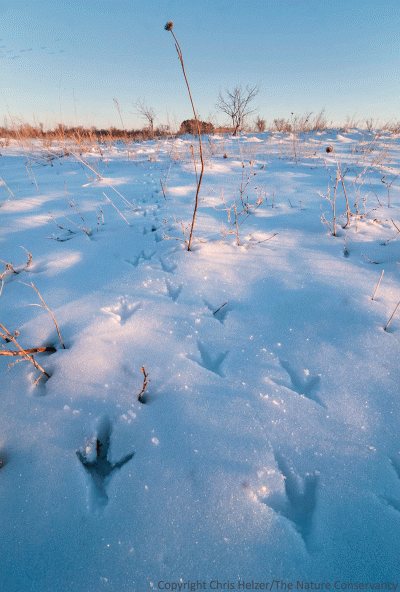
Ring-necked pheasant tracks in our Platte River Prairies.
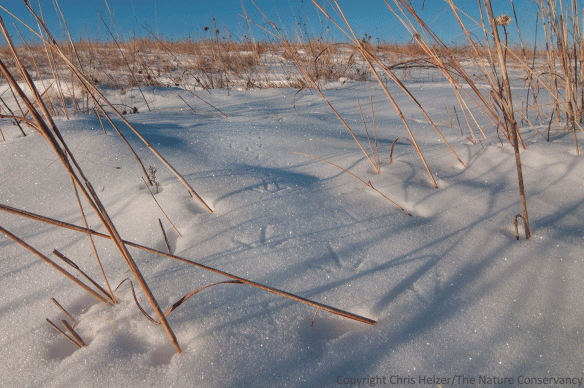
Tracks from a covey of quail (Northern bobwhite) running around on the snow in our Platte River Prairies.
Speaking of birds, I saw some songbird-sized tracks where tree sparrows (I assume) and others were feeding on seeds from prairie plants. I also saw numerous tracks of pheasants and northern bobwhites (quail). The quail seemed to have no trouble staying up on the snow’s crust, but the pheasants’ feet were punching through more often, so they probably had much less fun running around. Regardless, both species must have found abundant shelter on our properties – probably hunkering down within or behind thick clumps of vegetation to escape the driving snow and wind. Canada geese were noisily flying over the river Saturday morning, so they apparently weathered the storm. There were a few sandhill cranes in the river valley (early migrants) before the blizzard, but I don’t know if they stuck around or headed back south to escape the weather.
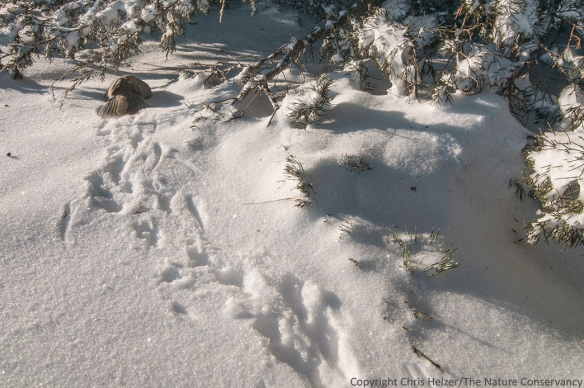
This Eurasian collared-dove died shortly after the blizzard. Based on the tracks leading to its final resting place, it wasn’t a peaceful passing.
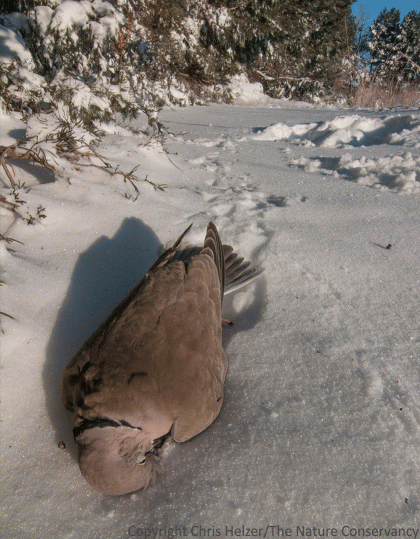
Collared-doves, of course, are not native prairie species, but it’s hard to say whether that had anything to do with this one’s death. I’ve seen quite a few others knocking around town over the last few days, so it looks like most of them survived.
It’s rare to find evidence of the animals that didn’t make it through storms like this. Animals that die in a blizzard either get buried by snow or eaten by others – or both. I did find one collared-dove here in town that died soon after the storm, but that was the only obvious death. Because life on the prairie has always been difficult, prairie species have developed strategies to survive just about any event, including droughts, floods, fires, and blizzards (including blizzards much worse than ours last week). We humans living in prairie country might think we’re pretty tough, but we have it pretty cushy compared to those creatures who actually live in the prairie itself.
Speaking of which, it looks kind of cold and windy out today. I think maybe I’ll just stay indoors and cook myself a warm meal for lunch…



 The Prairie Ecologist