
It’s been a very mild winter in Nebraska. We took advantage of the warm weather on Tuesday to burn a small island in the middle of a stream/wetland restoration project area. The day was sunny, and it was 55 degrees F with light winds when we started the fire. (Quite a contrast with Wednesday, which was in the 30’s with winds gusting to 40 mph.)
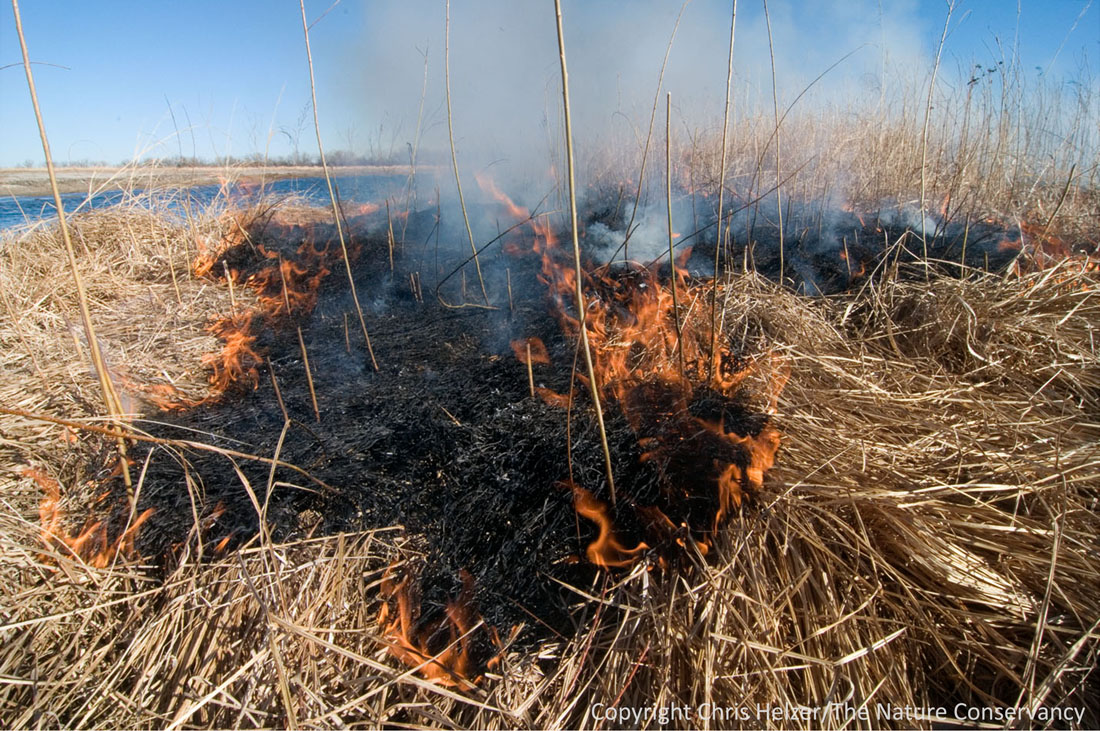
Fire backs into the wind through a grove of young sandbar willow trees. The fire will top kill the trees, but they will resprout again in the spring.
The objectives for the fire included clearing most of the vegetation from the island to create feeding and roosting habitat for migratory cranes, shorebirds, and other species in the early spring. We also wanted to burn through the willow trees that were establishing on the island and set them back before they started to crowd out the grasses, sedges, and other herbaceous wetland plants beneath them. The fire worked out just right, removing most, but not all, of the vegetation.
It’s not often we can get a burn done in January. Even when it’s warm enough, the days are too short. By the time the day warms up enough to dry out the grass and support good fire behavior, it’s usually after lunch – and by mid-afternoon, the sun has dropped low enough that fire stops burning well and smoke stops lifting. Most of our burn units are big enough that it’s difficult to complete them during that short window of time. The island we burned this week, however, was less than an acre in size and we didn’t have to do anything but light it and let it go. A great way to do prescribed fire!
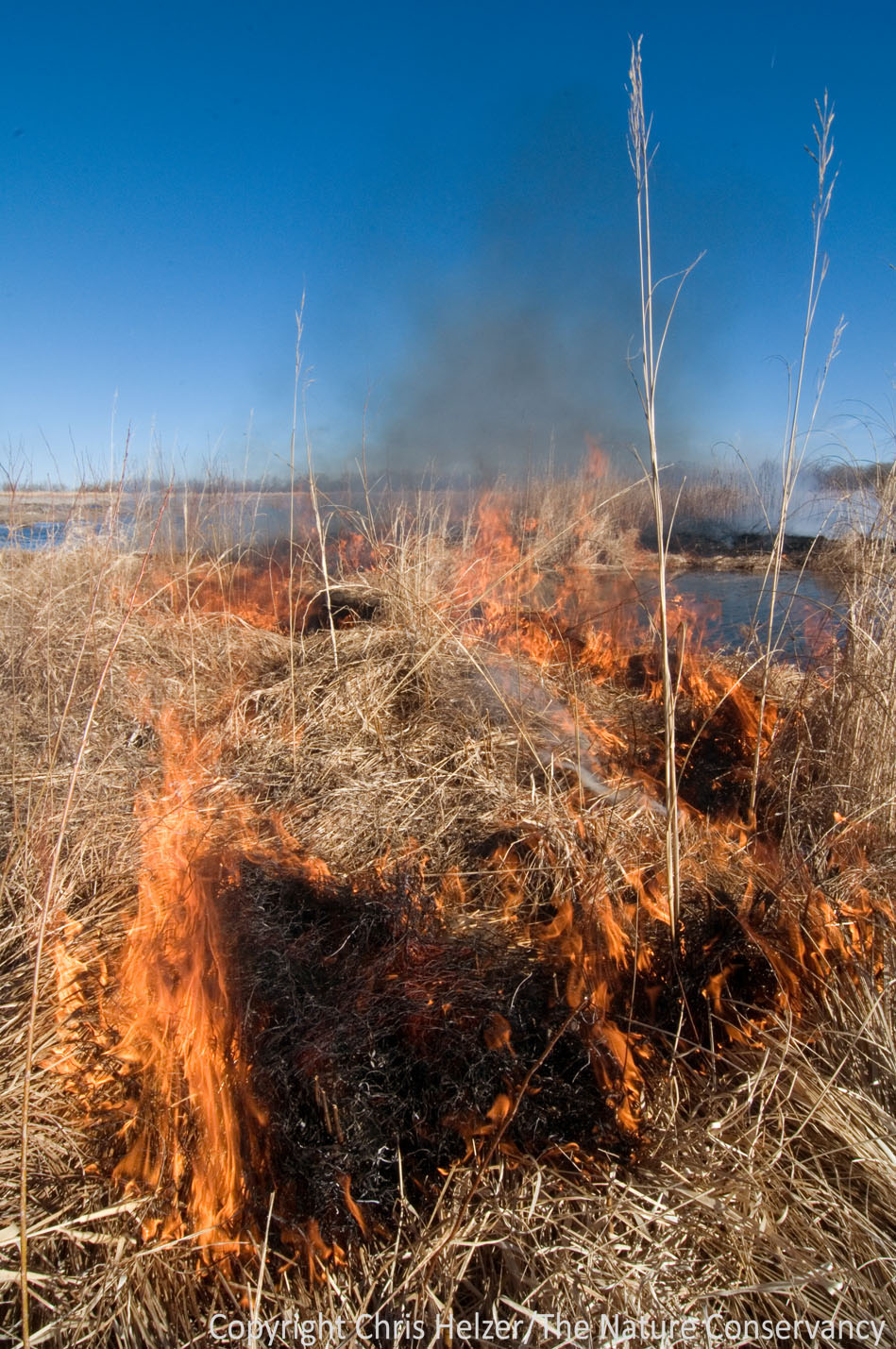
The island was surrounded by a wide swath of water and sand, making it very easy to control the fire (which is why I had time to take photographs!).
.
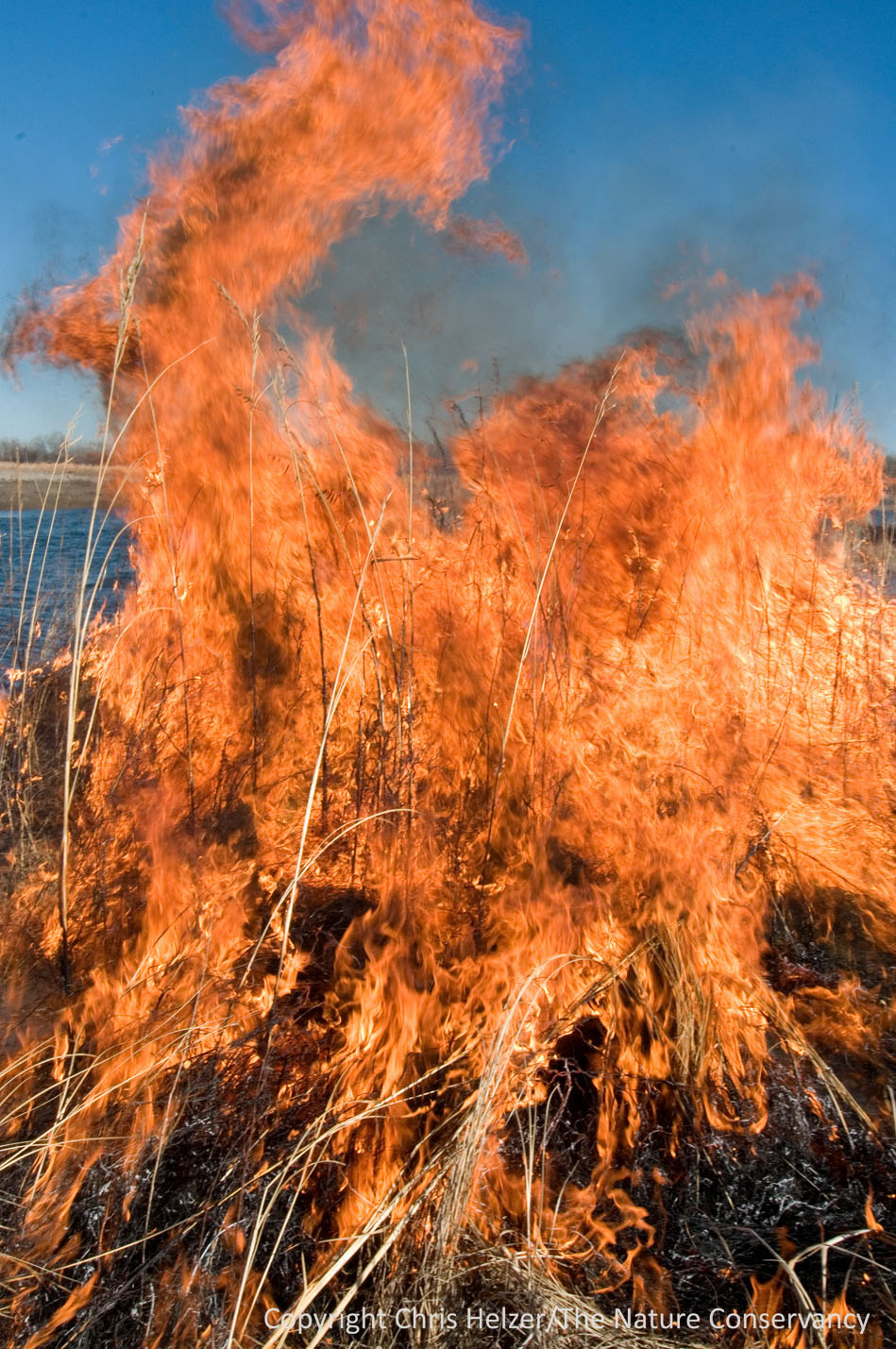
The prairie cordgrass (Spartina pectinata) on the island burned very intensely, but other areas had standing water or other vegetation types that burned less well - leaving a mosaic of burned and unburned vegetation when the fire was over.
.

