This is a post written by Jasmine Cutter, one of our 2014-15 Hubbard Fellows. All photos are by Jasmine.
Howdy, Prairie Ecologist friends!
I remember how much I looked forward to the Fellows’ posts before coming to the Platte River Prairies, so I apologize for the glacial pace of my updates. A considerable amount of my time and brainspace over the last two months has been occupied by small mammals (or s’mammals, as I prefer to call them). There are definite challenges to undertaking a project during the growing season (namely balancing project time and stewardship time), and throughout the process of the project and the summer there have been some unexpected surprises (mostly good), and a lot, a lot of learning.
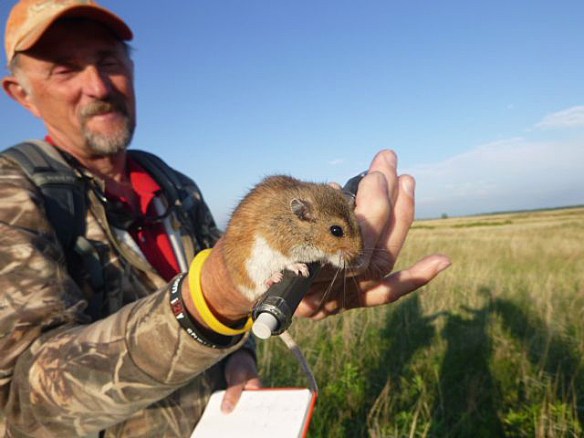
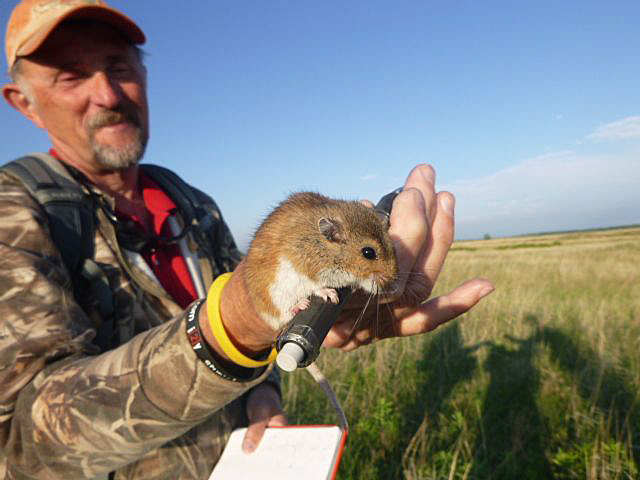
Mike Schrad (left), Nebraska Master Naturalist and my small mammal project mentor.
In the briefest of terms, I’ve been tromping through our Derr sandhills (a unit which includes both restored and remnant prairie on the edge of the Platte River Valley), battling cows, thunderstorms, and a lack of sleep in the pursuit of learning more about the small mammal community in this unit. I was initially drawn to this site because the Derr sandhills contain pocket mice (Perognathus flavescens) and Northern grasshopper mice (Onychomys leucogaster). The pocket mice are minute, streamline and silky, whereas the grasshopper mice are beefy and aggressive (and probably also soft, but getting your finger near enough to find out is tricky), yet, despite their differences, they’re both endemic to sandy soils. As these critters are relatively unusual, my study will give us a chance to learn more about their habitat preferences, and hopefully enable us to manage the site in a way that ensures the continuation of healthy populations. Although these two species have remained the most endearing through out my study, my affection has also expanded to include shrews (they have venomous saliva and black-tipped teeth!), voles (ferocious teddy bears) and harvest mice (very agile and keep a neat nest). Deer mice tend to have a heavy parasite load and botfly sores (not to mention the possibility of hantavirus and carrying lyme disease), and therefore are often pretty icky. At this point, I am done with trapping for the most part. Soon, I will be collecting vegetation and site data for each trap site (that’s ~370 sampling points!), and this winter, I will be seeing if there are any relationships between the presence of certain species and site characteristics.
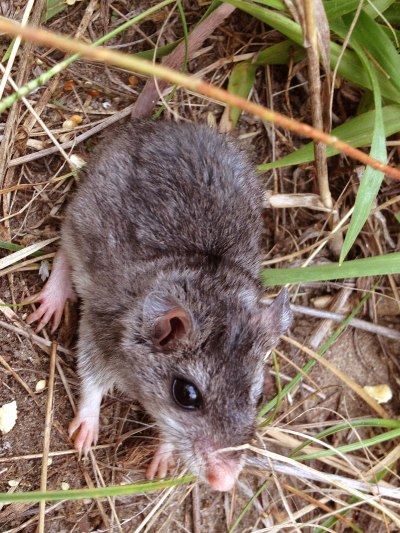
Beefy lil grasshopper mouse, so-called due to their carnivorous diet. At night, they sing to defend their territories.
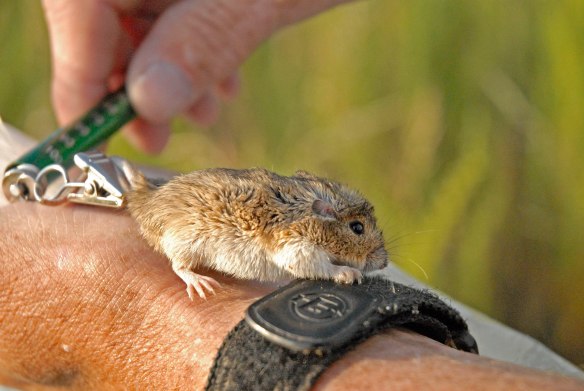
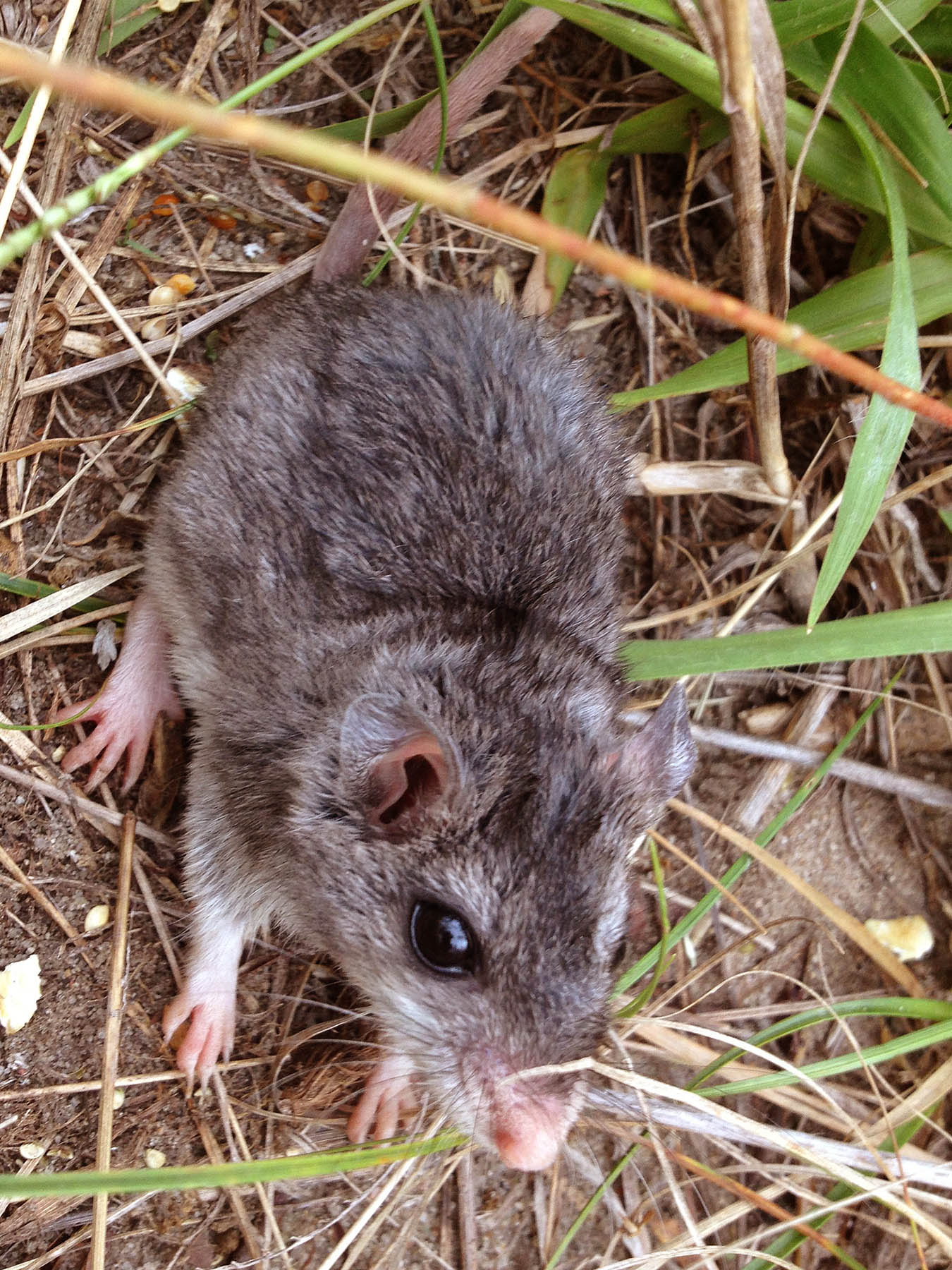
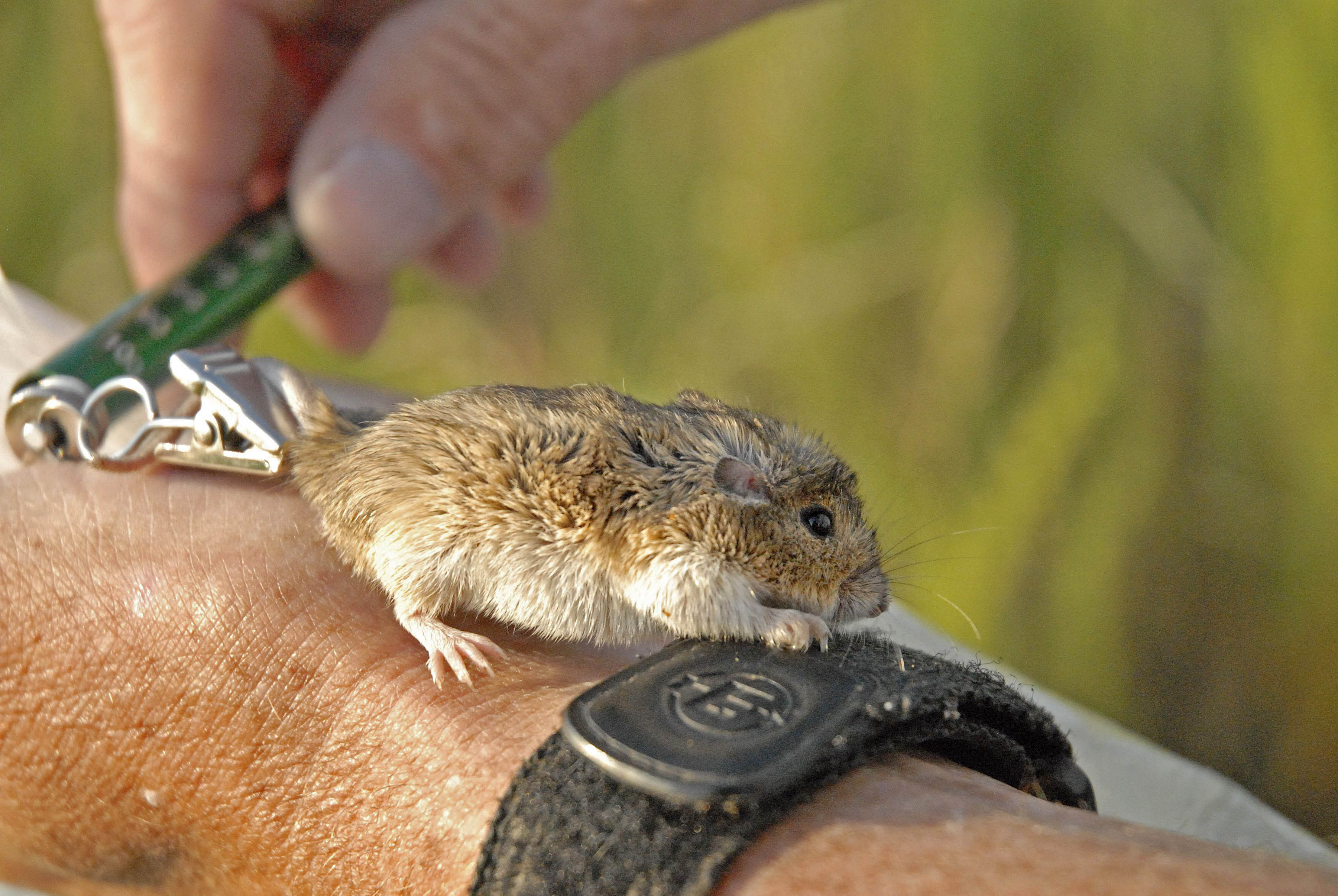
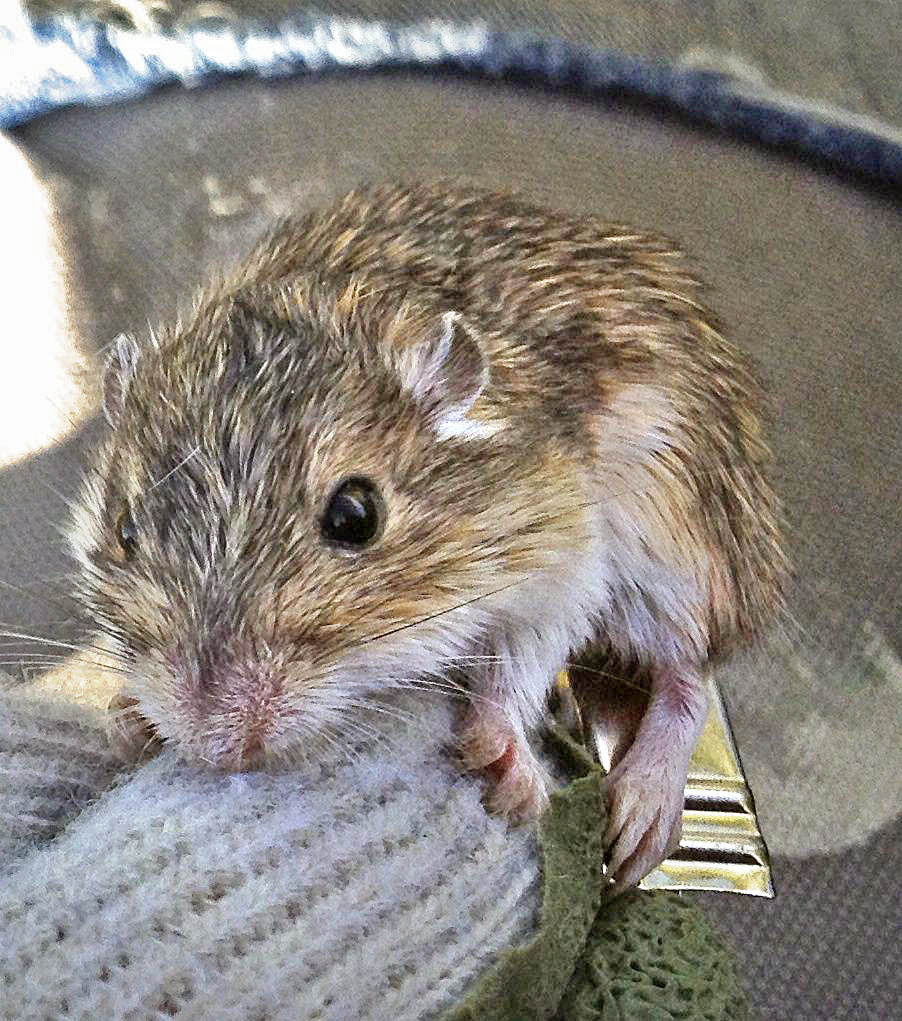
Pocket mouse. The clip on its tail is what is attached to the scale used to weigh them. While it is undoubtedly a little uncomfortable, there is no permanent damage. The clip is also a helpful way to hold onto animals so I can take a photo. It’s essential to my study that I am able to document how the pelage (fur) color varies between individuals.
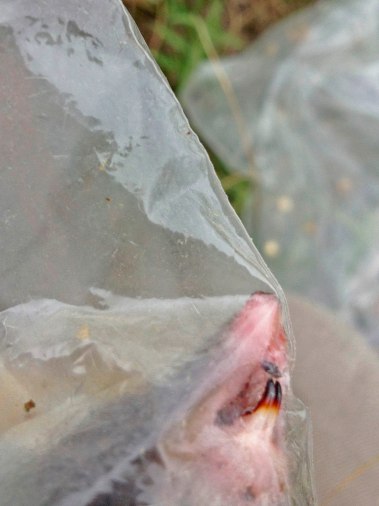
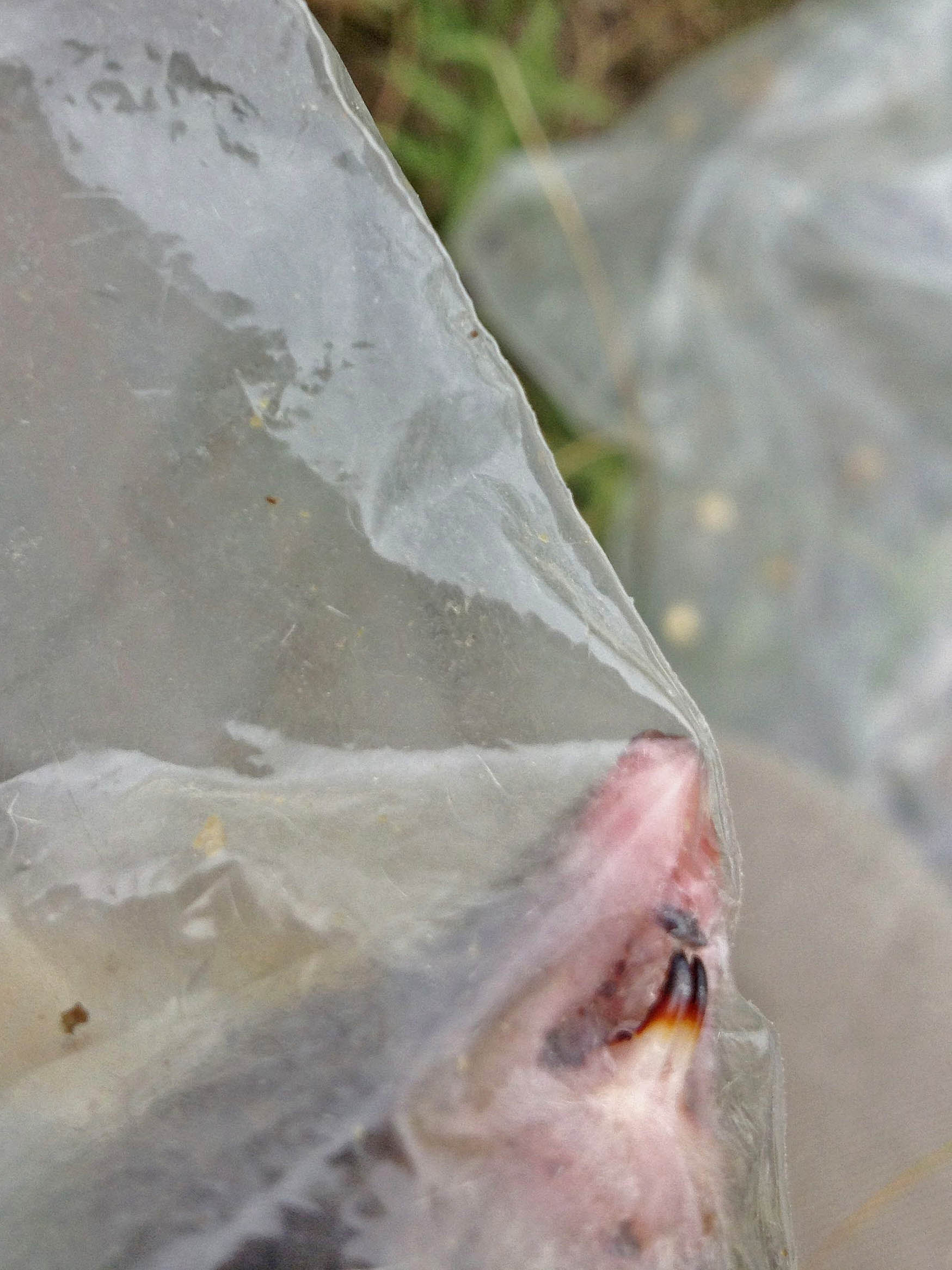
Scary shrew teeth. Unlike the rest of the similarly-sized critters I caught, shrews are not rodents. They are in the order Soricomorpha. They are mostly carnivorous and have saliva that paralyzes their prey.
There have been a few surprises during this project. For example, I have discovered that cows don’t like science. They have eaten my flags, licked my traps several feet off my transect, and squashed a few for good measure. If only their curiosity could be used more constructively!
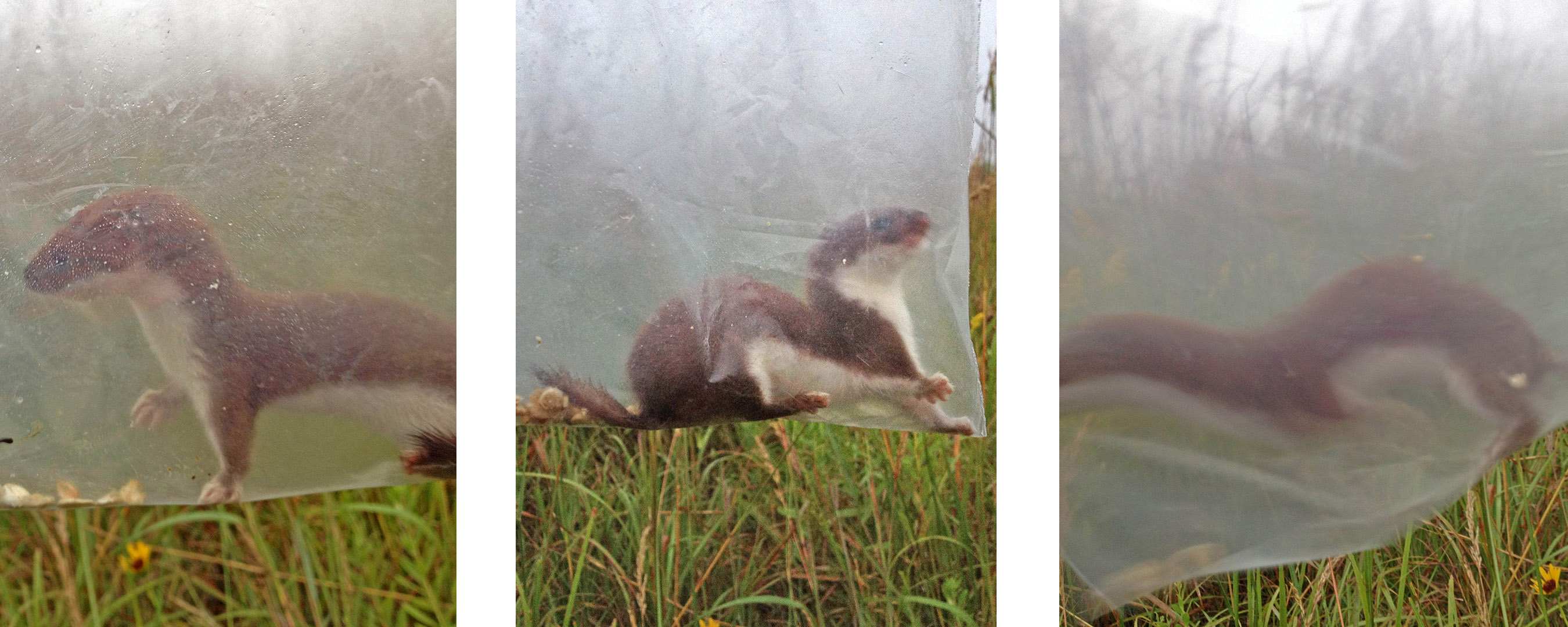
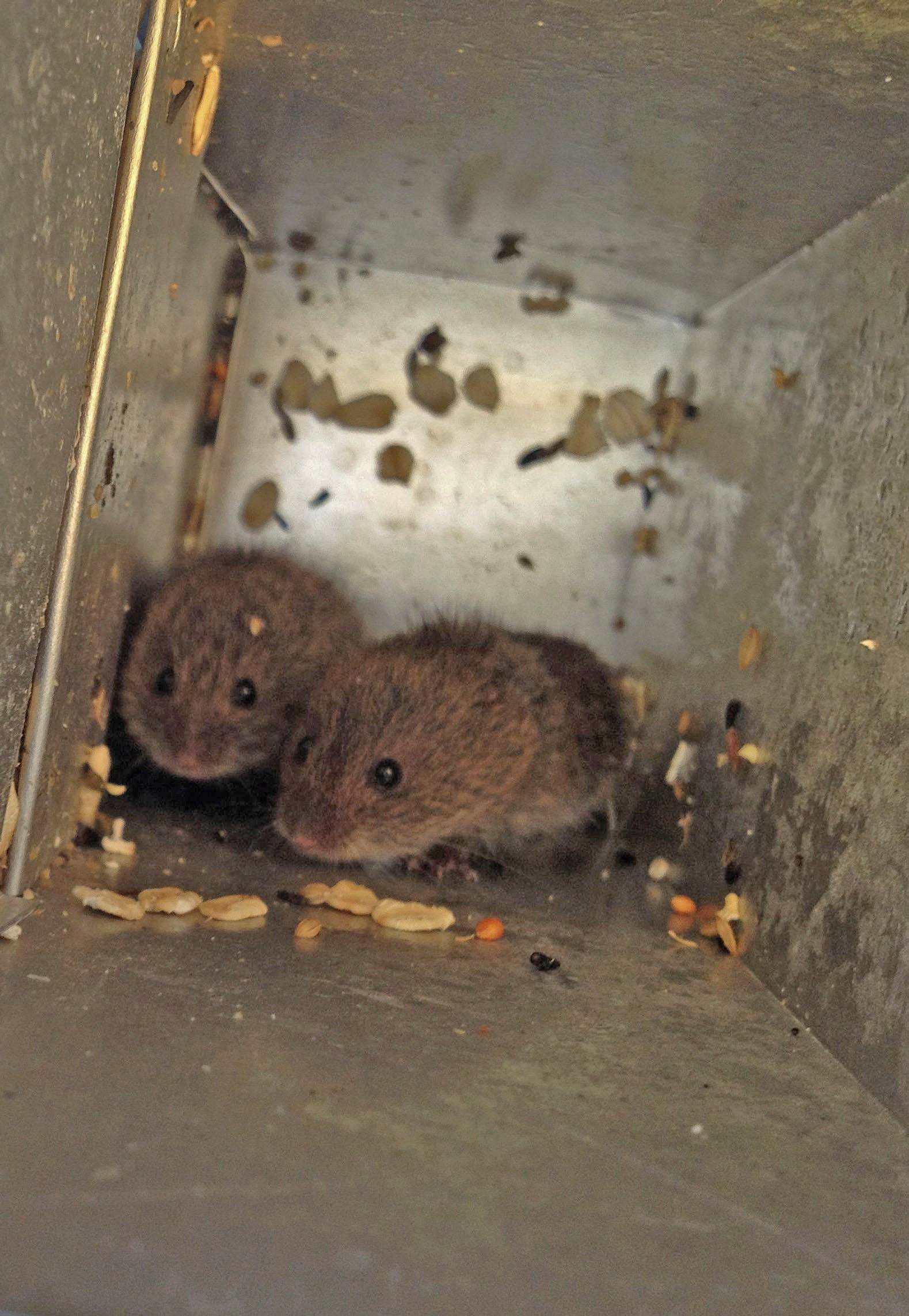
One of the best surprises was opening one of my traps and finding a least weasel inside! I was waaayyy more intimidated by this critter than it was by me. Despite its ferocity, it was impressively lightweight. This littlest weasel was longer than the thirteen-lined ground squirrels that I also caught that day, but considerably lighter. The ground squirrels maxed out my 100 gram scale, whereas the weasel was only 70 grams! The weasel was also impressively smelly, living up to the family name of mustelidae. I was a little worried that no other small mammals would go into that trap the next night because it smelled of predator, even after I sprayed it with Lysol. However, the harvest mouse I caught the next night was undeterred. No wonder s’mammals have such a short lifespan. Another surprising find on a different transect was an embarrassed-looking leopard frog. My bait seems to attract a lot of crickets, so I imagine that’s what lured the frog. And the cutest capture was these two baby voles that managed to wander into one trap.
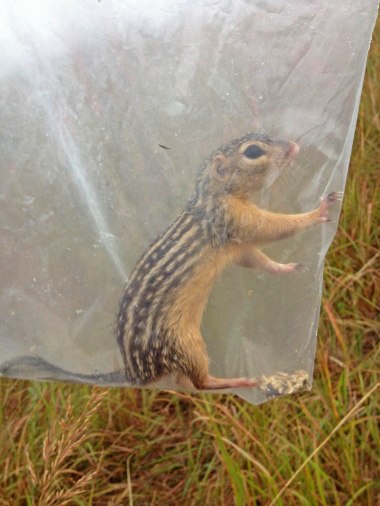
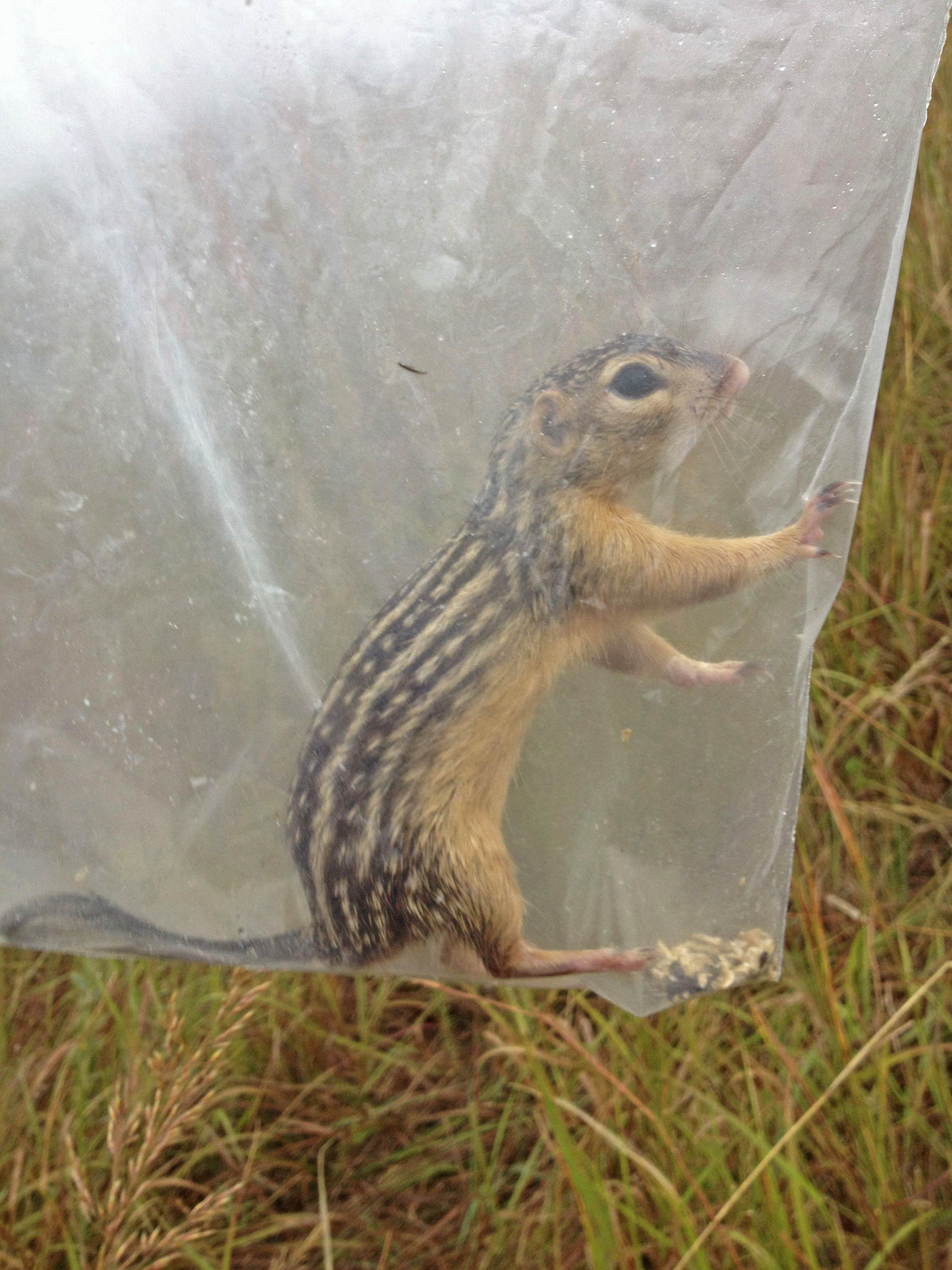
Thirteen-lined ground squirrel (Ictidomys tridecemlineatus). When I open a trap, I gently plop the critter into a bag in order to minimize handling exposure. I can weigh, identify and sex the critter while it’s in the bag. It’s safer for me, and the animal is only in there for a few seconds to a minute.
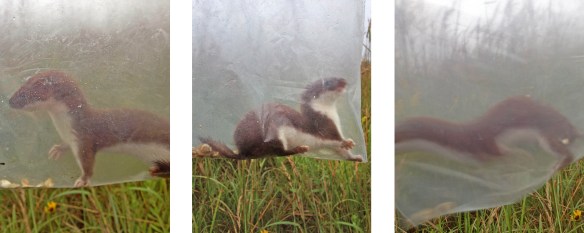
Weasel tryptic. Although none of these manage to capture the full length of the weasel (Mustela nivalis), they do manage to capture what you’d be likely to see – a reddish blur.
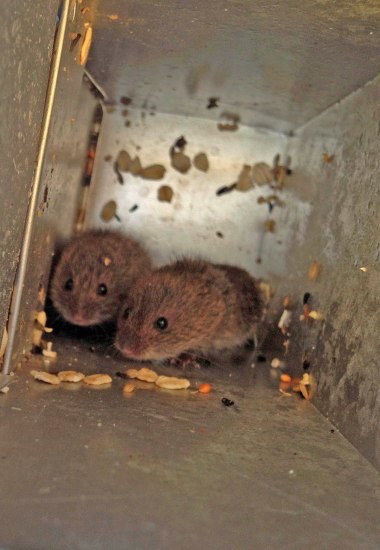
Baby voles!
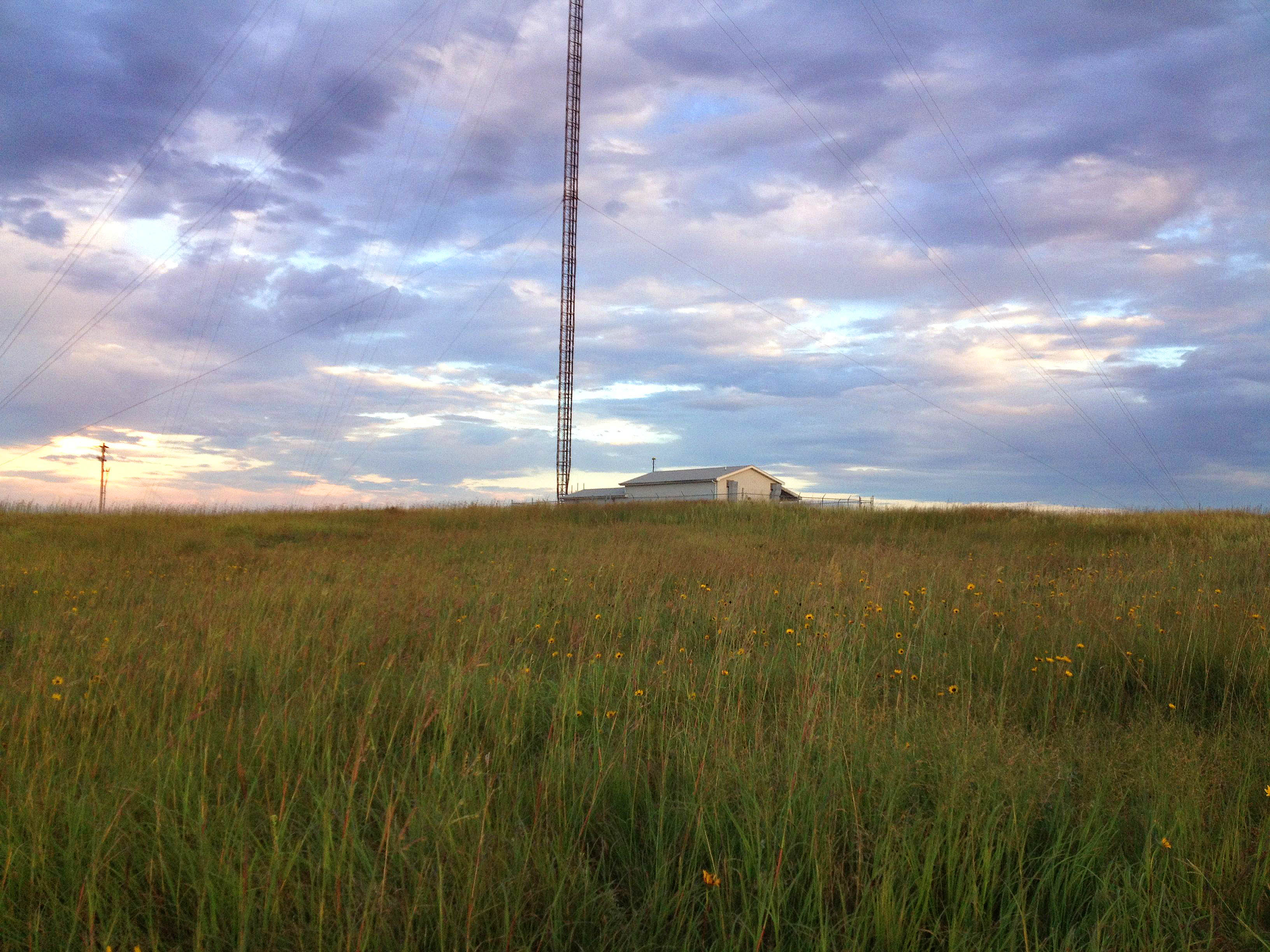
In addition to the excitement of peeking into every closed trap, there have been other perks to the project. I’ve gotten to see way more sunrises and sunsets than I would have otherwise. I love the freshness of the mornings, how the grass glows orange, and the spiderwebs glisten, and how much my mood (and finger mobility) improves once the sun crests the sandhills. I’ve gotten to hear the weird robotic chirpings of the swallows at sunset. The light at these times is able to make pretty much any photo look amazing, so it’s a little less discouraging to compare some of my photos to Chris’. I have also really enjoyed the slower pace of sampling, of covering my transect by foot. I spend a lot of time in the prairies, but infrequently do I have time to slow down and appreciate how the prairie community changes meter by meter. I have gotten to know my transects well, and I look forward to seeing if/how the patterns I’ve noticed play out in the data.
I’ve taken thinking like a s’mammal maybe a little too much to heart. Whenever we visit a new prairie, I think, ‘this looks like good pocket mouse habitat, I wonder if they have any? I wish I had my traps…’. I am also really grateful that so many mammalogists have been willing to donate their time and resources. I’ve learned a lot about species identification from them, and it’s exciting to make new connections with other institutions.
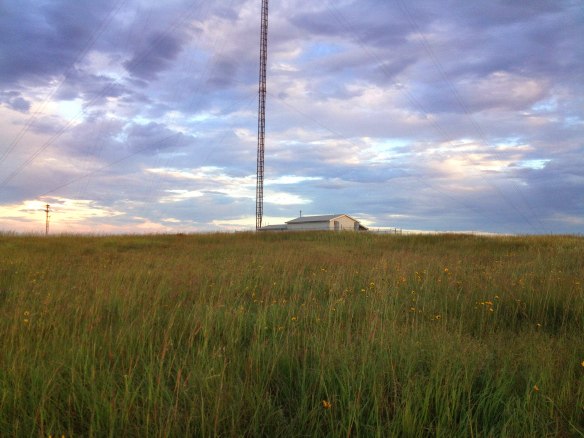
Sunrise!
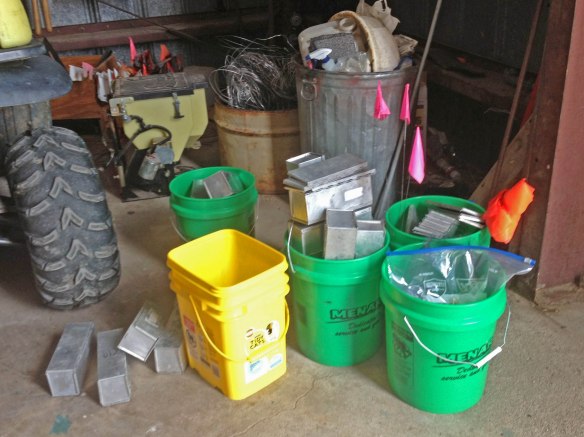
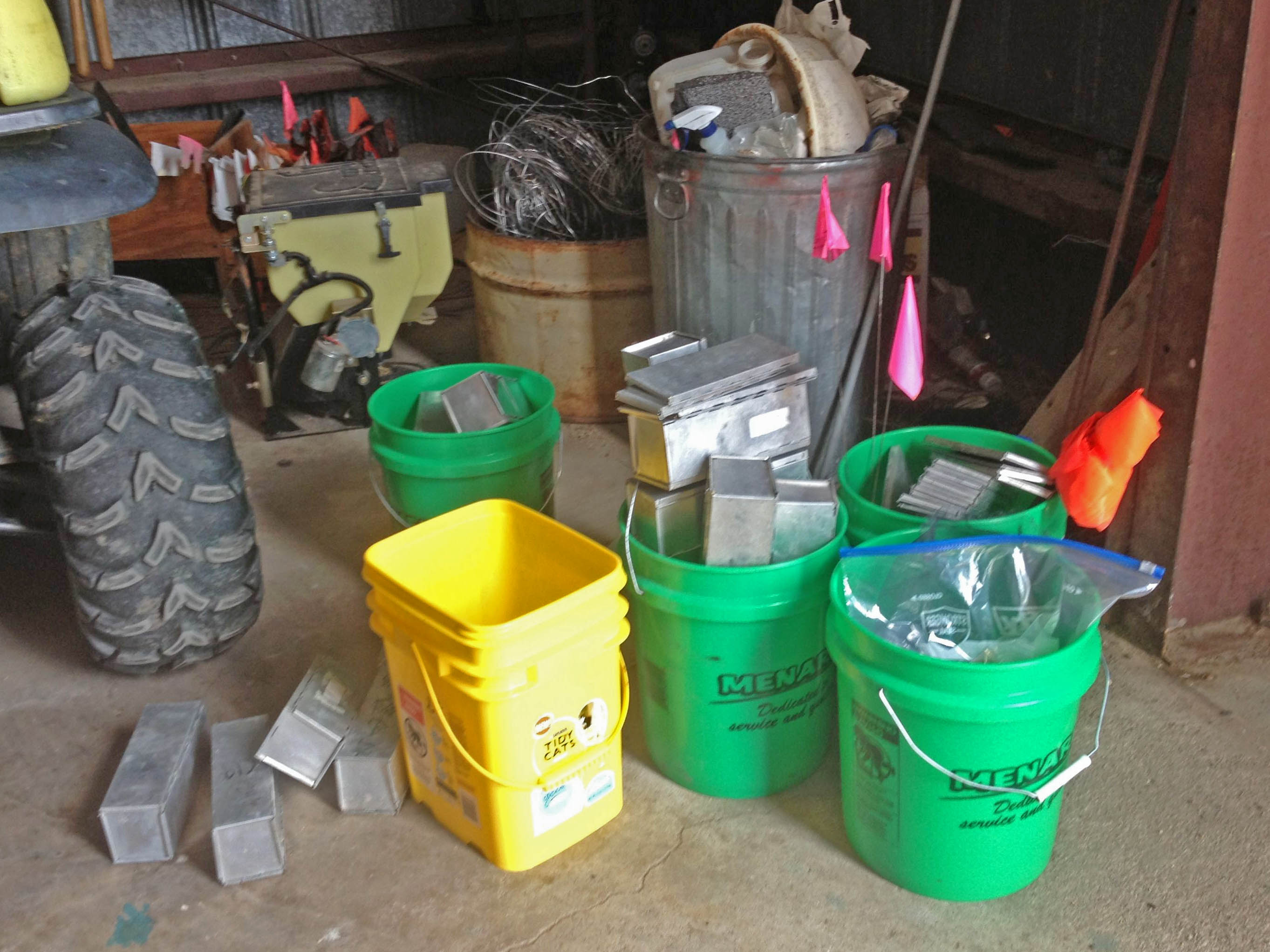
My pile of science. Traps generously lent out by Montana State University and Kansas State.
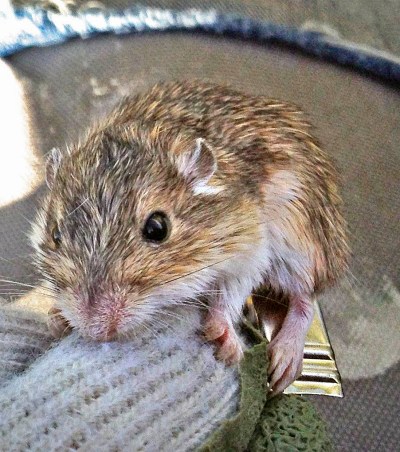
Pocket mouse pockets. They use external fur-lined cheek pouches to store seeds until they can bring them back to their nest cache.
This is not to say that this project has not had its challenges. I would say the main struggles have been setting reasonable goals (never a strong suit), keeping track of all the moving pieces (Do I have all my equipment? Am I recording all the right info? When do these traps need to be mailed back to Montana?), not losing things (Luckily the two mice than ran off with my scale clips were recaptured the next day!), and figuring out how to do the majority of the sampling by myself. It has been a long, time-intensive process for just five sampling transects. And, the project has not been without its dangers. The most dangerous part of the study has definitely been cacti. You wouldn’t believe the number of cacti I’ve accidentally kneeled on, or kicked into myself! I don’t recommend it. But, when these aspects of fieldwork start to get me down, I remind myself that I caught a weasel, and that’s pretty freaking cool.