Emergence of Life in a Wetland

After many years of wanting to, we finally installed some solar-powered pumps and livestock water tanks in our family prairie.  (Thanks to the U.S. Fish and Wildlife Service and Nebraska Game and Parks for providing cost-share money!)  Those two water tanks give the cattle nice cool clean water to drink and allow us more flexibility in the way we design our grazing each year.  Most importantly, they allow us to exclude the pond/wetland from grazing so it can start to function as a wetland rather than as a big mud hole for cattle to stand around in.

Because we’ve had good rains this year, the wetland has been pretty full.  That’s nice, but it has also prevented much of the wetland-edge seed I planted from germinating and growing.  Despite that, the recovery of the wetland is well underway.  There is now grass growing right to the water’s edge and arrowhead and other emergent plants are starting to appear in shallow water.  I’ve been spraying the few reed canarygrass plants growing nearby in the hope of preventing that invasive species from taking over the margins of the wetland, and hopefully I can get some more diverse wetland plants to establish there instead.
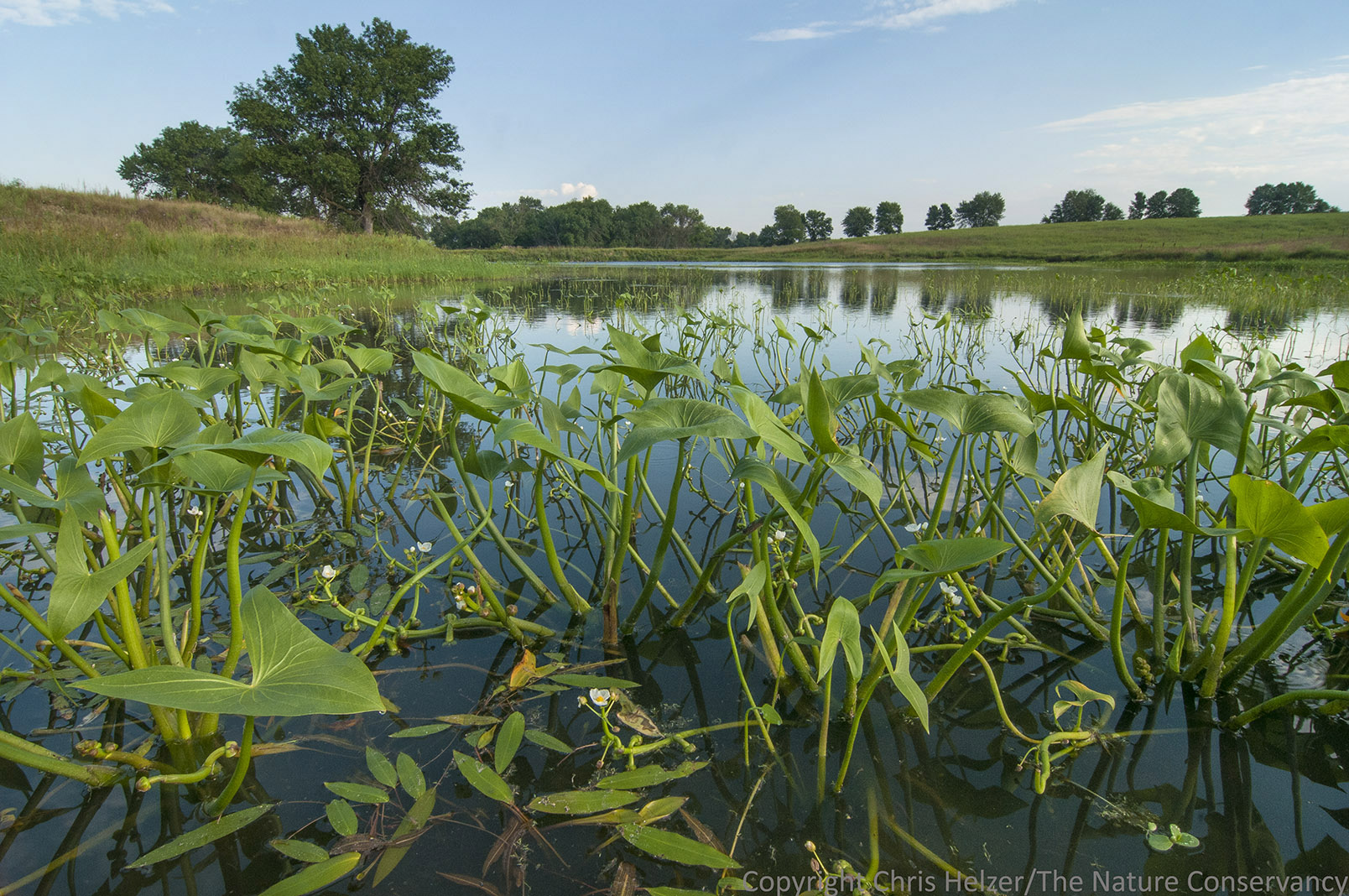
The pond/wetland at the Helzer family prairie with abundant arrowhead (Sagittaria sp.) in the shallows.

The pond/wetland at the Helzer family prairie with abundant arrowhead (Sagittaria sp.) in the shallows.

My daughter and I went for a walk at the prairie over the weekend and visited the wetland to see what was happening.  As I waded into the shallow water to take the above photo, leopard frogs scattered from my footsteps and red-winged blackbirds scolded me for encroaching upon their territories – very good signs of recovery.  However, looking more closely at the arrowhead plants poking through the water, I found even more evidence of new life.

Abandoned exoskeletons of damselfly nymphs were littered around the wetland.

Abandoned exoskeletons of damselfly nymphs were littered around the wetland.

Adult damselflies fluttered around everywhere, and many of them had apparently just appeared on the scene because the larval exoskeletons they’d just emerged from were stuck to leaves and stems all over the place.

ENPO140802_D008

ENPO140802_D010

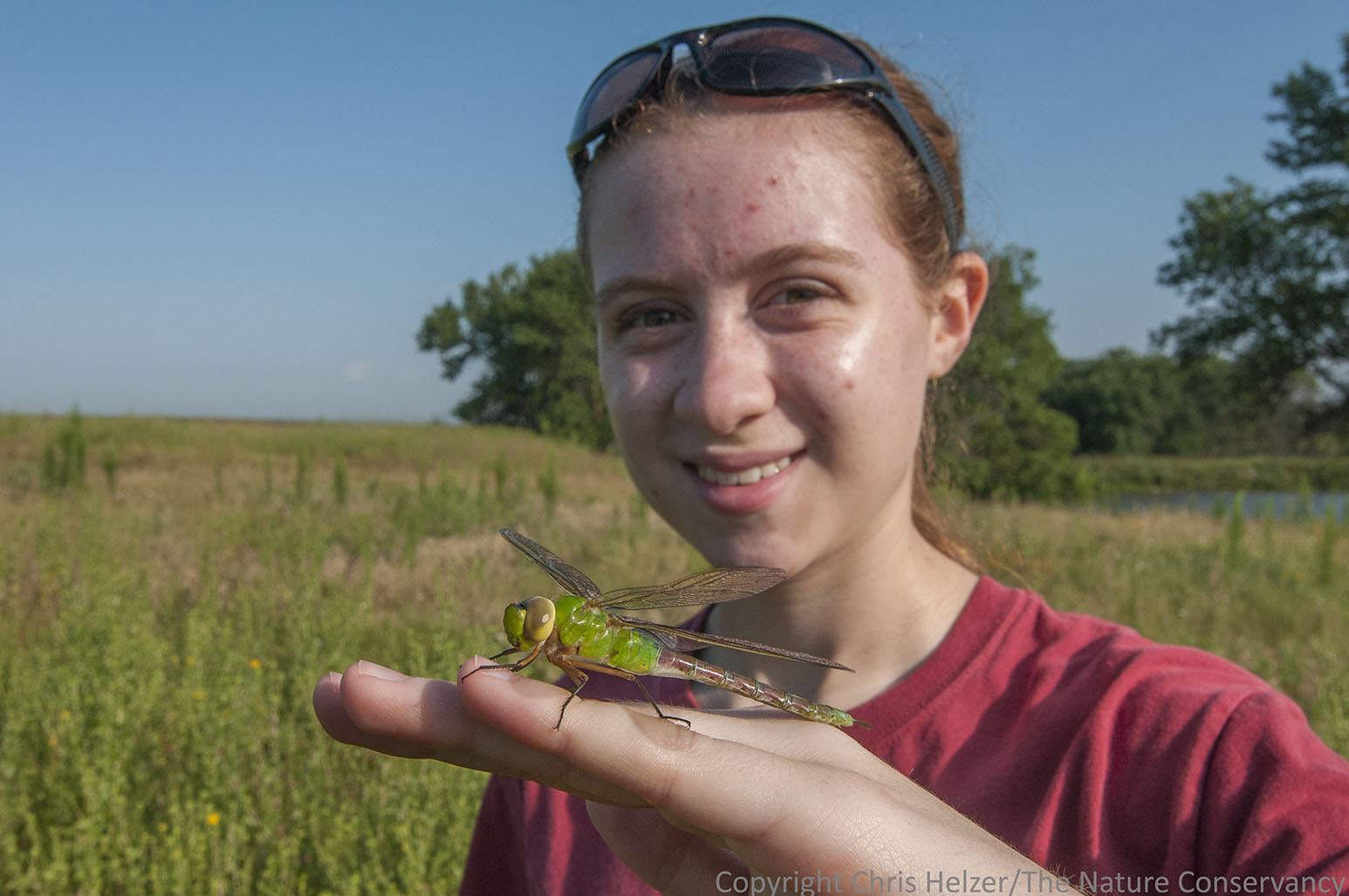
While I was too late to see the actual emergence of the damselflies, I did manage to find a green darner dragonfly that had just popped out of its larval skeleton and was fluttering its wings and waiting for its body to dry and harden.  I snapped a few pictures of it in place and then carried it over to Anna so she could get a good look at it.

A green darner dragonfly and the larval exoskeleton it had only recently escaped from.
A green darner dragonfly and the larval exoskeleton it had only recently escaped from.

Anna enjoyed getting a close-up view of the dragonfly and even posed for a photo with it.

Anna enjoyed getting a close-up view of the dragonfly and even posed for a photo with it.

After we became a little better acquainted with the new dragonfly, we set it safely on a fence post so it could finish hardening up in the warm sun.  I took a few more quick photos of it on the post and then left it alone.  It was gratifying to see other dragonfly species zipping around nearby too – I’m hoping that’s a sign that a number of other aquatic invertebrates are also colonizing our recovering wetland.  It should be fun to watch the changes in the coming years.

Our new friend on the top of a fence post.
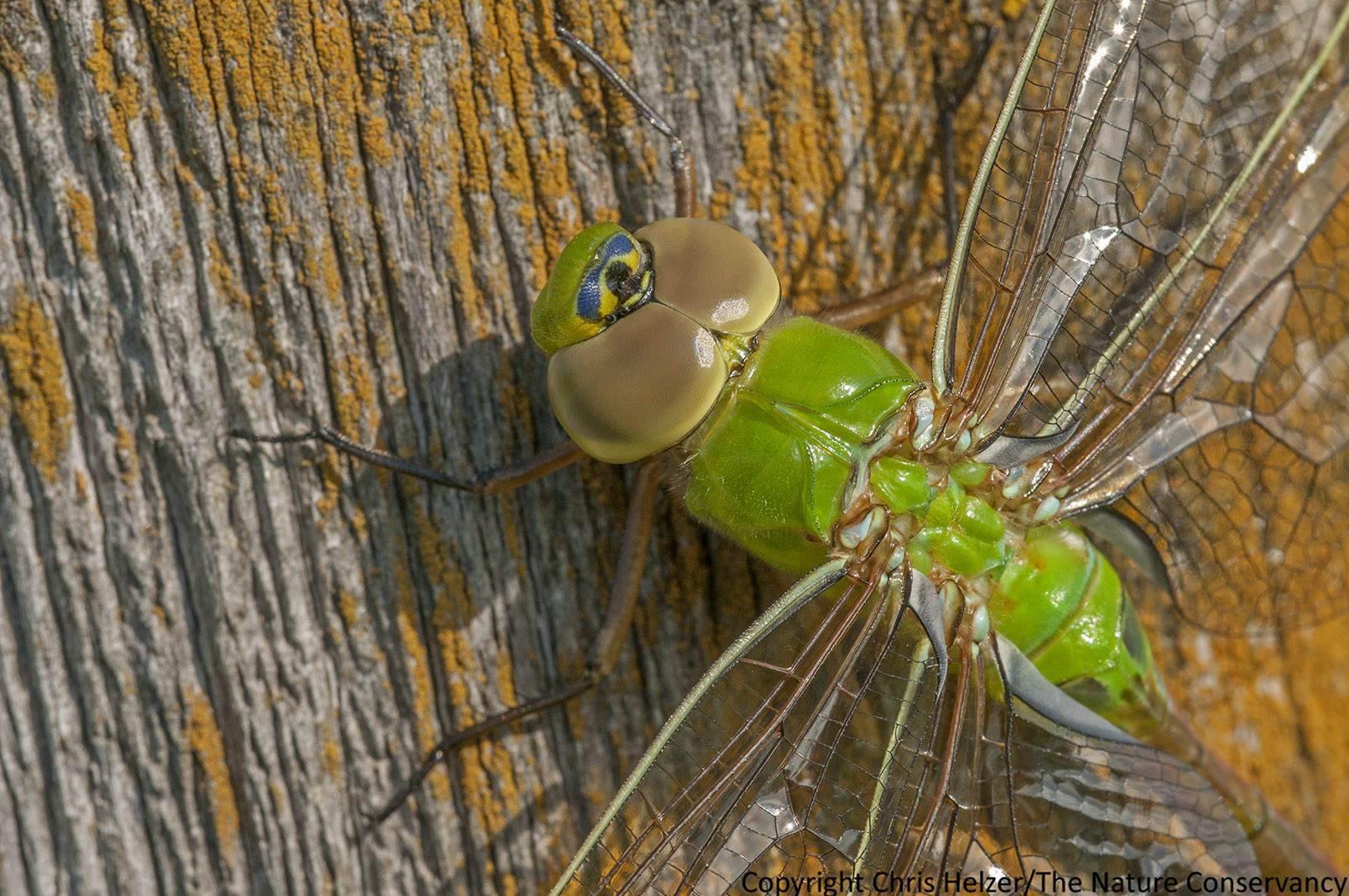
Our new friend on the top of a fence post.
ENPO140802_D019

The Answer to Yesterday’s Plant Quiz

Buckbrush in bloom.

Another look at the flowers.

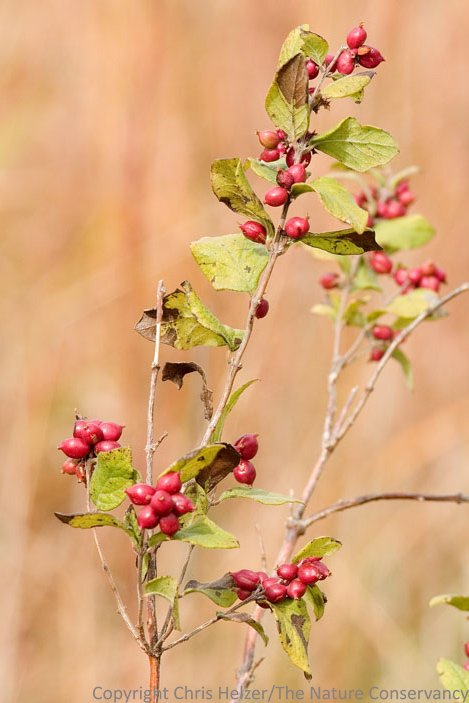
Many thanks to everyone who guessed at the identity of the plant species featured in yesterday’s post.  Here is another photo of the same plant species in bloom, from a little further away.  The species is commonly named “buckbrush”, which actually refers to a couple different species in the genus Symphoricarpos.  I believe this particular one is wolfberry, aka western snowberry (Symphoricarpos occidentalis), though it can be difficult to tell without seeing the fruits.  Wolfberry has white or light-colored fruits, while its cousin coralberry has red fruits.  Both grow together in many of our Nebraska prairies.  I’ve included a photo of coralberry fruits below – I don’t have a good photo of wolfberry with white berries.

This is a photo of coralberry, a close relative of wolfberry.  The two species look very similar except that coralberry has red fruits and wolfberry fruits are white.

This is a photo of coralberry, a close relative of wolfberry. The two species look very similar except that coralberry has red fruits and wolfberry fruits are white.

Taken together as buckbrush, coralberry and snowberry are seen as “weeds” by many ranchers and range scientists.  I suppose there is some degree of competition for resources with grass, but buckbrush is a low-growing shrub (often two feet tall or less) and I usually see it in loose colonies with plenty of grass still growing between plants.  At least in the prairies I’m familiar with, cattle graze right through the buckbrush colonies and get the grass they’re looking for.  In my family prairie, my grandpa and other relatives spent years spraying patches of buckbrush, trying – unsuccessfully – to eliminate them.  In the nearly 15 years that I’ve been helping to manage the site, we’ve not sprayed the patches, and I don’t think they’ve grown any bigger during that time.

On the positive side buckbrush berries are apparently highly sought as a food source by wildlife species.  In addition, because it’s a short-statured woody plant, it doesn’t significantly change the habitat structure of a grassland in ways that would negatively impact most grassland wildlife.  It’s also very pretty…

When I teach our staff and visitors how to identify buckbrush, I adapt the mnemonic device “MAD Buck”, which was intended to remind people of the common eastern North American trees that have opposite branching – Maple, Ash, Dogwood, and Buckeye.  In this case, since we don’t have Buckeye in the Platte River Prairies, I just substitute Buckbrush.  Most other woody species have alternate branching.  (Opposite branching means that each branch is paired with another one right across the stem from it, rather than staggered.)

Thanks again to all who submitted guesses yesterday.  The first to jump in with the correct answer was Quinn Long (who ought to know since he’s a professional botanist) so, as promised, he is awarded 400 points.  Quinn, you can redeem those points at any retailer you can talk into it.

Good luck with that.

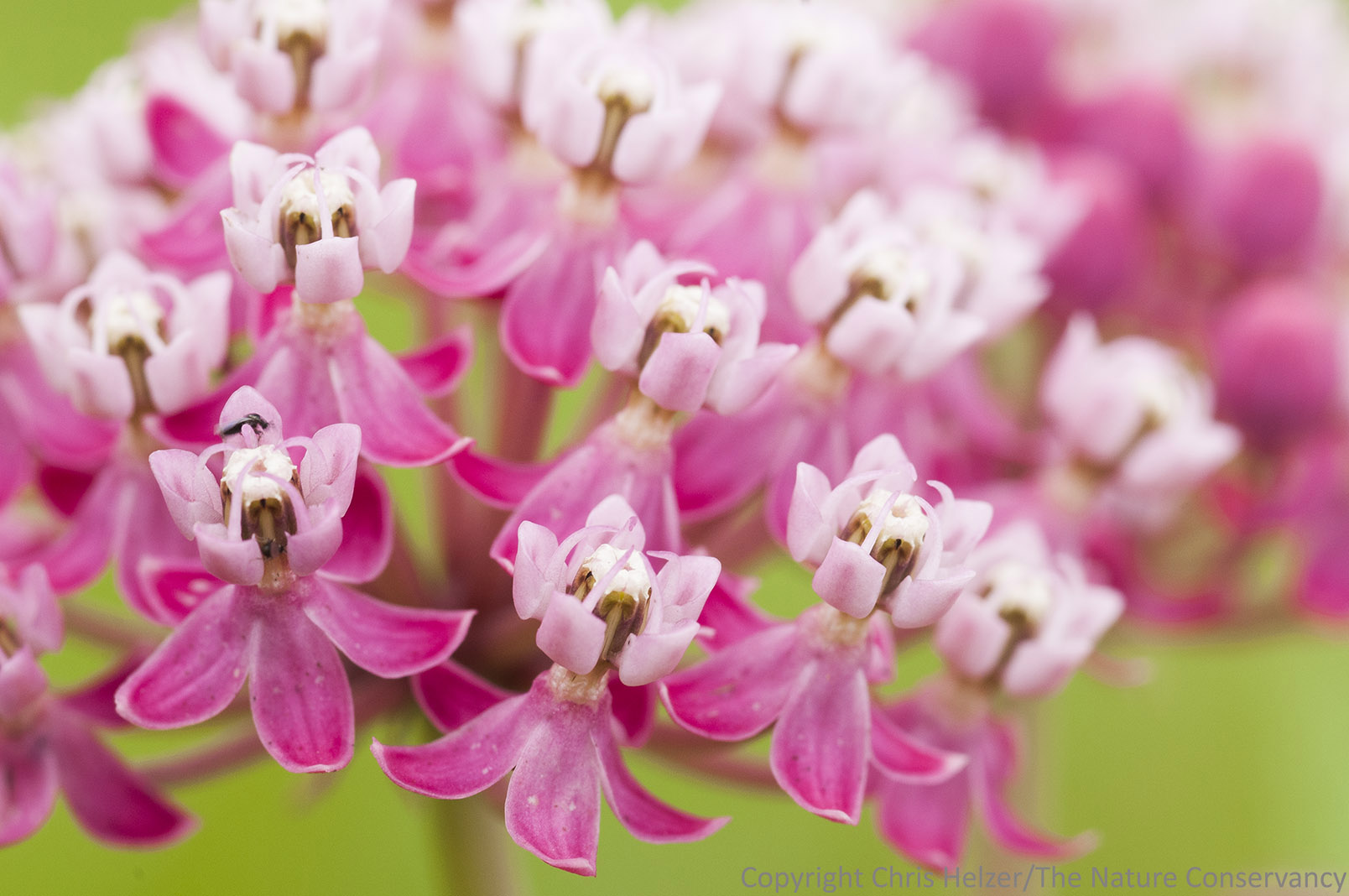
Oh, and several people guessed “milkweed”, which is understandable based on the appearance of the leaves in that particular photo.  However, the flowers of milkweed have a very distinctive shape – see below – that is pretty different from that of buckbrush.  It’s okay, though, you don’t lose any points for guessing incorrectly!

Swamp milkweed, displaying the distinctive flowers of milkweed.  Notice the conspicuous absence of visible anthers (the little appendages that hold pollen).

Swamp milkweed, displaying the distinctive flowers of milkweed. Notice the conspicuous absence of visible anthers (the little appendages that hold pollen).