If you live in Nebraska, you’re in for a treat next week. You’ll have three opportunities to watch the premiere of The Great Plains, the television documentary of conservation photographer Michael Forsberg and the process of making his most recent book. The Nebraska Educational Television (NET) program follows Mike around to the same sites he photographed and profiles the wildlife and people in each place. Along the way, Mike talks about conservation and photography, and about the importance of a wide swath of country that is all but ignored by people that don’t live there. The show will be on Sunday November 25 at 8:30pm CST, and then will be rebroadcast on November 28 at 7pm and December 2 at 2:30pm.

A film crew in our seed shop, with TNC employees Nelson Winkel (cowboy hat) and Nanette Whitten (background).
We had the opportunity to host Mike and the NET crew at our Platte River Prairies back in the fall of 2010. They filmed us harvesting seed and talking about the importance of prairies and restoration. In addition, Bill Whitney and his crew from the Prairie Plains Resource Institute had their combine on our prairies at the time, harvesting seed for both of us, so the film crew got to go along for the ride.
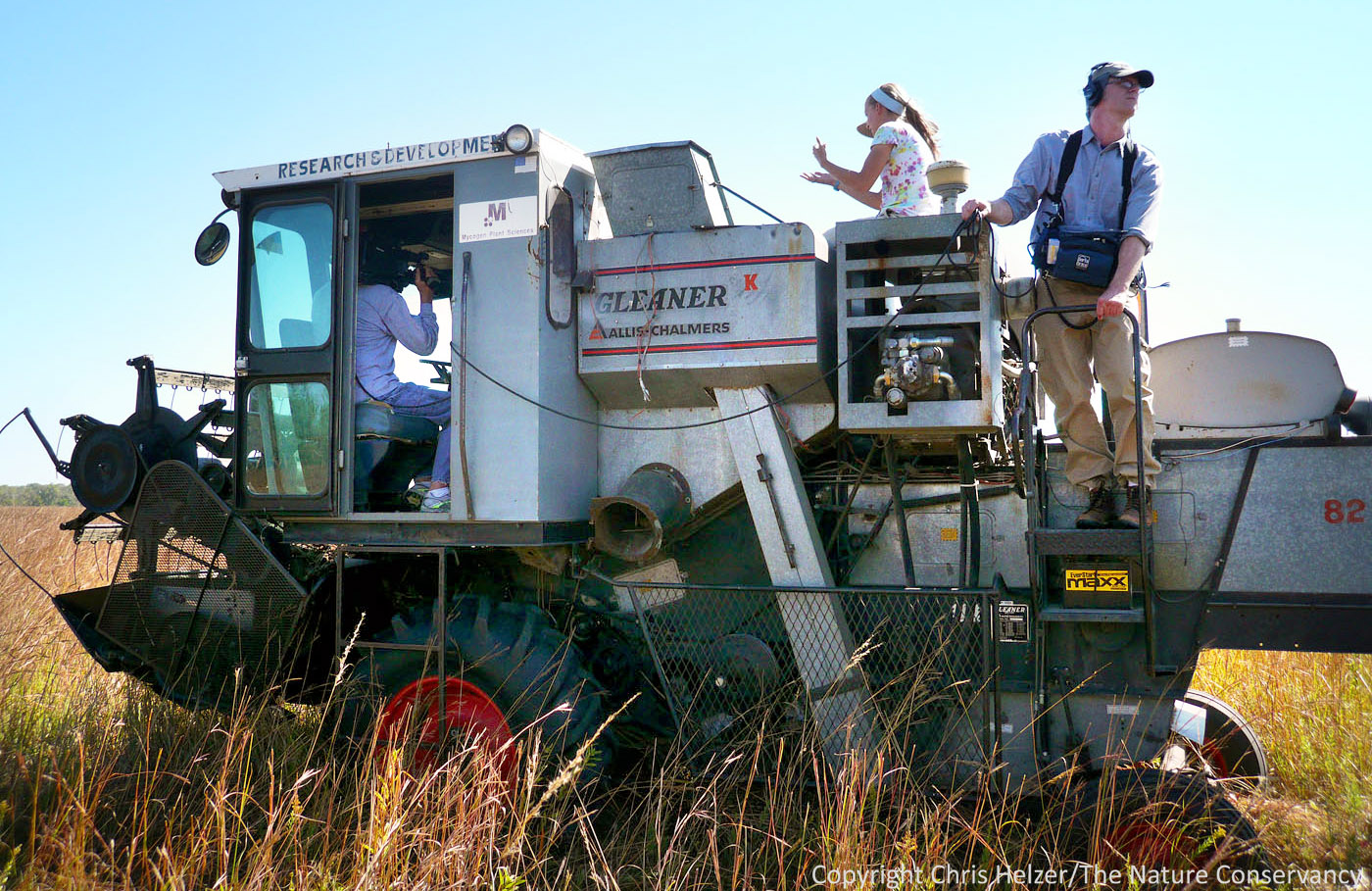
Bill Whitney drives the Prairie Plains Resource Institute combine through our prairie with a camera man in the cab and a sound man hanging on to the back.
.
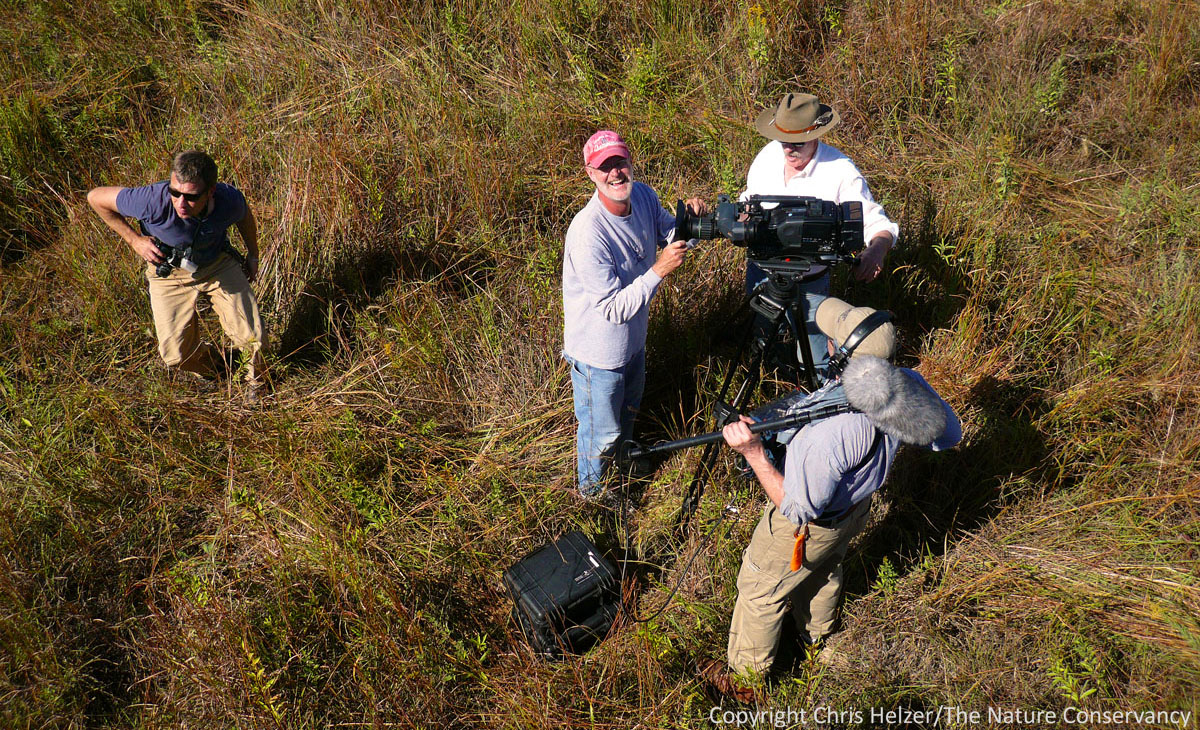
Mike Forsberg (left) and the NET film crew, as seen from the top of the PPRI combine…
Mike is a true conservation photographer, and an invaluable resource for the grasslands and other ecosystems of the Great Plains. He is not only an extraordinary photographer – both artistically and technically – he’s also an excellent naturalist. Most importantly, he speaks and writes with a passion for conservation that draws people in and makes them want to go out and save the world. He does tremendous work to highlight the value and beauty of a part of the world that many other photographers fly over on the way to more traditional photographic destinations.
Please click here for a link to a 5 minute preview of the show. In case you are in a big hurry, the best part is at 4:02 minutes…
Or click here to Mike Forsberg’s website where you can watch a longer (11 minutes) promo from Mike’s website.
And – if you can’t see the documentary (yet) you can certainly see the book that started it all. (It’s a great holiday gift!)
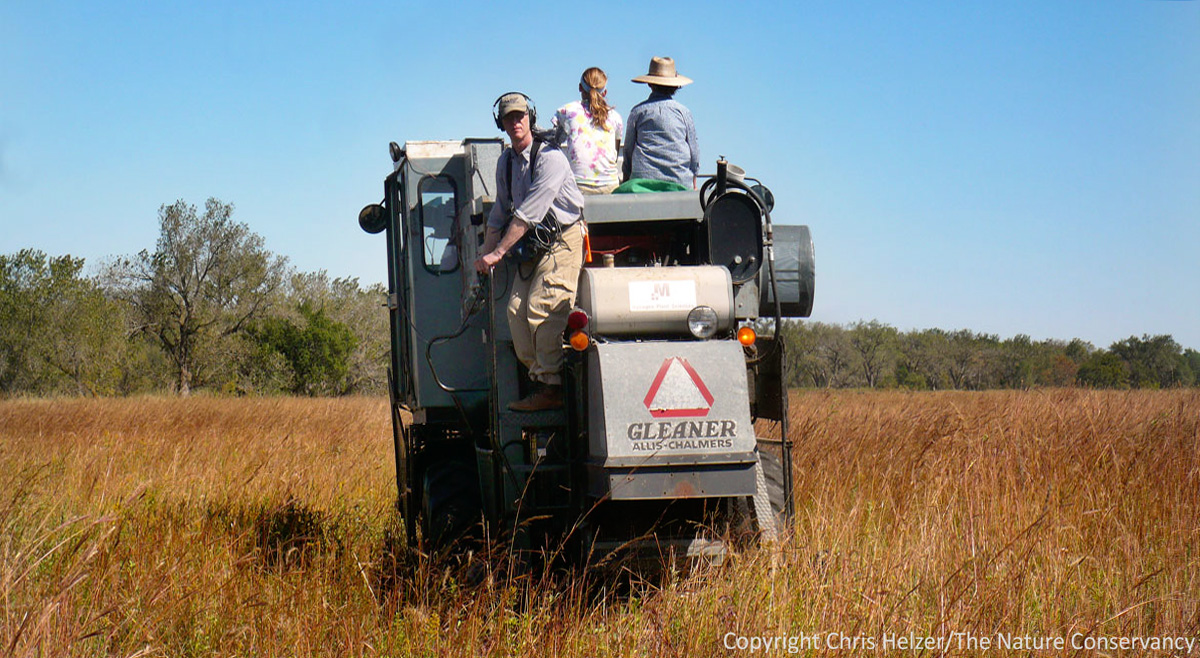
It was hard not to envision the Beverly Hillbillies as the old Gleaner combine staggered through the prairie with a full load of people on board.