Today, I’m beginning a new photography project aimed at exploring and celebrating the small scale diversity and complexity of prairies. I’ve picked out a 1 x 1 meter plot in a small patch of restored prairie here in Aurora, Nebraska, and I will be photographing everything I can within that tiny area over the next year or so. My objectives are to find and document as much beauty and diversity as I can and to show the dynamic nature of prairie life, even at a very small scale.
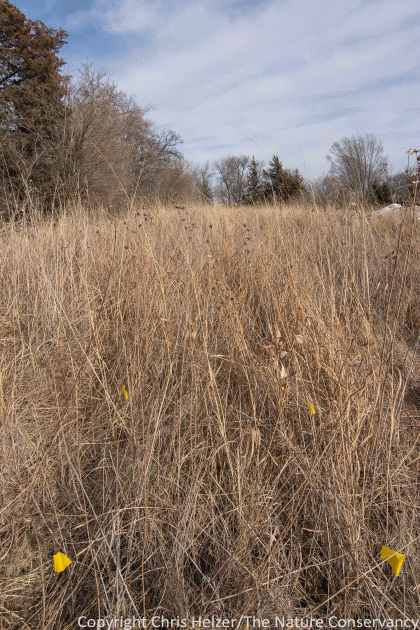
Lincoln Creek Prairie, with the yellow flags marking my square meter plot.
The plot sits in a narrow strip of land restored in the 1980’s by Bill Whitney and Prairie Plains Resource Institute. I picked Lincoln Creek Prairie because it’s right across town from me, and therefore easy for me to get to frequently. It’s also a great restored site that was planted with a diverse mixture of prairie species (over 100 species) and is well-established. However, the prairie is small enough that it doesn’t host any grassland-nesting birds or other animal species that need relatively large and open prairie habitats, and suffers from all the other issues that come along with tiny prairies. I anticipate that most or all of the organisms I photograph during the coming year will be plants and invertebrates, but I’m confident that I won’t find a shortage of subject matter.
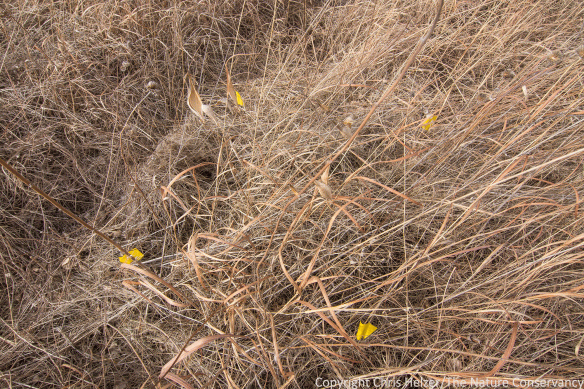
A view of the 1 x 1 plot from above
I didn’t pick the small plot randomly, but I also didn’t try to find a spot with more diversity than any other nearby. Instead, I looked for a place that would catch the light well during most of the year but was out of the way enough to not be disturbed by people hiking the nearby trail. I freely admit that I chose the exact location of the 1 x 1 plot because it has a butterfly milkweed plant in it – it’s a nicely photogenic species. This isn’t research, after all, and I don’t have to select my plot in a completely unbiased way! However, I’m confident that the 1 x 1 plot I chose is representative of the rest of the prairie around it.
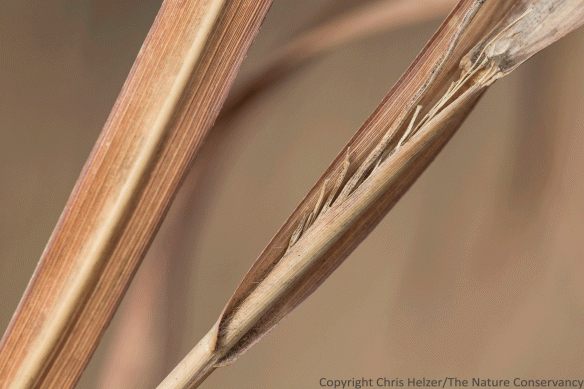
Switchgrass (Panicum virgatum) with a flower that never completely came out of its sheath last summer.
I began my photography journey within the plot yesterday, and took the photos you see here in this post. I’ve already discovered one big challenge regarding my plans – it’s going to be difficult to avoid crushing or breaking the vegetation within the plot during my frequent visits. I don’t see any way to avoid matting down the vegetation around the edge of the plot, but I’ll try not to do any more of that than necessary, and hopefully that won’t excessively impact what I see inside the plot.
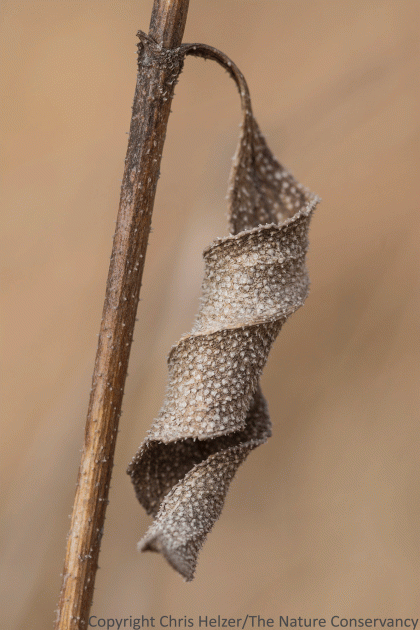
The curled and dried leaf of stiff sunflower (Helianthus pauciflorus)
Right now, the plot is fairly uniformly brown, and perhaps drab looking from a distance. However, I didn’t have much trouble finding interesting shapes and textures to photograph during the 10 minutes or so I spent there yesterday. Even without green vegetation or crawling invertebrates, there was plenty to look at. That bodes well for the coming year, I think! Stay tuned…
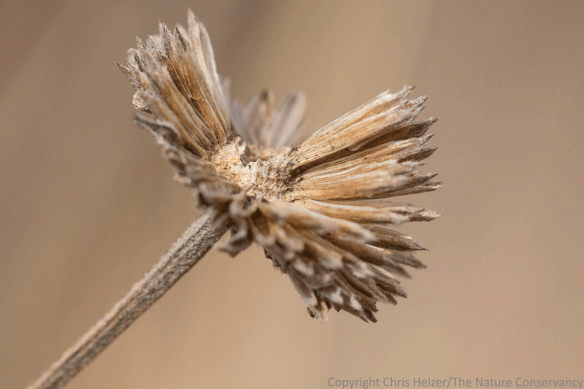
Maximilian sunflower (Helianthus maximiliani) seed head, minus the seeds. Birds, mammals, and/or other creatures likely picked it clean last fall.
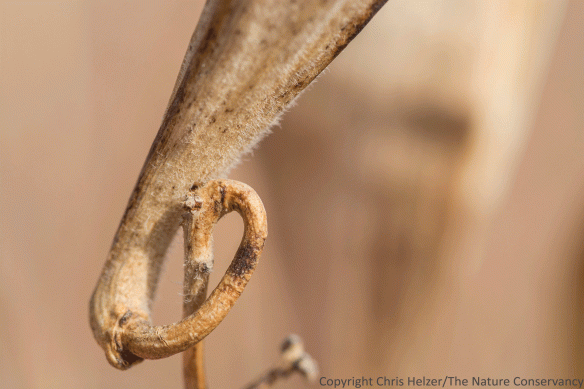
A butterfly milkweed (Asclepias tuberosa) seed pod on a curled stem.




 The Prairie Ecologist