Changing Our Focus

Last Friday night, I had the honor to be part of an event called the Conservation Jam, hosted by The Center for Great Plains Studies and The Nature Conservancy, and attended by about 300 people.  I was one of 15 conservationists asked to present a “big idea” to help conserve the Great Plains.  There was just one catch – each of us had to give our presentation in three minutes.

Three minutes is not very long.

I thought I’d share my presentation with you.  Partly because I spent a lot of time putting it together and only got to spend three minutes presenting it.  (But mostly because I’m too lazy to come up with another idea for a blog post this week.)  The topic of my presentation was not a new idea; if you’ve followed this blog, you’ve seen more extensive posts on similar subjects twice before, in January 2011 and February 2012.  The change of focus I advocate for isn’t, by itself, going to save the Great Plains, but I do think it’s a very important part of our approach going forward.

For what it’s worth, here’s my three minute presentation:

In grasslands, the vast majority of species are plants and invertebrates.  Birds and other vertebrates make up a very small proportion of those species.

In grasslands, the vast majority of species are plants and invertebrates. Birds and other vertebrates make up a very small proportion of those species.

.

Between them, plants and invertebrates drive the ecological function of prairies (including pollination and soil productivity, and they are the food sources for most creatures).   In other words, they’re what make grasslands tick.

Between them, plants and invertebrates drive the ecological function of prairies (including pollination and soil productivity; and they are the food sources for most creatures). In other words, they’re what make grasslands tick.

.

The diversity of plants influences the diversity of invertebrates, and vice versa.  That complexity is the foundation of the resilience and overall stability of the ecosystem.  It’s critically important to maintain plant and invertebrate diversity because without it, the ecosystem breaks down.

The diversity of plants influences the diversity of invertebrates, and vice versa. That complexity is the foundation of the resilience and overall stability of the ecosystem. It’s critically important to maintain plant and invertebrate diversity because without it, the ecosystem breaks down.

.
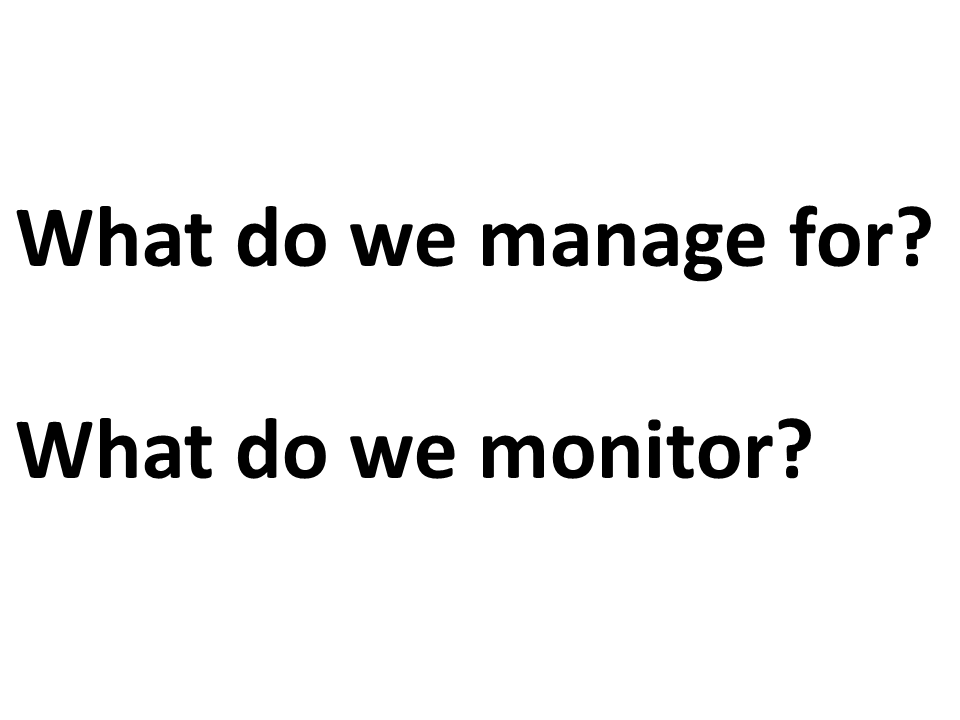
So clearly, as grassland managers and advocates for prairie conservation, we spend the vast majority of our time studying and managing for plants and invertebrates.  ...Right?

So clearly, as grassland managers and advocates for prairie conservation, we spend the vast majority of our time focusing on plants and invertebrates. …Right?

.

Wrong.  We actually  focus mostly on birds.  Birds we shoot and birds we watch.  I really like birds, but they’re not good indicators of how plant and invertebrate communities are doing, so they don’t tell us much about prairie function.  Birds are an important part of conservation, but they’re only a small piece – we need to be sure our focus on them doesn’t distract us from the broader ecosystems they live in.

Wrong. We actually focus mostly on birds. Birds we shoot and birds we watch. I really like birds, but they’re not good indicators of how plant and invertebrate communities are doing, so they don’t tell us much about prairie function. Birds are an important part of conservation, but they’re only a small piece – we need to be sure our focus on them doesn’t distract us from the broader ecosystems they live in.

.

A couple years ago, we brought these Illinois botanists to Nebraska to help us with a research project.  We had to, because there aren’t many people in Nebraska who can identify the majority of plants in a prairie.  That’s embarrassing.  More importantly, how can we manage prairies or evaluate our conservation progress if we can’t identify the species we’re trying to conserve??

A couple years ago, we brought these Illinois botanists to Nebraska to help us with a research project. We had to, because there aren’t many people in Nebraska who can identify the majority of plants in a prairie. That’s embarrassing. More importantly, how can we manage prairies or evaluate our conservation progress if we can’t identify the species we’re trying to conserve??

.

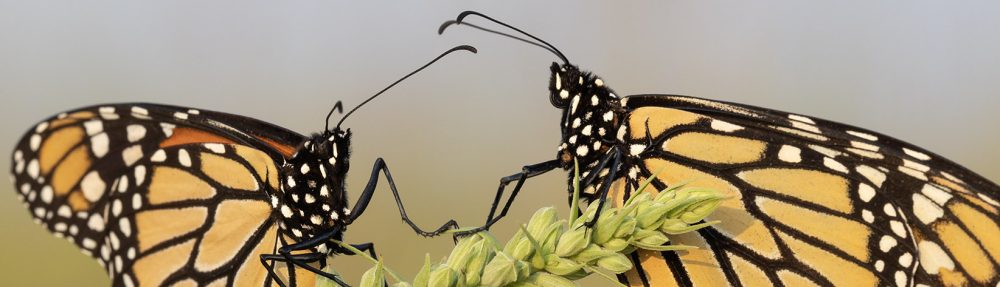
We know even less about insects and other invertebrates.  Of the few entomologists we have in Nebraska, most focus on crop pests.  As a result, we really don’t know what species of pollinators or other insects we have, let alone how they’re doing.  This is Mike Arduser, who came up from Missouri last year to help us learn about bees on the Platte River.

We know even less about insects and other invertebrates. Of the few entomologists we have in Nebraska, most focus on crop pests. As a result, we really don’t know what species of pollinators or other insects we have, let alone how they’re doing. This is Mike Arduser, who came up from Missouri last year to help us learn about bees on the Platte River.

.
Look, we have GOT to make some changes.  We desperately need naturalists with broad bases of experience who can help us study and assess plants and invertebrates.  We need to know what we have so we can see if we’re winning.  It’s up to all of us to broaden our own focus, but also to encourage others to do the same.

Look, we have GOT to make some changes. We desperately need naturalists with broad bases of experience who can help us study and assess plants and invertebrates. We need to know what we have so we can see if we’re winning. It’s up to all of us to broaden our own focus, but also to encourage others to do the same.

.

9.Birds are beautiful, they’re worthy of conservation, and they’re great at attracting people to nature...

Birds are beautiful, they’re worthy of conservation, and they’re great at attracting people to nature…

.

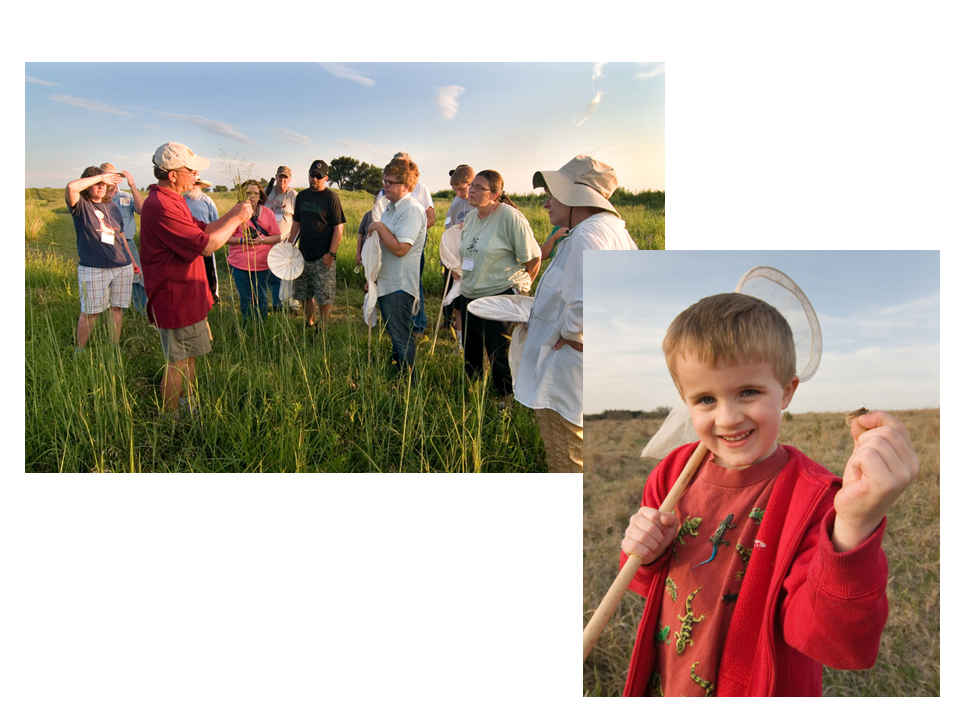
...but THIS is the face of conservation.

…but THIS is the face of conservation.

.

We need to create more opportunities to learn both insects and plants.  More importantly, we need to convince people that plants and invertebrates are interesting enough to care about. There are resources like bugguide that can help amateurs like us identify insects, but they only work if we use them.

We need to create more opportunities to learn both insects and plants. More importantly, we need to convince people that plants and invertebrates are interesting enough to care about. There are resources like bugguide that can help amateurs like us identify insects, but they only work if we use them.

.
The Significance (?) of Obscure Species

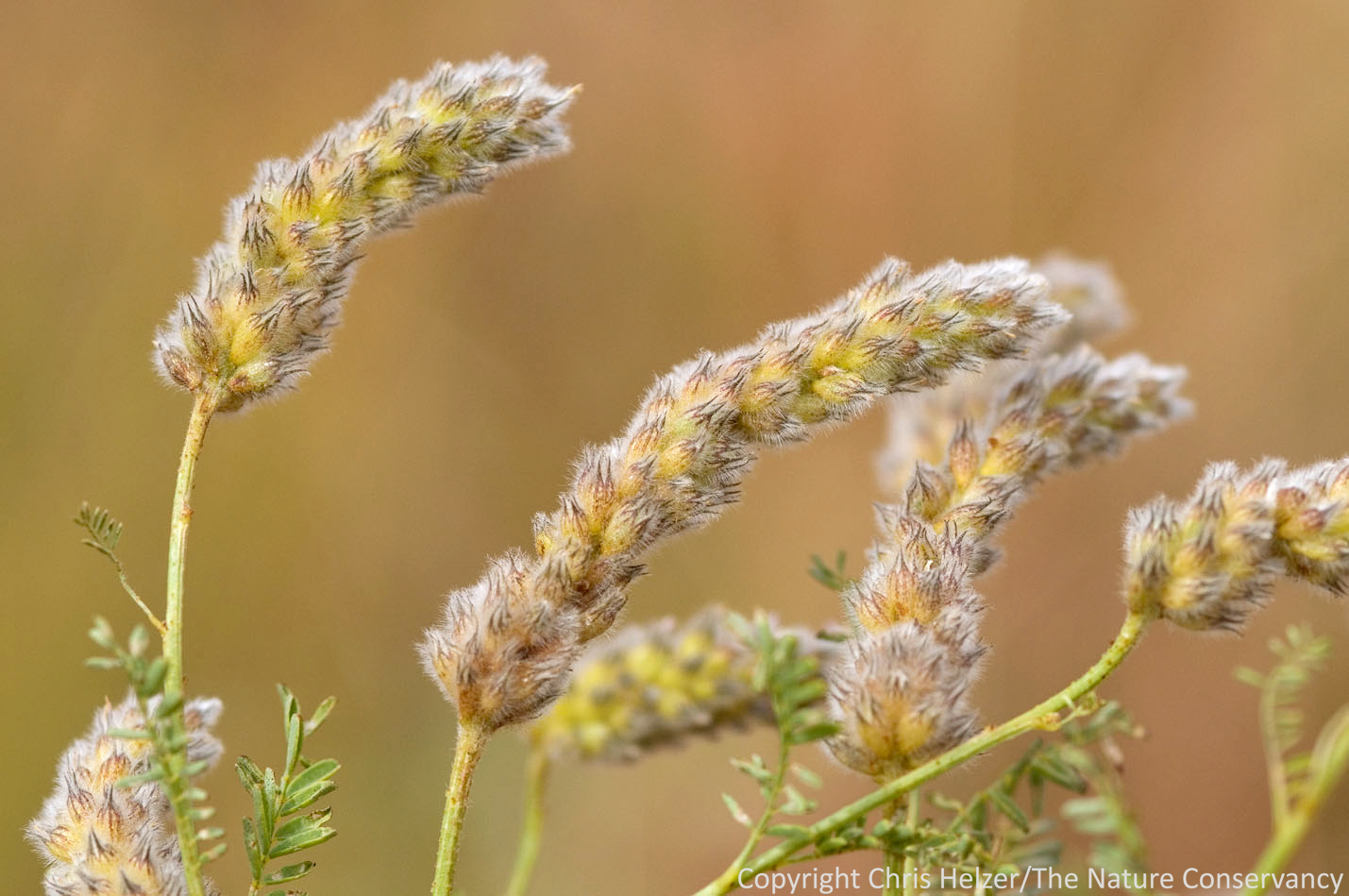
I’m curious to know whether any of you can identify this plant species.

I know what it is, but don’t know much about it.  I doubt anyone really does.  In the United States, it is found as far east as Massachusetts and as far west as Arizona.  More broadly, it’s found throughout much of the western hemisphere, from Canada to Argentina.  However, I’m not sure it’s really common anywhere – it certainly isn’t often seen in Nebraska.  Just an obscure little species living an insignificant little life.

This plant can grow as tall as ?? feet, but I'll bet there aren't many people who live within its range who have ever noticed it.

This plant can grow up to 3 feet tall or more, but I’ll bet there aren’t many people who live within its range who have ever noticed it.  Thanks to Bill Whitney of Prairie Plains Resource Institute for introducing it to me back in the mid 1990’s.

I was talking about endangered species with some high school students the other day.  That led to a discussion about the value of species in general.  Why does it really matter if any particular species goes extinct?  We talked about interconnections between species and the impact the loss of one species could have on others and their environment.  We talked about the famous analogy of removing rivets from a plane.  And, of course, we talked about the potential value of species to science and human lives (curing cancer and the like).

I wanted the students to experience the surprising difficulty of defending the value of most individual species, especially when your audience is not well versed in ecology.  We can promote the idea of complex ecological webs and the potential damage the loss of a species might mean, but the truth is, the absence of most species would be fairly readily compensated for by the rest of the ecosystem.  Sure, there are notable exceptions, but they are only notable because they are unusual.  Eventually, of course, the loss of too many species, or particularly significant ones, can lead to sudden and cascading impacts in an ecological system.  It’s why the rivet analogy is so good.  But arguing for the importance of any particular individual rivet is challenging.

To me, the “cure for cancer” argument is particularly dangerous.  If we start using it, we’re forced into a corner and have to come up with equally viable justifications for all species.  Ok, so Species A will cure cancer – we’ll save that one.  But what does Species B or C do for us?  It’s a slippery slope.

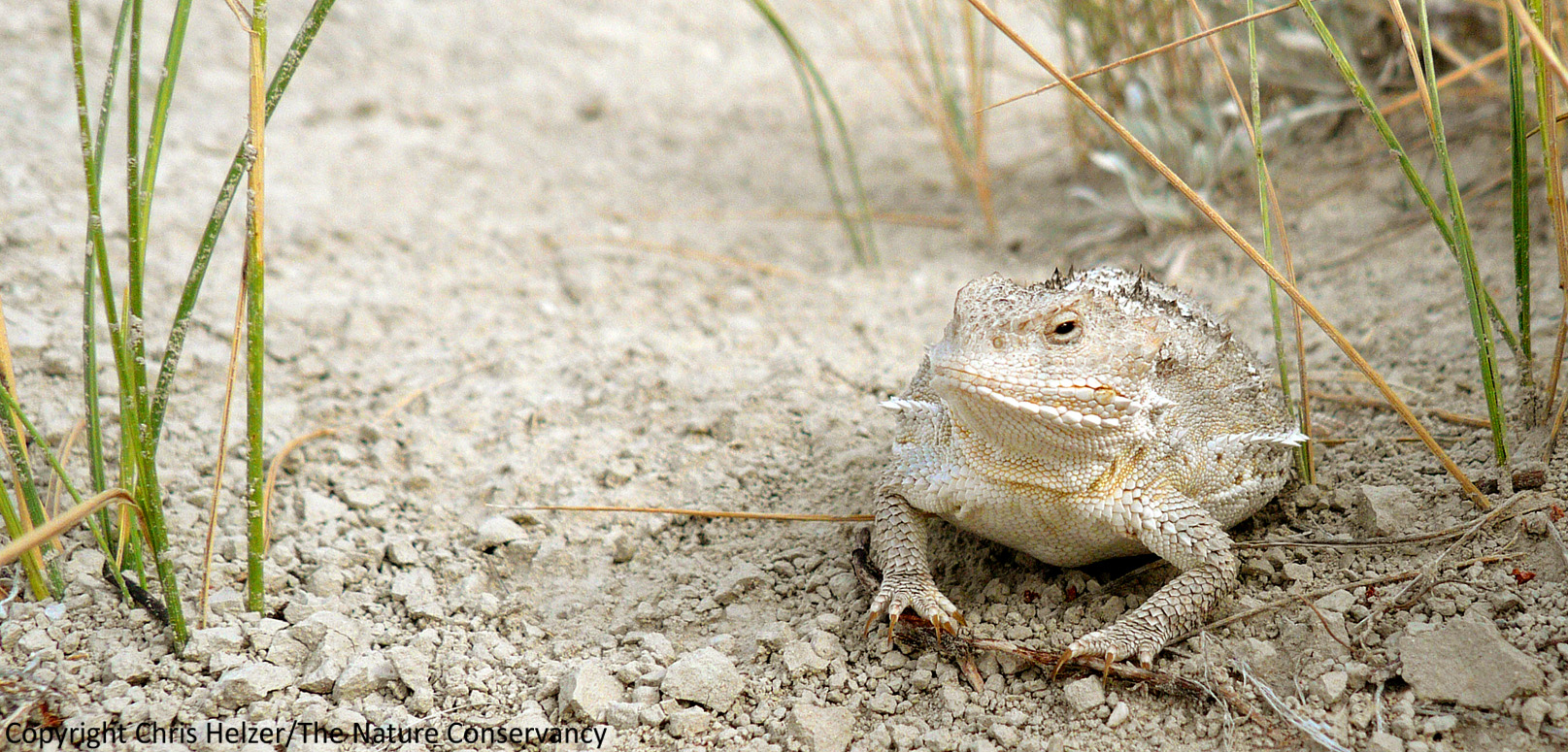
Recently it was discovered that pandas have peptides in their blood that might help humans fight bacteria that are resistant to antibiotics.  Not that pandas needed rationale for their conservation - they're cute, after all.  Surprisingly, not everyone thinks short-horned lizards are cute.  Does that mean we have to find a human health issue they can help us with in order to justify their conservation?

Recently it was discovered that giant pandas have peptides in their blood that could help humans fight antibiotic-resistant bacteria. Not that pandas needed extra rationale for their conservation – they’re cute. This is not a photo of a giant panda.  Surprisingly, not everyone thinks short-horned lizards are cute. Does that mean we have to find a human health issue they can help us with in order to justify their existence?

Of course, the preservation of species is also a moral issue.  For various reasons, most of us feel a responsibility for other life forms on earth.  Unfortunately, morals are often nice in theory, but surprisingly easy to rationalize away in specific instances.  Agreeing that a little brown slug species should be preserved is great until it stands in the way of a landowner’s ability to make the money he or she had counted on to send their kids to college.  Then one’s moral certainty depends upon whether one is the landowner or not!

I told the high schoolers that I usually try to shift a discussion away from trying to place value on one species or another, and instead talk about how the loss of a species can be an indication of much larger problems in an ecosystem.  Since ecosystems are more complex than we can grasp, the disappearance of species should trigger a vigorous effort to figure out what’s wrong before we start losing more.  It doesn’t often happen that way, but it should.  If we’re at the point where the choices made by a couple landowners could spell the extinction of a little brown slug, we’ve already screwed up pretty badly, and we’ve got bigger issues than just saving the last of those slugs.

…and that brings us back to the plant in the first photo.  If it disappeared tomorrow, most of us wouldn’t even know it was gone, let alone notice any ecological impacts.  There might be some microorganisms or herbivorous insects that specialize on it.  Maybe it’s even got its own specialist pollinator.   But the ripples caused by the loss of those species would go largely unnoticed by the larger ecosystem.  Does that make the plant insignificant?

Good question.

.

So – can you identify the plant?  I’ll even give you three clues.

1. It’s an annual.

2. It’s a legume.

3. The South Dakota Agricultural Experiment Station released a registered variety of this species in 1995.  Apparently, the species is significant to someone…

Good luck!  I’ll put the answer in the comments section below.

(If you don’t see a comments selection below, click on the title of this blog post and then look again.  Those of you who read this via email will have to do that for sure.)