Photo of the Week – May 19, 2016

Gjerloff Prairie, formerly known as Griffith Prairie, is a beautiful site on steep loess hills adjacent to the Platte River.  It’s owned and managed by Prairie Plains Resource Institute, and was burned earlier this spring.  I walked around the prairie for an hour or so this week to see how things were progressing since the fire.  From a distance it didn’t look like there was much to see – just a lot of short green grass.  Up close, however, there was a lot going on, and I didn’t have any trouble finding photography subjects..

The topography of Gjerloff Prairie is always interesting - if challenging to hike - but especially so after a fire.

The topography of Gjerloff Prairie is always interesting – if challenging to hike – but especially so after a fire.

Many plants, including this leadplant (Amorpha canescens), were growing strongly after the fire and a month of good rains.

Many plants, including abundant leadplant (Amorpha canescens), were growing strongly after the fire and a month of good rains.
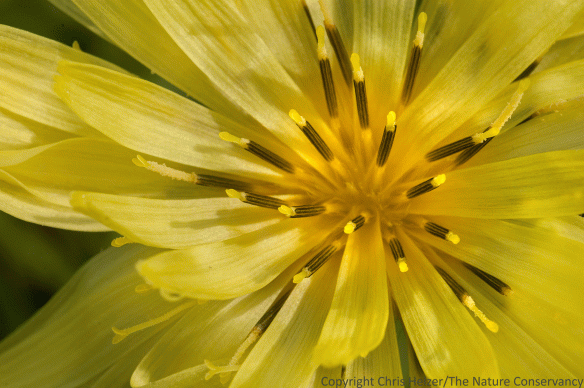
It was nice to visit the only population of tuberous false dandelion (Pyrrhopappus grandiflorus) in Nebraska. The southern Plains wildflower was discovered at Gjerloff prairie in 2004.

It was nice to revisit the only population of tuberous false dandelion (Pyrrhopappus grandiflorus) in Nebraska. Normally found only in Kansas and southward, this wildflower was discovered at Gjerloff prairie in 2004.

Smooth sumac (Rhus aromatica) can be overly abundant in some prairies in our area, but hangs out mainly on a few waslopes at Gjerloff prairie. It resprouts easily after fires, and looked vibrant and healthy this week.
Smooth sumac (Rhus glabra) can be overly abundant in some prairies in our area, but hangs out mainly on a few steep slopes at Gjerloff prairie. It resprouts easily after fires, and looked vibrant and healthy this week.

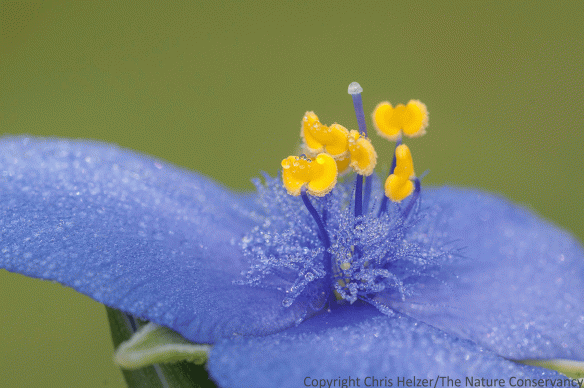
Spiderwort (Tradescantia occidentalis) was just starting to bloom on the warmer south-facing slopes of the prairie.
Spiderwort (Tradescantia occidentalis) was just starting to bloom on the warmer south-facing slopes of the prairie.

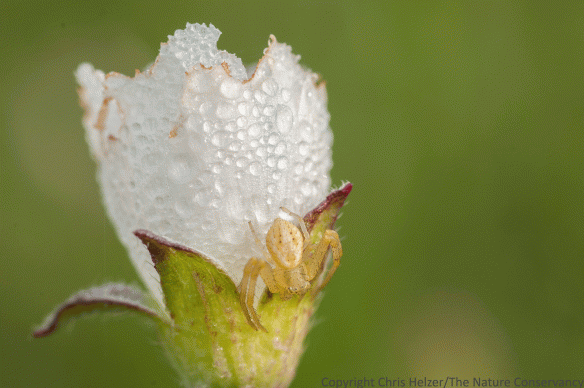
And, of course, I found a crab spider to photograph. Although they are particularly small this time of year, they are all over the place on flowers, and weren't difficult to find once I started looking.

And, of course, I found a crab spider to photograph (on pale poppy mallow – Callirhoe alcaeoides). Although they are particularly small this time of year, crab spiders are all over the place on flowers.
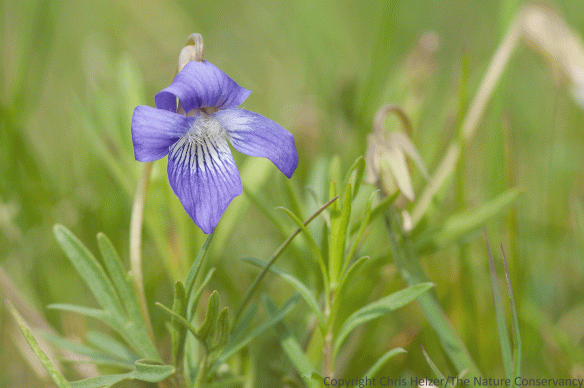
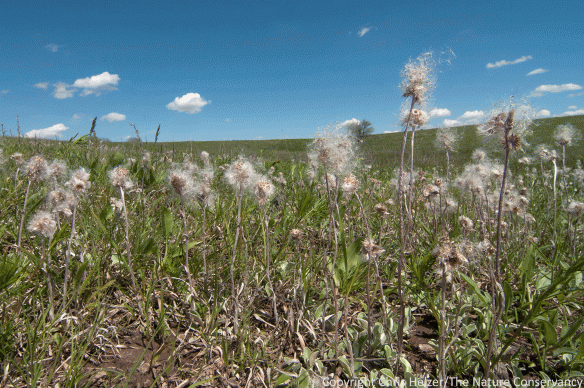
 

Photo of the Week – May 5, 2016

Wildflower viewing this time of year, at least in the prairies I know best, is more like an Easter egg hunt than a fireworks show.  Spring wildflowers tend to bloom within just a few inches of the ground, nestled among the early growth of grasses and wildflowers that will literally overshadow them within just a few weeks.  Their short stature, small blooms, and (usually) solitary nature don’t detract from their beauty, however, and each “egg” is well worth the hunt.  Earlier this week, I enjoyed a pleasant hour or so finding these colorful little surprises at our family prairie.

Prairie violet is scattered across the prairie, but numbers are highest near

Prairie violet (Viola pedatifida) is scattered across our prairie.  I assume some host caterpillars of regal fritillary butterflies, which are common in our prairie and can only feed on violets, but I’ve never actually found a caterpillar on a violet.  They’ve got to be there.  Somewhere.

Broad patches of pussytoes (Antennaria neglecta) have already gone to seed.

Broad patches of pussytoes (Antennaria neglecta) have already gone to seed.  Competing vegetation is kept short within pussytoes patches because the species is allelopathic, meaning that it releases chemicals to stifle growth of other plants.

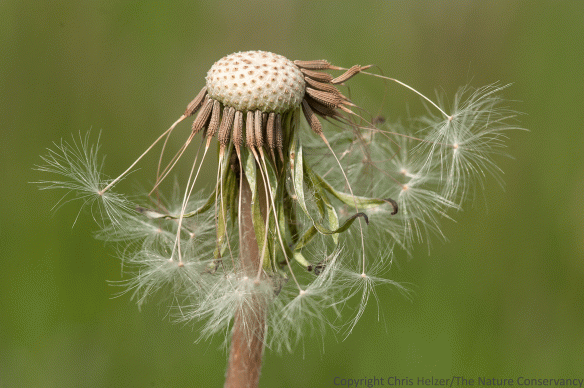
Most dandelion (Taraxacum officianale) plants have also gone to seed. While they were blooming, they were a major source of food for early spring pollinators.

Most dandelion (Taraxacum officianale) plants have also gone to seed. While they were blooming, they were a major source of food for early spring pollinators.

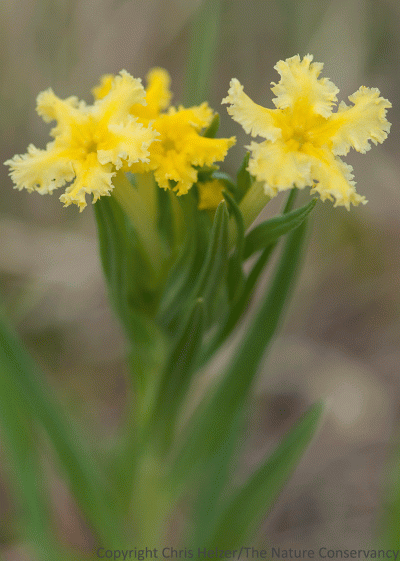
Fringed puccoon, aka narrow-leaf puccoon (Lithospermum incisum) is on the downhill side of its blooming period.

Fringed puccoon, aka narrow-leaf puccoon (Lithospermum incisum) is on the downhill side of its blooming period but is among the most abundant of spring flowers at our prairie right now.

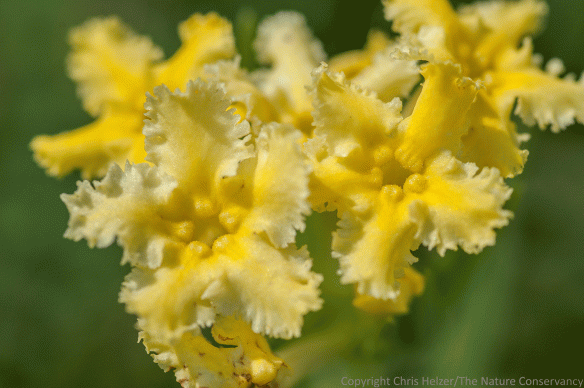
It's not hard to see where fringed puccoon gets its name.

It’s not hard to see where fringed puccoon gets its name.

American vetch (Vicia americana) seems to sprawl awkwardly across its neighboring plants.

American vetch (Vicia americana) seems to sprawl awkwardly across its neighboring plants.  It never seems to be abundant, but I seem to stumble across a few plants each year – and often in different places than I remember seeing them before.

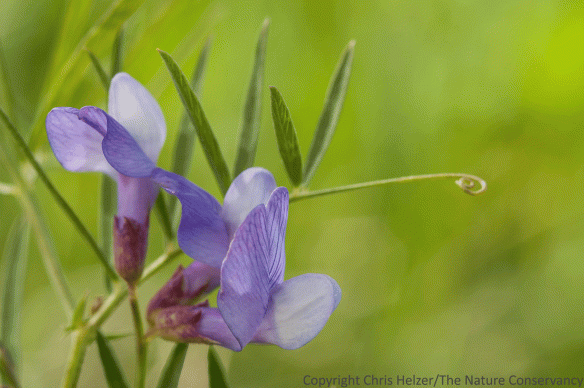
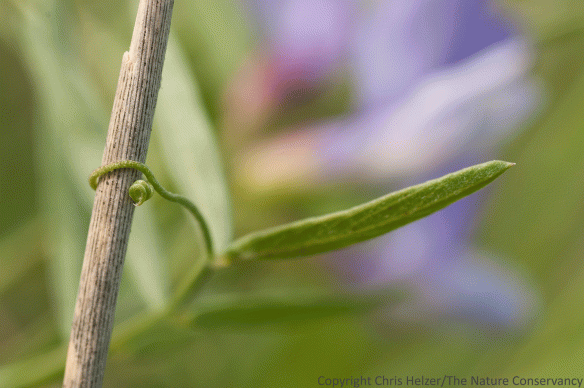
Tendrils on the tips of American vetch leaves wrap tightly around stems of adjacent vegetation.

Tendrils on the tips of American vetch leaves wrap tightly around stems of adjacent vegetation.  I’m not sure what benefit this might provide the vetch plants.

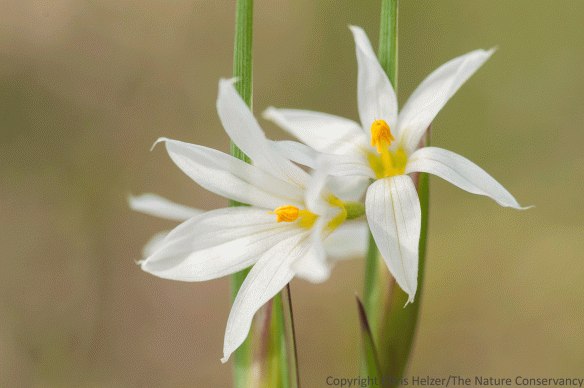
Blue-eyed grass (Sisyrinchium campestre) might be the most elegant of the flowers currently blooming in our prairie.

Blue-eyed grass (Sisyrinchium campestre) might be the most elegant of the flowers currently blooming in our prairie.