
Photo of the Week – July 9, 2015

Upright yellow coneflower (Ratibida columnifera), aka Mexican hat, is blooming all over the Platte River Prairies right now.  As with most showy flowers, the coneflowers are crawling with insects of many kinds.  I spent a fun half hour (31 minutes, to be exact) last week, trying to photograph as many of those insects as I could before I had to pop into our field headquarters for a meeting.
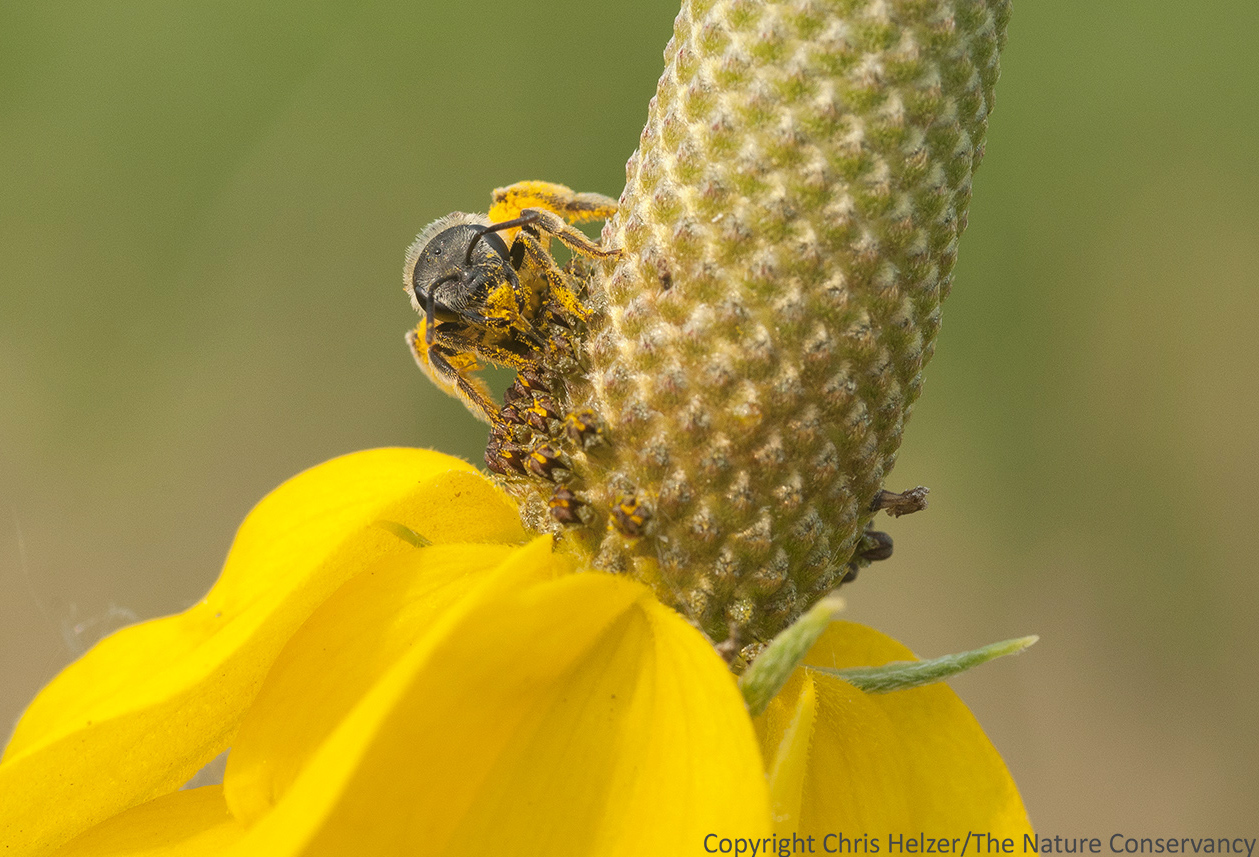
Bee on upright prairie coneflower.  The Nature Conservancy's Platte River Prairies, Nebraska.

Sweat bee (Halictus ligatus, I think) on upright prairie coneflower. The Nature Conservancy’s Platte River Prairies, Nebraska.

Bee and beetle on upright prairie coneflower.  The Nature Conservancy's Platte River Prairies, Nebraska.

The same sweat bee species on a different flower, this time joined by a small brown beetle.
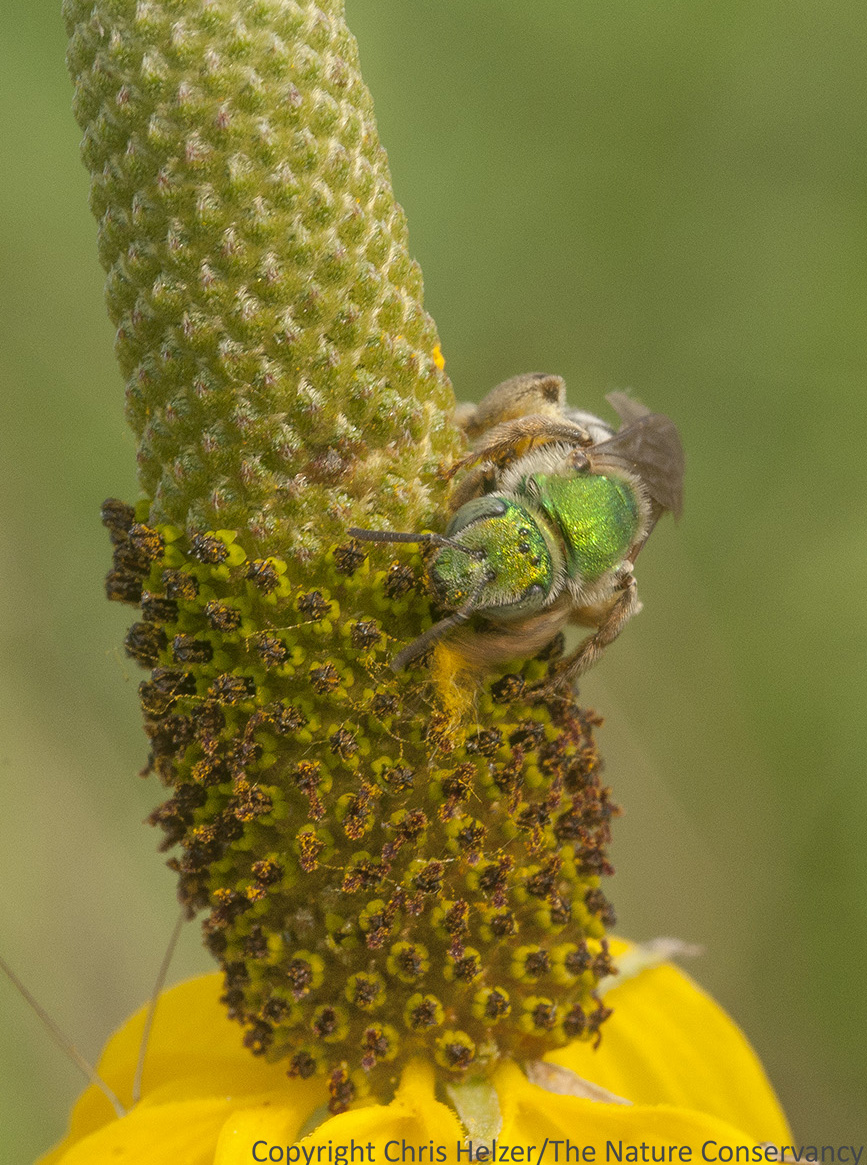
Bee on upright prairie coneflower.  The Nature Conservancy's Platte River Prairies, Nebraska.

A different bee with the antennae of another insect beneath it.

Hover fly (Syrphid) on upright prairie coneflower.  The Nature Conservancy's Platte River Prairies, Nebraska.

It took me a while to finally capture an image of one of these syrphid flies (hover flies).  They were a lot more skittish than the bees.
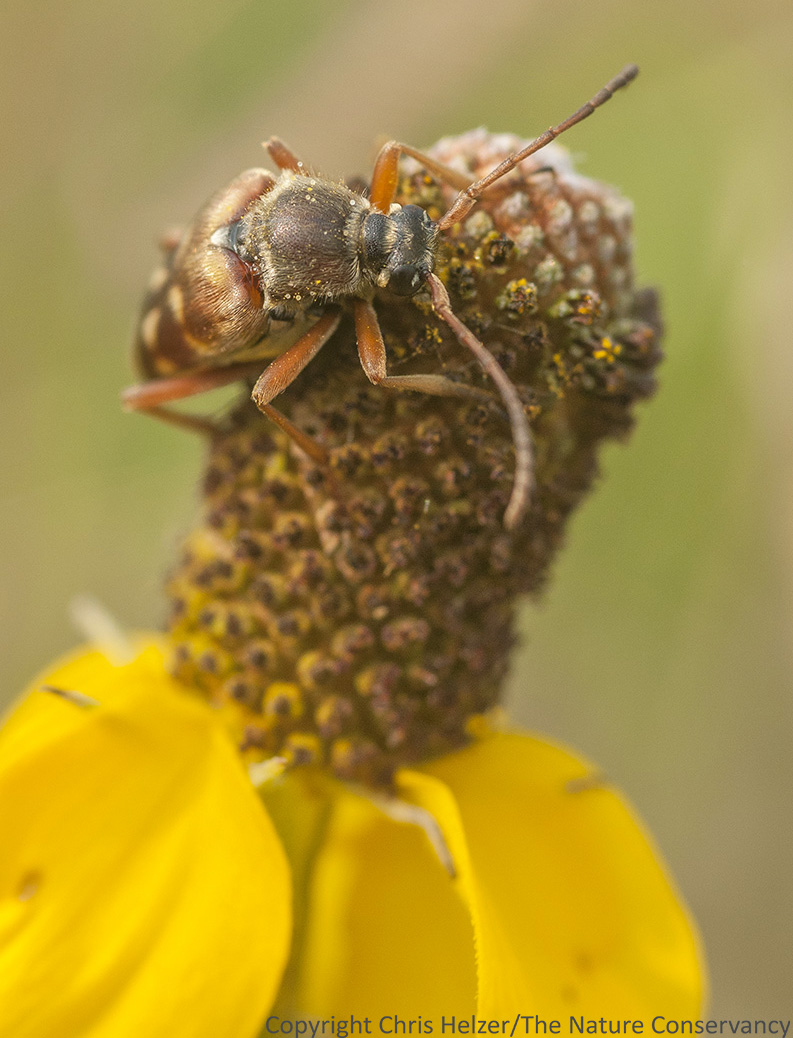
Long-horned beetle on upright prairie coneflower (Ratibida columnifera).  The Nature Conservancy's Platte River Prairies, Nebraska.

Long-horned beetle feeding on pollen.

I wrote about long-horned beetles last summer after photographing them on the same flower species.  I think this one is Typocerus confluens, but I’m just guessing based on photos from last year.  You might remember from last year that adult long-horned beetles feed on flowers, but larvae are wood borers or subterranean root feeders.
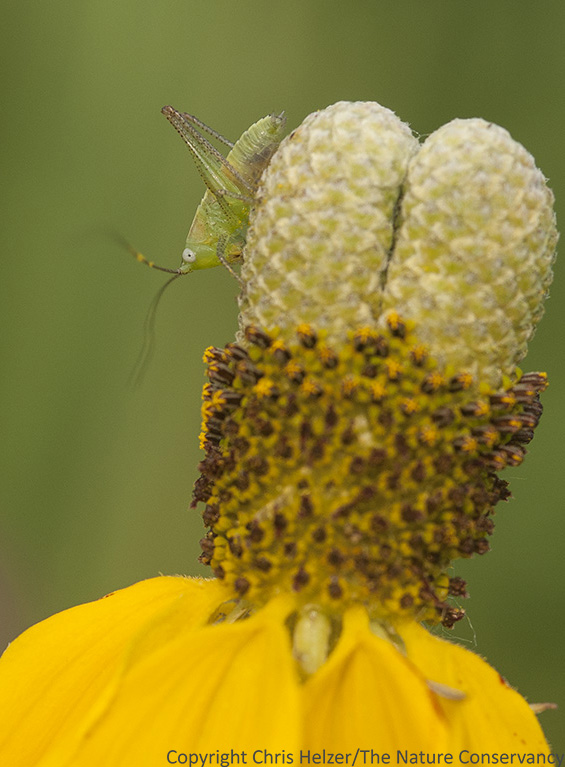
Katydid nymph on upright prairie coneflower.  The Nature Conservancy's Platte River Prairies, Nebraska.

A tiny katydid nymph.

Tree cricket nymph on upright prairie coneflower.  The Nature Conservancy's Platte River Prairies, Nebraska.

A tree cricket nymph.

As is always the case in prairies (and nature in general), the closer you look, the more you see.  The number of insect species feeding on this one flower (and, in some cases, pollinating it) is a great example of the complexity of life found in prairies.  Complexity leads to resilience because there are multiple species that can play fill similar roles.  If one species has a bad year, others will fill in for it.  That redundancy helps keep all systems functioning all the time.

Hurray for complexity!

Photo of the Week – July 2, 2015

Independence Day is this weekend.  Fireworks have been going off in my my neighborhood for days now as people who apparently equate noise with patriotism are enjoying their right to put that feeling into action.  Earlier this week, I was photographing a patch of common milkweed in front of our field headquarters at the Platte River Prairies and thought the flowers looked much like fireworks – but quieter.  Maybe prettier too.

Common milkweed (Asclepias syriaca)  The Nature Conservancy's Platte River Prairies, Nebraska.

Common milkweed (Asclepias syriaca) The Nature Conservancy’s Platte River Prairies, Nebraska.

The attention paid to milkweed has increased dramatically over the last year or two as concern over the plight of monarch butterflies has grown.  I’m excited to see that energy because it helps increase interest in broader issues of pollinator and biodiversity conservation.  What’s good for monarchs (plant diversity, natural land cover – especially prairie, land management that favors milkweed, intelligent use of pesticides, etc.) is also good for bees and many other species, as well as broader ecosystem functioning.

I’ve been thinking about milkweed management in our Platte River Prairies for a number of years now, especially related to cattle grazing.  Cattle like to eat the flowers off of common and showy milkweed (A. syriaca and A. speciosa) even in our moderately stocked patch-burn grazed prairies.  The “deflowering” of milkweed and a few others species has pushed us to modify our management somewhat to make sure that every portion of our prairies is completely excluded from cattle at least once every 4-5 years so those species can bloom and reproduce.  So far, that seems to have helped maintain healthy populations of those plant species, but we’re continuing to monitor and adapt our management as we learn more.

Milkweed plants are important to monarchs, but many other species as well.  Their flowers are among the most popular nectar sources for many pollinators, and a number of herbivorous insects have evolved mechanisms to deal with the toxic sap and rely on the plants for food.  Hopefully, the attention brought to milkweed by monarchs will help those other species as well.

Have a great 4th of July!