I like my camera bag. In fact, I’m pretty disappointed with Lowepro® for discontinuing it and not replacing it with a similar option. Sure, it would be nice to have a more convenient place to put a water bottle (come ON, Lowepro®!) but it has the fundamental qualities I was looking for. It’s big enough to carry a camera and several lenses, along with lens and sensor cleaning swabs, a few small tools, extra batteries, etc. It also has an extra compartment big enough to carry a light sweatshirt or rain jacket (or, more awkwardly, a water bottle). Most importantly, it has a big comfortable hip belt to help distribute the weight and it’s a sling bag that I can quickly rotate across the front of my body so I can open the bag and quickly grab my gear without having to take the bag off first.
My bag weighs about 16 pounds when it’s full of camera gear (not counting a water bottle), which is almost half of what I would want to carry on a backpacking trip. It’s enough weight that walking around all day with the bag feels very different than walking around without it. Despite that, I almost never walk prairies without the bag. Whenever I talk myself out of carrying it, I regret it. Sometimes I regret it because a burrowing owl will land within 20 feet of me and stare at me, daring me to try a photo with my stupid cell phone. Other times, I’ll come across a box turtle, or an assassin bug that has just captured a shiny green bee on a gorgeous flower.
I’ve carried my heavy bag during long hot days collecting field data and frigid blustery slogs across wet prairies to check fence. On those occasions when photography is not the primary reason for my trip, I often tote that bag all day and never get the camera out. When I get back to my truck, I’ll unstrap the bag, toss it gently on the seat, and stretch my back – enjoying the bliss of being suddenly 16 pounds lighter. Sometimes, I’ll ask myself if it was really worth carrying the bag all day when I knew it was going to be a windy day with bright blue skies and intense sunlight that would have made photography difficult anyway. I’ll then remind myself about the burrowing owl, box turtle, and assassin bug. Then I’ll sigh, climb into the truck, and drive home.
Now, while it might seem that way, this isn’t a blog post about how hard my job is, or a plea for sympathy because I have to carry a semi-heavy bag around while I get paid to wander around in prairies. I know how fortunate I am, believe me.
Nope, this post is about something else completely.
This post is entirely about needling Sarah and Kate, our two Hubbard Fellows, about NOT CARRYING THEIR CAMERA GEAR when we went out into the prairies this week! I met the Fellows and Cody (our land manager) on Tuesday afternoon and we spent a couple hours looking at potential research and burn sites. It was mostly cloudy and windy – not the best conditions for photos. Still, I carried my camera bag with me. Did the Fellows bring along the camera gear we bought for them?
No. No, they did not.
And so, when Sarah spotted a gorgeous little redbelly snake (Storeria occipitomaculata) and Kate picked it up so we could all admire it, did the Fellows pull out their cameras like I did and get some nice photos of this beautiful little friend?
Nope. (hee hee)
…
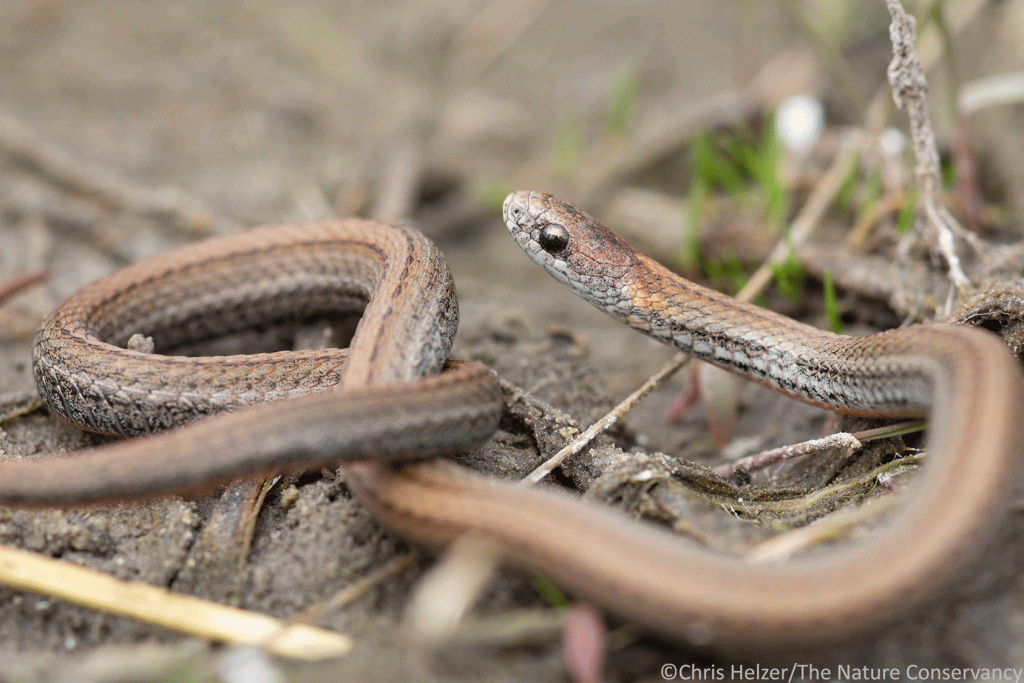
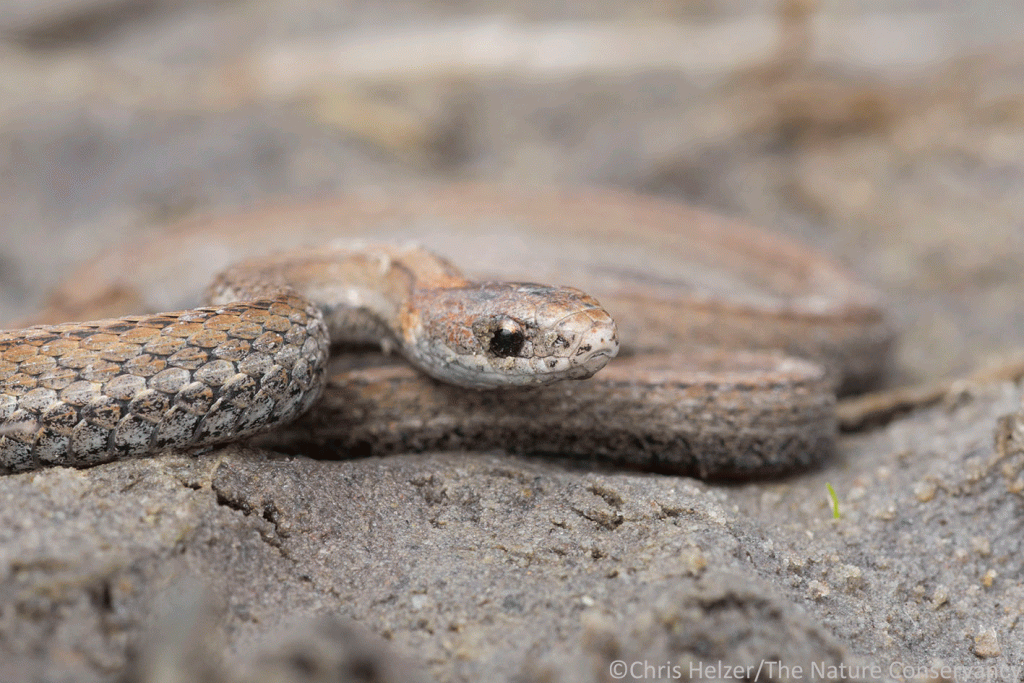
Purely coincidentally, I got some really nice photos of a redbelly snake this week! Here they are.

Redbelly snakes are similar to brown snakes (Storeria dekayi). They’re a little smaller than brown snakes (8-11 inches maximum) and have a red belly instead of pale gray or white. These snakes are found throughout a lot of the eastern United States but in Nebraska they’re only in a few counties along the Central Platte River – right where our Platte River Prairies are located. They’re usually tied to riparian woodlands and similar habitats, where they eat earthworms, slugs, and sometimes insects. The ones I’ve seen over the years have usually been in prairies and cropland, but usually near woodland. They are likely more abundant in woodlands but I don’t spend much time in the trees!


(As usual, I get most of my information on reptiles and amphibians from Dan Fogell’s terrific book, “A Field Guide to the Amphibians and Reptiles of Nebraska”.)