Given what’s happening in the country right now, this doesn’t seem like the right time for my previously-planned post on the importance of drawing people into conservation. There will be time for that after we get through this week and its various issues. Instead, I thought I’d present an activity that might help distract you from some of those issues, including the 762,000 pounds of Hot Pockets recalled because of potential glass and plastic contamination. We’ll get through this together.
I have spent multiple hours honing my paper crafting skills, and have gradually developed a style I call ‘dad origami’. I want to be clear that my origami style is based only very loosely on the ancient art of Origami, which I believe was developed by Fernando Origami sometime in the 1840’s. If anyone from the Origami family is reading this, I have nothing but respect for your family’s art. This is not that.
Anyway. If you’re looking for something to keep your mind off of scandals, including what was on Amanda’s desk on Law and Order: SVU, here are some simple – and hopefully, entertaining – directions describing how to make your own prairie creation out of paper. Enjoy.
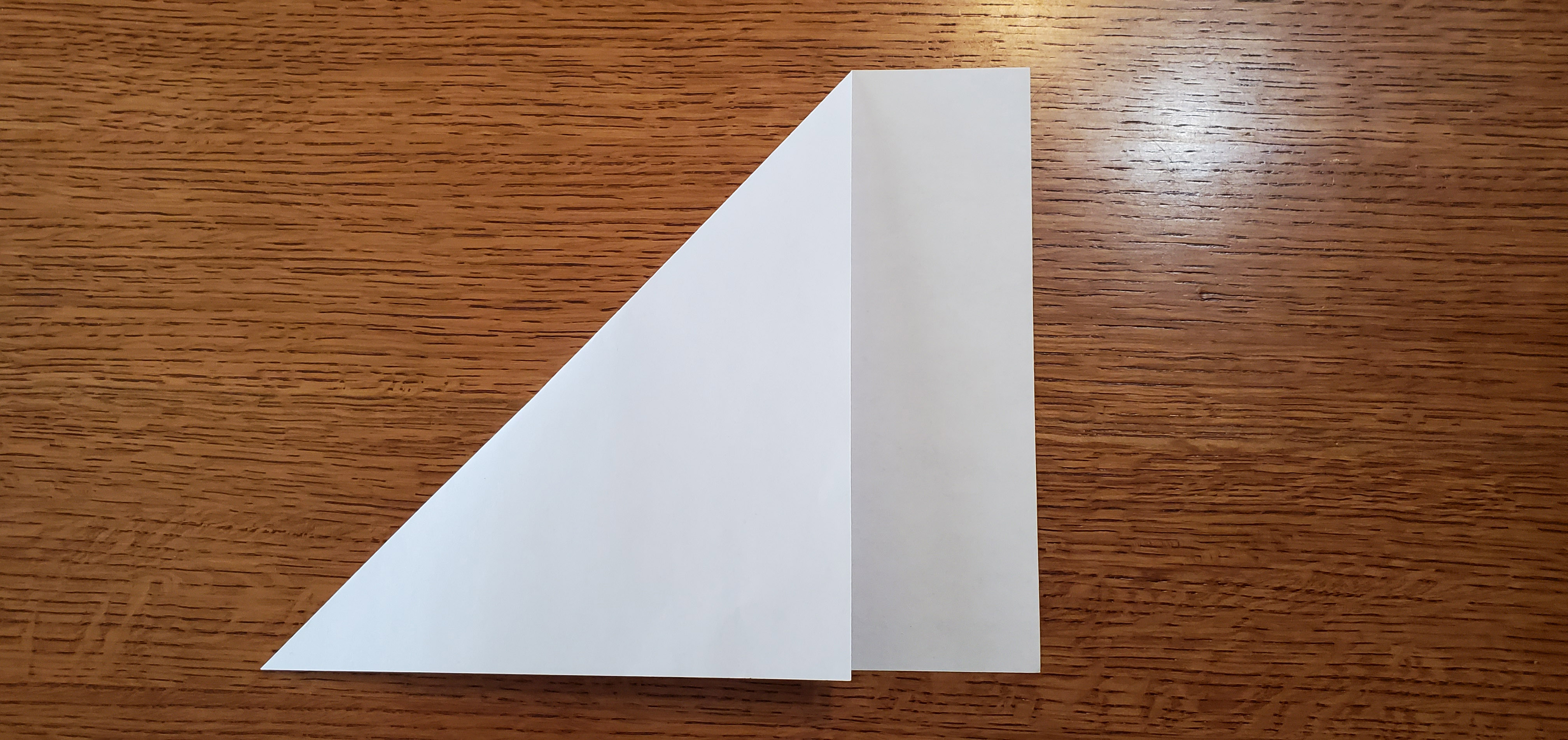
Start with a rectangular piece of paper. DO NOT USE SQUARE PAPER – THIS IS VERY IMPORTANT.Fold one corner over to the far edge of the paper. This is the most important fold of the entire project.Make another fold as shown here. Then open that fold back up. Grab some origami scissors (if you don’t have origami scissors, I guess you can use other kinds but I can’t guarantee results). Cut carefully along the last fold you made. Feel free to include a few small jagged edges for style. Make several more folds, including at least one that you fold and then open back up for no apparent reason. This is very important.Make a couple more folds. These are the most important folds in the entire project, so take your time on these.Unfold the fold on the left end and then make two more folds, pretending that this was part of the plan from the beginning.Turn the paper over. Try to hide your surprise that it actually looks a little bit like an insect.Now, take the strip you cut off at the beginning of the project and dig it out of the recycling bin, just as you intended all along. With your origami scissors, cut the strip into 6 smaller rectangular strips. As before, feel free to add small jagged edges for style. Fold each of those small strips into thirds, lengthwise.Fold each of those folded strips so they don’t look so straight and boring.Using origami tape, affix each of the strips to the bottom of the folded creation you’ve made. (If you don’t have origami tape, other tapes may also work, but it might affect the quality of the final product.)Turn the paper over again and admire what you absolutely had envisioned before starting.Using origami crayons (I really do have to insist that you use actual origami crayons for this step), add the final details.
And that, folks, is how you make a large milkweed bug out of paper. You’re welcome, and enjoy your week.
Here’s the same set of instructions in video format, in case you like that easier:
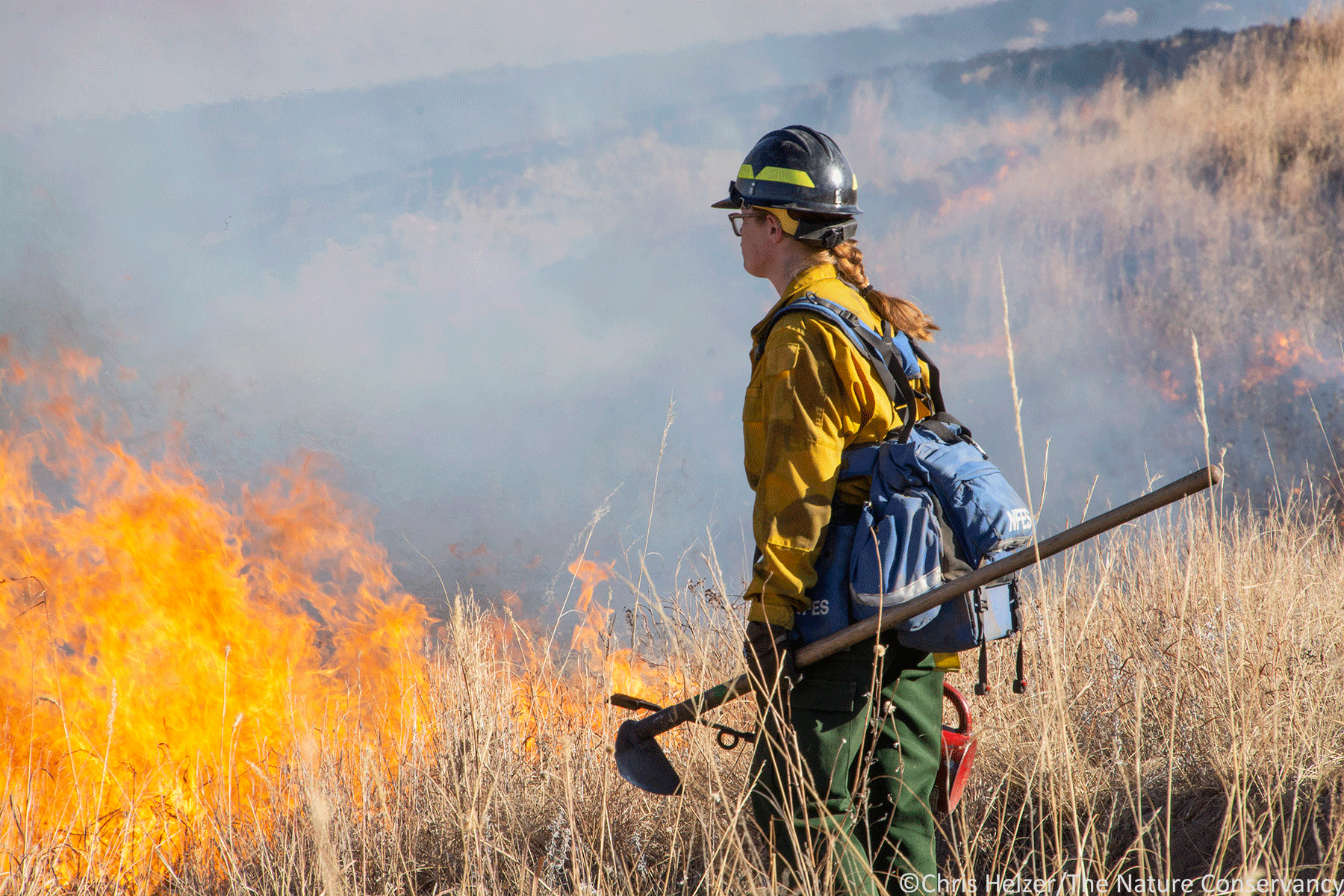
How critical is fire to the health and survival of prairies?
I think the answer might depend upon whether we’re talking prairie, as in the ecosystem, or a prairie, as in an individual patch of grassland. It might also depend on whether we’re talking about history or the present.
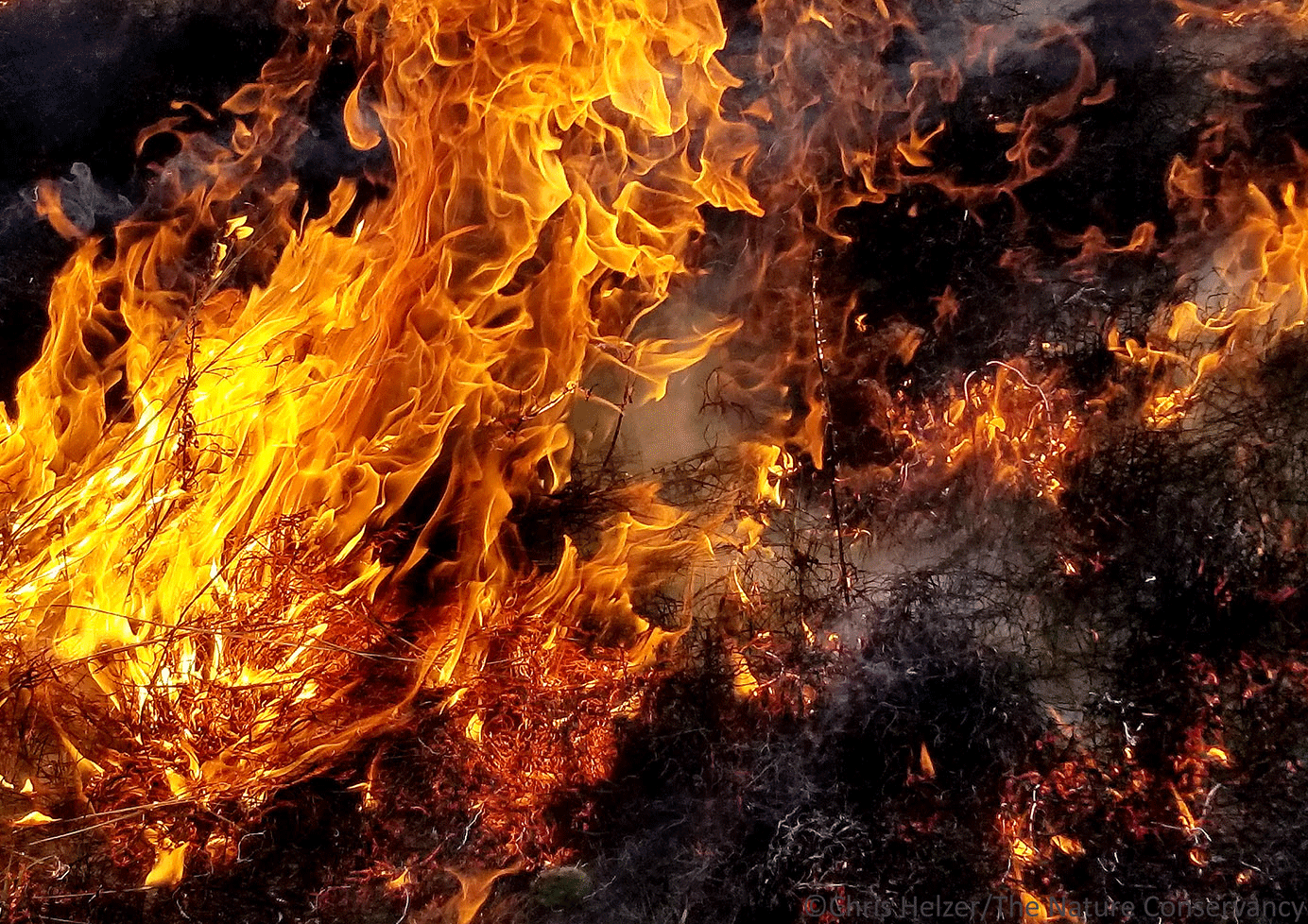
Prairie fires have been an integral part of prairies for a very long time.
Here are some things I think are true about fire in prairies:
Fire is one of three major forces (along with climate and grazing) responsible for creating, shaping, and sustaining prairie landscapes.
Fire can influence the competition between woody plants (trees and shrubs) and herbaceous plants (grasses, wildflowers, etc.) in grasslands. It can outright kill some woody plants (such as eastern redcedar) and top-kills others, forcing them to restart their growth at the ground’s surface.
Fire can also affect competition between herbaceous plants. A dormant season fire can speed up and enhance the growth of early spring plants. A growing season fire can suppress the growth of plants that are active at the time of the fire. Plants that begin their seasonal growth spurt right after the fire benefit greatly because it removes many of their competitors for light, nutrients, and moisture. See here for more on the timing of fires.
Fire can remove litter (dead vegetation from previous years), exposing the soil beneath. Sunlight hitting that soil can increase microbial and root activity, making nutrients more available to plants and triggering seed germination among some species.
Fire releases bound-up nitrogen from dead vegetation, sending most of it into the air as part of the smoke. Other nutrients, including phosphorus and potassium, tend to stay behind in the ash.
Fire alters habitat structure by removing aboveground plant material. This has varying effects, both short-term and long-term, on animals and plants.
Fire attracts large herbivores, if they are present, because of the nutritious fresh growth of plants following a burn event. If both burned and unburned areas are available, large grazers focus their time in the most recently burned areas. This adds another layer of complexity to the impacts of fire on habitat.
Most importantly, fire has been used as a land management tool by people for as long as today’s prairies have existed. Since the end of the Pleistocene era (aka Ice Age) and the re-emergence of prairies in central North America, people have actively managed those grasslands with the strategic use of fire. As a result, people and prairie are intrinsically intertwined.
With all that in mind, I think it’s fair to say that fire was an essential component in the development and persistence of the prairie ecosystem in central North America. The consistent occurrence of fires set by people, as well as through lightning, probably kept prairie from becoming woodland. That’s especially true in the eastern half of the prairie region, where drought tends not to be frequent or prolonged enough to suppress invasion by trees and shrubs.
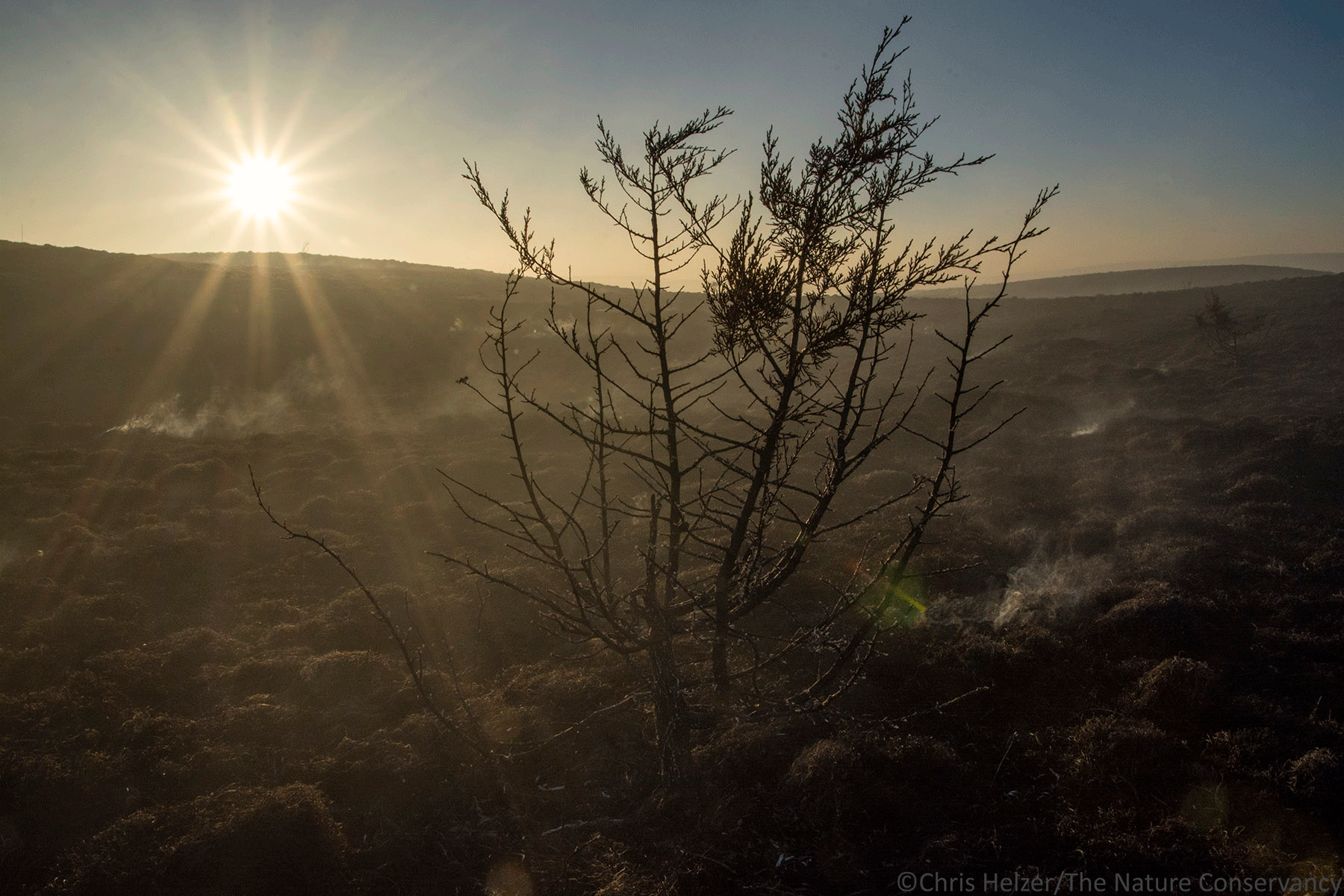
Eastern redcedars like this one are easy to kill and control with fire. Many other species can be suppressed, but regrow quickly after fire.
In addition, the relationship between fire and large grazers created a shifting mosaic of habitat conditions for both animals and plants. Across an immense grassland landscape those shifting conditions helped sustain a rich diversity of species and a resilient ecosystem. The impacts of fire (and grazing) on nutrient cycling was also a major part of that story.
At least historically, then, fire was essential to the function and survival of the prairie landscape. What about today?
This is where it gets tricky.
I think it’s essential to have fire as an available tool for managing prairies, just as it has been for thousands of years. There is no question that fire can be an efficient way to combat woody encroachment in grasslands, though it is not always sufficient on its own – especially as shrubs become increasingly competitive with rising levels of atmospheric carbon dioxide.
Fire is unquestionably an important tool for prairie managers.
In addition, fire can still influence grazing patterns and behavior in important ways. There is ample evidence that patchy fires, combined with large herbivore grazing, can create important habitat heterogeneity, even on a relatively small scale (20 or 30 acres or less). In large prairie landscapes, where bison or cattle can roam over thousands of acres, patch-burn grazing may be the best approach we have for creating the kind of shifting habitat mosaic that seems to sustain diversity and resilience.
But – is fire really essential for the management of individual prairies? I think about this a lot because our family prairie has never seen fire, as far as I know. That’s true at least as far back as the early 1960’s when the majority of it was replanted to grassland after being farmed (there are scattered unplowed patches of prairie as well). I could use fire at our prairie, but I don’t – primarily because I burn so much at work that the idea of trying to find the time and energy to also burn our own prairie seems overwhelming.
Despite that lack of fire, I’ve seen positive progress in terms of plant diversity and I feel really good about the habitat being provided and used by animals, including vertebrates and invertebrates. In our case, we manipulate cattle grazing with fences (using the open gate rotation approach I’ve discussed before) and create a shifting mosaic of habitat. We control woody encroachment by manually cutting trees, sometimes aided by herbicide for species that regrow after being cut.
Ours is not a unique story. I’ve seen many other prairies with far greater plant and animal diversity than ours that have not seen fire for many decades. Some are managed with grazing, others with haying, and woody encroachment is controlled by some combination of cutting and herbicides, as needed.
If you’re concerned about the use of herbicides, I’ll add here that there are plenty of prairies managed with frequent fire that are still losing ground to trees and shrubs, and that manual cutting/shredding and herbicide use are necessary components of management success. In other words, the use of fire by itself is often not sufficient on its own. Also, in some prairies where frequent fire is holding back woody encroachment, there are significant concerns about how that fire frequency is negatively impacting populations of plants and animals.
So, what’s missing from these prairies that aren’t being burned? I’ve asked this question to many people with lots of expertise in fire and prairie ecology. To date, I’ve not heard an answer that has pushed me to make fire a bigger priority on our family prairie or to push harder on other landowners/managers to do the same. Please chime in if you think you’ve got a convincing argument. I’m not saying fire isn’t necessary, I’m just saying I am not currently convinced that it is.
The answer to my question matters because training, equipment, neighborhood attitudes, and other factors make prescribed fire a real challenge for many landowners. Even for conservation organizations and private landowners who have invested in everything needed to conduct fires, weather and other logistics still present lots of complications.
Can ranchers and other prairie managers give prairies what they need to thrive without fire? Or is prescribed fire a necessary part of good management?
If we say the only way to manage prairies effectively is to include the use of prescribed fire, that’s a tall order, and one that is probably not feasible for most landowners. It will also likely alienate many people who think they’re doing a pretty good job of prairie management without fire. We’d better be really sure before we tell those folks their work is insufficient.
To sum up, fire was one of the major reasons prairies developed and persisted following the last ice age. Indigenous people’s strategic use of fire helped keep grasslands from becoming overwhelmed by trees and created the dynamic habitat and species diversity that maintained prairie resilience. Today, fire continues to be an effective tool for maintaining the health of prairies, and I think it’s essential that prescribed fire is available as an option for all landowners and land managers.
However, while it might seem heretical to some, I am not convinced that fire is an essential tool for all prairies. Or at least, I’m not convinced that prairie managers can’t maintain diverse and resilient prairies without the use of prescribed fire. I’d be happy to be proven wrong.