Photos of the Week – October 30, 2020

This week started out with a couple inches of snow on the ground and temperatures in the mid teens. It was cold, blustery, and a bit of a shock after a pretty mild fall to this point. I enjoyed having the snow around, but it also felt like the last nail in the coffin of the growing season, including for our garden.

When frigid weather slaps us each fall, I like waiting to see which invertebrates are going to be active again when the next warm spell returns. Wednesday, I had the chance to do my first observations for this year. The temperatures were very mild – above 60 degrees – and it was sunny and pleasant. I saw three different insects that seemed just fine. First, I saw a mosquito, which I’ll admit was a surprise. The other two species I saw didn’t shock me, but the mosquito kinda did.

Anyway, the other two species I saw were the black crickets that hang around in and around the house and false milkweed bugs. For some reason, we don’t have a lot of crickets that get into our house – or at least the ones that do aren’t overly noisy. I’m happy about that, given my previous experience with very noisy chirping that makes it hard to sleep. The crickets I saw Wednesday were out in the alley near our prairie garden, and they looked very perky.
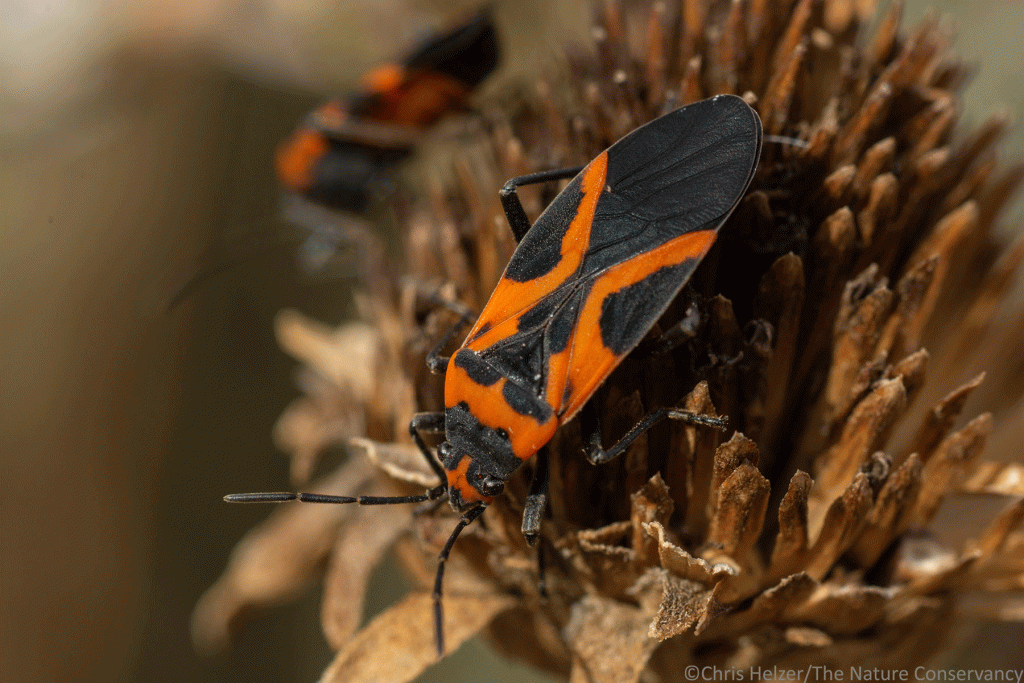
False milkweed bugs (Lygaeus turcicus) on false sunflower in our prairie garden yesterday. (You’d be excused for confusing these with boxelder bugs, but those have much less orange on their backs.)

The false milkweed bugs were very active in the prairie garden itself. Some looked like they might be feeding on seeds, while others appeared to be just basking in the sun – though most quickly moved into the shade and away from me, as I approached them. I wonder if they found enough shelter last weekend to keep from freezing or just froze up and then reanimated when warmer temperatures returned. Either way, it’s a remarkable achievement.

While I chased the false milkweed bugs around, I also noticed stiff goldenrod seeds hanging precariously from a number of plants – including, but not limited to, stiff goldenrod plants! Those kinds of wind-dispersed seeds flying around, or dangling from golden brown stems, leaves, and seed heads, always seem like they’re emblematic of autumn in the prairie, so I photographed a few of those as well.

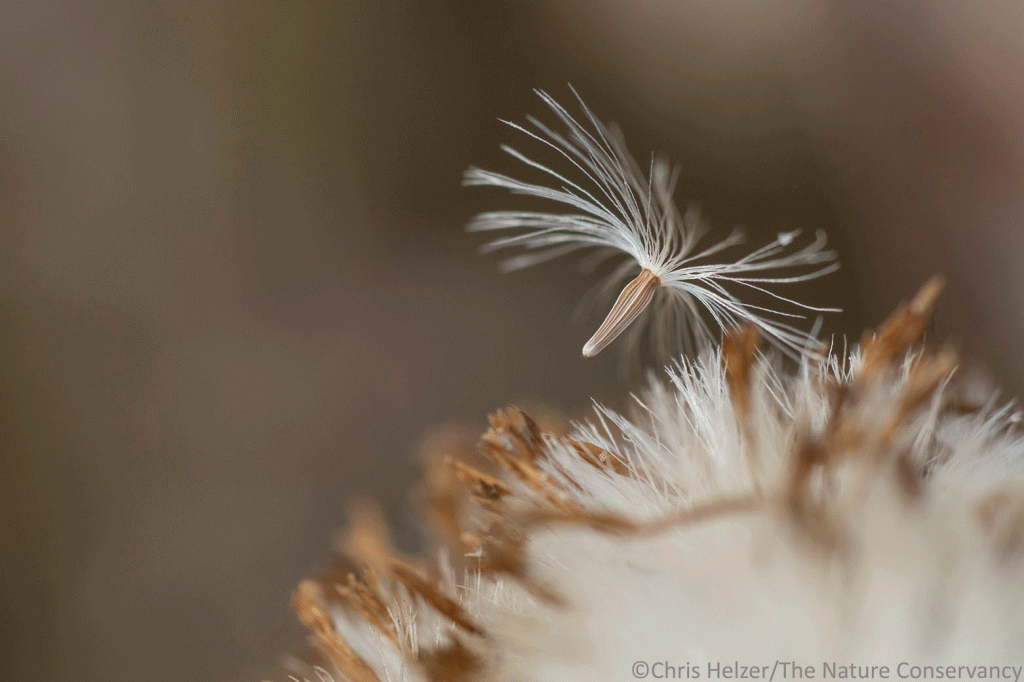
Stiff goldenrod seed (Solidago rigida) hanging on the seedhead of ironweed (Vernonia baldwinii).
Stiff goldenrod seeds.

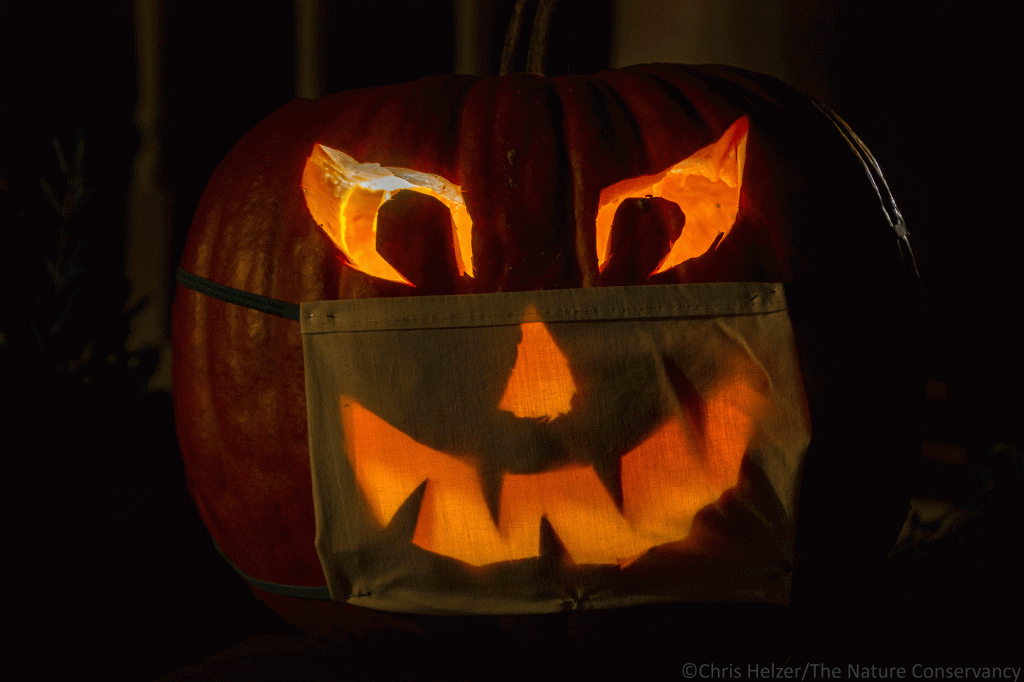
Best wishes to all of you over the coming days. Especially here in the United States, they will certainly be eventful. Stay safe, everyone. Also, be like Jack and wear a mask!
Hubbard Fellowship Post – Ashley’s Admiration of Grasshoppers

Ashley Oblander, one of this year’s Hubbard Fellows, has really dived into photography during her time with us. I think you’ll agree she’s doing quite well… It’s just one of her many strong skills. Anyone need an experienced and thoughtful land manager who can write, lead, photograph, and think strategically (among many other strengths)? She’s getting her resume polished up now… Here’s Ashley’s latest post:

My first distinct memory of a grasshopper was the moment I realized that they had wings and could move pretty long distances instead of just hopping around. Other than that memory, grasshoppers have kind of blended into the background for me. I figured they all looked like the tan ones that I saw in my backyard growing up. During my time as a Hubbard Fellow I’ve realized how wrong I was.

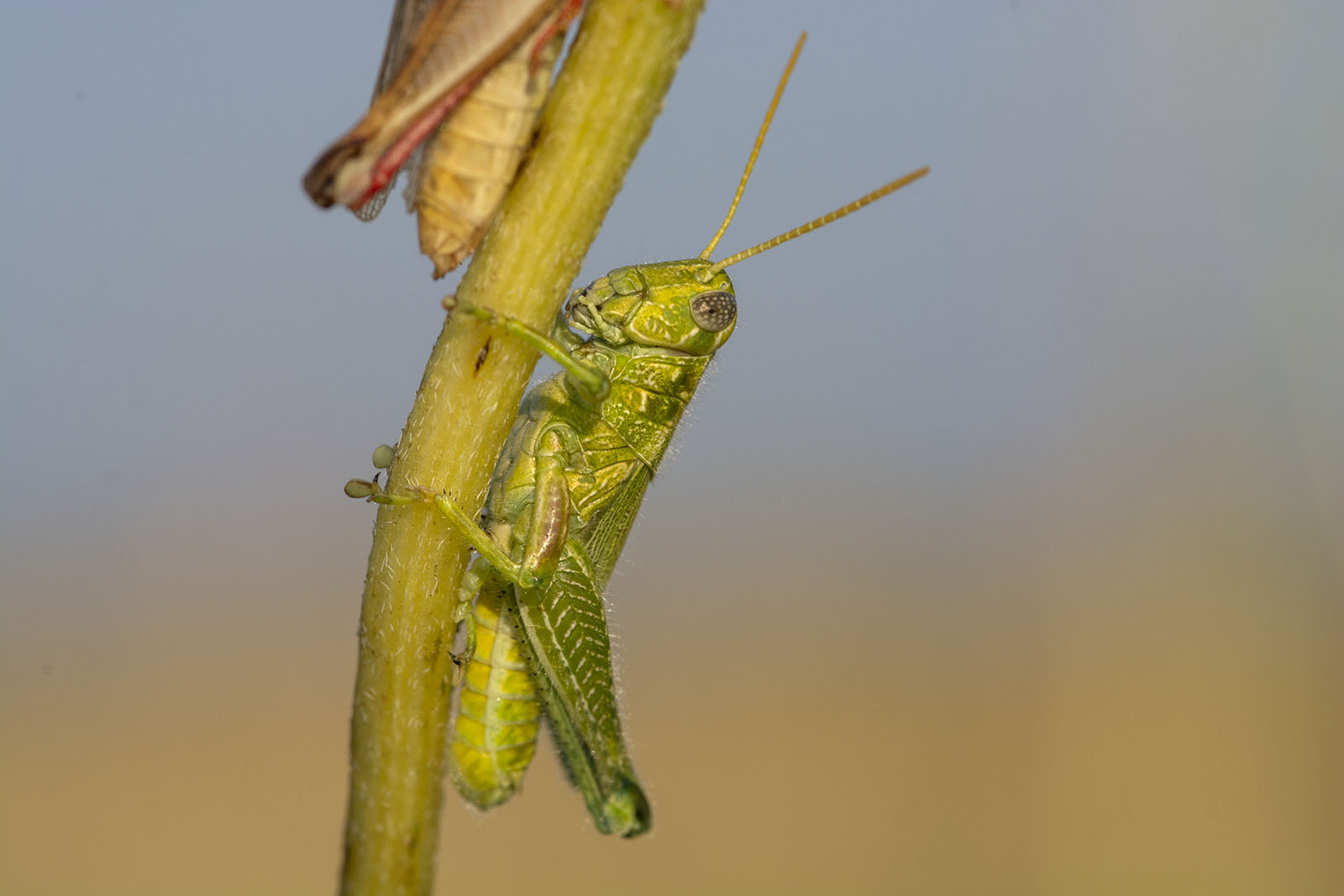
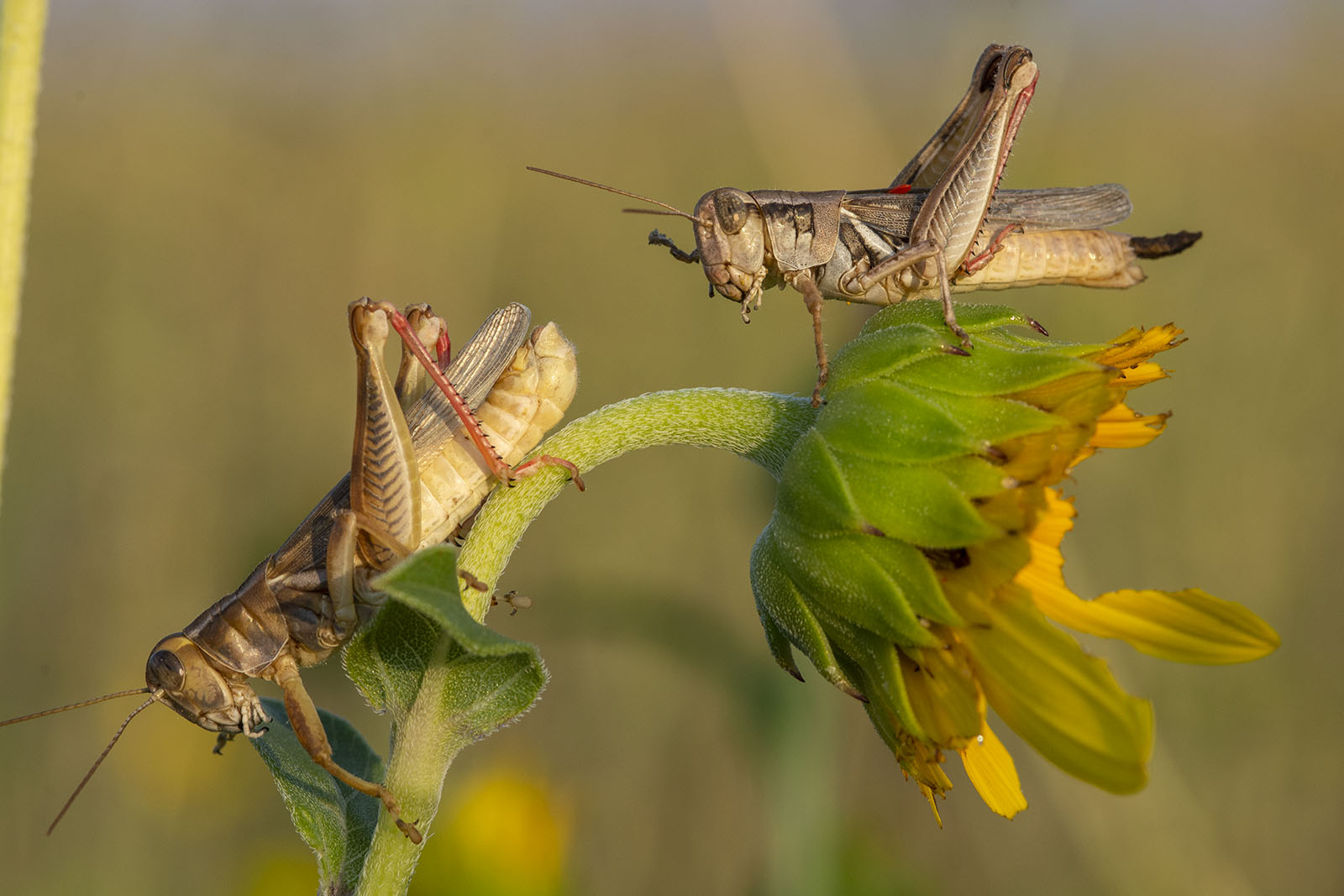
Through this past year, I’ve become interested in macrophotography (How could you not when a great photographer like Chris Helzer is your supervisor?). Through that lens, I started seeing a whole little world in the prairie that I hadn’t fully appreciated before. A great illustration of that discovery is grasshoppers.

Sometimes it feels like they’re checking me out just as much as I am them. Photo by Ashley Oblander.

The diversity in this group of insects is crazy. Did you know that there are 108 species of grasshoppers just in Nebraska? One that shocked me the most is a flightless species that can grow up to more than two inches long: the plains lubber. I had no idea that grasshoppers around here could get that big, and wow! They’re impressive, and like so many other species they are beautiful and detailed once you take a closer look.

This is the plains lubber mentioned above. This one let me take lots of photos of it, but that isn’t always the case. Photo by Ashley Oblander.

Another fun thing I’ve learned about grasshoppers is that they can be tricky to take photos of. I can’t even remember how many times I got everything set up how I wanted it to have the grasshopper move to the other side of a stem or leaf to hide from me or fly away completely. It can be frustrating, but it also makes it even more gratifying when I get a good shot.

Here’s one hanging out on a milkweed seed pod. Editing photos from this day led to a fun discovery! Photo by Ashley Oblander.

I didn’t notice the small structure above this grasshopper’s eye in the above photo until I was editing. I was intrigued because I wasn’t sure what it was so I did some research. Turns out it is one of its simple eyes! Grasshoppers have two compound eyes, the big and noticeable ones, in addition to three simple eyes, also called ocelli!  I may have learned that at one point but had totally forgotten. They use these simple eyes to differentiate between light and dark.

Speaking of eyes, who knew grasshoppers’ could be this pretty?! Photo by Ashley Oblander.

Learning about their different types of eyes prompted me to look up other grasshopper facts, and I figured I would share some of my favorites. The grasshopper’s auditory organs are found on the abdomen instead of the head. A grasshopper can eat half its body weight per day (this is impressive, but also why they are considered a pest on crops). If humans could jump as far as grasshoppers, relative to size, we could cover more than the length of a football field in a single jump. Needless to say, they’re fascinating.

One more shot just because they’re interesting to look at. This one was extra exciting to capture because it can be difficult to capture both subject’s eyes sharply. Photo by Ashley Oblander.

My motivation for writing this post was mostly to share my newfound admiration for grasshoppers, but it also serves as a nice reminder for myself. As I work in different places, I won’t discount something because it’s small or I think I’ve seen it before. Slowing down and appreciating the small things that make the world go round can be refreshing, enlightening, and humbling. I encourage you to do the same.