Photos of the (Last) Week

Last Friday morning, Kim and I were backpacking up a steep slope on the Blue Lakes Trail in the San Juan Mountains of Colorado. We’d spent two days doing short day hikes and getting acclimated to the elevation, but now were embarking upon an overnight trip as part of the ultimate goal of our trip – climbing to the the top of Mount Sneffels. Kim had done extensive research and had these last two days well-planned. We were going to backpack up to Upper Blue Lake and camp at about 11,700 feet, leaving us in good position for the remaining ascent (with day packs only) to the top of the 14,150 foot peak on Saturday morning.

Aspens on a south-facing slope along the Oak Creek Trail west of Ouray, Colorado – from one of our two day hikes prior to our overnight backpacking trip. Tokina 11-20mm lens @20mm. ISO 200, f/22, 1/60 sec.

As we hiked up the trail, we met and had a short conversation with a couple other backpackers on their way down. They said they’d camped at the lower lake and that it was beautiful. We asked if they’d been up to the upper lake too and they said, “yes, but it’s not as nice as the lower lake.”

“You wouldn’t want to camp at the upper lake,” they said, “there’s nothing up there but tundra.”

Kim and I shared a quick look and then politely thanked the backpackers and continued out trek. What those other backpackers didn’t understand is that their idea of “nothing there” was exactly what we were hoping for.

…But let me back up a little. This post is taking the place of the usual ‘Photos of the Week’ post I missed last week because Kim and I were on vacation. As I said above, we spent our first couple days taking short hikes to get used to the elevation. Because I’m married to someone nearly 10 years younger than me who runs about 25 miles a week, those ‘short’ acclimation day hikes ended up covering 18 miles in two days. Yeesh.
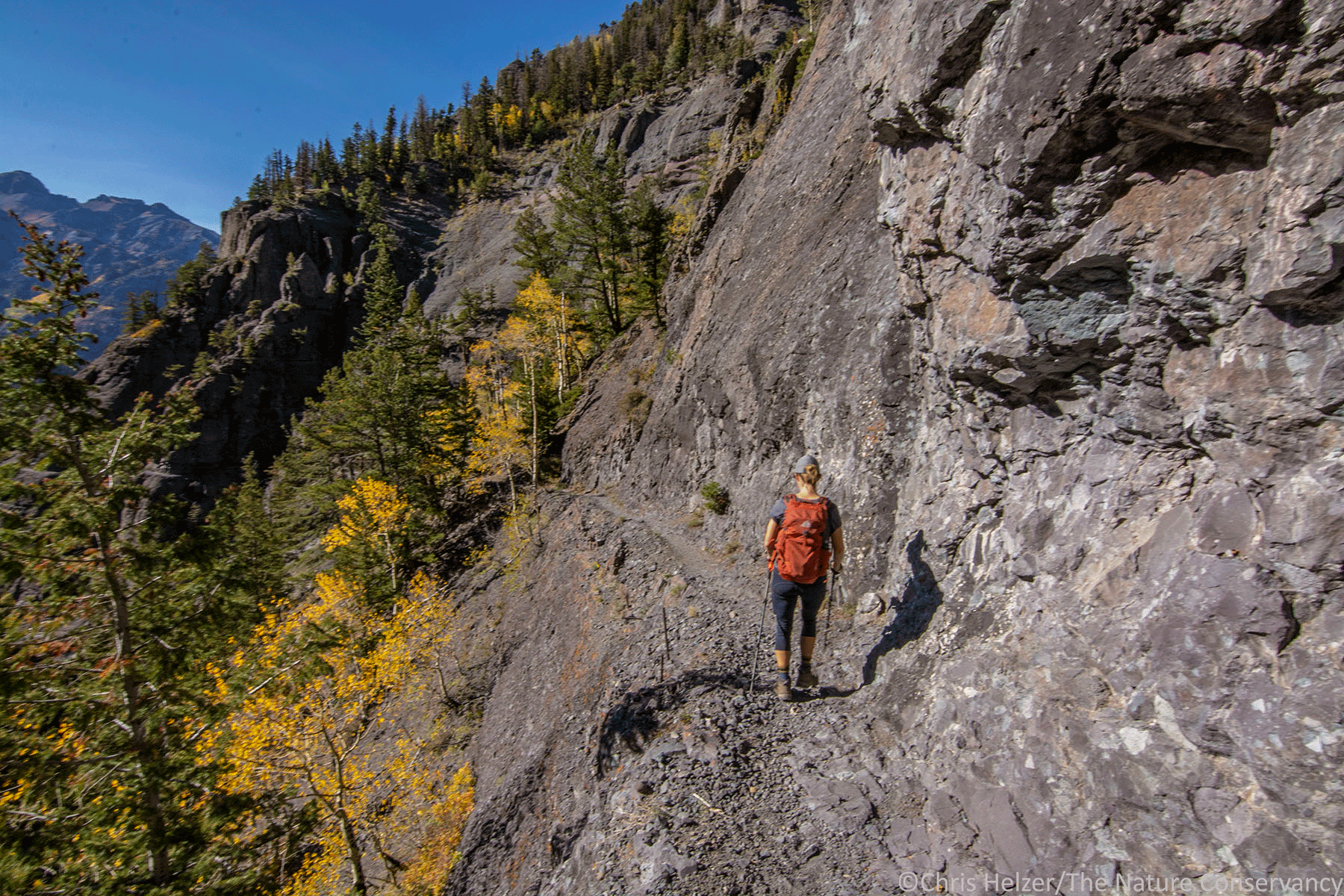
Hiking the Bear Creek National Recreation Trail along a very narrow path cut by miners long ago. Tokina 11-20mm lens @12mm. ISO 320, f/22, 1/80 sec.

Fortunately, Kim was pretty kind about pretending my ‘photo stops’ weren’t just excuses for me to bend over and pant loudly for several minutes until I could resume stumbling up the trail behind her. There were a few times when I think she needed to catch her breath too, but it was usually me who called for a stop.

Despite the wheezing caused by a combination of age, fitness and elevation, those first couple hikes were fantastic. Portions of the trails cut through dense woodland, where I couldn’t help thinking about the likelihood of catastrophic fire, given the number of dead and downed trees and the current drought conditions. However, we also planned our routes so we’d be out in the open quite a bit – either traversing south-facing grassy slopes with scattered aspen or above tree line altogether. While hiking the wonderful Bear Creek National Recreation Trail, we admired a high steep ridge covered in grass and made the decision to leave the trail and climb 1,000 feet to the rocky ridgetop. It took a while, but was definitely worth the effort.

Kim peering up at the second half of our impromptu climb up a steep grassy ridge along the Bear Creek National Recreation Trail. We were in a four point stance most of the way up, and were grateful for the thick bunchgrass, which provided helpful handholds. Tokina 11-20mm lens @11mm. ISO 320, f/13, 1/320 sec.
Kim on the way down the grassy ridge. Tokina 11-20mm lens @15mm. ISO 320, f/18, 1/200 sec.
Bear Creek. along the Bear Creek National Recreation Trail. Tokina 11-20mm lens @14mm. ISO 320, f/18, 1/125 sec.

After two days of day hikes and hotel stays, we set out on the main event of the trip. Kim had her heart set on reaching the summit of Mount Sneffels and I was happy to go along with her. We wanted to camp within a reasonable distance of the peak to shorten our ascent, so that’s why we decided upon the Upper Blue Lake as our campsite. The fact that it was high above treeline (and not favored by most others, apparently) was a bonus, especially since the forecast called for pleasant weather. It turned out to be everything we’d hoped for.
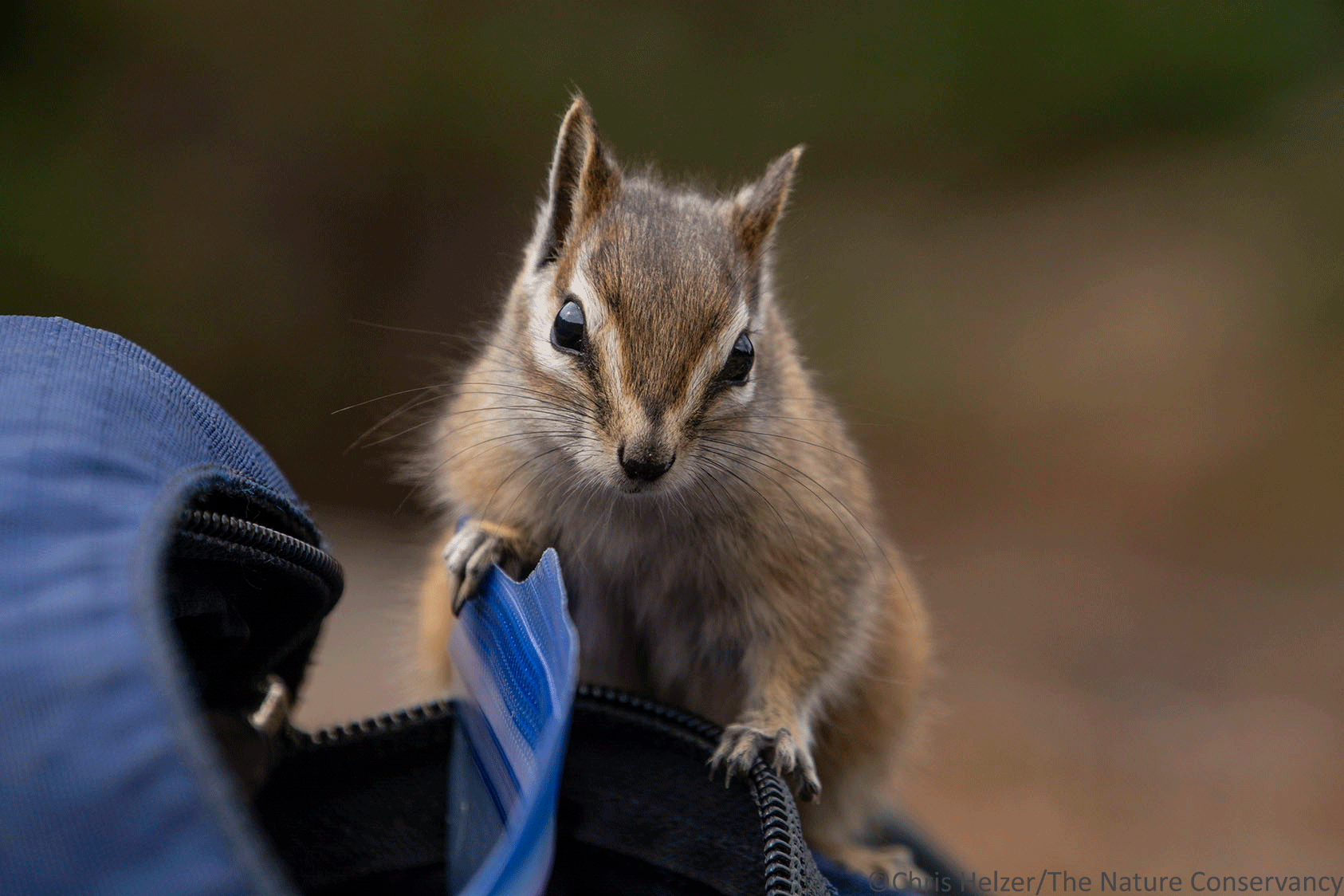
This Colorado chipmunk thought it was going to steal food from my backpack (it didn’t get to) during a stop on the Blue Lakes trail. Nikon 18-300mm lens @300mm. ISO 250, f/9, 1/500 sec.
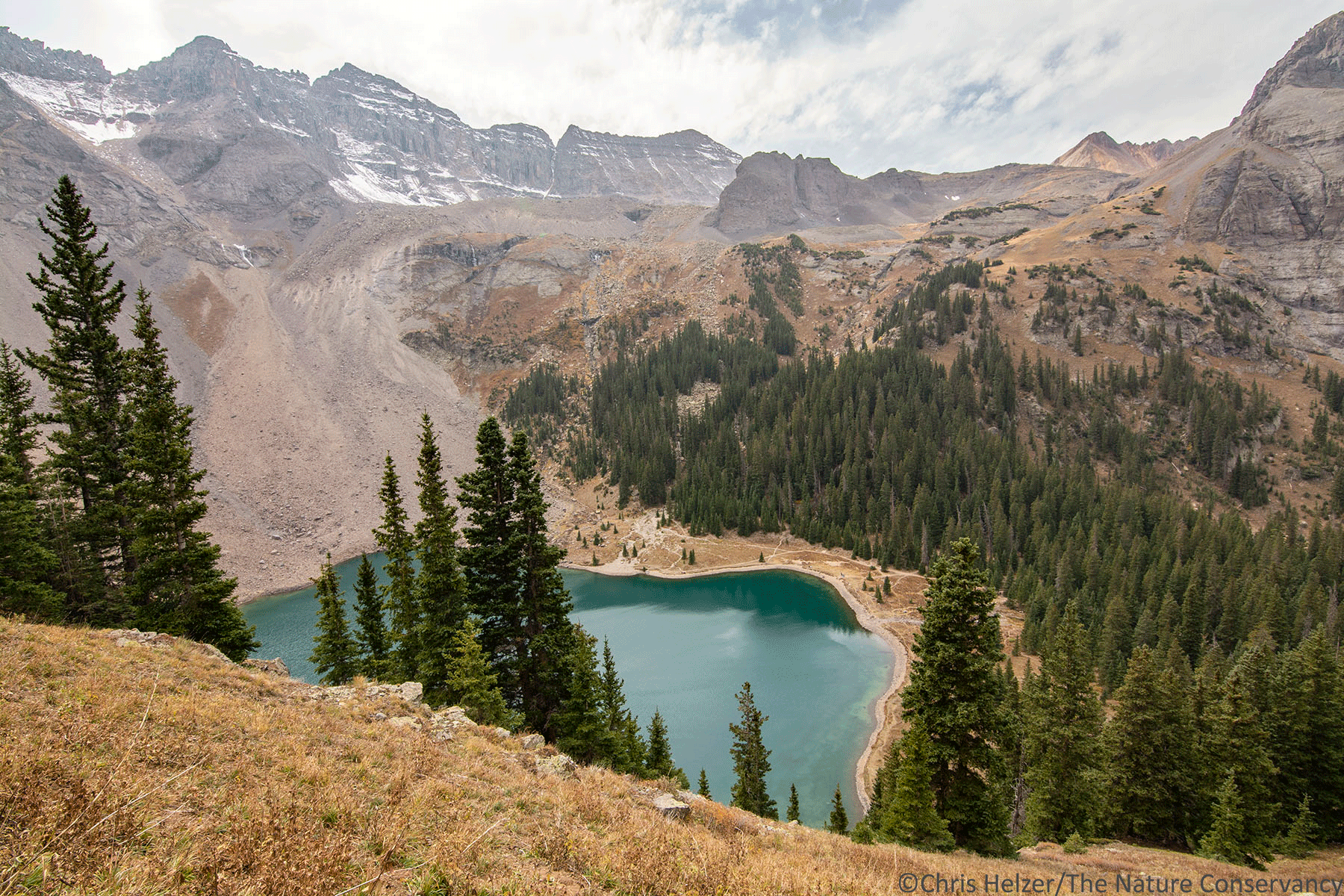
This is a view of the Lower Blue Lake, which we bypassed as a camping spot in favor of the treeless and more isolated Upper Blue Lake. Tokina 11-20mm lens @11mm. ISO 400, f/14, 1/100 sec.

When we finally reached the upper lake, there was some traffic – people hiking up to see it from below, as well as some people coming back from climbing Sneffels. No one else appeared to be planning to camp, though, and after we set our tent up out of the way, we watched the others warily, hoping we’d be the only ones to stay. I got nervous when I saw a group of backpackers approaching from far below us, but they decided to camp at the middle lake, which worked out well for all of us.
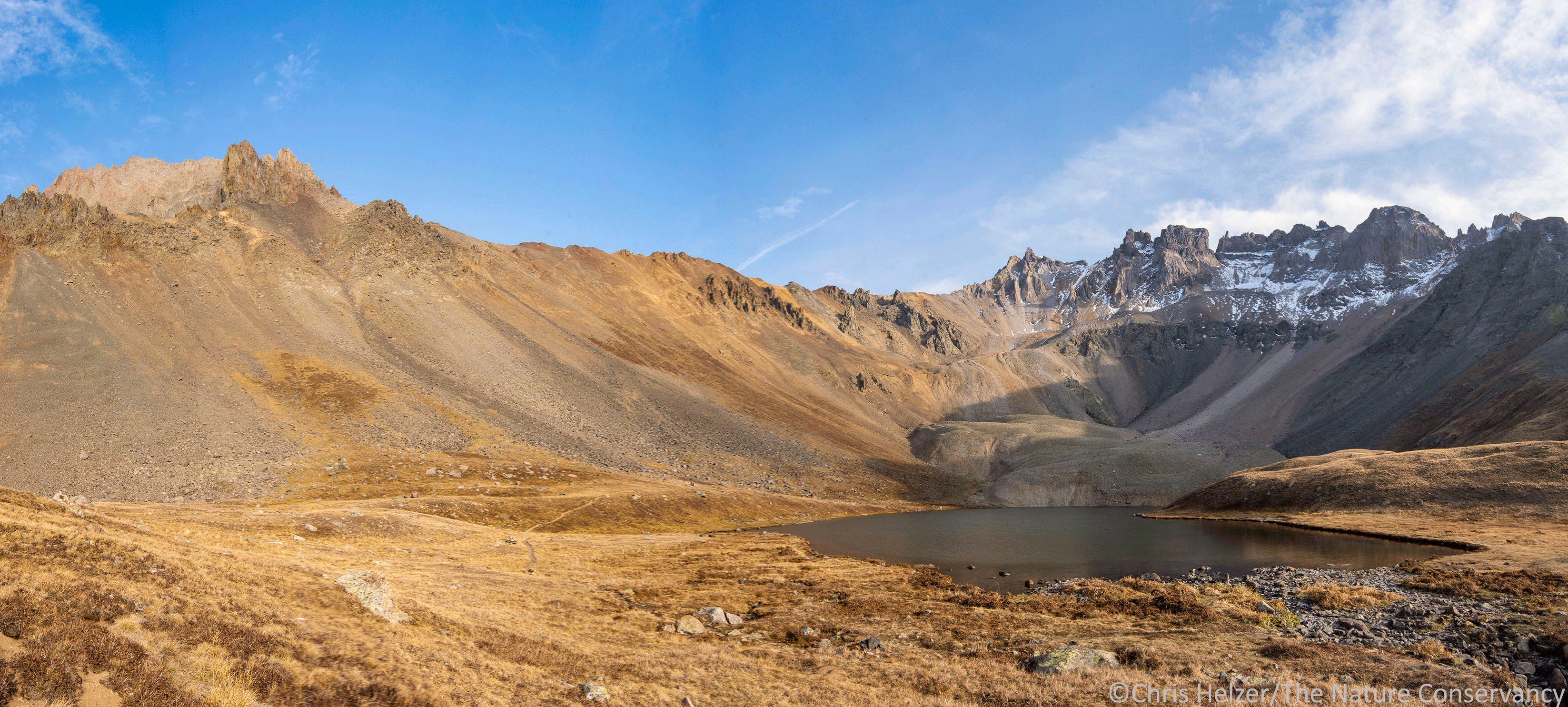
The Upper blue Lake (with the peak of Mount Sneffels in the background on the left.) We camped over a small hill from the lake off the right side of this photo. This is a panorama created from 7 photos with the Tokina 11-20mm lens.
This is the stream flowing out of the Upper Blue Lake into the Middle Blue Lake below. Tokina 11-20mm lens @11mm. ISO 400, f/18, 1/200 sec.

I spent quite a bit of time sitting quietly in the middle of several pika colonies near the lake, letting them get used to me and eventually getting a couple decent photos. One of those colonies was right by our tent, so we listened to their calls while we ate supper. Suddenly, a gray fox appeared and meandered through the pika colony within 30 yards of us. It nosed around, but didn’t seem to find anything worth stopping for. I can’t imagine a fox would have much luck catching a pika in those rock piles, but the chipmunks and voles we also saw are probably easier prey.

This pika got pretty comfortable with my presence after I sat still for about 10 minutes. Nikon 18-300mm lens @300mm. ISO 400, f/8, 1/1000 sec.
Our tent, with Mount Sneffels in the background. Tokina 11-20mm lens @11mm. ISO 400, f/18, 1/100 sec.

After the sun went down, but before the moon appeared over the mountain ridge, I played around with photographing our tent and some of the scenery around us. Then, I woke up well before sunrise on Saturday morning and wandered around in the light of the nearly-full moon, until it got light enough to eat breakfast and prepare for our ascent.
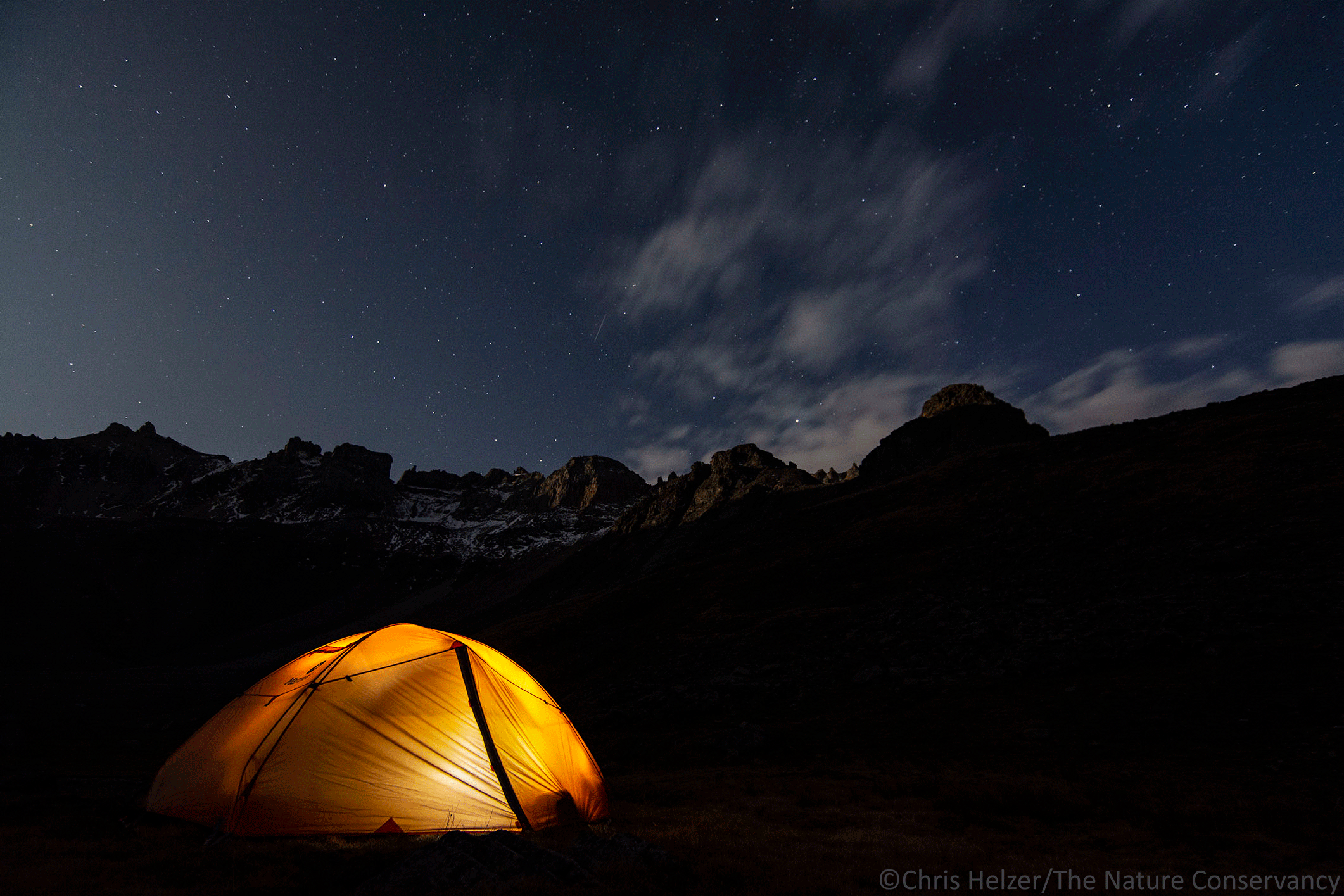
Kim was in the tent with a flashlight while I was outside trying to capture stars and the glow of the rising moon to the east (left side of this photo). The very top of the ridge behind the tent was catching light from the moon. Tokina 11-20mm lens @11mm. ISO 640, f/2.8, 10 sec.
I woke up early on Saturday morning and wandered around a little. Here, the tent and Mount Sneffels are both illuminated by the moon. Tokina 11-20mm lens @11mm. ISO 640, f/2.8, 6 sec.
Early morning moon over Upper Blue Lake. Tokina 11-20mm lens @13mm. ISO 640, f/3.2, 5 sec.

Soon after sunrise, but before we actually saw the sun, Kim and I struck out toward the mountain. We had to first climb 1,000 feet to the top of the Blue Lakes Pass – you know, just to get our blood pumping… That took us to about 13,000 feet, leaving about 1,200 more feet of climbing. That last stretch, though, was not anything like the narrow switchback trails to the pass. It was a lot of scrambling and climbing over boulders and up steep slopes.
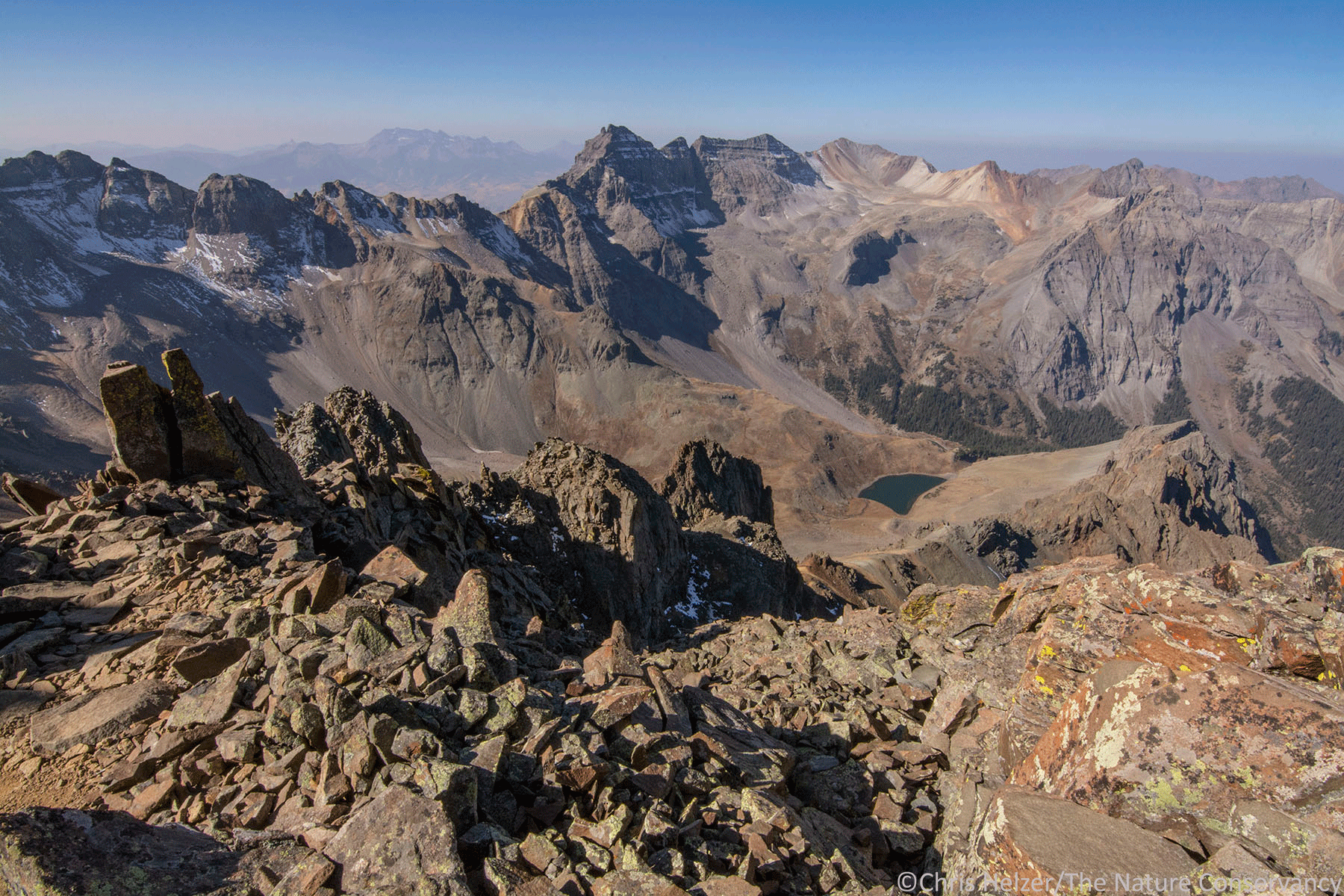
Looking down from the middle of our climb up Mount Sneffels. The lake on the right is Middle Blue Lake. Tokina 11-20mm lens @11mm. ISO 500, f/22, 1/200 sec.
Mountain ridges and haze/smoke off to the east of the top of Mount Sneffels. Nikon 18-300mm lens @220mm. ISO 500, f/13, 1/1600 sec.

Kim was having a great time. I was doing ok, but the elevation really started to get to me as we continued to climb. By the time we got above about 13,500 feet, I was getting a little light-headed and my stomach wasn’t right. At that point, though, it was a lot harder to go down than up. Once we reached the summit, we were planning to descend through a steep boulder field, where footing could be tricky, but there wasn’t the risk of falling straight down like there was where we were climbing. I gritted my teeth, forced myself to be very conscious of every movement, and kept going up.

The climb to the summit of Mount Sneffels got pretty steep…. Much of the ascent was actual climbing, rather than a distinct trail. This is a cell phone photo because I didn’t feel good about trying to pull my other camera out of its bag while holding on to a rock.
Here’s Kim making the final ridge ascent to the summit of Mount Sneffels. (Can you she was having a great time?) Tokina 11-20mm lens @11mm. ISO 500, f/13, 1/1250 sec.

We did eventually reach the summit and the view was absolutely spectacular. Since I wasn’t feeling great, I didn’t get to appreciate it as much as I would have liked, but I was aware enough to notice that everyone else we met on the way up (and down) was considerably younger than me. That made me feel a little better about myself. I then started to feel physically better as we started descending and eventually got back to a more reasonable (?) 12,000 feet or so. We packed up the tent and trekked the four miles back down to the trailhead (5,000 feet below the peak of Mount Sneffels).

I’m clearly a prairie person, and don’t expect to change. I like living at a nice tame 1,800 feet above sea level where a big hill is a hundred feet high. However, I also do enjoy getting up in the mountains now and then, just for a change of pace. I’m not a big fan of hiking through trees where I can’t see past the firs, pines, and spruces, but if I can find places where the view opens up, I’m happy. Aspens in full golden color are pretty sweet, too. I’ll probably let Kim talk me into going back again next year…

Ask The Prairie Ecologist (Part 2)

Well, when I ask for questions, you deliver! This might have to become a more regular feature of this blog. I thought maybe I could answer all the questions in two posts, but it’s going to take at least three. And you’re welcome to keep sending in questions – I’m happy to answer them. I’ll do at least one more post to catch the ones that have come in so far, and then might start saving additional ones for down the road.

These questions are also helpful to me as I think about topics for future posts. Sometimes, it reminds me that it’s been a long time since I’ve written about a particular subject, other times, it’s just helpful to hear what’s on your mind so I can research and/or write about it when I get a chance. Thanks to everyone who has sent in questions so far.

Here are more questions and answers…

Steinar Karlsen asks:

You still have a lot of hair, Chris. Lucky you! ;-)

I’m wondering about prairie dogs. As I understand it they are very important for a prairie’s ecology.
So, what’s the current attitude to prairie dogs and how common are they typically?

Prairie dogs definitely create important habitat for many other animals, as well as plants.  I’m a big fan of them.  However, their ecological value is hard to separate from some of the baggage that comes along with the species in today’s landscape.  For example, in Nebraska, most of our large grasslands are part of private ranches.  While there is much discussion about the (potentially positive) impact of prairie dogs on forage quality, and the idea that their holes cause lots of cattle to break legs is mostly mythology, there’s no question that prairie dogs compete for forage with livestock.  As a result, prairie dogs are seen as pests by most ranchers because they reduce the amount of forage (and thus income) produced by the areas they inhabit. 

Black-tailed prairie dogs have a big impact on grasslands. Depending upon your perspective, those impacts can positive, negative, or both.

Fans of prairie dogs and their associated ecological benefits might feel angry about ranchers eliminating prairie dogs from their land.  I understand that, but a more productive approach might be to consider ways to financially compensate ranchers for the losses they incur from prairie dogs.  It’s no more fair to expect ranchers to lose money by coexisting with prairie dogs than it is to expect a restaurant owner to give away food.  There might be some ranchers and restaurant owners who can afford to do that, but others who are riding a tightrope between profit and loss aren’t bad people for trying to stay in business.

Aside from the financial aspect, the other big obstacle to increasing prairie dog numbers on private ranches is that there is a big social stigma attached to them.  Ranchers who co-exist with prairie dogs risk scorn from their neighbors.  Social norms are real and important pressures that influence how we all behave.  Just as it takes a lot of confidence and bravery to dress in a drastically different way than your peers at a business meeting, it can be difficult to be that rancher in a rural landscape where everyone knows and relies on each other. 

In addition to the social stigma, prairie dogs like to spread out, so neighbors have a legitimate worry that one rancher’s prairie dog population might spill over into another’s.  Because of both the financial and social implications of that, the situation mirrors that of a landowner’s worries about the noxious weeds on a neighbor’s land.  In fact, there is a statute in Nebraska that gives county officials the ability to control prairie dogs on private land to prevent their spread, though that statute is not frequently enforced, as far as I know.

Prairie dogs are doing better on some public lands, though it sounds like disease and other pressures are still significant.  There certainly aren’t many places where the size of a prairie dog town is large enough to host a viable population of the once-thought-to-be-extinct black-footed ferret.  For that to change, we’ll probably need to figure out a way to deal with the aforementioned issues on private lands.  It’ll take some creativity and patience, and probably some significant funding.

.

shoreacres  asks:

After some thought, I realized that I’ve never been in the state of Nebraska, apart from one quick trip across I-80. I think a visit’s in order. Which grasslands, preserves, forests, or refuges should be on my must-see list? And which guides or books could I begin reading now to prepare for a trip? I probably could manage two weeks.

And I have to ask: after looking at Google’s satellite map, what kind of land form is that ripple-y area bounded by highways 20, 27, and 83 — west of the Valentine refuge? I can’t remember seeing anything like it. The land looks extruded, like spaetzle!

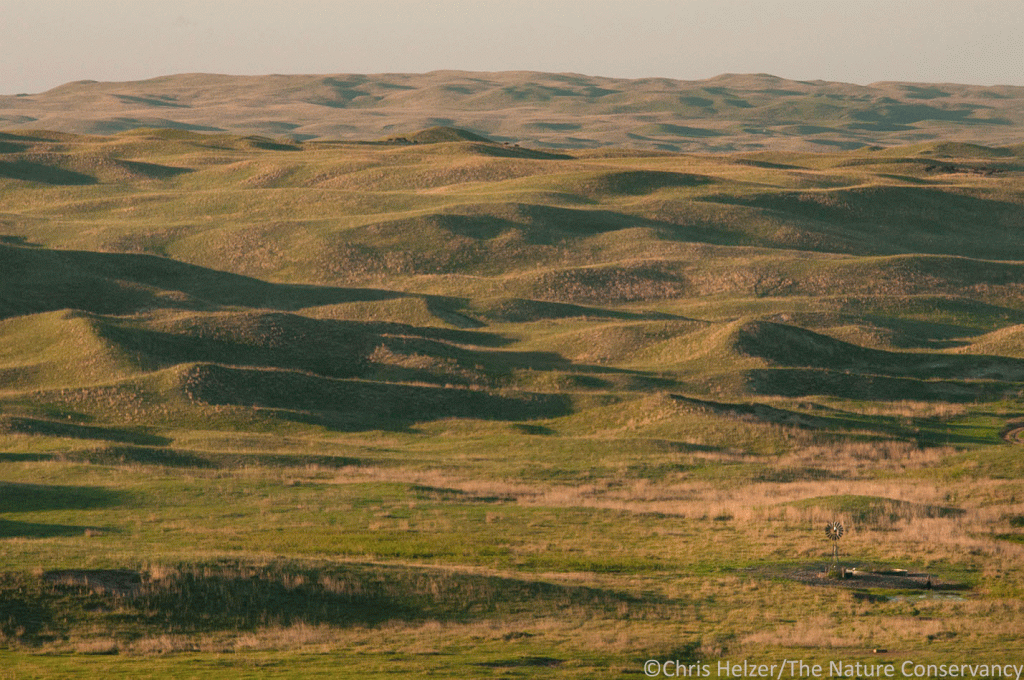
Linda, you’ve got a wonderful way with words.  First, the spaetzle landscape is the Nebraska Sandhills, 12 million acres of sand dunes covered in prairie and wetlands. It really does have a unique look from above, doesn’t it?

The Nebraska Sandhills is an amazing prairie landscape.

Nebraska has plenty of great sites. There are some pretty nice oak woodland sites with tallgrass prairie ridges in the east.  A couple public examples are Indian Cave State Park and Fontenelle Forest (you could also skip across the Missouri River to see the Iowa Loess Hills).  Elsewhere, most of the best remaining tallgrass prairie in southeast Nebraska is on private land, but Wachiska Audubon has worked to protect some of those remnants, and some are publicly accessible.  During college, I spent a lot of time at Nine-Mile Prairie in Lincoln, and it is still a nice place to wander around.  Spring Creek Prairie, just west of Lincoln, is a great site too, with some excellent interpretative displays.

Further west, check out the prairies owned by Prairie Plains Resource Institute.  Don’t skip Gjerloff Prairie, a wonderful loess hills site with interesting topography and habitat, as well as a view of the Platte River.  The Nature Conservancy’s Platte River Prairies, of course, are also nice (if I do say so myself) and we’re working to improve our hiking trails and visitor facilities over the next few years.  Let me know if you’re coming and I’ll try to meet you out there!

In the Sandhills, both the U.S. Forest Service and U.S. Fish and Wildlife Service have big public areas to visit and they’re all worthwhile.  Crescent Lake and Valentine National Wildlife Refuges are especially nice if you want to see some beautiful groundwater wetlands/lakes.  The amazing Niobrara River also has a number of publicly-available sites, including the Niobrara Valley Preserve, Fort Niobrara, and Niobrara State Park, to name a few.

In the panhandle, Fort Robinson, Chadron State Park, Toadstool Park, and the Wildcat Hills are among my favorites.  I’m sure other Nebraskans can help with other recommendations, especially with areas I’m not as familiar with.  For example, I love the northeast and southwest portions of Nebraska but don’t spend enough time there to know the best locations to visit. 

.

Laura asks:

How do you feel about bats?

Bats are adorable, amazing, and sadly misunderstood.

How do you feel about smammals?

Smammals are adorable, amazing, and sadly misunderstood.

What’s your favorite dinosaur?

Wow, it’s been a long time since I spent much time thinking about dinosaurs, but if pressed, I’d probably choose Pachycephalosaurus.

Small mammals, aka smammals, play lots of important roles in prairies. They’re also stinkin’cute.

.

Ellen Rathbone asks:

Legit question: After moving to the midwest, I’ve had to learn a lot about the prairie (and savannah) ecosystem(s). One of the early things I had read was that while bison provided valuable ecological services to the system, cattle were much harsher on the landscape and should not be promoted (this had to do with hooves, movement patterns, and possibly diet as well). THEN I read a piece that said there was no real difference – grazers are grazers, hooves are hooves. It sounds like you may fall in the second category, but I’d like to hear/read your thoughts on this. Thanks!

Not surprisingly, I do have thoughts to share on this topic!  In fact, I’ve spelled out a lot of those thoughts in a post written back in 2014. You can read that, but I’ll summarize a few points here too. 

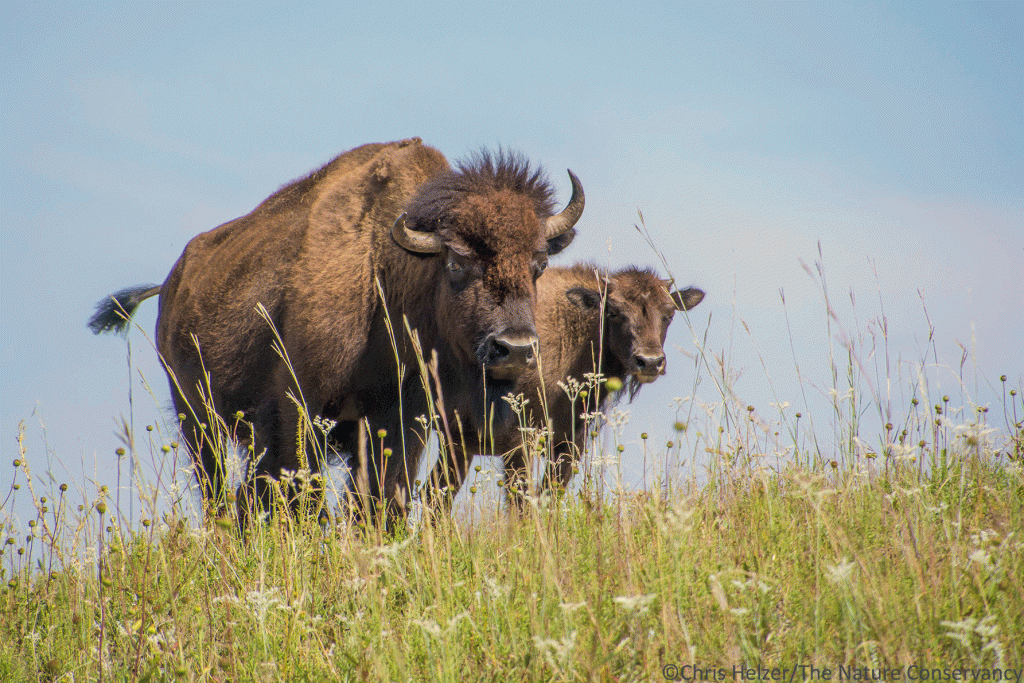
Bison at The Nature Conservancy’s Niobrara Valley Preserve are in 10,000 acre pastures, giving them plenty of room to move around the landscape.

Cattle and bison have pretty similar diets, if given the same choices and pasture sizes.  Bison might be a little more selective toward grasses, but both eat primarily grasses and fill in nutrient needs with wildflowers when they need them.  Some of the biggest differences are behavioral, especially related to the use of water and trees/shade.  Bison don’t hang around water or trees much.  They tend to get a drink, rub on a tree, etc., and then head back out into the open prairie.  Cattle often stand around in water during the summer, mostly (as I understand it) to escape biting flies that attack their legs.  They also seek out shade trees and will loaf around those trees enough that they’ll disturb vegetation significantly there.  As a result, there are some issues with pollution, erosion, and vegetation disturbance that can come from those cattle behaviors.  Most of that can be mitigated by management – fences, limiting/rotating access to water/trees, etc., so that there is no permanent damage done. 

Bison also come with hassles.  In most cases, prairie managers have to own the bison and keep them on the prairie year-round.  That means annual roundups, good fences and corral systems, and a lot of constant responsibility.  Ranchers often own their own cattle too, of course, but it’s usually their full time job to take care of them. Managers of public or private prairie preserves usually just bring cattle in on a temporary lease basis, so the animals are there for up to 6 months or so per year and then go somewhere else.  Typically, the owner of the cattle is in charge of any doctoring that needs to happen too, so the prairie manager’s job is easier than it is as a bison owner.  There’s a lot of variability in how all that works, but that’s generally the way it goes.

In short, both cattle and bison can do positive things for prairies if they’re managed thoughtfully.  Both can also be problematic – both logistically and ecologically – if they’re managed poorly.  If grazing is an important component of the management objectives for a particular site, the bison vs. cattle question often comes down to scale and logistics.  Unless you’ve got a few thousand acres of prairie, bison are probably not very feasible, both from cost (fencing/corrals, etc.) and ecological (bison like/need bigger areas to feel and act like bison) perspectives.  Cattle provide more flexibility in management options, and can be used in relatively small prairies, but also need a little more planning to prevent some of the potential issues surrounding water and trees.