The Other Prairie Pollen

When you think about insects feeding on pollen in prairies, your mind probably goes first to a bee on a colorful wildflower. If so, and you’re a frequent reader of this blog, I hope that bee in your visual image is not a honey bee (also see this). While a bee on a wildflower is a perfectly legitimate mental picture to draw, wildflowers are not the only source of pollen in a prairie. Grasses (along with sedges and rushes) have flowers too, and produce copious amounts of pollen. While grasses rely on wind to disperse that pollen and don’t create colorful and/or scented flower structures to attract pollinating insects, their pollen is still available for any enterprising insect that seeks it out.

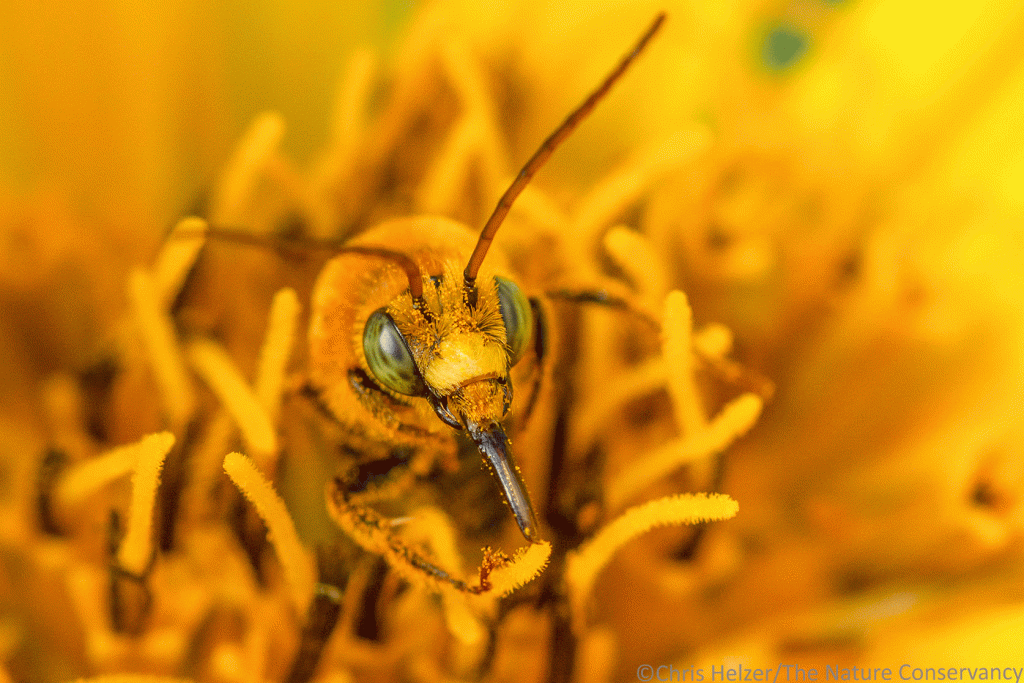
A female long-horned bee (Melissodes sp) has her ‘saddlebags’ loaded with sunflower pollen from this Maximilian sunflower.
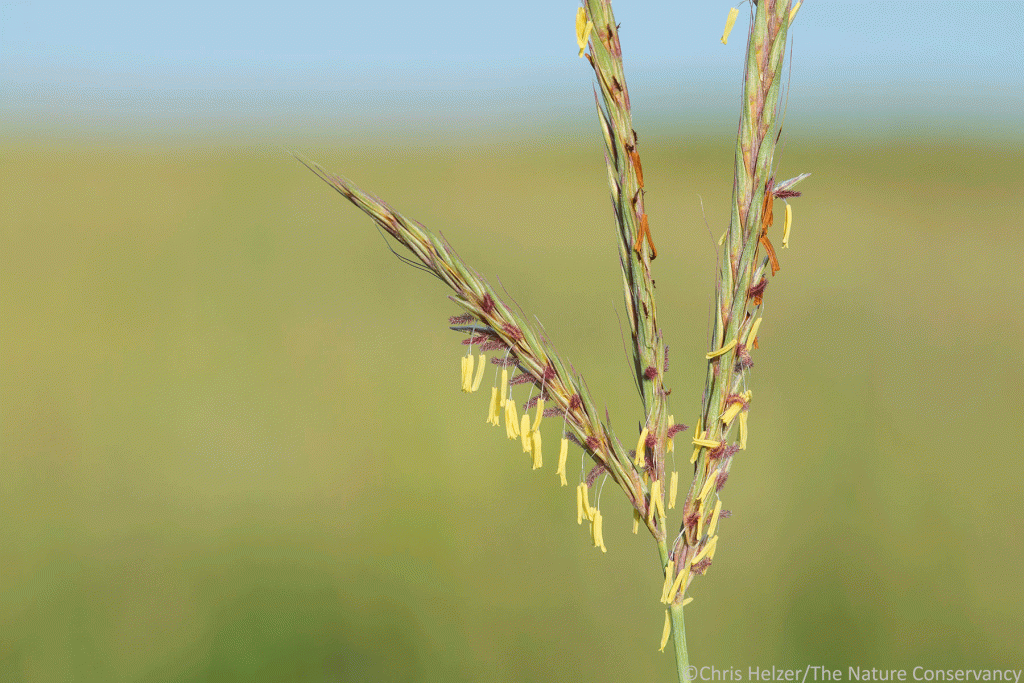
Big bluestem, like all grasses, is a flowering plant and produces pollen. In this case, the pollen is contained within the yellow anthers shown here, from which it can be released into the wind for dispersal.

As someone who pays an inordinate amount of time staring at flowers and insects, I’ve noticed that there are a fair number of insects feeding on grass pollen. And why not? It’s packed with nutrition and it’s just hanging there, ready to eat. Among the insects I’ve seen feeding on grass pollen are bees, flies, tree crickets, and beetles.

Researchers around the world have noticed this too, of course, but the use of grass pollen by insects is still a fairly poorly understood phenomenon. If you’re interested in catching up on the current state of academic knowledge of the subject, Manu Saunders wrote an excellent review of the literature in a 2018 article in Insect Conservation and Diversity. My take home point from the article is that not paying more attention to insects feeding on grass pollen might mean that we’re missing some important ecological interactions that would help us better understand and conserve natural areas.

This tree cricket was feeding on prairie cordgrass pollen (Spartina pectinata) a few years ago.
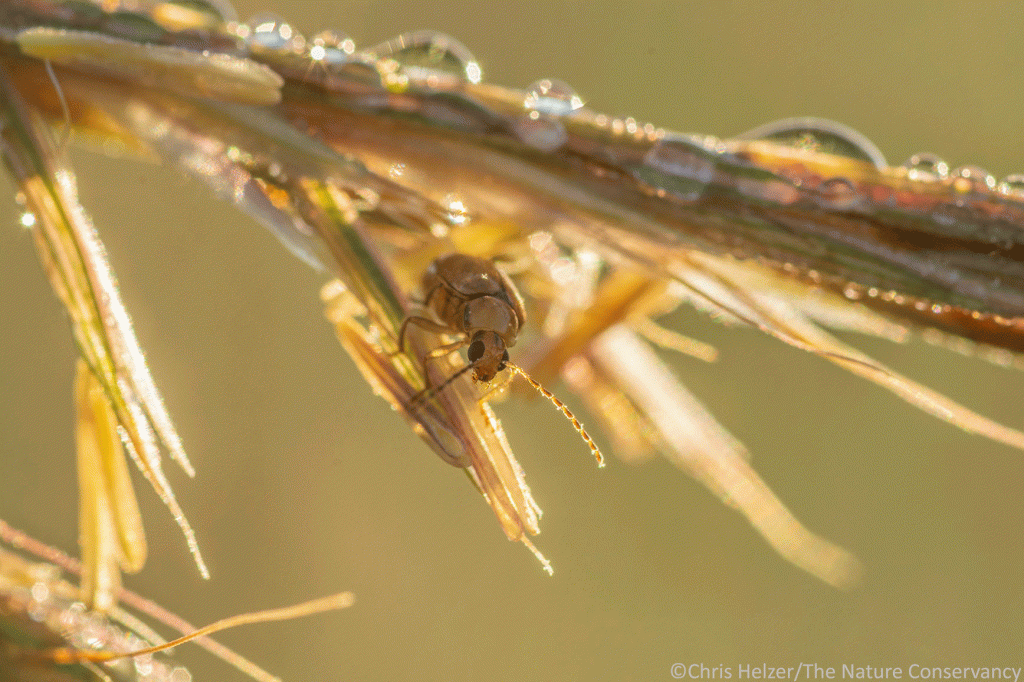
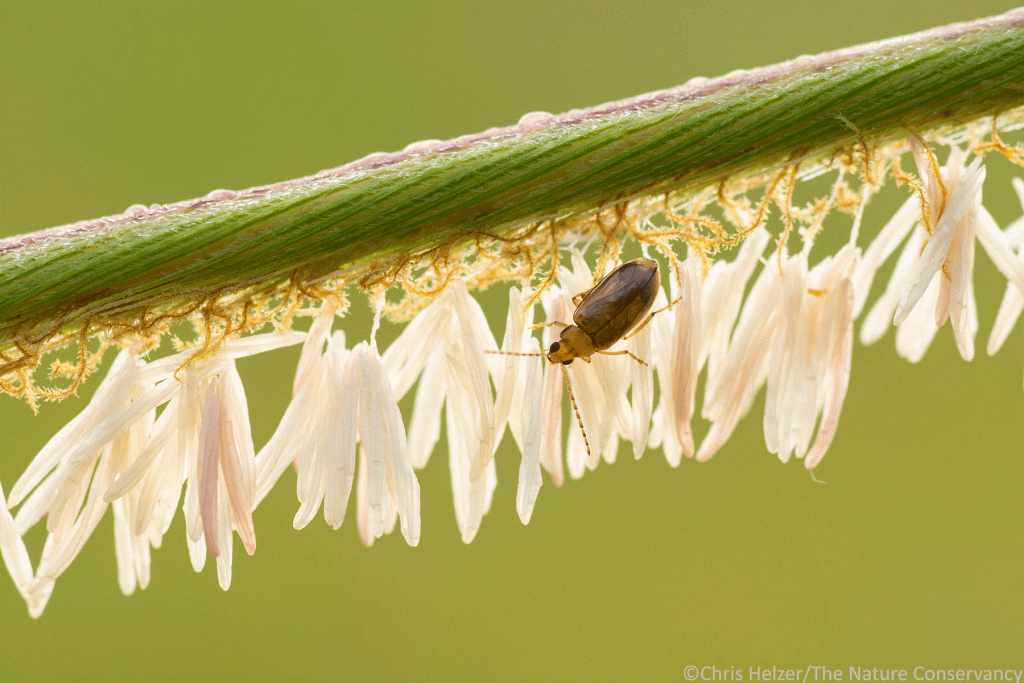
This leaf beetle was feeding on prairie cordgrass pollen last weekend. Both the beetle and tree cricket are commonly seen eating pollen from wildflowers too.
Here’s the same leaf beetle as above (I think) feeding on big bluestem last weekend.

Insects such as tree crickets and beetles that feed on grass pollen benefit from the food source, but probably do little to help the grasses themselves. Bees and flies, however, might provide at least some pollination benefit by transporting pollen from one grass plant to another. In fact, there is growing evidence that insect pollination can at least somewhat increase seed set for many wind-pollinated plants.
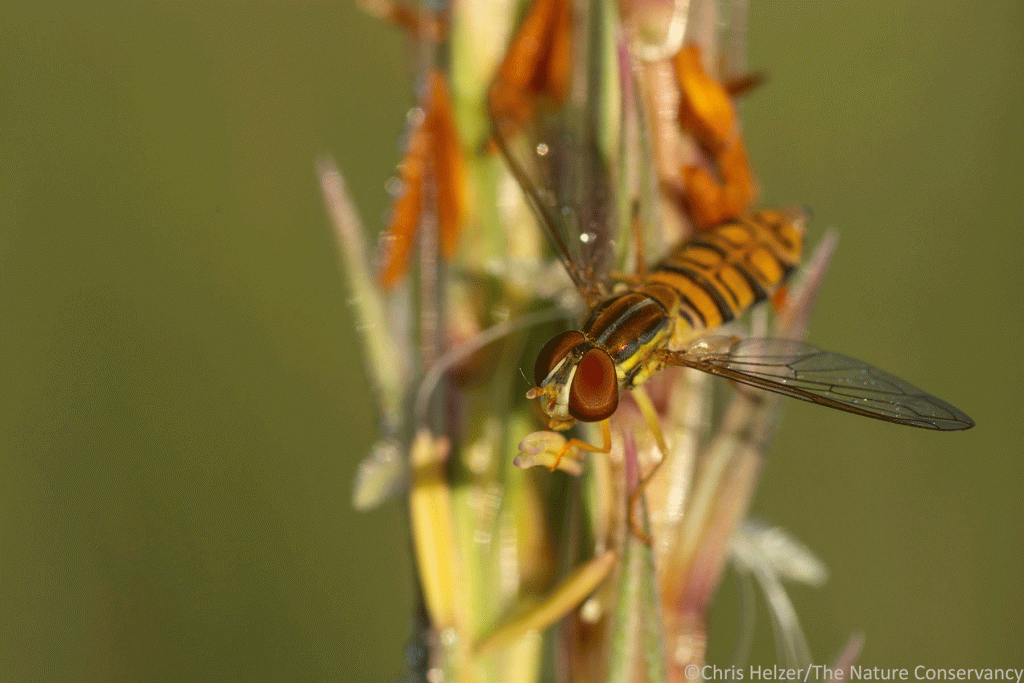
Syrphid flies (aka hover flies or flower flies) are frequent pollen feeders on grasses like this big bluestem plant. They often hold the anthers between their front legs like a giant ice cream cone.
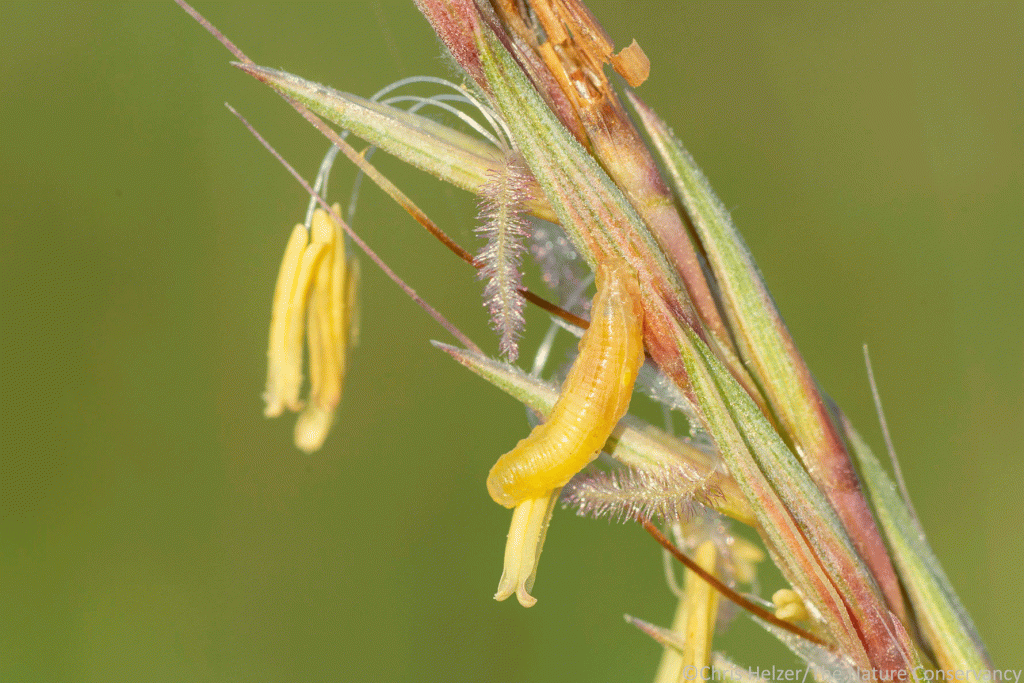
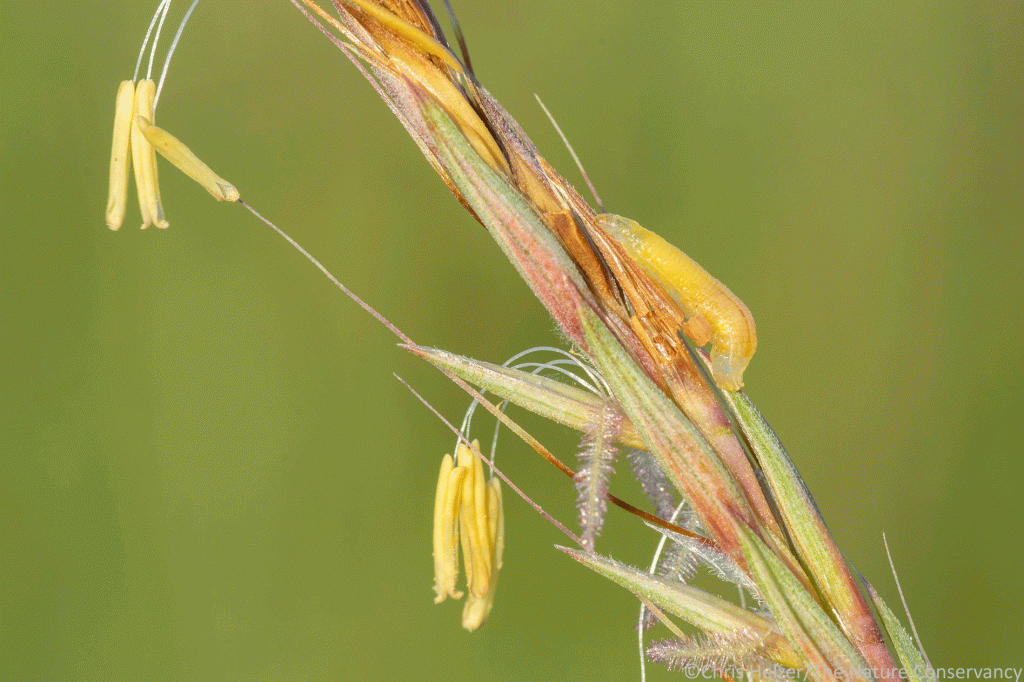
I don’t know what this tiny larva is, but I spotted it among the anthers of big bluestem this weekend, where it was very well camouflaged.
I watched it for a minute or two – just long enough to confirm that it was indeed, feeding on the anthers themselves.

At the same time, those bees and flies may benefit from an additional – and very abundant – source of food that allows them to supplement what they’re getting from wildflowers. What we need to know, though, is whether a fly or bee feeding on grass pollen is a sign that the wildflower community nearby is not sufficiently meeting its nutritional needs. In other words, are bees and flies feeding on grass pollen because they want to or because they’re desperate? I think we can all agree that’s an important distinction? And, of course, it would be helpful to know how important insects might be to the successful seed production of grasses, sedges, rushes, and other wind-pollinated plants.

I’ve been paying a little extra attention to insects on grass pollen this year as the late summer grass flowering season gets underway. Big bluestem (Andropogon gerardii) and prairie cordgrass (Spartina pectinata) have been the big draws so far this month, but other grasses are yet to bloom. Indiangrass (Sorghastrum nutans), for example, is definitely one that I’ve seen numerous syrphid flies feeding on in past years but hasn’t started opening up yet this season.

A syrphid fly feeds on Indiangrass pollen back in 2018.

If you’re someone who visits prairies fairly often (or who has prairie plants in your yard) insect use of grass pollen could be an interesting phenomenon to track. What species of insects are feeding on grass pollen? What other options are available at the time? Alternatively, if you’re a current or prospective graduate student looking for a project, here you go! Let’s see what we can learn about the ecological ramifications of insects feeding on grass pollen. It might not solve systemic racism or a global health crisis, but it’s something positive we can do while we’re trying to survive those other issues…

Photos of the Week – August 14, 2020

Our family prairie has been a place of tremendous refuge for me lately. The world seems to be going crazy and taking many of my friends and neighbors with it. I can’t even express the gratitude I have toward my extended family for the opportunity to own and manage the quarter section of land (including 100 acres of prairie) only 15 minutes from our house. The simple act of walking through our prairie fills me with a complicated mixture of emotions, including both peace and pride.

False sunflower (Heliopsis helianthoides) in foreground, and ironweed (Vernonia sp) and other wildflowers in the background. Nikon 10.5mm fish eye lens. IS.O 500, 1/320 sec, f/20

The peace comes from being able to quietly observe life and interactions that have nothing to do with swirling vortex of hate, argument and anxiety that otherwise pounds at my consciousness. I can sit still and lose myself in the earnest and vigorous foraging of a bee on a flower or reflect upon how much the plant community has changed in the days since my last visit. By the time I leave to return to my other sanctuary – my family – I’m much better suited to deflect and/or process the current unpleasantness in the human world.

Painted lady butterfly (Vanessa cardui) on Flodman’s thistle (Cirsium flodmanii). Nikon 105mm macro lens. ISO 500, 1/500 sec, f/13.

The pride comes from watching the prairie continue to thrive and increase in beauty and complexity as our restoration and management work bear fruit. A visiting botanist might scoff at the rarity of ‘conservative’ plants – species found primarily in unbroken and ‘pristine’ prairies. In response, I could walk them to many populations of plants in that category and describe how the populations of each has spread over the years I’ve been familiar with the site. I could then point out the diversity of pollinators and other insects (including some at-risk species) thriving in the ever-increasing plant diversity and the number of grassland bird species responding to the shifting mosaic of habitat structure we provide annually. And I’d try to describe the immense sense of accomplishment and pleasure I get from every sighting of a cicada, badger, tree frog, or any other animal that calls our prairie home.

False sunflowers, ironweed, and other wildflowers decorate the bottom of a shallow draw. Tokina 12-28mm lens @12mm. ISO 500, 1/250 sec, f/18.

When I was a full-time land steward for The Nature Conservancy, early in my career, any sense of accomplishment was always tinged with anxiety related to invasive species threats or other challenges looming in front of me. For some reason, I’ve never felt that stress at our family prairie, despite a consistent and long list of tasks still to accomplish. Instead, I chip happily away at encroaching trees, harvest and broadcast seeds to boost plant diversity, and spray patches of reed canarygrass around the wetland – all blissfully free of worry. It’s as if the prairie and I have reached an understanding. We’re in this together. What comes will come and we’ll deal with it as we need to. In the meantime, look at all those butterflies!

This long-horned bee (Melissodes sp) was feeding on rosinweed (Silphium integrifolium) and paused to wipe pollen off its face and tongue, allowing me to capture a couple portraits of it. Nikon 105mm macro lens. ISO 500, 1/800 sec, f/13.
Same bee as above, showing its tongue. Camera details are the same as the first photo.
This Woodhouse’s toad would rather I’d just left it alone but I pestered it for a few photos before letting it hop back off into the prairie. Nikon 105mm macro lens. ISO 500, 1/160 sec, f/14.
Same toad as above. Same lens too, but 1/400 sec and f/11.
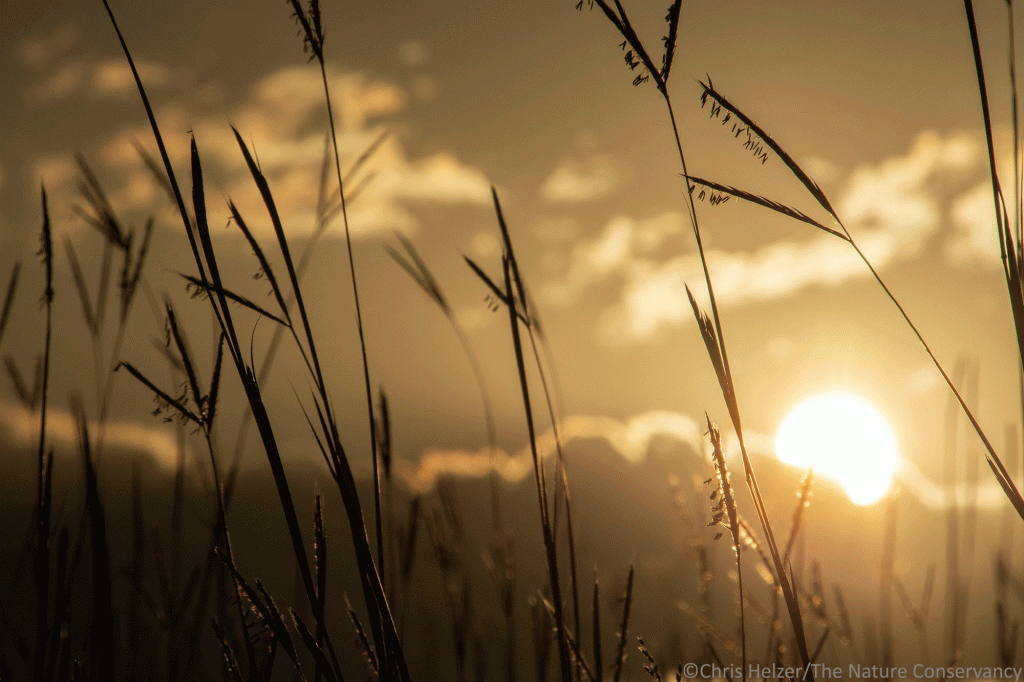
Big bluestem in silhouette as the sun emerges from behind morning clouds. Nikon 18-300mm lens @300mm. ISO 500, 1/5000 sec, f/22.
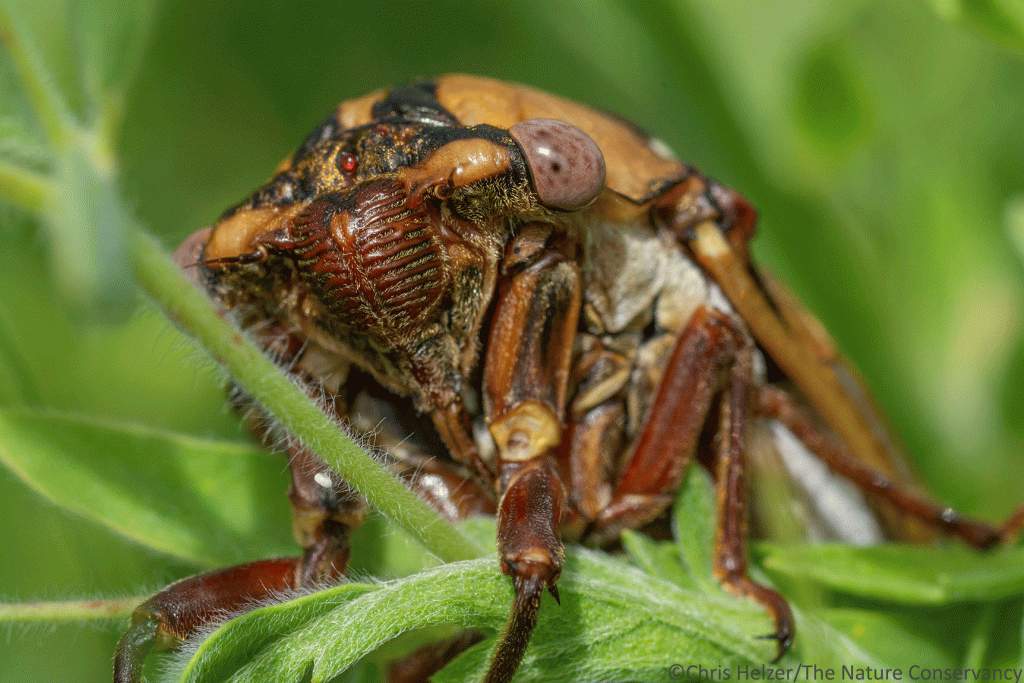
Prairie cicada (Megatibicen dorsatus). Nikon 105mm macro lens. ISO 500, 1/250 sec, f/18.
A patch of rosinweed (Silphium integrifolium) at sunrise last weekend. Rosinweed is one of many plant species that was absent from our prairie before we started broadcasting locally-harvested seed in recently grazed locations. Tokina 12-28mm lens @22mm. ISO 500, 1/125 sec, f/22.

I’ve said many times, here and elsewhere, that I acknowledge the enormous privilege associated with land ownership, especially when it’s accompanied by the kind of gratification and serenity I find in our prairie. Through this blog and other means, I try to share fruits of that privilege with others, spreading as much of the peace and pleasure as I can. More importantly, I hope anyone reading this can find access to a prairie or other natural area – large or small – that provides similar refuge. Goodness knows we can all use a little refuge right now.

Please be safe and be kind to each other.