
It had been a long afternoon (and early evening) of data collection and I was tired. I stowed away my gear in the cabin but needed to go back and grab one more thing from my truck. Podcast blaring from my phone, I walked out the door, and started toward the vehicle. About 10 steps later, the very edge of my consciousness finally grabbed my attention and pointed out a noise that hadn’t been there when I’d walked past earlier. Maybe an insect buzzing? Nope. Definitely a high-pitched buzz, though. Or maybe a hiss? Oh! It’s a snake. And what a snake!
Sitting just off the concrete patio, where I’d walked unknowingly past it half a dozen steps earlier, was a menacing-looking brown-patterned serpent with its flattened head raised in the air. My first thought was, “Ah! Finally, my first rattlesnake at the Niobrara Valley Preserve.” I’d been coming up for more than 25 years and had never seen one (though most other people haven’t either, especially in recent years). However, my second thought, following closely on the first, was ‘Hey, wait a second…’
Here’s what I saw:
Then I got really excited. I’ve seen hognose snakes before, and admired their cute upturned noses and normally calm demeanor. I’ve even photographed one before down at our Platte River Prairies (see below). But I’ve never gotten to see one of these snakes perform their famous two-part dramatic routine. Some of you are already nodding your heads, anticipating what’s to come. Well, just hush and don’t spoil it for everyone else…

There are two species of hognose snake in Nebraska: eastern and western. Both species are rear-fanged snakes that employ a slightly toxic venom to subdue toads and frogs – their primary prey. Western hognoses apparently have a somewhat broader palate, but easterns seem pretty exclusive in their toad/frog diet. Neither presents any threat to humans.
Back to the scene… Once my brain switched back from podcast to naturalist mode, I recognized the opportunity in front of me and I quickly banged on the door of Ashley’s cabin, alerting her to the situation. Then we both grabbed our cameras and hunkered down to enjoy (and encourage) the show.
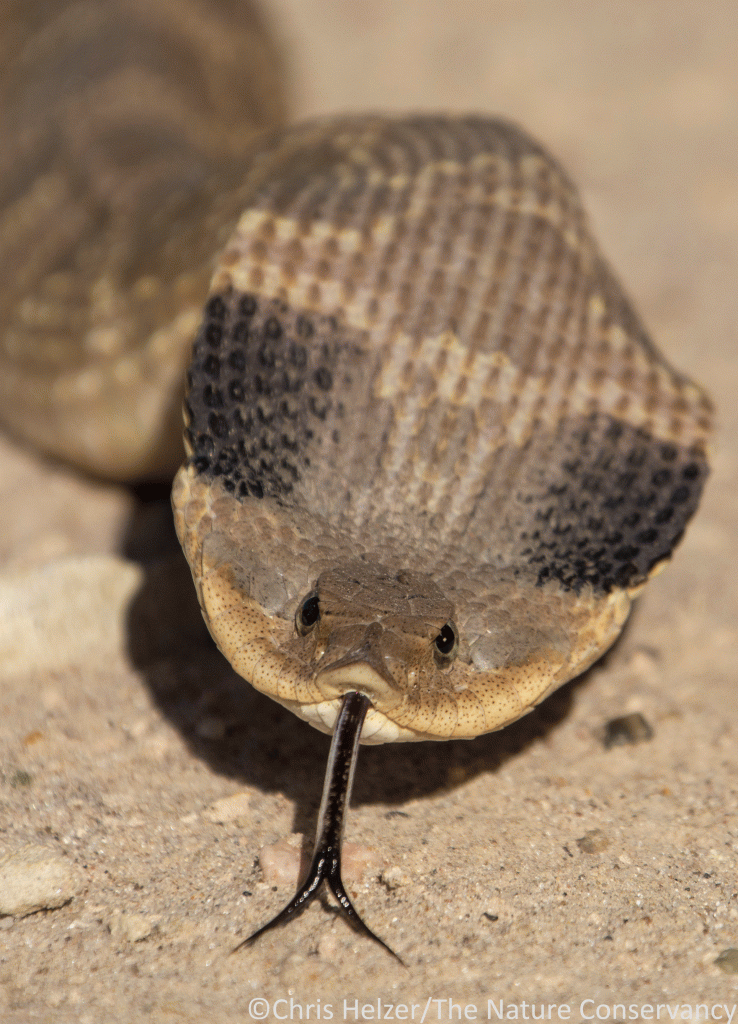
And what a show it was! Such an earnest performance by a dedicated actor! After watching for a few minutes, I grabbed a stick and gently lifted/dragged the snake out of the shade and into the sun (spotlight?). Undeterred, she continued – pouring herself into the role. The flattened head was really impressive but Ashley and I were more captivated by the loud hissing sound as she repeatedly and dramatically inflated and deflated the snake’s body.

I have no idea how effective this performance typically is against predators, but it would take an awfully bold coyote to continue an attack on a snake that looked and acted like this one. Even a predator with no previous experience with a venomous snake must have the same kind of instinct we have to back off from an aggressive-looking serpent, right?
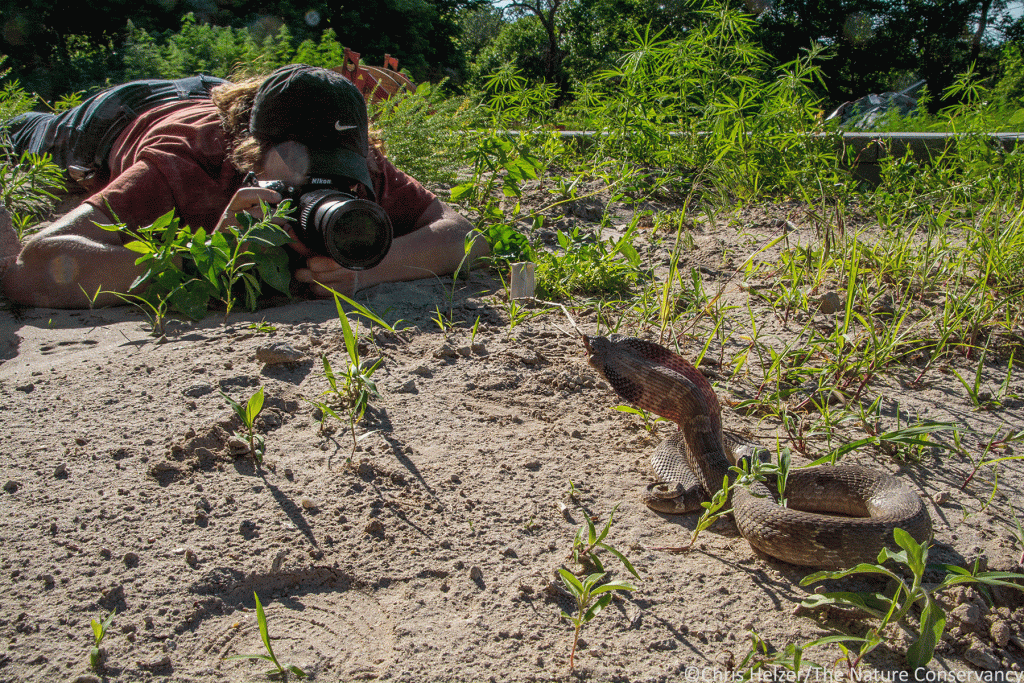
Now, because I’m a well-read ecologist, I knew that hognose snakes typically have two acts to these dramatic performances – the second coming only if the first one fails to dissuade a potential threat. Because of that, once Ashley and I had sufficiently photographed the first act, I grabbed my stick again. Without harming the snake at all, I repeatedly starting poking and gently lifting it with my stick. I was trying to show it that I wasn’t afraid of it.
(Here’s the thing, though – I knew without a doubt the snake was harmless, but every time it snapped its head toward me in a fake strike I flinched strongly backwards. Every. Single. Time. And I was carrying a big stick…)
It took more harassing than I’d expected to trigger the second act. I was getting close to giving up, feeling bad about the degree to which we were bothering the poor thing, when it finally flipped. Literally. The snake whipped over on its back and started violently writhing and squirming around with its mouth held absurdly wide open and its underbelly completely exposed. This was a snake that was undoubtedly in its final moments of life – dying from some unknown, but apparently extremely painful (and maybe contagious?) threat. It was simultaneously unnerving and hilarious.

I didn’t get any video of the squirming and writhing, but it’s easy to find videos online, and you should look them up if you’re not familiar with this behavior. I did, however, get plenty of photos of the snake once it stopped squirming and entered the final ‘I’m super dead now!’ phase of its performance. It laid perfectly still, even when prodded with the stick, selling the finality of its death completely. We admired the snake for another minute or two and then decided to finally give it what it deserved – our retreat. It had worked so hard, it seemed cruel not to reward it with success.
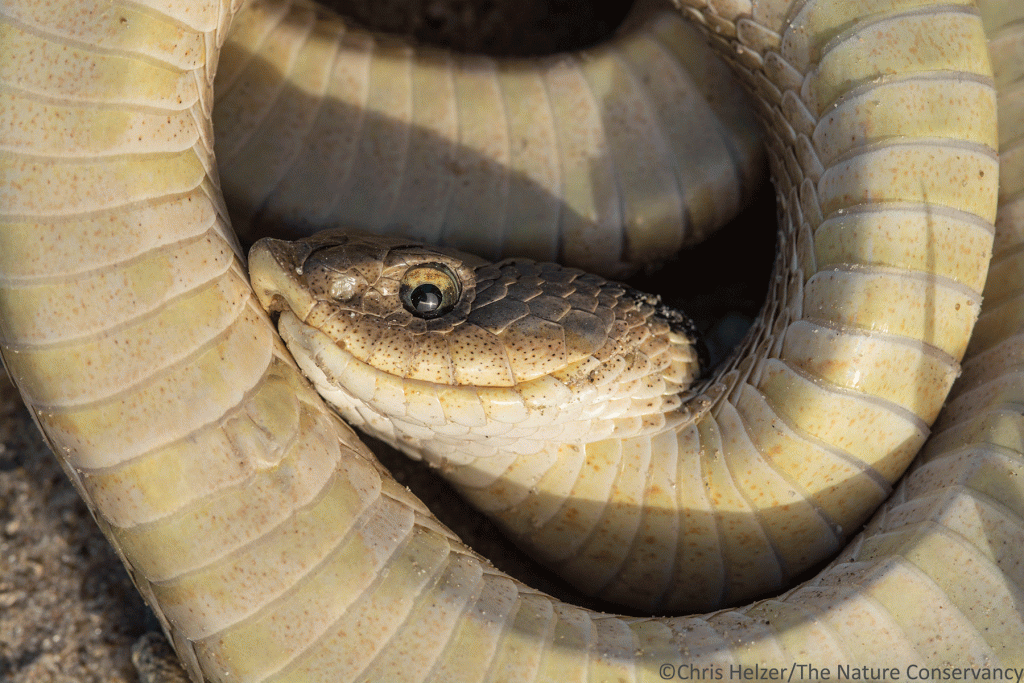
We both walked away from the poor ‘dead’ snake and within a minute I watched from a distance as it glanced around, flipped back over, and glided quickly off into the vegetation. I wonder if it was self-evaluating its performance as it went?
“Gee, I felt like I was giving the hissing everything I could, but it didn’t seem to get through to them… That death scene, though – wow, did I kill with that!”
Brava!

 The Prairie Ecologist