I’ve been working along the Central Platte River in Nebraska for close to 30 years now. Despite that, I’ve actually spent relatively little time in the river itself. As a grassland ecologist, most of my time has been focused on nearby prairies. The river sustains the groundwater beneath those prairies and it draws the sandhill cranes and geese that provide an annual soundtrack each spring. It’s much more than that, of course, but those are the attributes I’ve paid the most attention to.
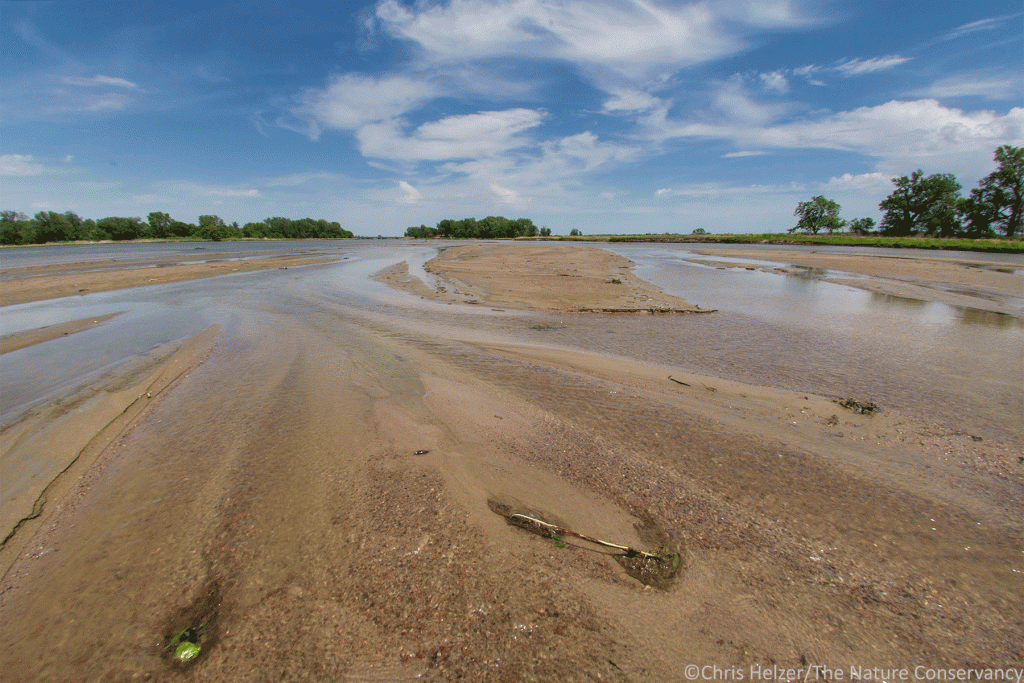
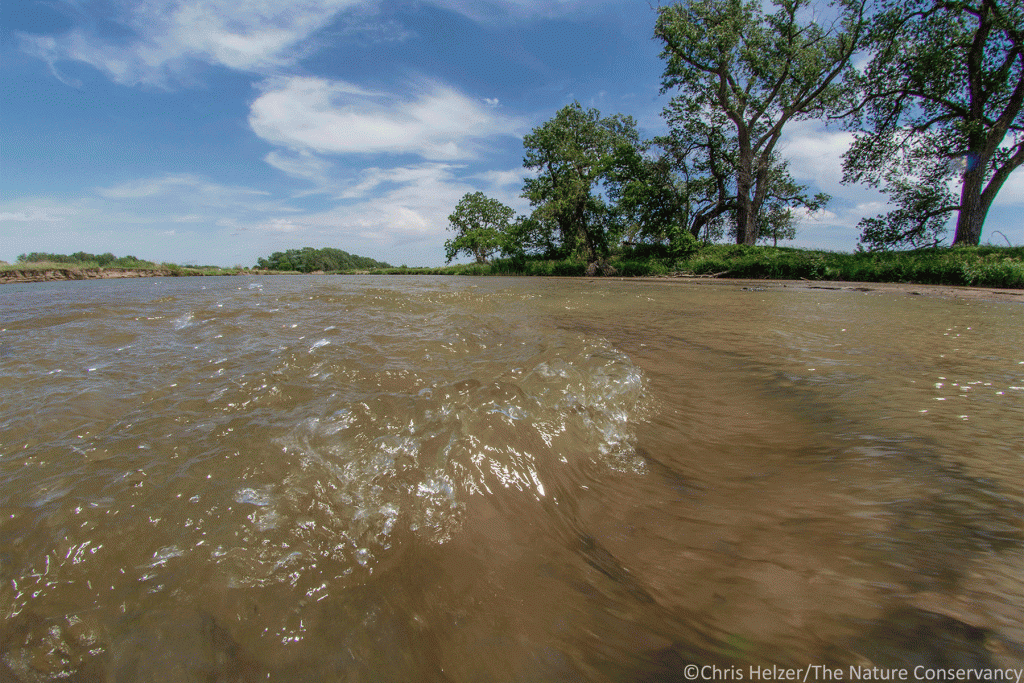
The Central Platte River is a shallow braided river. At this time of year, it is a combination of exposed and barely submerged sandbars – all slowly moving downstream. Nikon 10.5mm fish eye lens. ISO 320, 1/200 sec, f/22.
During the last couple weeks, my college-age son John has been bugging me to take him out to splash around in the Platte. Last week, we found some time on a hot afternoon and enjoyed a couple hours in a quiet stretch of river – wading through channels, squishing through mud and sand, chasing toads, and more. It was so much fun that we couldn’t keep it to ourselves and we made another trip a couple days later, bringing Kim, Calvin and Atticus with us.
The boys had a great time playing on one of the sandbars – building sandbars, making mini river channels through the sand, and generally enjoying the day. Nikon 12-28mm lens at 12mm. ISO 320, 1/400 sec, f/10.
While the boys had noisy fun on a sandbar and Kim enjoyed some quiet time on another (far away) sandbar, I meandered around with my camera. As I did, I wondered why this kind of river exploration is such a rare part of my nature-based activities. I spent much of my time in a backwater channel (connected to the main channel only at the downstream end) where tiny fish and tadpoles zipped around much slower snails and other aquatic creatures. Killdeer and spotted sandpipers patrolled nearby, and red-winged blackbirds noisily let me know when I was too close to a nest on the higher, more vegetated islands.
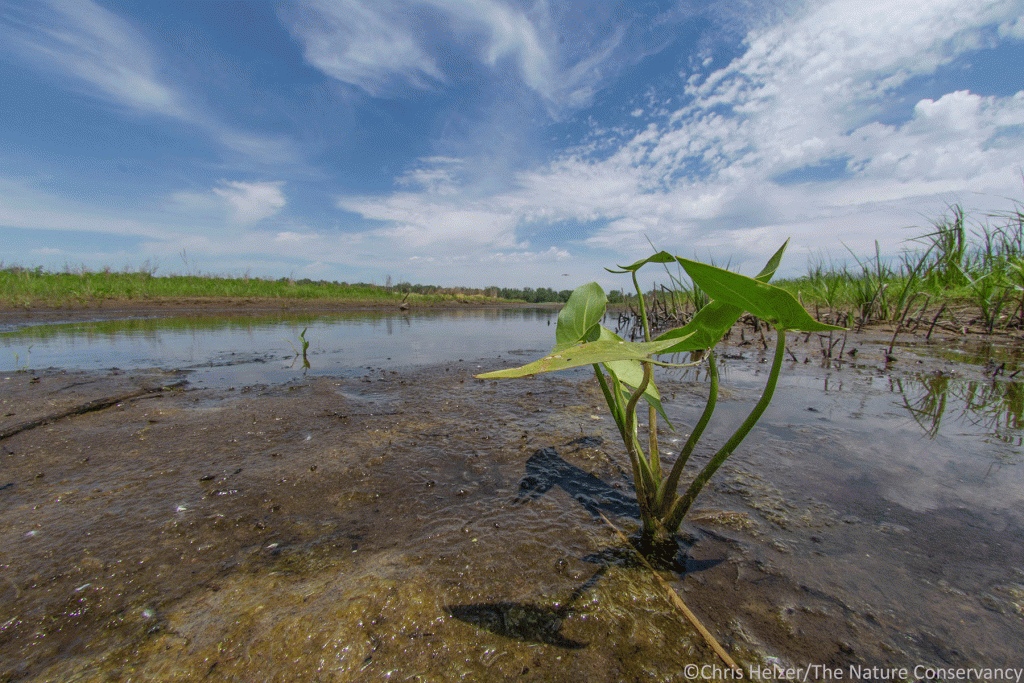
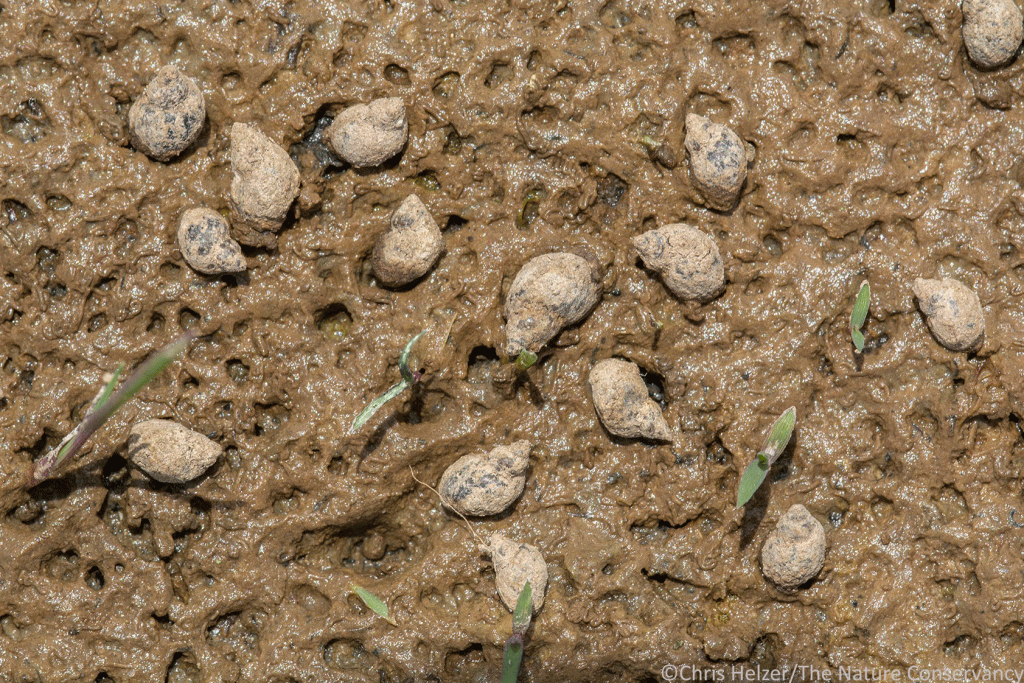
This backwater wetland was full of life, including fish, tadpoles, snails, birds, frogs, and more. Nikon 12-28mm lens at 12mm. ISO 320, 1/800sec, f/13.Little pools like this one were full of snails and tadpoles, along with other aquatic life. Raccoon tracks around the edge showed that this pool was well known by local predators. Nikon 10.5mm fish eye lens. ISO 320, 1/250 sec, f/18.Another photo of the backwater wetland. Nikon 10.5mm fish eye lens. ISO 320, 1/250 sec, f/18.Arrowhead (Sagittaria sp) in bloom. Nikon 10.5mm fish eye lens. ISO 320, 1/200 sec, f/18.These snails were left high and dry after water levels receded from some parts of the backwater channel. Nikon 105mm macro lens. ISO 320, 1/125 sec, f/18.Killdeer were running all around the bare sand, making lots of noise and (I assume) keeping an eye on eggs or chicks nearby. Nikon 105mm macro lens. ISO 320, 1/400 sec, f/9.
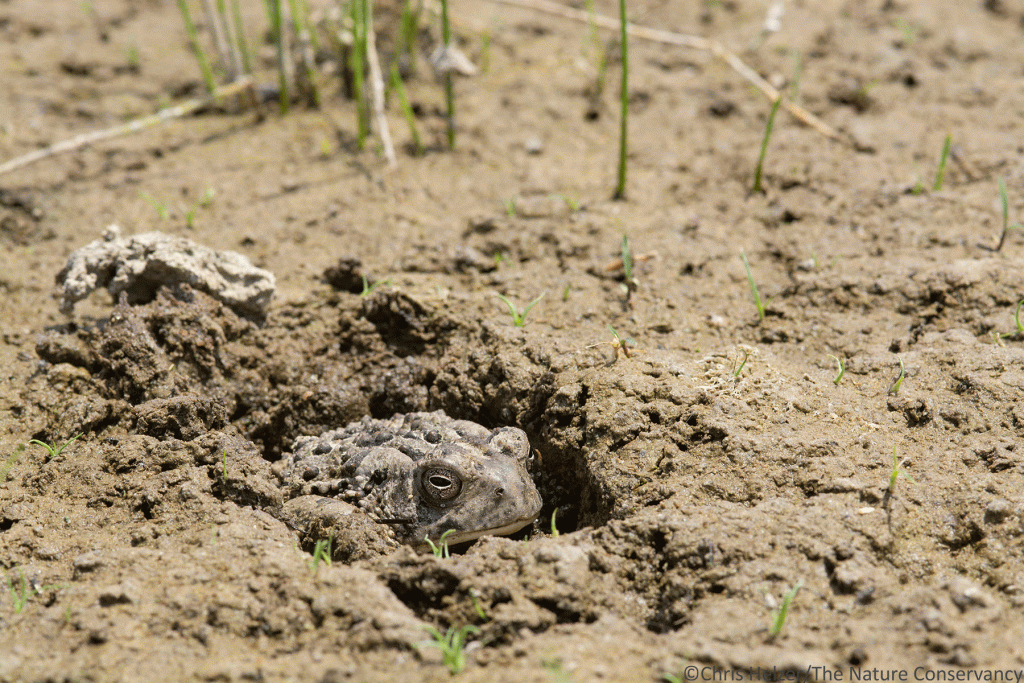
Woodhouse’s toads were regulating their temperatures by sitting in shallow depressions in the wet sand. After I startled the first one out of its hole, I got better at spotting them before I got close enough to make them nervous. By slowly approaching them and staying low to the ground, I even managed to get a couple photos of them.
There were several Woodhouse’s toads in the backwater wetland, partially dug into the wet sand. They were firmly ensconced in their shallow depressions, coming out only if I got too close as I walked past. Nikon 10.5mm fish eye lens. ISO 320, 1/200 sec, f/18.This clever toad took advantage of a deer track in the sand and just nestled into that. Nikon 105mm macro lens. ISO 320, 1/250 sec, f/13.I didn’t see this toad until it hopped away from my feet and into some shallow water where it let me take a few photos of it. Nikon 105mm macro lens. ISO 320, 1/160 sec, f/13.Water from as far away as the Rocky Mountains passes through the Central Platte on its way to the Gulf of Mexico. On the way, it provides drinking water for much of Nebraska, supplies irrigation water to many thousands of acres of crops, sustains groundwater levels beneath prairies and meadows, and – by the way – is important habitat for many fish, wildlife, and invertebrates. Nikon 10.5mm fish eye lens. ISO 320, 1/200 sec, f/22.A fallen cottonwood leaf, partially buried in the wet sand. Nikon 105mm lens. ISO 320, 1/250 sec, f/22.
It won’t come as a big revelation to most of you that rivers are a fun place to explore. It’s not exactly a revelation to me either, but it’s certainly an opportunity I’ve not taken advantage of very often. Hopefully, I’ll be a little less neglectful in the future. If I forget, I’m guessing the kids will remind me…
Thanks for the kind and thoughtful responses to my last post (as well as some helpful caterpillar identifications!) I hope you’re all doing well. Hang in there and please be kind to each other.
I headed out early yesterday morning to do some data collection in the Platte River Prairies. Before I could get started, I got distracted by some nice light and clouds and ended up spending an hour wandering around with my camera before jumping into my vegetation surveys. (Nobody worry – I still managed to get all my data collected.) I’m sharing a few of the resulting photos today.
A temporary wetland after recent rains at the Platte River Prairies. Tokina 12-28mm at 12mm. ISO 500, 1/125 sec, f/18
A few of you joined an online photography class I presented last week. If you missed it but want to watch the recording, it is available now at this link. The class is targeted at people who want a better basic understanding of how cameras work (including phone cameras) and how to use that information to make better photos. I also talked about how to identify and use various kinds of light and covered some basic exposure information.
On that topic, a number of you have asked me to provide information on camera lenses and settings for the photos I share. I’m not promising to do that every time, but I did provide that info for today’s photos and I’ll try to do that more often when I have the time (and when I remember).
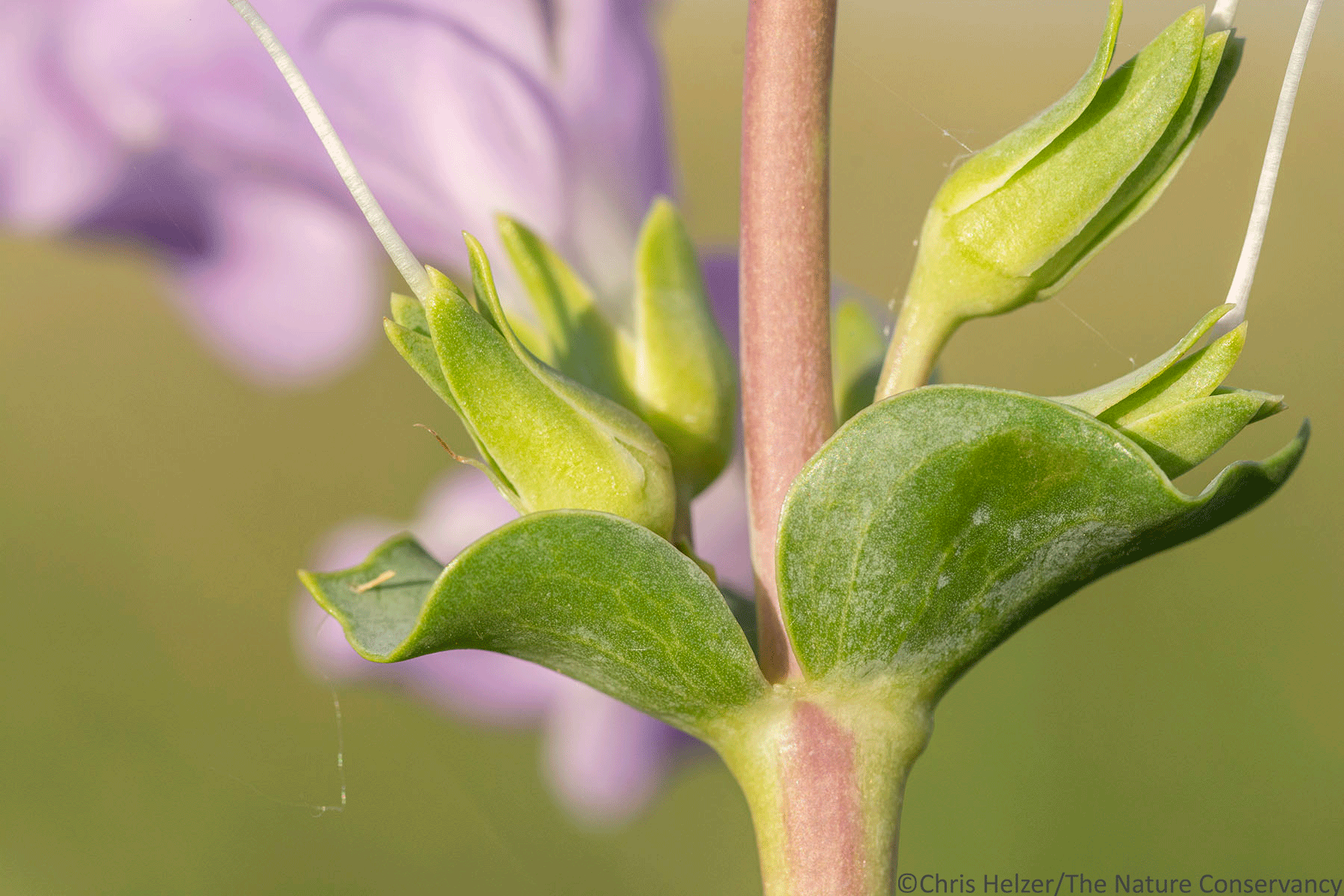
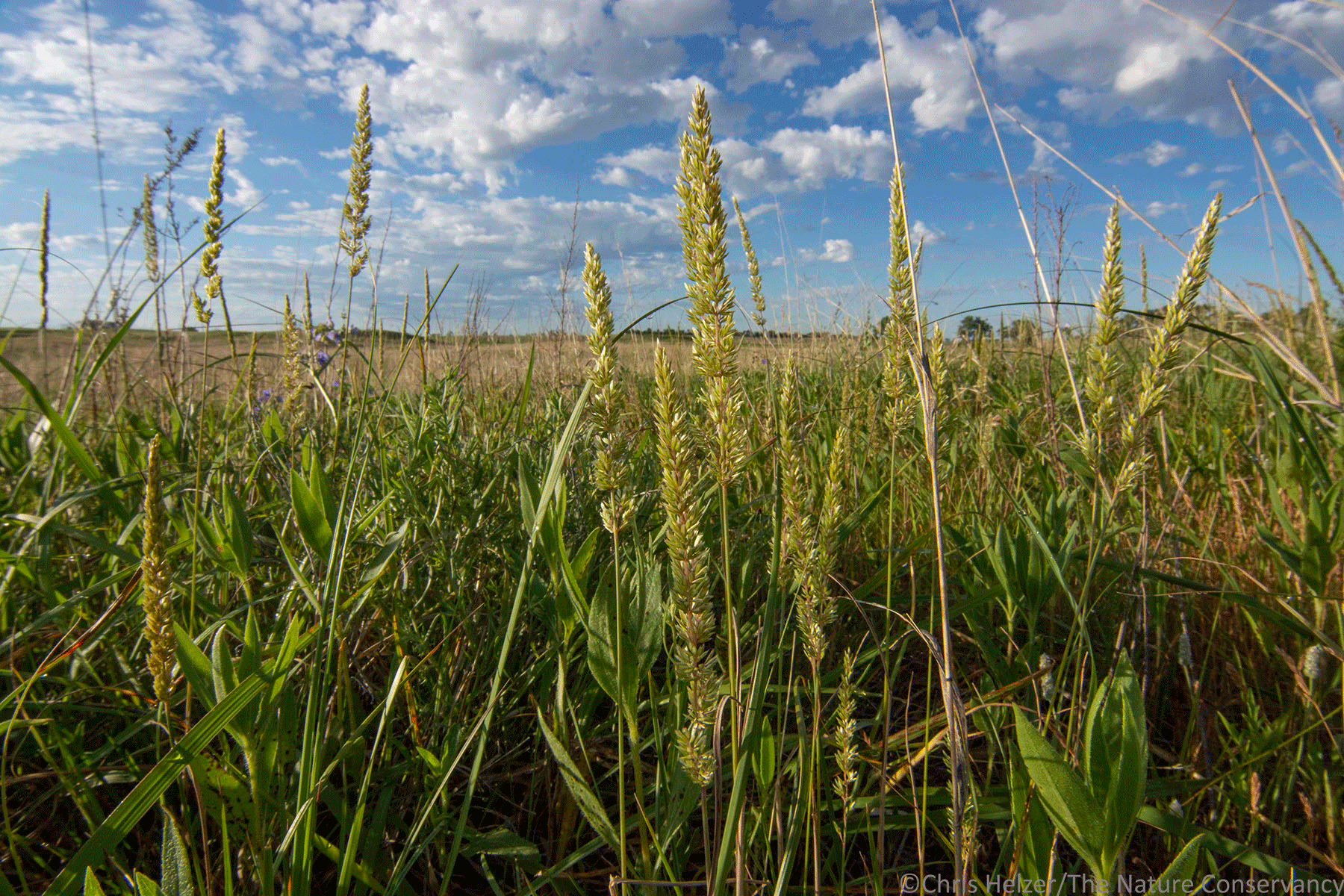
Shell leaf penstemon (Penstemon grandiflorus). I missed the peak flowering season for this species this year, which is disappointing, but I found a few still blooming yesterday. 105mm macro lens, ISO 500, 1/500 sec, f/11Crab spider on yarrow (Achillea millefolium). This is a species, or at least a coloration, I don’t see very often around here. Most crab spiders on our flowers tend to be yellow, white, or green. The red markings really caught my eye. Nikon 105mm macro lens, ISO 500, 1/800 sec, f/11June grass and sand prairie. Tokina 12-28mm lens at 12mm. ISO 500, 1/200 sec, f/22Junegrass (Koeleria macrantha) in bloom. Nikon 105mm macro. ISO500, 1/800 sec f/11Shell leaf penstemon. Nikon 105mm lens. ISO 500, 1/320 sec f/22Jumping spider with captured flower fly with spiderwort flower in the background. I noticed this flower fly sitting in an odd way and looked closer. That’s when I saw the little jumping spider on the other side of the leaf that was holding the fly in its jaws. Nikon 105mm macro lens. ISO500, 1/400 sec, f/11. Prairie spiderwort (Tradescantia occidentalis). I’m really liking my new fish eye lens but I don’t feel like I’ve fully taken advantage of it yet. The experimentation process is sure fun, though. Nikon 10.5mm lens. ISO 500, 1/320 sec, f/22Common checkered-skipper butterfly (Pergus communis) on larkspur (Delphinium carolinianum). This photo was taken a little later in the morning while I was in the middle of data collection. Some thin clouds passed overhead and I noticed this butterfly as I was walking between sampling locations. I didn’t have my tripod with me but was glad I was carrying my camera. Nikon 105mm macro lens. ISO 500, 1/500 sec, f/11












 The Prairie Ecologist