Photos of the Week – January 9, 2020

I woke up to the first day of a new decade at the Niobrara Valley Preserve – a pretty good spot for the occasion. As the horizon started to brighten, I wasn’t in a big hurry to hop on my ATV and head out because I wasn’t yet sure where I was going. Sandhills? Riverbank? Bluffs north of the river? Just as I decided the bluffs might be the best place to catch first light, I realized the sky had become spectacular. I snatched up my camera gear, threw on my coveralls, and ran for the ATV.

Pre-sunrise color on New Year’s morning – The Nature Conservancy’s Niobrara Valley Preserve.

I headed up the nearest tall hill, knowing there was a nice view from the top. The sky color was still great, but already fading by the time I got up high enough to see the river, so I stopped and quickly composed a couple shots. While the sky was full of color, its reflection off the snow-covered ground was muted. As the color in the eastern sky continued to fade, I happened to glance behind me and discovered the western sky’s color was intensifying. I sprinted to the other side of the hill and set the camera up to photograph the upstream view, just as that sky’s color also began to fade. Ten minutes into my morning jaunt and I was sweating, breathing hard, and feeling like I’d just missed the best of the morning’s show.
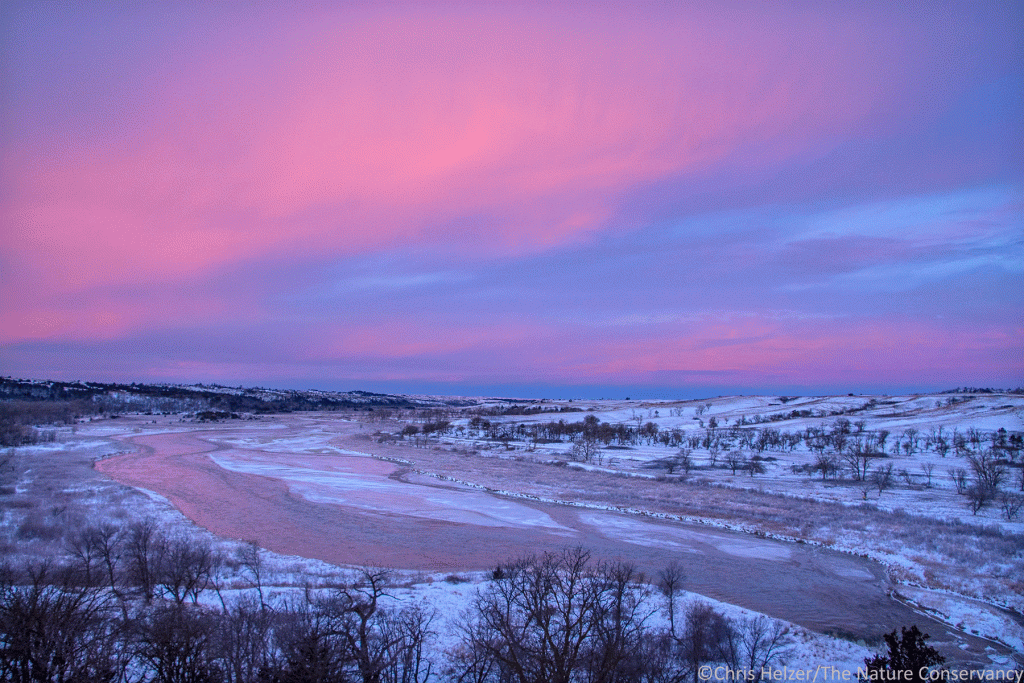
Same sky, same river, opposite direction.

As the sky returned to its dull grayish-blue color, I headed north across the river and partway up the steep slope. I took the ATV as far as it would go and then hopped off and trudged through the drifts until I found another nice view of the river. The sun was just starting to peek above the horizon, so I scrambled to find some foreground for a photo. I tried a couple different options, but was finally drawn to the dimpled snow within a yucca plant, accentuated by the shadow and light from the sunrise.

Sunrise, slopes, and yucca, with the Niobrara River in the background.

After taking a few photos of the sunrise, I decided I’d better hurry up and get the drone into the air if I was going to get any aerial shots before the sun got swallowed up by the big bank of clouds just above it. After all, one of the reasons I’d justified this quick trip north was to get some practice with the new drone. I created a makeshift launchpad with a spare sweatshirt, hoping to limit how much snow spray would get kicked up by the propellers and onto the camera lens. It worked like a charm and ‘Dallas Mavic’ lifted up into the sky.
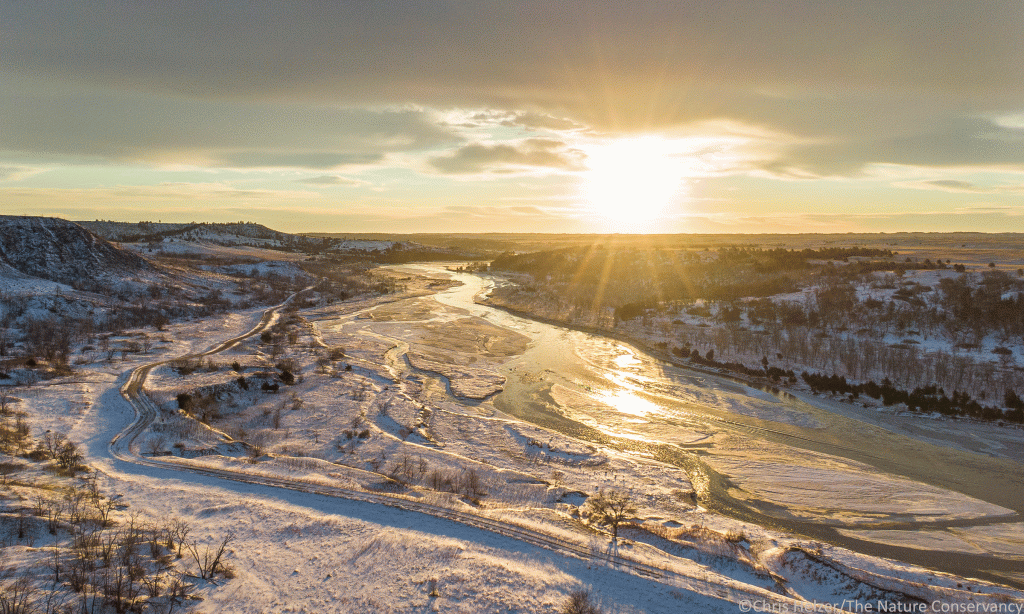
The view of the river, shortly before the sun disappeared for a while behind a bank of clouds. (Drone photo)

I had about five minutes of flight before the light went away, so I headed toward the sun, taking still photos and a little video as I went. Still learning the capabilities of the camera, I tried shooting darker and lighter, and at various focal lengths – testing the zoom lens that had attracted me to this particular model (DJI Mavic 2 Zoom). The light was pretty glorious, so I snapped away freely until the sun finally reached the clouds and the scene became dark and dull.

Looking back to the west and judging the speed of the cloud movement, I thought I saw an open window in the cloud bank that would intersect with the sun for at least a few minutes. I grabbed my gear and headed back down to my ATV and then back across the river to the Sandhills, racing the sun and clouds. A nice relaxed morning in the prairie…

Sharp-tailed grouse sign. You can see faint wing prints where a grouse had burst out of a snow bank and then tracks winding around the same area.

As I rode out into the prairie, keeping an eye on the clouds and the glow of the hidden sun behind them, a short-eared owl ghosted out of the snow, just a few yards away from me. I stopped to watch, and it landed about 10 yards away, glared enigmatically at me for a few seconds, and then floated off and over the horizon. Feeling somehow simultaneously honored and dismissed, I kept moving, trying to find the right place to be when the sun finally reappeared. I spotted several groups of sharp-tailed grouse on the move, some flushing in front of me, others gliding along in the distance. There were tracks all over in the snow, and when the sun finally reappeared, I followed some of them around with my camera.

Wandering grouse tracks.

The window of sunlight was frustratingly small, so I split my time between glorying in the light and scenery and struggling to quickly capture it before it all went away. I had my wide-angle lens on and was wading around in deep drifts, holding the camera up as if I was trying to ford a deep river without getting it wet.

Tracks of mice, birds, deer, and bison, were everywhere. I enjoyed following their trails and trying to interpret what they were doing, but I also didn’t fail to notice they were better at snow travel than I was. The lightweight mice and birds certainly weren’t sinking into the deep drifts like I was, and the bison and deer were smart enough to stay out of those drifts altogether. Meanwhile, my coveralls were glazed white from feet to neck, and only my head and camera remained dry.

Small mammal hole and tracks in the snow on the leeward side of a big dune.

Just as the last flash of sun was winking out behind the resurgent clouds, I spotted a glimpse of red peeking out of the snow and quickly swapped out lenses. My one and only close-up photo of the day was also the last shot of the trip, and captured prairie rose hips within a small ice-rimmed window. The sky was now fully overcast, and it looked like it was going to stay that way, so after taking a pleasantly circuitous route back to the headquarters, I packed up and started the long drive home. Happy New Year indeed!

Wild rose hips peeking out of a snow drift as the light faded and skies became firmly overcast.

Hubbard Fellowship Post – Mary Grudgingly Admires Birds

This post was written by Mary Parr, one of our Hubbard Conservation Fellows. Mary is an excellent botanist and land steward and very interested in the field of ecological restoration. She (along with Chelsea) is entering the final month of her Fellowship, which seems hard to believe.

Over the years, I have tried to foster an interest in birds, but have had little success. I prefer my deeply rooted photosynthetic friends that don’t flee from me when I slowly sieve through a field guide identifying them. While my relationship with birds has been strained by their elusiveness, I am beginning to understand why they receive praise from millions of bird lovers. Living on the Platte River Prairies, we are located directly in the continent’s central fly-way for migratory birds and water fowl. Since beginning the fellowship, I have seen and experienced the most birds (possibly) in my entire life. As a result, I have begun to develop curiosities about a specific behavior and one that I have now experienced by the thousands: flocking.

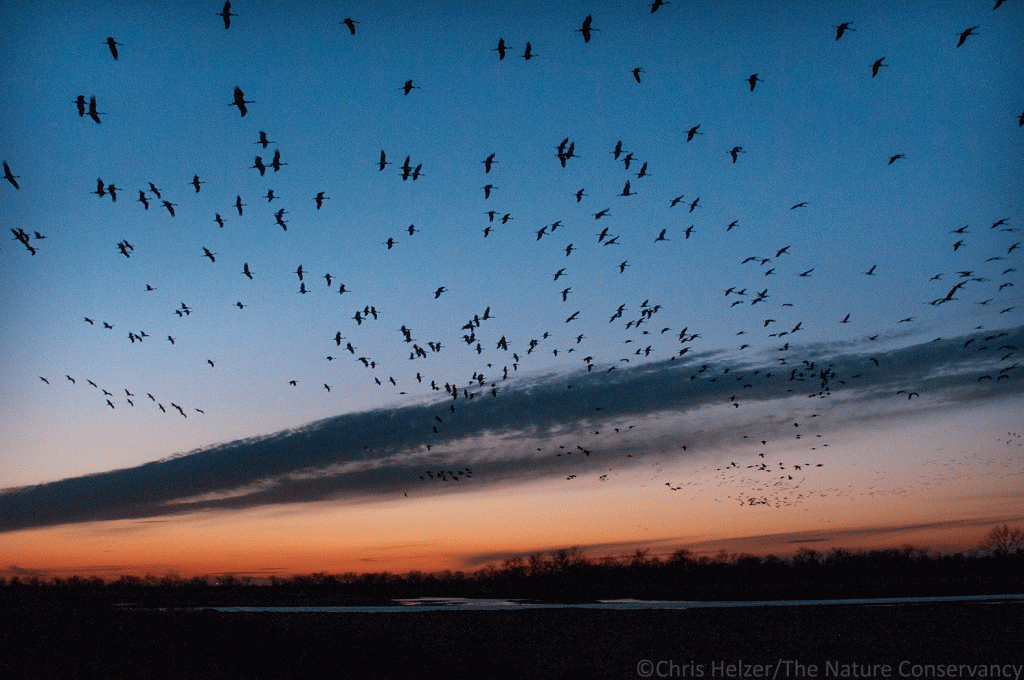
The Central Flyway passes through our Platte River Prairies, bringing big flocks of geese, cranes (shown here), and numerous other bird species during the spring and fall.

I can recall the first time I experienced a central fly way migration. One blue-skied spring morning, I woke up to a cacophony of honking. I went out the front door in my pajamas to view a river of Snow Geese in the sky. The continuous stream of birds’ silhouettes directly overhead stretched form horizon to horizon. Their movements reminded me of water flowing through a delta as their V’s were converging, diverging, and re-emerging. As I researched further why migration occurs in large flocks, I found there were many beneficial reasons. A big one is for safety. Many eyes provide many alarms when a predator is nearby. Additionally, it is more difficult for a predator to focus in and single out an individual – this is especially beneficial for young and old birds that may be more vulnerable. The V’s are an efficient form of travel reducing drag from the wind like bicyclists in the Tour de France. The front bird creates an updraft of air for the bird behind it, and the pattern continues down the V. This enables the group to use less energy and reduce fatigue. When the leader tires, they all alternate positions. The honking can be related to several communications, but my favorite is encouragement. Individuals from the back of the group will honk in support of the birds in the front to continue the pace. I like to think of a nervous young adult goose finally getting their big chance as the leader and their friends and parents cheering them on.

The Sandhill cranes migrate with similar behavior, but slightly different physics. Their bodies are shaped like an intercontinental airbus – perfect for gliding. By waiting patiently for the predominant winds to go the direction of their travel, they can travel long distances and expend little energy. My favorite group display of the Sandhill cranes was their angelic thermal rising during their departure from the Platte River this spring.  The group takes advantage of thermal cells, pockets of rising warm air that are heated at the earth’s surface from the sun’s radiation. As the air rises (as warm things do because they are less dense) the cranes catch the updraft with their large wings. The slow rising occurs as a group in a long spiral and continues until they are hundreds of feet high and nearly out of sight. Once they reach the predominant winds above they are carried north to complete their journey to Canada, Alaska, and for some Siberia.  

Here’s a home video by Chuck Petters of sandhill cranes rising on a thermal.

Although non-native, one of my favorite displays is from the European Starling – a species introduced from Europe in the 1880s. Every fall growing up I would sit utterly mesmerized as I watched the large swarming mass of hundreds of birds expanding and contracting, twisting and pulsating in perfect coordination. These starlings are widely known for their fluid flocking displays known as murmurations. This mass avian aerial stunt occurs every fall, primarily in urban areas and cities where the starlings predominately live. They gather for many reasons including: to share information, body heat, and avoid predators – the primary one being Peregrine falcons. The presence of a predator in the sky results in even wilder displays as the group twists and diverts the path of the raptor. These birds are not led by a determined leader, but governed collectively by all the members. Among all bird species, starlings flocks are particularly recognized for their excellent communication and collective response. When one individual changes speed or direction, its immediate flock mates will respond to the change almost simultaneously. Some research has found that an individual in the flock can continuously monitor up to 7 of its nearest neighbor’s movements and react respectively. The swooning flocks in Denmark are so dense they actually block out the sun in a display known as “Black Sun”.  The largest flock recorded had over 6 million individuals!

A National Geographic short film called ‘Flight of the Starlings’. Incredible footage of murmuration. (Watch in HD)

While birds are not the champion of my interests, I can respect a good show when I see one. Happy flying, my friends.

Sandhill cranes, showing their aerodynamic body shapes…