I have no idea what kind of beetle this is. It looks like a pretty nondescript black beetle, doesn’t it? I bet it’s not. I bet it has a life strategy that would knock your socks off if you knew about it.
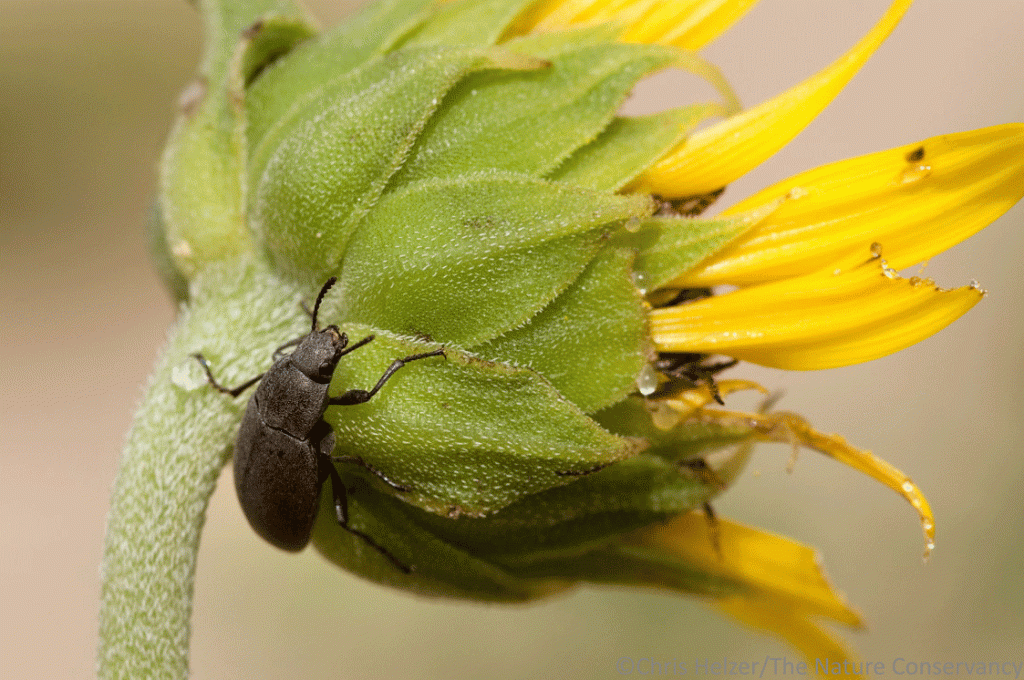
When I say that, I’m not even talking about its incredible transmogrification ability. I mean, we already know this adult beetle was once a larva that looked COMPLETELY different than it does in the picture. It was a wingless, and probably long and skinny creature that bore little resemblance to its adult form and might have been herbivorous or carnivorous – it doesn’t really matter. The important thing is that at some point, a very different-looking larva entered a pupal stage, and when it emerged from that pupa, it had totally transformed into what it looks like today. That’s CRAZY. Nobody reading this has ever gone through any body transformation remotely comparable to that. And yet, that’s not even what I’m talking about when I’m betting you it has a fascinating life strategy.
You’re probably thinking, “I bet he’s going to tell me what that amazing story is now.” Don’t get your hopes up. I’m not. I don’t know what it is. I’m just promising you that it’s a good one.
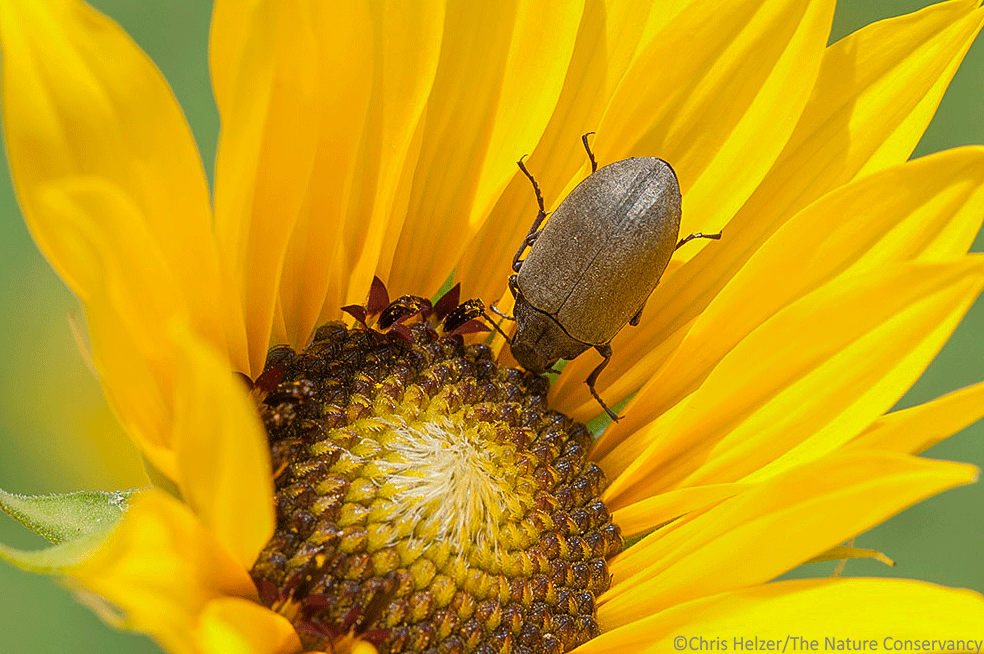
I have a second photo of a beetle that looks a lot like the first one. It might be the same species – it’s hard to tell. The angle of the photo is different and the way the light is reflecting makes it difficult to say whether it’s the same color or not. Regardless, I’ll further guarantee you that THIS beetle also has facets of its life that would make you sit up and say ‘Wow’. I just have no idea what those facets are.
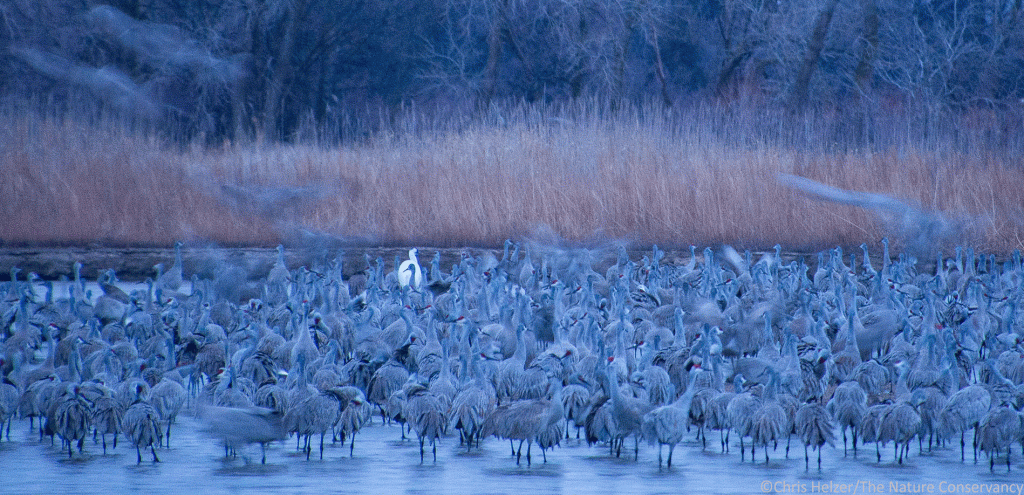
I can’t promise you that the beetles shown here have a story that’s as good as the oil beetle. That’s a pretty tough act to top. Not every beetle produces larvae that cluster together and produce a chemical that smells like a female bee. Those larvae hop on the male bee that comes to investigate, transfer themselves to a female when the frustrated male actually finds a real one, and then ride the female back to her nest where they attack and eat her babies. Not many species, let alone the beetle(s) featured here, are going to match that story. Still, I’d wager real money that the life history of the nondescript-looking beetle(s) is a really good one.
Assuming for the moment that the two beetles I’ve photographed are the same species, I wonder what it eats? Both individuals were photographed on sunflowers, so it’s possible the species feeds on sunflower pollen, like many other insects. Alternatively, maybe it’s a predator that feeds on the insects that feed on the pollen. Or, maybe it feeds on both the pollen AND insects that feed on pollen. So many intriguing possibilities. It might even lay its eggs on the sunflower so its larvae will hatch and consume the seeds.
That last possibility reminds me of the silphium weevil, another beetle that lays its eggs on sunflower blossoms. However, I doubt the beetle from these photos follows the silphium weevil’s example of girdling the stem beneath the flower before laying eggs on it. You have to admire that strategy, though, because when the flower eventually falls to the ground, the larvae can hatch and burrow directly and safely into the ground where they overwinter. The girdling might also make that flower less attractive to other invertebrate species (like our beetle?) who might be considering laying eggs on it. That helps ensure more food for the weevil babies. It would be really neat to know that our beetle has that kind of strategy, but it probably doesn’t. It has its own unique and mesmerizing approach to life.
This would be a great time to tell you that I’ve been leading you on this whole time, and I’m now going to reveal both the identity of this post’s featured beetle and its captivating life story. Unfortunately, I’ve been completely honest with you and I don’t know that story. Maybe someone reading this will recognize the beetle and share what they know with us in the comment section below. That would be awesome, and we could all revel in yet another example of the incredible diversity found within the life strategies of earth’s creatures.
Alternatively, maybe no one will know much about this beetle, and we’ll all be left wondering what it is we’re missing out on. There are so many insect species in the world, we have yet to discover many of their identities, let alone their life histories – which can take a lot of research to glean. We just don’t have enough scientists studying invertebrates…
…which is really odd, given the remarkable and appealing attributes of creatures like this beetle!