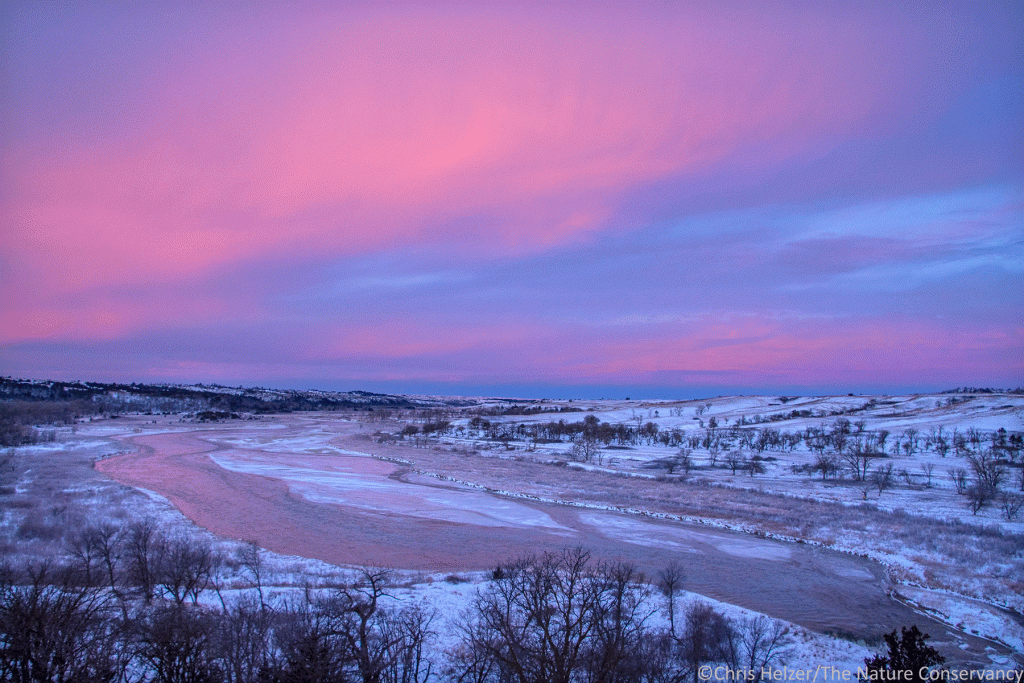
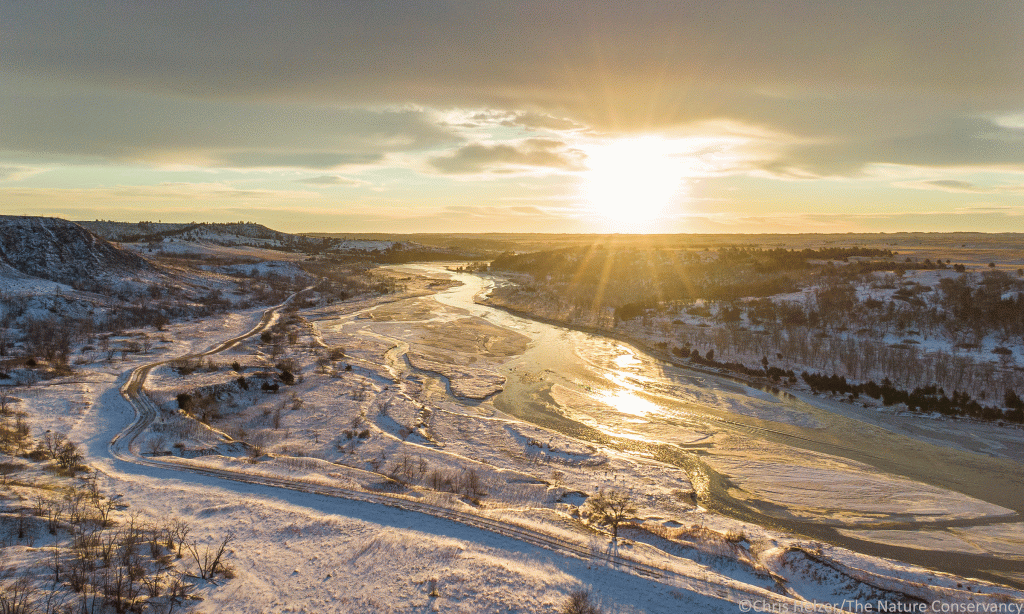
Last Saturday morning, I was at the Niobrara Valley Preserve, helping with an event. I woke up early and decided to venture out to catch the sunrise. A small group of bison was slowly grazing their way across the prairie, so I parked my truck in a place that I hoped would intersect with their movement.
The morning was nearly silent apart from the gentle grunts of the bison. As the horizon brightened, a few of them crested the hill in front of me, silhouetted against the soft glow. As the sun finally crested the hill, I snapped away with my camera as the bison calmly walked past.
After a little while, the bison had moved beyond me so I slowly pulled the truck away and circled around in front of them again. Once more, they gradually made their way past the truck – a little further away this time – and I managed some more photos of them against the rising sun. After a while, I glanced at the clock and was surprised to see that I’d been with the bison for nearly an hour. It was time for my breakfast, so I left them to theirs and headed back down the hill and back to headquarters.
My job grants me extraordinary access to bison and the prairies they graze in, and I’m deeply grateful for that. As a result, I’ve spent enough time around bison to feel pretty comfortable in their presence (while obviously maintaining a very healthy respect for their size, athleticism and unpredictability). While I no longer feel compelled stop to admire them every time we pass each other in the prairie, I don’t take them for granted either. I hope I never do.
Imagine that you’re a seed produced by a milkweed, goldenrod, or some other plant species that relies on the wind to carry its seeds away. Attached to you are long fuzzy plumes (or similar structures) that allow to you ride along on the breeze after becoming detached from the pod or flower head where you developed. If you were able, you’d probably feel excitement about the potential journey you were about to embark upon.
Dotted gayfeather (Liatris punctata) is one of many wildflower species with wind-dispersed seeds.
Unfortunately, the chances of you taking a long trip aren’t actually that great. More importantly, the chances of you making any kind of trip that ends with successful germination and survival are even less good. Much less, in fact.
The majority of wind-dispersed seeds fly only a short distance from their parent plant. Most get caught on nearby plants or simply float down to the ground before getting picked up by the wind in any significant way. If those seeds were able to, they’d probably feel pretty disappointed by that.
All this, of course, assumes the seeds weren’t eaten by an insect, bird, or other animal prior to being released by the plant. It also assumes the plant was actually able to produce a viable seed in the first place. (Asters, blazing stars and many other similar ‘fuzzy-seeded’ prairie plants have notoriously low seed viability – they often create ‘seeds’ that don’t actually contain a live embryo.)
This common milkweed (Asclepias syriaca) seed got snagged on big bluestem plant just a few feet from its seed pod. Most wind-dispersed seeds end up landing close to their parent.
Ah, but the seeds that DO get picked up by the wind must have a marvelous time, right? They rise up into the air, borne by a breeze that carries them far away until they land in just the right place to germinate and grow into a new plant.
Except they don’t. Almost never.
Think for a moment about the incredibly specific criteria that need to be met to ensure the successful germination and survival of a wind-dispersed seed. Seeds that land close to their parent have a decent chance of remaining with the same soil type, light and moisture conditions, and plant community that allowed their parent to thrive. Seeds that travel further away, however, face the really strong likelihood that they’ll end up someplace completely unsuitable to their basic survival needs.
Just for fun, let’s assume a seed from a plant growing on the south-facing slope of a loamy mixed-grass prairie flies off for miles and somehow lands on another south-facing loamy prairie hill slope. It beat incredible odds by not ending up in a woodlot, crop field, or even a north-facing slope in a similar loamy prairie. By some amazing luck, it has found itself descending into a place that looks just like home. Hooray! It (probably) gets to die in a familiar-looking place.
Tall boneset (Eupatorium altissimum) seeds.
I say it will probably die because just landing in the kind of habitat it grew up in doesn’t mean it will automatically get to germinate and grow there. In order for that to happen, the seed needs to make contact with the soil. It then needs the right amount of moisture to trigger germination. Many seeds also need certain light conditions (light intensity and/or photoperiod) before they germinate. Lastly, they have to be able to successfully compete with surrounding plants for light, nutrients, and space as they grow from a tiny seedling into a mature plant.
If you’ve spent much time in prairies, you know that most grasslands don’t have a lot of exposed soil on the ground – at least not most of the time. That soil is usually covered by vegetation, both live and dead. A seed that falls on top of that layer of vegetation isn’t going to be able to germinate unless it can get through that mesh of plants and down to the soil. Rain and wind can help jostle and push seeds down to the soil, but even if that works, it might take a while.
In the meantime, the seed is vulnerable to being eaten by any number of invertebrates, being attacked by mold or fungus, or simply dying of old age. Many seeds, especially those built to be light enough to fly, don’t contain enough endosperm (starchy nutritious tissue inside the seed coat) to keep the embryo alive for very long. A few weeks or months is the limit for many wind-dispersed seeds.
Let’s say a seed lands in good habitat, makes it way to the soil, and gets the right combination of light and moisture to germinate before it dies. The last big obstacle is the competition from surrounding plants. Root systems in prairies tend to be pretty tightly-woven and neighboring plants are likely to grow fast and tall enough to canopy over a tiny seedling. Often, some kind of disturbance that weakens nearby plants (drought, growing-season fire or grazing, excavation by animals, etc.) is needed to create enough space for that little new plant to squeeze its way into a plant community.
Tall thistle (Cirsium altissimum) seeds.
So, to recap, in order to survive and grow into a new plant, a wind-dispersed seed has to be extraordinarily fortunate. If it flies very far from its parent, it will need to land in the appropriate habitat. Once there, it will need to somehow make it down to the soil and get the right light and water it needs to germinate. Then, it will probably need some help to reduce competition from nearby plants if it’s going to survive its seedling stage.
Why even bother? Why should plants even create seeds that can travel long distances if the risks are so high? It seems smarter to drop their seeds close by where at least the habitat conditions are most likely suitable.
Wild lettuce seeds (Lactuca sp) poised to float away.
There are several ways plants can benefit from sending some of their seeds long distances. First, colonizers from far away can bring in new genetic information to otherwise isolated populations, helping to bolster genetic diversity and fitness. At the same time plants can send their “kids” off into the world to places where they don’t have to compete for space with all their close relatives. That can be especially important for plant species that live in specific and/or small habitats where there might not be a lot of space for continued population growth.
Plants can also use seed dispersal to make sure they don’t have ‘all their eggs in one basket.’ If something bad happens in one location, it’s helpful to have closely-related relatives living elsewhere to make sure your family line continues. As rapid climate change continues, that ability to send offspring far and wide can also help plants adjust to shifting growing conditions across broad geographies.
Sending seeds into the wind is a high risk strategy, at least for individual seeds. However, if even one seed manages to successfully establish in a new site, the parent plant’s efforts are justified. Sometimes you just have to throw caution, and your babies, to the wind and hope for the best.