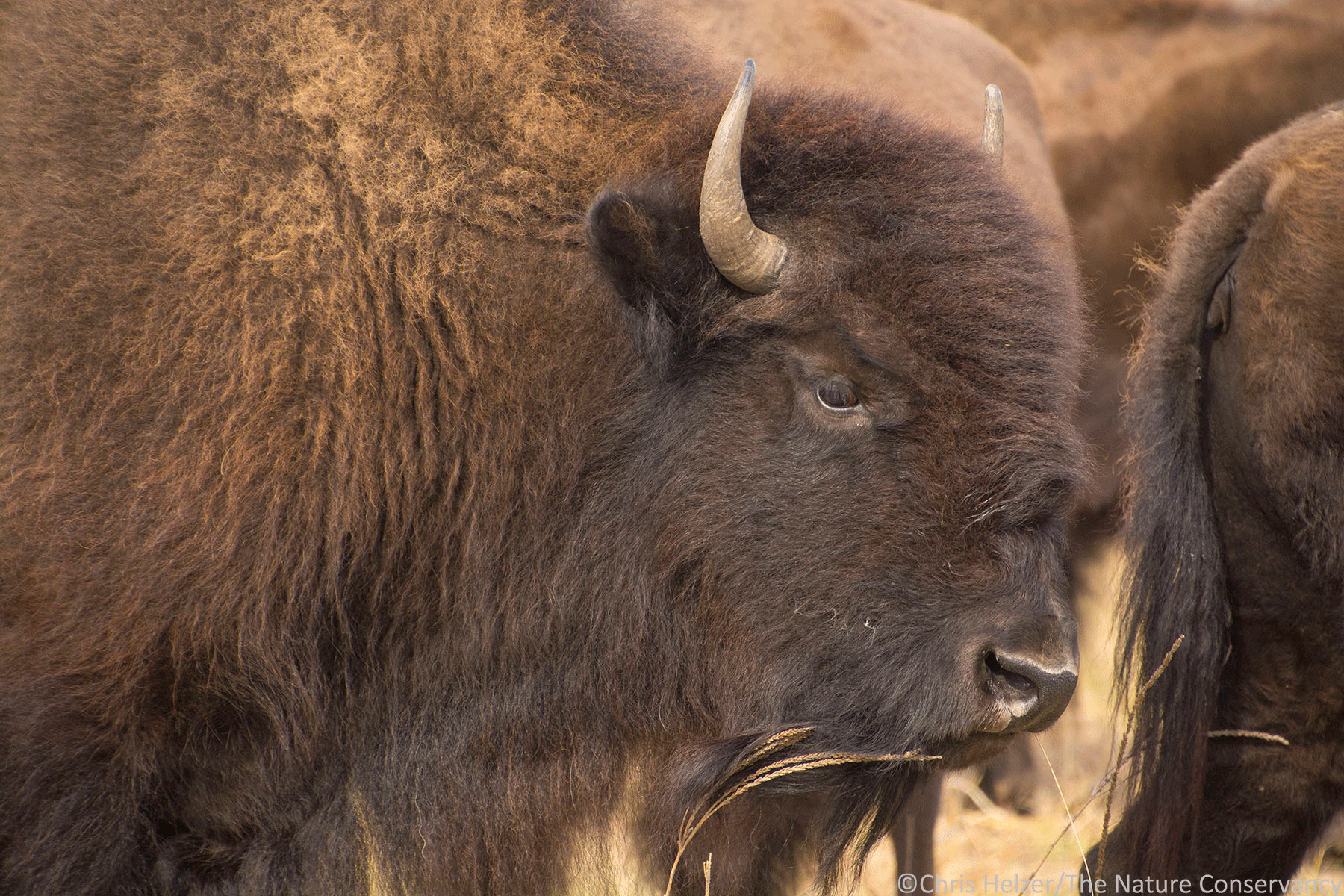
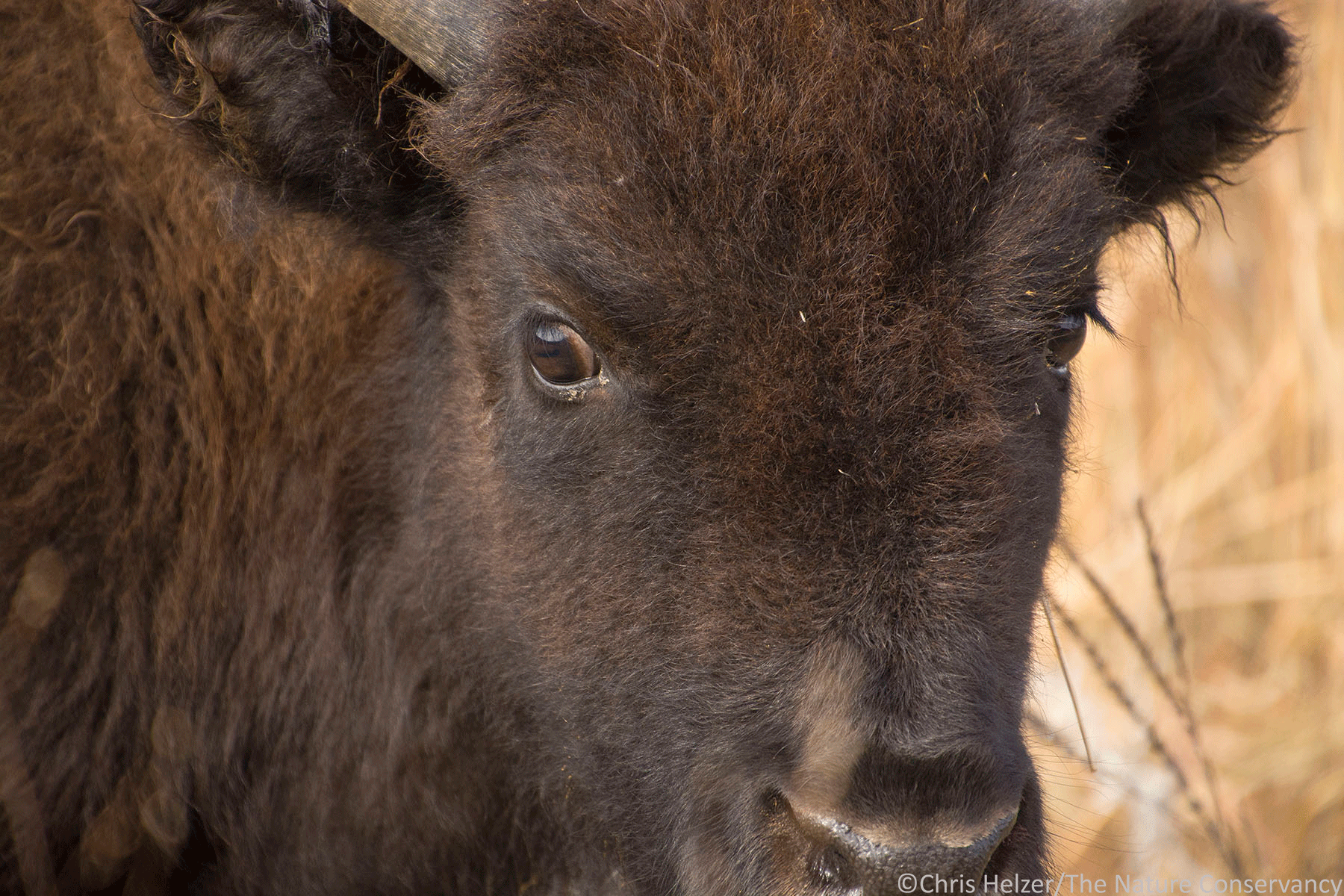
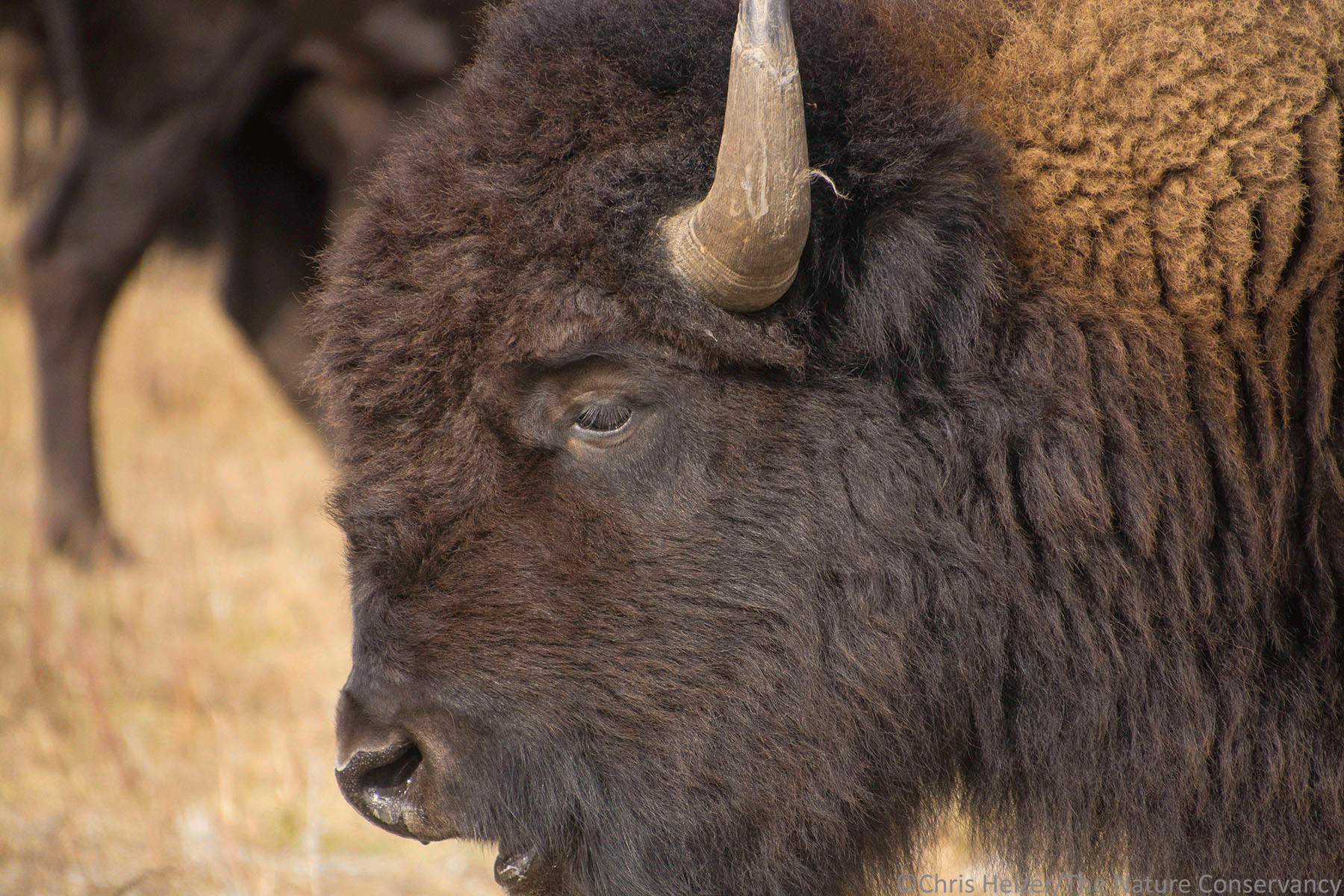
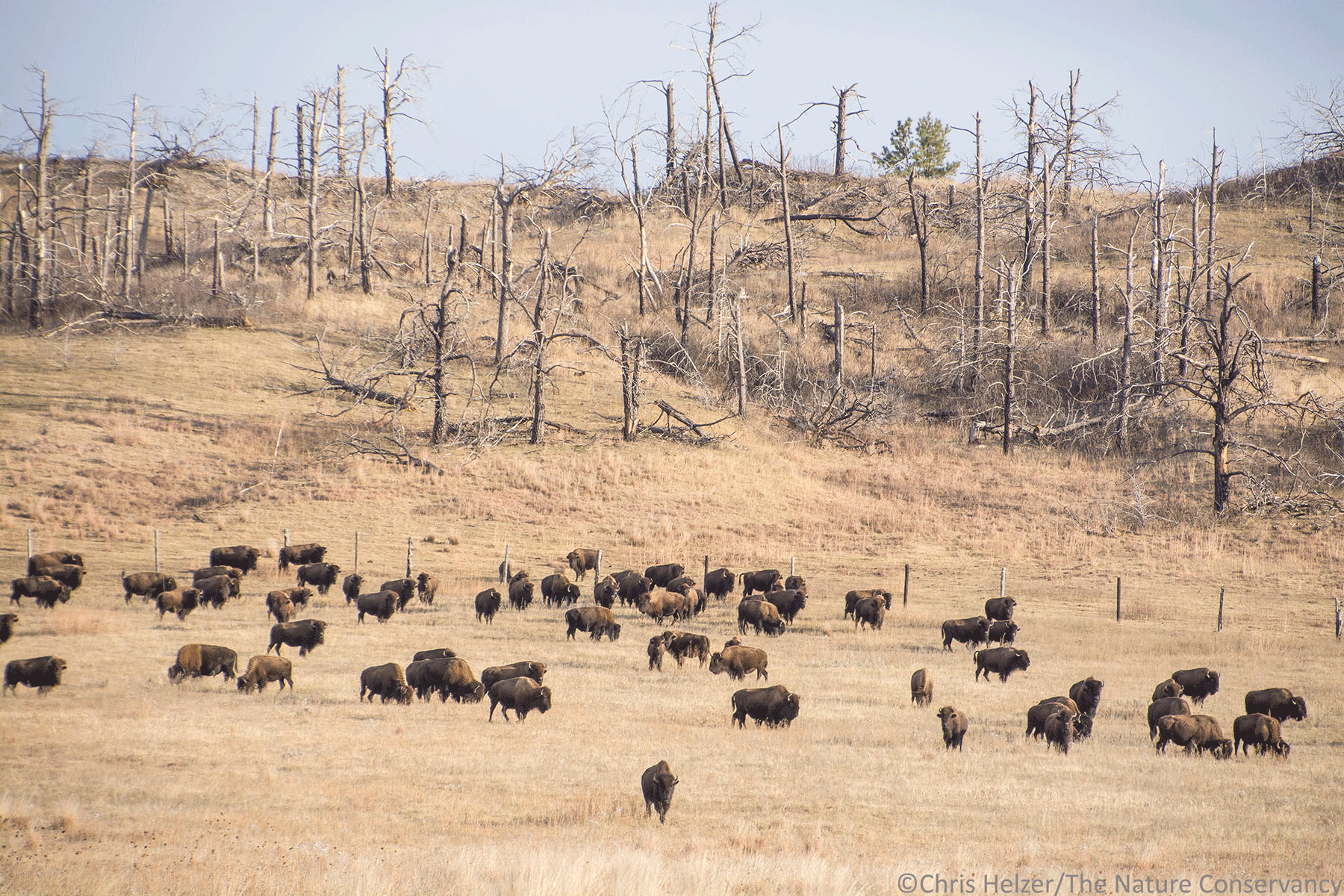
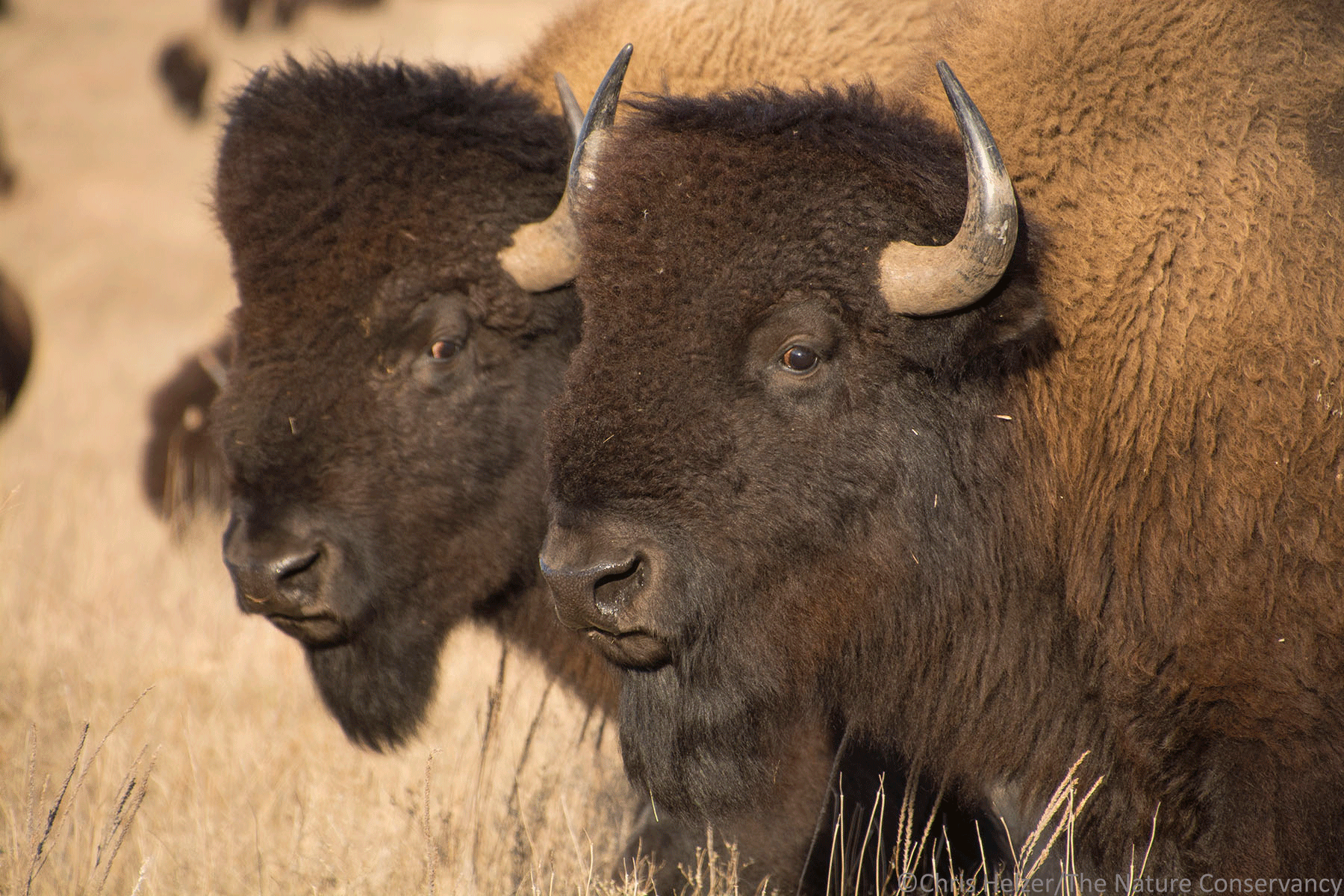
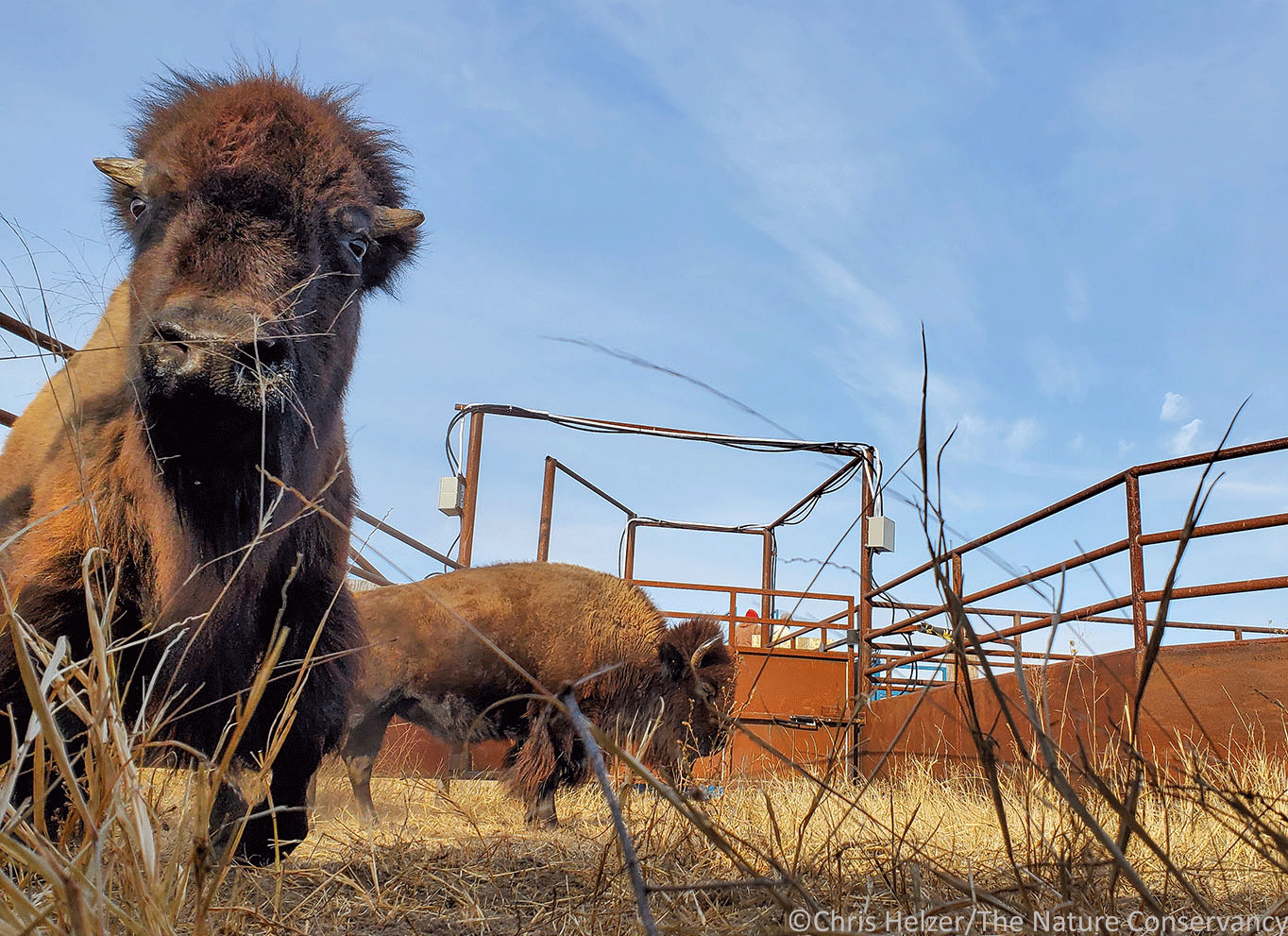
This week, we worked on the first of our two annual bison roundups at the Niobrara Valley Preserve. Our roundups allow us to manage herd size and also to vaccinate and put ID tags on the new calves we’re keeping in the herd. We were working the animals from our west herd this week, which live in a 12,000 acre pasture. Our staff had spent a month or so drawing them into a relatively small “trap pasture” and then we pushed them from there into the corral on Monday. During a break in the action, I took a few bison portraits while they milled around the corral, waiting for their turn to move through the alleys.
A young cow in the corral at our bison roundup.A calf stares at the camera from inside the corral.A relatively young bull in the corral.
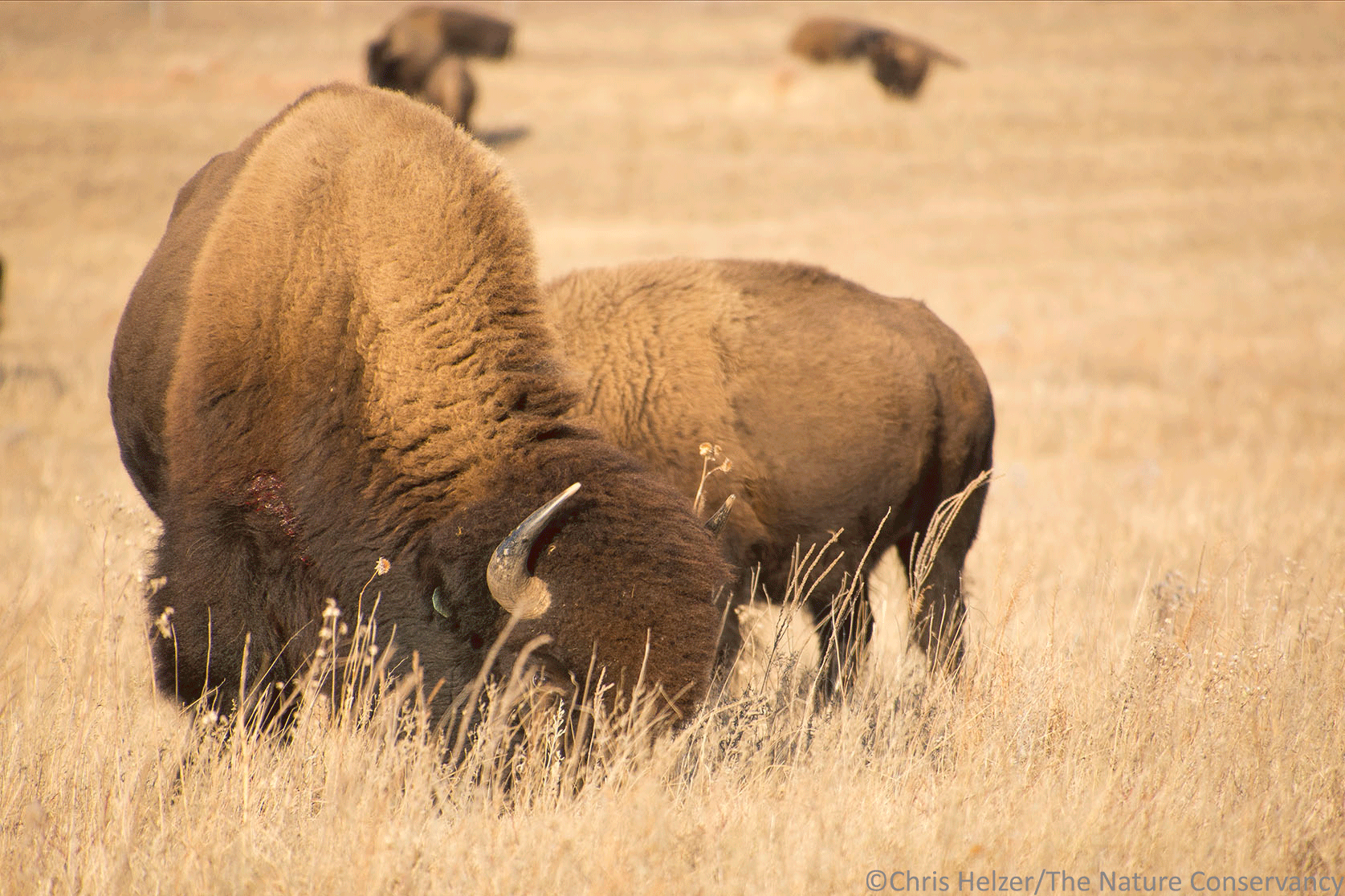
After the bison were released back into the trap pasture, I drove slowly out among them to get some more photos. I was amazed at how calmly they reacted to my presence so shortly after they had been in the corral.
These bison had quite a day. They were brought into the corral at about 10 a.m. Shortly thereafter, they made their way through a labyrinth of alleys and then were released back into our trap pasture. This is a subset of the “keepers” that will soon be released back into their 12,000 acre main pasture.I like the look the left bison is giving the one on the right. See next photo…I’m pretty sure these are the same two bison as those in the above photo. They were walking next to each other when the one on the left (slightly larger of the two) suddenly turned on the other. It didn’t do anything other than spin around and make the other one jump out of the way, but it was a clear demonstration of dominance. A moment later, they were walking calmly along again.You’d never know these bison had spent a couple hours in a corral. As soon as they were back out in the pasture, they went back to grazing calmly.This was my favorite photo from this year’s west herd roundup. Bison look pretty different from below, don’t they? I took this photo with my cell phone by lying on my stomach and pointing the camera through a small gap between ground and the heavy steel panel along the edge of the pen.
This post was written by Chelsea Forehead, one of our 2019 Hubbard Fellows. Chelsea is a terrific scientist with a strong background in birds – along with many other subjects. She had the opportunity to travel north this fall for a bird-banding workshop and shares that experience here. All photos are by Chelsea.
As an aspiring avian ecologist, the Hubbard Fellowship has granted me countless opportunities to add skills to my conservationists’ toolkit. In late September I was fortunate enough to gain further experience in the bird-monitoring practice of netting and banding. I wasn’t netting and banding just any species, however. I was handling and adorning the ankles of the supremely adorable Northern Saw-whet Owl (Aegolius acadicus) on the North Shore of Lake Superior.
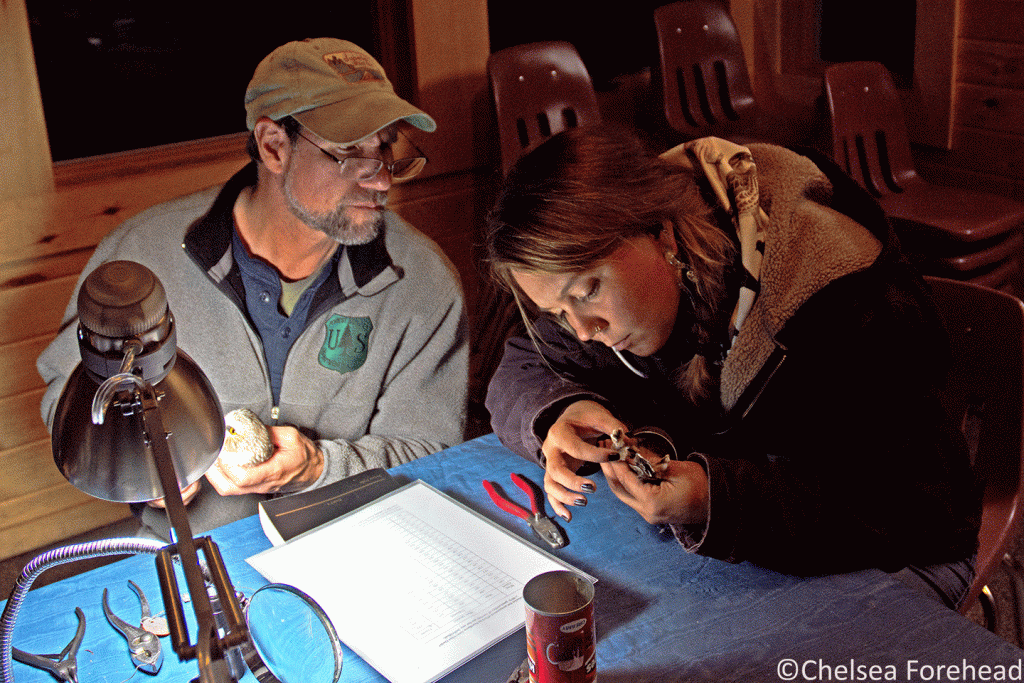
Application of a band on the tarsometatarsus of a Northern Saw-whet Owl.
The migratory paths of the Northern Saw-whet Owl were, at one time, poorly understood. The tiny, well-camouflaged raptor is a rare sighting in the deciduous and mixed-forest habitats of its range across North America. They remain well-hidden during typical birding hours. Efforts to understand the fall movement of saw-whets grew exponentially, however, in the 1990s with the use of audio recordings to lure the nocturnal creatures into nets. Once captured, the sex, size, and age of the miniature predator can be recorded along with a unique number that matches the one on their band.
By entering the location, time, and characteristics of each numbered capture into a database, researchers can see a bit of the banded bird’s history upon recapture. The odds of recapture are increased by the concerted efforts of hundreds of banding sites across the eastern United States. If an owl is banded during its breeding season in Minnesota and then recaptured during the fall in Alabama researchers can add this trajectory to the ever-clearer map of saw-whet migration. Understanding which habitats a species relies on throughout its life is valuable when addressing any future conservation needs.
Adding to
the body of knowledge about Northern Saw-Whet Owls was only part of my
excitement that weekend. Getting to hold the world’s cutest owl was also a
factor. At dusk, we set up our nets in strategic formation. The volleyball
net-like trap consisted of six 12-meter-long nets stretched between tall poles.
A speaker played a recording that sounded quite like the beeping of a reversing
dump truck.
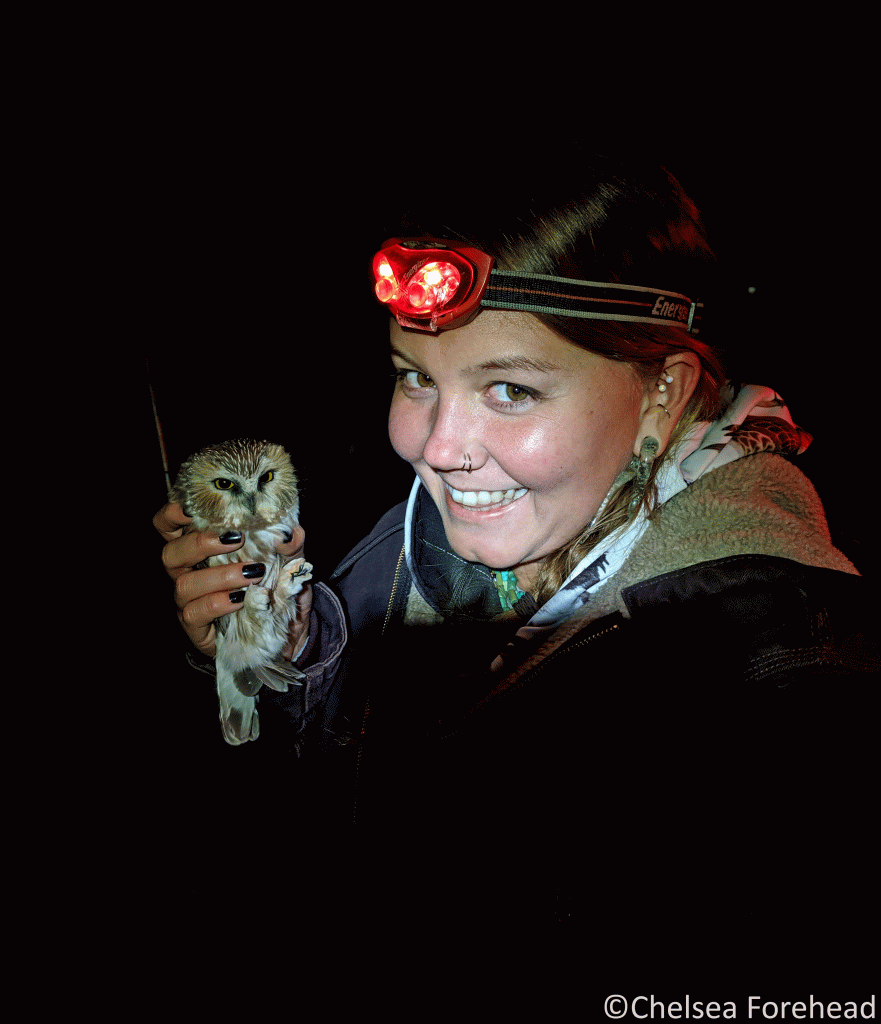
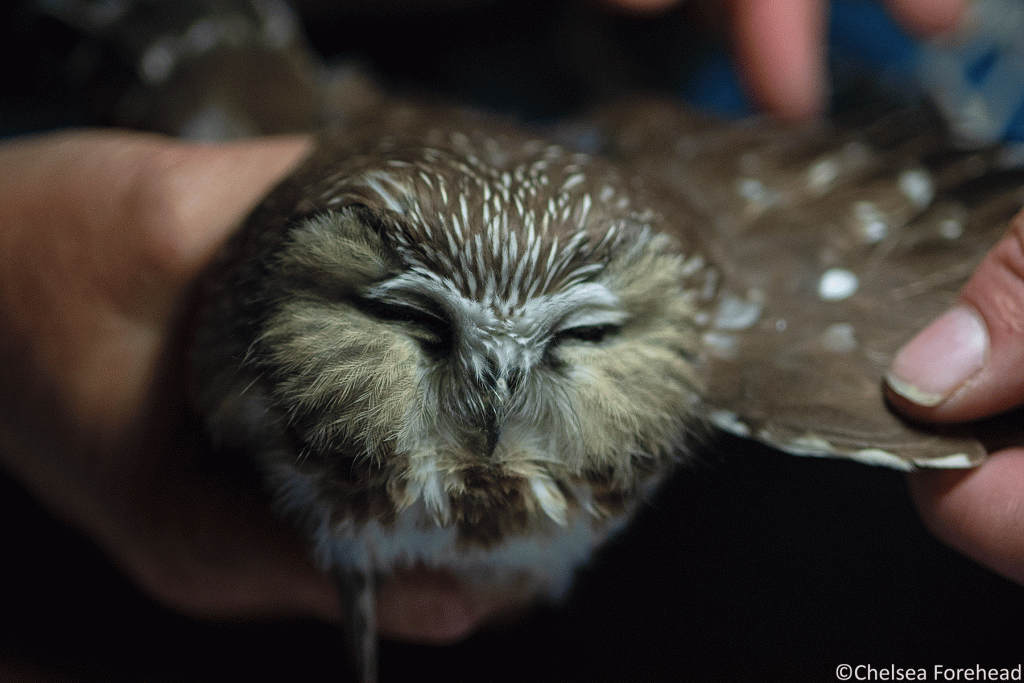
After waiting anxiously indoors for 45 minutes we returned to the forest to check our nets. A very confused-looking owl laid tucked in one of the sagging pockets of our net. The owl biologist leading our group carefully removed the tiny saw-whet from the net while explaining proper technique. Since I was an especially ecstatic bird nerd, he handed me our first captive. “Hold it like an ice cream cone,” he said. I was overwhelmed with admiration for the creature as I saw, up-close, all the trappings of a bird evolved for expert-level predation. The sharp talons, powerful feet, and feathers for silent flight that I had only read about were right there in front of me – on a miniature sized creature with eyes big enough to melt hearts.
A northern saw-whet held like an ice cream cone.Holding my first saw-whet! Only one of us looks excited about it.
Over the course of the workshop we banded a total of 49 Northern Saw-whet Owls. By the end of the first night I was confident in my ability to remove owls from the nets. After discerning from which side of the net the bird flew in, I held the tibiotarsi (which look like the bird’s thighs but are akin to the human calf) and removed the netting from the feet, then the wings, then the head. Once it was free from the net, the owl’s “angry end”, or feet, needed to be secured for holding. While some of the birds were docile and patient while being held, others were insistent about being released. A slight release of the feet could be capitalized upon by the brave little raptors. The resulting pain of eight talons clenched fiercely into my fingers made clear that though saw-whets are small, they are mighty.
Workshop attendees banding and processing the owls. Carefully banding under the supervision of our instructor . One of our more docile captives. It often seemed that older birds were calmer than the feisty youngsters .
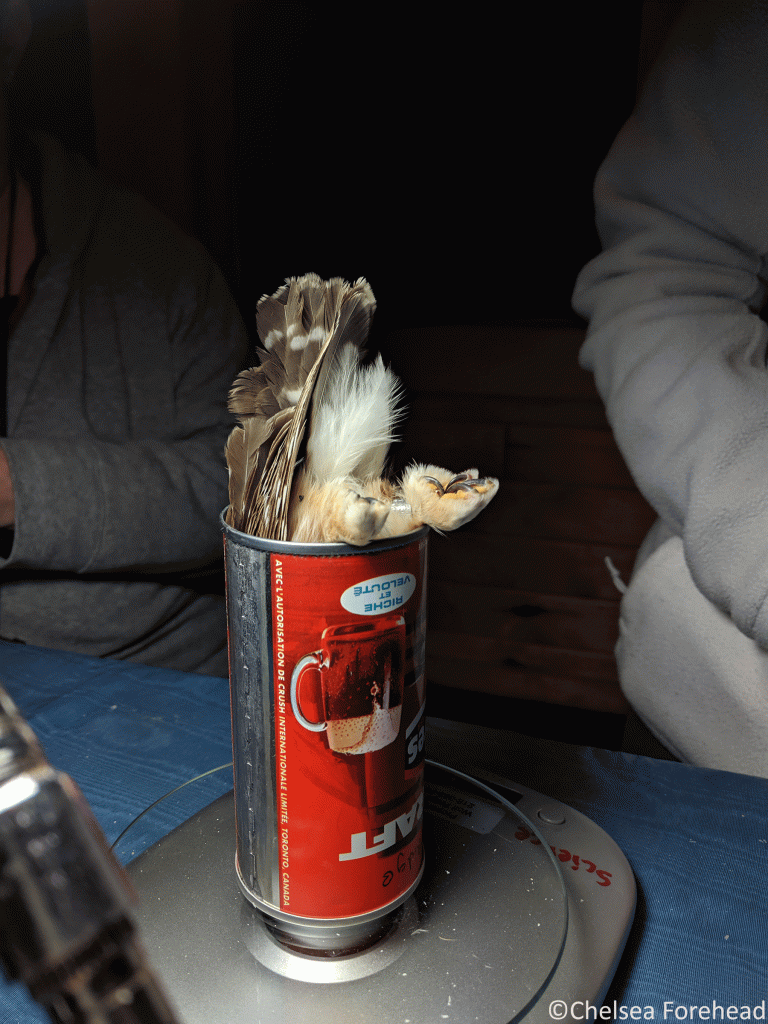
The procedure for determining the sex of the birds involved weighing them and measuring their wings. As with other species of owl, the females are generally a bit larger, but otherwise have a nearly identical appearance to the males. It is posited that this size difference may provide greater agility in hunting for the males, who are the primary providers of food for nestlings.
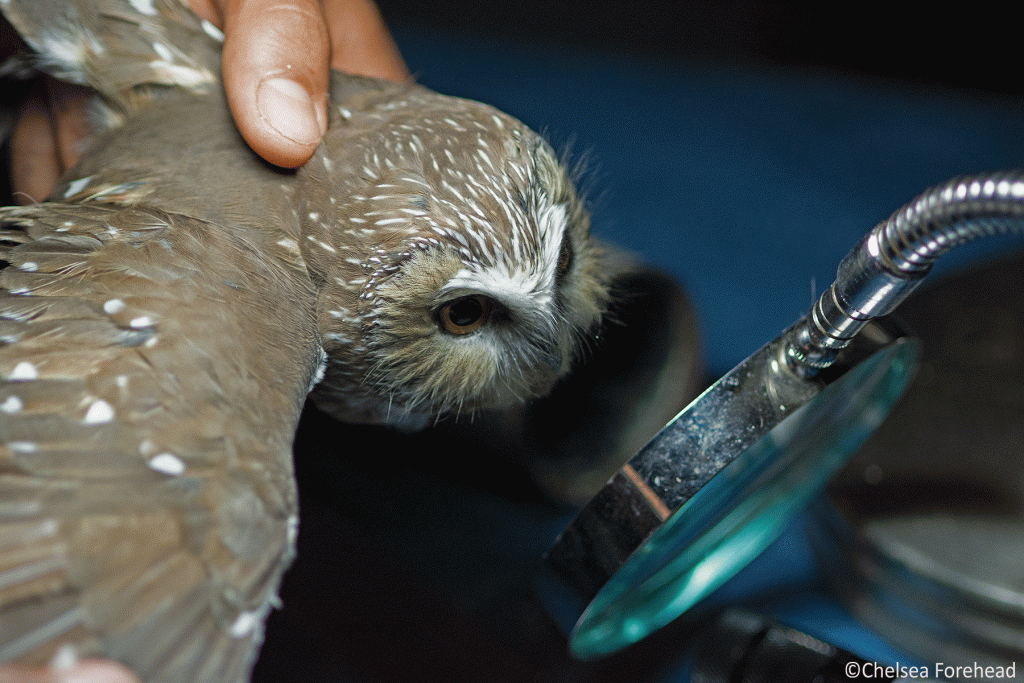
The age of Northern Saw-whet Owls can sometimes be clearly inferred from patterns of wear on their flight feathers. Older feathers are sometimes visibly lighter in color, with speckles and wear. The presence of newer looking feathers implies that the bird has molted. Since owls don’t molt those feathers within the first year of life the presence of flight feathers with differing degrees of wear indicates that the bird is at least two years old.
A bander examines the outstretched wing of an owl to look for molting patterns.
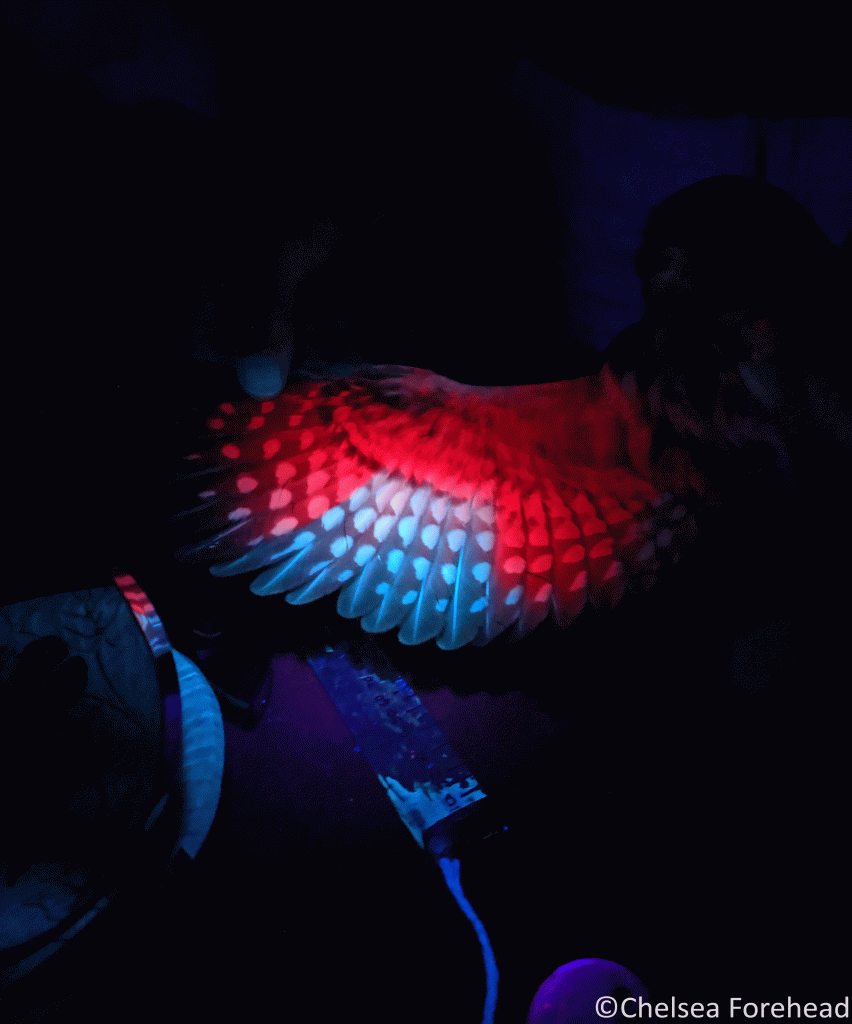
When the pattern of wear isn’t clear to the naked eye, owl biologists have a second way to literally highlight molting patterns. It turns out that in two families of birds- owls and nightjars- newer feathers contain a chemical called porphyrin. Porphyrin glows pink under UV light. By exposing the underside of the wing to black light researchers can more clearly see which feathers are new and which are old. While molt patterns can become complicated and variable after the third year, being able to record an approximate age helps to model the age groups of migrating populations.
The pattern of pink-glowing feathers on this bird’s primaries and secondaries told us that it had molted once and was therefore a two-year-old.
Once each little owl had been processed it was time to release them back into the forest. In order to allow for the owl’s eyesight to readjust to seeing at night we made sure to turn off all headlamps. This readjustment often lasted nearly five minutes. Once daggers of defense, the owls’ toes became simple instruments of balance. I served as a patient perch in pitch black while the tiny, precious raptors regained their bearings. As each pair of feet lifted from my palm I smiled at the truly silent flight of the now-free bird. After each owl flew away, I stood for a moment in a silent, invisible farewell. I hoped each would feel, somehow, my well wishes and gratitude for their contribution to science.
A Northern Saw-whet ready to begin its pitch-black adjustment period before flying away