Time to give that kid a camera

How do you know when it’s time for your kid to get his own camera? When he starts stealing yours out of your hands.

My stepson Atticus tagged along with me on a quick trip to the Niobrara Valley Preserve this week. It was a last minute decision, but I’m glad he was able to make it. I wrote a couple months ago about an even quicker trip Atticus and I took to our family prairie, and that trip should have prepared me for his camera thievery…

As we were walking around some hills north of the river last night, we came upon a big cicada (I think it’s a bush cicada – Megatibicen dorsatus) that was just pulling the last of itself out of its larval exoskeleton. Fascinated, we stopped to examine it and I got my camera out, even though the light was pretty flat (thick clouds).

This cicada was just finishing its molt when we came upon it. They don’t come any fresher than that. If you look at my last post, you can see how much darker this one will be after it dries out a little.
Atticus was content just to examine the cicada for a few minutes…

I managed to get a couple photos taken before I felt Atticus edging nearer and nearer to me, clearly hinting at something. Before I knew it, he had my camera and tripod and was lining up his own shots – just as the light started to improve. Sure, no problem – help yourself! I gave him a few tips on focusing and some camera settings, but let him do all the framing work on his own. He came up with several really interesting compositions before I wrestled the camera back from him and we moved on.

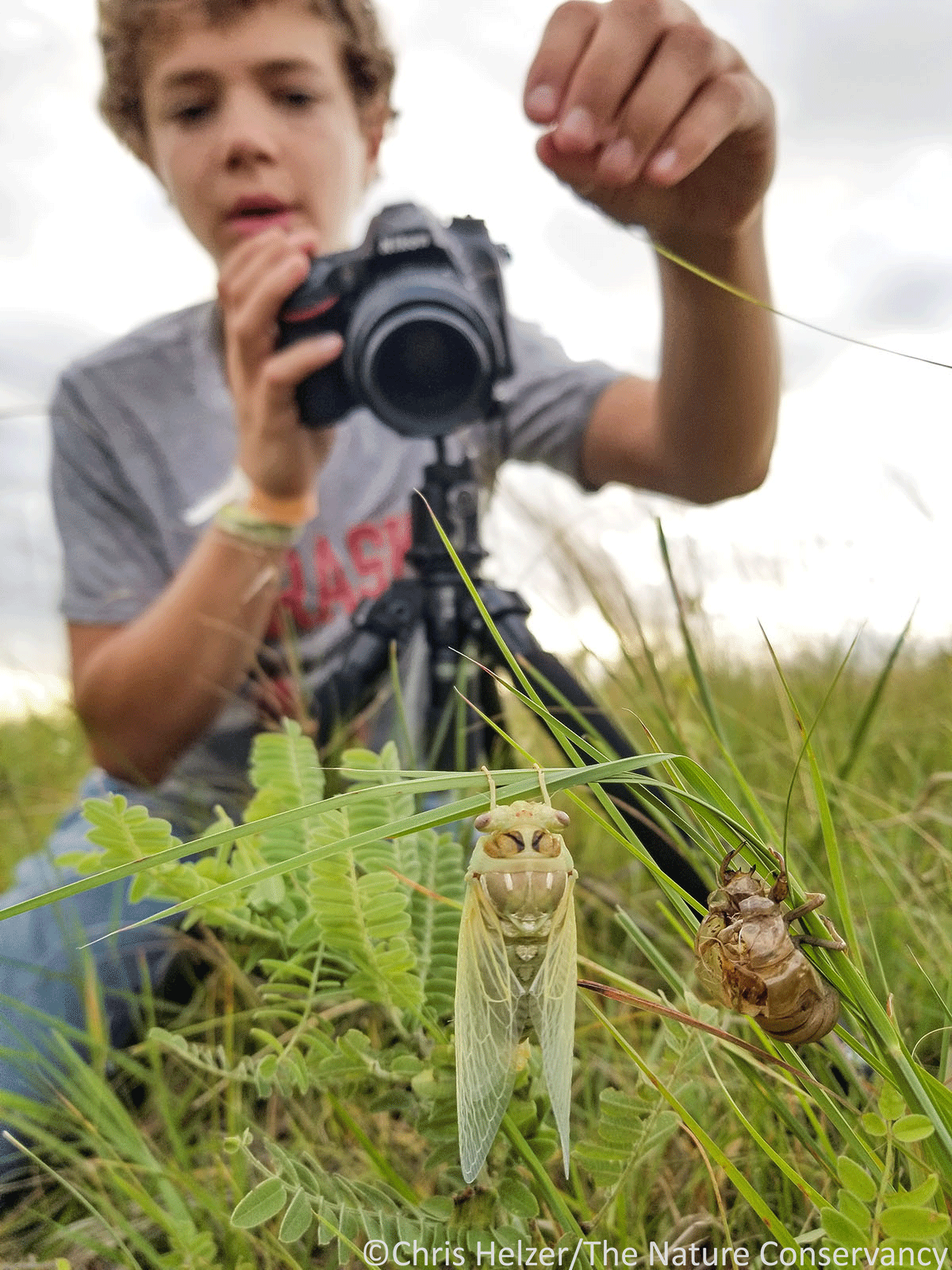
Here’s the little thief, using MY equipment just as the light started to improve…
Here’s Atticus reaching in to gently nudge a stray grass leaf out of the picture without disturbing the cicada. If he can master that little technique, he’ll be far along toward figuring out insect photography.

I can pretend to be offended, but of course I’m really pleased he’s interested in macro photography. Atticus is clearly a science-oriented kid (reinforced by all the time he spent in Kim’s high school science classroom when he was younger), and I’ll obviously do whatever I can to encourage his interest in nature and insects. After he went to bed, I called Kim and we agreed that it’s probably time to get him some of his own equipment. I have enough old gear laying around to outfit him pretty well, so we can see how serious he is before investing any significant money. My only fear is that he’ll start a competing blog and put me out of business…
This was Atticus’ favorite from among the photos he took. Again, all the composition work was his. I advised a little on focus and had the camera shutter speed and aperture already set when he took over, but the real credit for this image all goes to him and his creativity. Can you see why I’m really proud, but also worried about trying to compete with him?

Natural History Bites

I learn a lot of natural history through photography. First, I pay attention to my surroundings differently when I carry a camera – especially little creatures and the details of plants. Second, I photograph a lot of interesting organisms I don’t recognize and then look up information on them later. This last month has been a productive one for many reasons, including that I’ve gotten a lot of nice natural history photos. Some images were just nicer images of species I’ve photographed and researched before, but others were brand new. I’ve already shared my recent box turtle revelation, but here are some other tidbits of natural history and photographs from the last month or so.

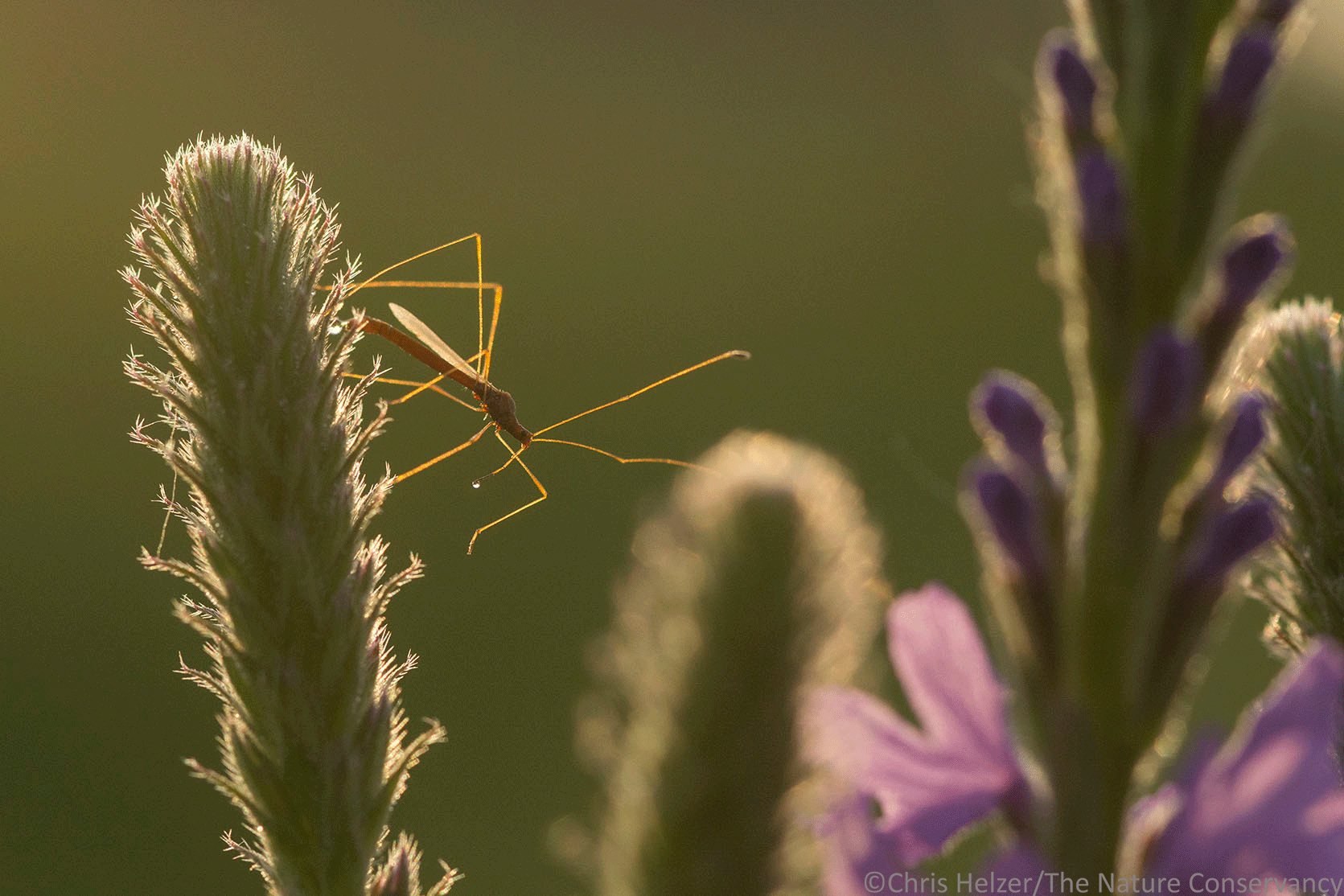
For a long time, I’ve thought these little critters were thread-legged bugs, but after staring at recent photos of them, did some more research and discovered they are actually stilt bugs (Berytidae). I had to go edit an Instagram post… I found this one on hoary vervain that was nicely backlit by the rising sun at Lincoln Creek Prairie. This is just one of many photos I took of it. At least in my yard and in nearby prairies, these are surprisingly abundant, once you start looking for them.
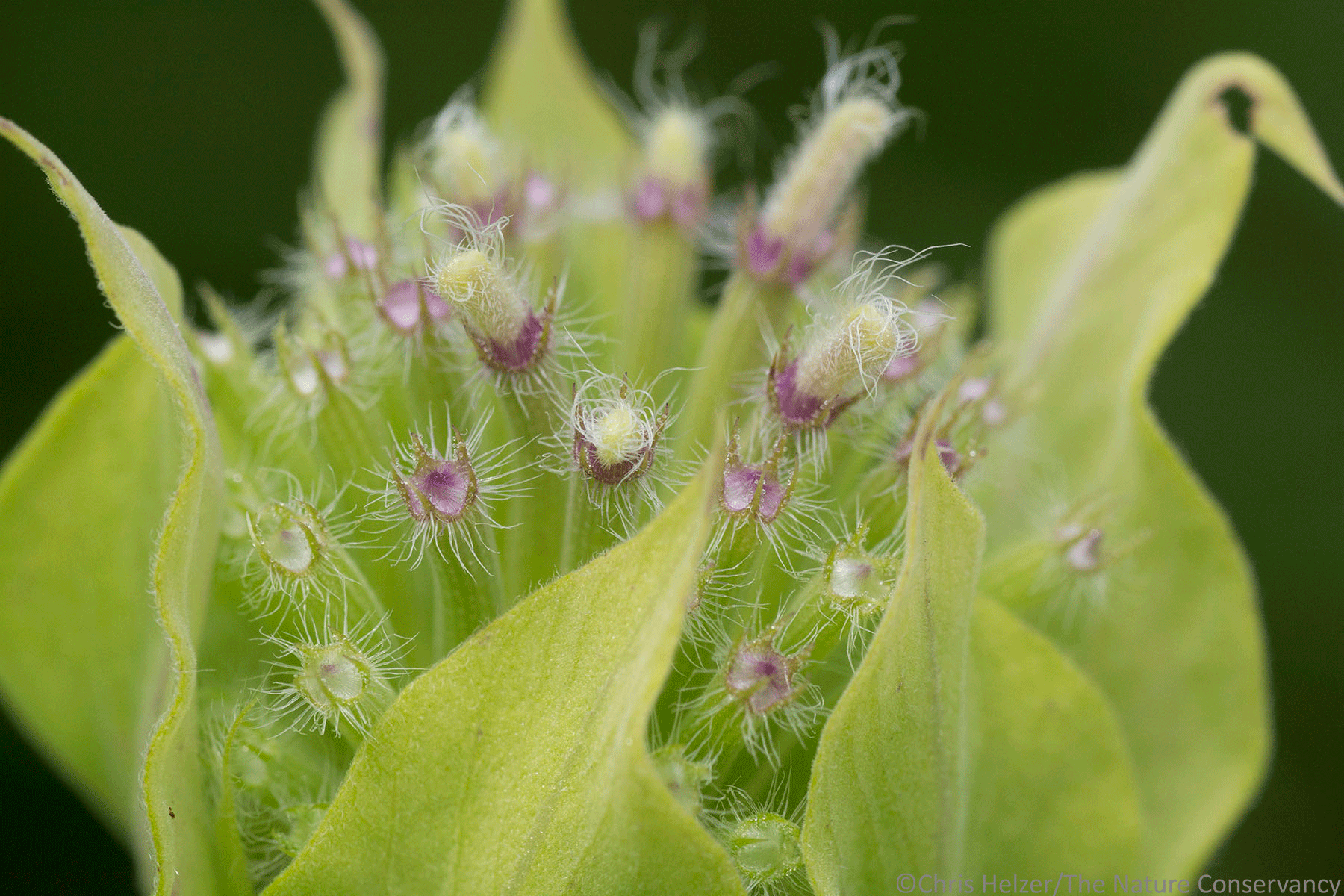
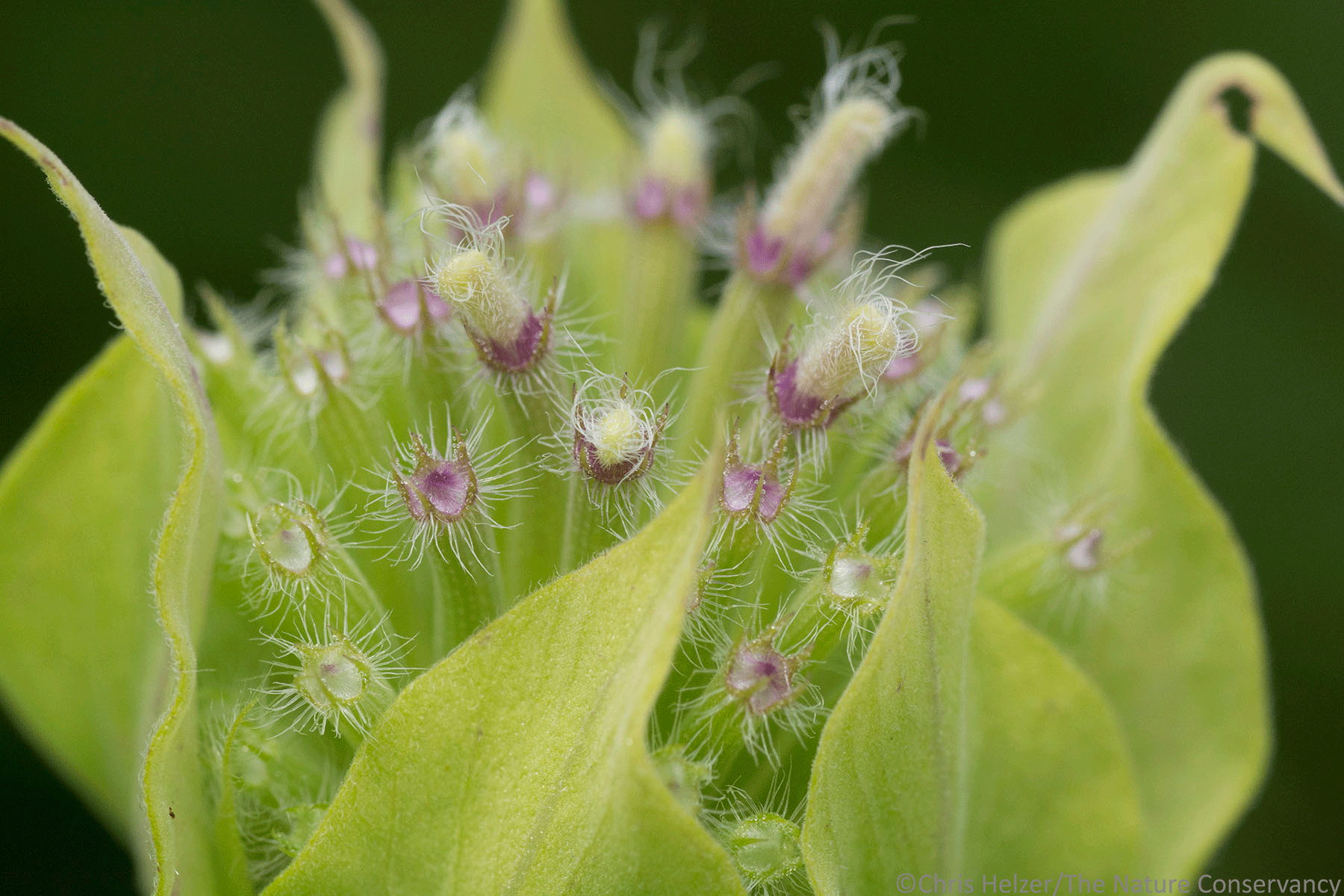
Can you tell what plant this is? Most of you have seen it before, but might not recognize it in this form. Check below for a repeat of this image with a proper label.
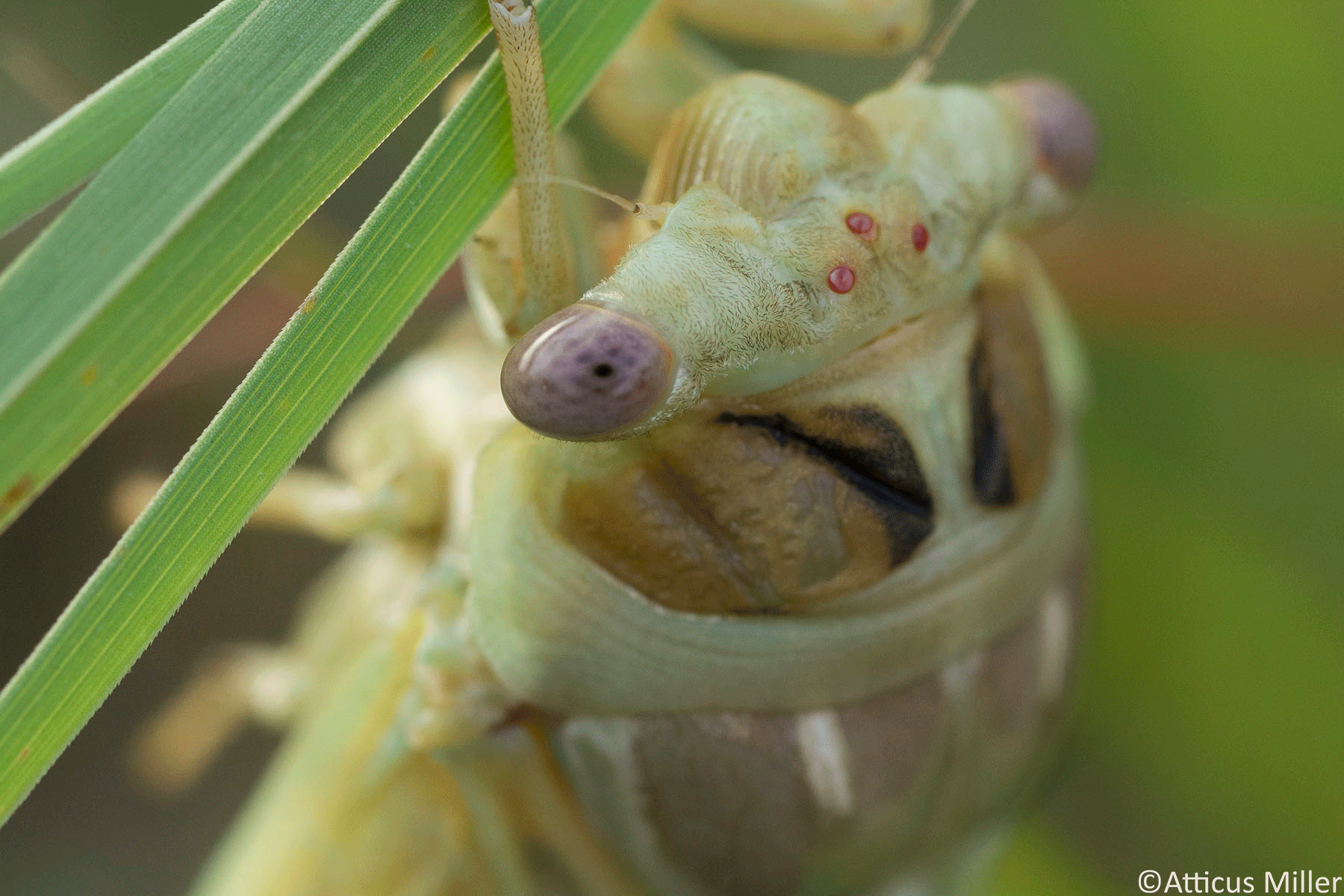
This is a bush cicada (Megatibicen dorsatus), otherwise known by the more impressive moniker, the Grand Western Cicada. They are difficult to ignore right now, both at the Niobrara Valley Preserve (where this one was photographed on a yucca plant) and at our family prairie. The sounds they produce are so loud it can be hard to have conversations nearby, let alone think. They are so stinking attractive, though, it’s hard to be anything but pleased to see and hear them when they’re around. Apparently, they are becoming much less common where prairie landscapes are more fragmented, so I’m glad to see them in the 100 isolated acres of grassland at our family prairie.
Here’s a second look at the same bush cicada as pictured above, but in this version you can more easily see its three red simple eyes (ocelli) between its two larger eyes. This triangular set of simple eyes is common on quite a few insect species and other creatures, but as far as I know, biologists still aren’t sure of their purpose. Because of their arrangement, it seems logical that they might be used for orientiation, but that’s still conjecture, I think – though I’m rooting for that answer to be right. The simple eyes can really only sense light and dark, so they probably don’t increase acuity of vision.
The plains lubber (Brachystola magna) is a massive grasshopper that can reach lengths of 2 1/2 inches or so. This male wasn’t that big, but even at its inch-and-a-half size, was impressive because of its girth. As flightless grasshoppers, lubbers are pretty easy to spot as they crawl through open patches between grass plants in the Sandhills, and must be a welcome find for birds and other predators that like grasshoppers. Despite that, they have managed to maintain strong populations.
Did you figure this one out? It is an inflorescence of wild bergamot, aka bee balm (Monarda fistulosa) and is just starting to bloom. Those fuzzy cream-colored projections will continue to elongate into the more familiar pink flowers that cluster together to attract multitudes of pollinators, especially bumble bees and butterflies.
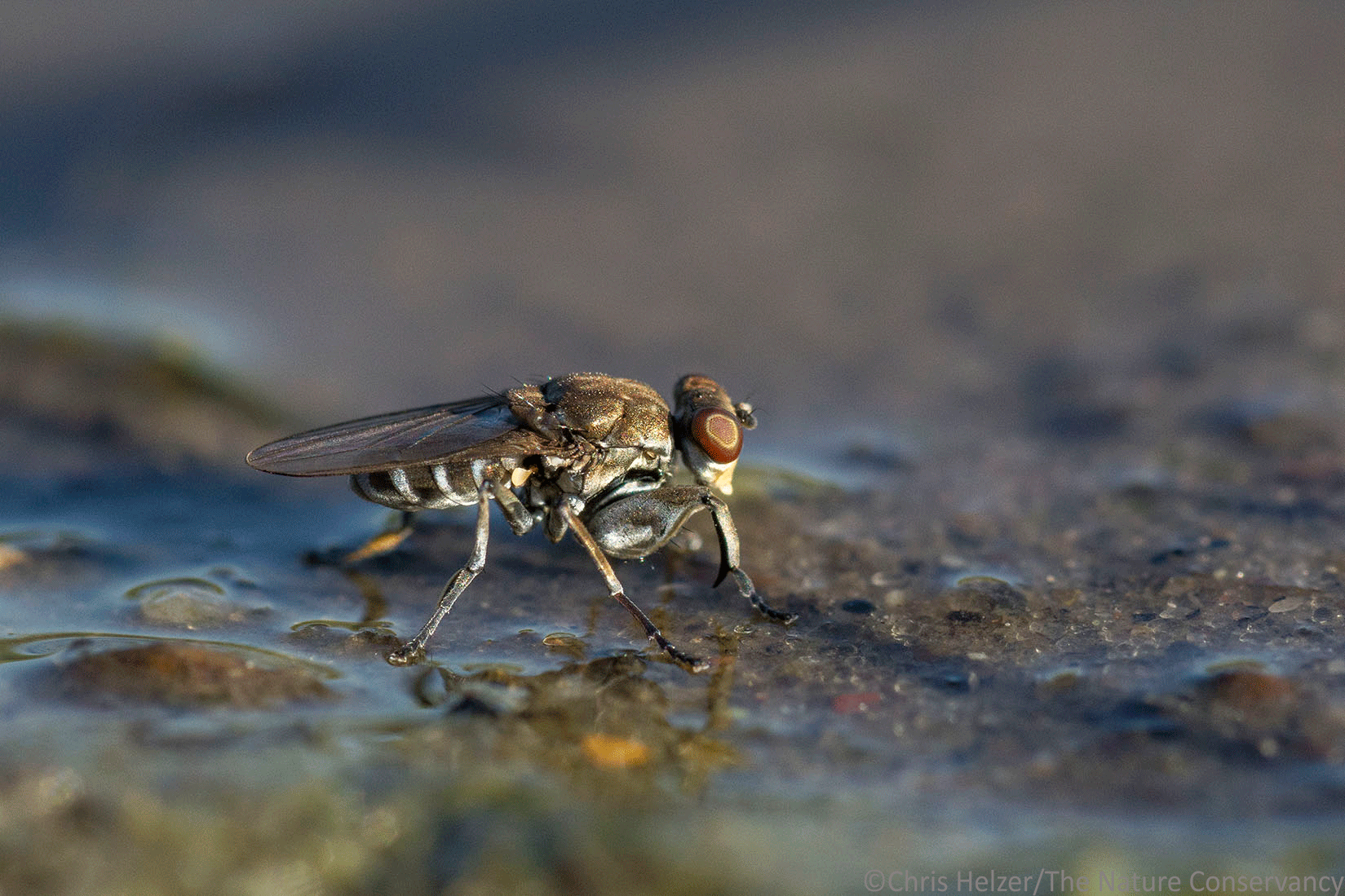
My son John and I kayaked the Niobrara River a couple weeks and, while taking a leisurely break on a sand bar, were examining tiny flies along the water’s edge when we realized there was something odd about their front legs. The legs had humongous “thighs” and looked raptorial – like a mantis’ front legs. The next morning, I saw more of them along the edge of a wet bison wallow and managed a few reasonable photos. They are mantis flies (Ochtera), a kind of shore fly that preys on midges and mosquitoes. Mantis flies are distinct from mantis-flies (the hyphen is important), which are in their own family (Mantispidae) and aren’t flies or mantises. I photographed a mantis-fly that mimics a wasp and posted on that back in 2017.
This katydid nymph just emerged from its (very tight!) old exoskeleton through a process called molting. The katydid will continue growing and molting until it reaches its full size later this year, at which point it will have full size and working wings – and will be sexually mature. While it looks like a grasshopper, attentive readers will remember that the extreme length of the antennae (most of which can’t be seen in this photo) in katydids separate them from grasshoppers, which have antennae much shorter than their body.
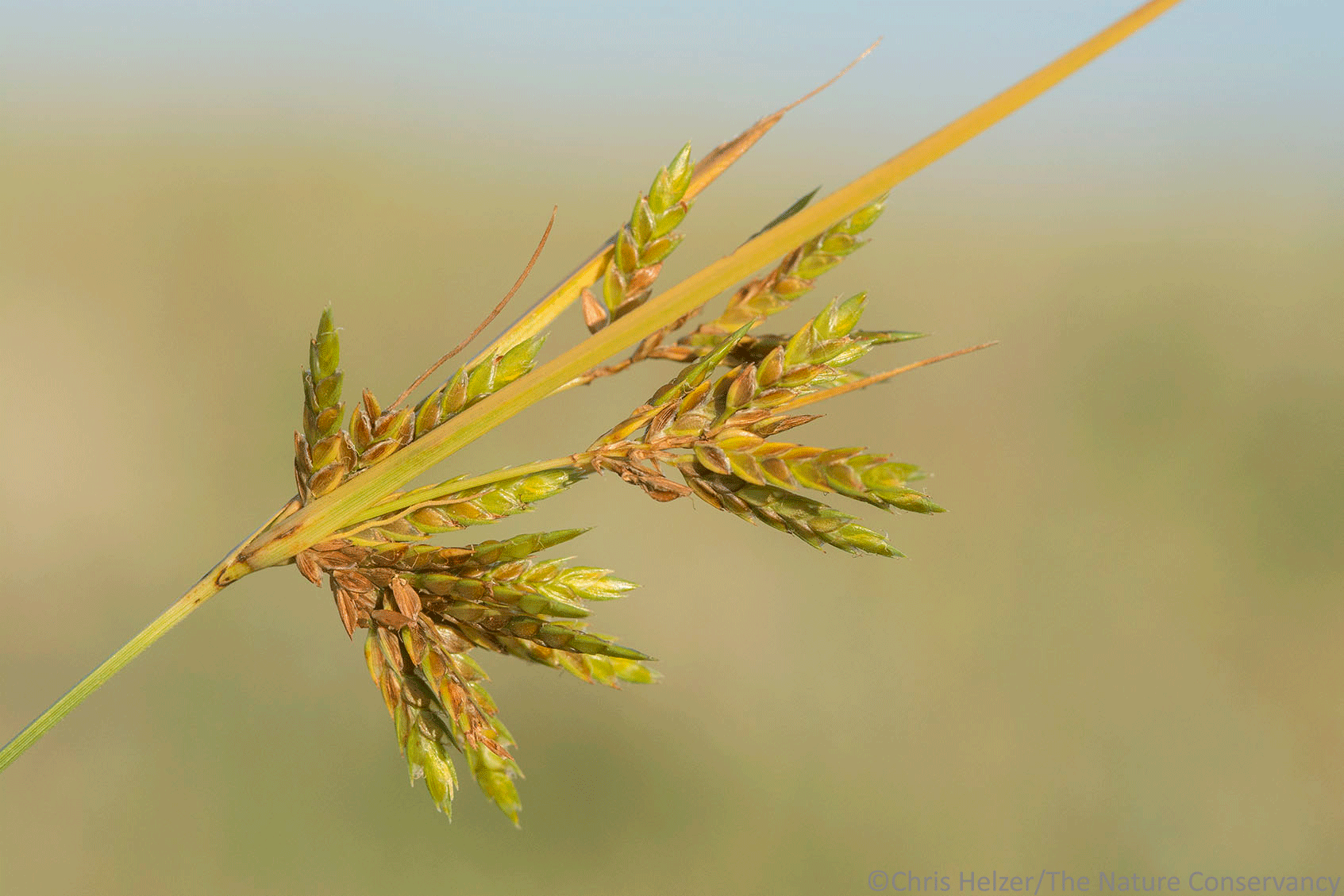
This is Schweinitz’s flatsedge (Cyperus schweinitzii), a fun name to say, and an abundant plant in the Nebraska Sandhills. As a flatsedge (aka nut sedge), it is one of very few that is found in dry habitats – most of its peers are wetland plants. Schweinitz’s flatsedge, while common, tends to fade into the background among the grasses and other prairie plants it lives with, so if you’re not looking for it, it’s easy to miss it – especially when it’s not blooming.
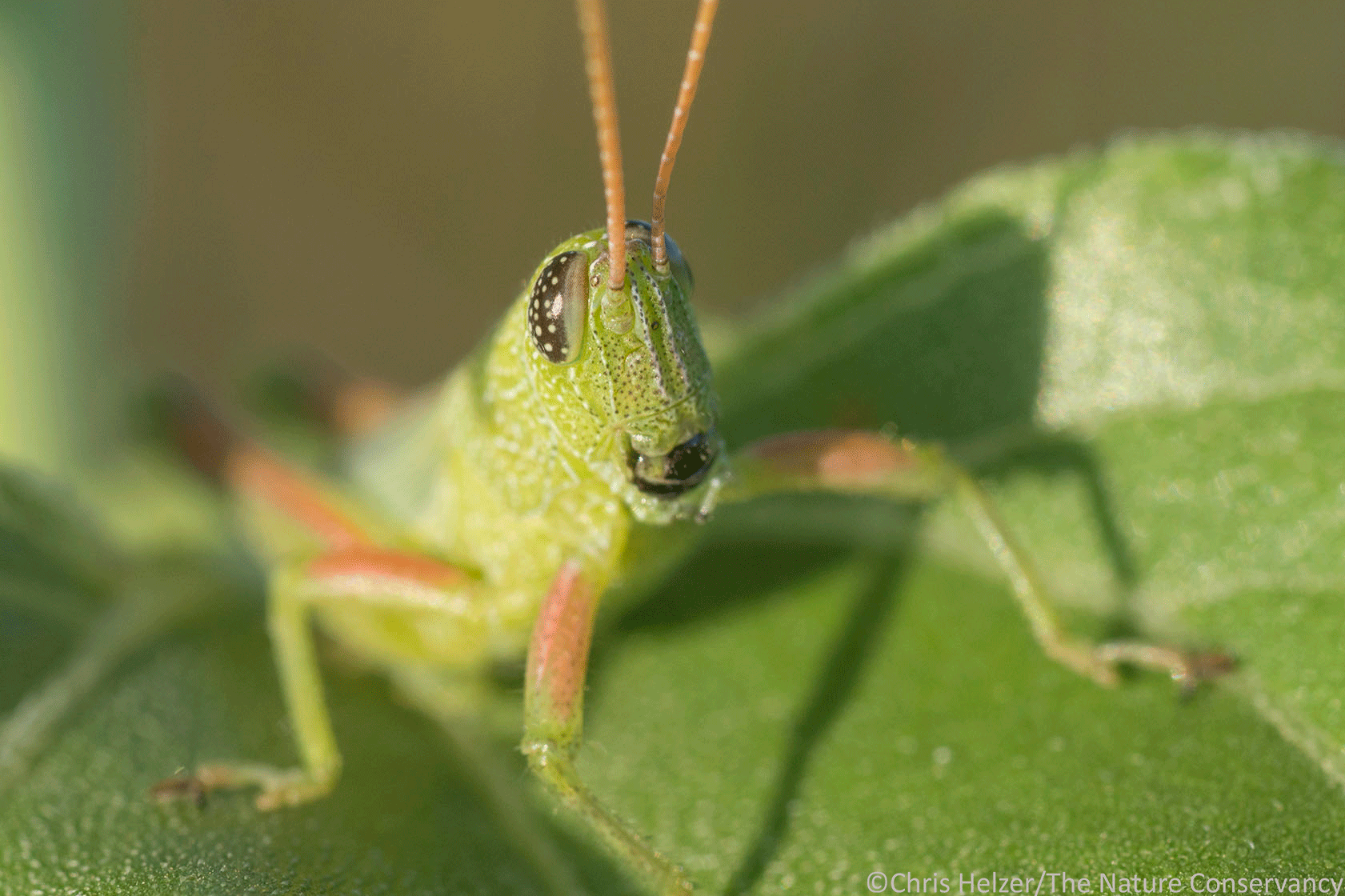
The fuzzy olive-green grasshopper (Campylacantha olivacea) is a favorite of mine, partly because I like species with descriptive names, but also because it is a really attractive little grasshopper. There is a lot of variation in coloration within the species, but I am the biggest fan of the ones with red on their legs and antennae, along with the gorgeous pale stripes and patterns that are present on all individuals.
This is the same olive-green grasshopper shown above, but in a more interesting position – trying to hide from the nosy photographer pointing a lens at it…
I’m not sure which four o’clock species this is, but it has the typical four o’clock seed shape and pale bract that sits beneath the pink and tubular “corolla” that looks like, but isn’t, 5 petals. Four o’clocks typically open in the late afternoon (hence their name) and close the next morning. The flowers aren’t present very long, so this photo of the bract and seeds is what the flower heads look like much of the time – and I think they’re very attractive, especially on early on a dewy morning.
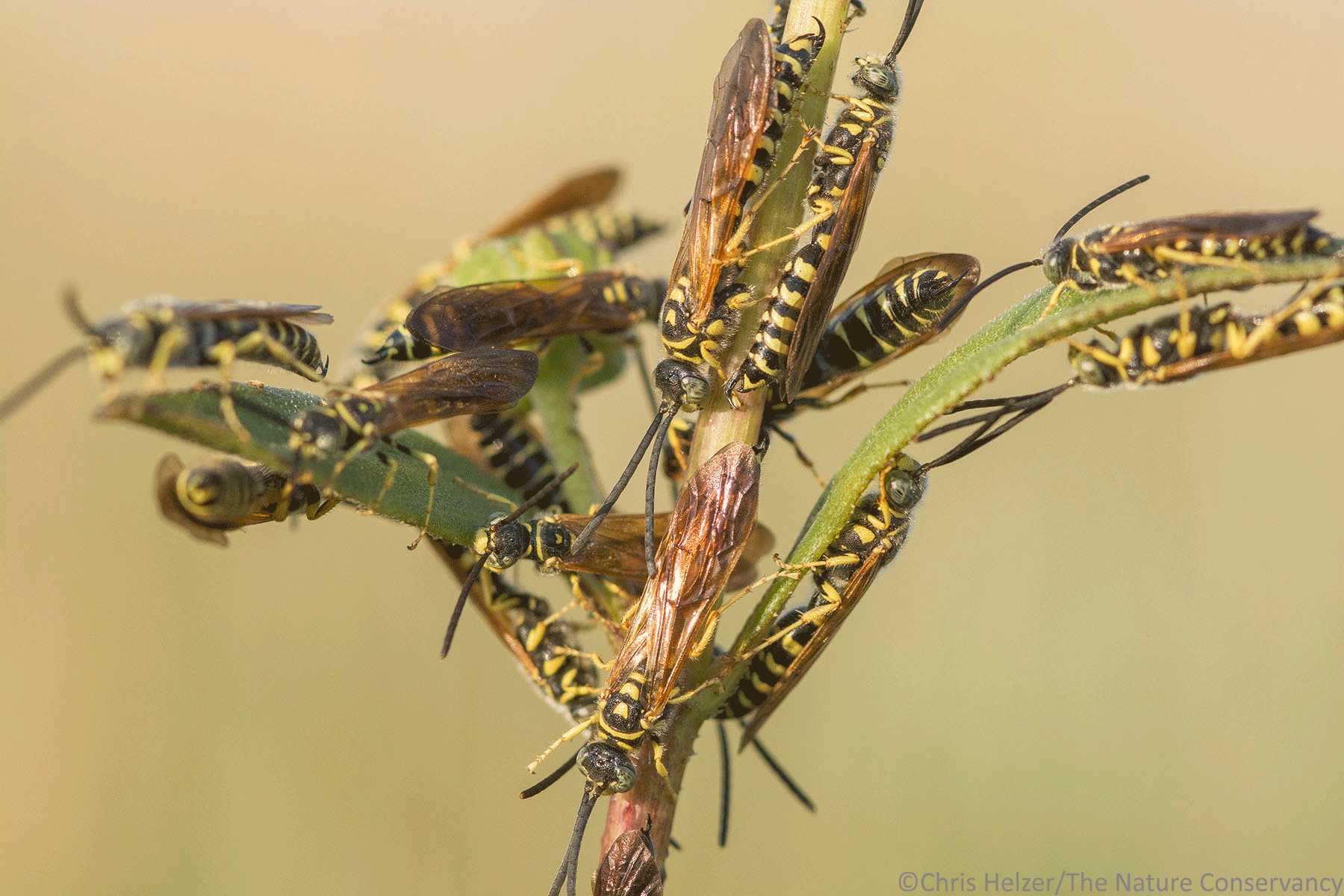
Myzinum wasps (Typhiidae) are pollinators and ectoparasites. Adults feed on a variety of plants and females paralyze and then lay their eggs on a beetle larvae so wasp offspring can consume it. In prairies, male Myzinum wasps (such as those shown here) can often be seen congregating together, especially in the morning, on plants – presumably hanging around and waiting for females to appear. We can only hope they are better behaved than human males often are in similar congregations…
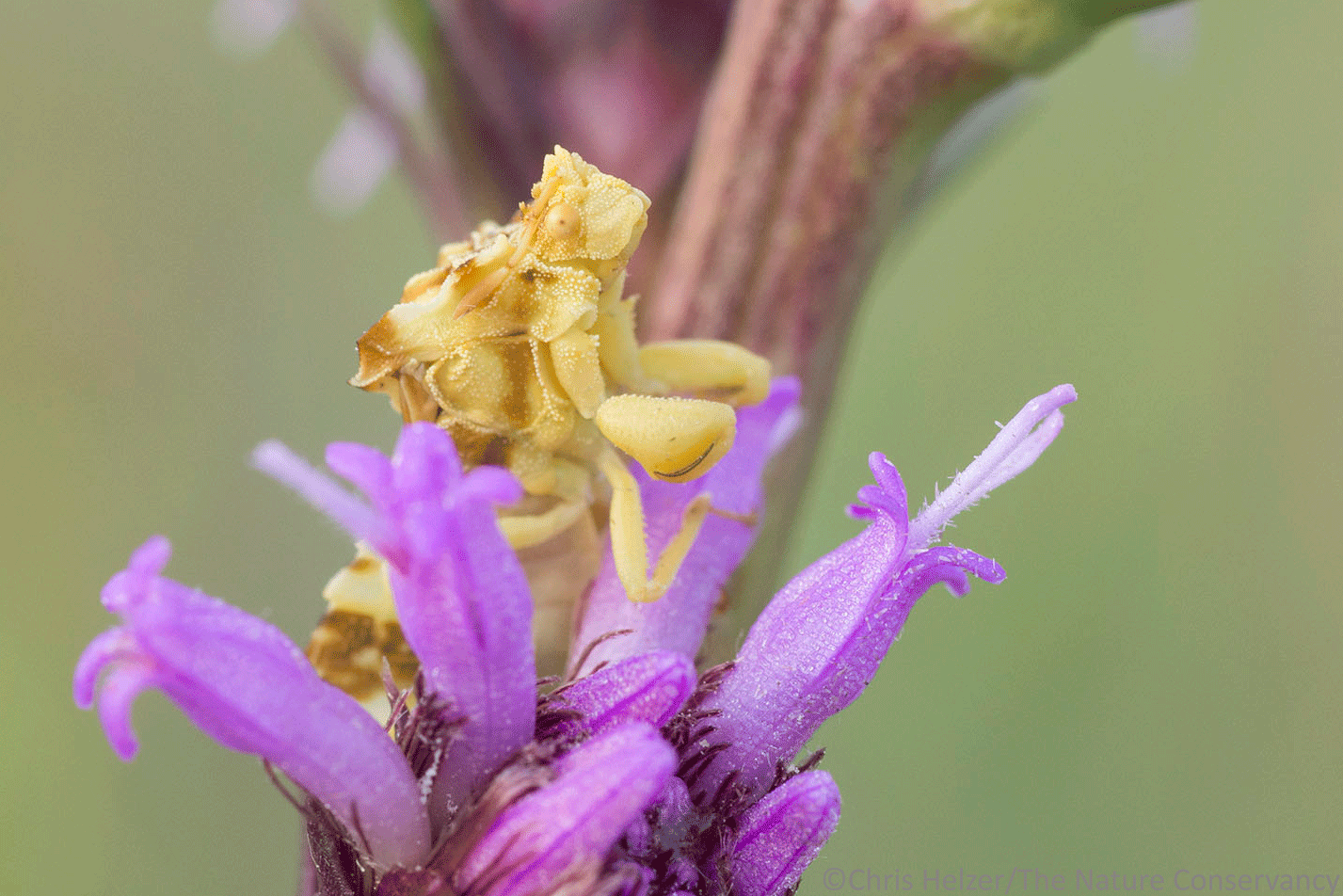
Last one… This ambush bug (Phymata sp) was lying in wait for pollinators that might come visit the blazing star (Liatris squarrosa) flower it was sitting on. Ambush bugs are related to assassin bugs, but tend to be much more compact in body style, as well as more textured and camouflaged. However, that camouflage seems less effective on a flower that looks so different from the ambush bug’s body… If an insect does happen to land nearby, the ambush bug’s impressively-thickened raptorial front legs will clamp on to it and the ambush bug will suck its prey dry with its long proboscis.