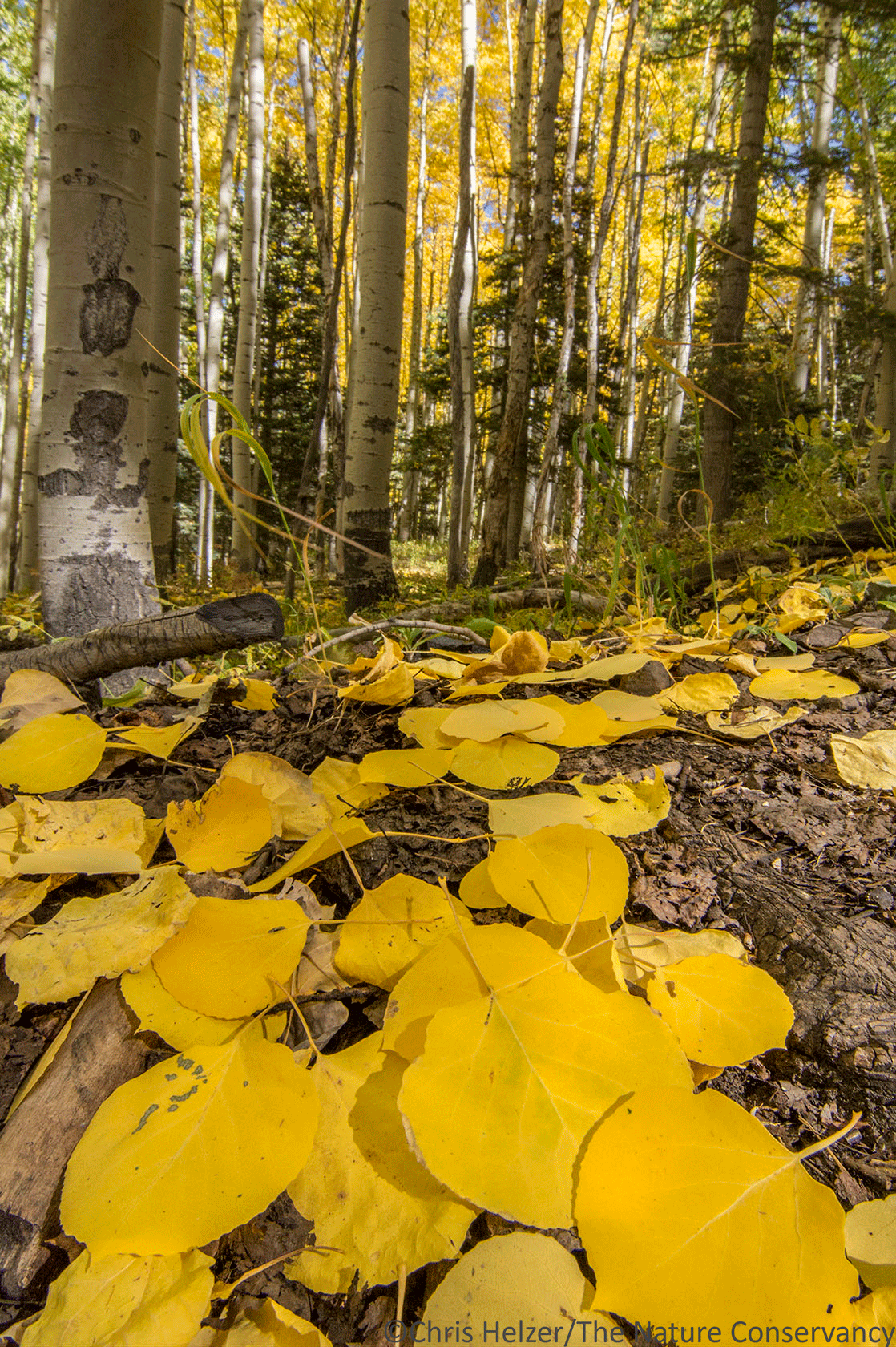
Kim and I took some vacation time this week. Despite living 8 hours or less from the Rocky Mountains for most of my life, I’d never been out to see the quaking aspen in its full golden glory before now. Boy am I glad I fixed that. Here are a few photos from one of our hikes near Ouray, Colorado. More to come next week.
The view from the south part of the Corbett Creek Trail near Ouray, Colorado.Quaking aspen leaves. Corbett Creek Trail near Ouray, Colorado.Quaking aspen, photographed with a Samsung Galaxy S10e (wide angle lens). Moonshine Park, Colorado.Kim walking through an aspen wonderland on the Corbett Creek Trail near Ouray, Colorado.
When I wrote my first book back in 2009, I cited a factoid that blew me away. Flies are the most diverse insect group in North America. While beetles (Coleoptera) are the most diverse group in the world, here on our continent, they are third, behind ants/wasps/bees (Hymenoptera) and flies (Diptera). I had the rankings right in my book, but even though I cited my source correctly, I misquoted it and said there were 37,000 species of flies in North America. That’s a ridiculous number, of course. The actual number is over 61,000.
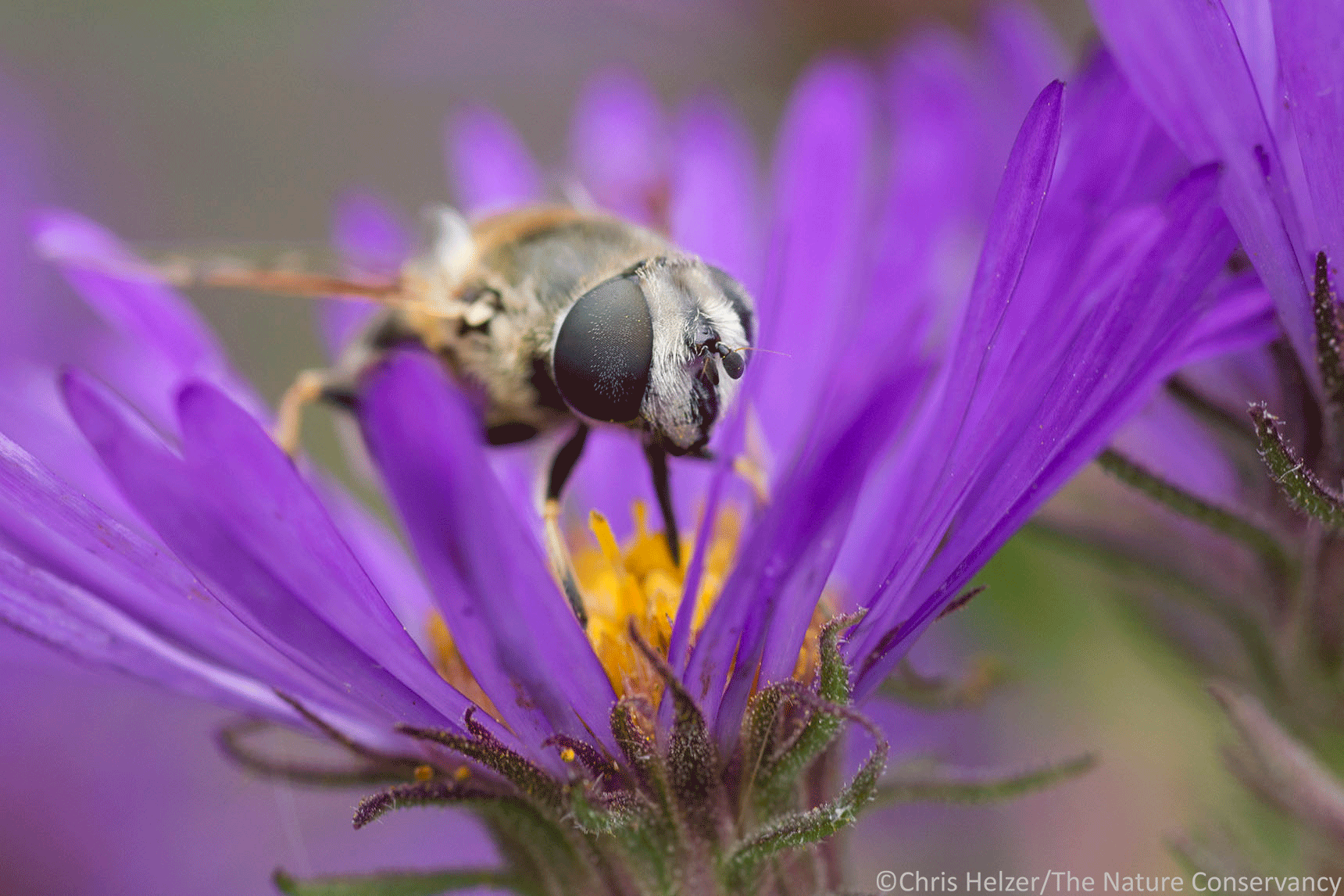
Hover flies are very common pollinator insects. Some, like this one, can have a fuzzy and stocky appearance, much like some bees. The huge eyes and tiny antennae, however, help set them apart.
Let’s take a moment to appreciate that number. 61,000. How many fly species can you name? House fly? Horse fly? Deer fly? Black fly? Fruit fly? That’s five. Only 60,995 to go… Dragonflies and butterflies don’t count… It might help to know that mosquitoes are counted within that group, but how many species of mosquitoes can you name??
Even while I was quoting the erroneously low number to people, my point was still accurate – there is an astounding number of fly species buzzing around on this continent. My square meter photo project helped me to appreciate that even more. Appropriately, flies were the most diverse group of insect species (22) I photographed within that square meter during 2018. Apart from the diversity of species, their sheer abundance was also impressive. It was amazing how many flies, especially teeny tiny flies I wouldn’t have ordinarily noticed, were hanging out in my little photo plot.
There’s a lot of variation in appearance among flies, including some with fairly colorful bodies and wings.
Last week, while looking through photos from this current month (September 2019), I realized many of them included flies. I decided that was as good a reason as any to gush a little more about flies – not that I particularly need a reason. All of the photos in this blog post were taken during this month, and I didn’t even include all of what I took.
When
most people think of flies, of course, they think of the pesky house fly that
buzzes annoyingly around when we’re trying to relax or do something else
important. Alternately, they might
visualize something that bites us painfully while we’re outside trying to enjoy
the day. Both of those visions are
accurate, but boy are they limited in scope.
This is the shape and fuzzy texture most people envision when they think about flies. Within that “standard” fly shape, however, there are many thousands of species, only one of which is the common housefly.
Flies can be pollinators, predators, scavengers, decomposers, parasites, and much more. As pollinators, flies (especially within the Syrphid family) are abundant and important. If you know to look for the giant eyes and short stubby antennae (most of the time) on flies, as opposed to the longer antennae (most of the time) on bees, you’ll quickly note that there are often more flies than bees on your favorite flowers. They aren’t usually as effective at fertilizing flowers as bees are, but they help make up for that with their overall abundance.
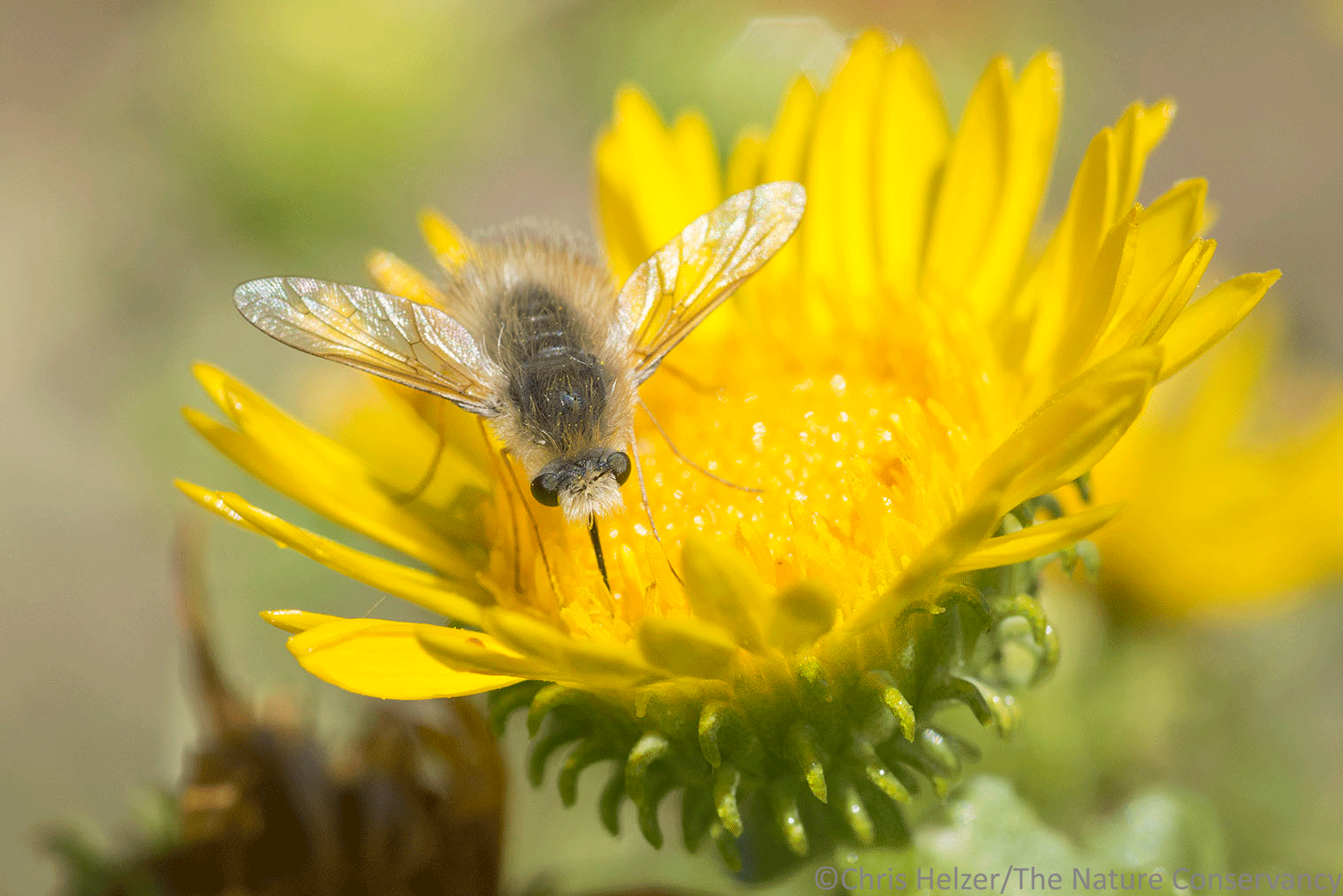
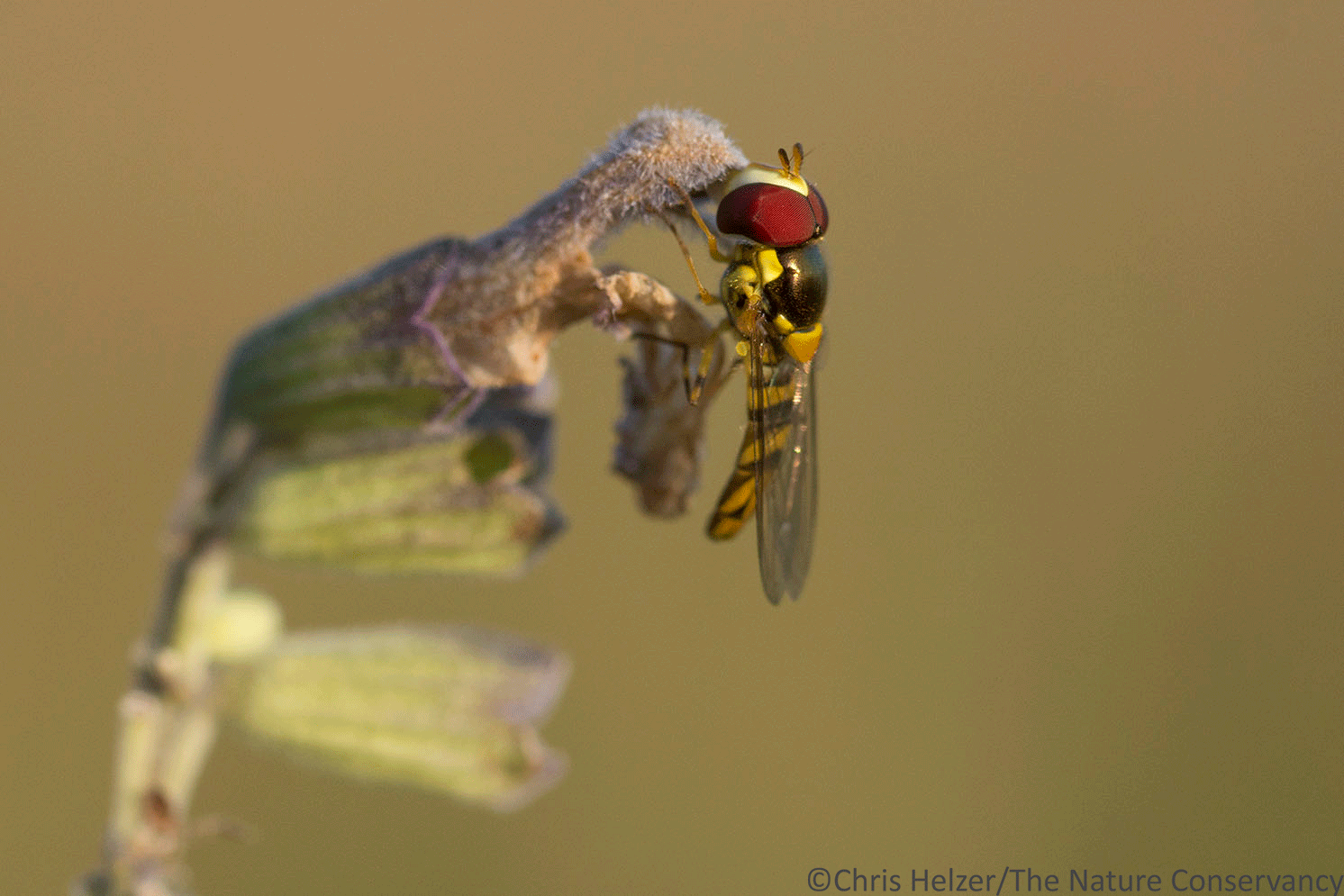
Bee flies have a long stiff mouthpart. They often hover in front of flowers and insert it into flowers to extract nectar. Other times, they land on the flower and suck up nectar from there.These small, nearly hairless flower flies are commonly seen feeding pollen. Among the many species, lots of them have the yellow and black stripes that can resemble bees. Again, though, look at the humongous eyes and tiny stubby antennae.
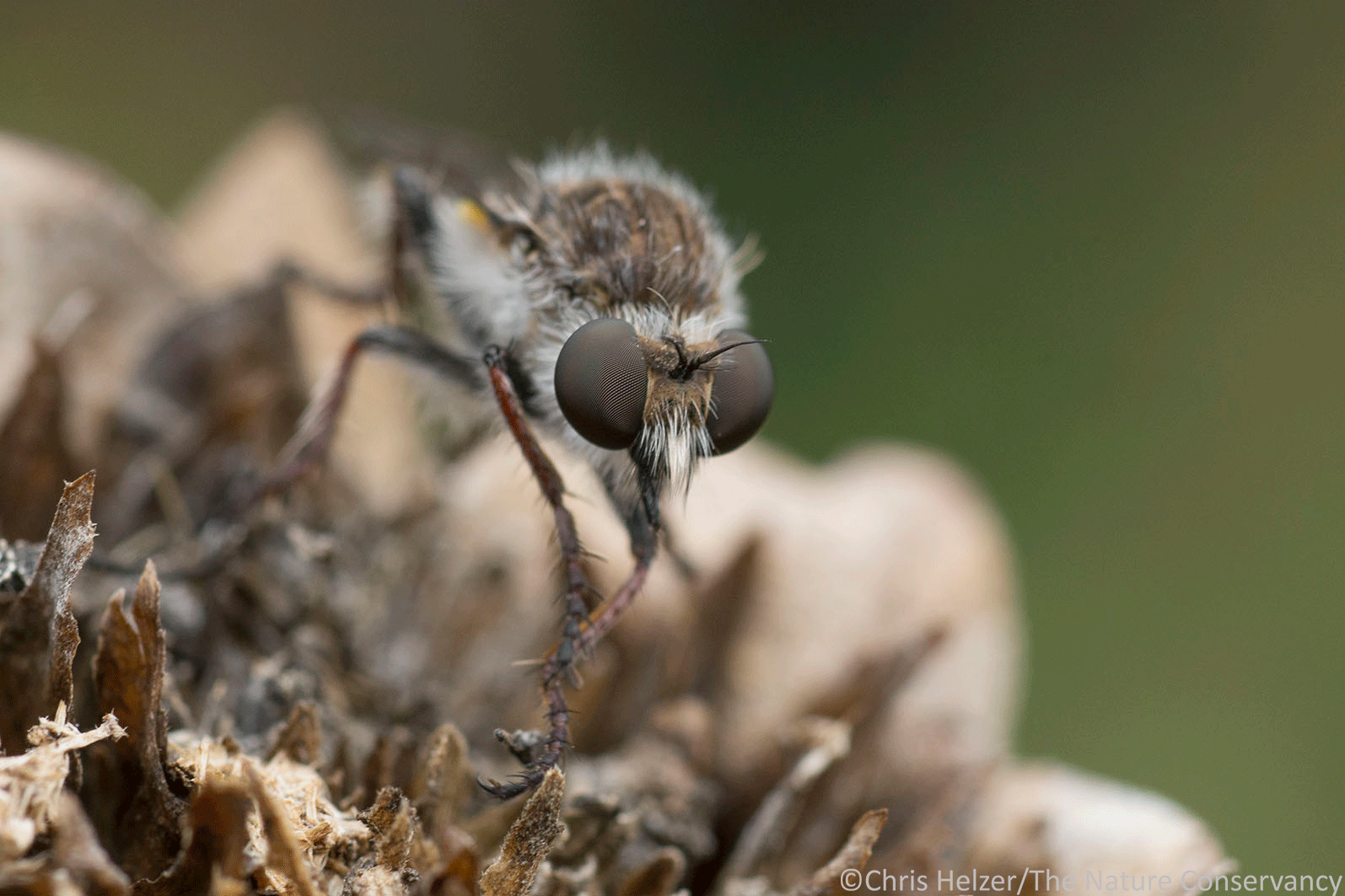
Some predatory flies have a recognizable fly shape (e.g., long-legged flies), but others, like robberflies, can look appropriately menacing, with long streamlined bodies and wings, huge eyes, and a scary looking mouth. On the other hand, some robberflies mimic the appearance of other kinds of insects (often bees) to mask their fearsome abilities. It’s pretty hard not to admire a robberfly.
This face-t0-face view of a robber fly doesn’t do justice to its long streamlined body. Its long black mouthpart, with which it stabs prey, can barely be seen beneath the hair on its face.
Everyone knows flies hang around dead animals and poop. Many species lay their eggs in that stinky stuff so their larvae can feed on it as they grow up. As a result, they are among the most important of the many organisms that help clean up messes in the world. Thank goodness for them.
You may have heard of the botfly? Species in that group parasitize mammals, and are the subject of horrific stories of larvae burrowing out of the skin of many animals, sometimes including humans. Interestingly, the botfly doesn’t lay its eggs directly on mammals. Instead, it captures mosquitoes or other flies and lays eggs on them. When a loaded mosquito or fly feeds on a mammal, the botfly larvae can drop off and enter the mammal’s skin, sometimes through the convenient hole created by the mosquito’s proboscis. Fortunately for most of us in North America, the botfly species that feeds on humans is found far south of us – from southern Mexico into parts of Central and South America. It might also be in parts of Europe, I hear? In either case, it isn’t super abundant, apparently, which is nice.
Another parasitic bunch of flies, the Tachinids, are more deadly. Their larvae develop inside the body of another insect and end up killing that host. While they don’t feed on humans (to my knowledge!) they make botflies seem pretty tame, don’t they? They are also pretty common, at least around my area.
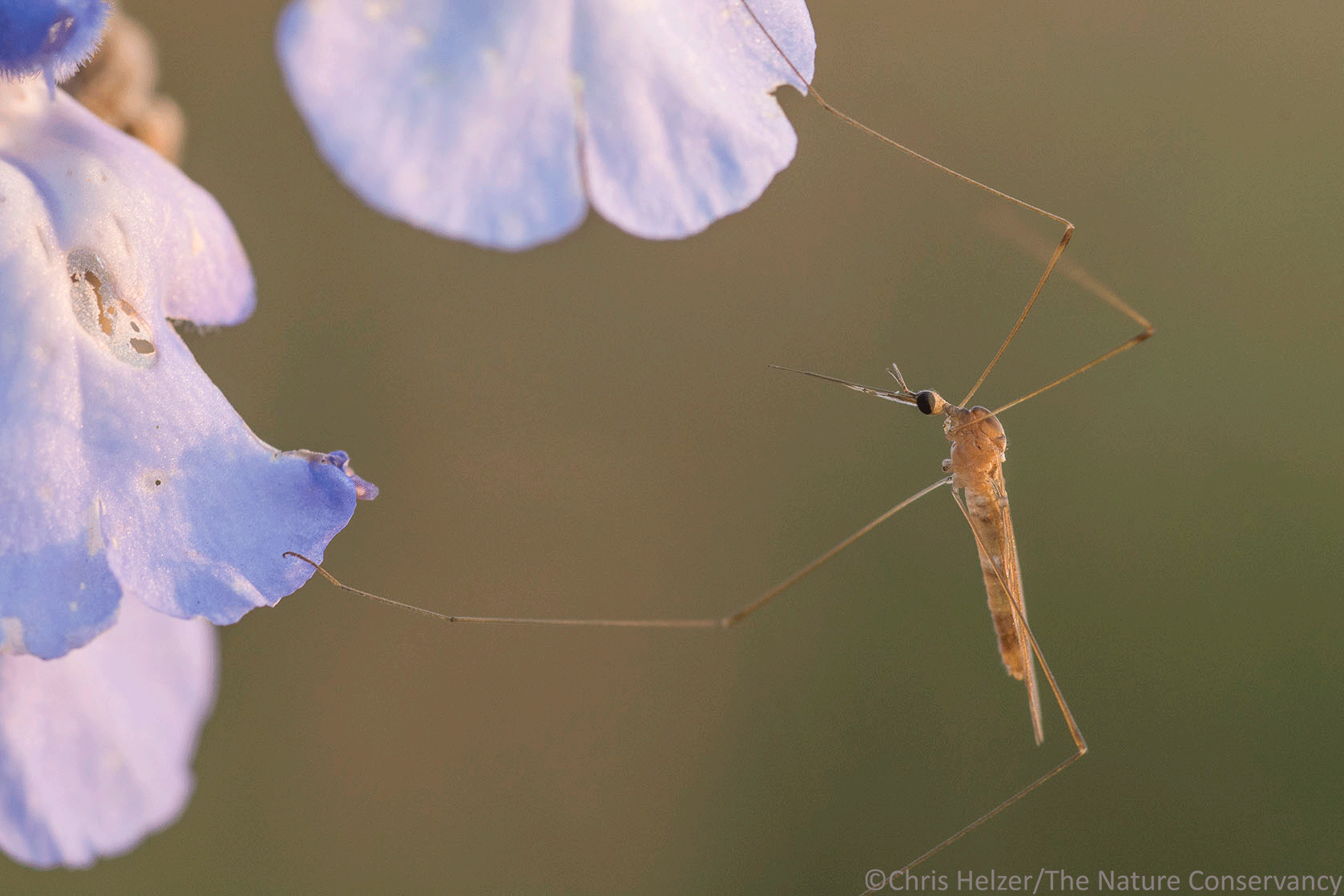
Crane flies look like huge mosquitoes but pose no danger to anything, at least as adults. As larvae, most live underground and feed on decaying plant material and microorganisms.
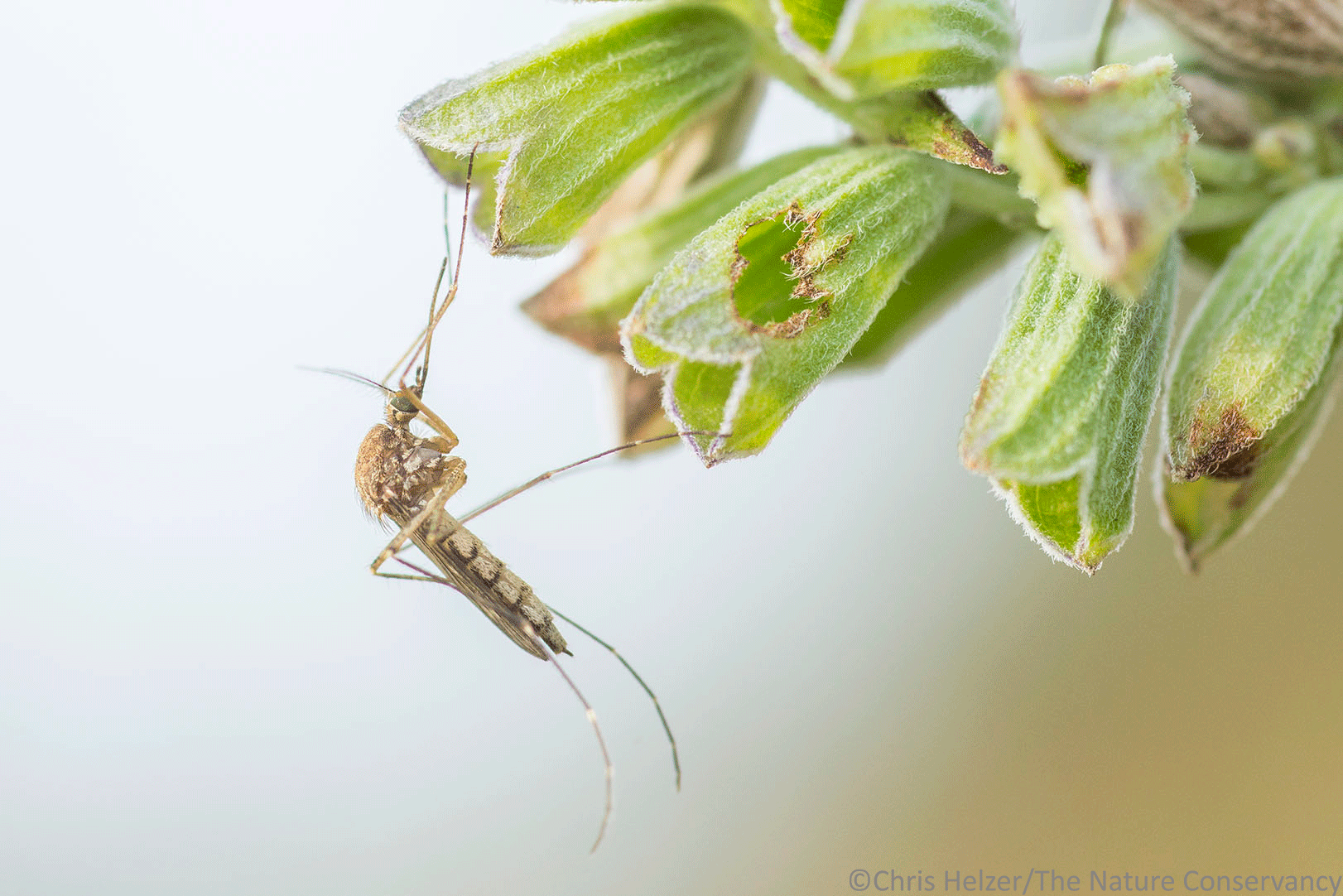
We haven’t even talked about mosquitoes yet. Mosquitoes can be a big hassle; their whining flights around our heads make it hard to focus while working or playing outside. When there are enough of them, they can cause us to engage in frantic dances, featuring lots of head and neck slapping, and often the shouting of words our parents wish we didn’t know.
Ah, the mosquito. The most abundantly annoying insect in the world? Did you know there are about 3,500 species of mosquitoes?
Embarrassing dances aren’t such a big deal, though, compared to the million or so people that die each year from mosquito-borne malaria. Mosquitoes also help carry many other diseases that affect both humans and other animals. While their larvae and adult forms provide food for lots of animals, it’s still tempting to wonder whether the world would be better off without them. I’m not advocating that, for the record, but I’ve heard that conversation many times.
While there are some flies that cause us frustration, and can even be dangerous, the vast majority (and it’s a VERY vast majority) play important, if rarely recognized, roles in the world. They pollinate flowers, help suppress populations of other small creatures, and clean up stinky messes. Sure, sometimes they burrow into the flesh of animals or consume insects from the inside out. (But while it’s gross, it’s also kind of cool, right?) And sure, some transmit diseases – though even there, they’re providing a valuable service to that pathogen organism…
Overall, however, flies are an incredibly diverse and amazingly abundant group of organisms. When they aren’t just buzzing around our heads, they’re out doing important work, largely without notice or appreciation. Maybe a thank you, now and then, would be appropriate?