The Fellows and I traveled to Wisconsin this week for the annual Grassland Restoration Network workshop, which – this year – was being hosted by the University of Wisconsin-Madison Arboretum. I’ll write more about the workshop in a future post, but for now, I’ll share a few photos from our last evening in Madison.
Greene Prairie at the UW Madison Arboretum.
Despite looking forward to the workshop itself, my top priority for the trip was to revisit Greene Prairie, a site that has mesmerized me since I first saw it in 2004. Henry Greene began work on his prairie in 1943 and ended up hand-planting 130 species over the next couple of decades. It was painstaking work, laid out in great detail and brought to life by a man who, by all accounts, had a very prickly personality. We couldn’t find a window of time to visit his site during the workshop, but as soon as our last field trips ended on the last evening of the workshop, the Fellows and I headed to Greene Prairie, accompanied by Sarah Bailey and Gerry Steinauer.
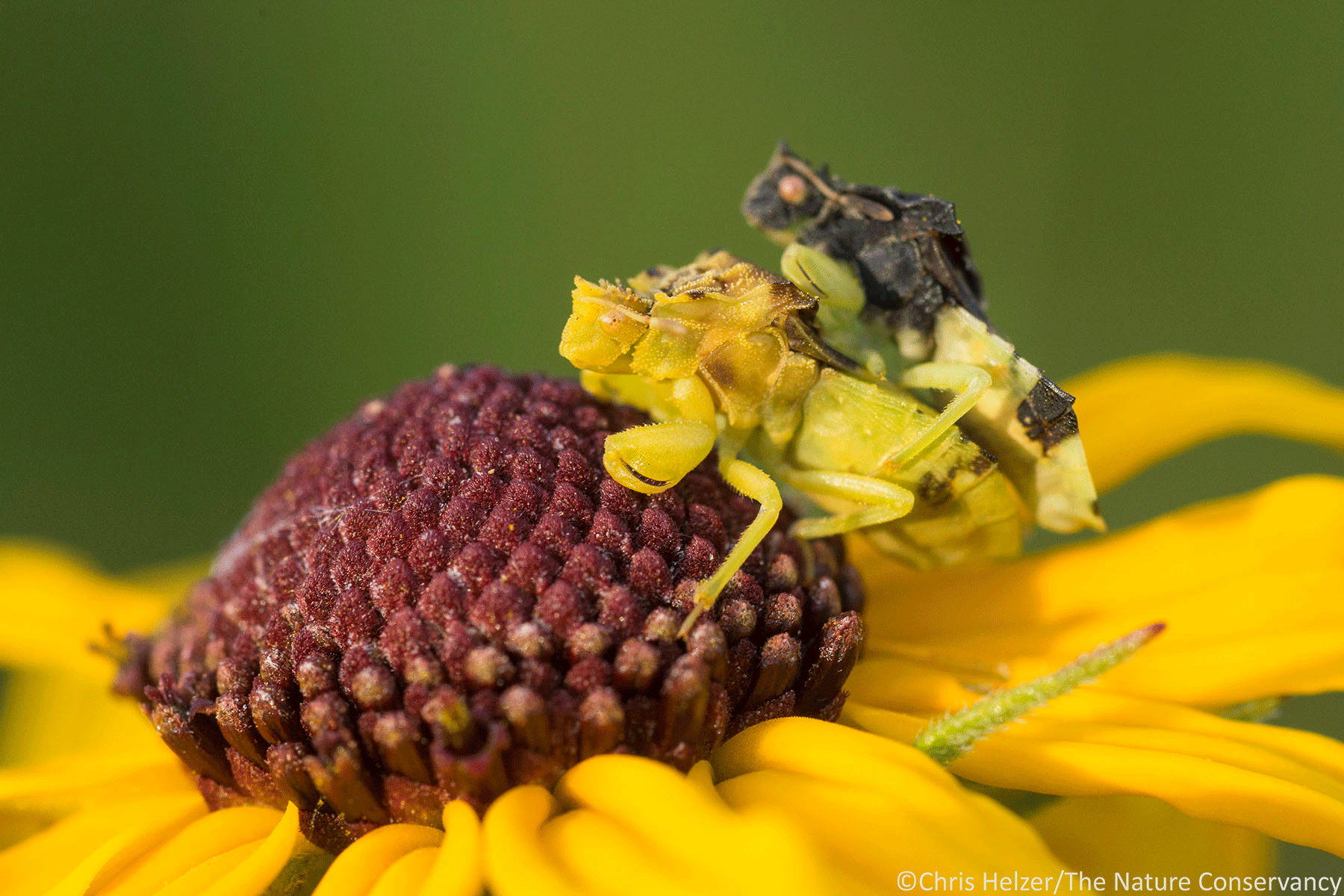
Ambush bugs (Phymata sp) mating and feeding on a bumblebee. If you look closely, you can see the same three insects (plus another bumblebee) in the photo above this. If you’re having a hard time deciphering what you’re seeing here, the bumblebee is dead and is impaled upon the proboscis of the paler-colored ambush bug (female), which is underneath the darker colored ambush bug (male).
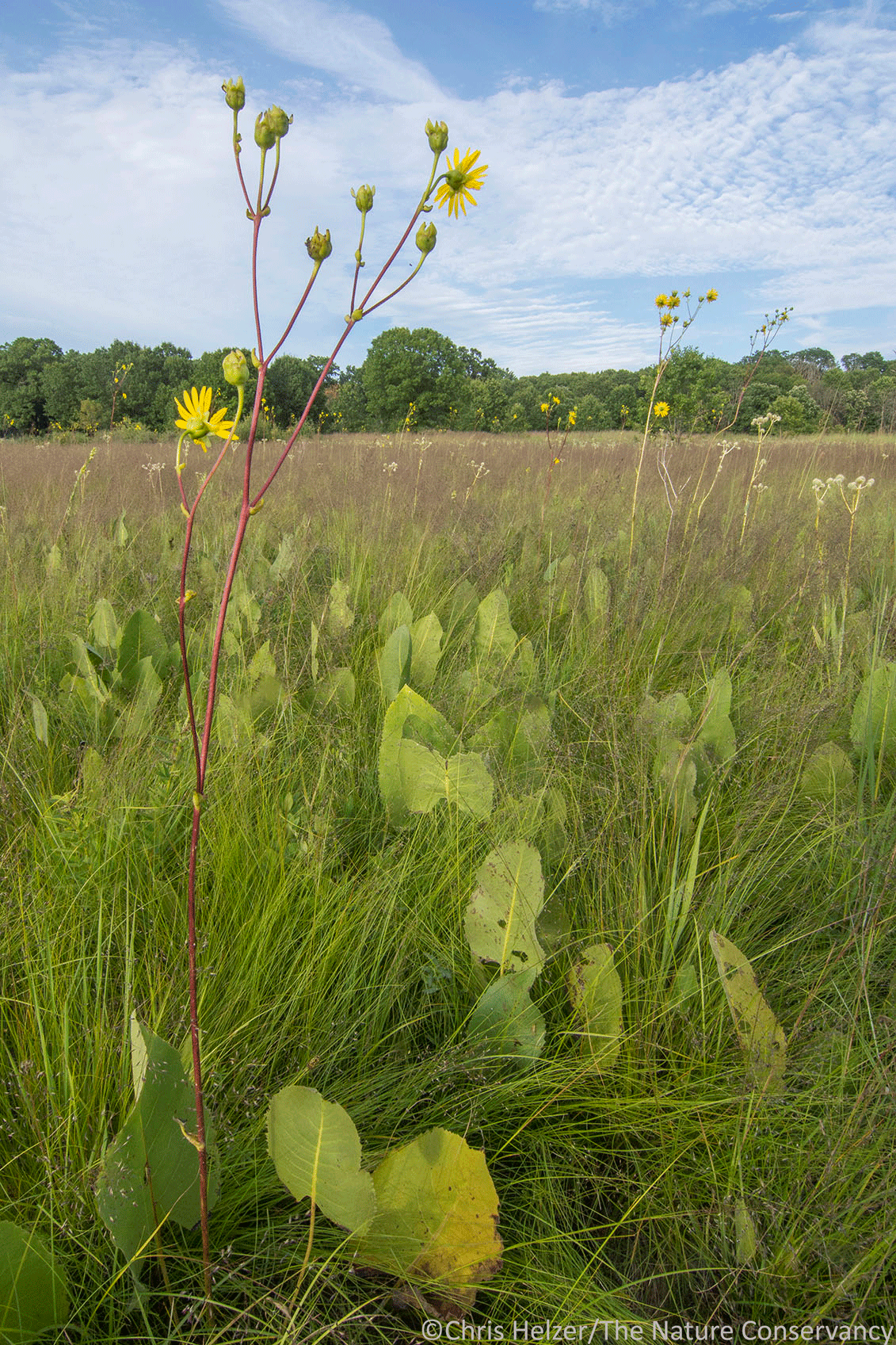
We saw a lot of great restoration work during our few days in Madison, but there is something about the aesthetic at Greene Prairie that makes it stand out. During my previous visits, I’ve tried to puzzle out what draws me so strongly to it. It’s not the presence or abundance of any particular species, including some rare species, as well as lots of charismatic wildflowers. I think it’s the overall structure and look of the site that I find so attractive. Many of the restored prairies we walked through during this (and other) trips are tall and nearly impenetrable to pedestrian traffic. That’s not necessarily a bad thing, but it’s definitely different from the prairie structure I’ve become used to here in Nebraska. The Greene Prairie, while it has plenty of tall plants, also has large areas dominated by a matrix of shorter plants like prairie dropseed. Even where many of the plants are tall, the spacing between them makes the prairie easy to walk and see through.
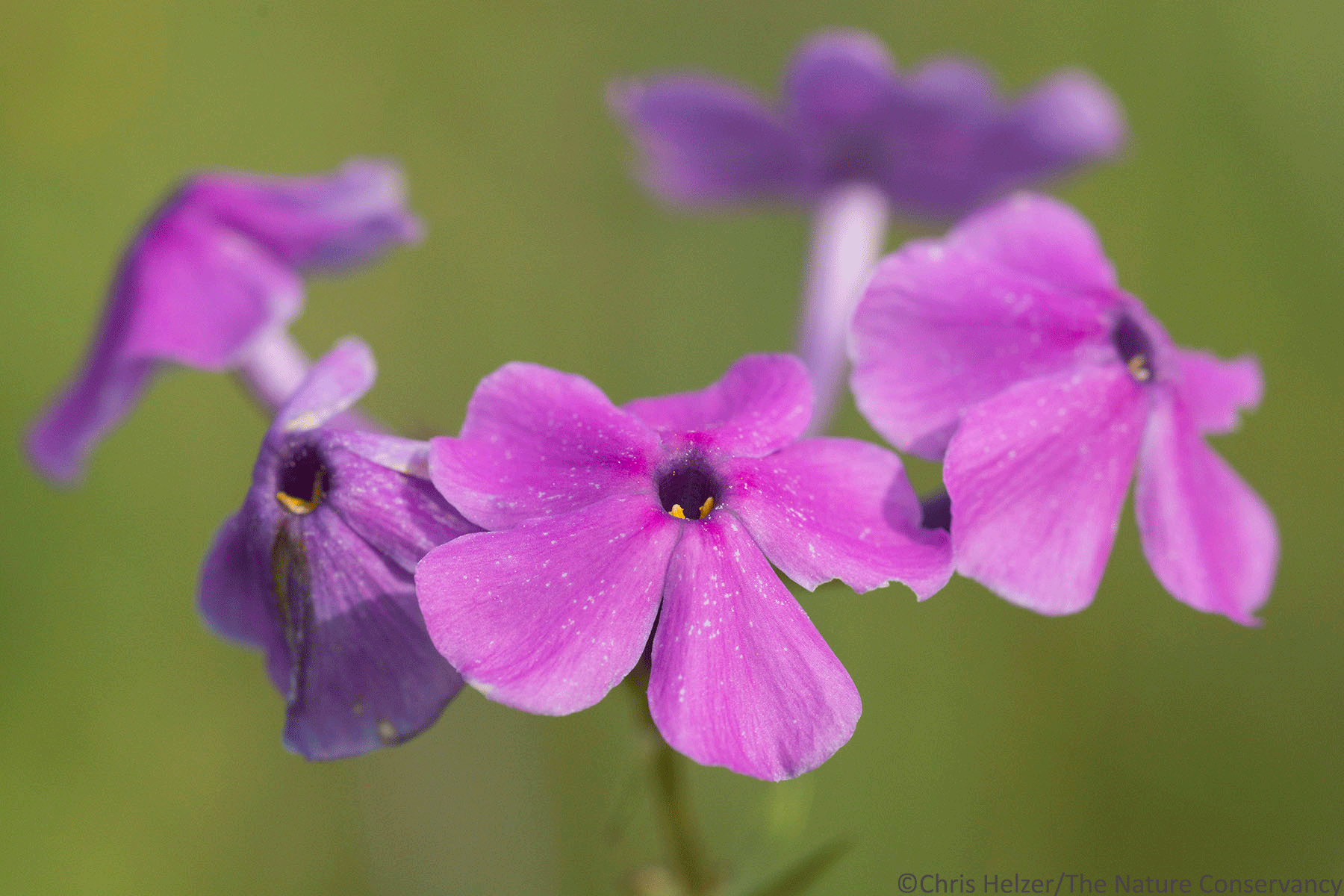
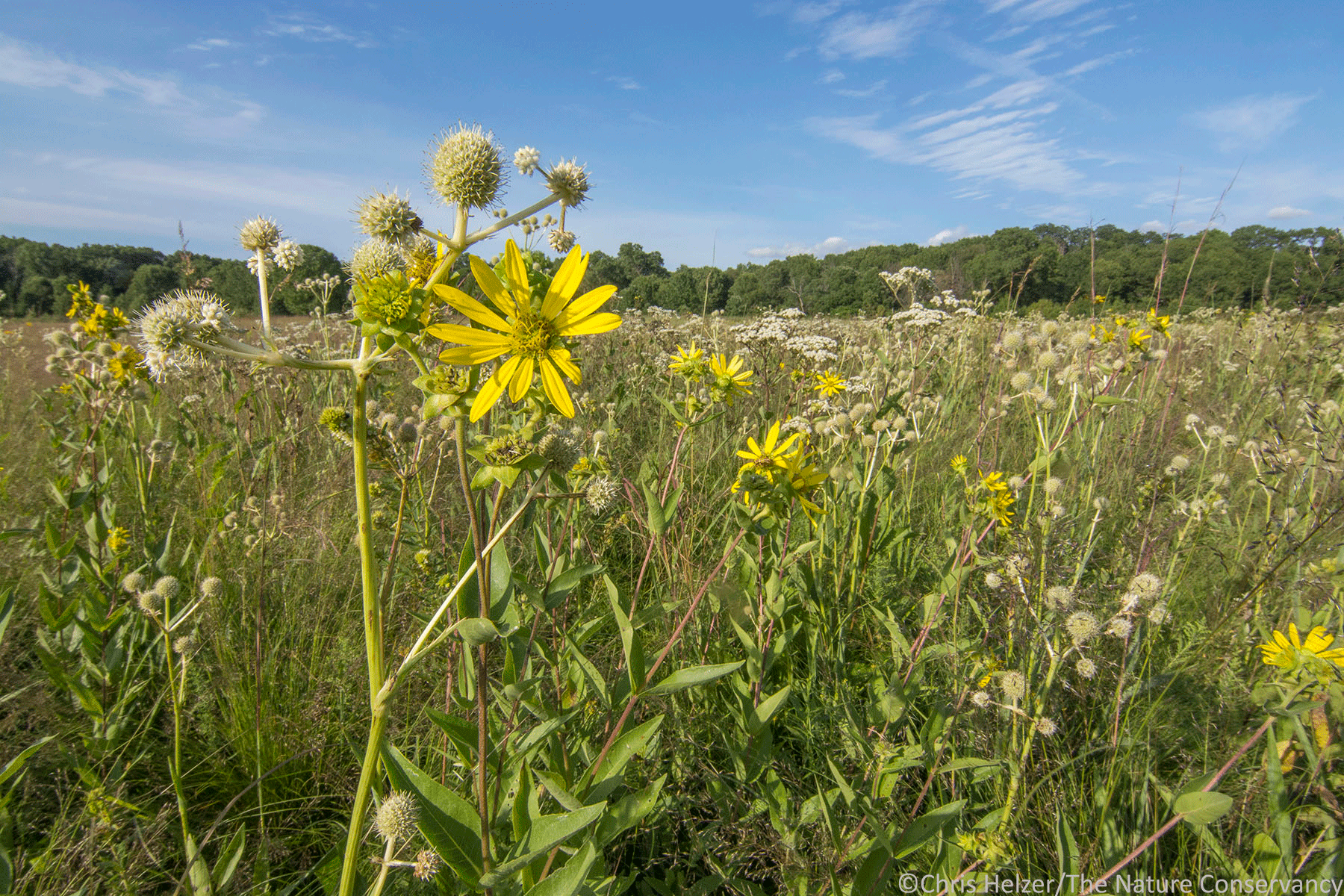
Gayfeather (Liatris) was nearly done blooming, so we missed the peak color of that species, but rattlesnake master (Eryngium yuccifolium) and some of the Silphiums were still going strong.We were surprised to find a few prairie phlox (Phlox pilosa) in bloom during August. (Edit – Steve Packard graciously informed me that this is likely Phlox glaberrima).
There’s a lot more I could say about the Greene Prairie, but honestly, it’s been a long week and my communication energy is pretty depleted. I never feel like my photos represent the site well, but they’ll have to be sufficient for now. I’ll try to come up with a good synthesis of this week’s workshop to share next week. In the meantime, enjoy these photos!
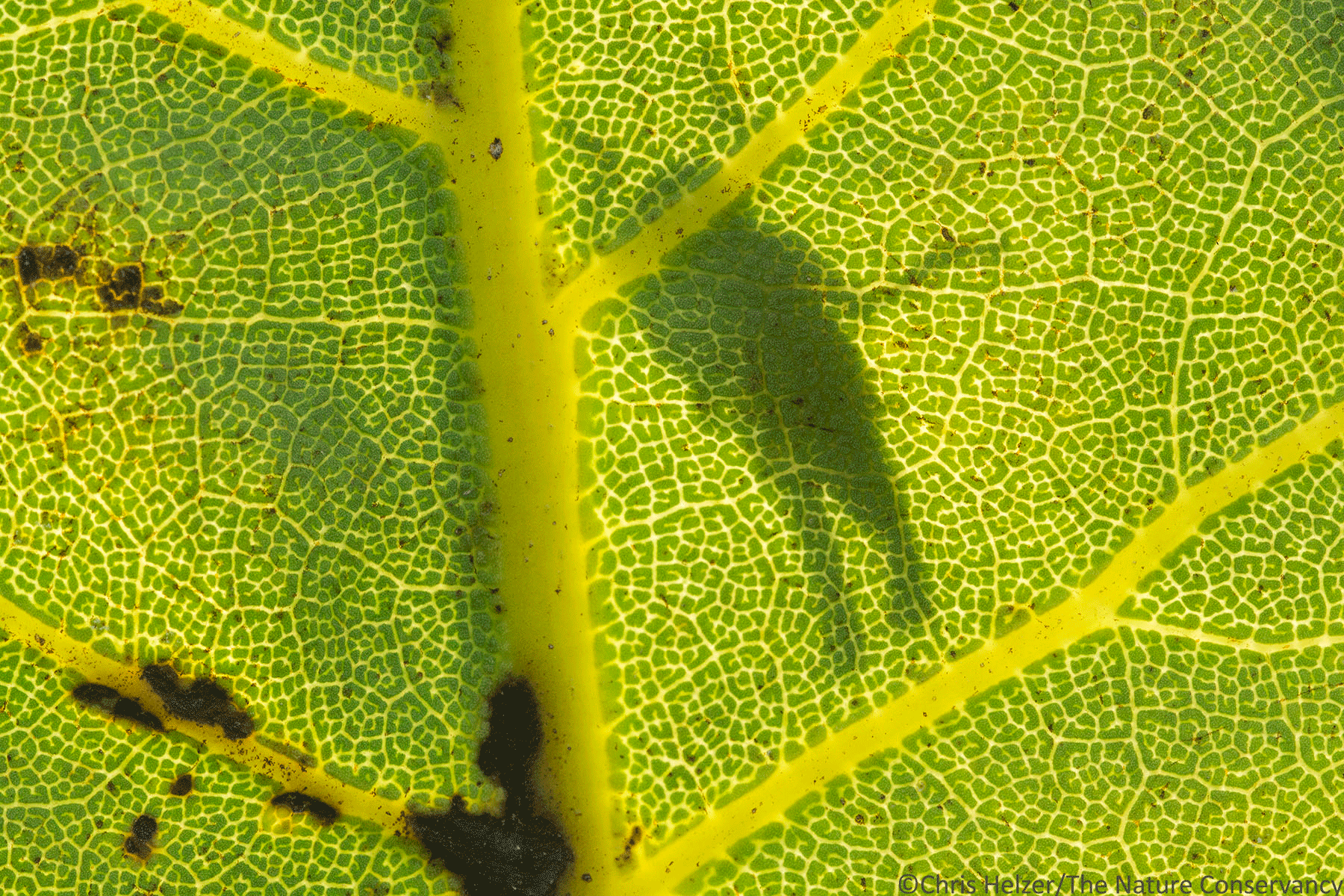
More Silphiums and Eryngium.This photo shows a prairie dropseed-dominated patch of prairie, with lots of prairie dock (Silphium terebinthinaceum) scattered around. It’s a completely different habitat structure than most of what we saw in other restorations around the Madison area. Some of that is the maturity of the site, some of that is the near absence of big bluestem and other tall grasses, and there are other factors I probably don’t fully comprehend. Ecologists from the area tell me prairie dropseed was probably much more prominent than big bluestem in many eastern tallgrass prairies. I’m enraptured by prairie dock, with its giant leaves and strikingly tall flowering stalks. I sure wish we had it in Nebraska. Here is a leaf with a grasshopper silhouetted against it.I don’t know which fern this is, but it was draped prettily on the grasses and sedges beneath it.Prairie dropseed was in full bloom around the site.It was apparently mating season for ambush bugs this week. I saw several pairs of them during our short hike.What’s not to like about Greene Prairie? I’m very grateful to Mike Hansen and all the other staff at the Arboretum who are striving to keep this and the other beautiful areas of the Arboretum in good shape. I look forward to my next visit!
If you’re looking for bonus content, this week, click here to read a blog post I wrote for The Nature Conservancy’s Cool Green Science blog. I was asked to write about pollinator conservation and why we should be focusing on the incredibly diverse native bee community rather than honey bees. You might find it an informative read.
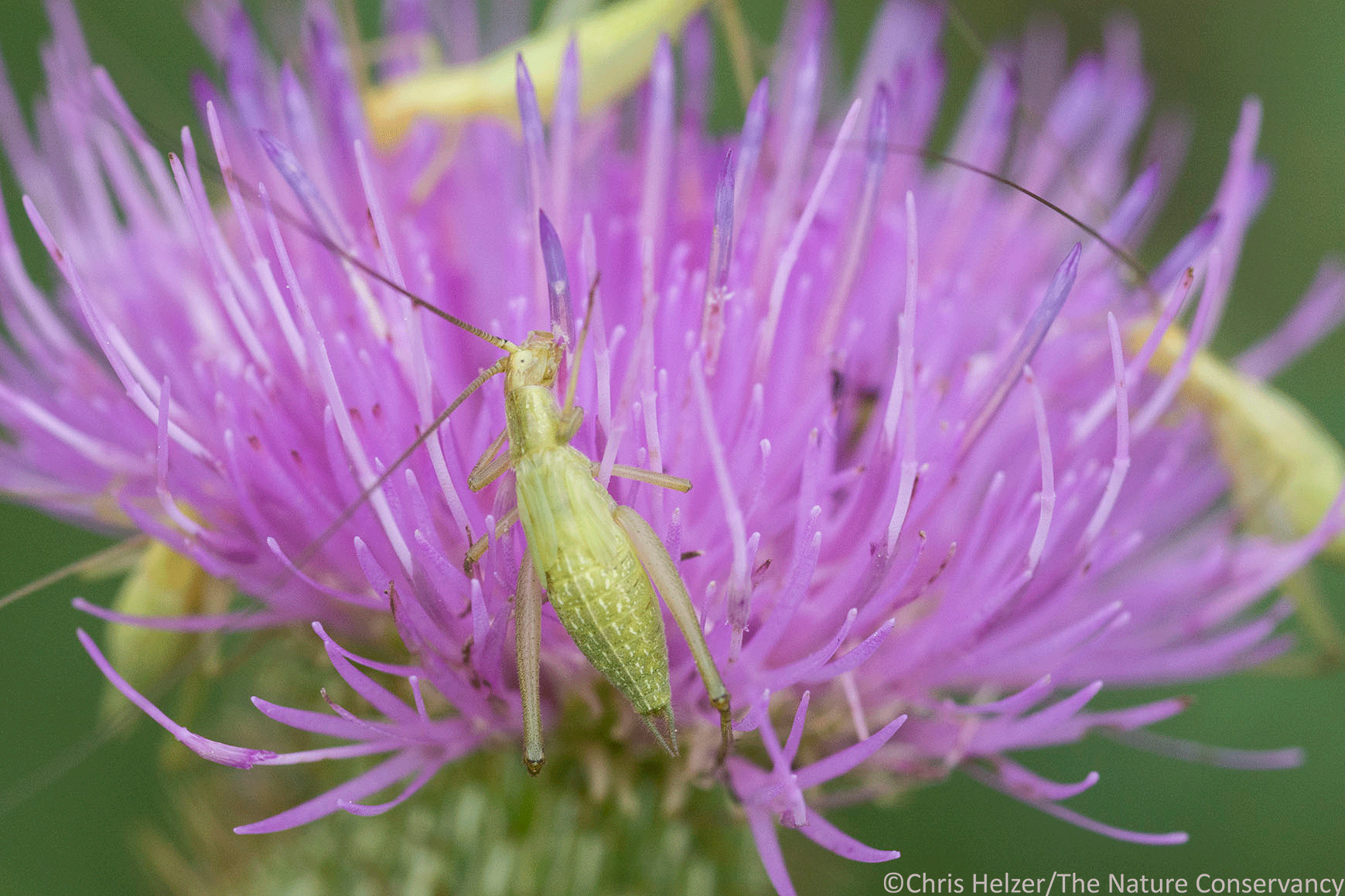
Tree crickets feed on a native tall thistle flower (Cirsium altissimum) in restored prairie.
Over the weekend, I met up with former fellow Evan Barrientos, who was back in Nebraska for a short visit. Evan is now the Communication and Marketing Coordinator of Audubon Rockies, based in Fort Collins, Colorado. He was in the state for a meeting and then hung out at the Platte River prairies for a few days before heading home. We met up Sunday morning to talk and do some photography. It was cloudy and breezy (10-15 mph winds) but we ventured out with our cameras anyway.
We mostly walked and talked for a while, but eventually, the skies lightened enough that we got our cameras out and started shooting a little. As we did, we shared some good-natured banter about whether or not to use a tripod. I almost always carry my tripod so I can stabilize my camera while photographing flowers and insects. Evan often does too, but said he’s been trying to go without it more lately and left it in the truck while we were walking. We argued about whether or not a tripod does any good when the wind is already whipping plants around anyway.
Here is Evan, displaying his technique for photographing a small hover fly on a big bluestem flower in the wind. Looks like a lot of work to me, but is probably a good muscle workout, if you’re looking for that.
My position was that with a tripod, I could at least control the movement of my camera and really only worry about the plant’s movement (with or without an insect on the plant). Evan said that since the plants were moving so much anyway, the little bit of camera shake from hand-holding his camera was irrelevant. Young people…
I enjoyed watching him clench his body into uncomfortable positions and shoot hundreds of rapid-fire shots, hoping one of them would be sharply focused. Maybe he managed to luck into a few good shots by doing that, I don’t know. I do know that my technique of using a tripod (or sometimes just folding the legs together to form a monopod) let me get some really nice photos of tree crickets – and other subjects.
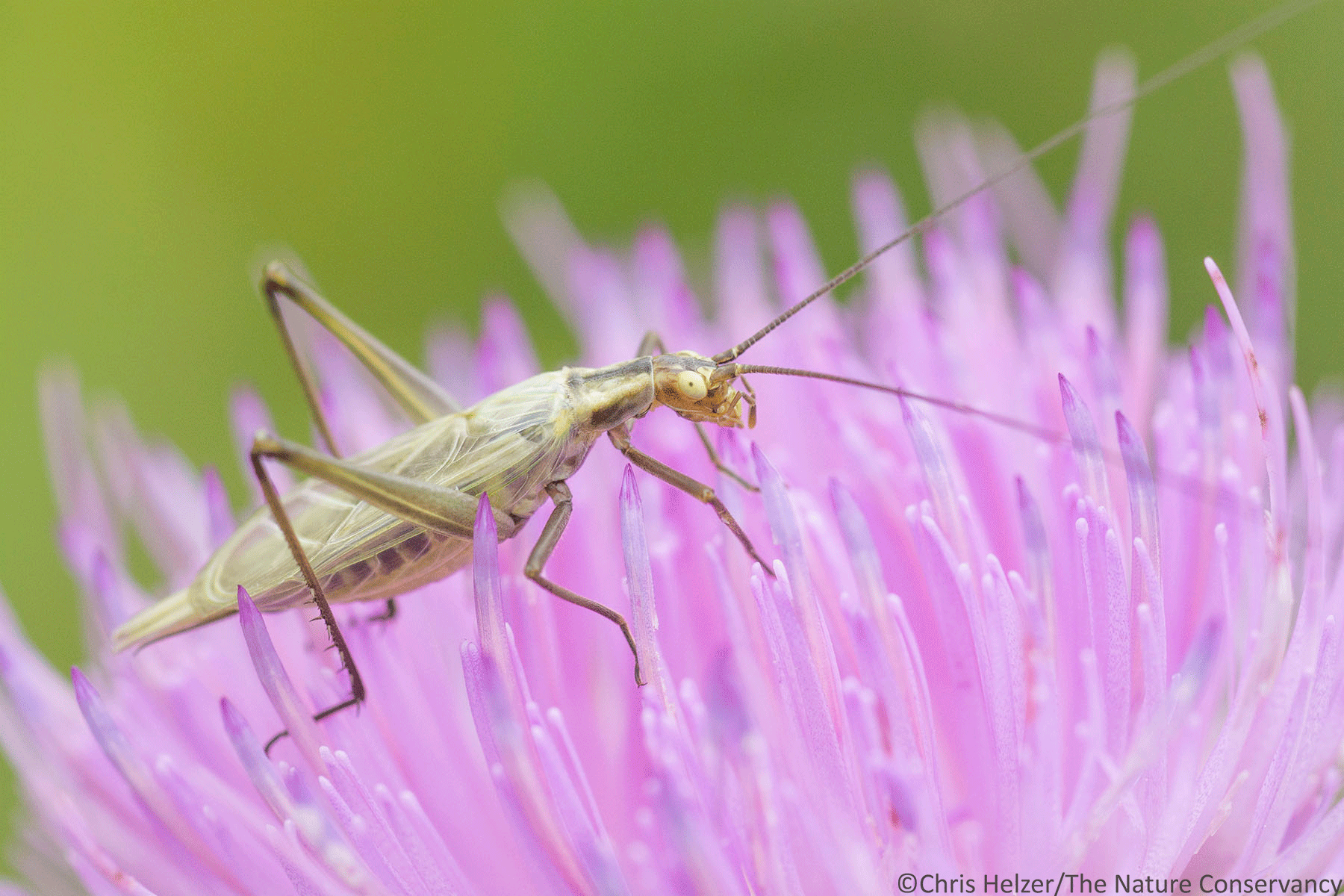
Most of the tree crickets we say on tall thistle were head down and totally engrossed in feeding on nectar (I assume?) from the flowers. They reminded me of dabbling ducks in wetlands.Here’s a better view of one of the tree crickets. Notice how tack sharp this image is, despite the breeze. Tripods are really helpful tools… I also showed Evan my little trick of using nearby vegetation and “tying” a flowering stem to my tripod to dampen its movement in the wind. He pretended to pay attention…
I’m mostly kidding about all of this, of course. Evan is a great photographer and you can enjoy his work on his blog, The Naturalist Lens. When he eventually finds time to edit his photos from yesterday – and if he was lucky enough to get something good from the day – he’ll probably post them there, or on his Instagram account (@evanbarrientosphotography). Feel free to visit those sites and harass him until he does so. Let’s see what the little whippersnapper came up with!
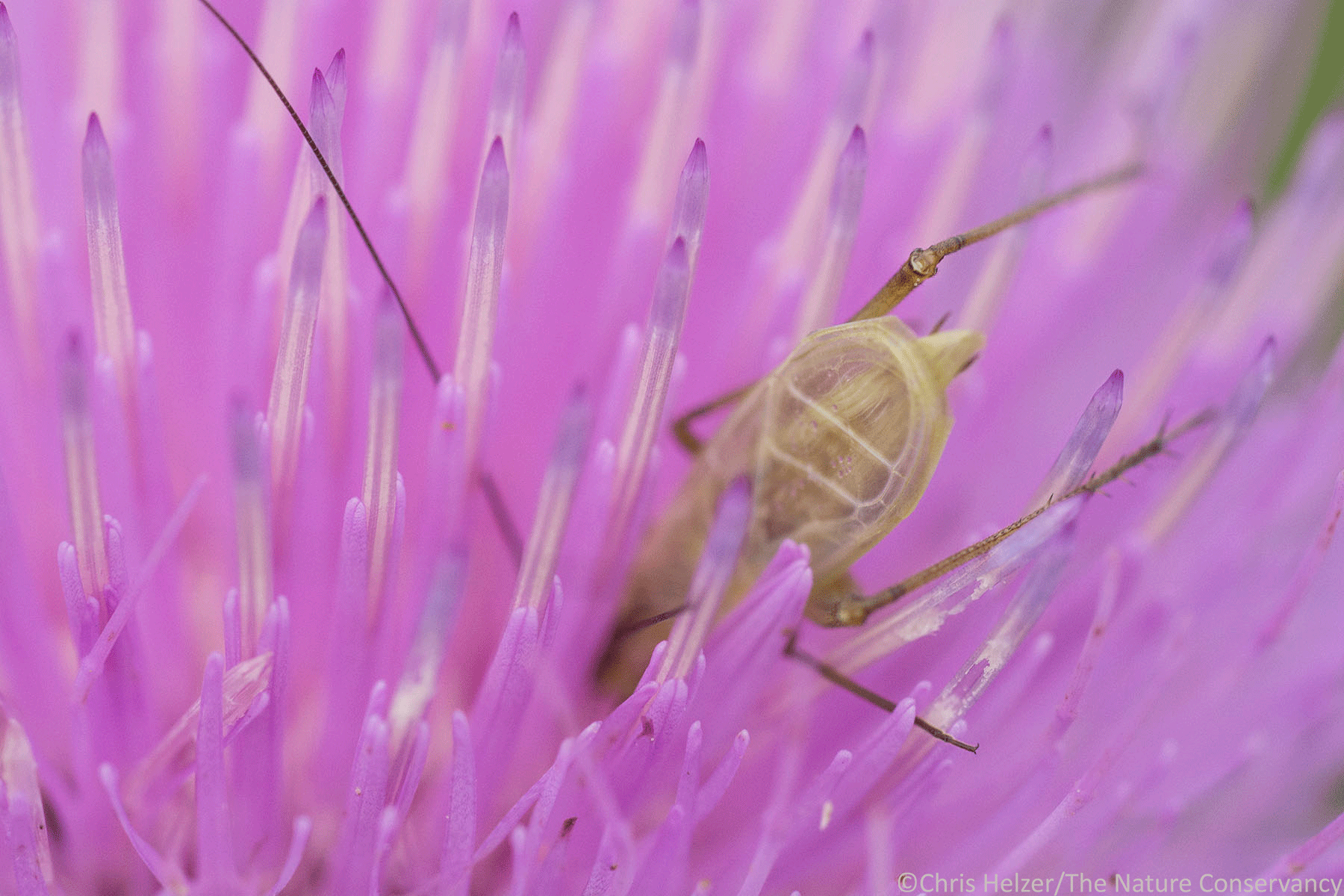
Another tree cricket butt.Yet another tree cricket butt. I’m not sure why I was so enamored of this subject, but I thought it was both funny and cute that the crickets were diving headfirst into the flowers for food.This crab spider was waiting for a tree cricket to venture close enough for it to have breakfast.
Just to show that the tripod worked for photographing subjects other than tree crickets and crab spiders on 5 foot tall thistles, here are a couple more example photos from the morning. I’m sure Evan has some nice images too, but I wonder if his back hurts from standing so funny… (My back hurts too, but that’s just from being old!)
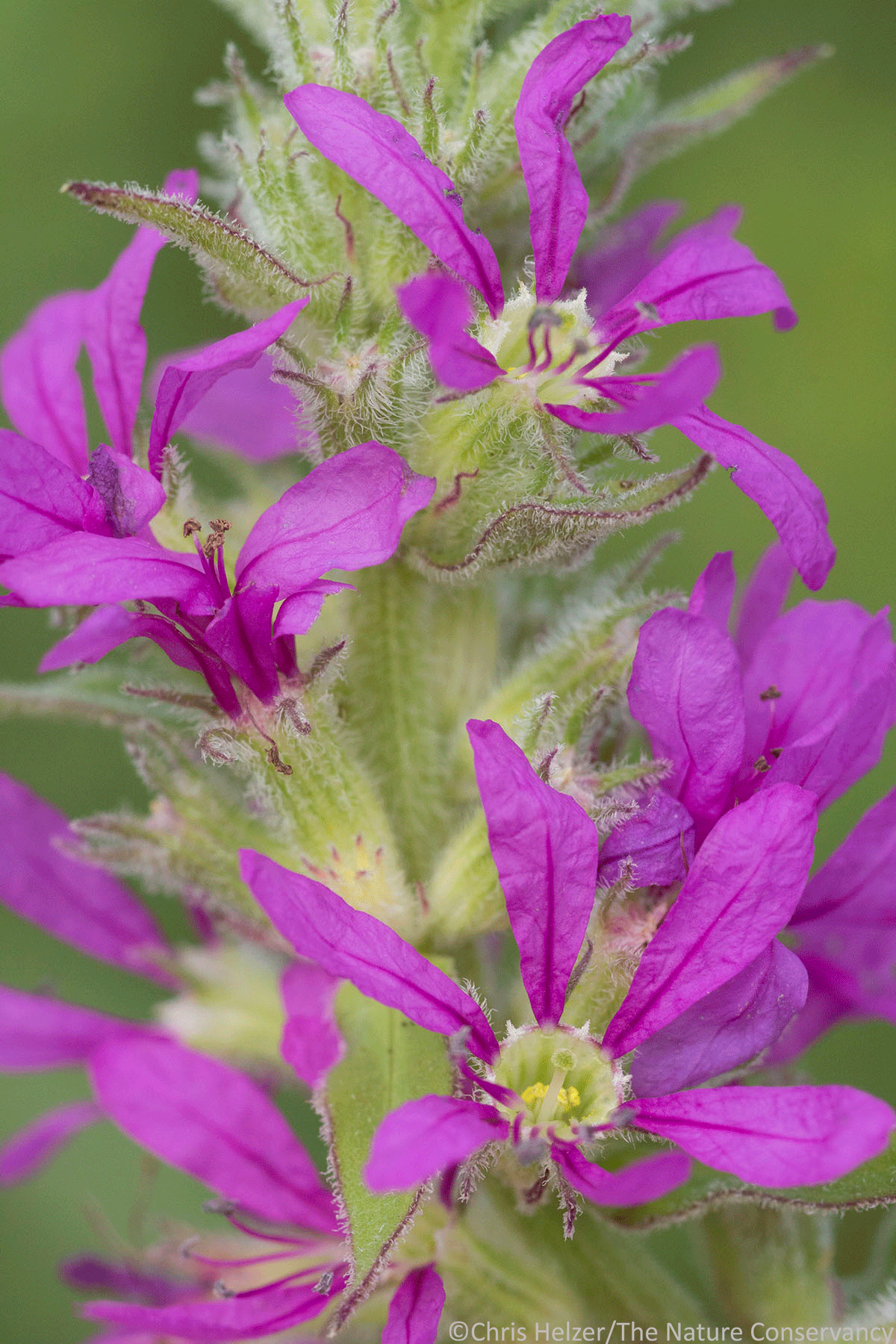
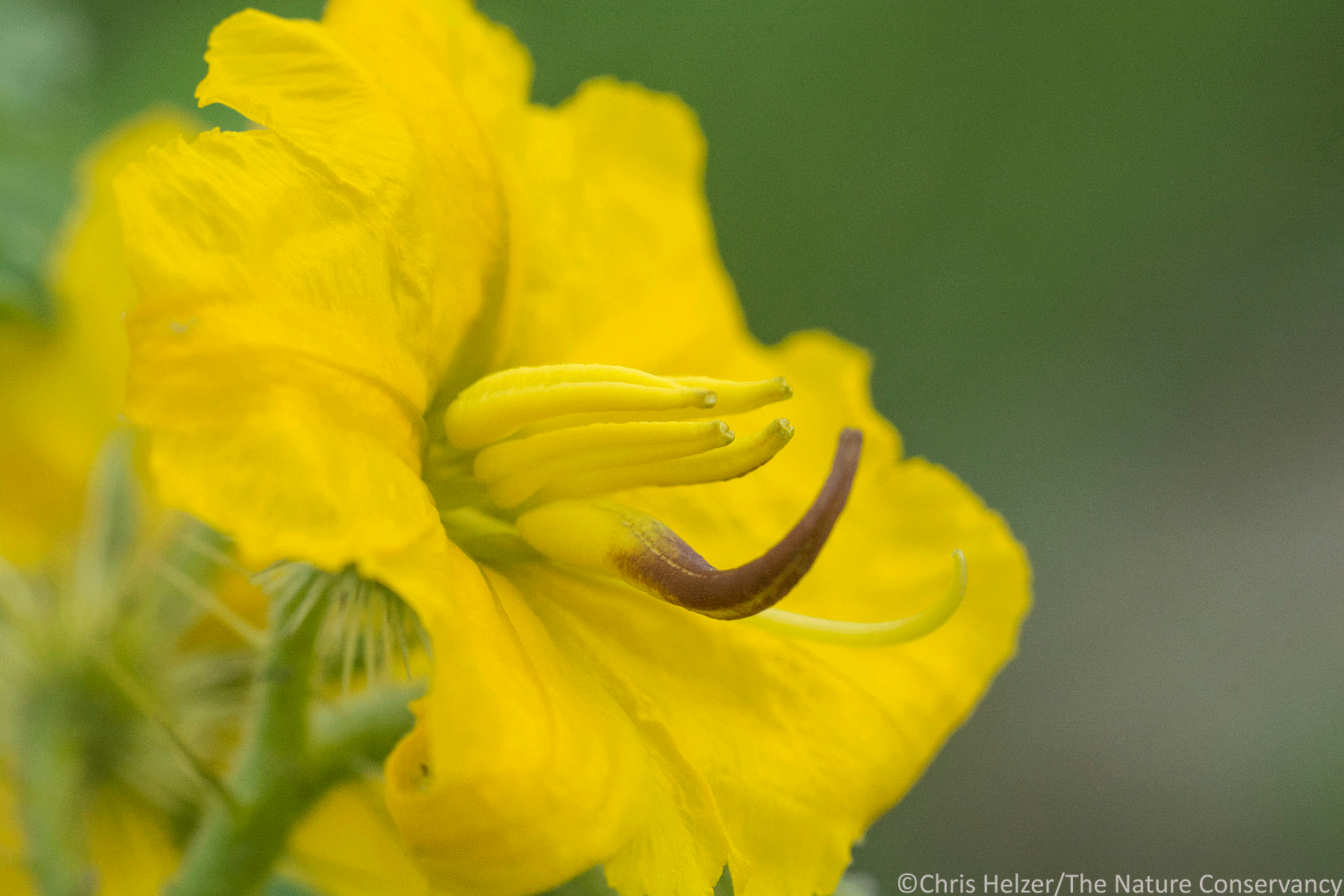
Purple loosestrife (Lythrum salicaria) has gorgeous flowers but is invasive in North America. This particular plant will probably be sprayed with herbicide within the next few days. Buffalo bur (Solanum rostratum) is often seen as a weed, but only because it establishes well on bare ground, is spiny, and not usually eaten by cattle. An alternative view is that it is a beautiful native plant that helps cover bare ground to prevent erosion and employs the cool strategy of requiring buzz pollination, wherein only bees that can vibrate their bodies at the right frequency can cause pollen to be released. Bumblebees are one common group of bees that can do just that.