Square Meter Photography Project – Next Steps

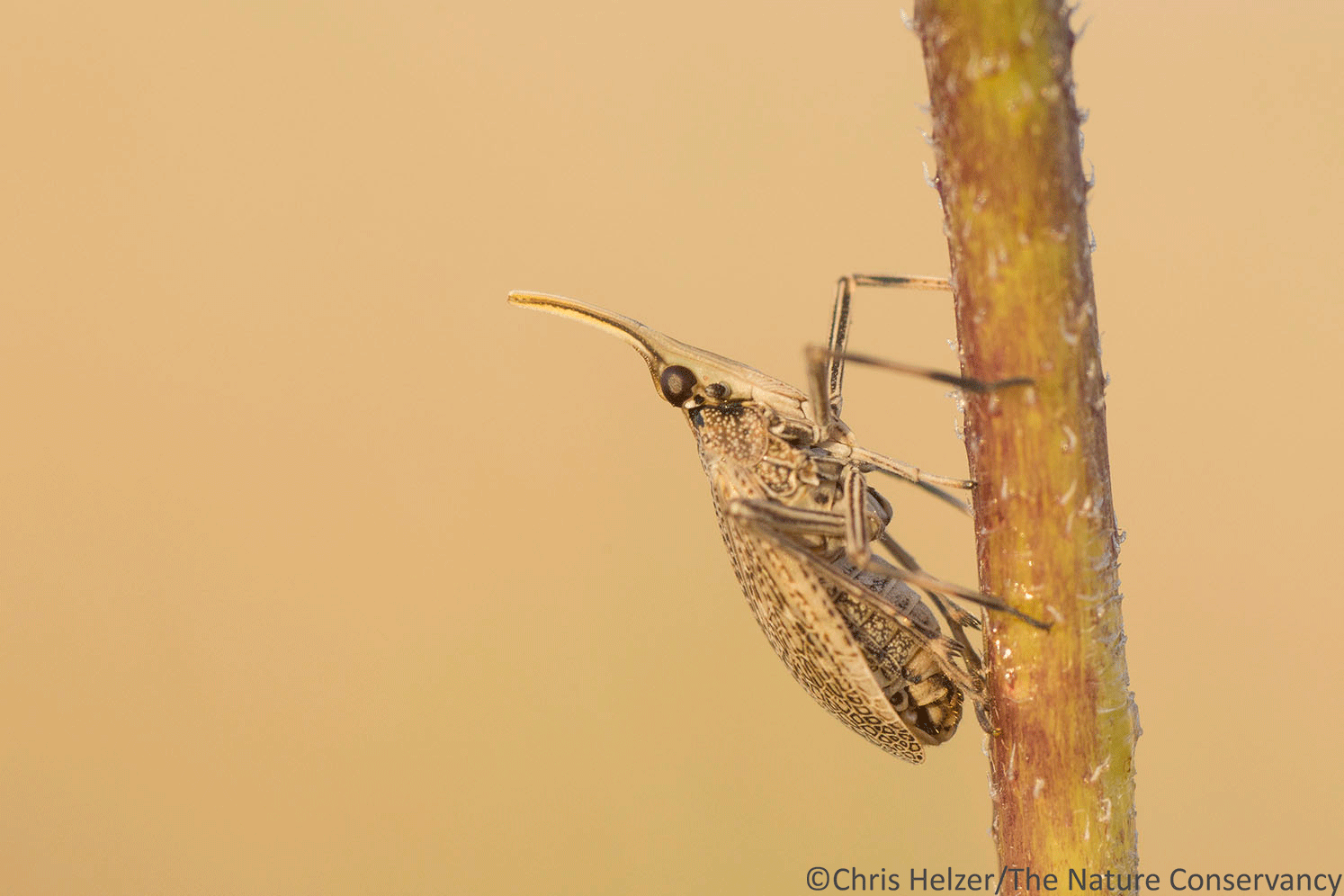
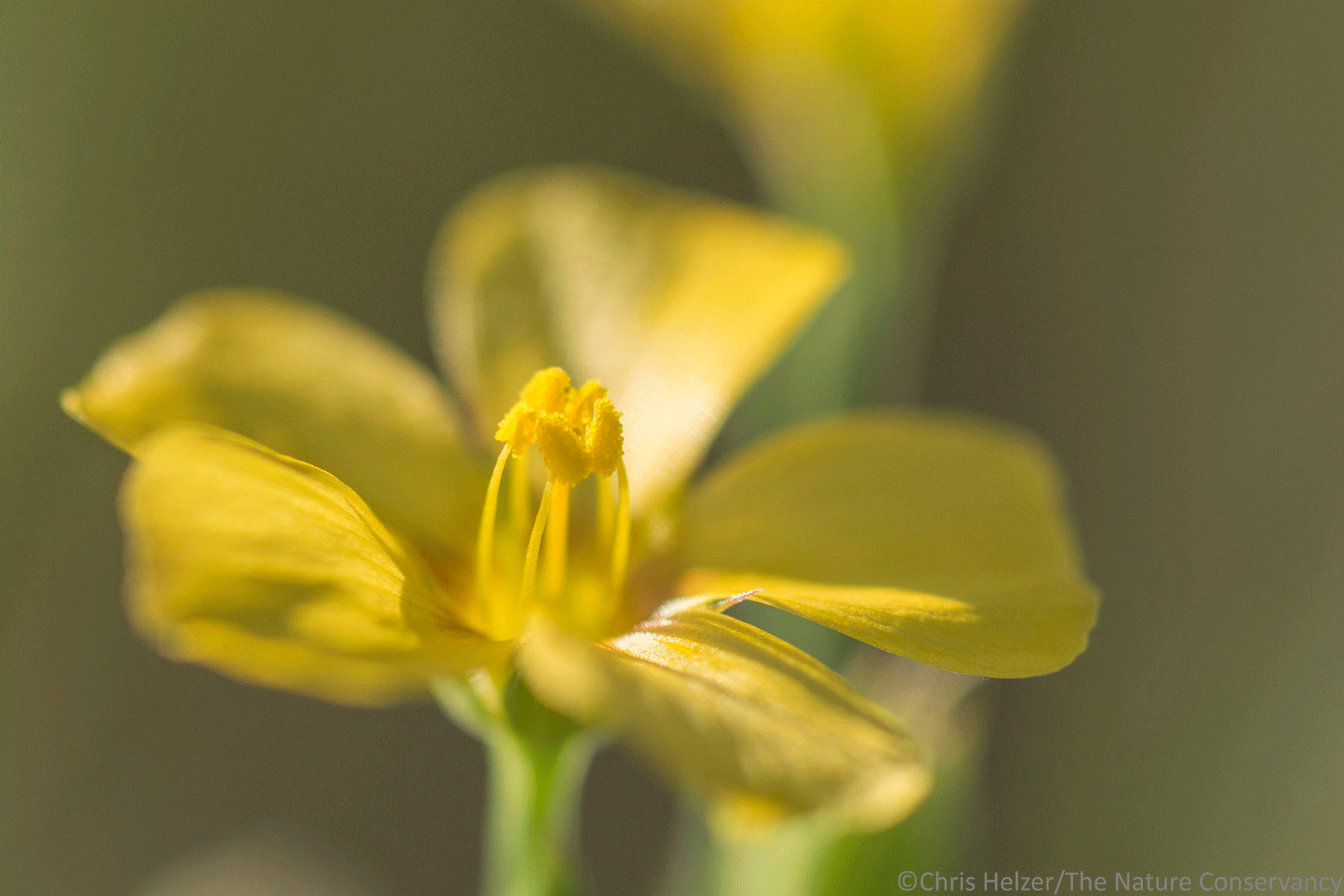
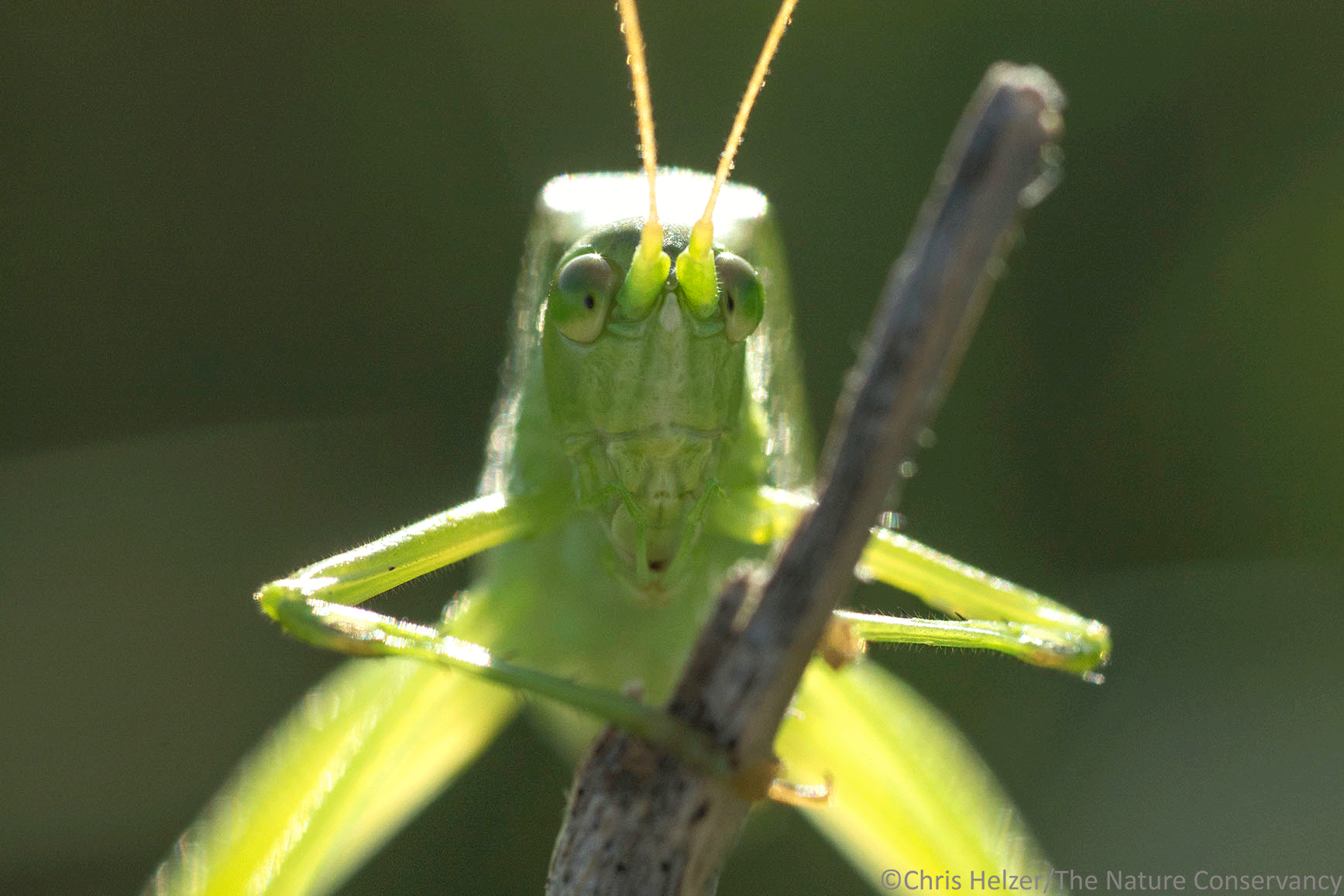
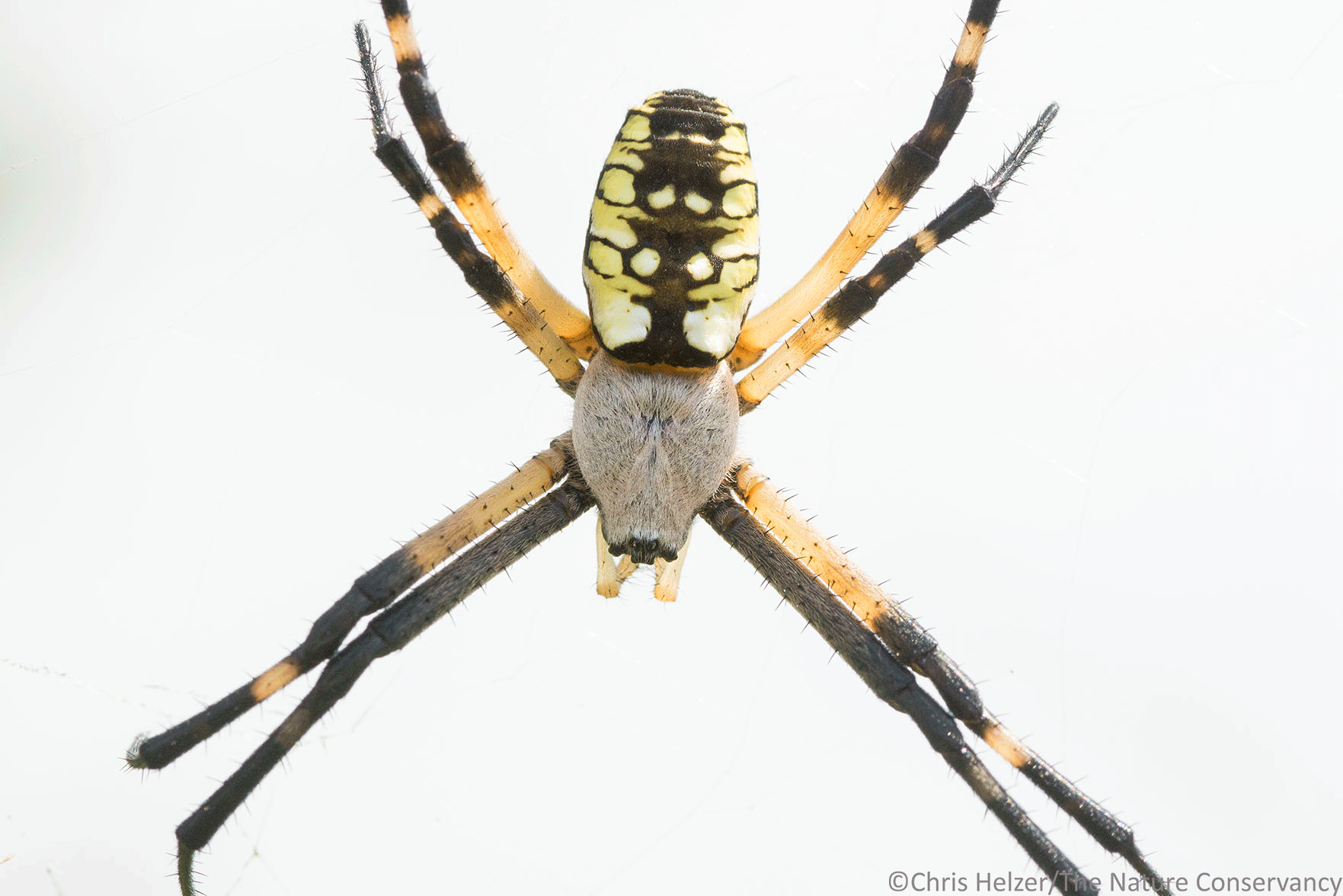
Many of you followed along last year as I set off on what turned out to be one of the most fulfilling efforts I’ve ever worked on – my Square Meter Photography Project. When I came up with the idea of photographing everything I could within a square meter of prairie, it was just meant to be a fun little project and a way to provide fodder for this blog. I had no clue that it was going to become a personal obsession and a (hopefully) powerful outreach tool for prairie conservation.

Here’s my square meter project selfie. This is me at my plot, but if you notice, I’m using the wrong hand to manipulate my camera because my right hand is holding a cell phone… I need to find some friends.

The year-long project wrapped up in January, and I’ve been giving presentations on the project to various audiences. The response has been tremendous, and reinforces the idea that I need to figure out how to better package this and share it widely. I’m working on a book that will hopefully come out this winter sometime, and we are exploring options for a traveling gallery show of some kind. However, there are a lot of other ways to get this in front of people, and many of those are outside of both my comfort zone and realm of experience. I need some help.

Because I’ve heard the recommendation from so many people, I spent time this weekend putting together a short video, set to music, that features my favorite photos from the project. My intent was to highlight the diversity of images that came out of the project – the 113 species I photographed, but also just the tremendous beauty I found when I took the time to explore my tiny plot. I’m presenting my first draft of that video here because I’d really like your feedback.

I’m a still photographer, not a film maker, and video is not a medium I’m comfortable with. I also don’t have access or experience with the kind of software I should really be using for a project like this. Nevertheless, I used a combination of PowerPoint and Movie Maker to cobble together something I hope will be a first step toward where I really want to go with this. It is set to music, but the music doesn’t start until after the first several slides.

I would love to hear your thoughts on the video, as well as other ideas you have about how this project can be used to help inspire people to care more about prairies. So far, the project has been featured in a few blogs and on-line publications, and there will be more coming. The book should be helpful, and I’ll keep giving presentations in person, as I have time. Beyond that, I’m hoping a video like this, along with some accompanying materials, can be used as a table-top display at events, and I’d really like to see some kind of interactive touchscreen display that could live at nature centers or other facilities. It would be great to package it somehow for use in schools as well, but I’m not yet sure how best to make that happen.

Thanks in advance for your advice and input. Please feel free to distribute the current video, understanding that it’s a first attempt and I’ll hopefully get some professional help to make the next version better.

Here’s the link to the video, in case the above window doesn’t work on your particular device. https://youtu.be/xsk5TdnVg0U

Photo of the Week – May 10, 2019

Plants are far from helpless in their efforts to repel herbivores. They can cover themselves with thorns, make themselves taste bad, or produce leaves that are difficult to digest, just to name a few examples. However, my personal favorite strategy is the purchasing of protection that occurs when plants produce extra-floral nectar to attract ants. Ants are major and effective predators, but are also attracted to sweets. Plants can induce ants to swarm about on their leaves and stems by producing droplets of a sweet liquid.

I notice this phenomenon most frequently on sunflowers, especially plains sunflower (Helianthus petiolaris), an annual plant common on sandy soils around Nebraska. Over the years, I’ve photographed a number of ants that have been drawn to sunflowers by the extra-floral nectar those plants have produced. Below is a selection of those images. The ants aren’t a foolproof strategy, and sunflowers still get eaten by lots of animals – large and small. Regardless, it’s an admirable and fascinating tactic in sunflowers’ fight to survive and reproduce.

All of the above photos except this last one show ants getting extrafloral nectar from annual sunflowers (Helianthus petiolaris). During my square meter photo project last year, I saw a lot of ants on Maximilian sunflower (Helianthus maximiliani) but I’m not 100% sure they were there because of extrafloral nectar. If anyone knows for sure, I’d be glad to hear from you.