Looking for prairie wildflowers in the spring is much like an Easter egg hunt. Spring wildflowers tend to be small and difficult to see until you get close to them. From a distance, prairies might look like they haven’t yet woken up, but if you take the time to wander out into them, there’s abundant color and movement – albeit in small scattered bits.
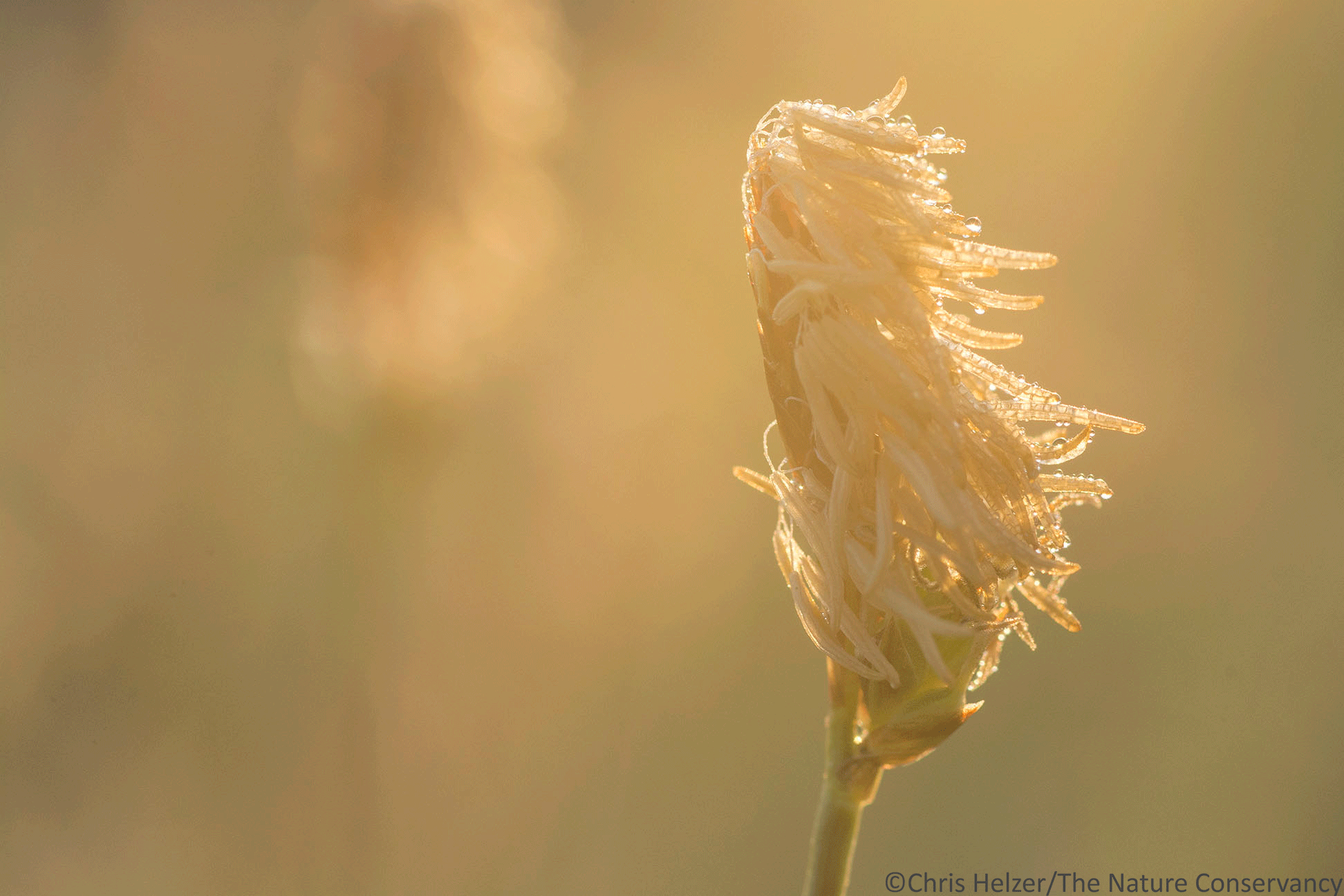
Spikerush sedge (Carex eleocharis) is a small-statured sedge that hides for most of the year, but becomes more apparent when it blooms each spring.
Earlier this week, I spent a wonderful morning exploring Gjerloff Prairie (owned and managed by Prairie Plains Resource Institute). As I hiked up and down the steep loess hills, it felt like catching up with an old friend.
“So, how’s your spring going so far?”
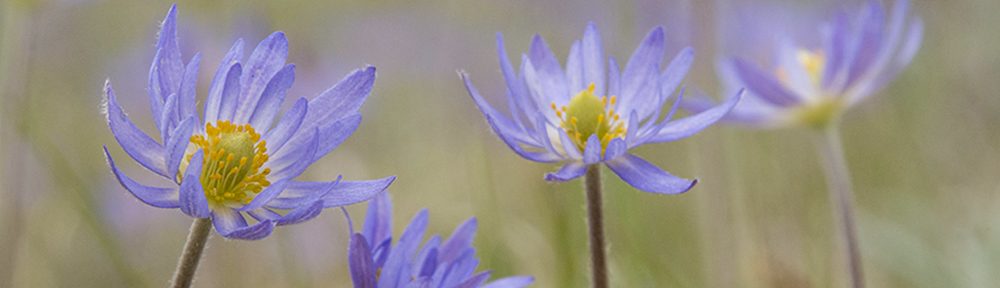
“Ah, I see your anemones and early milkvetches are blooming, but the puccoon isn’t quite…oh – there’s one!”
“It was a wet winter, but the soil is sure dry now, isn’t it?”
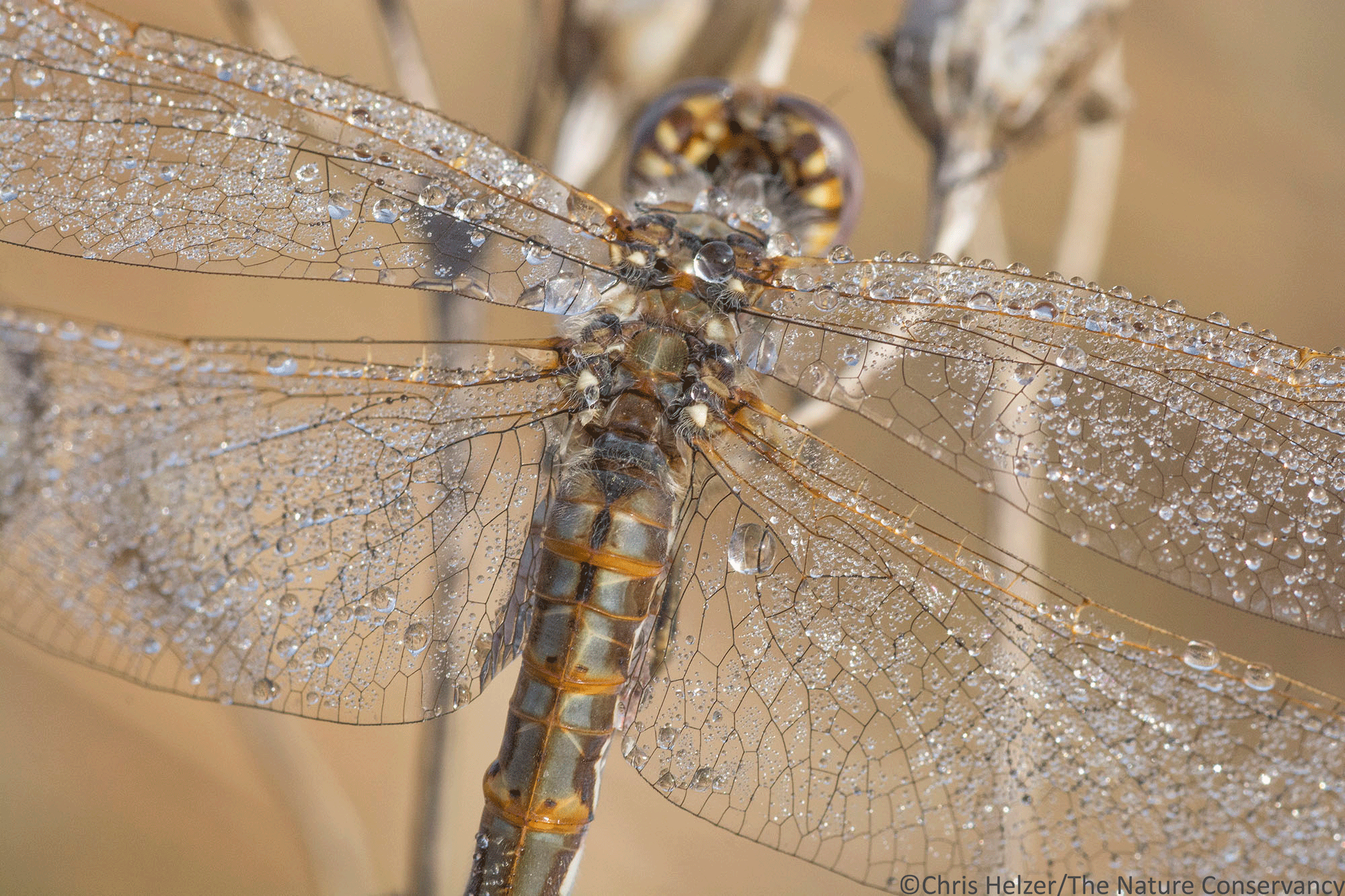
“It’s nice to see the dragonflies migrating back north again and hear the grasshopper sparrows and western meadowlarks singing.”
…Here are some photos from that cool dewy morning at Gjerloff Prairie.
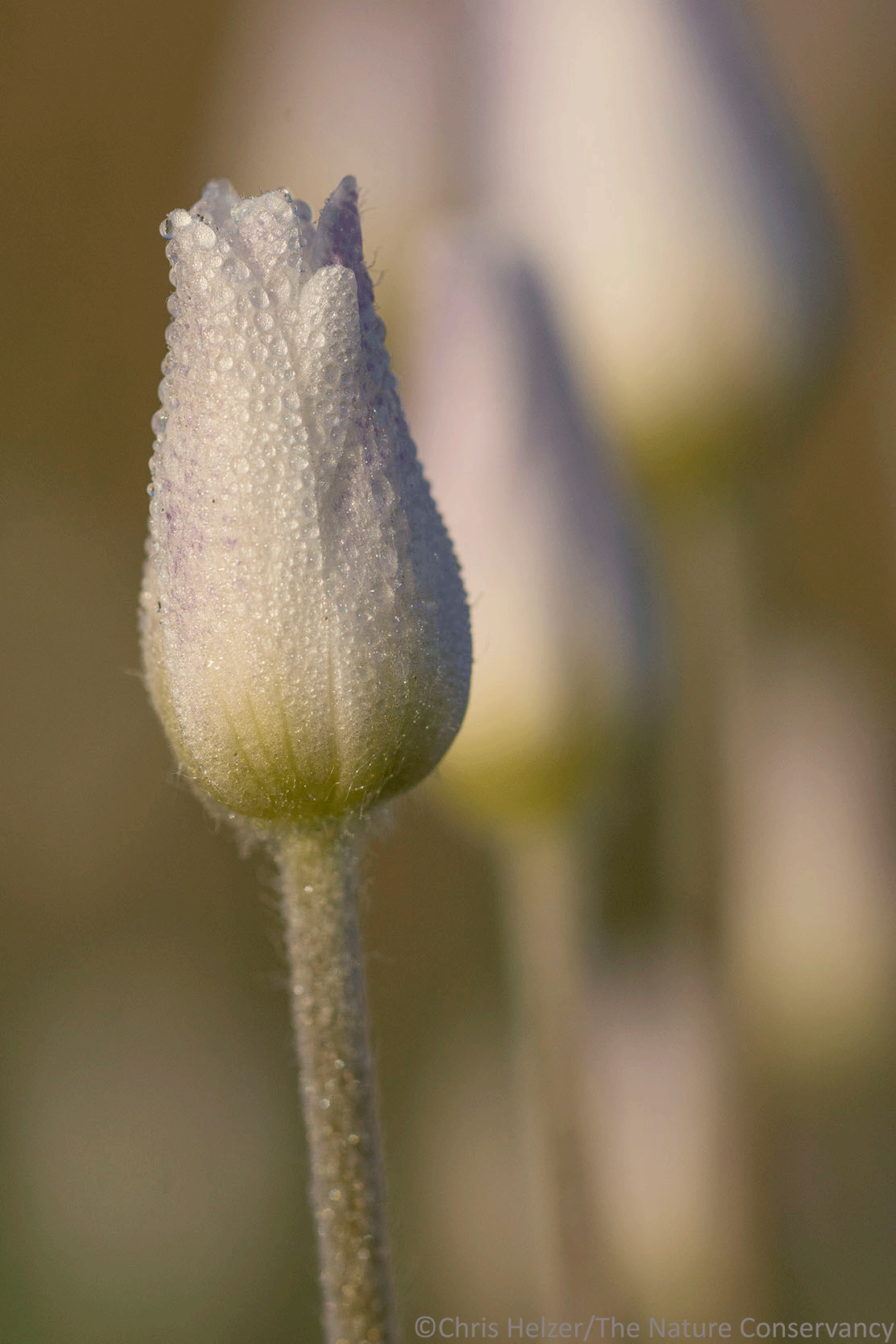
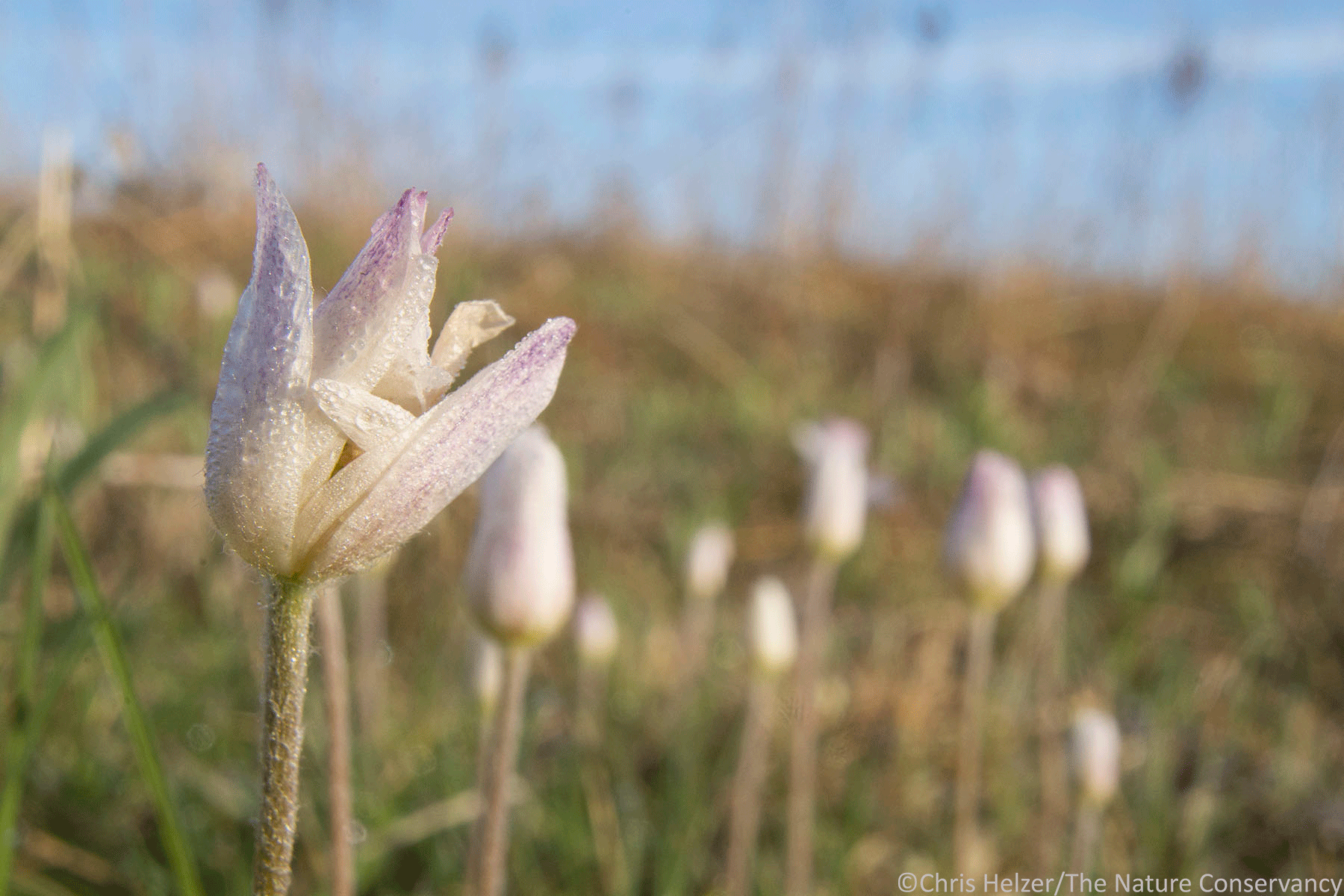
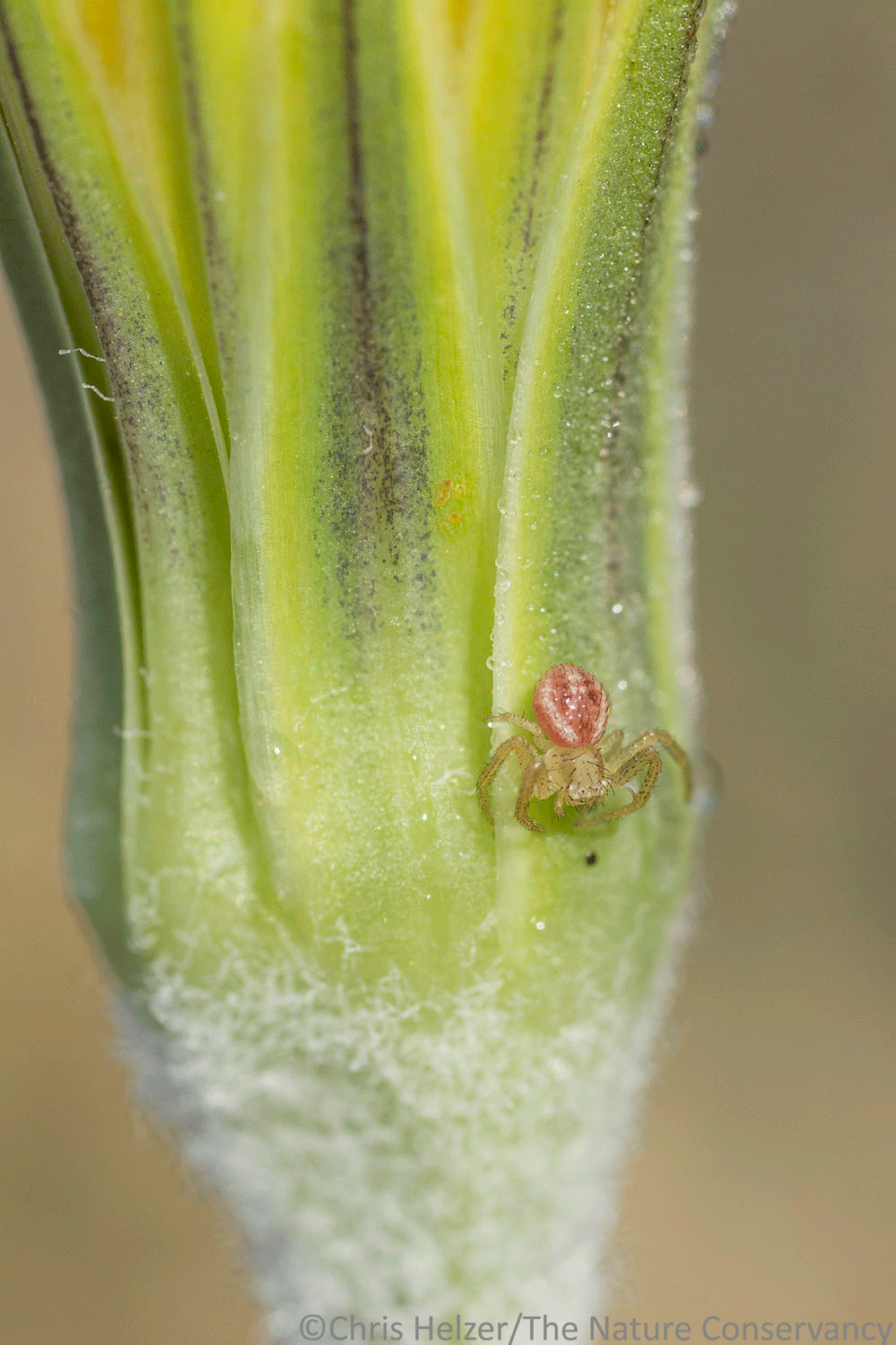
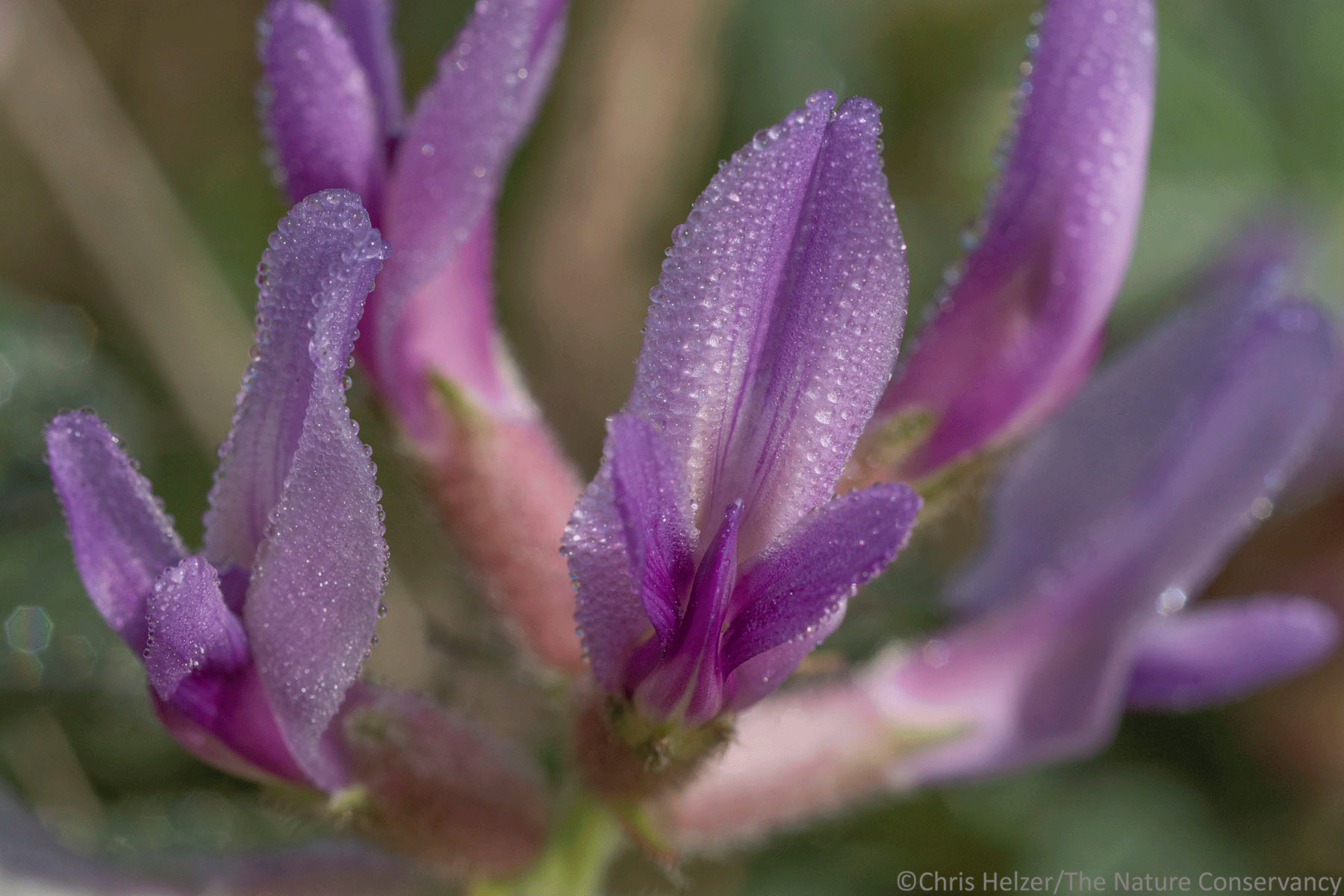
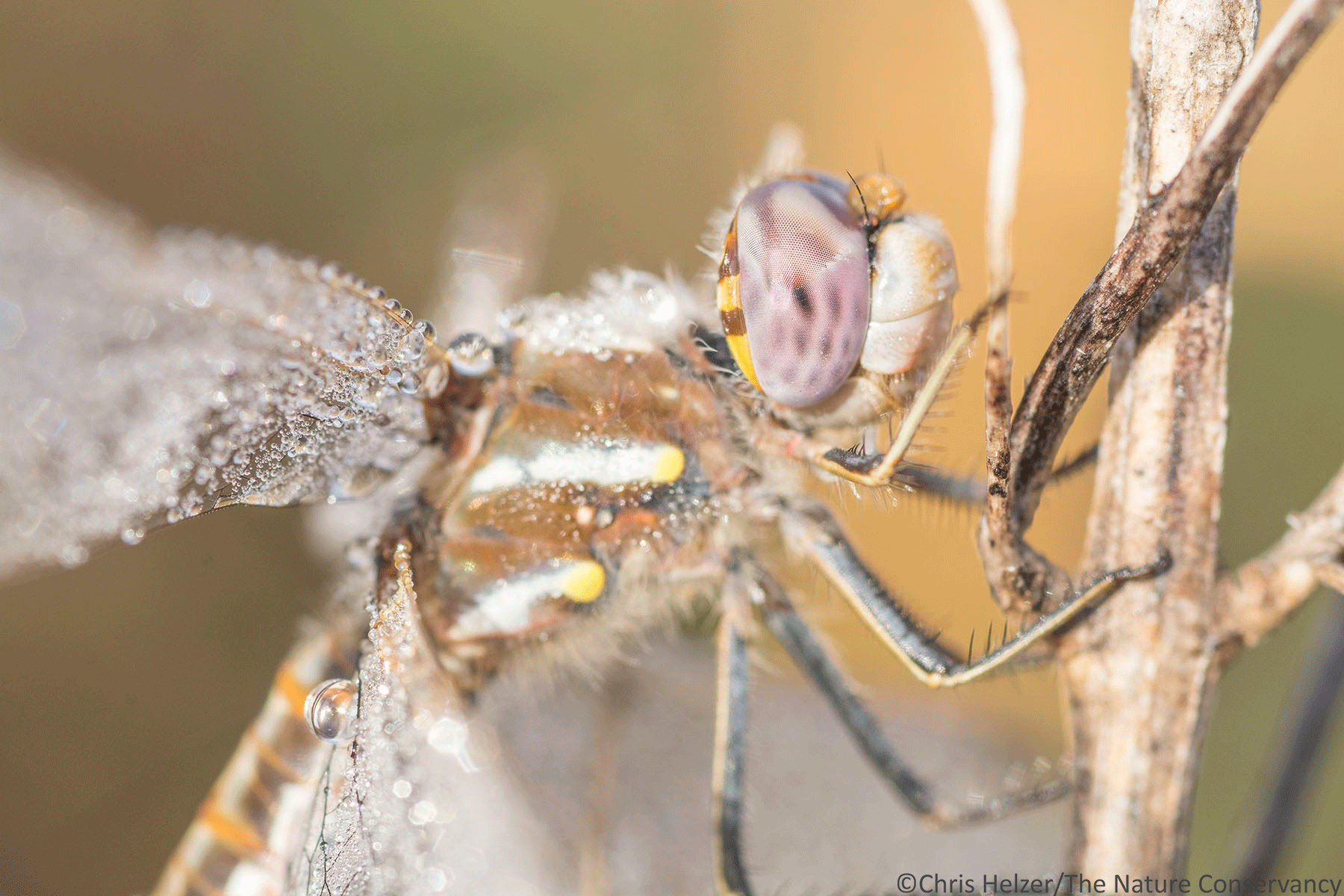
Spikerush sedge framed against the morning sun.Missouri milkvetch (Astragalus missouriensis) is a tiny legume that grows on dry ridgetops and especially thrives when those areas have been recently short-cropped by grazers.More Missouri milkvetch.Carolina anemone, aka windflower (Anemone carolinianum) hadn’t opened up for the day.Carolina anemone photographed with a wide-angle lens, showing more of the clone and prairie in the background. The front blossom was either starting to open or didn’t close property the night before.A tiny crab spider on prairie dandelion (Nothocalais cuspidata).Buffalo pea, aka ground plum (Astragalus crassicarpus).Buffalo pea is like an exponentially larger version of Missouri milkvetch – in terms of footprint – but still only reaches 3-4 inches in height.A variegated meadowhawk dragonfly, presumably a recently-arrived migrant, was cold and dew-covered.The same dragonfly from a different angle.
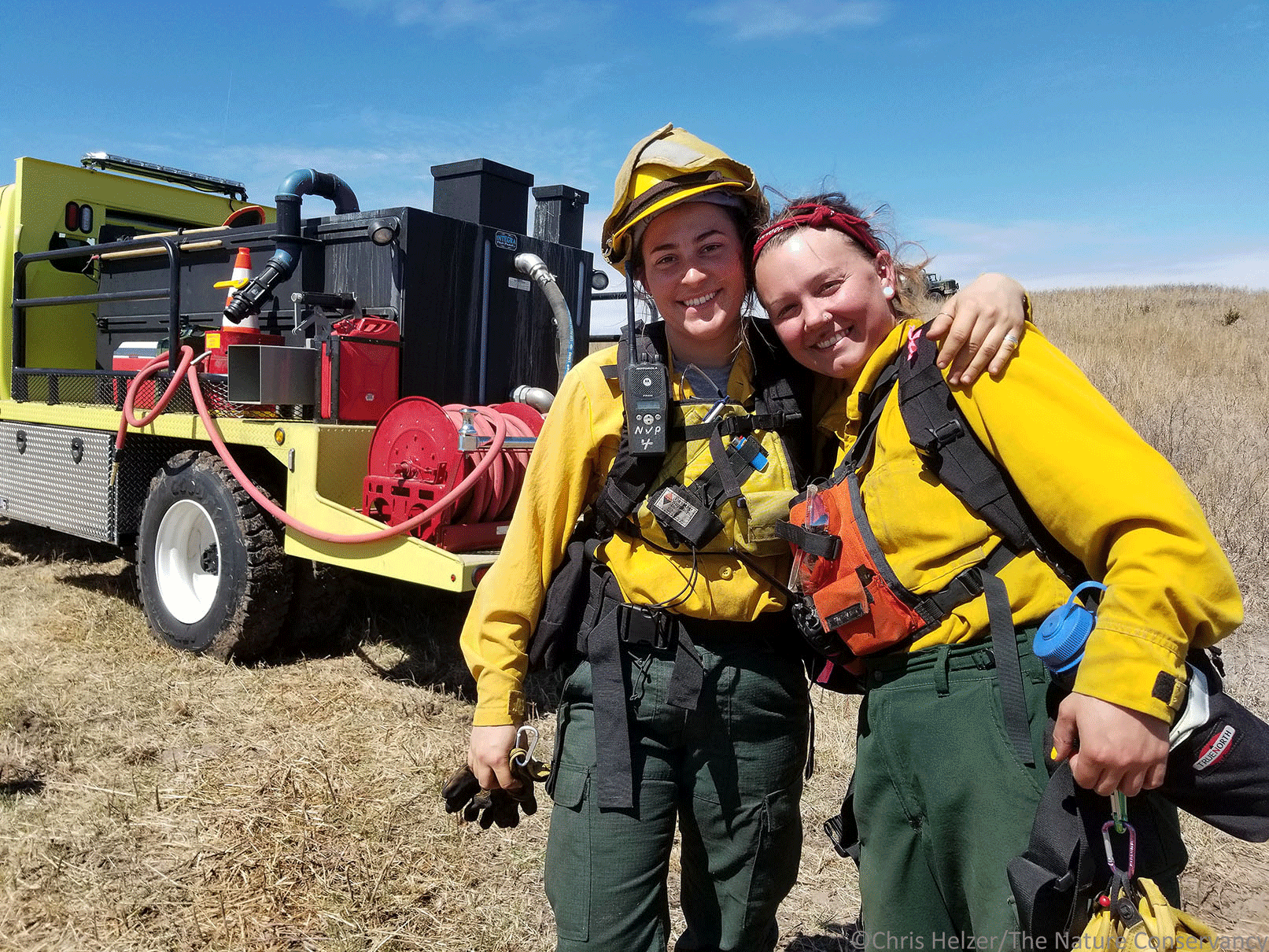
Mary Parr (left) and Chelsea Forehead (right) are our 2019 Hubbard Fellows.
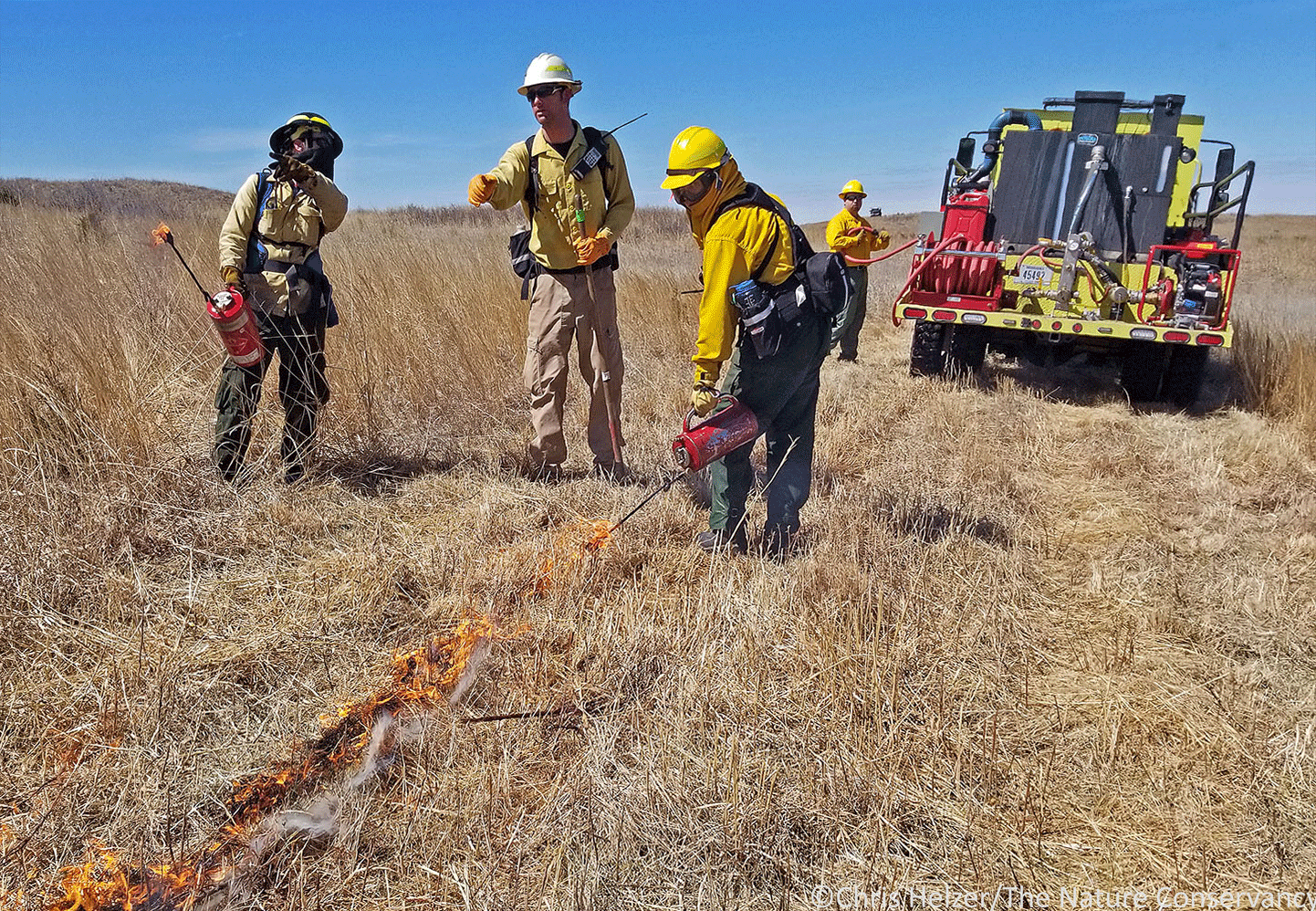
Back in early February, we brought in our next two Hubbard Fellows, the sixth class of that program. Chelsea Forehead and Mary Parr will be here for a full year, working on all aspects of conservation, including land stewardship, outreach, fundraising, and much more. Lately, they’ve been doing a lot of work with fire (as shown by the photos here…) They are also developing their own independent projects that will allow them to dig deeper into a particular area of interest and produce a product that will contribute to conservation. I am inspired and energized by every class of Fellows I’ve had the pleasure to work with over the past years, and this pair is no exception. You can read more about the Fellowship program here, and you’ll read some blog posts by both Mary and Chelsea throughout the upcoming year. For now, I’ll let the Fellows introduce themselves in their own words.
Chelsea Forehead:
“What do you want to be when you grow up?” was a question I
answered with little certainty as a child. “I want to help people,” I would
reply. Figuring out how exactly to best “help” was a quest that would take me
through many learning landscapes and continues to this day. The first clue I
discovered in my search for how to assist was found nestled in the text of my
Earth Science book in middle school. Humans, it turned out, were biting the
hand that feeds them. I realized that the best way to help, then, was to focus
my efforts on protecting and repairing the seemingly doomed life force that
sustains all people.
Having already developed a love for nature, I was easily
enthused at the thought of such a task. The summers of my childhood in Nebraska
were spent exploring the facets of nature found at lakes, campgrounds, and
parks. The shoeboxes of treasures stashed in my closet were filled with the
most perfect pinecones, oddly-lobed leaves, and rocks with flecks of mica found
on my outdoor adventures. The need for conservation had occurred to just the
right girl for the job.
While an undergraduate student at the University of Nebraska
at Lincoln I realized just how many aspects of conservation there are. I chose
to pursue the fascinating, but narrow path of ecological anthropology. The
human component to conservation seemed like the most efficient route by which
to bring my efforts to their intended recipient. While at UNL I completed
majors in Anthropology, Environmental Studies, and Spanish. I reveled in
learning about the ways in which people around the world interact with nature.
A semester of sustainability courses in Costa Rica brought such interactions to
life. I learned the importance of considering the needs of the surrounding
community when attempting to solve problems facing an ecosystem. Ex-poachers of
turtle eggs employed as ecotourism guides highlighted the potential for harmony
between humans and nature when the needs of both are met. I graduated in 2012
feeling better prepared to join the army of conservationists.
In order to better understand the threats facing our
planet’s ecosystems I set my sights on earning a Master of Science in biology. I
familiarized myself with the floral communities found in prairies while
investigating the effects of management techniques. A birder by hobby I gained
field experience as a point count technician. I decided to focus my studies on
grassland bird and in 2017 I joined the University of Nebraska-Omaha Lab of
Avian Ecology as a graduate student.
Never forgetting the purpose of my quest, I made sure that
the results of my thesis research would address a current need in conservation.
Given the vast loss and fragmentation of prairie habitat I investigated a way
that the value of remaining habitat might be increased for declining grassland
songbird populations. From 2017-2018 I spent my summers searching for
Dickcissel (Spiza americana) nests at
Platte River Prairies. It was during those summers that I really became smitten
with the prairie ecosystem. I spent hours walking through each parcel, tracking
the movement of birds and being awestruck by the flora that surrounded me. Of
the many habitats I had explored, only the prairie made me feel like I could
really breathe. I wanted to be able to help the prairie breathe, too.
Despite all I had learned in school, I still felt that I hadn’t put theory into practice. Having talked with previous fellows over the past two summers I knew that the Hubbard Fellowship would incorporate experiences in research and management practices. The fellowship will also give me the chance to use my social science skills when learning about community outreach and engagement. And even beyond the opportunities afforded to me by the fellowship, I am giddy about the chance to work for The Nature Conservancy. I am simultaneously humbled and inspired to be working with and learning from such a talented group of conservationists. After a long, arduous journey through the forests of social science, the lagoon of seasonal field work, and the mountainous climb through graduate-level biology research I am so pleased to have figured out how it is I can help.
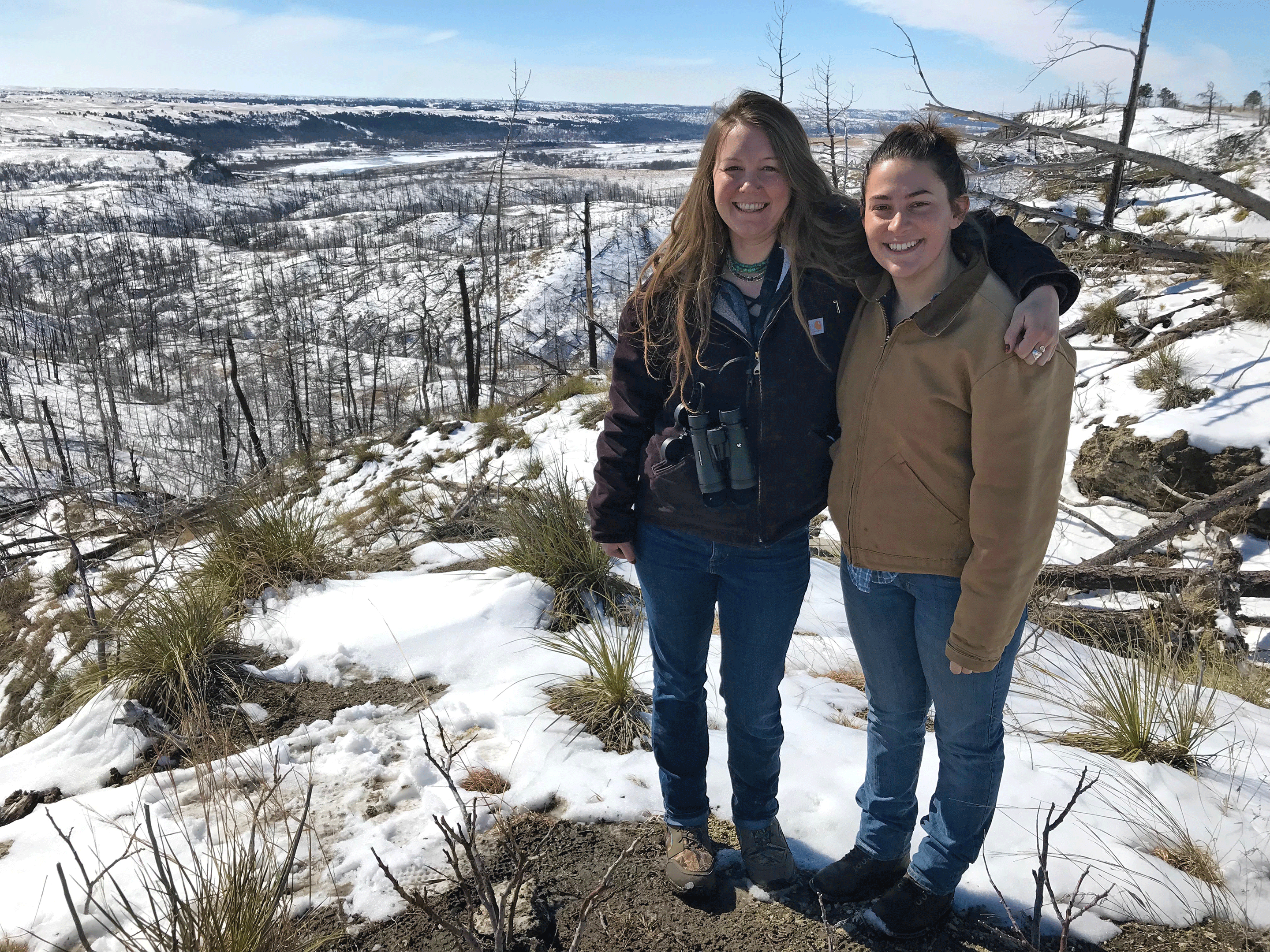
Chelsea and Mary at the Niobrara Valley Preserve last month. Photo by Amanda Hefner.Chelsea (with the torch on the right) ignites Sandhills prairie at the Niobrara Valley Preserve last week.
Mary Parr:
Growing up in West Michigan, I have always loved the outdoors. My family and I spent many vacations camping around our pleasant peninsulas. My favorite memories were had on our frequent visits to Lake Michigan, body surfing on the waves and running down blow out dunes – often resulting in face plants in hot sand. Walking from the beach to the forested trails was like walking through succession in time as the landscape changed from sand to beach grass to aspen saplings to towering white pine, beech, and red oak. My dad, a landscape architect, would eloquently say the Latin names of everything we pointed to. As I grew, so did my fascination of nature and physical science.
I attended college at Grand Valley State University, Allendale
MI, majoring in Natural Resource Management and a minor in Biology. I focused
my courses in ecological restoration, ecology, and botany. Throughout school, I
pursued any jobs and opportunities that interested me, which included urban
green infrastructure, watershed education, horticulture, greenhouses, volunteer
organizing, parks and recreation, conservation, and stewardship. Despite my
enjoyment of all, I found my strongest interests were in ecological restoration
and plant ecology. For those of you who are unfamiliar, ecological restoration
is the activity of restoring ecological services and function to an area that
is degraded, damaged, or destroyed. This path encapsulated my love of plants,
ability to work outdoors, and fulfilled my personal mission to protect natural
areas.
I began an internship with the Michigan Nature Association
and spend nearly every weekend performing restoration and stewardship. I
enjoyed the physical realities of stewardship as we mechanically removed
invasive shrubs, chain sawed trees, and conducted controlled burns. Countless
times I returned home filthy, exhausted, and seemingly perpetually covered in a
poison ivy rash, but the gratification was worth it. While I enjoy the
application of restoration, I also enjoy the theoretical, ecological mechanisms
behind it. I assisted an ongoing research project of an experimental
restoration of dry sand prairie. That’s right, Michigan has prairies! While I
enjoy trees, I also enjoy the absence of them. Being a plant enthusiast, I was
elated by the diversity of herbaceous material, and struck by the prairie’s
resilience to disturbances.
Graduating in spring 2018, I followed my long-held desire to
explore westward. I accepted a seasonal position working for the Nature
Conservancy in northern Minnesota in the Tallgrass Aspen Parklands – a great
intersection between great lakes flora and the great plains. I gained
substantial experience with large scale land management and prescribed fire. It
was indescribable to work remotely in a landscape of prairie.
Working for TNC was an amazing experience that I wanted to
continue. I loved the positive atmosphere of the organization and their
determination to find solutions for both people and nature – a mission parallel
to my own. Hearing of the ongoing efforts of the Nebraska Chapter and the
Hubbard Fellowship, I knew this was a place I could grow! I was most attracted
to the Chapter’s progressive views of managing land for biodiversity, which will
prove essential in the face of climate change. I am very interested in their
regimes using fire and grazing, and their applicability to local ranchers. Additionally,
I admire the close connection between their research and land management as it
speaks to the success of their regimes!
I am utterly amazed by the amount of work being done across Nebraska by the Nature Conservancy. I have thoroughly enjoyed learning about their success and ongoing projects in water conservation, policy, urban greening, public outreach, and stewardship. I have felt immense support from the staff and look forward to the rest of this year!
Mary pauses for a photo during a prescribed fire at the Niobrara Valley Preserve.First look at part of a bison herd at the Niobrara Valley Preserve. Photo by Amanda HefnerChelsea (left), Mary (center), and Olivia Schouten (2018 Fellow, now working for us as a stewardship technician) before a spring burn at the Platte River Prairies.






 The Prairie Ecologist