There is a lot I like about winter, but right now, winter is not really meeting my needs. We’ve missed the last couple of snows here, so everything outside seems very dull, flat, and blah. Today’s bright overcast light, if this was summertime, would pull me right out the door and into the prairie. It’s not summer, though, and beautiful evenly saturated light doesn’t get me very excited when there’s not much color to be found. (And of course I’m being lazy, because if I ventured out with my camera, I’d surely find SOMETHING to photograph.)
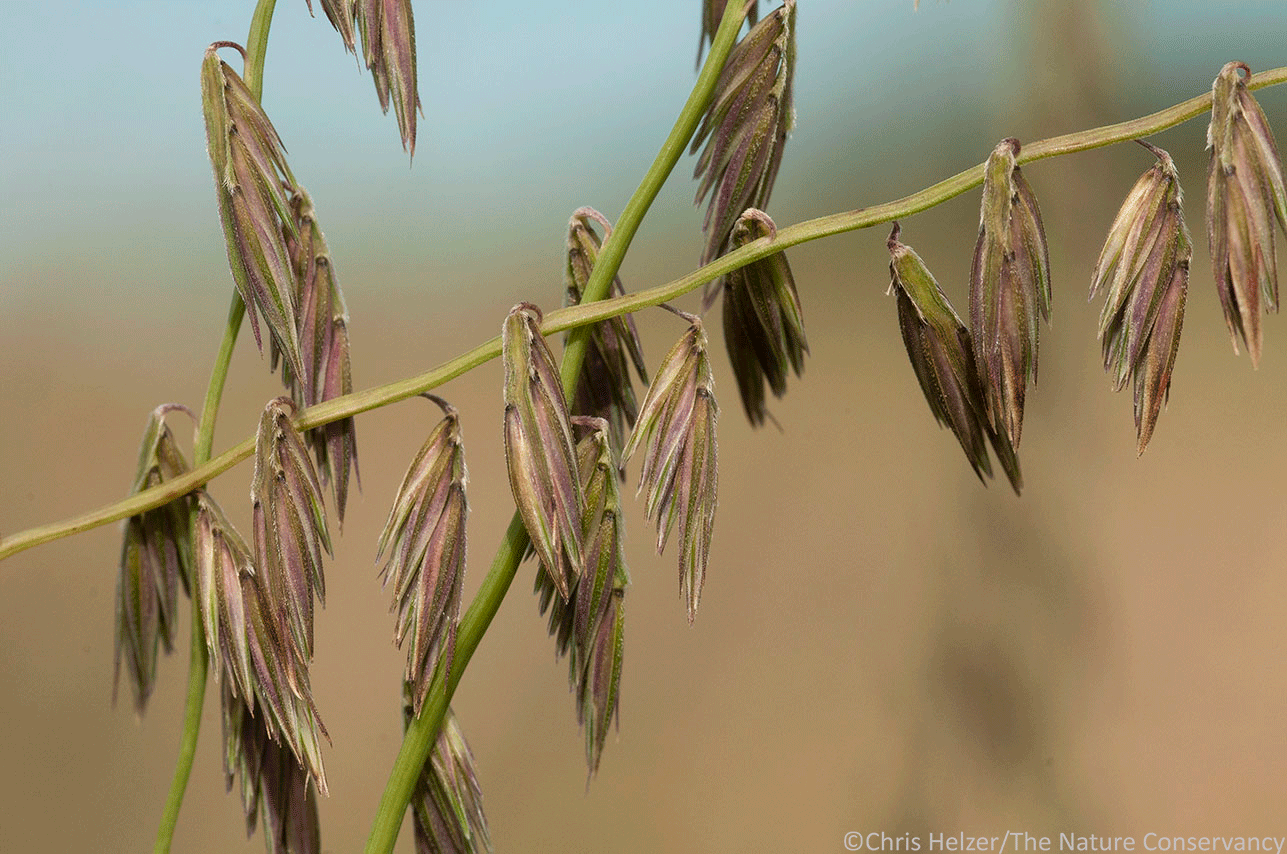
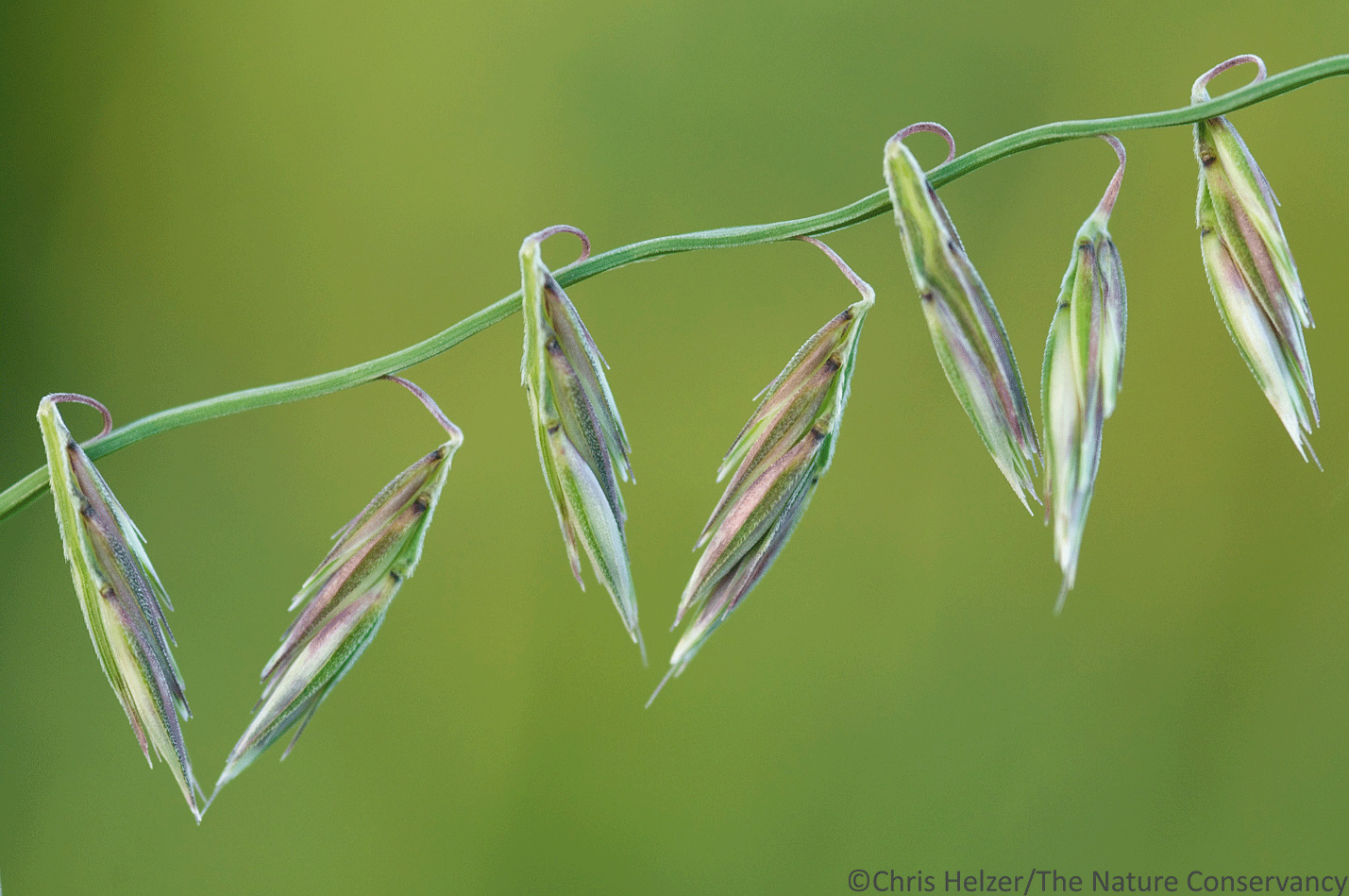
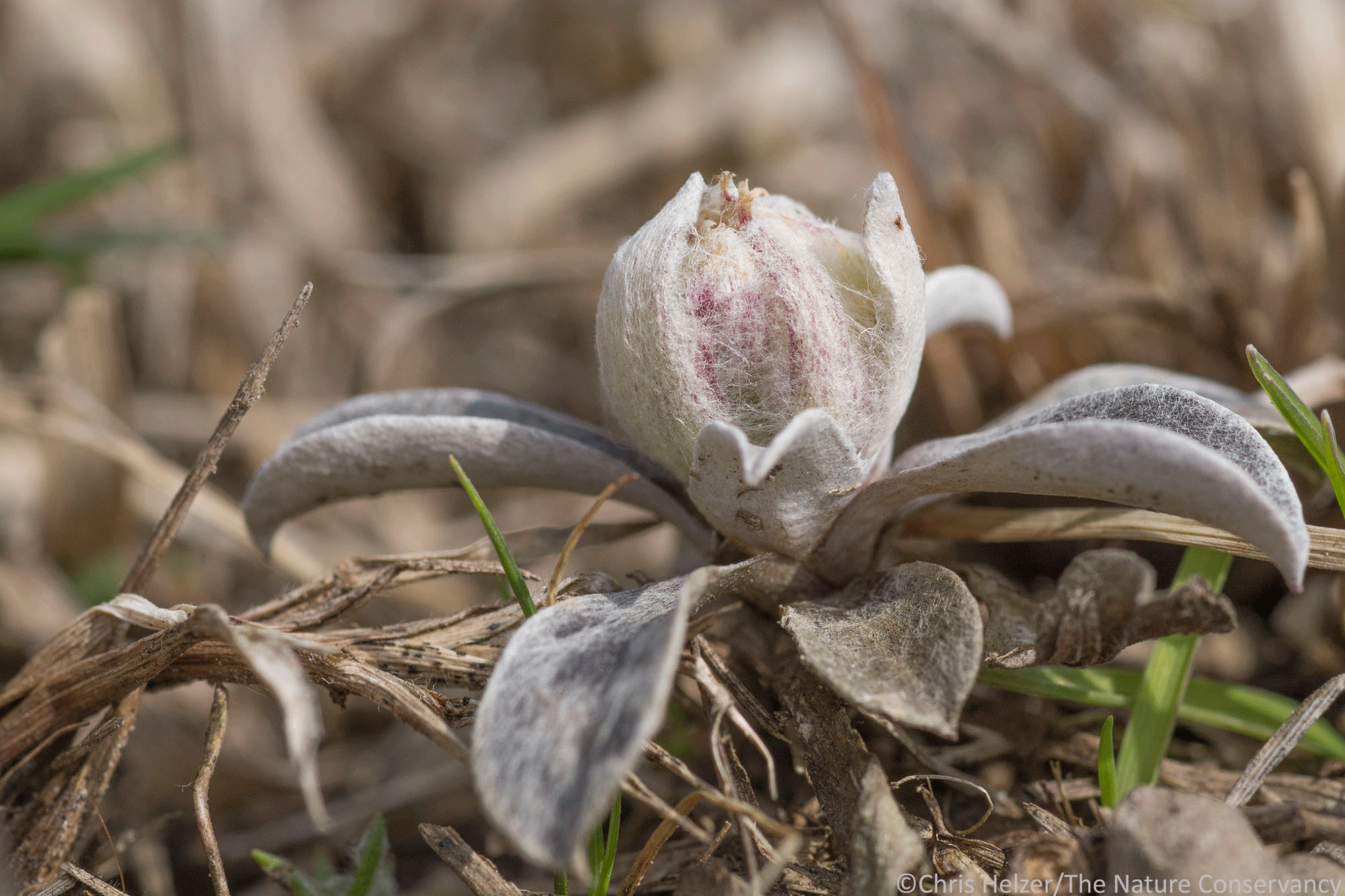
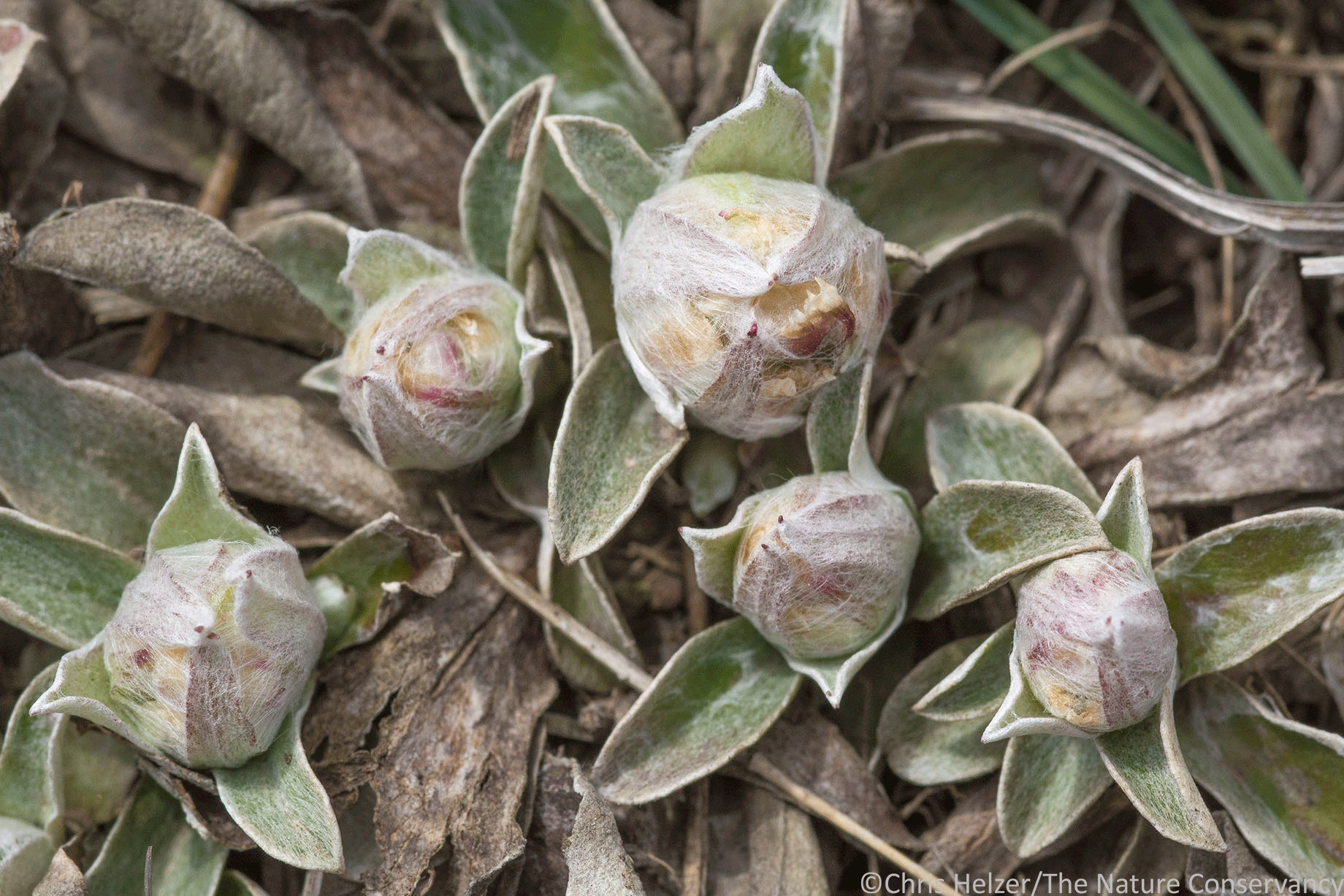
Instead, I went into my files from six months ago and found some photos I took back on July 23, 2018. The light that day was almost identical to today, but I had no difficulty finding something photograph in the prairie across town. It cheered me up to look at those photos. I hope they do the same for you.
The topic of today’s blog post has been rattling around in
my head for a long time. I’ve been
hesitant to write about it because I don’t really have a strong stance, just
lots of thoughts. My motivation here is just
to stimulate thoughtful conversation.
Let’s start here: I’m guessing most people become interested in conservation because of a love of animals. For many of us, that love starts with having a childhood pet and/or from childhood stories/movies about animals. Disney movies that give animals huge eyes, human voices, and relatable life stories, have been emotional touchstones for many millions of people. By the time we’re out of elementary school, many of us feel a strong attachment to animals such as dogs, cats, deer, rabbits, squirrels, and many other animals we see around us. It’s not hard to transfer that attachment to whales, penguins, jaguars, bison, pandas, and other animals we might not see in person, but that are large, charismatic, and look like they need us.
Mule deer. Nebraska Sandhills.
One of the main jobs of conservation educators is to help
nurture and build upon that love of animals.
You like squirrels? Well,
squirrels need trees, and trees need forests, so you should also care about
forests and other habitats that support the animals you love. Whales need the ocean and bison need
prairie. Save the oceans! Save the prairie! It’s an effective strategy, and one that is
critically important for building necessary support for conservation.
Here’s where it starts to get complicated. For some people, that message of, “if you
love animals, you should love habitats” sends them on a path of learning more
about habitats and ecosystems. They
learn about the value of biological diversity and the complex contributions and
interactions between all the various species in ecosystems. Animals are still charismatic and loveable,
but plants and fungi are also really important, and – as it turns out –
captivating in their own right. A love
of animals becomes a passion for nature that is based on the intricacy of all
the interacting organisms that make it work.
For some, that passion is linked to spirituality, while others are
fascinated from a more scientific perspective.
Other people, however, remain much more focused on animals,
and feel an obligation to those fellow beings.
Every animal has its own personality and life story, and thus is
important to nurture and protect. We
need to save oceans and prairies because destroying habitats destroys animals
and that is ethically wrong. Conserving
nature becomes more about individual animals than about complex systems. Some people with this perspective gravitate
toward involvement with or support of wildlife rescue programs and Humane
Society-type organizations.
(I want to pause here and state clearly that I’ve narrowly described two points on a broad spectrum of nature lovers and conservation supporters. Please understand that I’m not trying to stereotype anyone or pass judgement. I also recognize that most people have much more complex and broad perspectives on nature, animals, and conservation than what I just portrayed. I’m only using these narrow descriptions to help make some upcoming points.)
Black-tailed jackrabbit. The Nature Conservancy’s Platte River Prairies.
There are a couple ways these disparate perspectives can have
an impact on conservation. The first is
a simple matter of balancing time and effort.
Many people contribute many hours a year to conservation. What is the most effective use of that
time? Nursing orphaned robins and
squirrels (species that are thriving) until they can be successfully released? Or clearing invasive brush from a prairie? Clearing brush will have a stronger immediate
impact on the world and will help species that are more imperiled than robins
and squirrels. However, it’s not that
simple, is it? First, not everyone can
or wants to clear brush in their free time (or harvest seed for restoration
projects, etc.). Second, nursing an
orphan squirrel might really strengthen someone’s commitment to conservation,
leading to other actions, such as donating toward effective conservation groups
and efforts.
A second impact of these two perspectives on conservation has to do with support of land management actions, and this is the one I really want to dive into. In today’s world, most ecosystems require active management in order to keep them healthy. That concept, alone, can be difficult for people to swallow, especially given the naïve but understandable idea that nature can somehow balance itself, even when broken up into small disjunct pieces and exposed to invasive species and other threats. I’ve written enough on this topic before that I won’t dwell on it here. However, even when people accept the idea that active management is important, management actions themselves can be controversial – especially if they can have an impact on animals.
Here are just a few examples:
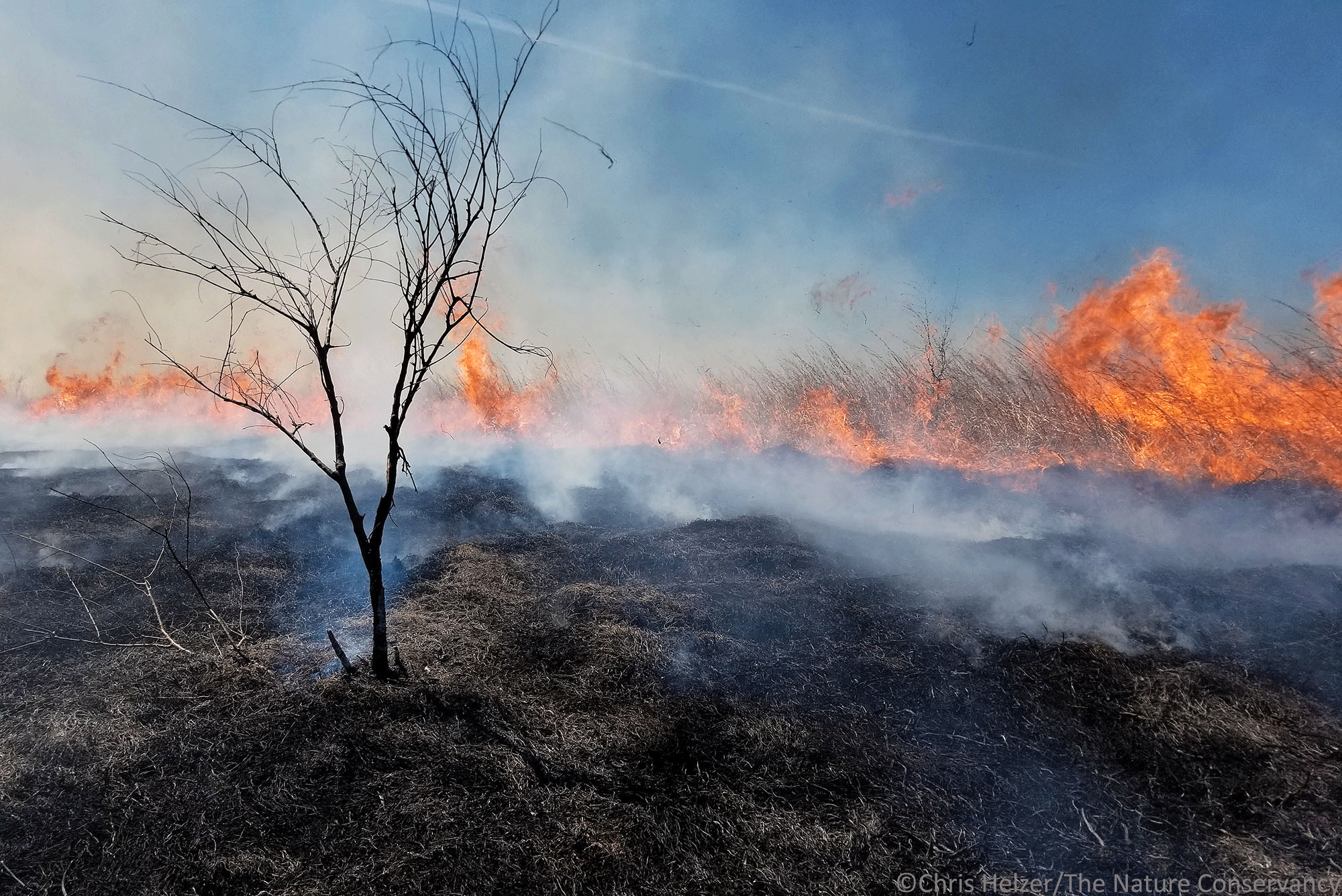
Fire is an important part of many ecosystems, and the use of prescribed fire helps maintain healthy forests and prairies. Fire also kills and injures animals, and while those impacts can be minimized, they are not completely avoidable. Is the death and/or injury of a few animals worth the broader benefits of preserving the health of the ecosystems they and many others depend upon?
Trees are increasingly moving into prairie habitats, making those areas uninhabitable for many prairie species and enabling encroachment of other invasive species. Increasing tree density is also degrading habitat in woodlands and savannas. However, trees provide homes for many animals (particularly birds) that are more familiar to people than the prairie animals displaced by trees. Thus, removing trees from prairies and thinning trees in woodlands and savannas has caused huge controversy in many sites around the country (I see you, Chicago). Some of that controversy comes simply from a love of trees, but that emotion is also tied to squirrels, robins, and other animals that people envision in those trees.
Deer overpopulation is a major issue in natural areas around the country. White-tailed deer, in particular, have had population explosions over the last century, leading to the decimation of rare plant populations, general habitat degradation, and a high number of automobile collisions. Many discussions about population control stall out because of public outrage that arises whenever the topic of culling deer is broached.
Spadefoot toad. The Nature Conservancy’s Niobrara Valley Preserve.
Just about everything we do as land managers comes with a
risk of killing or injuring animals.
That includes mowing, grazing, prescribed fire, tree removal, or just
driving (or even walking) through our sites.
Every land manager I know is very cognizant of these potential impacts
and works to minimize them. At the same
time, however, they are also looking at bigger picture issues such as habitat
fragmentation and degradation and the wide-reaching impacts of those on entire
populations and communities of animals.
All these topics are complex and nuanced. Decisions about prescribed fire, tree removal, deer population control and other strategies need to be made within a context that examines all their potential ramifications. It’s helpful to have voices expressing concern about the effects of those treatments on animals. That prevents conservation from becoming a numbers game in which morality takes a back seat. However, it’s not helpful if those voices lead to paralysis because they won’t accept any action that harms animals.
Black-tailed prairie dog. The Nature Conservancy’s Niobrara Valley Preserve.
For me, all this leads to a lot of questions. If we continue to use cute wild animals to spark conservation support among the public, can we do it in a way that gives them a more realistic view of nature? Is it important for people to recognize that very few cute wild animals – especially those low on the food chain – die of old age? Are we too hesitant to talk about the number of animals that die in nature? How do we keep people from loving nature so much they won’t let us take the actions that will protect it?
Again, I don’t have any answers to these questions. I’m not even sure they are important questions. I write this because I’m curious to hear your thoughts and perspectives. Thanks for any thoughtful feedback.