Last week, I posted a bunch of cute baby bison photos. This week, I’m posting a bunch of charming snake photos. I recognize that not everyone thinks snakes are cute or charming, and if you’re really triggered by images of snakes, you can scroll quickly down to find last week’s bison babies and counteract this post. However, I encourage you to give snakes a chance. I promise these photos won’t hurt you. Most of the snakes won’t either, as far as that goes.
There is tremendous variety and beauty among the snakes found in Nebraska and the Great Plains of North America. Many species are small – pencil-sized or so – and even most of the bigger ones are harmless. I’ve spent about 25 years exploring and studying prairies as an adult and have never been bitten or attacked by a snake in any way. Most are incredibly hard to photograph because they slip away quickly when they spot me.
Common garter snake (Thamnophis sirtalis), also known as the red-sided garter. Perhaps the most beautiful snake in the state, but that’s just my opinion, and there’s a lot of competition for that title. They are pleasantly common in our Platte River Prairies.
For most of us, seeing a snake causes an initial instinctive reaction in which we jump – or at least flinch – backward. That includes me, but I’ve trained the logical part of my brain to quickly overrule that instinct, allowing me enjoy the few opportunities I get to see and appreciate snakes in the wild. If you look at snakes from an artistic standpoint, they really are gorgeous creatures, and they live fascinating lives. For those of you still reading this, here are some images of Nebraska snakes that have allowed me to photograph them over the years.
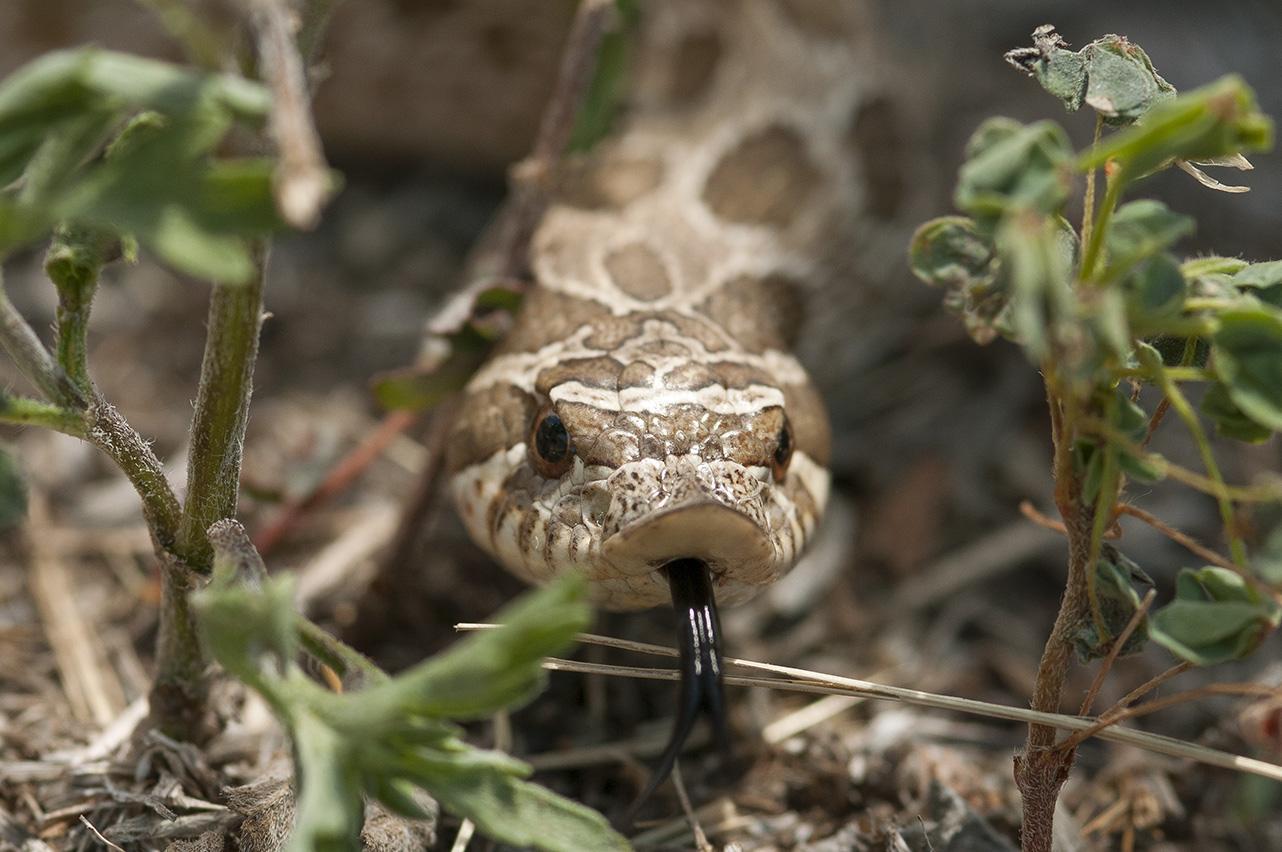
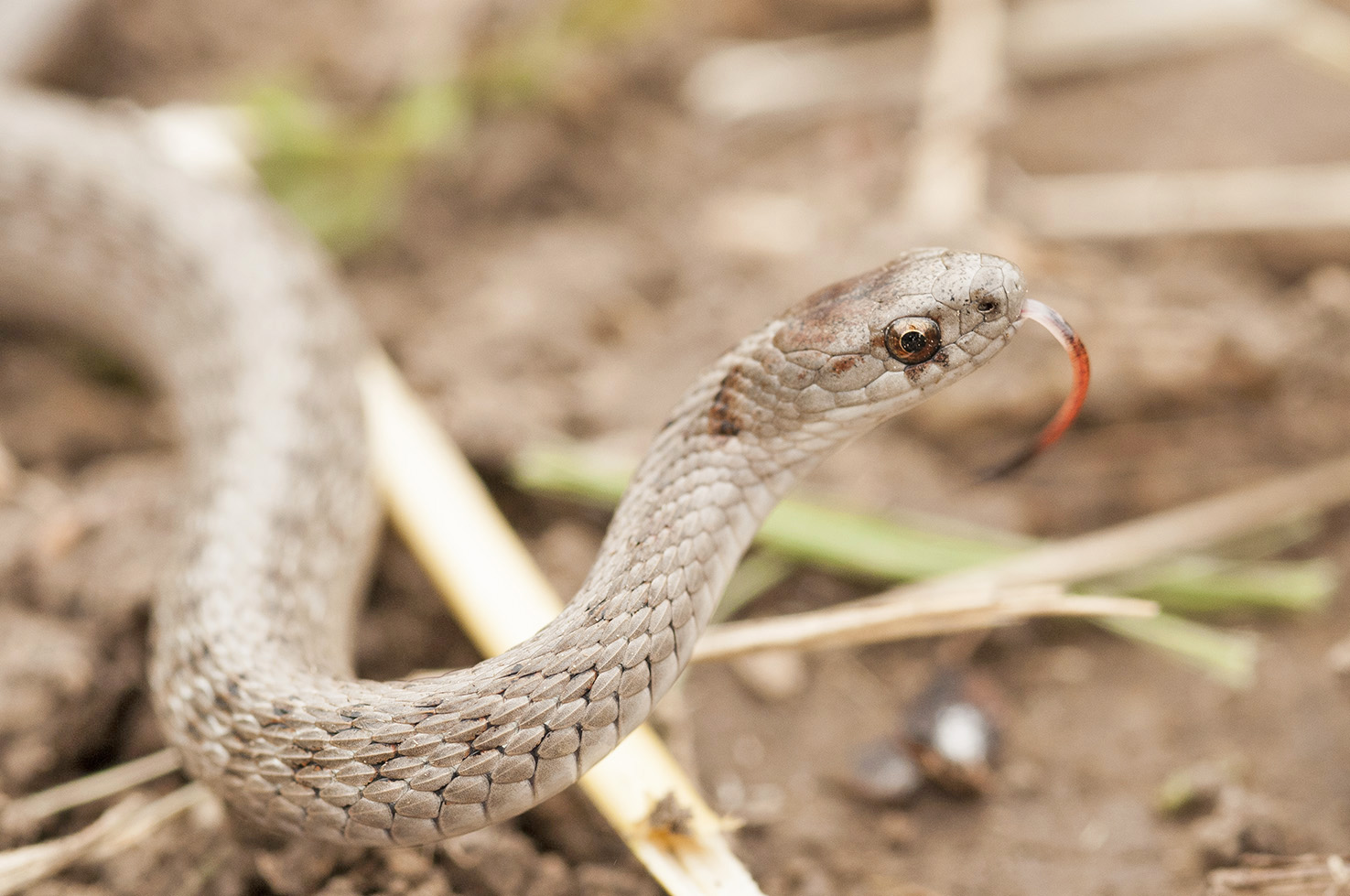
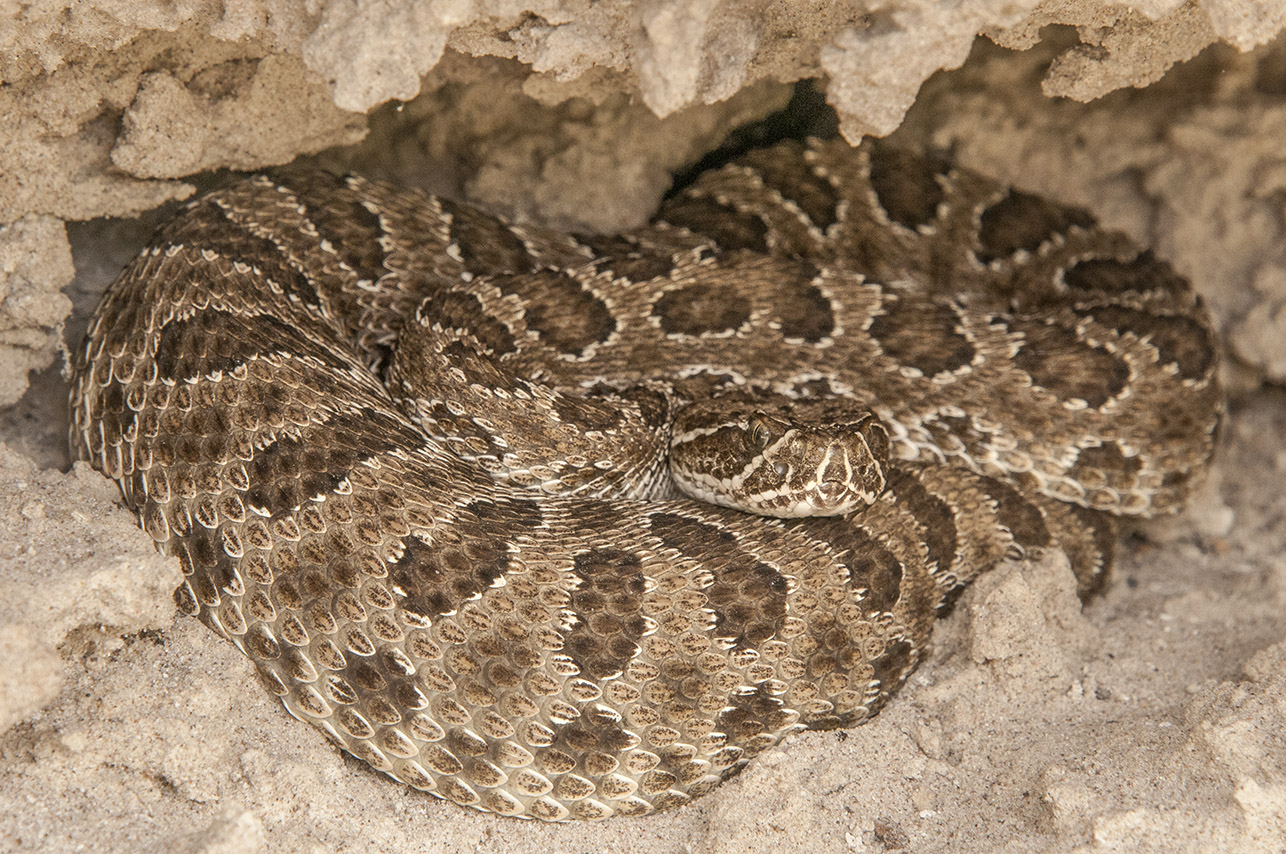
Ringneck snake (Diadophis punctatus). Usually found near trees around here and small (usually 14 inches or less in Nebraska). The tightly coiled tail is a defensive mechanism. You can see hints of how brightly colored the belly of this snake is.A juvenile eastern racer (Coluber constrictor). Adults are solid colored, olive green to greenish blue on top. This little cutie was about the size of a pencil.Western hognose snake (Heterodon nasicus). This species has an adorable little turned-up nose, eats lots of frogs and toads, and is a champion actor – playing a dead snake with hilarious exaggeration when threatened.Redbelly snake (Storeria occipitomaculata). In Nebraska, this tiny snake is found only along the central Platte River. I’ve only seen it a few times in my nearly 25 years of working along the river.Bullsnake (Pituophis catenifer). These big snakes feed on mammals (including rabbits) and birds (including eggs). They’d like you to think they are dangerous, and they reinforce that idea by flattening their heads to look like vipers when they feel threatened. They can also exhale loudly in a way that sounds nearly exactly like the rattle of a rattlesnake.Brown snake (Storeria dekayi). Rarely as long as 12 inches, this little snake is nondescript in coloration and innocuous in habit. They primarily eat snails, slugs, and earthworms in wooded areas.Prairie rattlesnake (Crotalus viridis). This venomous snake is the most common rattlesnake in Nebraska – found mainly in the western half of the state. They are often found in prairie dog towns and feed almost exclusively on small mammals. I appreciated this one from a comfortable distance, using a long telephoto lens to photograph it.A plains garter snake (Thamnophis radix). A common and definitely harmless prairie snake.
(If you live in or near Nebraska, you can’t beat Dan Fogell’s book A Field Guide to the Amphibians and Reptiles of Nebraska for identifying snakes and other scaly creatures. It lives in my truck always.)
I just finished reading a batch of research proposals submitted to our J.E. Weaver grant program, a program administered through the Nebraska Chapter of The Nature Conservancy. Graduate students apply annually for $1000 grants to help them with their research projects. In the instructions for applying to the grant we have the following (in italics to make sure students see it): Please note that reviewers will consist of a mix of scientists and non-scientists, so please keep your language and writing readable for a wide audience.
That’s pretty clear, right? Apparently not. I have a pretty good vocabulary and am familiar with most of the research topics being discussed in the proposals I read. Regardless, there were numerous times when I had to read a sentence three or four times to make sure I understood it. After a couple hours of proposal reading, the last thing I want is to wrestle with a sentence. Just tell me what you’re doing and why I should care.
I didn’t know what kinds of photos would best illustrate this post, so I decided to just share a few cute animals to offset how cranky I my writing sounds. On the other hand, this little baby softshell turtle looks a little cranky too, doesn’t it?
To some extent, the problem is that most graduate students are still fairly inexperienced writers. Stringing words together in a coherent way is difficult. However, when you combine unseasoned writing with a desire to look academically smart, the result is a disaster. Have you ever been in the back of a room, trying to hear what a speaker at the front of the room is saying, but they’re speaking just softly enough you can barely hear the words? You have to put so much of your energy into catching the words that your brain doesn’t have enough capacity left over to translate their meaning. That’s what it’s like to read research proposals full of jargon, acronyms, frivolous latin terms, and uselessly highfalutin words.
Quick caveat – I actually enjoy reading these Weaver grant proposals each year. There is a lot of smart and interesting research going on around the Great Plains and beyond, and I love learning from the graduate students and their projects. I come away from the experience with a renewed energy for science. However, I also come away with a headache from staring blearily at paragraphs I can’t quite decipher.
I don’t blame the students, I blame the professors. No offense, professors, but you have to do better. First, you need to set a better example. After all, it’s you the students are trying to emulate. They use the same big words and useless jargon you use because they want your admiration (and your signature on their thesis). Who are you trying to impress when you write like that? If you’re trying to impress reviewers of your journal articles, don’t you think they’d rather read clear and concise language than plow through piles of overly-technical terminology? Don’t you want your research results to be understood, appreciated, and put into use? If so, why use words that only a very narrow slice of the world’s population comprehends?
Second, you need to help your students. You wrote a nice recommendation letter that accompanied their proposal, so I assume you read the proposal too? If not, that’s just a bad job by you. If you did read it, why didn’t you give them more helpful feedback? I understand that our small grant program is often used as a practice exercise for students learning to write grants – and I think that’s great. However, it’s only productive practice if you’re editing their work and providing them with useful guidance.
Good grief.
I apologize for ranting, but I hope you’ll cut me a little slack. I just finished reading proposals full of sentences
like this one (which I’m making up as an example): “By conflagrating indecipherable
exoskeletons using McDonnells’ constabulary ordination technique, we expect to establish,
ex libris, perfunctorily correlative conclusions.” How many times did you read that sentence
before you decided it was worthless to try deciphering it? It’s exhausting, isn’t it?
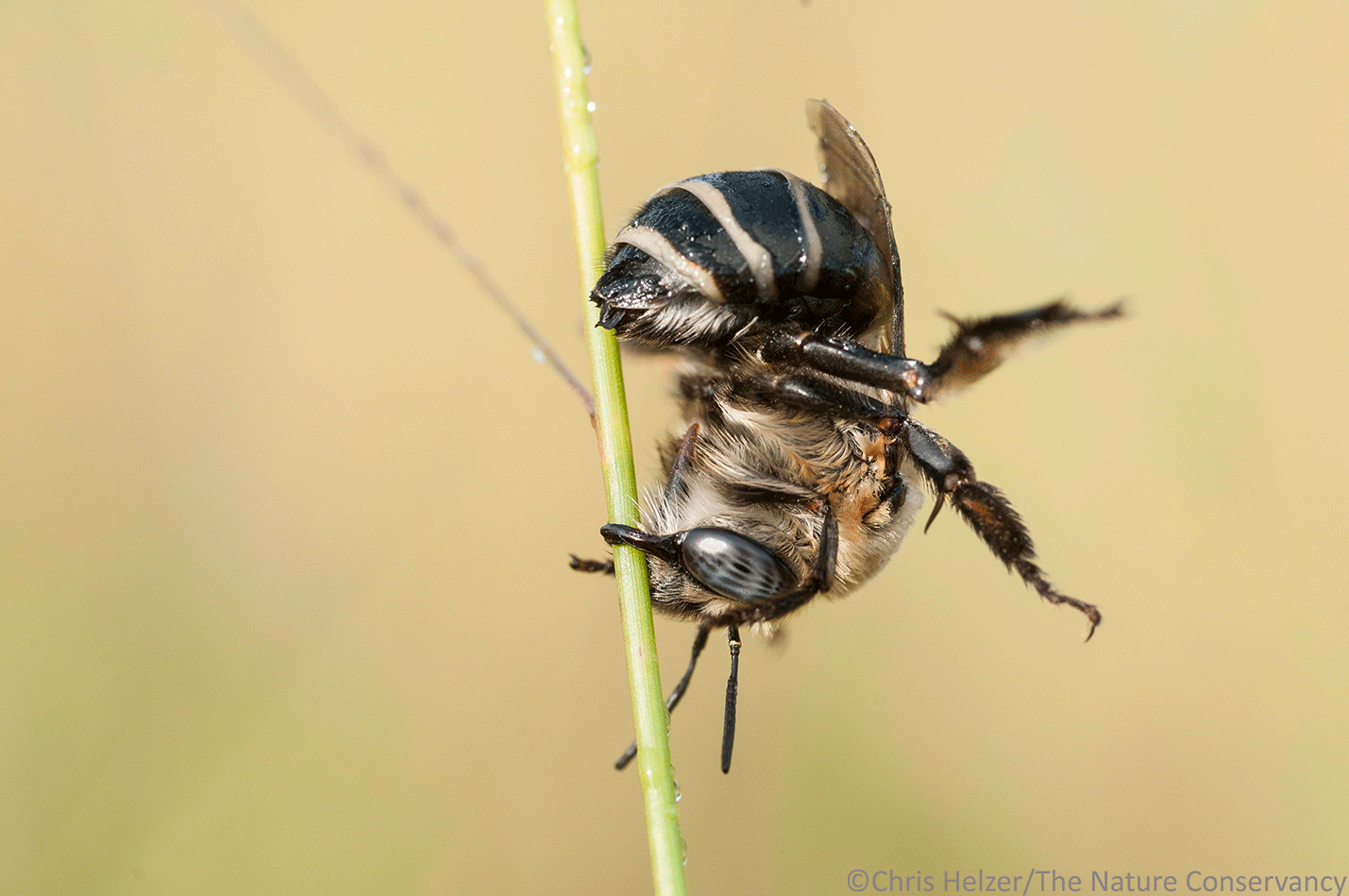
This bee is clinging to a grass stem like I was clinging to my sanity while reading research proposals this morning… Or something.
As a free public service to academic writers everywhere, and as a
favor to everyone trying to slog through scientific journal articles and other
similar texts, I am hereby offering the following tips for clear communication
of ideas and results:
Don’t use jargon. I know you’ve heard this before, but I mean it. Come on. Pretend you’re explaining your research to your mom (unless she’s an expert in your field, then substitute another close relative whose opinion matters to you). Use words she would know. If you absolutely have to use a particular technical term to convey a precise meaning or concept, use it, but define it for your reader.
Write in short sentences and short paragraphs. If I’ve forgotten what the beginning of your sentence said before I reach the end of it, you’ve failed at communicating. Paragraph breaks allow your reader to catch their breath before diving into your next idea. Please let your readers breathe.
Stop trying to impress us with your vocabulary. The point of writing is to communicate ideas. No one cares about the grandiloquence of your exposition. We just want to know what you’re saying. While I’m on this subject, the word myriad is a perfectly nice term, but most of you are using it incorrectly. Look it up and either use it appropriately or not at all. Thank you.
Latin names for species are important. They help make sure we’re all talking about the same species because there are a lot of plants called “blazing star.” However, if you use a Latin name, include a common name too – or at least tell us what kind of organism we’re dealing with. I honest-to-goodness read a three-page proposal this morning that referred to the study organism exclusively by its Latin name (and one that had very recently changed, no less) throughout the entire document. Someone unfamiliar with herpetology could have read the whole proposal and not known it was about a frog.
Speaking of Latin words, I hereby and officially ban all future use of the term in situ. Maybe that term had a place in conversation at some point in history, but it has no purpose today other than to alienate readers who aren’t part of whatever club you think you’re in. It’s not difficult to write phrases such as “on site” or “in place” or “where it lives”, all of which will convey your meaning perfectly well in a way that is accessible to all of us.
This little horned lark fledgling is well camouflaged. Good writing shouldn’t, um, camouflage the message it is intended to send?
Ok, I think that’s enough. I could easily come up with more tips, but I would risk violating my own guidance about the need for conciseness. It comes down to this: writing is hard, but the best writing is that which the reader can follow effortlessly. Don’t write as if you’re trying to impress or fit in with people you think sound smart. Just tell us what you want us to know. We’ll appreciate it and pay attention. Heck, we might even admire you for it.