Hubbard Fellowship Blog – Wasp Slumber Party

This post was written by Evan Barrientos, one of our Hubbard Fellows.  Evan is a talented writer and photographer and I encourage you to check out his personal blog.
08032015_nebraska_1906

I was enjoying a sunset walk in the prairie when I stumbled upon an alarming sight: several dozen large wasps covering a clump of grass. They had menacing eyes and dagger-like stingers, but I wanted photos of this new species so I could identify and learn more about them. Cautiously edging closer and closer to the wriggling mass of black and yellow, I got my photos and escaped unscathed. Thanks to these photos I was later able to identify these wasps to the Myzinum genus, and by doing so learned that there was absolutely nothing dangerous about them.

08032015_nebraska_1956

After doing some research, it turns out that these wasps weren’t forming a murderous attack squad; they were  just having a big ‘ol slumber party. Male Myzinum wasps are known to sleep together in large groups such as this, although no one seems to know why. Furthermore, males don’t even have stingers, just curved spines that seem to only serve as intimidation. During they day they feed on a vegetarian diet of nectar and look for females to mate with. The females, however, are a little less gentle.

08032015_nebraska_1921

Females actually have functional stingers and they’re bigger, built for digging underground in search of scarab beetle larvae.  Like the last wasps I wrote about, Myzinum larvae are parasitoids, parasites that kill their hosts. When a female Myzinium finds a scarab beetle larva, she paralyzes it with neurotoxins injected from her stinger lays a single egg on it. After hatching, the wasp larva devours its host like a sci-fi alien.

So the next time you find a swarm of scary-looking wasps, instead of grabbing the can of wasp spray, consider that they might just be harmless insects that pollinate your flowers and eat the beetles that damage your flowers and lawn.

For more information:

Photo of the Week – November 26, 2015

The sky yesterday was mostly overcast and dark, but I looked out my window mid morning and noticed the clouds thinning a little.  I grabbed my camera and drove down to our family prairie for a walk.  It was a beautiful day, with temperatures in the 50’s (F) and light winds.

Sun coming through dotted gayfeather in autumn prairie. Helzer prairie, near Stockham, Nebraska.

Sun coming through a dotted gayfeather seedhead in late autumn prairie. Helzer family prairie, near Stockham, Nebraska.

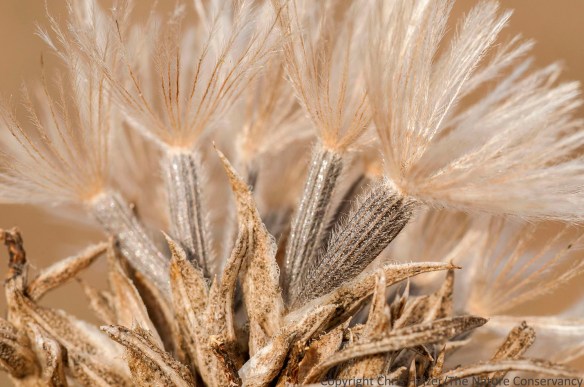
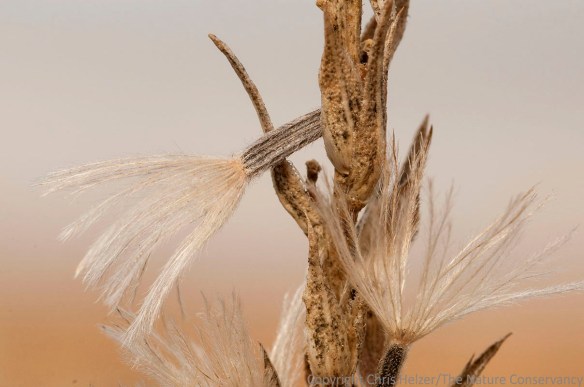
I rarely start these photo walks with a particular subject in mind, and yesterday was no exception.  I enjoyed looking at the bright red leaves on wild rose plants, and perused the tracks of various animals along the edge of the wetland.  However, I ended up spending most of my time photographing the seeds of dotted gayfeather (Liatris punctata) plants.

Dotted gayfeather in autumn prairie. Helzer prairie, near Stockham, Nebraska.

Dotted gayfeather seeds still hanging on.

While many plants with wind-blown seeds released the last of those seeds weeks or months ago, most gayfeather plants are still hanging on to most of theirs.  It’s hard to know if there is an evolutionary adaptation involved in that delay, but it sure is appreciated by photographers like me.  …Especially in late November, when wildflowers and insects have disappeared for the winter.

Dotted gayfeather in autumn prairie. Helzer prairie, near Stockham, Nebraska.

Dotted gayfeather in autumn prairie..

Dotted gayfeather in autumn prairie. Helzer prairie, near Stockham, Nebraska.

More seeds.

Dotted gayfeather in autumn prairie. Helzer prairie, near Stockham, Nebraska.

A big ‘ol jumble of seeds.

On this official day of Thanksgiving, I’m grateful for many things – including my job, which allows me to work in, study, photograph, and write about grasslands and prairie ecology.  More than that, I’m incredibly thankful for the opportunity to write this blog over the last five (!!) years.  Writing these posts forces me to explore more ideas and think more deeply than I otherwise would, and I learn a tremendous amount as a result.  Thank you for reading, following, and sharing your feedback.

Have a safe and enjoyable holiday.  Happy Thanksgiving!