
The Platte River Prairies got four to five inches of rain last week, filling up the sloughs (old river channels) in many of our floodplain prairies. This will help quite a bit with the lingering drought conditions we’ve been dealing with. It also provided a chance to photograph some of our sedge meadows with standing water, something I’ve not had much opportunity to do over the last couple years.
I wasn’t able to get out on Friday, but arrived at one of our prairies before sunrise on Saturday. I was wearing rain pants, rain jacket, and neoprene boots, anticipating that I’d be wading through and kneeling in shallow water. As it happened, I also laid down several times, which my rain suit wasn’t completely adapted to. It made for a damp ride home, but it was well worth it.
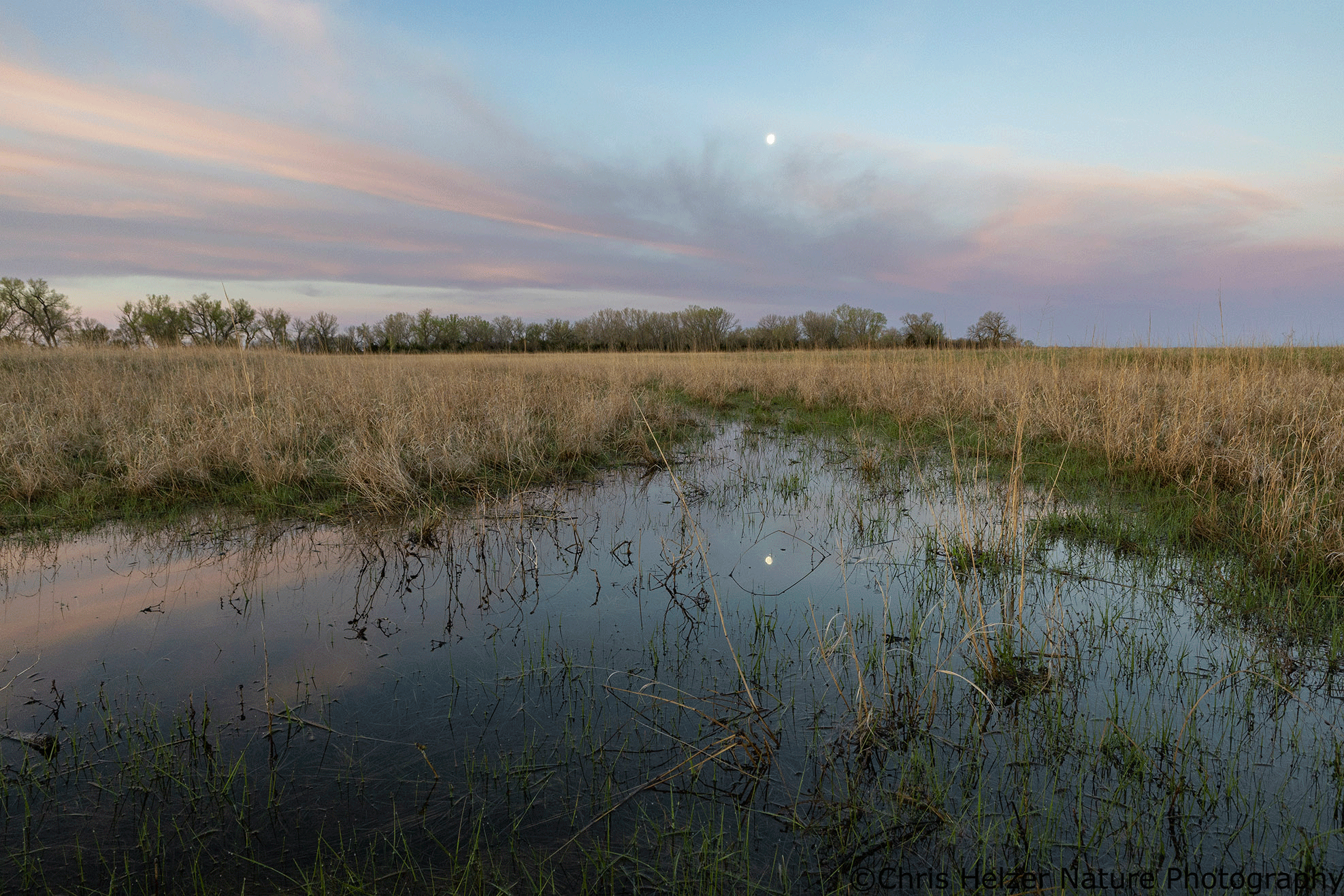
I spent most of my time along a single large slough that still had half a foot or more of water in it. The water level had clearly dropped during the previous day and was gently running to the east, where it would eventually meet up with the Platte River. It was a peaceful, beautiful morning, with birds singing and a light breeze rustling the leaves of last year’s prairie plants.
I took some photos of the landscape, complete with moon and colorful clouds, before the sun rose, and noted the calls of the first grasshopper sparrows and eastern meadowlarks I’d heard this year. The vast majority of meadowlarks in the Platte River Prairies are the western species, but I think this site has had a few eastern meadowlarks present each year for at last 30 years now. I wonder if it’s the same multi-generational family through time.

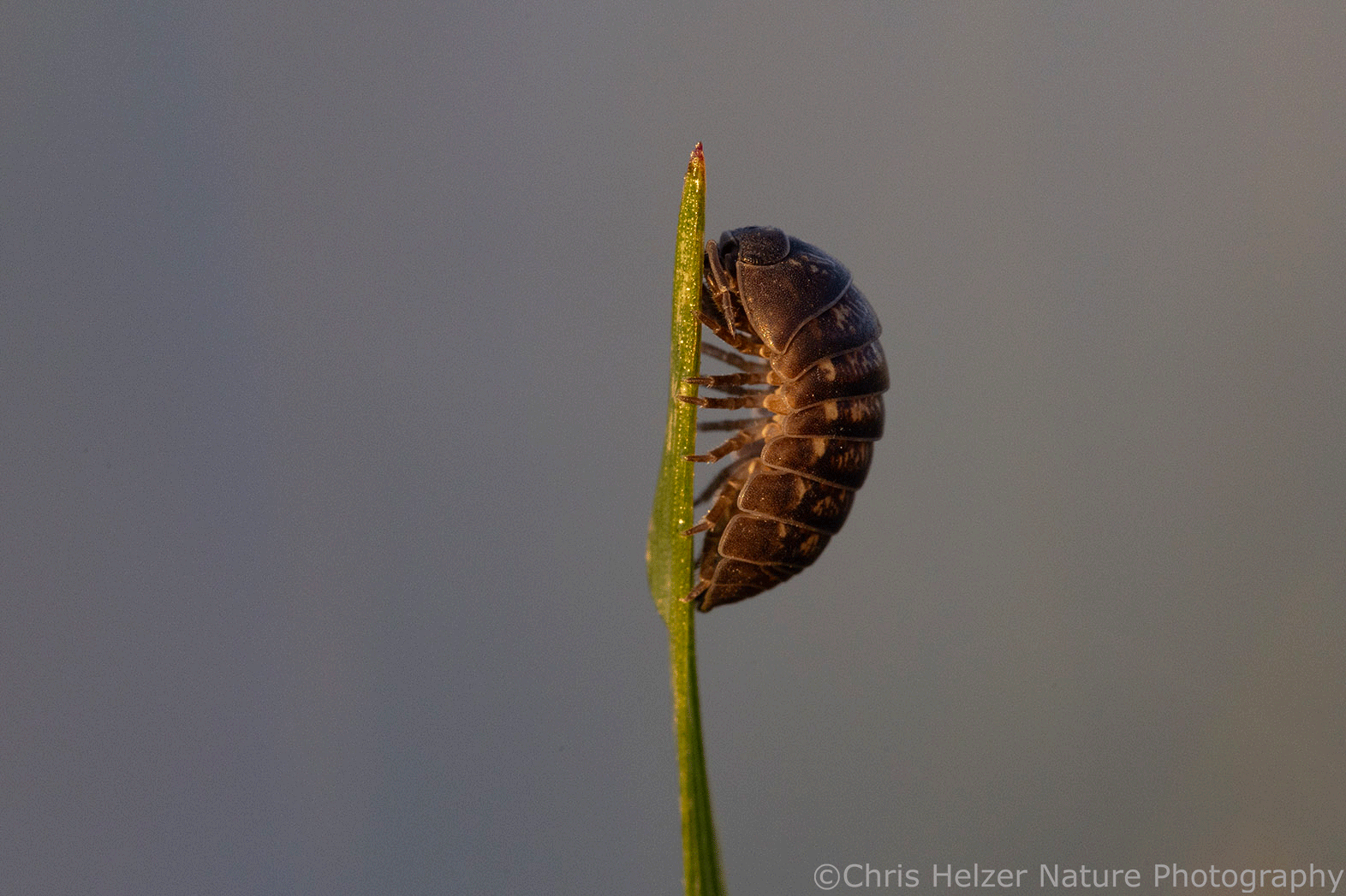
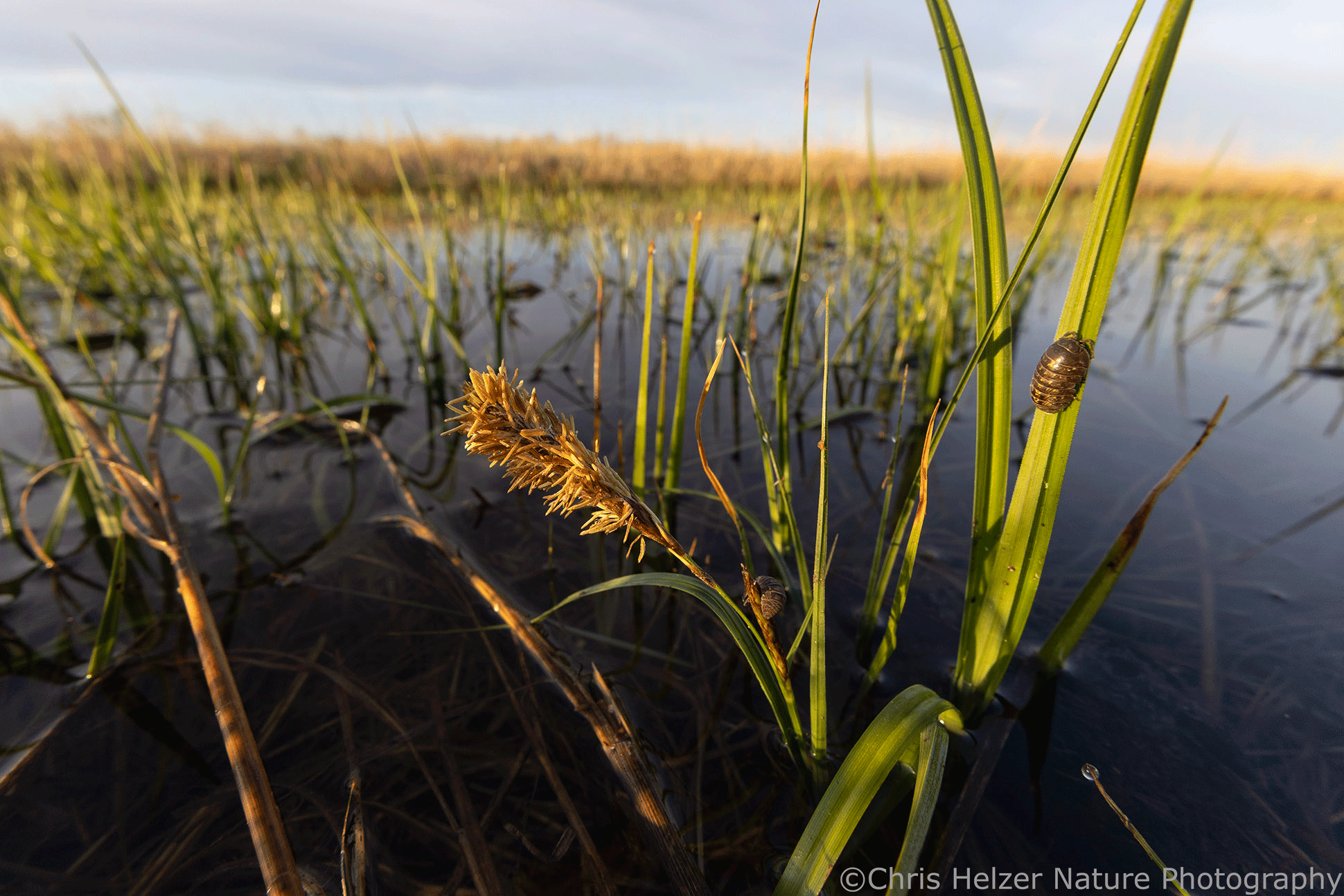
Usually, big rain events strands ground-dwelling invertebrates in the vegetation above standing water, waiting for the water to recede. One of this year’s Hubbard Fellows (Kees) had sent me photos from the this site the previous day showing a bunch of pill bugs (aka sow bugs, rolly polies, or woodlice) that had retreated upward. Sure enough, they were still there.
I was a little surprised not to see the scads of ants I’ve seen after other storms. I wonder if that’s because the ground beneath the standing water is usually saturated enough that it prevents ant burrowing. In other words, maybe ants weren’t living in the area that flooded. If the water had spread out to the broader landscape, covering more mesic prairie, maybe it would have stranded more ants? I didn’t see many beetles or other insects either. Pill bugs, though, were very abundant. I saw clusters of up to 50 or more on the same plant.


I hope you appreciate the above photo because taking it led to the first seepage of water between my rain jacket and rain pants. I’d been doing well propping myself on my elbows and keeping my mid-section out of the water (those planking exercises were paying off!) but for this shot I had to extend a little further into the slough to get the right angle. The things I do for dumb bug photos…


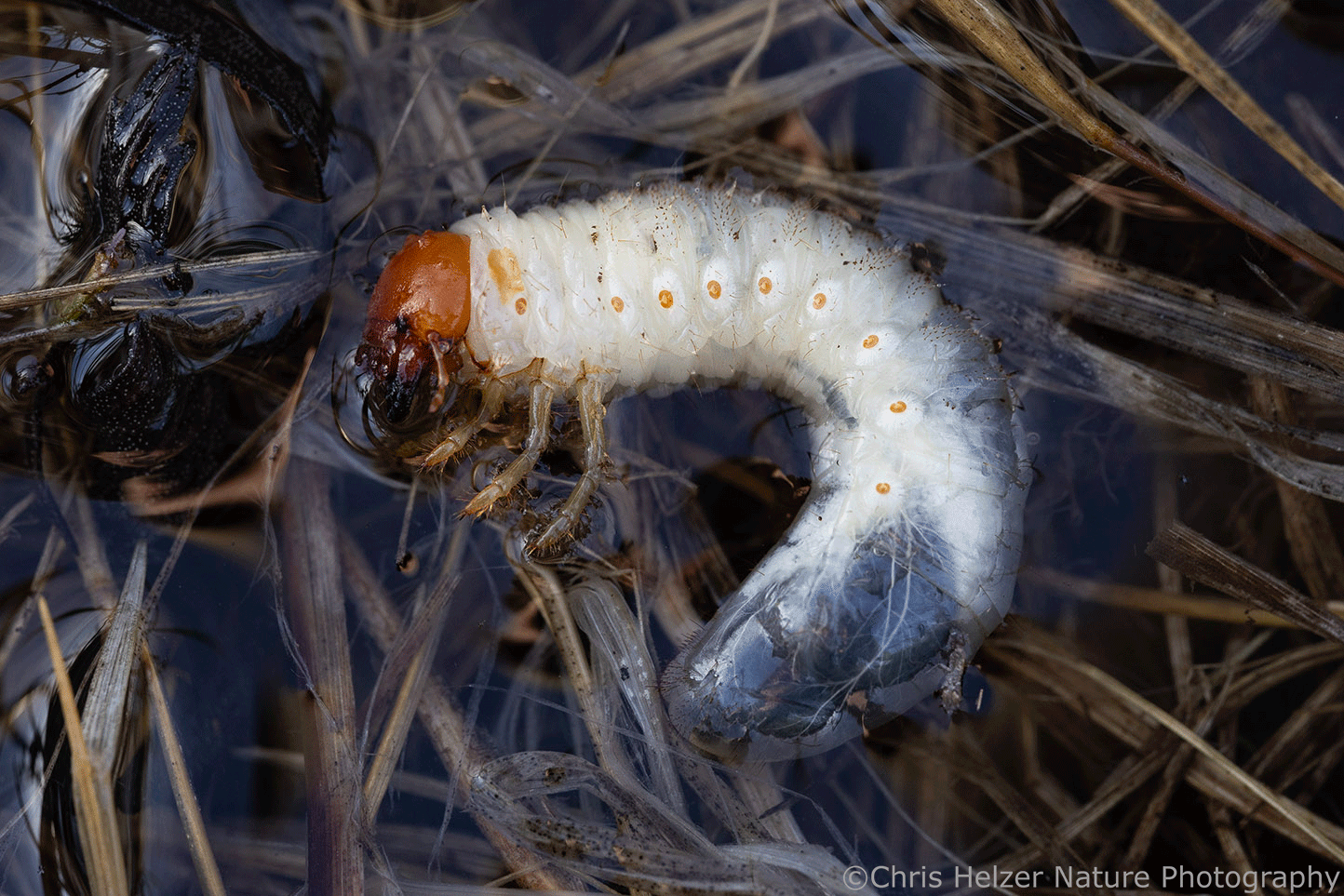
I came across a few big white scarab beetle larvae floating or stranded in shallow water. Most seemed to be still alive. Going back to my ants-in-saturated-soil hypothesis, I wondered if they’d actually been underground beneath the slough. It seemed unlikely, but what do I know? My guess was that they might have come up to the surface in higher areas when the heavy rains saturated the soil they’d been in. Then they might have been washed into the sloughs from there. Counter hypotheses (or facts) are welcome…
As the sun rose, I took some more landscape photos, including the one below, which was a nearly identical framing as that of the first photo of this post. An hour’s difference in the light, though, makes the photo look pretty different!

Most of our wetland and wet prairie sedge species are blooming right now and it was fun to see a lot of them around. Sedge identification can be pretty tricky under the best circumstances, but all the keys I have rely on the sedges being the seed stage. When they’re actively flowering, all I can do is guess based on the location, height and density of the plants, and sometimes the growth form. One the flowering period is over, there’s a window of time in which I can look at features like perigynia, spikelets, stigmas, pistillate scales and other fun botanically-named plant structures that allow me to distinguish between species.
We’re lucky in Nebraska that the Flora of Nebraska has an excellent dichotomous key for sedge identification. Some of the terminology can be a little intimidating at first, but if you’re motivated, I’d encourage you to dive in and give it a try. Once you can start identifying species, you can marvel at the diversity of sedge species in prairies and wetlands! Not surprisingly, in plant communities called “sedge meadows”, sedges make up a pretty important part of the ecosystem…

This might be a good time for a quick rant. Even if it’s not a good time I’m gonna do it.
You may have heard the phrase “sedges have edges”, or the longer version, “sedges have edges, rushes are round”. These are dumb and nearly useless phrases, in my humble (but strong) opinion. The “edges” part refers to the idea that sedges are supposed to have a triangular stem in cross section. When you roll the stems in your fingers, you can feel the “edges” of that triangle.
The problem is that while all (most?) sedges have leaves that extend out in three directions, not all of them have noticeable triangular stems or edges. Even worse, other wetland graminoids like bulrushes often have very distinct triangular stems with obvious edges. That pretty much spoils the value of the phrases, doesn’t it? Let’s all agree to stop using the “sedges have edges” thing, ok? The fact that it rhymes doesn’t make it accurate.
Thank you for listening.

It’ll be interesting to see if last week’s rain is enough to pull the Platte River Prairies out of the “moderate drought” category on the Drought Monitor website. Regardless, the precipitation was probably enough to significantly change the competitive balance in our plant communities for at least the next month or two.
We’re constantly applying fire, grazing, haying, rest, and other treatments to the prairies, each of which can favor some plant species while suppressing others – depending upon treatment timing, intensity, duration, and other variables. Weather patterns, though, also play a very significant role in determining which plants will find favorable conditions to grow, bloom, and thrive each year. Our prairies look very different in dry years than in wet years.
Of course, wet and dry conditions also affect animal and other communities as well. As we’re seeing right now, rapid changes in water levels and soil moisture can affect species like pill bugs, ground beetles, ants, and many others. At the same time, those new conditions will be really attractive to all the shorebirds and other water birds migrating through, as well as those looking for local nesting sites.
Looking beyond short-term changes, though, if this turns out to be a fairly wet year, it’ll have positive and negative consequences for lots of animals. While lush vegetation growth will be great for many, higher rates of fungal infections and other pathogens can be problematic as well. Pollinators and other invertebrates that specialize on plants that thrive in wet years will celebrate, but those that focus on plants more adapted to dry conditions won’t find as many opportunities.
Either way, diverse prairies are well-adapted to variability in weather and other factors. As managers, our job is to facilitate the species diversity that maintains that adaptability. And, of course, we can admire and celebrate the ways in which prairies flex and modify themselves to meet whatever comes.





 The Prairie Ecologist