Photos of the Year – 2023 (4)

Here are more of my favorite photos from 2023. Today’s batch is all from The Nature Conservancy’s Platte River Prairies. Surprisingly, as I looked back through my 2023 photos, I didn’t have all that many from the Platte River Prairies. It’s the closest work site to my house and I spend a lot of time there, but I’m usually working, and photography is an opportunistic thing rather than the primary objective of a visit. However, I did manage some nice shots this year – many of them on days when I left the house early to catch the sunrise before the workday started.

We didn’t get much snow along the Platte last winter (as opposed to the Niobrara Valley Preserve, which got dumped on repeatedly). The site has been under drought conditions since the summer of 2021, so both winter and summer precipitation has been scarce. As a result, when we did get a decent snow in January, I made sure to take advantage of it.

Canada wildrye (Elymus canadensis) in snowy prairie.
Ice crystals on the snow.

I don’t do a lot of bird photography, but when one plops itself down nearby and makes it clear it’s not going anywhere, I’ll grab my longer lens out of the bag. Dickcissels tend to be a little bolder than many other grassland birds around humans, so I have quite a few photos of them. I can’t explain exactly why I like this particular photo (below) so much because I have others that most people would probably like better. There’s just something about the simplicity of the photo and the earnestness with which the bird is singing that struck me.

A dickcissel defending its territory.

Prairie four o’clock is a wildflower that I feel is underappreciated. Sure, it’s an annual, and can grow through the cracks of a sidewalk just as easily as in a prairie, but shouldn’t count against it, should it? It’s able to fill open ground, but it’s not a strong competitor (at least around here) so it’s not problematic. I always like seeing it, either alone or in a big patch. 

Four o’clocks, of course, are named because they bloom late in the day and through the night. Their blossoms are very pretty, but I actually like them just as much after their done blooming and just the bracts and developing seeds are left. They look like a completely different flower, but have a subtle beauty I really appreciate. 

Prairie four o’clock (Mirabilis nyctaginea)
Another prairie four o’clock
Red milkweed beetle (Tetraopes sp) on sand milkweed (Asclepias arenaria).

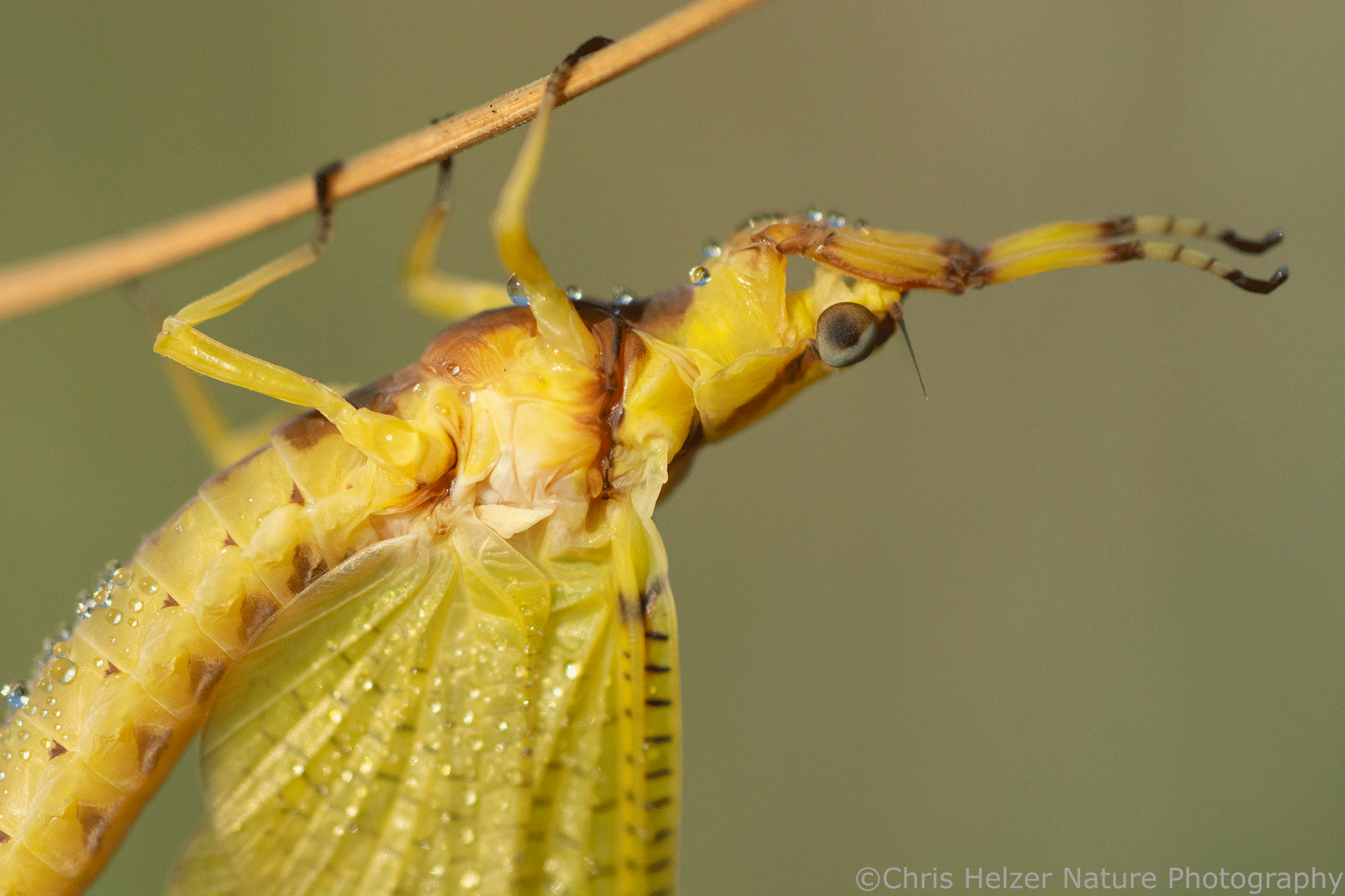
A katydid doing what a katydoes.

As you probably know if you’ve followed this blog for a while, the vast majority of our native bee species are solitary, meaning there’s a single mom that constructs a nest, lays eggs, and then provides food and protection for them. Most solitary bee species in the prairie live in underground burrows. However, we (science) know frustratingly little about where they like to put those burrows and why. 

We think most of those bees like bare ground for nesting, but is that because they really do or because that’s where it’s easiest for us to see the nests? Do they need an patch of ground with no plants growing on it or just a place where the soil isn’t covered by dense thatch that makes it hard to get to the ground? It’s a difficult question to answer because while it’s fairly easy to spot nests in bare soil patches, it’s hard to see them (if they’re there) in vegetated areas.

Now and then, I’ll be fortunate enough to spot a bee entering or leaving a nest. If I have time, I’ll lurk nearby to see if it reappears. When luck is on my side, I can get a photo of the bee itself, but often, they don’t pause as they enter and exit the burrow. This year, I had a couple encounters with bees that allowed me to capture a photo of them at their nest. I’m including one of those here.

A female digger bee in her nest burrow.
Fly on Maximilian sunflower on a cool late summer morning.
Male bumblebee in the morning dew.
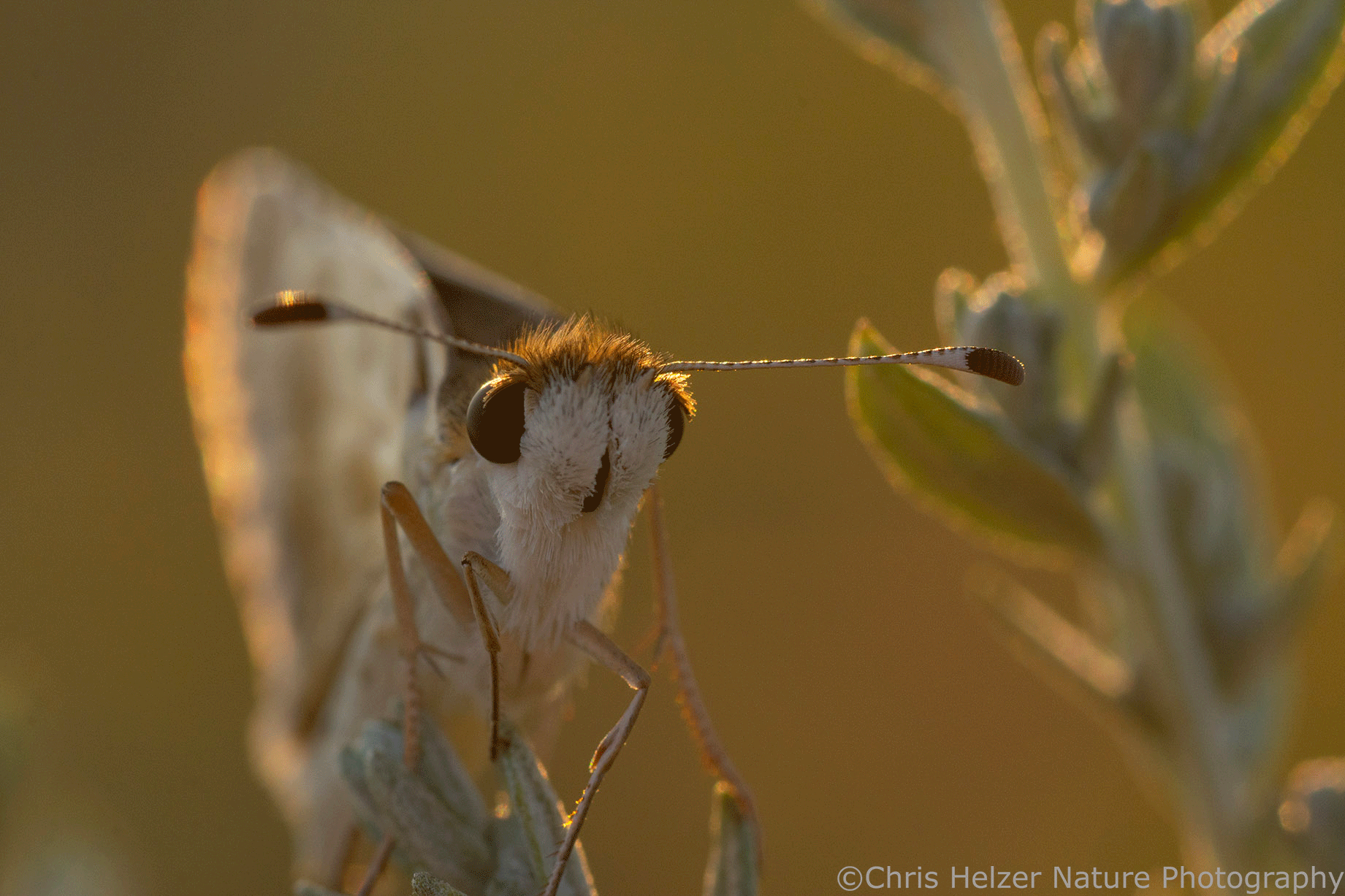
Eastern tailed-blue butterfly (Cupido comyntas) at sunrise.
A different eastern tailed-blue after sunrise,
Plains dog day cicada (Neotibicen auriferus)
Black-eyed susan (Rudbeckia hirta) and frost
Milkweed seed and frost

We built some new trailhead facilities at the Platte River Prairies late this year, so if you’re in the area, or if you’re driving down Interstate 80 and need a prairie hike to break up your long trip, stop by! The address of the trailhead is 13650 S Platte River Dr, Wood River, NE 68883, which is just 2 miles south of the interstate. 

Currently, there are two trails available – one that travels through lowland tallgrass prairie and one that climbs up into some sandhills right on the edge of the Platte River Valley. Both trails are accessible from the same starting point. Most of the prairie you’ll see along the trails has been planted with high-diversity seed mixes, but there is some unplowed sand prairie up in the hills. If you’re there around sunrise, maybe I’ll run into you out there. I’ll be the one lying on my belly photographing a dew-covered bug of some kind.

Photos of the Year – 2023 (3)

I hope you’re not tired of ‘Best of the Year’ photos just yet (especially because I’ve got six episodes in this series and this is only #3). 

Today’s selection is all from The Nature Conservancy’s Niobrara Valley Preserve. I’m also cheating a little by including some photos from the last couple days of 2022. Two things. It’s my blog, so I make the rules. Second, all the included images were shot after the ‘best of’ photos I posted last year, so I’m not really double dipping.

Remember to click on the title of this post if you’re reading this in an email. That’ll allow you to click on individual photos to see bigger, more clear version of each.

Sunrise over the Niobrara River Valley on a frigid, frosty morning at the tail end of 2022.
Sideoats grama and frost.
A prairie wild rose hip (Rosa arkansana) poking out of the snow.
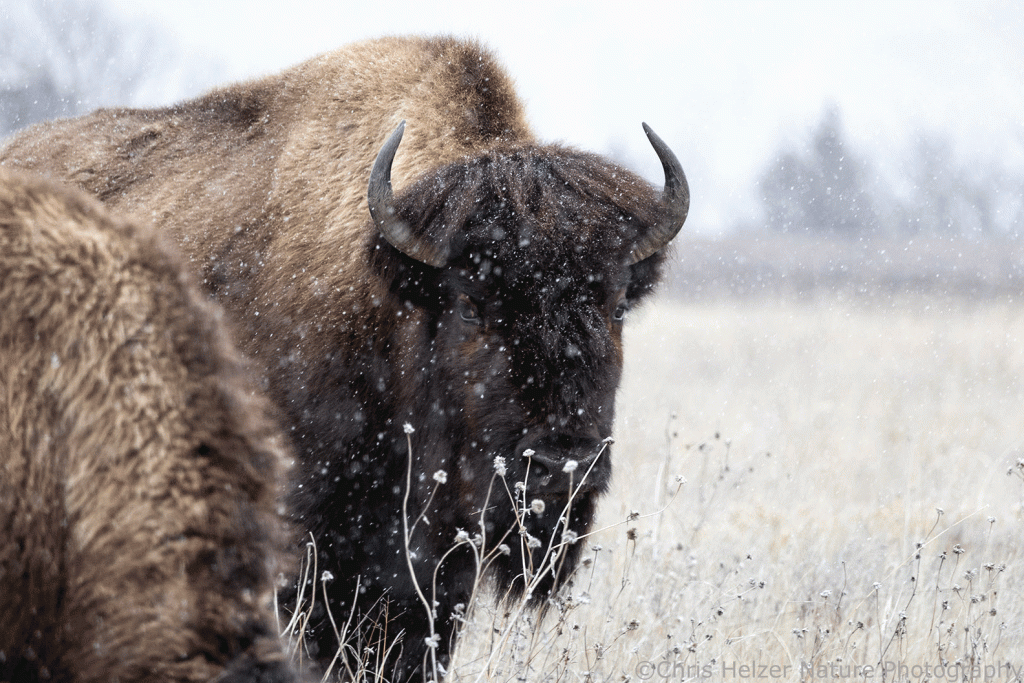
A couple bison bulls in snowy prairie. You’ll have to trust me on the snow part. Also, check out that beard!
Another bison bull in the snow. The snow is just out of the frame, beneath the tops of the grasses. I promise.

All the above photos were taken in late December 2022, but the rest are honest-to-goodness 2023 images. I had some good luck with wildlife photos in 2023, including one really amazing trip during which all the animals seemed to come out to pose for me. As good as those photos were, most of them didn’t make the cut for the ‘best of’ post, though, so you’ll have to revisit my post from last April to see them. Here’s a shot of a sharp-tailed grouse and a few more bison.

Sharp-tailed grouse on the lek after an ice storm. 
Bison breath on a cold morning.
Sparring bison calves are pretty high on the cute-o-meter.
There are lots of places you can see bison across the Great Plains (and – increasingly – the Midwest) but I really love seeing them in places like the Niobrara Valley Preserve where they’re moving around in 10,000 acres or more of prairie.

The year 2023 was a fantastic wildflower year at the Niobrara Valley Preserve. In fact, it might be the best flower year I’ve seen in the 30 or so years I’ve been familiar with the place. Following a pretty strong drought, we had a winter of repeated heavy blizzards and then strong rains in 2023. The result was an explosion of prairie plants – grasses, sedges, wildflowers, and more – and a really amazing show.

Narrowleaf penstemon (Penstemon angustifolious) was one of several penstemon species that had a banner year in 2023. The variation in color between and among the blossoms of each plant are incredibly beautiful.
Prairie larkspur (Delphinium carolinianum) silhouetted against a smoky sunset.
A stick insect, aka walking stick, showing how well-camouflaged they can be. They’re also really challenging to photograph, especially when they’re being blown around in a breeze. This is one of my favorite photos partly because of the degree of difficulty!
Weevil lurks among the petals of a prickly pear cactus…
Prairie spiderwort (Tradescantia occidentalis) bloomed abundantly and for a long time this year. 
A foggy morning and the Niobrara River from one of my favorite (and well-used) vantage points.
An even foggier morning from a different vantage point above the river.

I spent a really magical several hours this fall slipping and sliding along the banks of a couple creeks, finding photographic treasures along the way. You might remember the post the next few photos were first shared in, but if not, you can take a look now. 

Mushroom on moss-covered log, with waterfall in the background. I mean…
Fungus on a log, with mossy accents.
Liverwort!
One of many small waterfalls along the creeks that flow out from under the Sandhills prairie and then cascade down the steep slopes to the Niobrara River.

The photo below was taken during a guided trip along the public hiking trail at The Niobrara Valley Preserve. That trail is open to the public, so if you happen to be up along the river for a float trip or other purpose, stop by! We built a snazzy new trailhead this year, including a vault toilet and informational signage, so it’s ready for your visit. (The same facilities are now available at the Platte River Prairies as well.)

Birdwatching during our annual “Autumn in the Sandhills” event for Nebraska TNC members.
A late-season spider (with prey) on a dew-covered spiderweb.

There are a lot of incredible places in the world, but The Niobrara Valley Preserve competes really strongly in the field. I’m really grateful for the opportunity to get paid to visit and work there. On that note, I’m happy to say that my job duties are shifting in a way that will take me up to NVP even more often. 

Starting in January, I’ll be taking on the supervision of the land stewardship teams that manage the Niobrara Valley Preserve and Platte River Prairies, in addition to my current science and outreach roles. I’m really looking forward to it for lots of reasons. The downside is that, at least for a while, it’ll cut into the time I have to write and do other outreach activities. Don’t fret – the blog isn’t going away. Just don’t be surprised if the frequency of posts decreases a little.