
Beaver art?
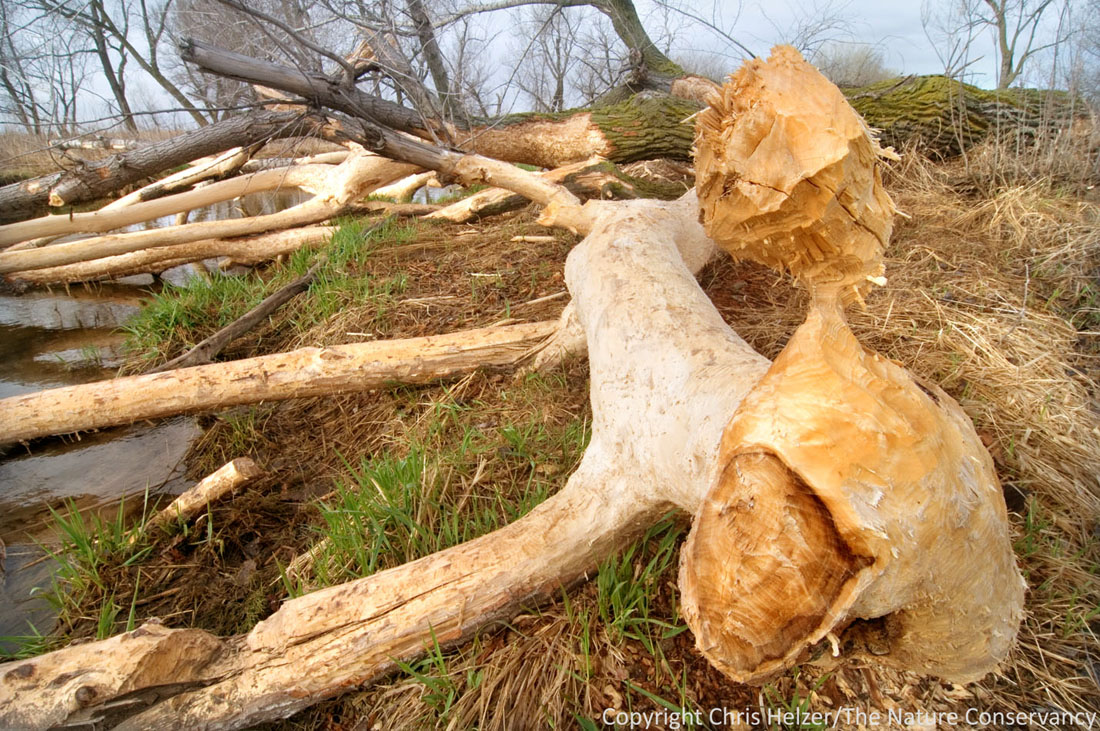
Beaver "sculpture" at the end of a downed cottonwood's branch. Click on the photo for a larger, sharper image.
This week, I had some time to walk along the creek that runs through our Platte River Prairies. As I was walking, I found this big cottonwood tree that had fallen over and subsequently had most of the bark stripped off its branches. Clearly there were beavers at work. I was particularly drawn to the end of one large branch that had been chewed in an odd way. No, I don’t think it was done to be artistic, but I can’t actually come up with a logical scenario that explains it either. Accidental art?
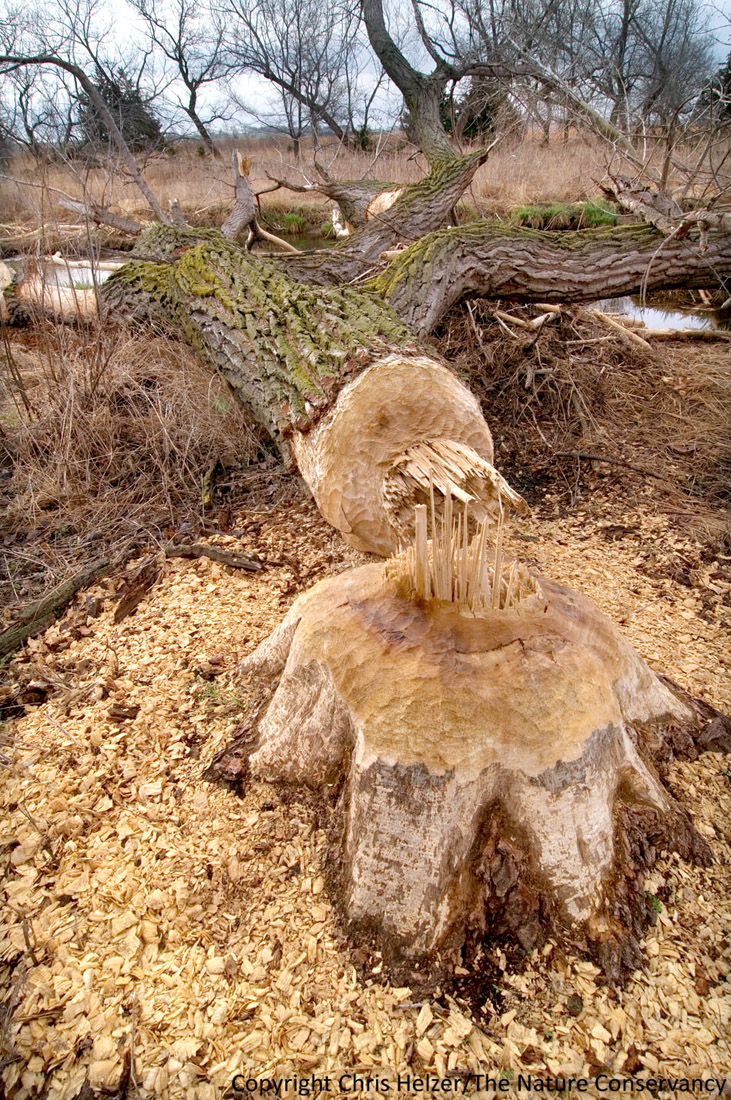
The two-foot diameter base of this cottonwood must have taken the beavers quite a while to work through.
The cottonwood tree was very large – over two feet in diameter. A curious choice, since there were numerous smaller willow and cottonwood trees nearby. On the one hand, they gained an awful lot of branches and bark from dropping one tree. On the other hand, boy, what a job!
The beavers’ lodge was on the bank of the stream, right underneath the fallen tree. I’d really like to know whether they built the lodge before or after they dropped the tree…
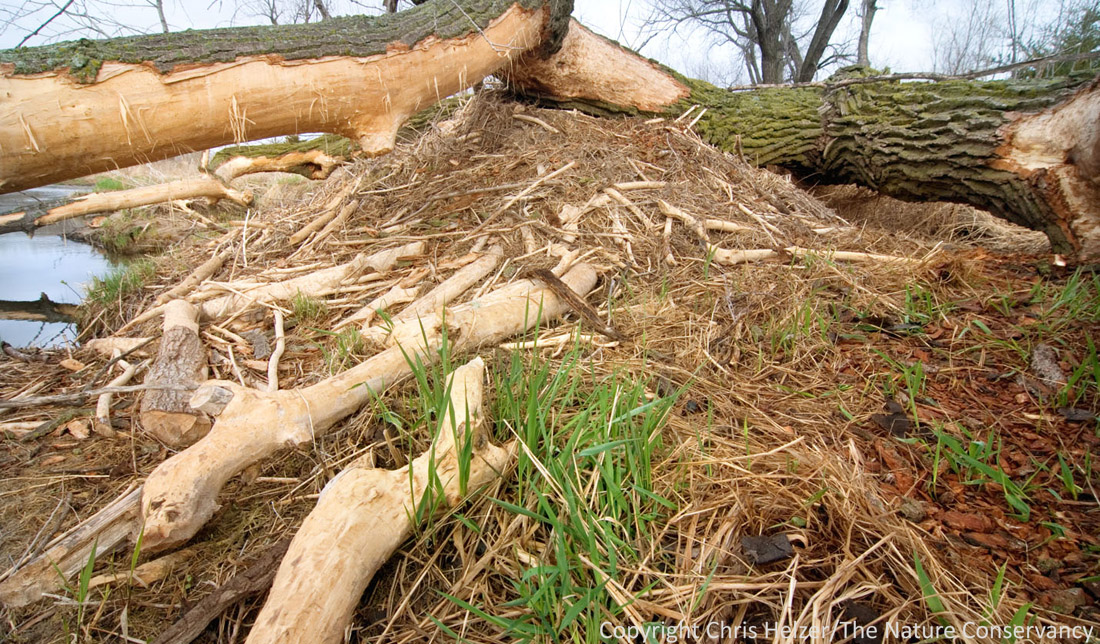
I'd love to know whether the lodge was initiated before or after the big tree was dropped. It ended up being right underneath the fallen tree.
Beavers are great engineers, of course, dramatically changing water courses and wetlands wherever they live. Sometimes that ability brings them into conflict with humans. We’ve been battling beavers at another of our sites where their dams are backing water over the roads that we and our neighbors rely on to get to our properties. In that case, the engineering of the beavers has been less pleasant to observe – though no less impressive. In the case of the “artistic” beavers in our Platte River Prairies, I’m happy to let them build and create at will. In fact, I look forward to watching what they come up with next.
 The Prairie Ecologist