Quick last minute announcement – we are hosting a plant identification/habitat workshop at the Platte River Prairies next Tuesday (9am-2pm). Fore more information or to RSVP, please contact Kate Samuelson at kate.samuelson@tnc.org.
I spent a couple days at the Niobrara Valley Preserve this week. There was a lot to see, as always. Here are some of the highlights.
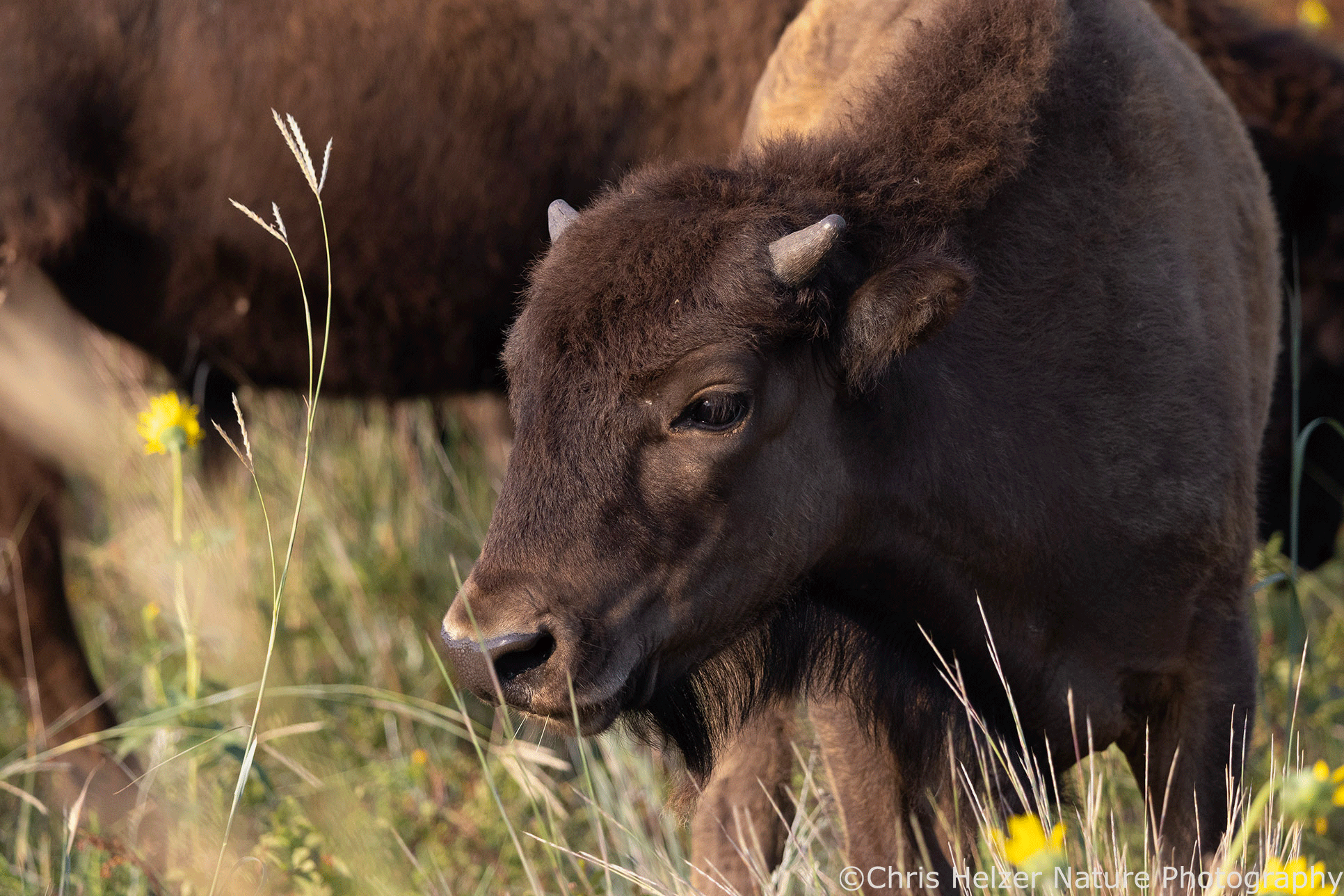
It’s mating season for the bison. During the rut, as it’s called, the herd is as noisy as it ever gets. The sound comes mainly from the big mature bulls who take mating very seriously and spend a lot of time “tending” females. That mostly entails finding females in heat and sticking very close to them, preventing them from merging with the larger herd and keeping other males from getting too close until (they hope) mating ensues. You can get a feel for the sounds of this happening in the video below. (If the video link isn’t active, click on the title of the post to open it online.)
We have two herds on the Preserve. The west herd has a 12,000 acre pasture and the east heard has a 10,000 acre pasture. Between the two, there are around 1,500 to 1,600 animals right now. I was hanging out with the east herd this week.
In that east bison pasture, the bison were very noticeable, of course, but the other big scene stealer was a plant. Annual buckwheat (Eriogonum annuum) is as abundant as I’ve ever seen it and I’m not sure why. It made a terrific white backdrop for photographing the bison herd, but also was attractive on its own – especially with some plains sunflowers (Helianthus petiolaris) mixed in for accents.
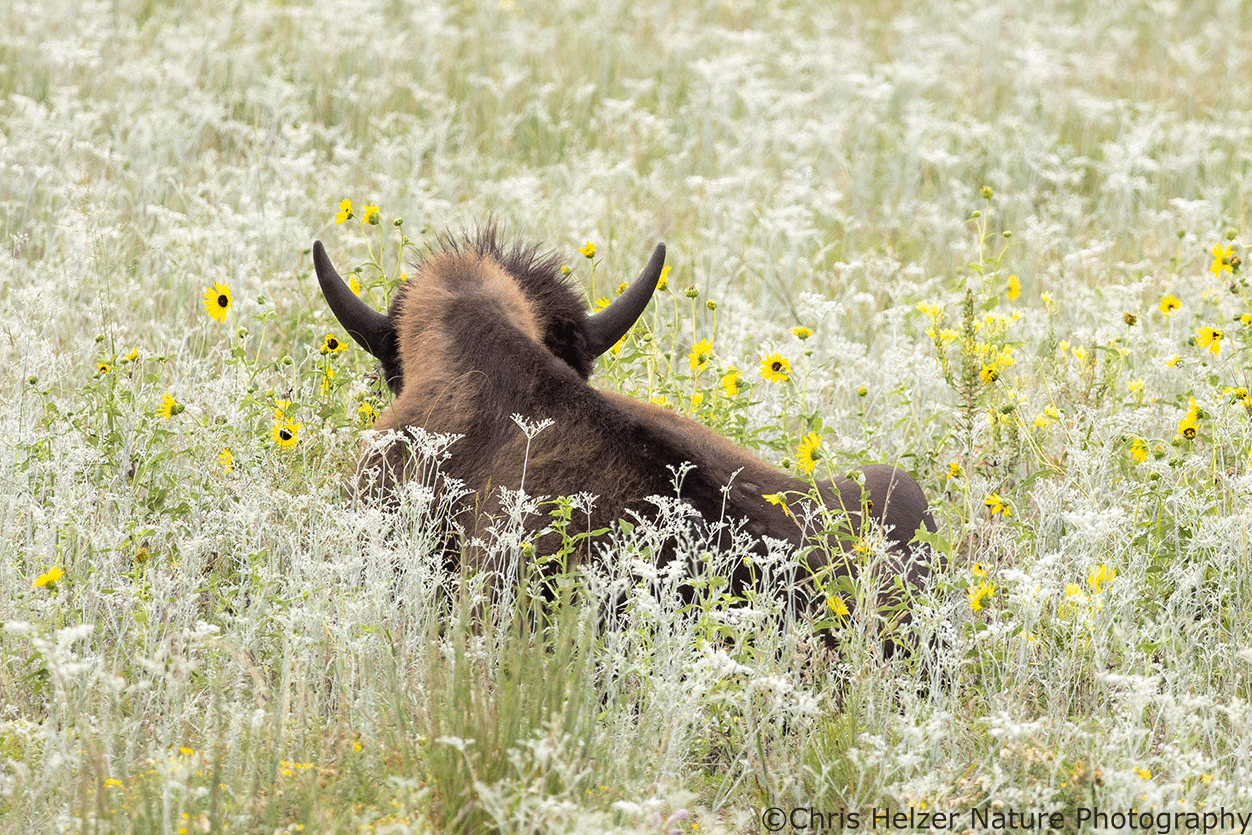
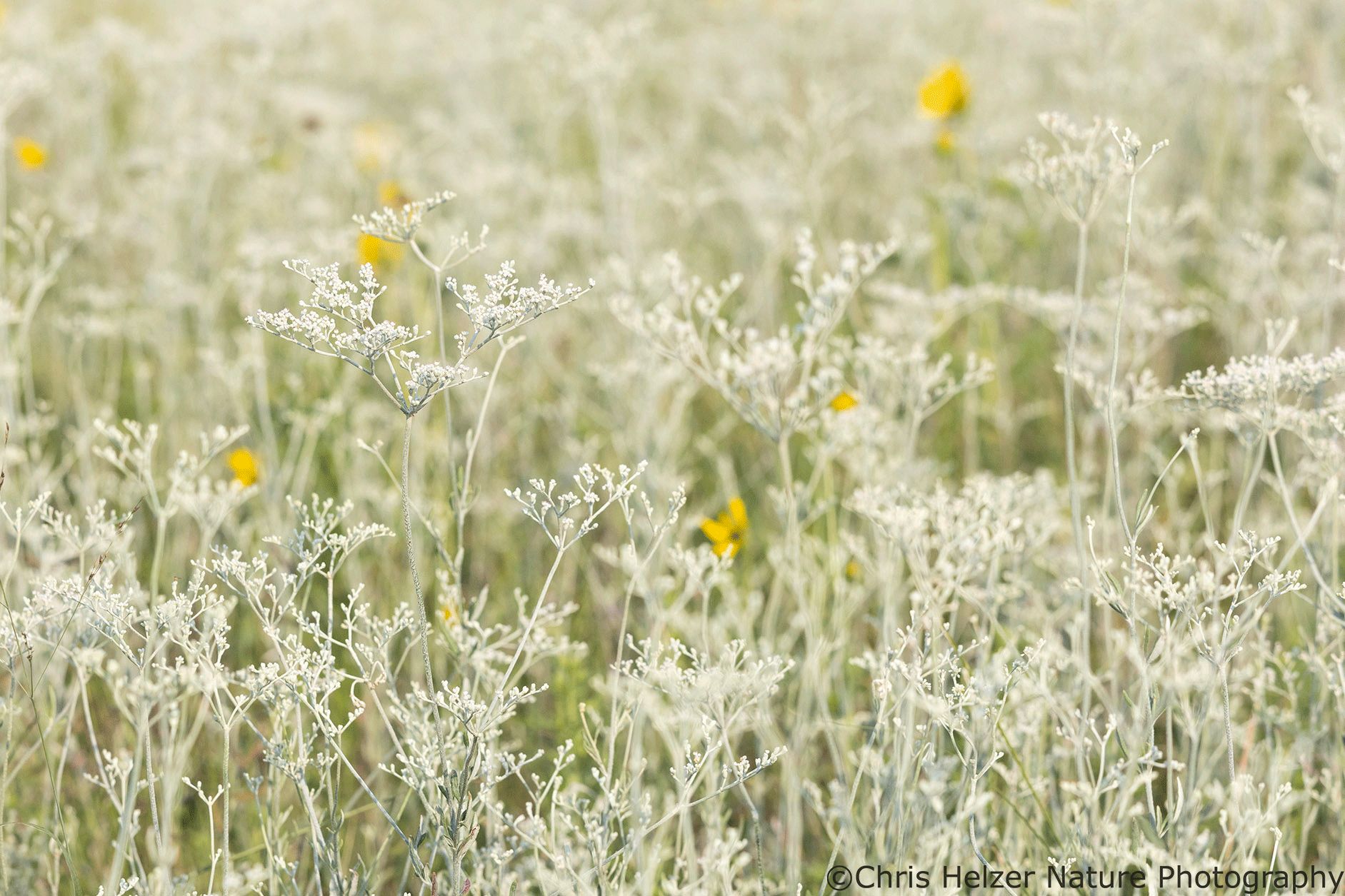
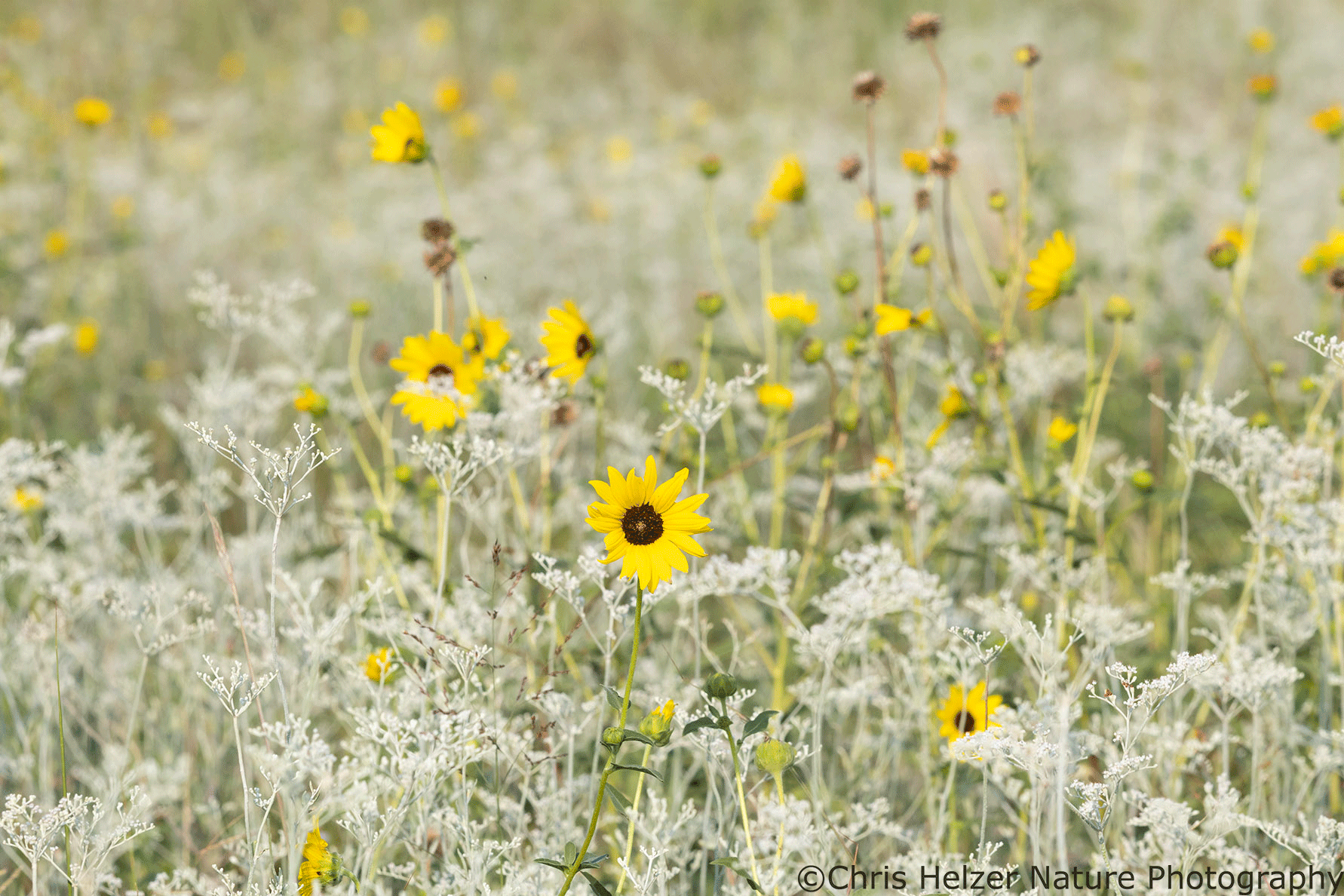
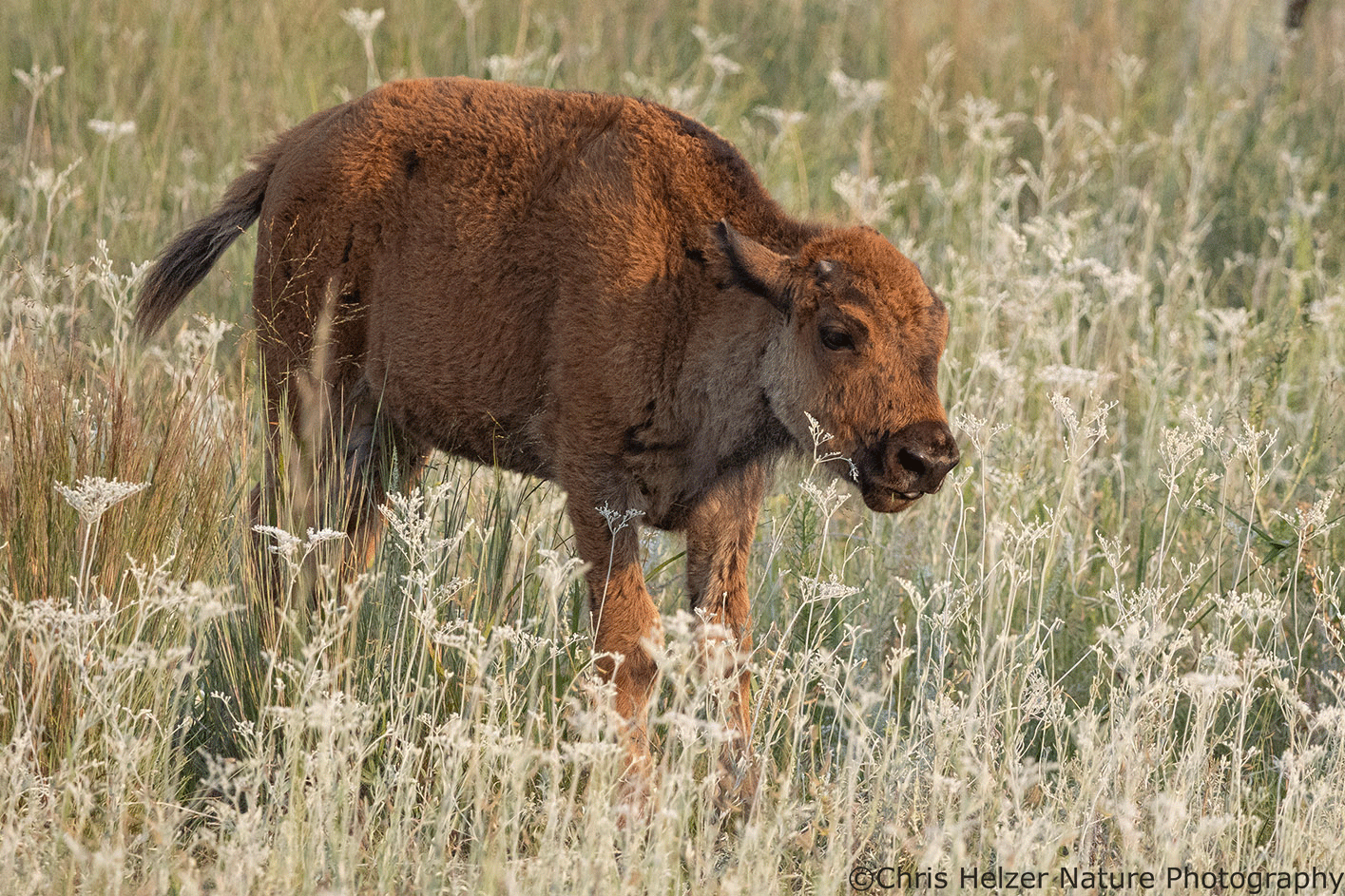
Most of this year’s bison calves are getting big and have lost their red color, making them blend into the herd much more than they did a couple months ago. That’s not uniformly true, though – there are a few red calves around that were probably born within the last month or so. It’s not unusual to have a few outliers like that, even though most calves are born in April and May.
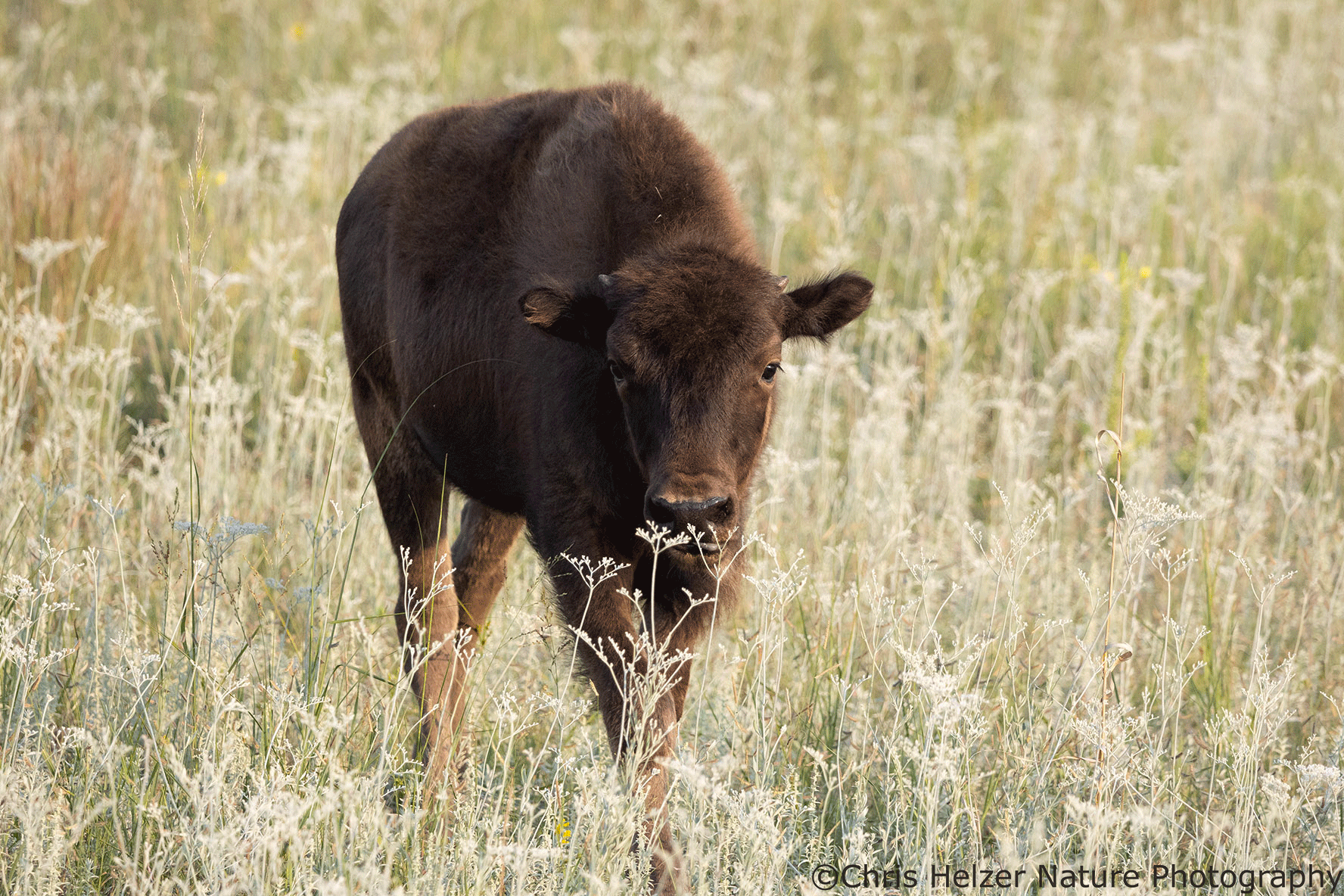
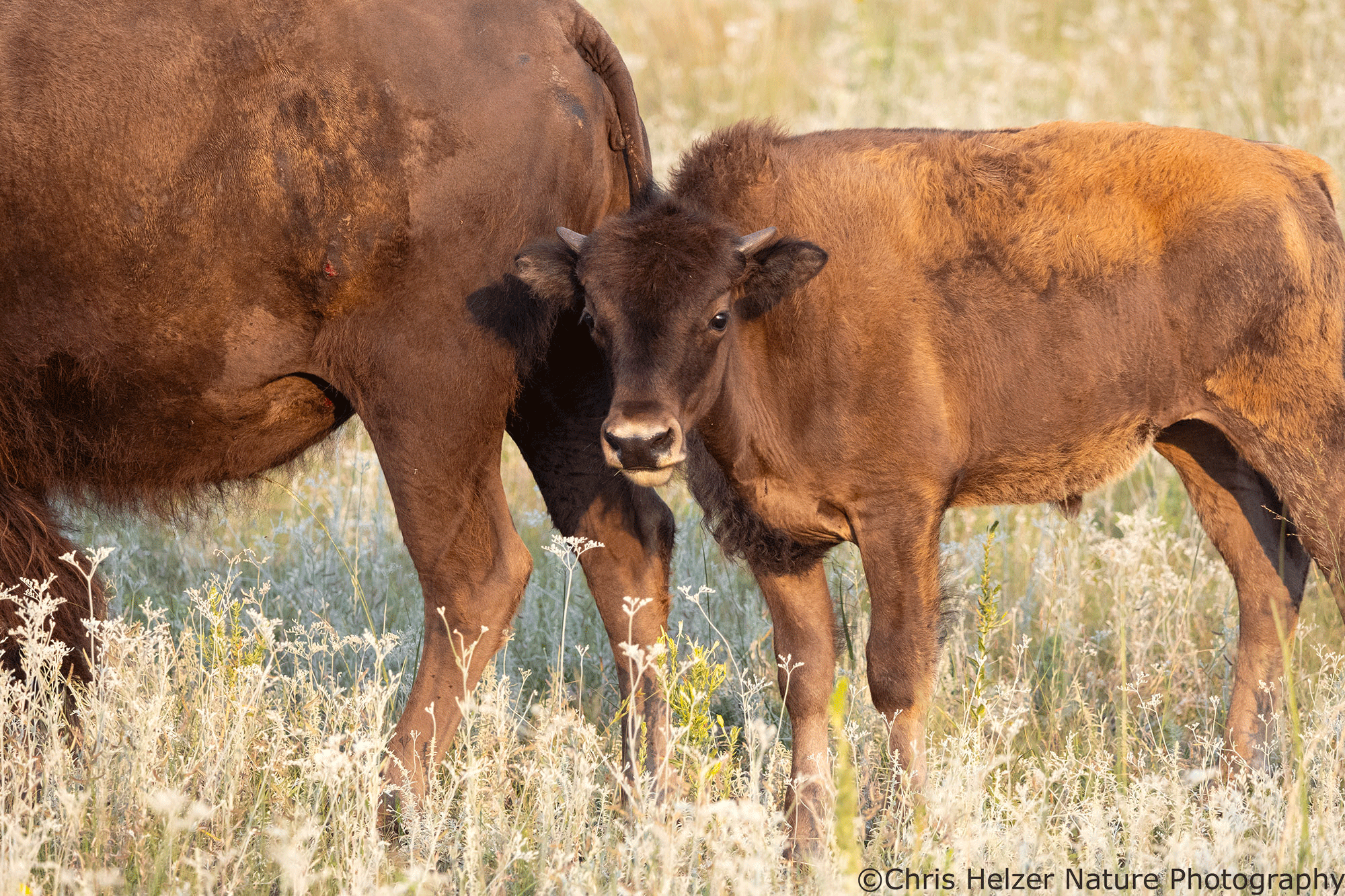


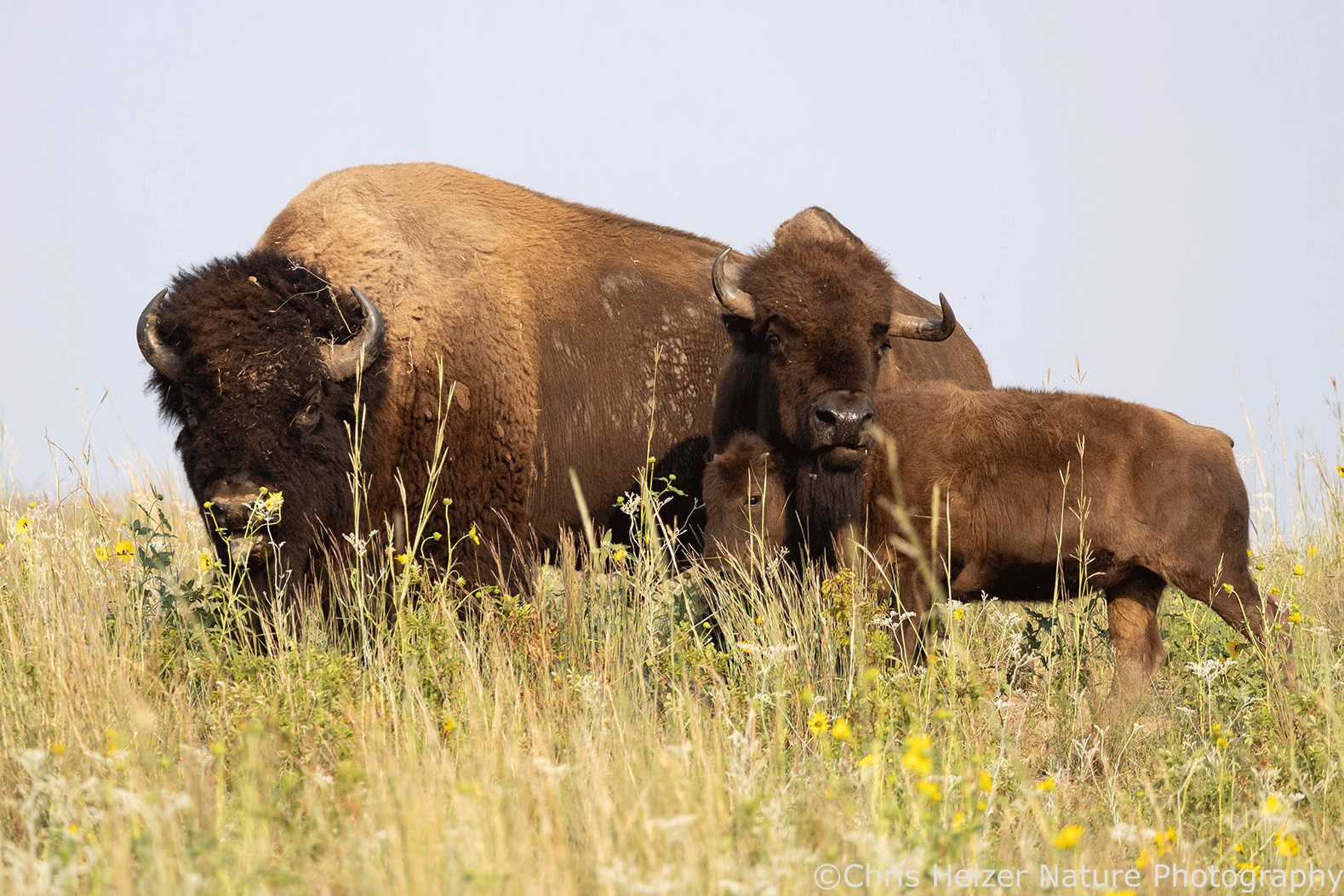
The photo below shows a bull, cow, and calf in what you might think is a little family group. They’re not ‘that kind’ of family, though. What’s really happening is that the cow is in heat (ready to mate) and the bull has separated her from the herd a little so he can keep an eye on her and keep rival males from getting too close. The calf is trying to stay with her mom, too, both for food and comfort.
Monday evening, I drove slowly out to one of the bigger groups of animals in the east bison pasture and parked near where they were hanging out. Over the next hour, the herd very slowly flowed past my truck. I enjoyed watching all the social dynamics and listening to the sounds of the rut. I also took a few short videos with my phone (shown earlier and below) when the animals were right outside my window. I had a to cut a couple of them short, though, because my truck started swaying too much as a young bull scratched its neck and back on my rear bumper. The video below shows a bull licking its flank and the sound gives you an idea of the rasping power of a bison tongue.
All that bison and buckwheat action took place in Sandhills prairie on the south side of the river. On the north side, we have mixed-grass prairie on “harder ground” – sandy soils, but with a little more clay and silt mixed in.
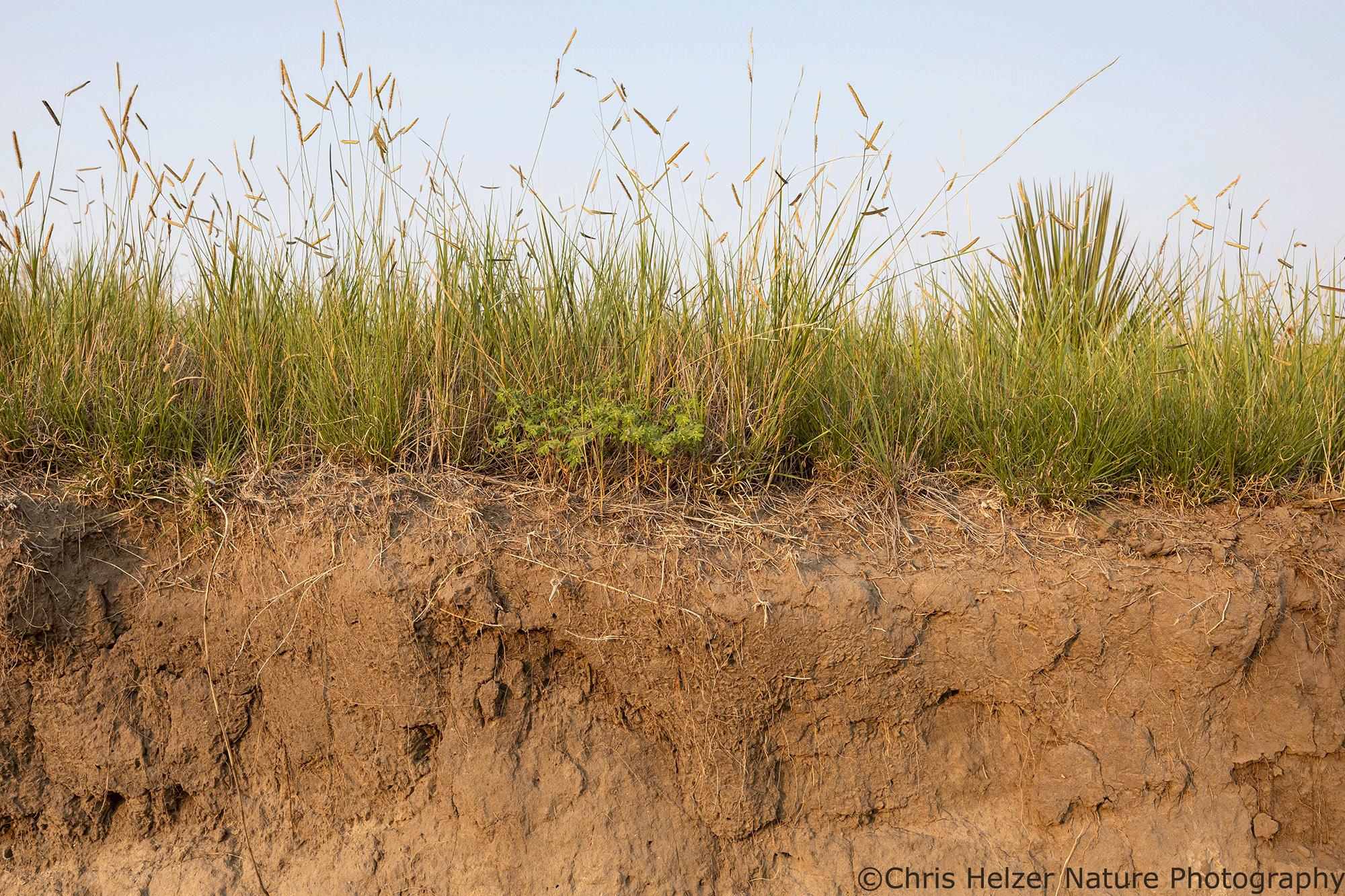
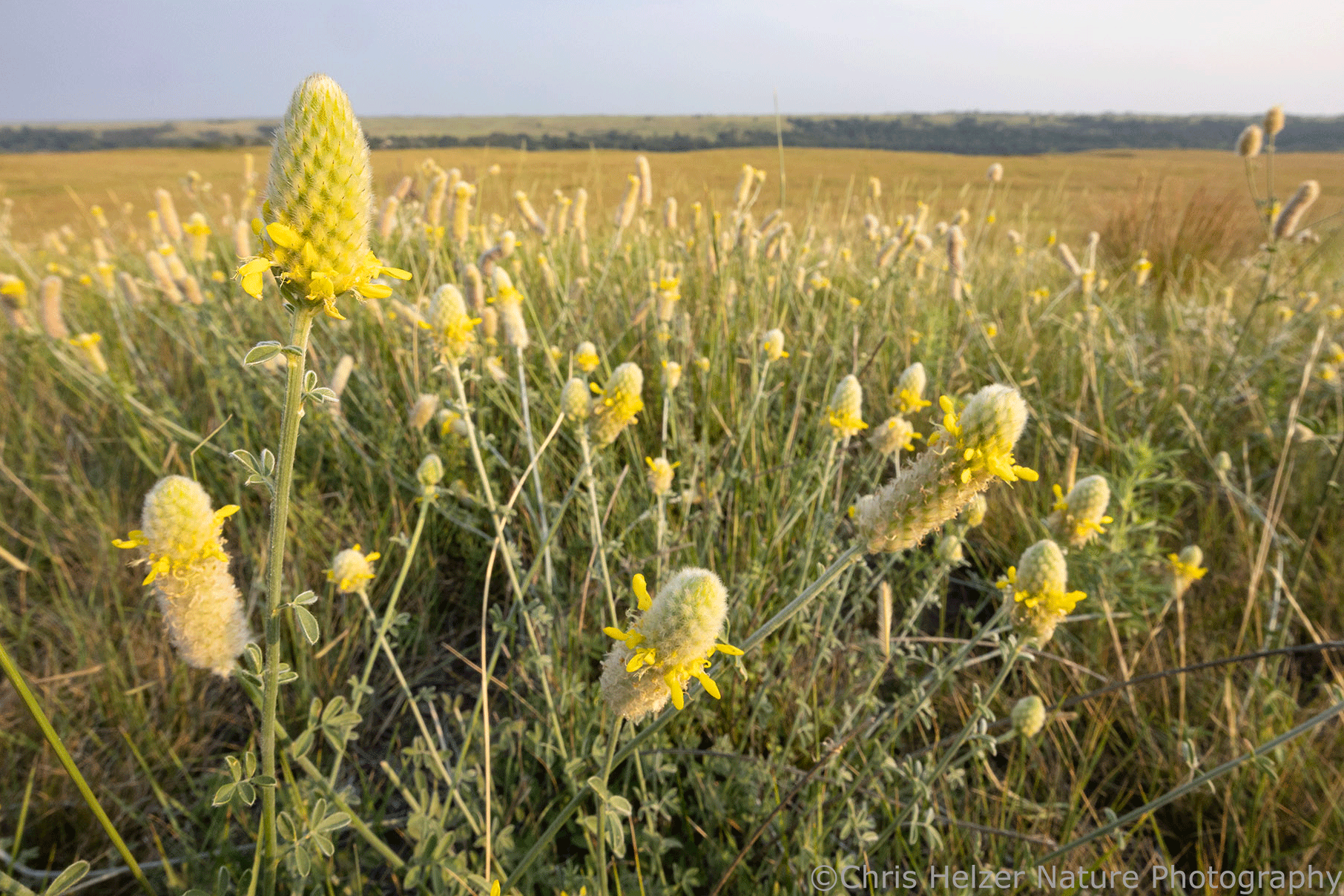
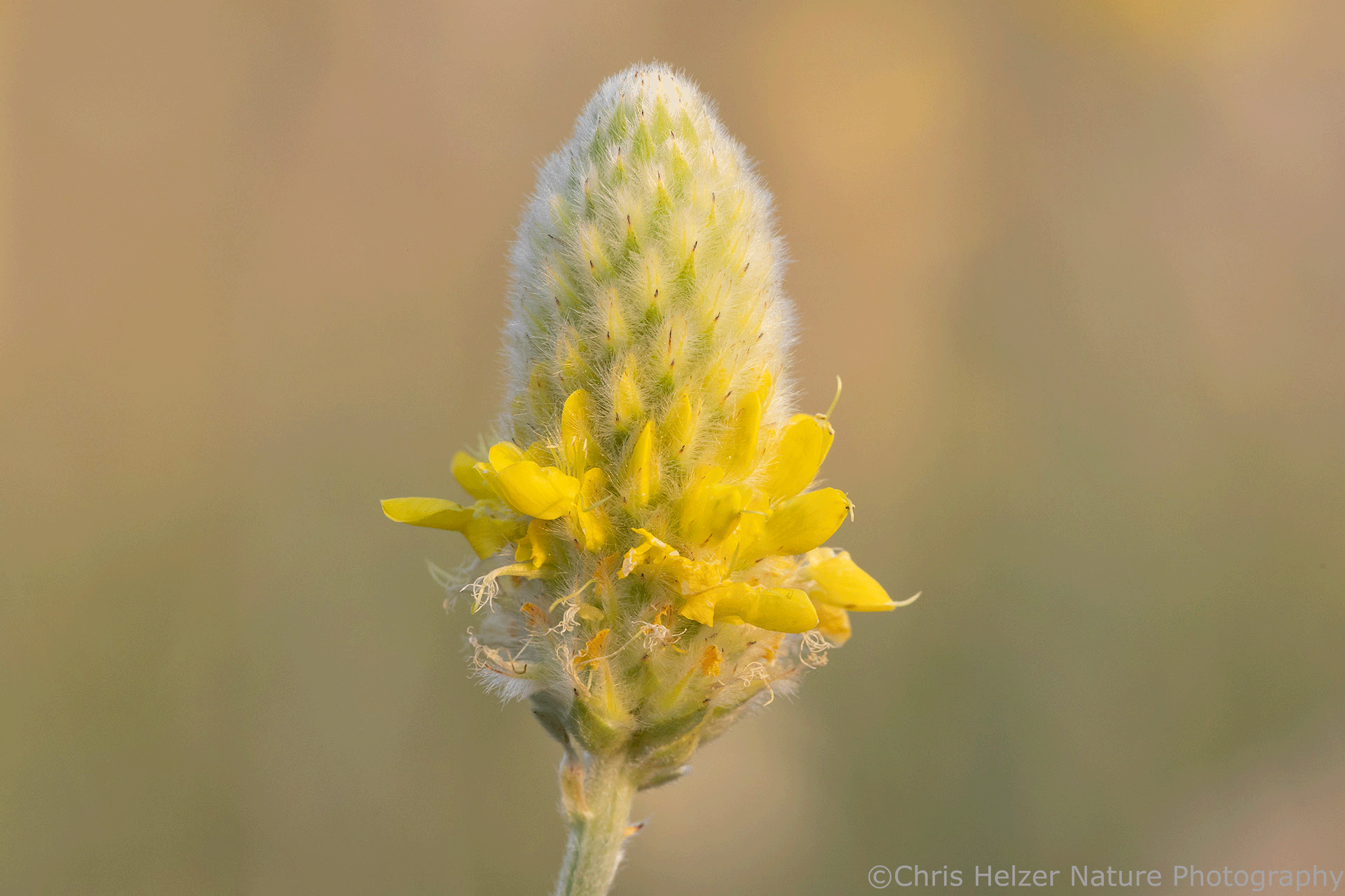
There’s a lot of overlap in plant species composition between the prairie to the north and south of the river, but also some significant differences. For example, purple, white, and silky prairie clovers are all blooming in the Sandhills right now. On the north, there are a few of each those species, too, but also some big populations of golden and nine-anther prairie clover, which aren’t so much Sandhills plants.
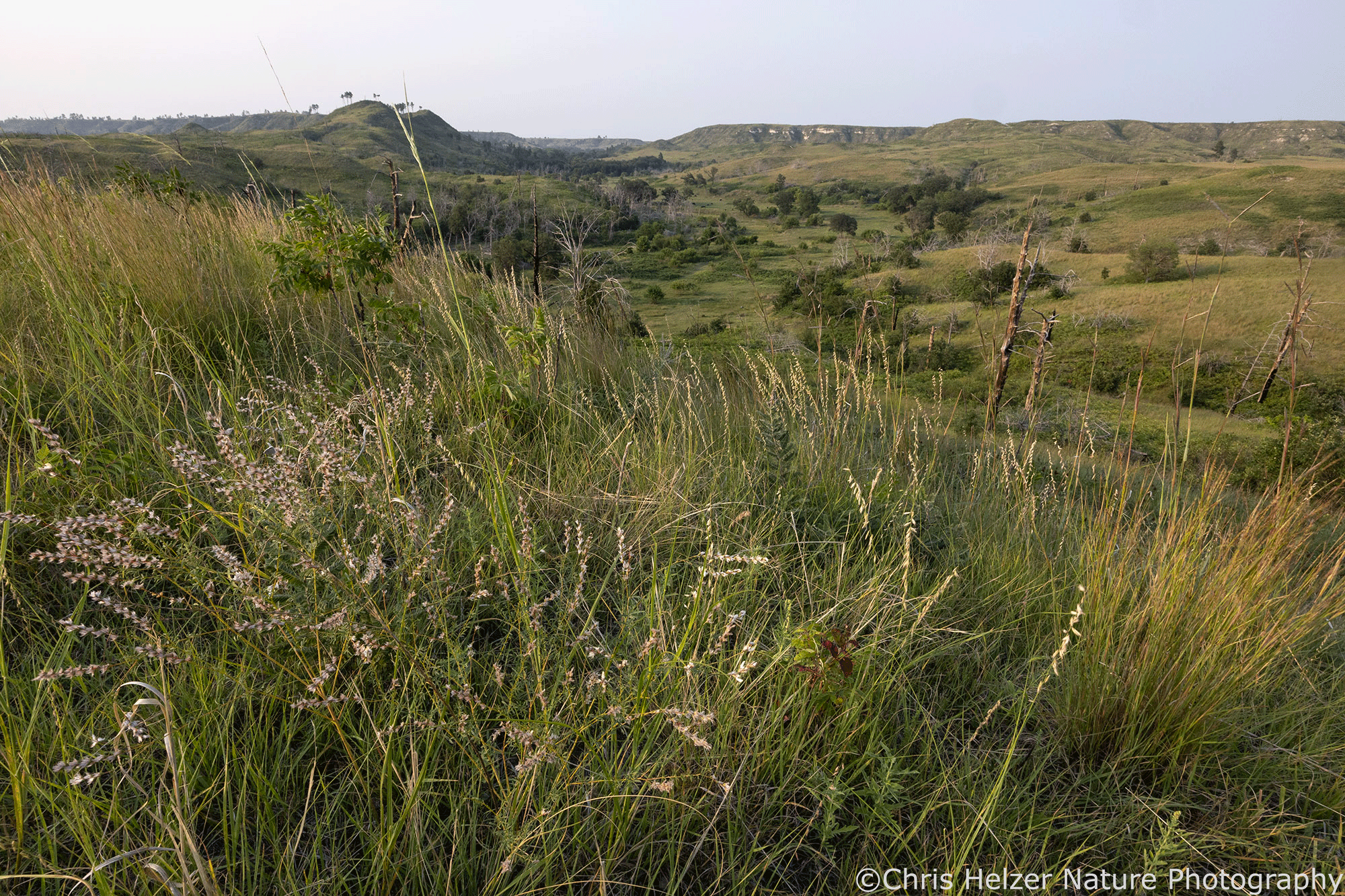
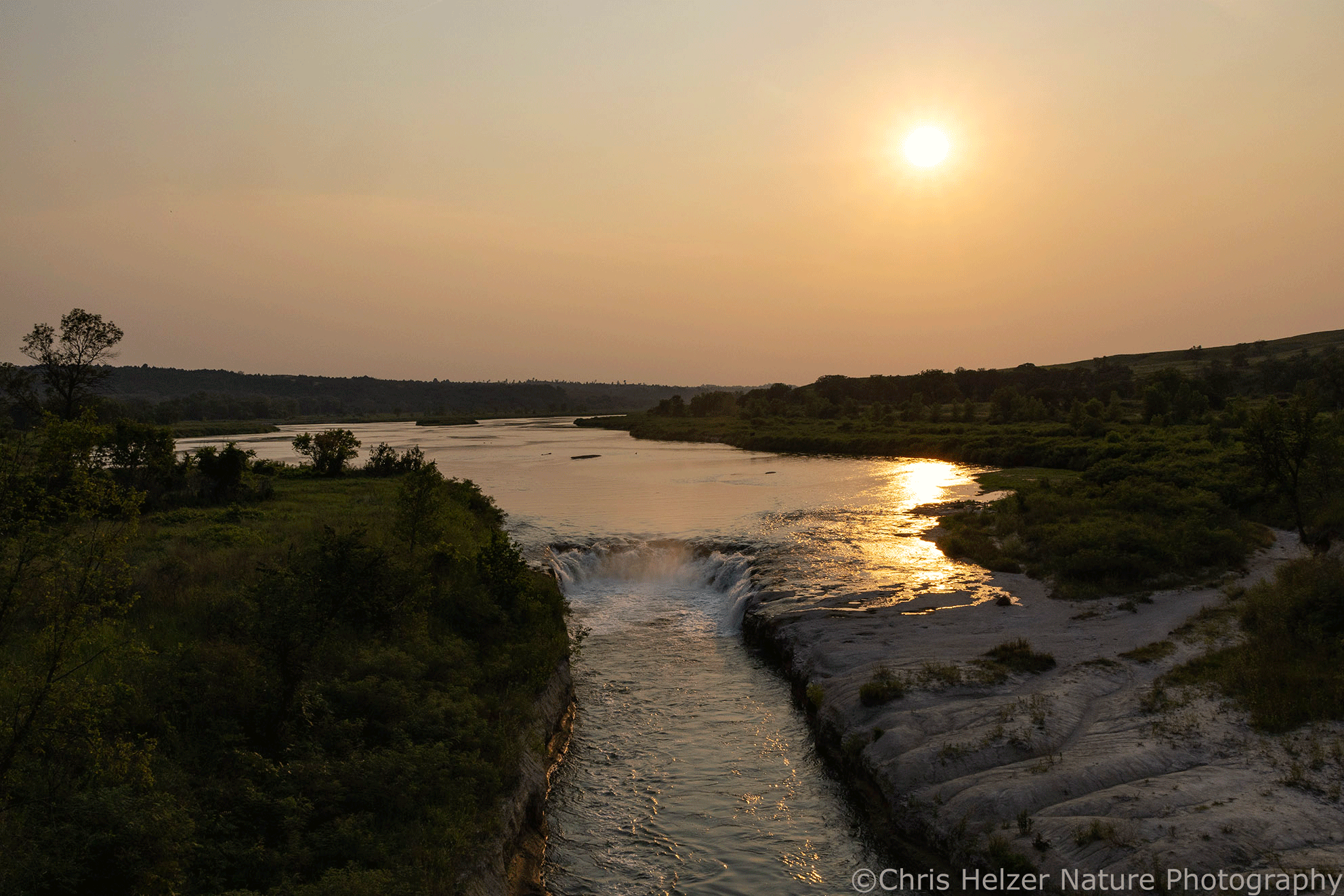
I poked around in the hills north of the river for a while on Sunday evening and then headed down to the river for sunset. I walked up to the Norden Chute, the big waterfall just upstream of the Norden Bridge that crosses the Niobrara River on our property. This local landmark is accessible to anyone who wants to park in the little lot by the bridge and walk under the bridge to get close. (There is also public fishing available in the same spot.) Because the Chute keeps moving upstream a few feet each year, you might want to come see it fairly soon because when it hits the wider channel, it’s hard to know what it will become.
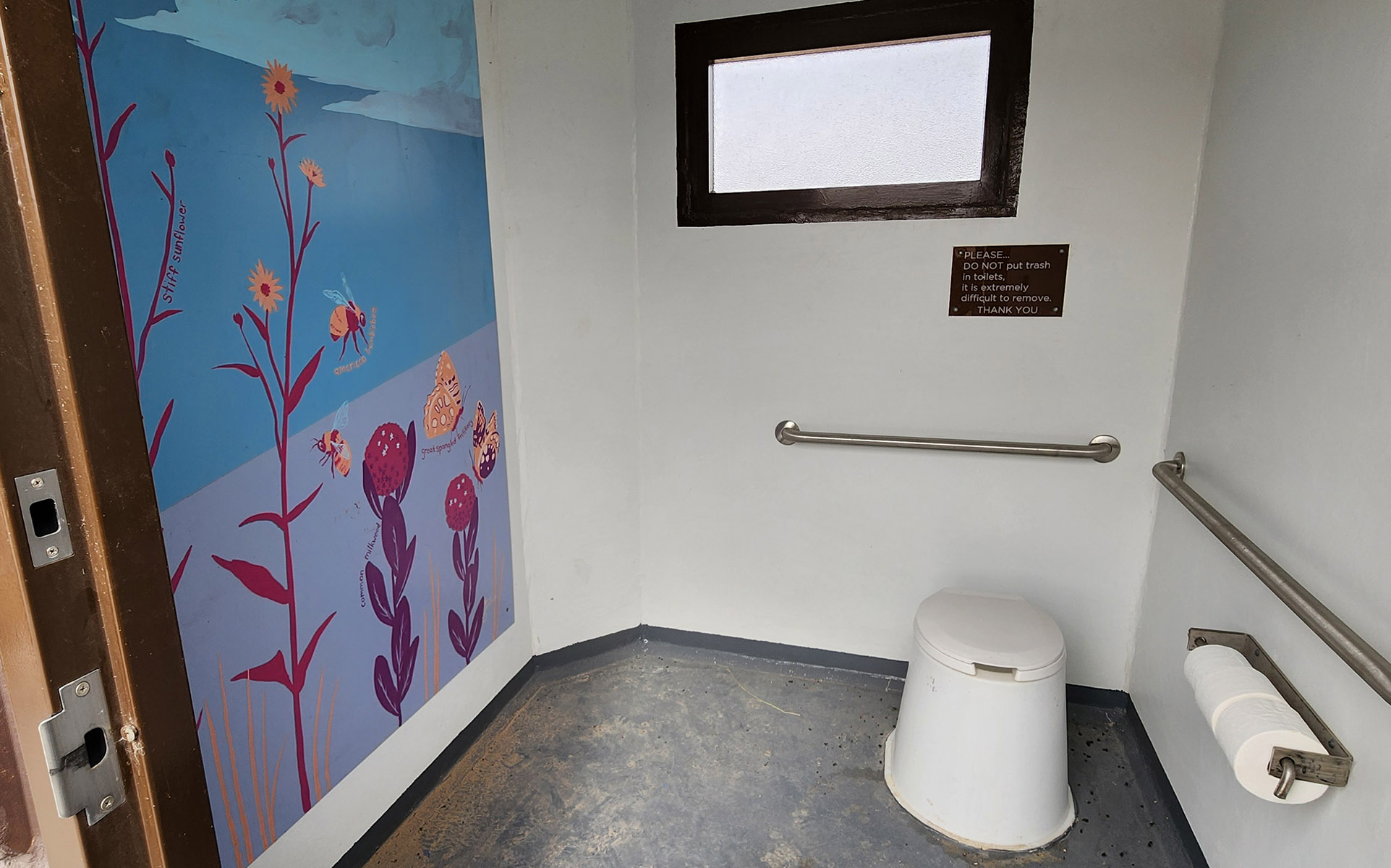
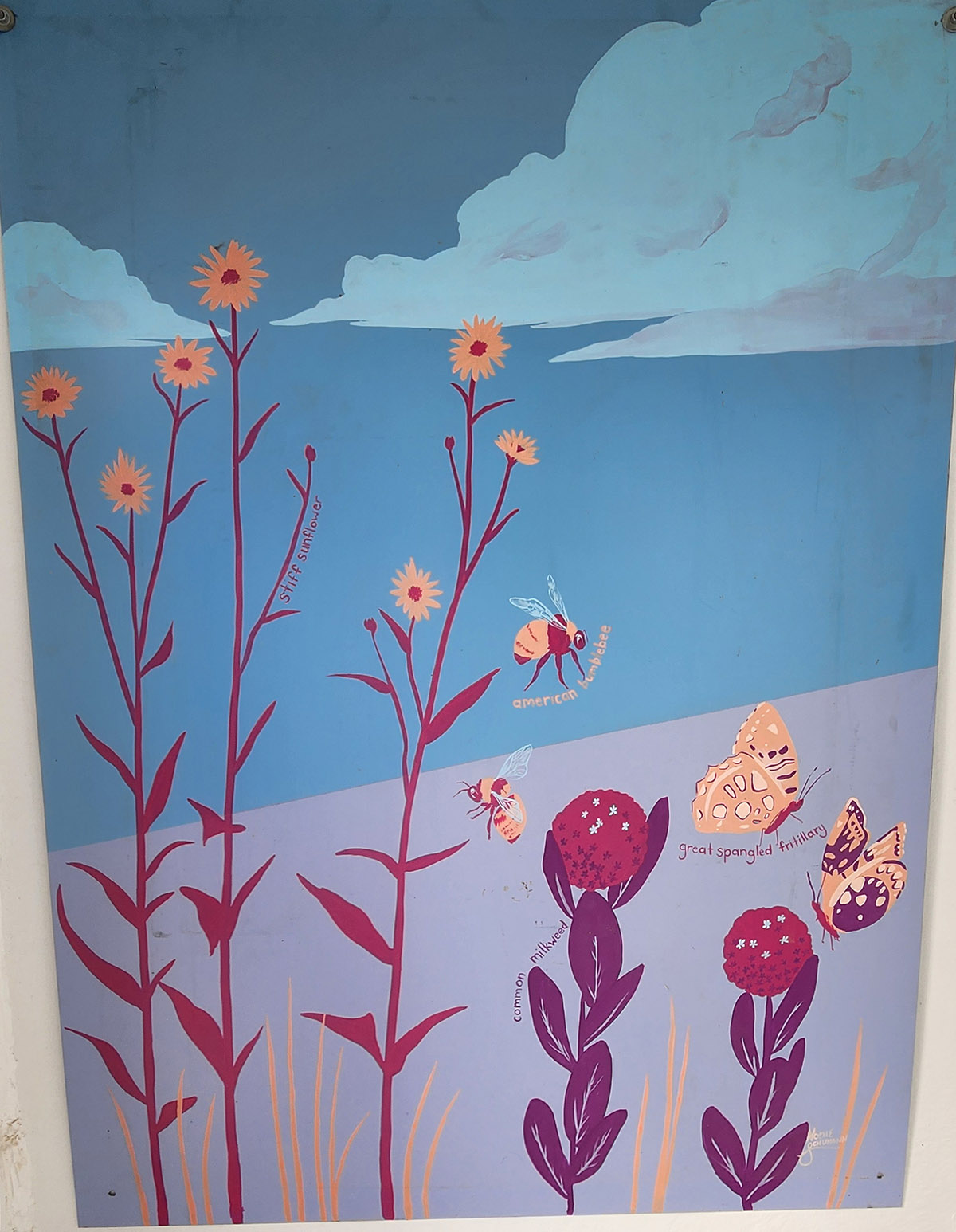
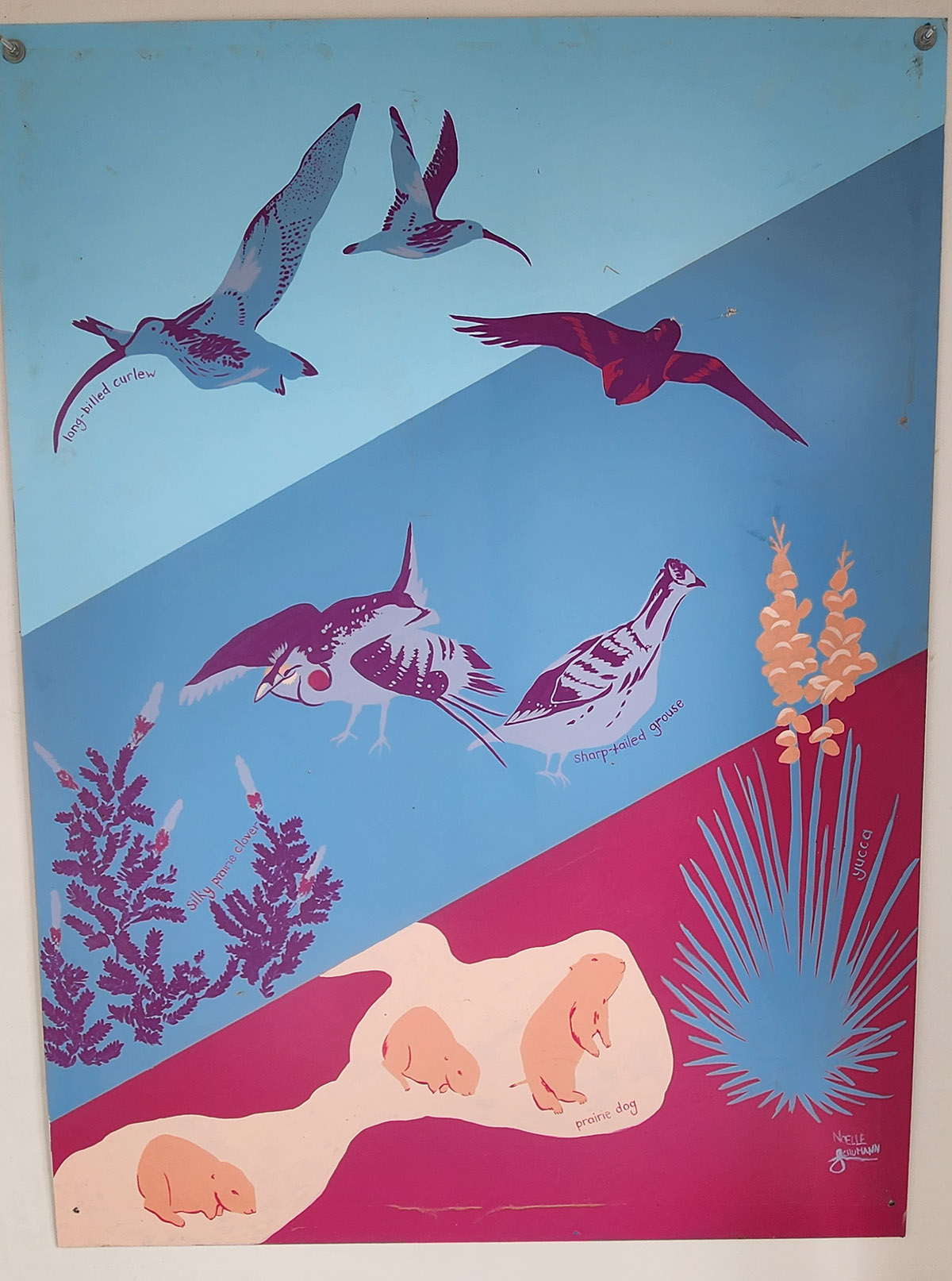
Please come visit both the Niobrara Valley Preserve and our Platte River Prairies! There are public trails at both sites. And, at both sites, in addition to some very nice interpretive materials at the trailheads, you should really take a look inside the bathrooms. They’re perfectly nice bathrooms, but they also include some murals painted by former Hubbard Fellow Noelle Schumann. Here are some photos from the trailhead bathrooms at the Niobrara Valley Preserve: