
On Wednesday of this week, we took advantage of the eerily warm November temperatures to conduct our second prescribed fire of the fall. This one will help concentrate some spring grazing in an area where we want to suppress grass dominance and rehabilitate forb diversity. The fire was also a great opportunity for further training of some young conservation staff. In addition to Eric and Katharine, our two Hubbard Fellows, we also had three young interns/technicians from a couple of our conservation partners, the Crane Trust and Audubon’s Rowe Sanctuary.

Katharine Hogan, one of our Hubbard Fellows, ignites the west flank of the fire.
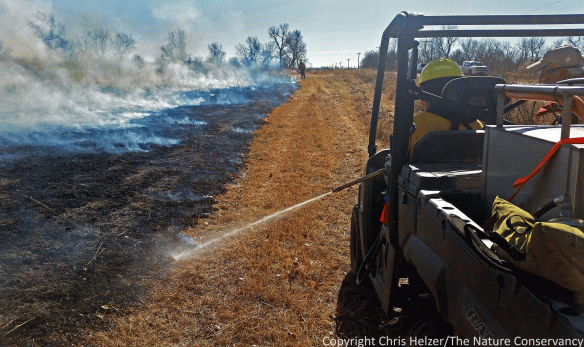
A firefighter in a UTV with a slip-on pump unit follows Katharine’s ignition and prevents the fire from creeping into the mowed firebreak. By this stage in the fire, the wind was mostly blowing the fire away from the break and into the unit, making this job easier.
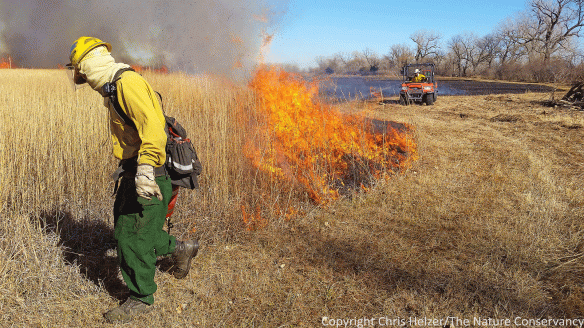
Here, Eric Chien, our other Hubbard Fellow, ignites the head fire, which runs quickly with a tailwind until it is stopped by the backing fire and blackened area at the far end of the unit. He is followed by another UTV and pump unit.
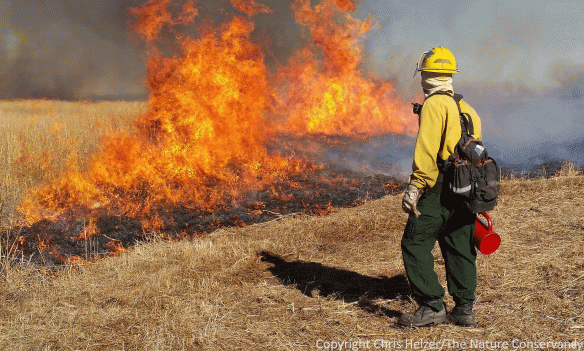
Nothing to do now but watch.

At the end of every fire, we hold an “After Action Review” in which every member of the crew shares what went well, what they learned, and what might help us do better in the future.
Anyone who has seen prairie fires up close gains an appreciation of their speed, heat, and power. Harnessing a force like that to achieve prairie management objectives takes careful planning, solid training and good equipment. The fire this week went as smoothly as could be hoped for, but – as with every burn I lead – my stomach was still knotted up until the last of the big flames had been extinguished. After we were done, I took a leisurely and therapeutic walk around the perimeter of the burned area, both to confirm that everything was secure and to envision the positive impact the burn will make as next year’s growing season begins.




 The Prairie Ecologist