
Bumblebees are fascinating creatures. Like honey bees, they are social insects that split foraging and brood rearing chores between groups of workers. However, unlike their non-native cousins, bumblebee colonies die off at the end of the year, leaving only a few fertile females to overwinter. Those females emerge from hibernation in the spring, find a suitable nesting site, and begin building up a new colony of bumblebees that can reach several hundred individuals in size – all within a single season.
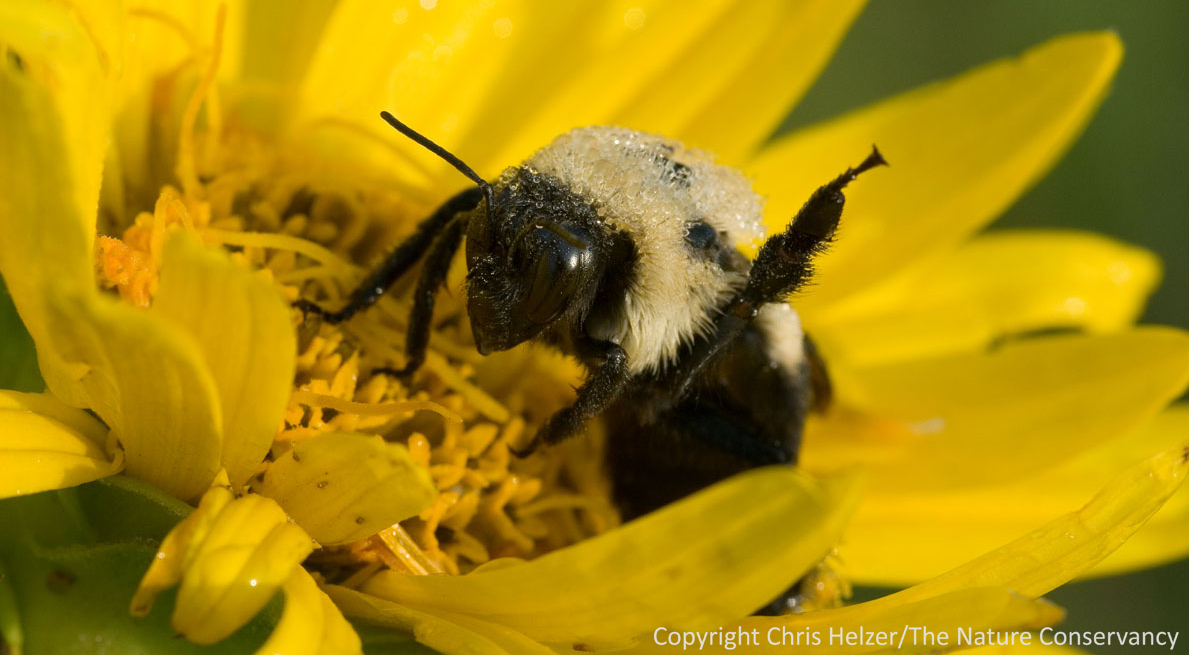
This bumblebee kept lifting and lowering its leg as I photographed it. The Nature Conservancy's Platte River Prairies, Nebraska.
This particular bumblebee was sitting on a rosinweed flower in a dew-covered prairie one morning. As I began photographing it, it started lifting and lowering one of its legs. I have no idea why it was doing that. It could probably be construed as either a greeting (or perhaps the opposite!) but was probably more of a stretching exercise as the bee began warming up in the early sunlight.
To learn more about bumblebees, and to find an easy identification guide (at least for the 17 Nebraska species) go to the University of Nebraska’s bumbleboosters site.
 The Prairie Ecologist