
Celebrating Seeds

I’ve been seeing a lot of brand new plants germinating from seeds during the last couple weeks. Looking at all those cotyledons (first leaves) poking out of the ground makes me reflect on the massive amount of good fortune it takes for any seed to actually turn into a new prairie plant.

Prairie dandelion seeds (Nothocalais cuspidata).

Seed production is a high risk, high reward strategy for plants, and even that’s a huge understatement. It takes a tremendous amount of energy for a plant to produce a flower – especially if you’re trying to make one that’s attractive to an animal pollinator. There’s all the colorful petals or other structures, nectar (in many cases), and, of course the pollen itself. After pollination, even more energy can go into loading up the developing seeds with the nutrition and energy needed to give the embedded embryo a chance of success.

Once the seeds are released from the plant, they often travel away from their parent – at least far enough that they aren’t trying to grow directly beneath them. The varied tactics used by plants to disperse their seeds is a huge, fascinating topic, which I’ve written about before. Regardless of whether a seed travels by wind, water, attached to the fur or feathers of an animal, or by being eaten and then pooped out, there are myriad dangers along the way.

Prairie violet (Viola pedatifida) seeds can travel in two ways. First, they are ballistically launched into the air as their pods dry and constrict. Second, many are picked up and carried home by ants because of the little fatty packet of nutrition (elaiosomes) violet seeds have attached to themselves for that very purpose.

Seeds packed with nutrients to feed their embryo are also a great food source for many other organisms. Countless vertebrate and invertebrate animals seek out and eat seeds, especially during the dormant season when most other food sources are scarce. Fungi and lots of microorganisms can also destroy and consume seeds.

Pasque flower (Pulsatilla patens)

If, by some minor miracle, a seed survives its short or long journey intact, it may still be a long way from ultimate success. For most plants, germination only happens if a seed is in good contact with soil. Think for a moment about the world a seed is launched into and how many obstacles there are between that seed and the soil!

When you walk through most prairies, if you look straight down, you’re not seeing a lot of bare soil. Instead, there are a lot of living and dead plant parts (leave, stems, etc.) between your feet and the ground. A recently-burned prairie, of course, has lots of bare ground. That’s a great opportunity, but only for any seeds who weren’t consumed by the fire itself.

Most seeds land on something besides soil. Often, that’s the end of their journey and they sit there until they die (e.g., the embryo runs out of stored food) or they’re found and consumed by another organism. If they’re lucky, they might get dislodged from their original landing spot by wind or rain, for example, and slip downward toward the soil.
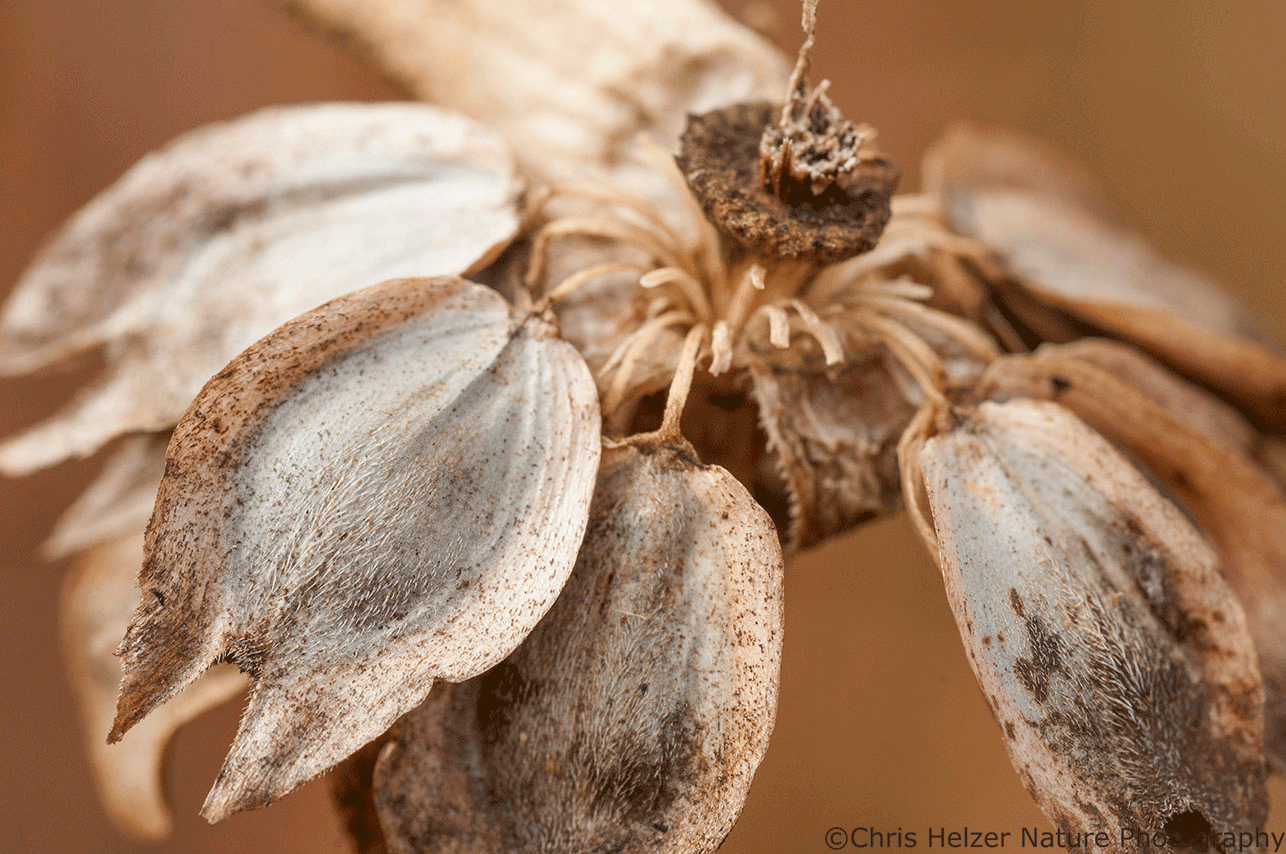
Entire-leaf rosinweed seeds (Silphium integrifolium)

Let’s say a seed has led a lucky life and manages to reach soil. It might even get pushed into that soil slightly by rain or a passing animal’s foot. Hooray! Now it can grow and reward its parent’s huge investment.

Well, maybe.

Most seeds need water to germinate. During drought periods, a seed might sit in the dusty earth for weeks, months, or years, waiting for sufficient moisture to help break its seed coat open. As it sits there, it’s vulnerable to any passing animal, fungal hyphae, or tiny microorganism looking for a meal. Plus, as we discussed earlier, the embryo might simply run out of food.

Dotted gayfeather (Liatris punctata)

Even if rain or snow provides sufficient moisture for germination, some prairie seeds also need a certain amount of sunlight to trigger germination. (This is why it’s important not to plant prairie seeds like you plant pumpkin or green bean seeds. Just scattering them on top of the ground is often best.) If a seed that requires light lands on bare soil that happens to be in the shade of other plants, it might still be stuck in limbo.
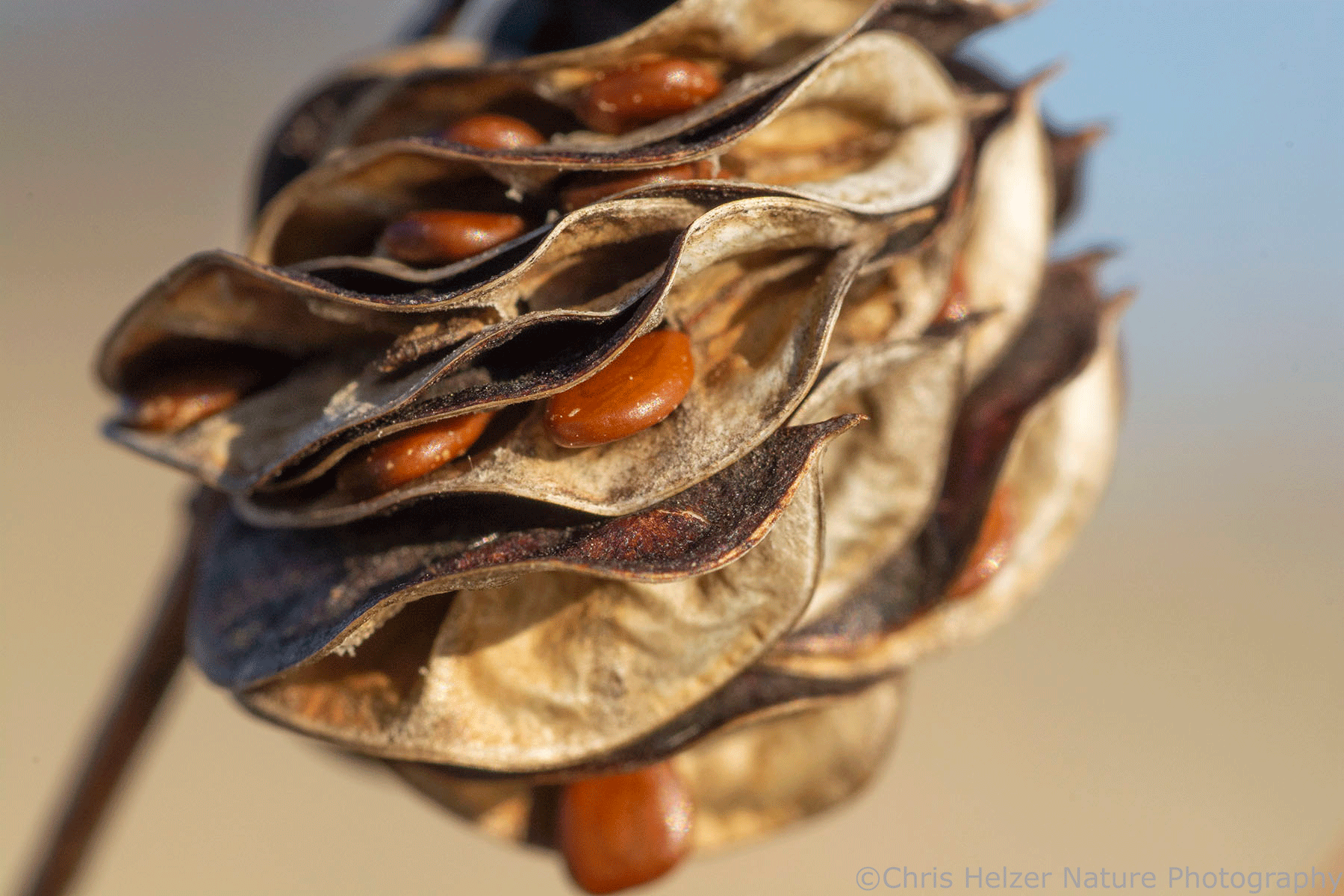
Illinois bundleflower seeds have such a strong seed coat they can survive a trip through the digestive system of an animal. That’s great for the seed, but doesn’t provide any reward for the poor hungry animal!

As a result of all the challenges they face, only a tiny percentage of seeds released into the world by their parents actually end up germinating. Those that do have a chance to perpetuate the family line. However, simply reaching the germination stage isn’t the end of the race.

A tiny seedling still has to compete with any nearby plants for food, water, and sunlight. Only a small minority of prairie plant seedlings make it to maturity and create their own flowers and seeds. They either wither and die in the face of more competitive neighbors or get eaten by herbivores looking for fresh new growth to nibble on.

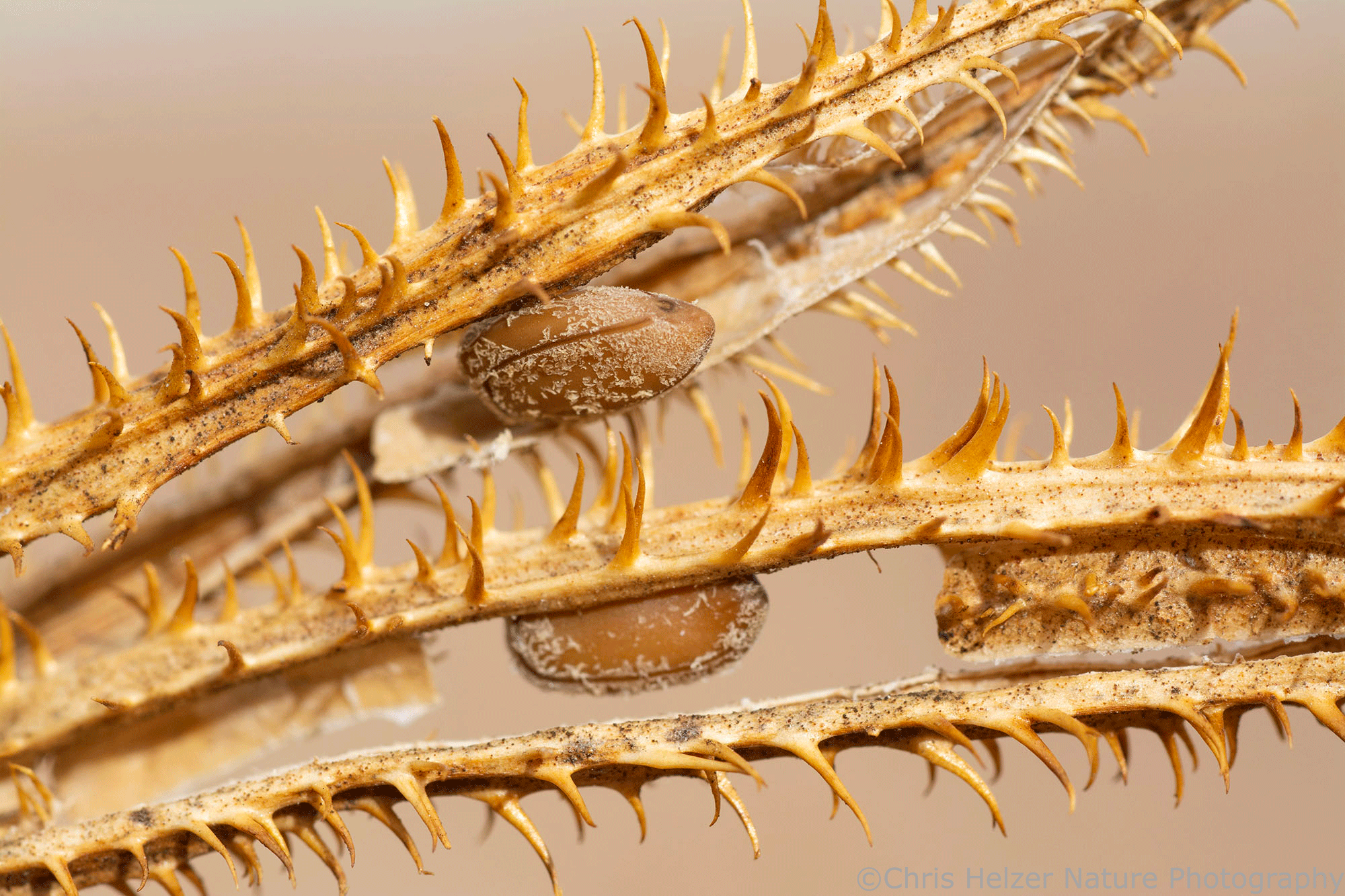
Tall thistle (Cirsium altissimum)
Sensitive briar (Mimosa quadrivalvus)
Ironweed (Vernonia baldwinii)

Despite the odds, of course, some seeds do manage to germinate and then become parents themselves. We’ve got abundant evidence of those successes all around us. It’s easy, though, to take those winners for granted. Spare a thought for all those who didn’t make it!I’m cheering on all the little germinating plants in the prairie right now. They’ve already survived a ton of obstacles, but they still have a lot to overcome.

I often wish seeds good luck when I see them, too (usually silently, especially if other people are around). While most seeds fail to become plants, each one of them plays a vital role in the prairie ecosystem. Animals and other organisms have to eat, after all, and seeds help keep lots of other community members alive.

Apart from everything else, seeds and the structures that help carry them into the world are simply beautiful. I’m incredibly appreciative of the diversity and aesthetic elegance of prairie seeds and I’ve spent a lot of joyful hours photographing them. I just try not to dwell too much on their individual survival chances…

How (Not) to Photograph Prairie Dogs – Part 1

I had it all planned out.  I’d scoped out the site, found the prairie dogs, and located an active burrow close to a road ditch with enough cover to conceal me and my camera.  I’d even built a kind of half-blind – a small piece of garden fencing with tall grasses woven into it – with a space for my lens to poke through.  All I had to do was show up at the dog town in the early morning, crawl into position, set the little photo blind in front of me, and wait for the prairie dog to come out into the beautiful early morning sunshine to pose for a portrait.

…Which is how I came to be lying on my belly in a road ditch yesterday, waiting for the sun to come up.  It was a really beautiful day – light winds, a pleasant temperature, and just enough haze on the horizon to soften the light when the sun finally emerged.  As I lay in the ditch, I was even pleasantly surprised to hear prairie chickens booming near the wetland just to the west of me.  In short, everything was wonderful, and just as the sun started to poke through the haze, the first prairie dog emerged from its burrow in the center of the small town and started barking.  “Won’t be long now,” I thought to myself.

Looking back, I now recognize the barking as more of a kind of mocking laughter.   “Hee Hee Hee Hee!,” it laughed mockingly.  “Hee Hee Hee Hee Hee Hee Hee…”

At the time, not being familiar with the local customs of this particular dog town, I mistakenly assumed that once the first prairie dog started barking, the others would soon emerge and begin doing interesting and photogenic activities.  Instead, the lone prairie dog – from a distance of several hundred yards from my little blind – just continued his lone sardonic monologue for about 20 minutes.

“Hee Hee Hee Hee Hee Hee…!”

Eventually, a few other prairie dogs did pop out of their holes and join in the fun – though none of them were anywhere close enough for good photo opportunities.  All the while, the burrow right in front of me, the one I’d carefully scouted several days earlier, remained sneeringly silent. As the sun continued to climb, inching closer and closer to the point at which the light would be too bright for good photography, the only prairie dogs in sight were the jokesters out in the middle of the town.

A spiteful gang of prairie dogs, maintaining a needlessly long distance from the photographer lying at the edge of the town. (This photo is cropped significantly to allow you to see that these actually ARE prairie dogs, and not just little brown specks.)

A small group of 8 to 10 western meadowlarks was milling around in the town as well, each pausing occasionally from feeding to sing the characteristic meadowlark song.  I consoled myself with the thought that if nothing else, I’d at least get myself a decent photo of a meadowlark as soon as one ventured close enough.  It’s funny… I’ve been listening to western meadowlark songs my whole life, but never fully realized the true spiteful tone of those songs.  Especially from a distance of several hundred yards…

A fuzzy long-distance photo of a contemptuous meadowlark with a jeering prairie dog right behind it.

Just as I was about to give up on the whole adventure, I heard a prairie dog start chipping away at close range.  Unfortunately, it was about 30 yards to my left, and the vegetation along the road ditch/fenceline was blocking my line of sight.  Knowing full well how the little escapade would end, I nevertheless backed slowly out of my position and started army-crawling quietly down the road ditch toward the sound.  When I was close enough to the sound, I started moving very slowly – inch by inch – through the tall grass toward the prairie dog.  I could barely see the prairie dog’s head, a mere 20 feet in front of me, through the vegetation.  About two feet closer, and I’d have a clear view.

At about one and half feet, I heard the following sound – “Hee Hee Hee Hee Hee Hee…YOINK!”

And down it went.

A prairie dog burrow, from which - only moments before - a prairie dog was in plain site, laughing mockingly.

Out of nothing but pure stubbornness, I laid there with my camera trained on the hole for a full 10 minutes.  Nothing.  Finally, I grabbed my camera, stomped back to the truck, and headed back to town to catch my first conference call of the day.

But I’m not giving up.  Oh no – I’ve got a plan.  Now that I’ve fully studied the behavioral pattern of the dog town’s inhabitants, I know JUST what I’m going to do next time.  I’m going to get me some FANTASTIC photos of prairie dogs.  Photos that will KNOCK YOUR SOCKS OFF.  Just you wait.

(“Hee Hee Hee Hee Hee!”)