
Busy Burning

I apologize for not having a pithy and thought-provoking post this week.  I’m actually working on a couple different ideas, but was interrupted by a couple days of good prescribed fire weather.  We had a long day yesterday and today looks like it’ll be another.

I can at least post a few photos from our fires yesterday.  We completed a fire in one of our restored prairies that will be grazed this year, and then had time to light off a small island in a nearby restored wetland. 

Here are those photos:

Mardell Jasnowski lights the headfire near the end of yesterday's prescribed burn in a 2001 prairie restoration.   The Nature Conservancy's Platte River Prairies, Nebraska.

Mardell Jasnowski lights the headfire near the end of yesterday’s prescribed burn in a 2001 prairie restoration. The Nature Conservancy’s Platte River Prairies, Nebraska.

.

Big flames from tall grass.

Big flames from tall grass.  The burned area will be grazed intensively by cattle this season while unburned areas will receive little grazing pressure. 

.
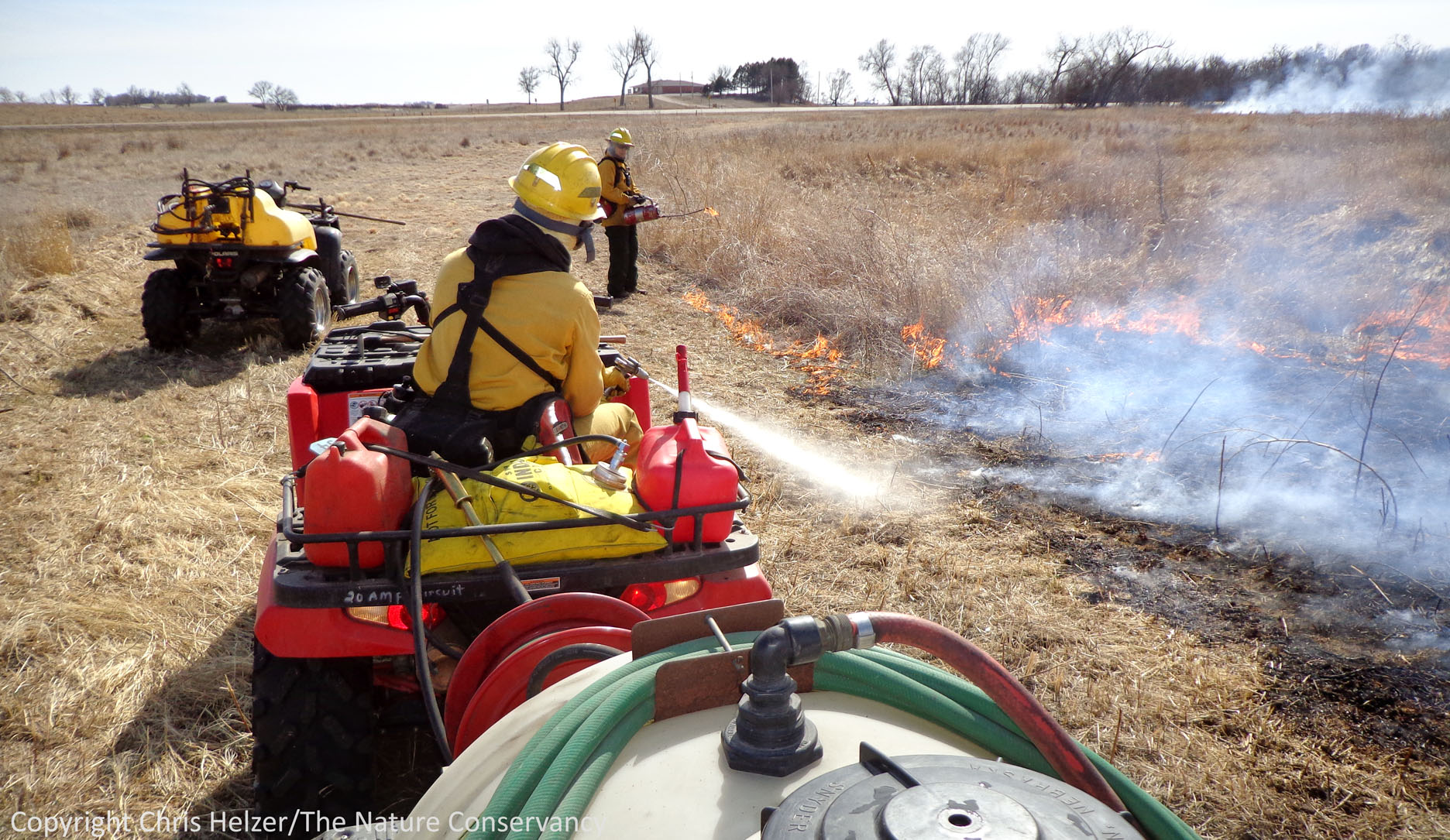
Burn crew member Aric Ping keeps the fire inside the mowed firebreak with a high-pressure spray of water.

Burn crew member Aric Ping keeps the fire inside the mowed firebreak with a high-pressure spray of water.

.
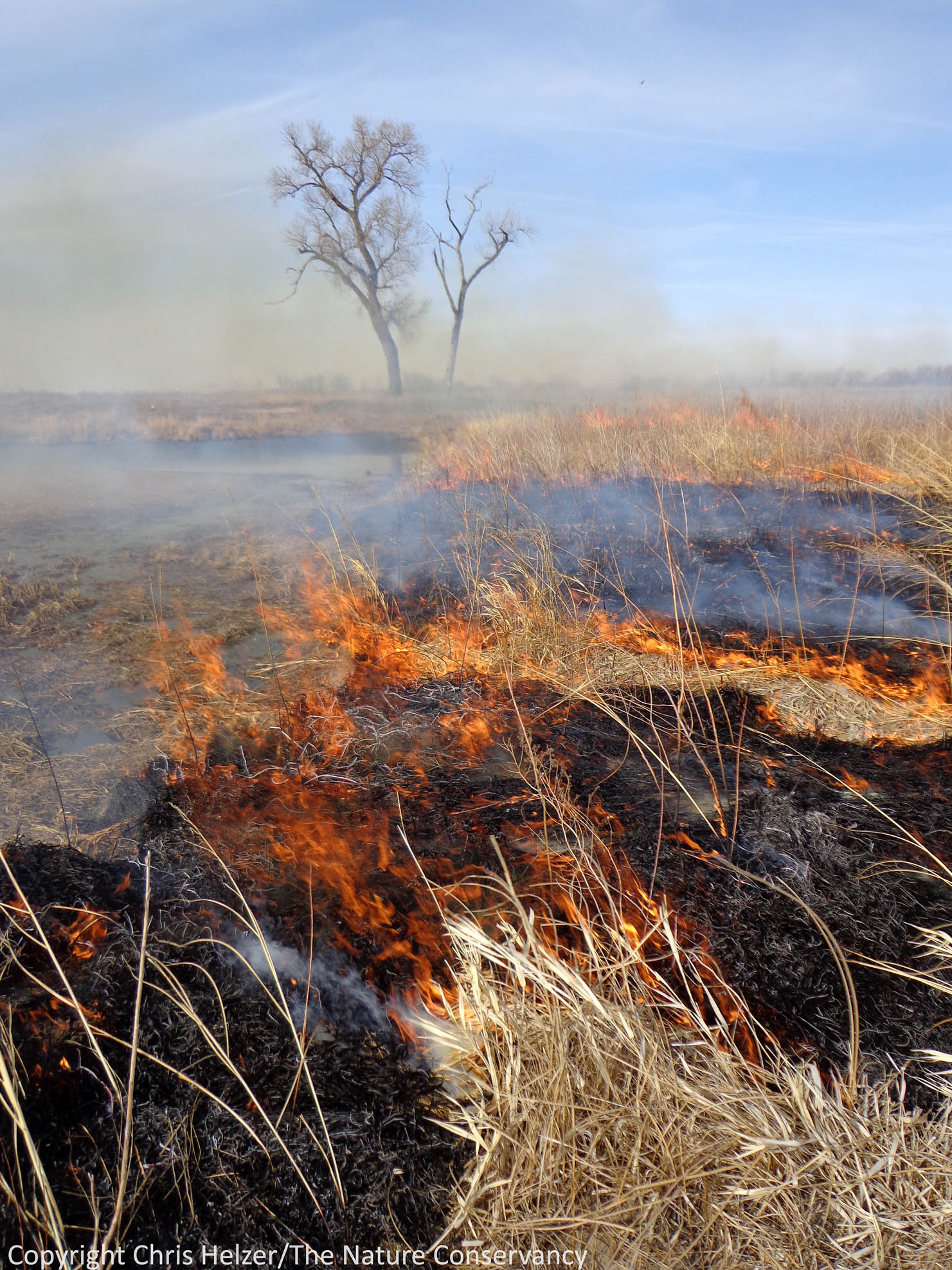
Fire burns on a small island in a restored wetland.  The burn will encourage shorebird use this spring, suppress the growth of willow trees, and make it easier for us to find and control reed canarygrass this summer.
Fire burns on a small island in a restored wetland. The burn will encourage shorebird use this spring, suppress the growth of willow trees, and make it easier for us to find and control reed canarygrass this summer.

Regal Fritillary Butterflies in Burned and Grazed Prairie

We’ve been conducting field surveys of regal fritillary butterflies for the last three years.  During that time, we’ve learned a lot about how those butterflies are responding our prairie management and restoration work.  So far, there are two overwhelming lessons we’ve learned from our work.

1. The number of regal fritillaries produced in our Platte River Prairies is primarily tied to two factors: violets and thatch.  During the spring, when adults are first emerging from their chrysalises, butterfly abundance is highest in degraded remnant (unplowed) prairies that have few showy native wildflower species, but lots of common blue violets (Viola sororia).  While they don’t have much to excite a prairie botanist, these prairies sure produce a lot of regal fritillaries.  We don’t find many regals in recently burned portions of these prairies – only in portions that have built up some thatch.

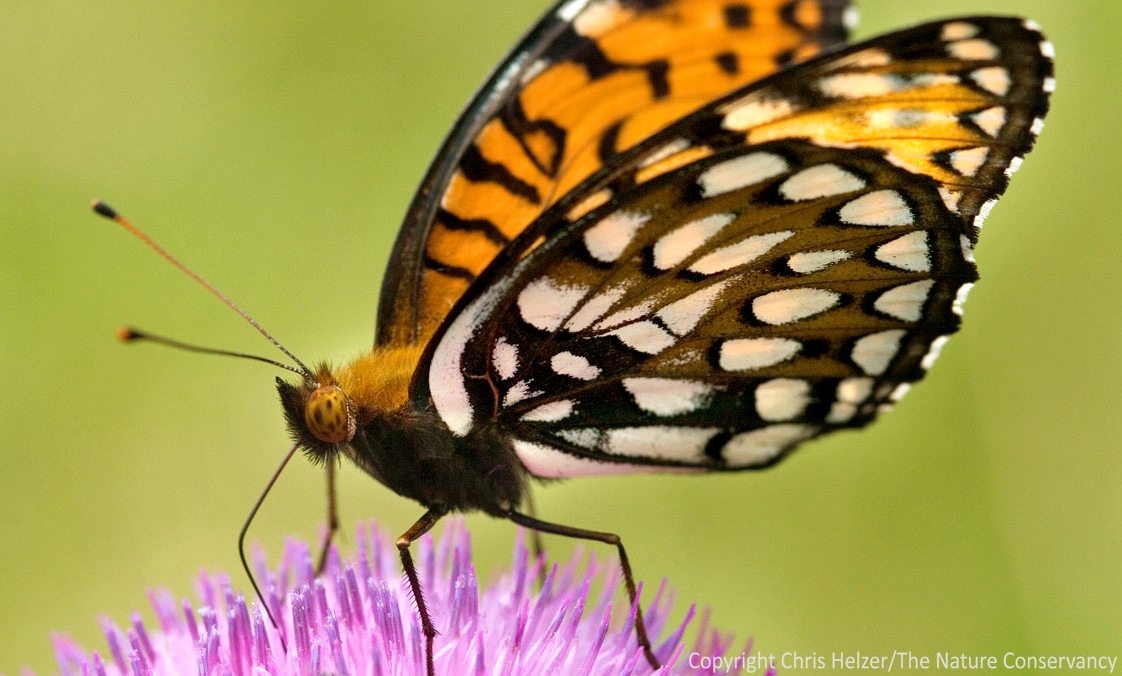
A regal fritillary feeds on a thistle – The Nature Conservancy’s Platte River Prairies, Nebraska.

2. After regals emerge and mate in those thatchy violet-rich prairies, they spread out into more flowery sites to feed.  In our Platte River Prairies, those feeding sites tend to be restored (reconstructed) prairies located around and between those degraded remnants.  Those restored prairies have significantly fewer violets than remnant prairies, but lots of the favorite nectar flowers for regals, including hoary vervain (Verbena stricta), milkweeds (Asclepias spp.), wild bergamot (Monarda fistulosa), and thistles (Cirsium and Carduus spp.).  Interestingly, while we don’t see regals emerging from recently burned prairie, some of the most-used summer nectaring sites are our most recently burned sites.

Continue reading