Photo of the Week – April 18, 2014

A couple weeks ago, I posted a few photos from the timelapse cameras at a restored wetland on our Platte River Prairies.  One of those showed the first documented use by sandhill cranes of that site, which was pretty exciting.  I downloaded those cameras again this week and found a few more interesting photos, so I’m presenting them today.  All three are panoramas stitched together from two photos – which were shot simultaneously by twin cameras mounted side by side.

Of course, the biggest value of timelapse imagery comes from the ability to build sequences of photos that show change over time.  I will certainly be doing that with the images from this site, but in the mean time, we’re also getting our money’s worth out of the simple fact that the cameras are recording interesting and beautiful scenes that would have otherwise gone unrecorded.
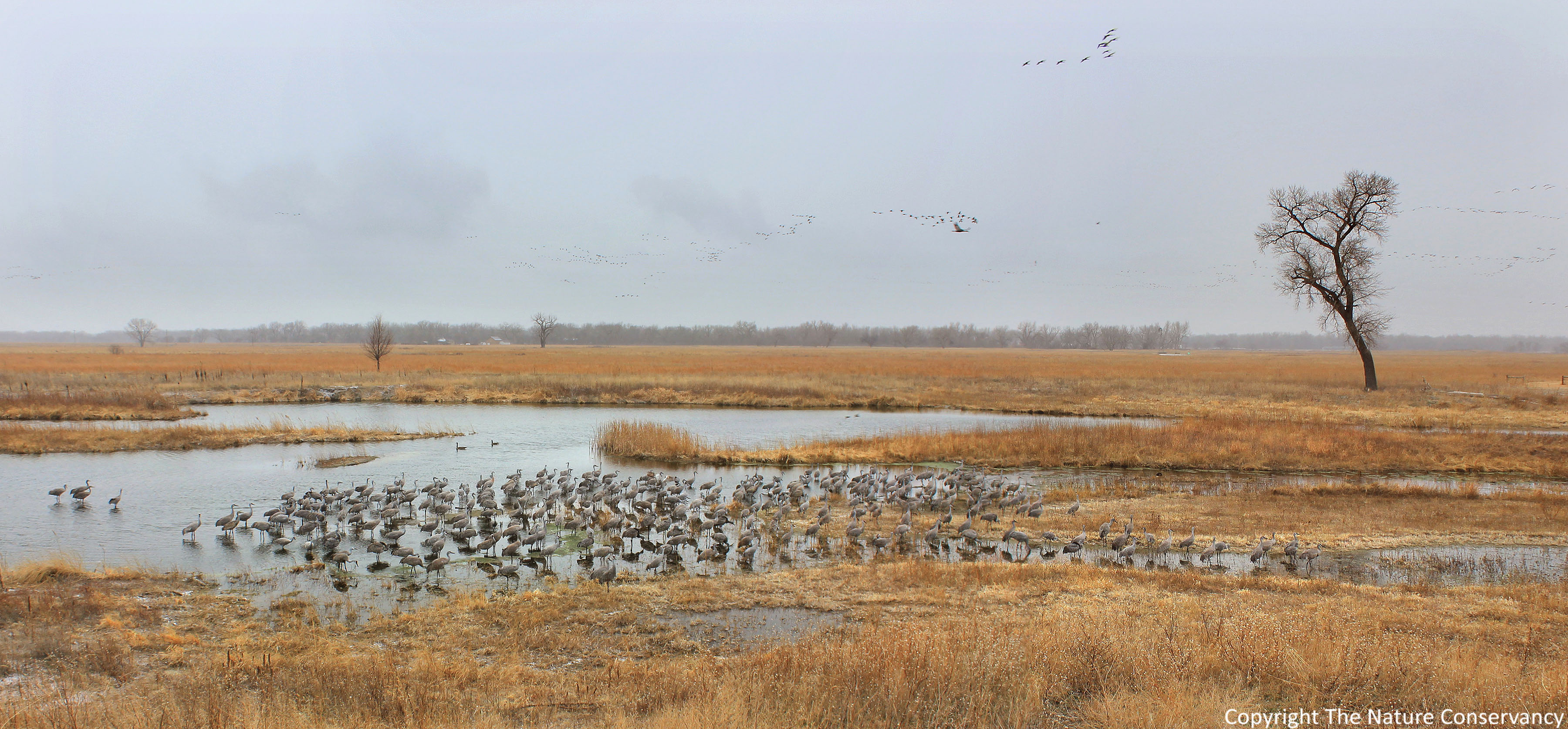
We documented another occurrence of overnight roosting by a flock of sandhill cranes on March 20 of this year.  Interestingly, they roosted in a different part of the wetland this time than they did the previous time...

We documented another occurrence of overnight roosting by a flock of sandhill cranes on March 20 of this year. Interestingly, they roosted in a different part of the wetland this time than they did the previous time… Also, there were more of them than on the previous roost night of March 11.

.

This photo shows a beautiful April sunset and a small group of deer stopping by the wetland.  Can you find all seven deer in the photo?  (You can click on the photo to get a closer look)

This photo shows a beautiful April sunset and a small group of deer stopping by the wetland. Can you find all seven deer in the photo? (You can click on the photo to get a closer look)

.

This is my favorite photo of the batch, but that could be because we've had so little rain this year. Any sign of moisture from the sky is pretty attractive...

This is my favorite photo of the batch, but that could be because we’ve had so little rain this year that any sign of moisture from the sky is pretty attractive…

Thanks again to Moonshell Media for their help setting up these (and other) timelapse camera systems.


Photo of the Week – March 6, 2014

As I posted a couple days ago, I spent some time at my favorite wetland earlier this week.  It was a cold, but very pleasant morning.  The sun was moving in and out of thin clouds, creating attractive light and a nice sky for photograph backgrounds.

A beautiful early March day at The Nature Conservancy's Derr Wetland.

A beautiful early March day at The Nature Conservancy’s Derr Wetland.

.

frozen wetland

An ice ridge formed along the edge of a flowing channel prior to the most recent cold spell.  It apparently caught blowing snow during last weekend’s flurries.

.

Cattails

I assume the gap near the bases of these cattails was formed either by wind or by the relative warmth of the cattail stems, but I can’t explain the mounded ice.

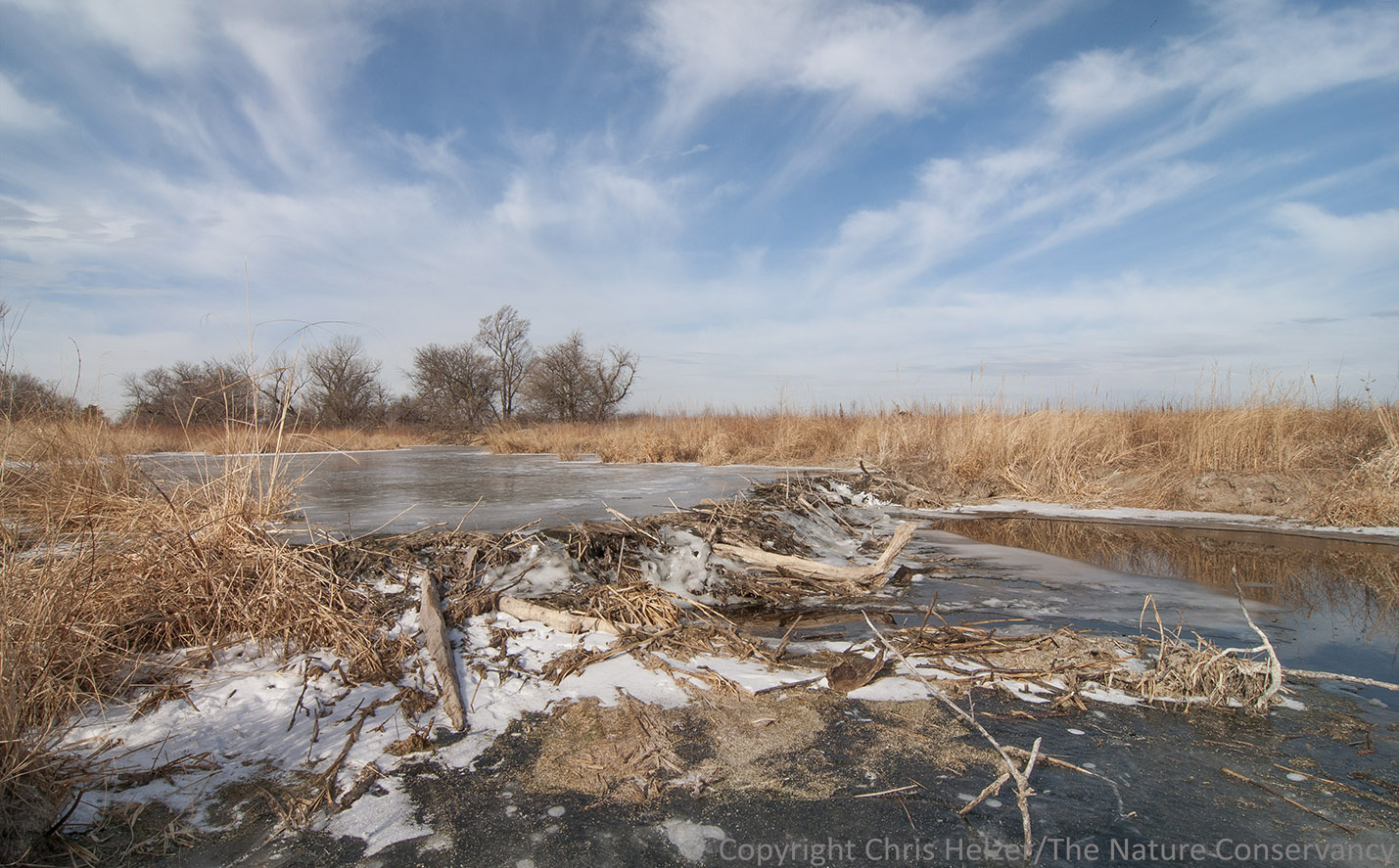
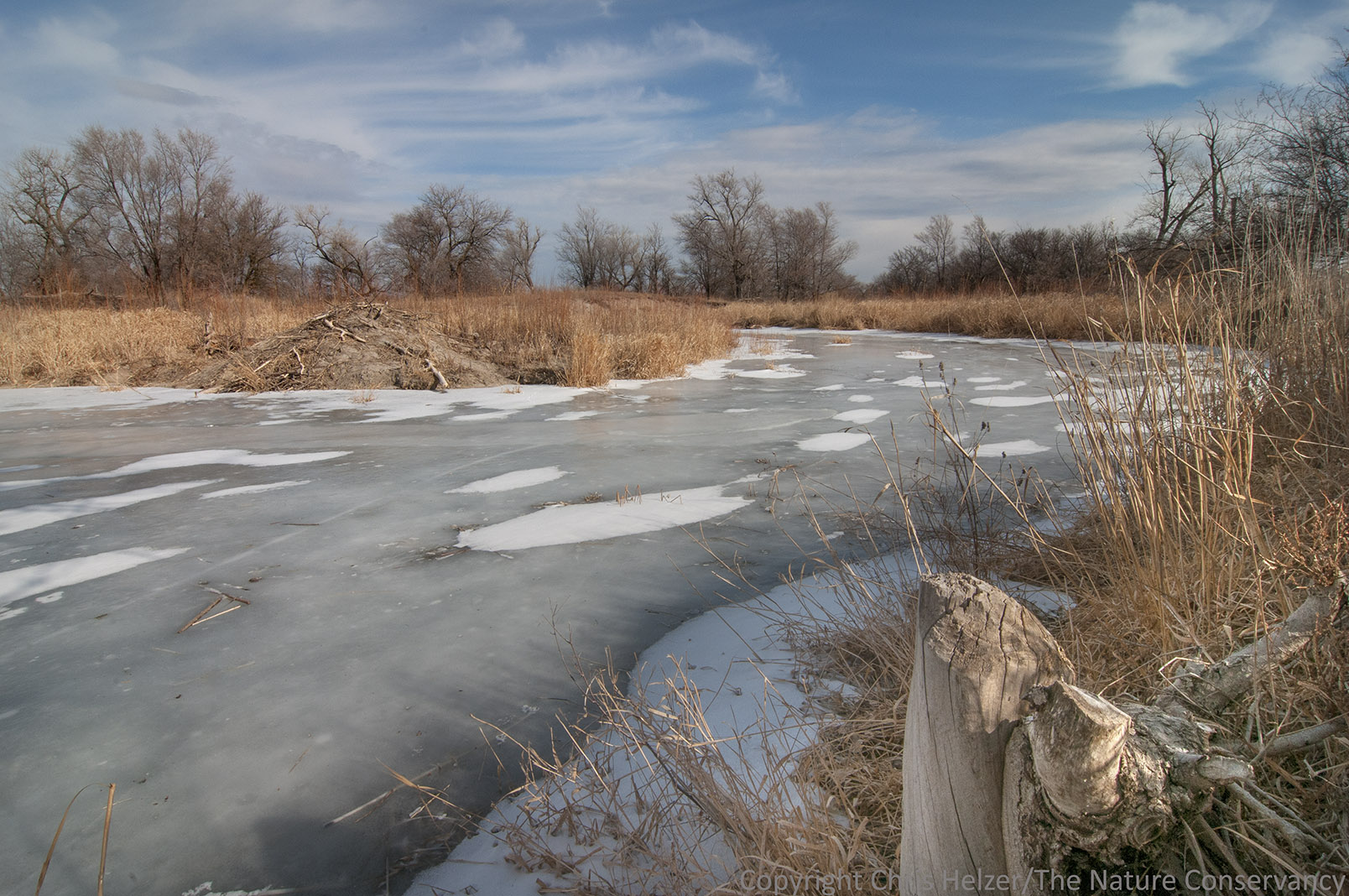
Beaver activity was obvious along the stream that runs into and through the wetland.  Numerous dams are being maintained, and I found lots of recent tracks and marks from the dragging of sticks in patches of snow or bare sand.  The beavers’ slowing of the streamflow probably enables the surface to  freeze more quickly – to the detriment of waterfowl looking for a place to roost and feed – but the concentrated flow through the dams maintains small areas of open water where wildlife can access it.

Water pours over a small beaver dam.

Water pours over a small beaver dam.

.

Another one

The only open water left after the most recent cold snap was just below some of the larger beaver dams, though the ice was very thin in other places, especially above some of the more active springs.

.

Water over the dam

Water flows through the spillway of a dam just upstream of the open wetland area.  There are at least seven separate dams being maintained by the inhabitants of a single beaver lodge.

.

The beaver lodge is several hundred yards upstream of the main wetland area.

The beaver lodge is several hundred yards upstream of the main wetland area.

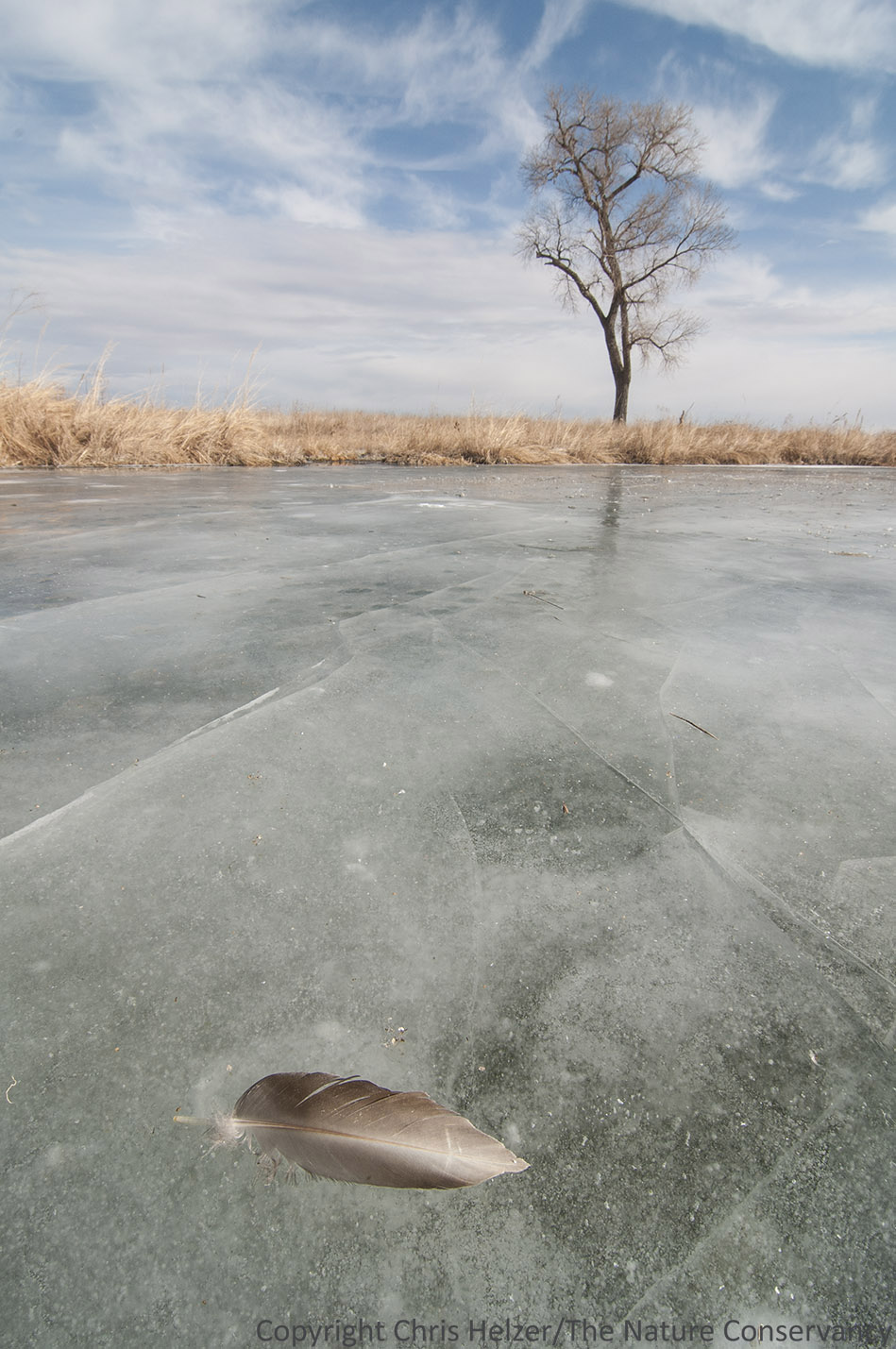
Beavers weren’t the only wildlife species active along the wetland.  Based on recent images I downloaded from our timelapse cameras on site, waterfowl have also been using the wetland in big numbers.  Canada geese, especially, have been abundant – especially before the surface froze last week.  Based on evidence found at the scene, they have continued to use the frozen wetland too…

goose feather

Goose feathers littered the frozen surface of the wetland

.

feather

Here and there, tiny fluffs of feather clung to plants of all kinds.

.

poop

Feathers were not the only thing geese left behind on the ice.  I can’t think of a better way to end this blog post then with a big pile of goose poop.  So there you go.

No beavers or geese were harmed during the making of this blog post.  However, more than 300 images were shot during a two hour period.