
I’m pretty good at spotting insects. When I walk around prairies with a camera, I’m usually looking down, scanning for small creatures. Just as I imagine a building inspector develops search images for signs of mold, fire hazards, and shoddy construction, my search images help me pick out grasshoppers, spiders, caterpillars, and stink bugs. Despite that, I rarely see stick insects (aka walking sticks).
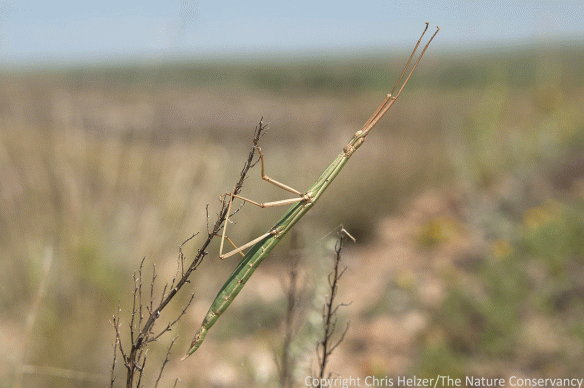
This stick insect (walking stick) is more visible than usual because I put it on that plant so I could photograph it. Garden County, Nebraska.
I don’t think stick insects are all that uncommon. In fact, about 12 years or so ago, I was using a pull-behind seed stripper to harvest seed from lemon scurfpea (Psoralidium lanceolatum) in one of our Platte River Prairies. The machine essentially uses a street sweeper brush to strip seeds from plants into a hopper. Of course, the brush often captures insects along with the seed. After maybe 10-15 minutes of running the machine, I stopped to check the harvest and was astonished to see hundreds of stick insects swarming about in the hopper. As the machine was harvesting seeds, I had been constantly scanning ahead of it to be sure there were no seed heads of invasive plants and to pick out the best patches to harvest. Regardless, I didn’t see a single stick insect until they ended up in the hopper. I’ve not seen that phenomenon again, but I often wonder if there are hundreds of stick insects hidden all around me as I walk through prairies. That may be true, but I feel lucky every time I actually see one.
Earlier this year, I was photographing bison and saw a couple stick insects riding on the back of one of those big furry animals. Later in the summer, I found one riding along on my own back. I gently put it on a nearby plant and photographed it for a while, grateful for the unexpected opportunity.
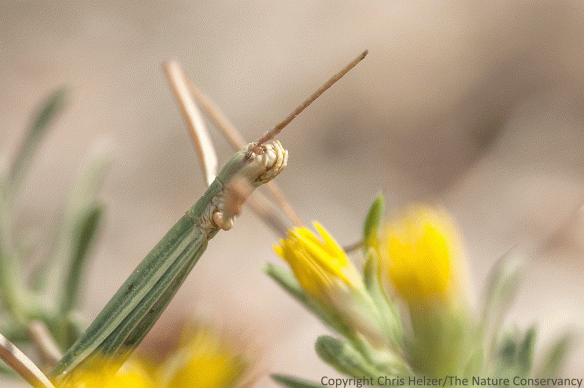
A closer view of the head of the stick insect, showing the palps around the mouthparts that I assume help to maneuver leaves into position to be eaten. Also, even the eye is striped, contributing to the camouflage.
Stick insects are in the order Phasmida, along with leaf insects, and there are about 3,000 species of Phasmids worldwide. There is a lot of general information about stick and leaf insects, but I found it hard to know which details fit the stick insects I see in Nebraska prairies. I’d love to hear from others who know more about the ecology and behavior of these creatures.
Here are a few basic facts:
Stick insects are leaf eaters. In some cases, they can cause widespread defoliation of trees, making them pests to those who like those trees. (Or potential heroes to those of us working to limit the number of trees in our prairies!)
Like praying mantids, stick insects can often be seen swaying back and forth on their legs. Some scientists think this might help with their camouflage, giving the impression that they are moving in the breeze. Others think it’s a strategy to help them pick out objects against their background (they are triangulating).
The other major information presented by most sources is that at least some species of stick insects are known for copulating – or at least staying in that position – for days, weeks, or even months at a time. It may be that the female benefits from having the smaller male on her back to act as a shield from predators, or maybe the two of them are just more cumbersome for a predator to deal with. There are other theories about the behavior as well, but I don’t feel qualified to sort through them for you.
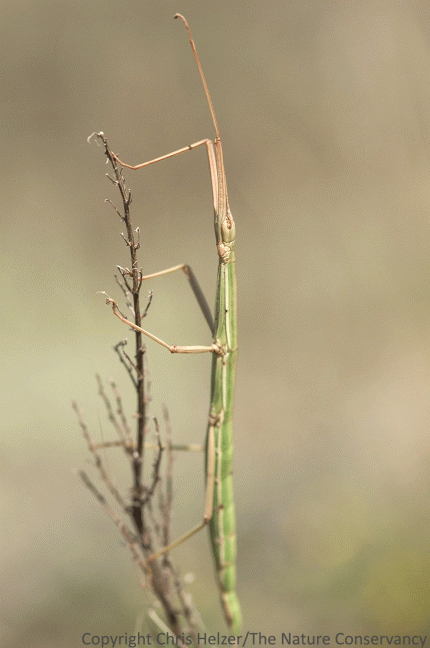
One last photo of the stick insect before I left it alone to go find something to eat and a place to be better hidden.
As I’ve said numerous times, I’m not an expert on insects and other small invertebrates – I’m just an enthusiast. If there are experts out there who can tell us about the stick insects of prairies, or the one specifically featured in the above photos, please chime in. I’m sure there are fascinating stories to learn.

 The Prairie Ecologist