
Photo of the Week – October 10, 2013

At the Platte Prairies, and – I assume – throughout most of the central United States, this is the time of year we see woolly bear caterpillars crawling all over.  They are one of the most widely-recognized caterpillars around, though most people don’t give a second glance to the tiger moth they become as adults.
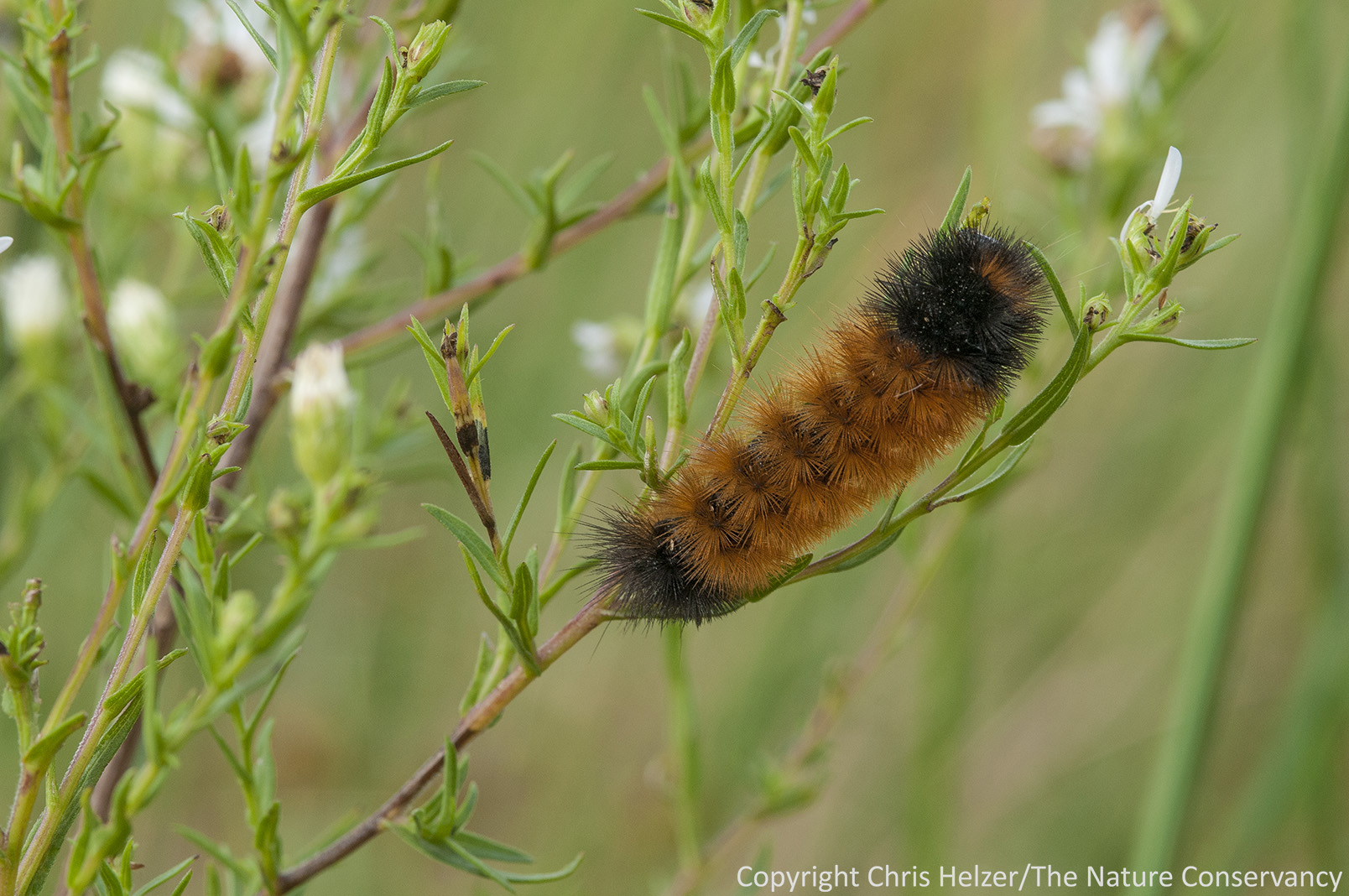
A tiger moth larva (woolly bear caterpillar) photographed on October 4, 2013.  The Nature Conservancy's Platte River Prairies, Nebraska.

A tiger moth larva (woolly bear caterpillar) photographed on October 4, 2013. The Nature Conservancy’s Platte River Prairies, Nebraska.

This time of year, woolly bears are often seen crossing roads or sidewalks, trying to find a place to spend the winter.  Like many other insects, they will freeze solid over the winter, only to thaw out and resume their lives in the spring.
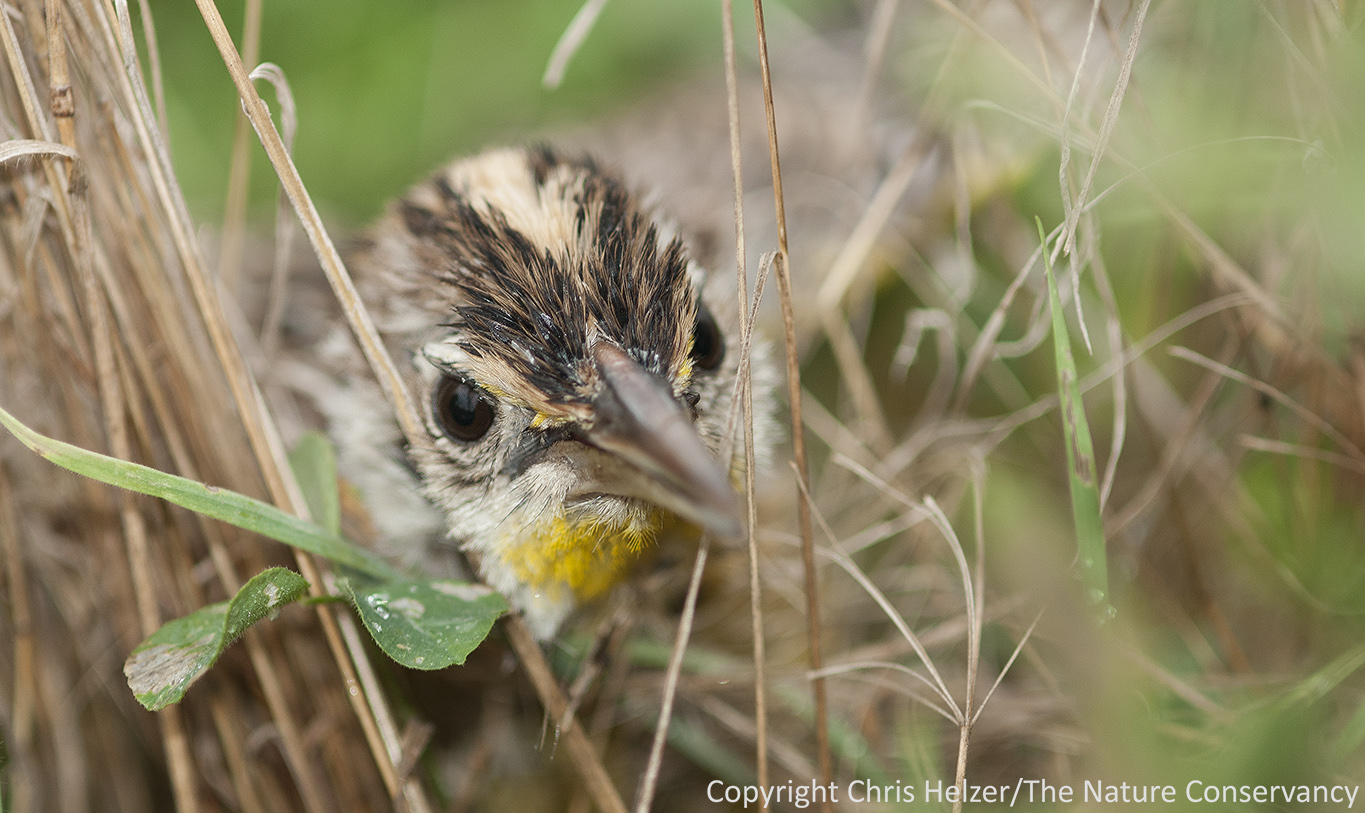
Photo of the Week – September 19, 2013

I was a little surprised last week to find a fledgling meadowlark in the Platte River Prairies.  The bird was young enough that it still couldn’t do much more than flutter clumsily away from me as I first approached it.  The bird must have come out of a very late nest (probably the 3rd or 4th nesting attempt by its parents?)  Multiple nest attempts aren’t unusual for grassland birds – many nests fail because of predators or other reasons – but I can’t remember ever seeing a bird so young this late in the season.

This young meadowlark peered through the grass at me as I crept close enough to photograph it.  Platte River Prairies, Nebraska.

This young meadowlark peered through the grass at me as I crept close enough to photograph it. Platte River Prairies, Nebraska.

While this particular meadowlark was unusually young for this time of year, it’s common for young-of-the-year birds of many species to hang around prairies longer than their parents, many of whom migrate south soon after their offspring leave the nest.  Because they are not expert fliers and inexperienced with life’s challenges, those newly independent birds are vulnerable to everything from predators to haying equipment.  In some species, young birds appear to take advantage of the adults’ absence by scouting for their own potential future nesting locations – a strategy that might help save them time when they return from migration next year.  However, just knowing where you want to set up a territory doesn’t mean you can fight off a more experienced male who has the same idea!