Wanna Know What Really Makes A Sunflower Lose its Head?

Nearly-decapitated sunflower heads, scattered across the prairie.  Oh, the devastation!  Who could be carrying out such an evil plan?

(Ok, more accurately, a weevil plan?)
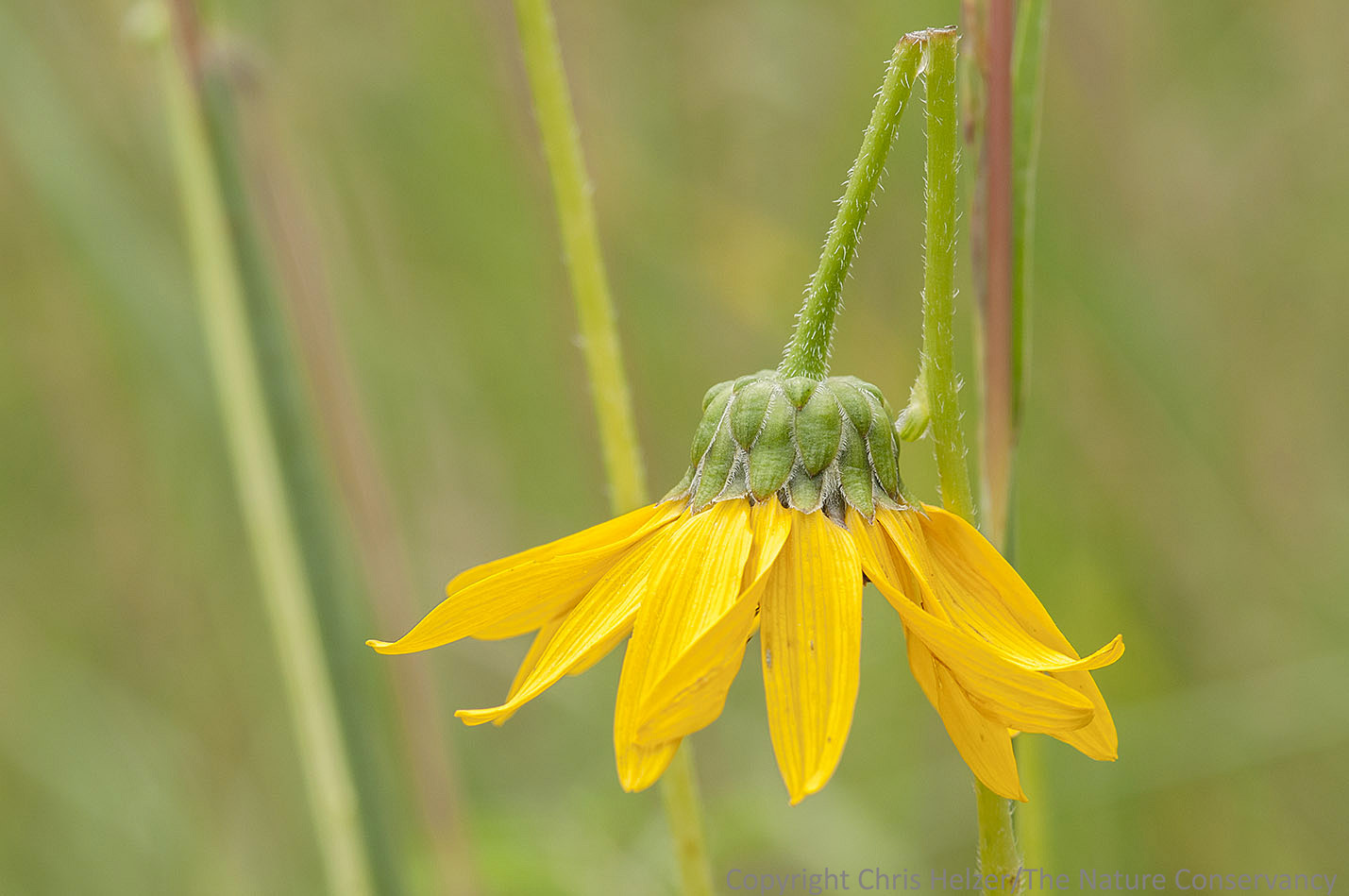
Weevil damage

I found this sad-looking stiff sunflower (Helianthus pauciflorus) during a prairie hike back in August.
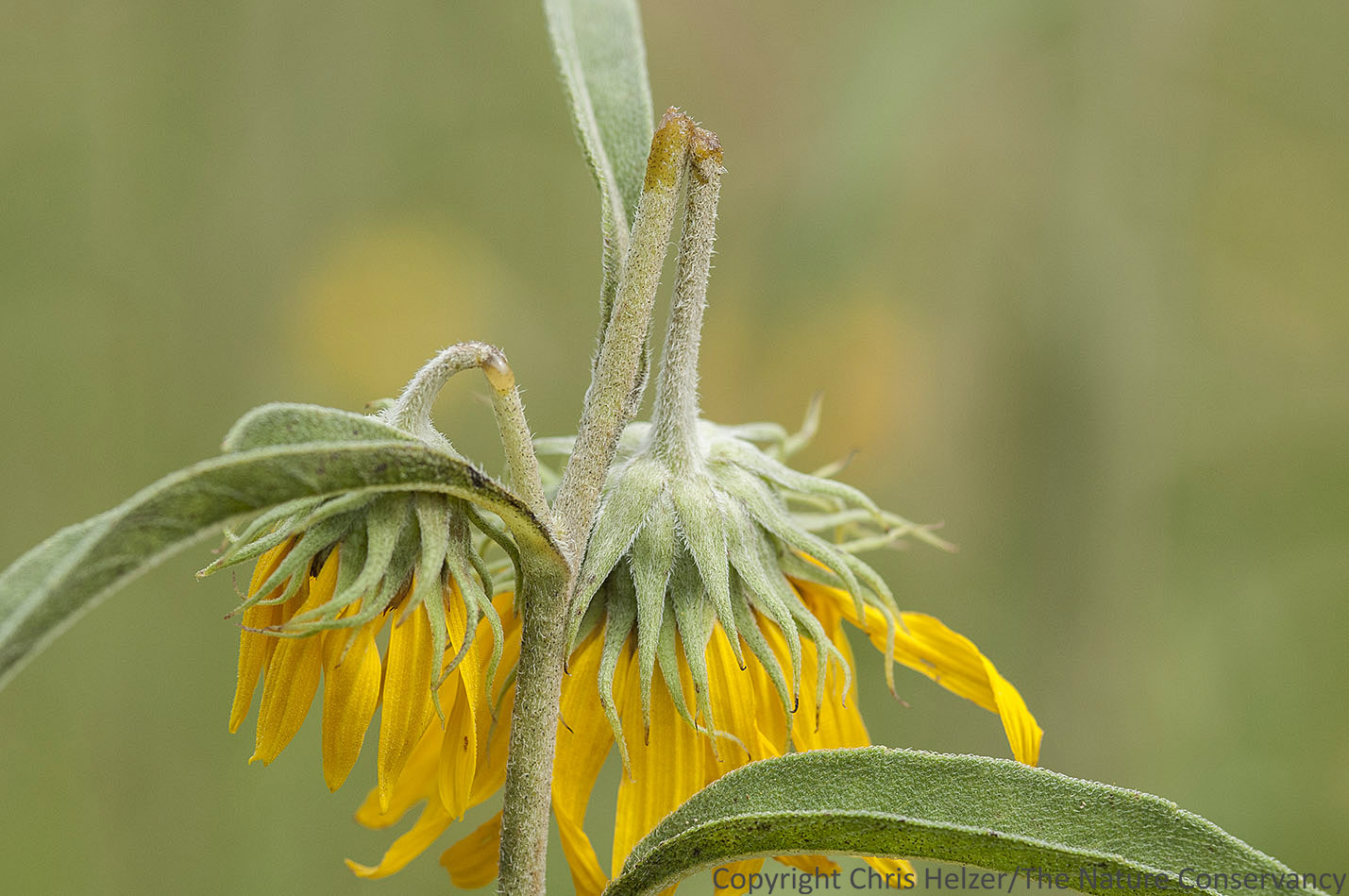
Maximilian

Stiff sunflower was not the only species being targeted.  Maximilian sunflowers (Helianthus maximiliani) were also dangling…   This photo was taken just a few minutes after the first.

The head-clipping weevil, aka the Silphium weevil (Haplorhynchites aeneus) is a small dark-colored weevil, less than a centimeter in length.  Females girdle the stems beneath sunflower heads – as well as other plants such as compass plant and rosinweed – so that the flower head falls over, but usually doesn’t drop completely off, at least not right away.  Once a flower has been knocked over, other weevils usually show up – male and female – to feed on pollen, mate, and lay eggs in the blossom.

Doing some research for this post, it was hard for me to confirm what happens next, but it seems the eggs usually don’t hatch until the flower eventually falls to the ground.  The larvae feed on the decomposing flower head and then burrow into the earth to overwinter.  It is thought that clipping the flower before laying eggs on it might make the flower a less attractive place for other insects to lay eggs, saving more food for the weevil larvae.
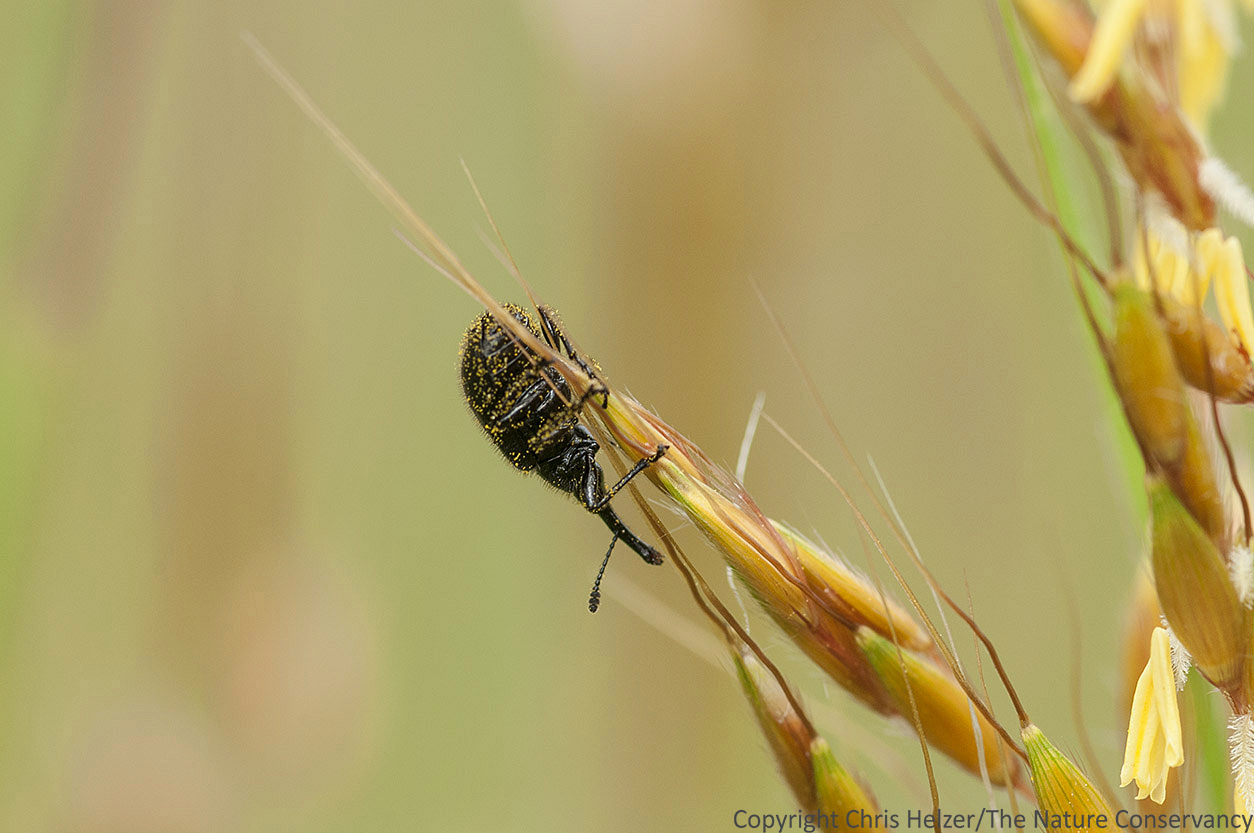
I have rarely seen the head-clipping weevil itself, and had never photographed it.  On the day I photographed the sunflowers shown above, though, I finally saw one fly off a stem and managed to get a documentary photo of it.  Look at all the sunflower pollen stuck to it!

Before that August hike, I hadrarely seen the head-clipping weevil itself, and had never photographed it. Not long after looking at the sunflowers shown above, I finally saw a weevil fly off and managed to get a documentary photo of it when it landed. Look at all the sunflower pollen stuck to it!

The clipping behavior by weevils can cause problems for those raising sunflowers commercially, but I’ve never seen it impact enough flowers to cause any serious issues in prairies.  I’m guessing that some of you readers will know much more about the head-clipping weevil than I do, and I hope you’ll contribute additional information in the comments section below.  Thanks in advance!

So, to summarize the weevil plan:  The weevil female nearly decapitates a flower and then mates with weevil males and lays weevil eggs right on the mortally wounded blossom.  The weevil babies eat the dying flower and then burrow into the ground until the next spring.  Then they make a triumphant return and hatch their weevil plans once again.  And who do we have to thank for finding out about all of this?

Weevil scientists, of course!
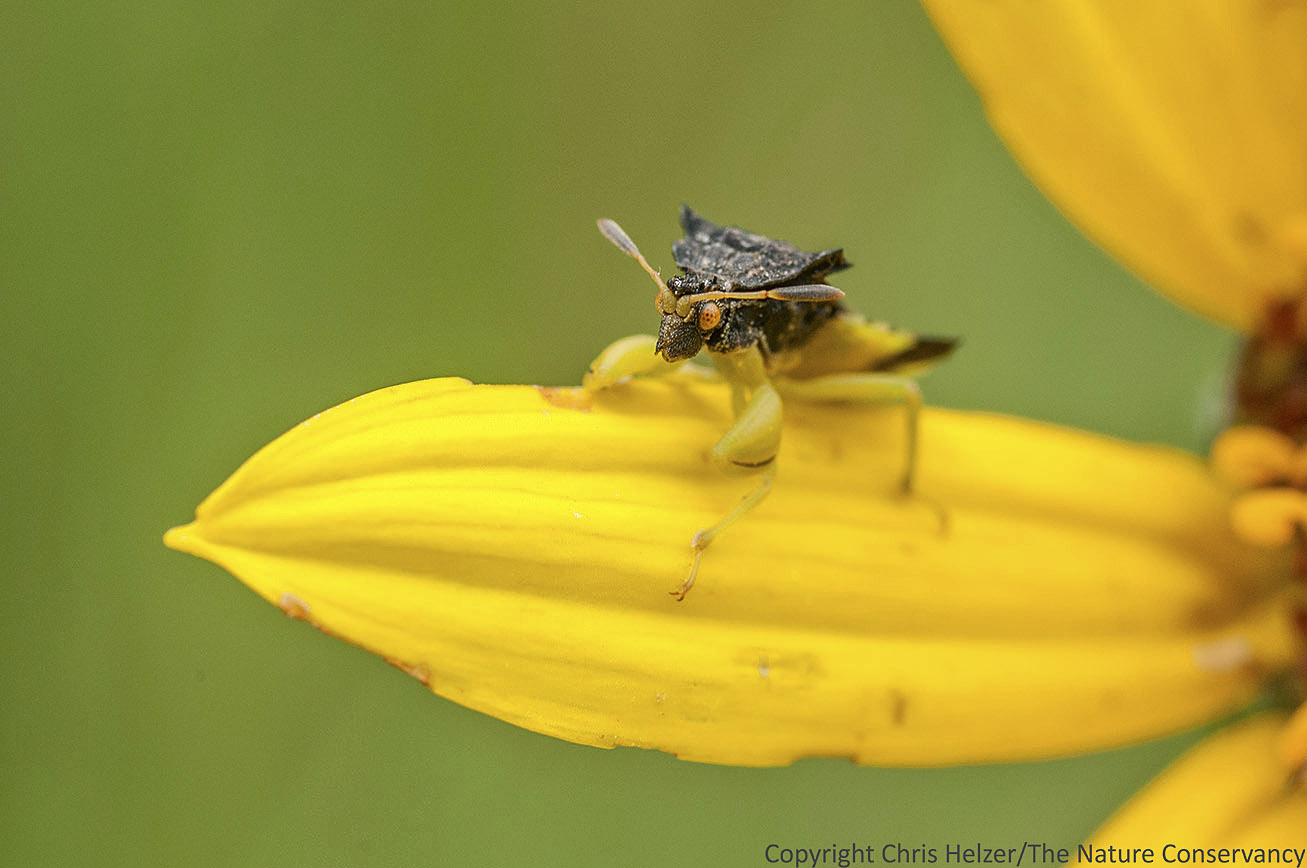
Photo of the Week – November 28, 2014

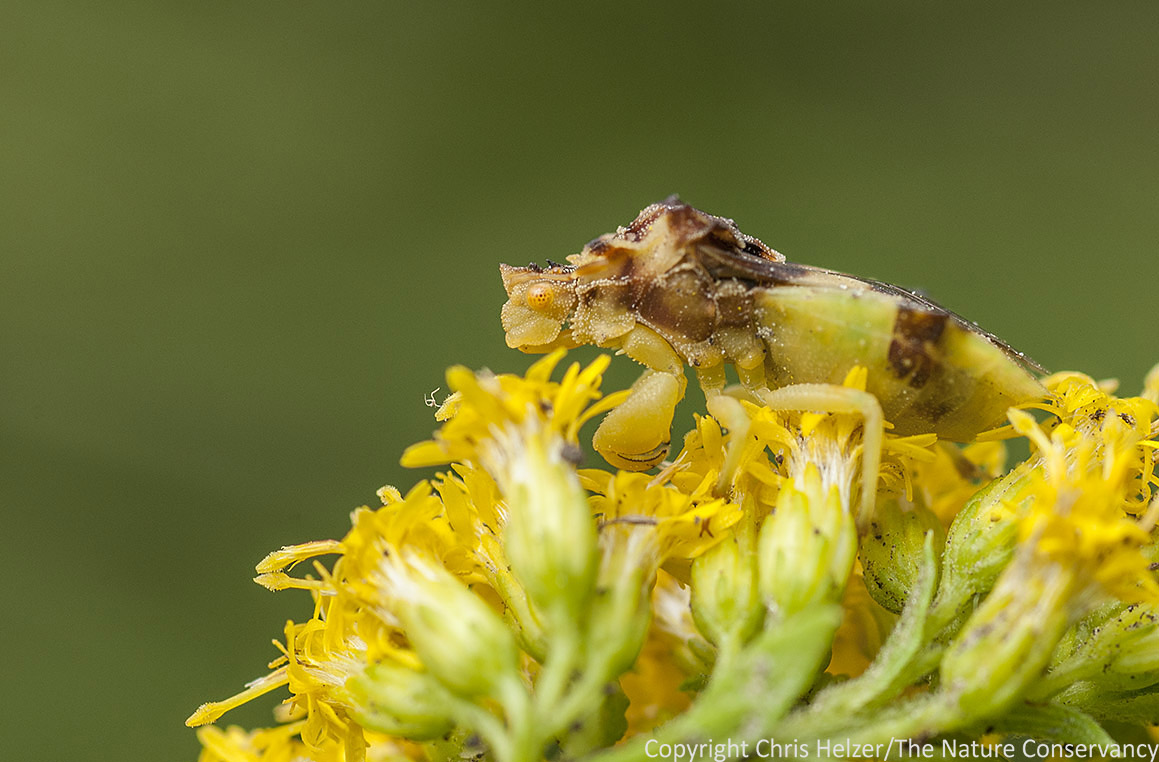
Ambush bugs are scary-looking little predators.  Their stocky bodies are heavily armored up front, and they have very thick raptorial forelegs like those of praying mantises.  I usually only spot ambush bugs when I’m photographing something else such as flowers or pollinators – their camouflage is pretty good, and they sit very well while waiting for prey.

Ambush bug (Phymata americana?) on a stiff sunflower plant.  The Nature Conservancy's Platte River Prairies, Nebraska.

Ambush bug (Phymata americana?) on a stiff sunflower plant. Lincoln Creek Prairie, Aurora, Nebraska.

Ambush bugs are a subgroup of assassin bugs (Reduviidae) and have the same straw-like mouthpart (rostrum).  Like assassin bugs, they can inject both a paralyzing venom and digestive enzymes into their prey through that mouthpart, which they keep tucked underneath them when not feeding.  When an ambush bug attacks its prey, it nabs it quickly with its strong forelegs and stabs it with its rostrum.  Once the insides of its paralyzed victim are properly liquefied, it sucks them out.  I was describing this process to some high school kids the other day and one of them excitedly pointed out that it’s just like drinking a Capri Sun.  Yes. Yes it is.  Except you don’t have to capture and kill the Capri Sun first (at least not the kind they sell around here).

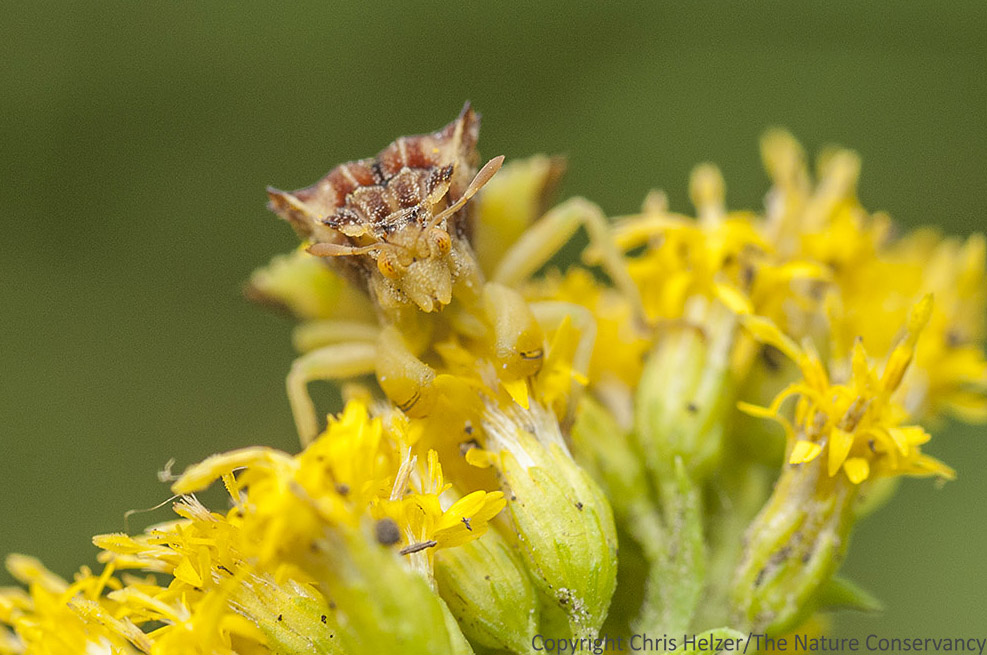
I think this might be the female of the species shown in the first photo.  However, I'm an ecologist, not an entomologist, so don't take my word for that.

I think this might be the female of the species shown in the first photo. However, I’m an ecologist, not an entomologist, so don’t take my word for that.  It was photographed the same day at the same prairie…

Ambush bugs are just one of the countless insects that can be found right in your backyard, as long as you’ve got some semblance of habitat available.  The three photos in this post came from a small prairie here in town.  I’m glad they’re common – they are a great insect to show kids (and to photograph) …as long as you can find them.  I’m also glad they’re only about 1/2 inch long and not dangerous to people!  (Can you imagine a 6-foot-long ambush bug hiding along the side of the trail as you walked by??  Hoo boy.)

Don't mess with ambush bugs...

Don’t mess with ambush bugs…

As an interesting side note:  While I was looking up a few bits of information for this post, I found out that Ambush Bug is also a DC Comics character.  I was disappointed, however, to find that the superpowers of the comic book character are not very similar to the actual bug (or even very “super”).  In fact, it’s a very weird character, even by comic book standards, that is a “well-meaning but incompetent adventurer who vaguely fights crime…”  Ambush Bug also has a stuffed toy for a sidekick and his arch enemy is a sock.  Who writes this stuff?