Photo of the Week – May 30, 2014

I made another trip up to Griffith Prairie last week.  It looked pretty much as it had the week before – still lots of ragwort blooming –  but the photographs I returned with were very different.  This time, I came home with a bunch of photos of dumb invertebrates.

(I don’t mean that invertebrates as a group or concept are dumb, rather that the particular individuals I photographed seemed not to be very smart or savvy.  I’ll explain in a minute.)

Since I’d spent quite a bit of time photographing landscapes on my previous visit, I decided to put my macro lens on the camera and look for insects this time.  It was immediately clear that the long winter had dulled my insect photography skills…

First, I had to get my brain refocused on the idea of finding small creatures.  That part actually came back fairly easily.  Second, however, I had to work on my approach once I spotted those small creatures (come in low and slow).  I started by tracking some damselflies that were flitting just ahead of me as I walked.  I’d wait for one to land, then creep slowly toward it.  Unfortunately, just as I’d set my tripod down and lean forward to focus, the damselfly would fly about 2 feet further away and I’d have to repeat the whole process.  That highlighted the third aspect of insect photography I had to recapture… patience.
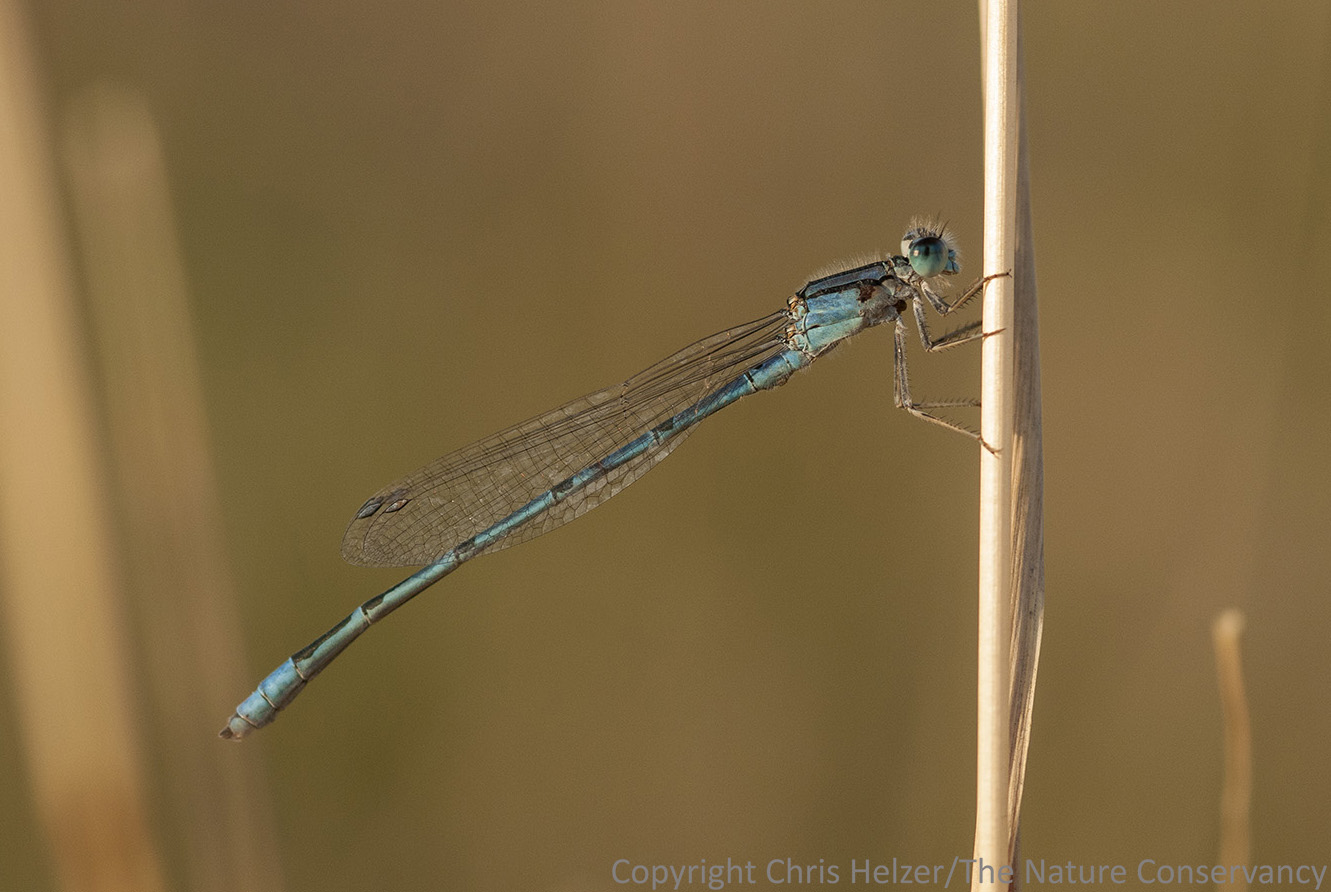
This was not the first damselfly I tried to photograph...just the one that finally let me get close enough to get a picture of it.

This was not the first damselfly I tried to photograph…just the one that finally let me get close enough to get a picture of it.

I did finally manage to get a photo of a damselfly.  I think it was a matter of following several different ones until I found one that wasn’t as skittery.  Of course, that’s probably a bad sign for the potential survival of that individual damselfly, since skittery is a good tactic to avoid predation.  I often wonder whether the insects I photograph are the ones that are not long for the world…

This returns us to the “dumb insect” topic.  Do you suppose smart insects look different from dumb ones?  I’ll probably never know because the only invertebrates I can photograph are the ones that are too dumb to run, jump, or fly away!

Here is a selection of some of the invertebrates that hung around on ragwort flowers long enough for me to photograph them last week.  I wish them the best, of course, but I’m not optimistic about their long-term survival…
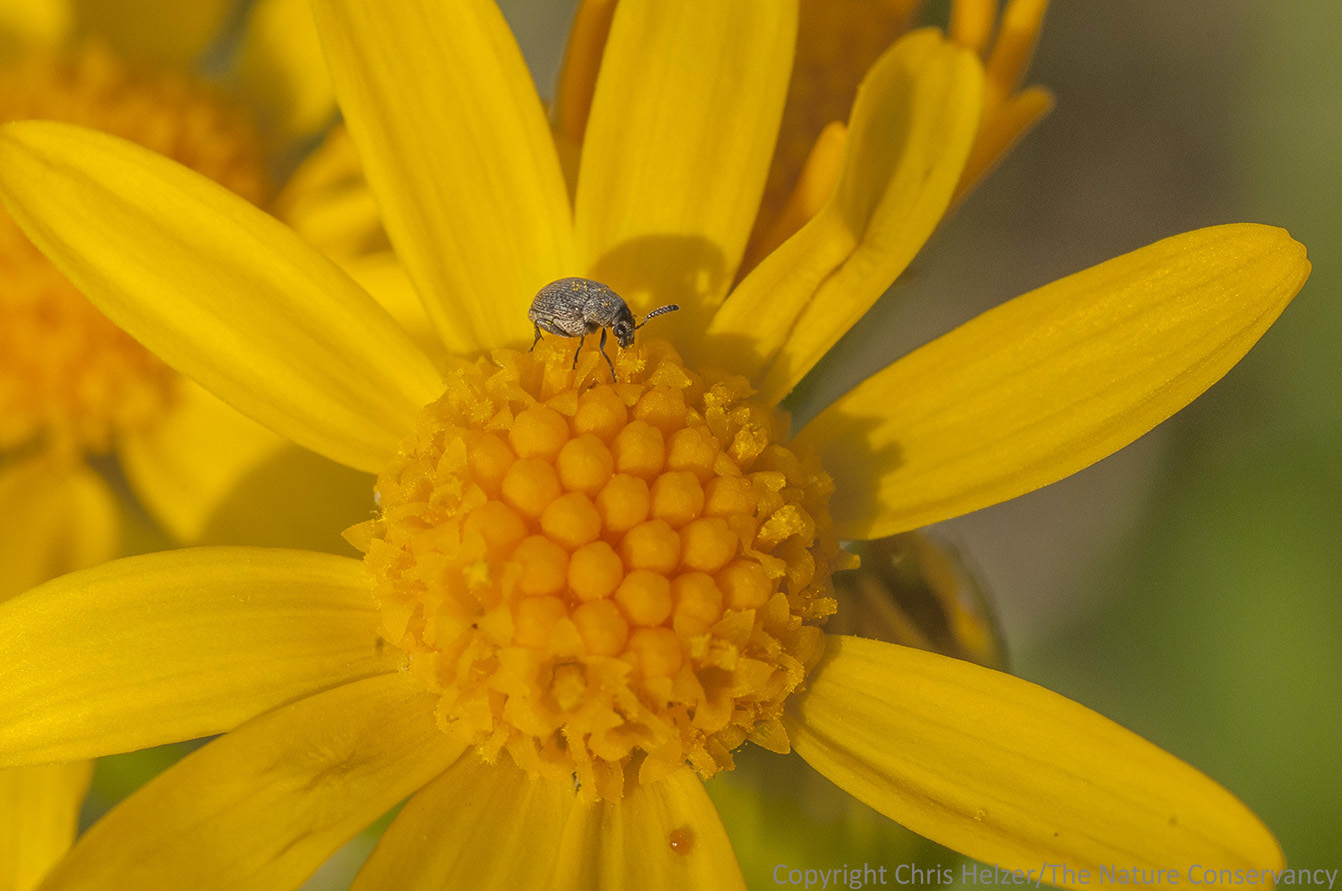
This tiny beetle was on several ragwort plants.  Most of the beetles turned away or jumped to safety when they saw me coming, but this one didn't.

This tiny beetle species was on several ragwort plants. All of the other similar-looking beetles turned away or jumped to safety when they saw me coming, but this one didn’t.  It appeared to be enjoying its pollen dinner too much to bother running away.  It’s probably inside a bird or spider by now.

.

Not a very smart little fly...

Not a very smart little fly…

.

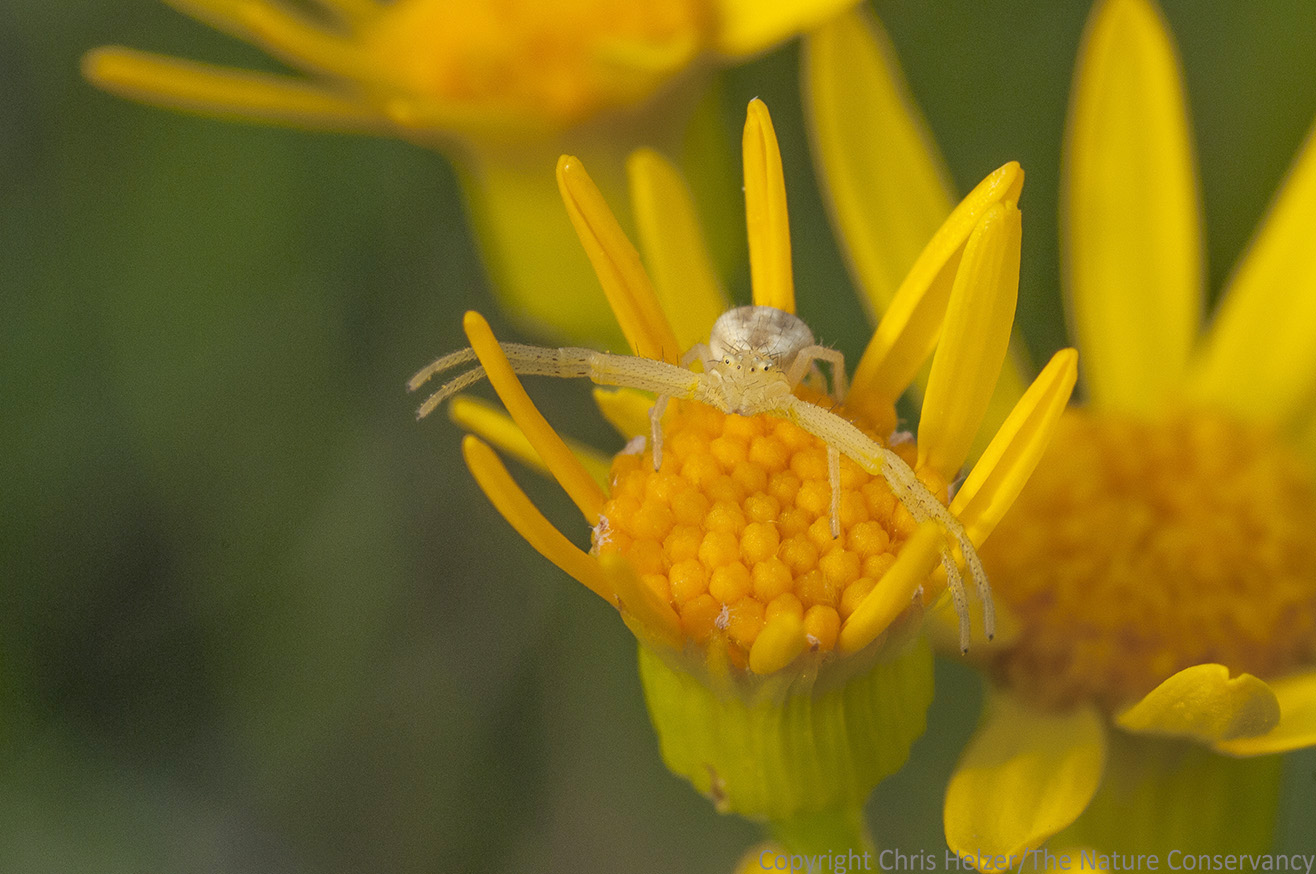
I must have seen two dozen crab spiders before I got this photo.  All the rest of them crawled beneath the petals when I approached, or dropped to the ground if I kept coming.  This one just sat there.

I must have seen two dozen crab spiders before I got this photo. All the rest of them crawled beneath the petals when I approached, or dropped to the ground if I kept coming. This one just sat there.

.

I got several photos of various individuals of this bug species (a true bug - Hemiptera).  Maybe the whole species is not so smart?

I was able to photograph several individuals of this bug species (a true bug – Hemiptera). Maybe the whole species is not so smart?

It was pretty neat to see the diversity of insects and other invertebrates using this one species of wildflower.  There were quite a few more than I’m showing here because most of them didn’t stick around long enough to be photographed (the smart ones).  I’m grateful to those that did.

…and I bet there are some grateful predators out there too.

Follow up to my earlier Swallows-on-Cold-Days Post

I posted earlier this week about swallows feeding from the surface of water bodies during a cold and windy day.  In that post, I included a link to a report on a mass die off of swallows and intriguing research on some rapid evolution of swallow body and wing sizes by Mary Bomberger Brown at the University of Nebraska – Lincoln.  I intended to follow up with Mary to get more information, but she beat me to it and contacted me first!  I asked for permission to share what she told me, and she agreed.

This is what Mary had to add to my short blog post:

This sort of foraging behavior is fairly common in the swallows, especially at this time of year when the birds are transitioning from migration to nesting. All of the swallows that occur in Nebraska (Bank, Barn, Cliff, Purple Martin, Tree, and Violet-green) do it. They are picking insects off the surface of the water—insects just emerging as flighted adults from aquatic instars, surface species (e.g., water striders) or moribund adults floating on the surface. Usually swallows feed on concentrations of insects caught up in thermals, mass emergences or mating swarms. Those concentrations form in the sort of weather conditions that allow thermals to form (warm, sunny, high barometric pressure days). On cool, wet, cloudy days (low barometric pressure days) thermals don’t form, insects don’t swarm and hungry swallows are left to pick insects off the water surface. With their long wings swallows aren’t particularly well-designed for that type of acrobatic flight, so, energetically, that style of foraging is probably ‘net loss’ or ‘even sum’ for them, but better than not foraging at all. You can think of swallows as being flying barometric pressure indicators—low pressure, insects down low, so swallows down low, high pressure, insects up high, so swallows up high.


And, about the 1996 Cliff Swallow weather kill—Cliff Swallows (and probably most swallows) typically carry fat reserves sufficient to carry them for about 4 days without feeding, beyond that they starve and die. In the last week of May 1996, the weather was cold, wet, windy and miserable across the Great Plains. It was too cold for insects to emerge and/or fly. The swallows got wet and chilled when out trying to feed on insects that weren’t available…the only successful foraging they could do was picking insects off the water surface. The swallows survived for 4 days, but on the 5th day as much as two-thirds of the population died. The swallows that survived had shorter wing and tail feathers, larger skeletons and were perfectly bilaterally symmetrical, meaning they were efficient, acrobatic fliers that could carry larger fat reserves. The swallows that did not survive were just the opposite. In the years following the weather kill those swallows and their descendants have maintained the shorter feather lengths and larger skeletons (there was significant survival selection for those heritable traits).


The road kill study mentioned in the last paragraph of the blog showed that the wing feather lengths of Cliff Swallows nesting on bridges and road culverts declined significantly over the past 30 years. The shorter wing feathers made them more efficient, acrobatic fliers that could better avoid being hit by cars/trucks/SUVs/RVs and survive to reproduce, producing offspring who also had shorter wing feathers. The presence of humans on the landscape with their roads and vehicles was the cause of significant survival selection for that heritable trait…a demonstration of birds adapting to accommodate anthropogenic change in the environment. The two results (bad weather and road kill) are similar (shorter wing feathers leading to more efficient, acrobatic flight and survival selection), but with very different causes, one natural and one unnatural.

Many thanks to Mary for this great information!