Photo of the Week – February 20, 2014

This the time of year when I start getting antsy to see green vegetation, flowers, and insects again.  Since our prairies are still brown and dormant, I have to live through photographs from previous field seasons.  Here is a photo from August 2012 I found yesterday while looking through old images.
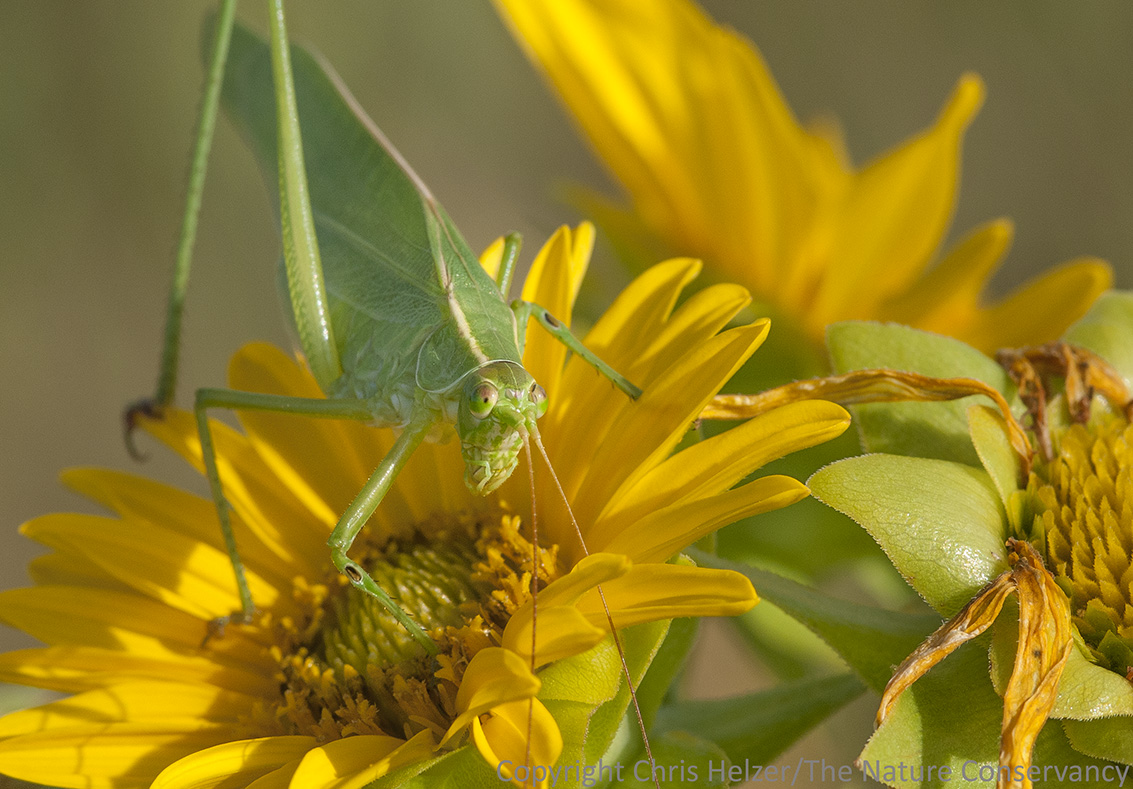
A bush katydid on a rosinweed flower - The Nature Conservancy's Platte River Prairies, Nebraska.

Bush katydid (Scudderia?) on a rosinweed (Silphium integrifolium) flower – The Nature Conservancy’s Platte River Prairies, Nebraska.

The beautiful green creature in this image is a katydid, not a grasshopper.  The easiest way to tell is by looking at the length of the antennae, which are very long on katydids but very short on grasshoppers.  There are numerous species of both katydids and grasshoppers in our prairies, and by late summer, most have gone through their final molt and have become fully adult – with the wings to prove it.

You may not be aware that katydids have special hearing devices on their legs.  In the photo above, you can see dark pits in the “forearms” of the insect, right below their “elbows”.  Inside those pits are tympana that vibrate just as our own eardrums do.  For an excellent description of this, and an explanation of how it’s an advantage to the katydid to have its ears on its legs, read this post on the Living with Insects Blog.
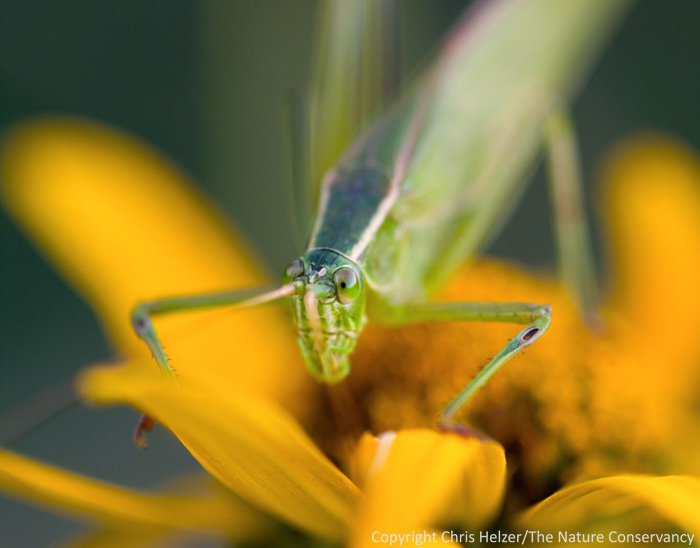
Photo of the Week – March 3, 2011

 Katydids are a diverse group of species – about 243 different species reside in the U.S. and Canada.  We have about the same number of katydid species as we do grasshopper species in our Platte River Prairies, but grasshoppers tend to grab a lot more attention.  In fact, katydids are often called “long-horned grasshoppers”, though they’re actually much more closely related to crickets than grasshoppers.  Katydids are often difficult to see because of their camouflaged appearance, but it’s impossible not to hear the distinctive songs they make by rubbing their front legs together – especially in late summer. 

Katydid on false sunflower. Sarpy County, Nebraska.

In the above photo, you can see the tympana on the katydid’s front leg – right below its “elbow”.  The tympana is the hearing organ katydids and crickets use to hear the songs of others of their kind.

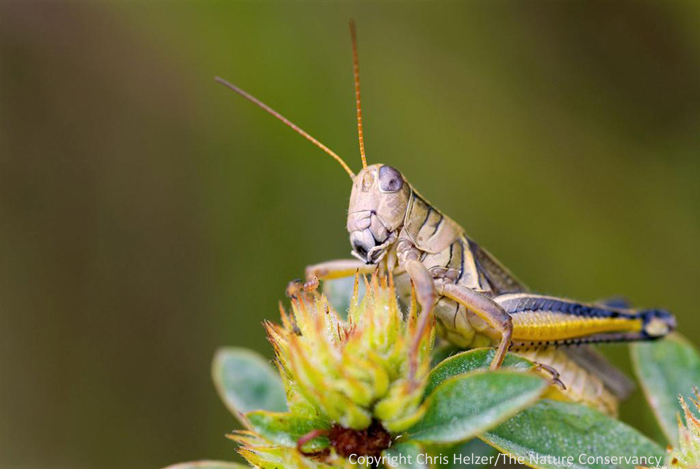
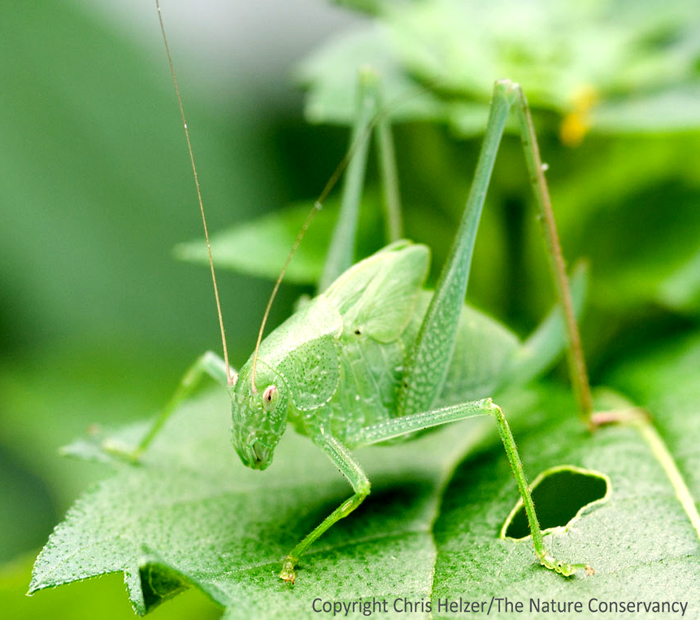
Telling grasshoppers and katydids apart is usually as easy as looking at the antennae (see below).  Grasshoppers have short antennae – much less than the length of their bodies.  Katydids have very long antennae that usually exceed their body length.

A grasshopper showing off its short antennae.

A katydid nymph (hence the short wings) with its long antennae - long enough I didn't capture their entire length in the photo.